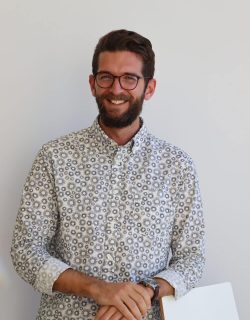
Dr. Jochen Fenske is a Professor and Department Head at the Helmholtz-Zentrum Hereon , specifically within the Materials Physics Institute . His work focuses on the development of new instrumentation for neutron scattering , which is critical for advancing materials characterization techniques. His research interests span neutron scattering methods , advanced materials instrumentation , and condensed matter physics . These areas are essential for understanding material properties at the atomic level and improving experimental capabilities in neutron science.
Dr. Jocelyne Leroy is a Researcher at the French Alternative Energies and Atomic Energy Commission (CEA), Fundamental Research Division, where she has served since 2005. As XPS Facility Manager at the Laboratory for Innovation, Chemistry of Surfaces and Nanosciences (ICMSN), she leads surface characterization efforts supporting national research initiatives. Her prior roles include materials research at CEA's Technological Research Division (2002-2005) and industrial optoelectronics development. Her research focuses on surface analysis and materials science across critical domains: Energy: Solar cells, hydrogen catalysts, superconducting materials Environment: Microplastics impact, corrosion, decontamination Biomedicine: Protein-surface interactions, biomaterial characterization Electronics: Perovskite thin films, nanoscale coatings She specializes in electron spectroscopies (XPS, UPS, Auger) to resolve chemical states and interfacial phenomena at sub-nanometer scales. Analysis of her 2022-2024 publications reveals three converging research trajectories : (1) Quantum hardware optimization through surface defect engineering, (2) Environmental nanotoxicology via microplastic-protein corona studies, and (3) Sustainable materials synthesis including solvent-free catalysts and 2D carbon nitrides. This work bridges fundamental surface science with urgent societal challenges in energy transition and pollution mitigation. Dr. Leroy directs ICMSN's XPS facility , a national resource for advanced surface characterization. The laboratory supports interdisciplinary projects through: High-resolution spectroscopy for chemical state mapping In-situ analysis capabilities for reactive environments Correlative microscopy approaches (XPS + SEM/AFM) Custom sample preparation protocols for sensitive materials Her technical leadership enables breakthroughs in nanomaterials design and failure analysis across academic and industrial partners.
Dr. Harim Jang serves as a Researcher within the Department of Physics at the University of Hamburg's Faculty of Mathematics, Computer Science and Natural Sciences. He is affiliated with the Institute of Nanostructure and Solid State Physics and operates as a core member of the Wiesendanger Working Group, specializing in advanced Scanning Probe Methods for nanoscale material analysis. His research concentrates on Solid-State Physics and Nanostructure Physics, with primary emphasis on Scanning Probe Microscopy techniques that enable atomic-level investigation of electronic and magnetic properties. This work drives innovation in nanotechnology and condensed matter systems, focusing on experimental characterization of novel materials and quantum phenomena at microscopic scales. As part of the Wiesendanger Working Group, Dr. Jang contributes to the institute's active publication record in nanoscience, with research outputs documented through the group's dedicated platform at nanoscience.de. The team maintains strong experimental capabilities in scanning probe instrumentation for cutting-edge nanomaterials research.
Dr. Emine Babur ŞAŞ is an Associate Professor at Kırşehir Ahi Evran University's Vocational School of Technical Sciences, where she works in the Electronics and Automation Department. She has been serving in this position since 2020, following her progression from Assistant Professor (2015-2020) and Doctoral Teaching Staff (2018-2020) at the same institution. Prior to that, she worked as a Research Assistant in the Physics Department of the Faculty of Science and Literature at Ahi Evran University from 2005 to 2015. Her academic background includes: Ph.D. in Physics (2010-2014), Kırıkkale University, Institute of Science Master's Degree in Physics with Thesis (2005-2008), Gaziosmanpaşa University, Institute of Science Bachelor's Degree in Physics Program (2001-2005), Gazi University, Kırşehir Faculty of Arts and Sciences Dr. Babur ŞAŞ specializes in Spectroscopy, Atomic, Molecular and Laser Physics , with particular focus on the optical, electronic, and structural properties of organic molecules and materials. Her research employs both experimental and computational approaches, including Density Functional Theory (DFT) calculations, to investigate molecular structures, vibrational properties, and electronic characteristics of various compounds. She has made significant contributions to the understanding of organic semiconductors, nonlinear optical materials, and molecular systems with potential applications in optoelectronics, photovoltaics, and biosensing. Her publication record demonstrates a strong focus on the spectroscopic characterization and computational analysis of organic molecules, particularly benzimidazole, oxadiazole, and triphenylamine derivatives. These studies often explore the relationship between molecular structure and optical/electronic properties, with applications in organic light-emitting diodes (OLEDs), organic photovoltaics (OPVs), and molecular sensors. Her more recent work has expanded into investigating interactions between organic molecules and biological systems, particularly anti-apoptotic proteins, showing an interdisciplinary approach that bridges physics, chemistry, and biology. Dr. Babur ŞAŞ has served as principal investigator or researcher on numerous scientific projects, including studies on anticancer properties of benzimidazole drugs, spectroscopic properties of organic semiconductor materials, and optical characteristics of molecules for OLED and PLED applications. She has supervised at least one Master's student and has taught various physics and mathematics courses at both undergraduate and graduate levels.
Fumiaki Ito serves as Assistant Professor in the Department of Microbiology-Immunology at Northwestern University's Feinberg School of Medicine, where he leads research on molecular mechanisms of viral infection and host defense systems using structural biology approaches. His academic credentials include: BS from University of Tokyo (2011) MS from University of Tokyo (2013) PhD from University of Southern California (2019) Postdoctoral training in Structural Biology at University of California, Los Angeles (2025) Dr. Ito's laboratory employs cryo-electron microscopy and biochemical techniques to investigate how DNA/RNA viruses hijack host cells and evade immune responses. This structural virology research focuses on atomic-level characterization of virus-host interfaces to inform therapeutic development for infectious diseases, spanning subfields including viral entry mechanisms, innate immune sensing, and capsid assembly dynamics. No information regarding student advising or research grants was provided in the source material. His laboratory operates within the Department of Microbiology-Immunology's research infrastructure at Feinberg School of Medicine.
Phillip Christopher is a Professor of Chemical Engineering and the Mellichamp Endowed Chair of Sustainable Manufacturing at the University of California, Santa Barbara within the College of Engineering. His research focuses on developing catalytic processes for sustainable manufacturing and energy conversion through molecular-level engineering of catalysts. Education: BS in Chemical Engineering, University of California, Santa Barbara (2006) MS in Chemical Engineering, University of Michigan (2008) PhD in Chemical Engineering, University of Michigan (2011) Dr. Christopher's research integrates chemical engineering, materials science, and quantum chemistry to design catalysts for environmental and energy applications. His group specializes in heterogeneous catalysis, photocatalysis, and single-atom alloy systems, with current projects targeting solar energy conversion, plastic upcycling, and emission control technologies. The work combines computational modeling with advanced experimental characterization to establish structure-activity relationships. Scientific Awards: Paul H. Emmett Award in Fundamental Catalysis (2025) Guiseppe Parravano Award for Excellence in Catalysis (2024) ACS Ipatieff Prize (2022) AIChE Catalysis and Reaction Engineering Division Young Investigator Award (2020) ACS CATL Division Early Career in Catalysis Award (2020) Presidential Early Career Award for Scientists and Engineers (PECASE) (2019) NSF CAREER Award (2016) ARO Young Investigator Award (2014) Dr. Christopher has mentored 27 graduate students including current PhD candidates and alumni now faculty at institutions like UT Austin and Virginia Tech, plus industry leaders at companies including Johnson Matthey and Intel. His research is funded by major grants from NSF, DOE, and federal agencies including the $500,000 NSF CAREER award and PECASE funding supporting his sustainable catalysis initiatives. He leads the Christopher Research Group at UCSB with 9 graduate students, 5 postdocs, and multiple undergraduates working across three thematic areas: photocatalysis for solar fuels, single-atom alloys for selective reactions, and membrane-integrated catalytic systems for water treatment.
Todd Schwendemann is a full Professor of Physics at Southern Connecticut State University (SCSU) , where he also serves as the CNT Laboratory Manager . His expertise lies in scanning probe microscopy, nanotribology, and thin film deposition, with a strong focus on nanotechnology education and research. Education: While specific degrees are not detailed, Dr. Schwendemann’s extensive research and academic role suggest advanced training in physics and nanoscience. Research Interests: Dr. Schwendemann’s research spans a wide range of nanoscale phenomena, including: Nanotribology and atomic-scale friction Thin film and nanoparticle deposition via pulsed laser deposition Carbon nanotube synthesis and characterization Nanoscale chemical catalysis Development of scanning probe microscopy techniques His work integrates experimental techniques with computational modeling to explore surface interactions, defect identification, and material properties at the atomic level. Research Trends: Across his publications from 2005 to 2019, a clear trajectory emerges from fundamental surface science to applied nanomaterials research. Early work focused on atomic-scale imaging and force spectroscopy, while later efforts emphasize carbon nanotube synthesis, thin film deposition, and educational outreach in nanotechnology. Grants & Funding: Dr. Schwendemann has secured multiple grants, including: Principal Investigator: "Patterned Deposition of Metal Nanoparticles on Silicon for Growth of Carbon Nanotubes by Chemical Vapor Deposition" (Connecticut State University, $3,800) Co-Principal Investigator: "Micro and Nanoscale Investigations of Iron doped High Temperature Superconductors" ($7,579.50) Supporting Team Member: "Center For Research On Innovative Structure and Phenomena (CRISP)" (NSF, Federal) Team Member: "Nanotechnology Industry Academic Fellowship Program" (Werth Family Foundation, 2014–2024) Laboratory & Team: As the CNT Laboratory Manager , Dr. Schwendemann oversees advanced microscopy and nanofabrication facilities. He collaborates with interdisciplinary teams, including faculty and students, to advance nanotechnology research and education.
Jieyi Liu serves as a Research Fellow at Diamond Light Source, the UK's national synchrotron science facility located at the Harwell Science and Innovation Campus in Oxfordshire. She is an integral member of the Structures and Surfaces group, specifically dedicated to the Momentum Microscope Project on the I09 beamline, which specializes in surface and interface structural science. Her research focuses on advanced surface characterization techniques using synchrotron radiation, with particular expertise in electron microscopy applications for probing atomic-level structures of materials. This work bridges condensed matter physics and materials engineering, enabling breakthroughs in nanotechnology and surface chemistry through high-resolution imaging methodologies. Contact: jieyi.liu@diamond.ac.uk | +44-1235-77 8931
Fatemeh Shahbazi Farahani serves as an Affiliated Researcher at the Italian Institute of Technology (IIT), embedded within the NanoChemistry group of the CCT@Morego research center. Her position places her in a collaborative environment focused on advanced materials research. Her work centers on nanotechnology and chemistry, specifically the synthesis and characterization of nanomaterials. The NanoChemistry group investigates fundamental properties and applications of nanoscale structures, with implications for biomedical, electronic, and energy technologies. Research emphasizes precision engineering of materials at atomic and molecular levels. The CCT@Morego research center provides specialized infrastructure for nanomaterial development, hosting multidisciplinary teams including postdoctoral researchers, PhD candidates, and technical staff. Current colleagues include postdocs like Luca Saluta and Francisco Matias Yarur, alongside PhD students such as Thi Hong Hang Le and Umberto Filippi, indicating active project pipelines and team-based research dynamics.
Professor Mark Rümmeli is a chartered scientist specializing in nanotechnology and physics with multi-institutional appointments: Professor at College of Physics, Optoelectronics and Energy, Soochow University (China) Head of Molecular Nanostructures group, IFW Dresden (Leibniz Institute, Germany) Head of nano-sensor laboratory, Polish Academy of Sciences Educational background: Bachelor's in Physics and Computer Electronics, London Metropolitan University PhD in Analytical Chemistry and Plasma Physics His research centers on nano-materials characterization using advanced transmission electron microscopy, driving innovations at the intersection of physics, materials science, and nanotechnology. Current work focuses on atomic-level structural analysis to develop next-generation materials for technological applications. Scientific recognition: Honorary Doctor of Science from London Metropolitan University (2015) Professor Rümmeli maintains active leadership across three international research facilities. His career demonstrates continuous progression from e-learning development to NASA/DLR space research, now focused on cutting-edge nanomaterials investigation. Information regarding current student advising and specific grant funding is not detailed in available sources.
Dr. Elisabeth Falk is a Reader in Physics (Physics and Astronomy) at the University of Sussex, where she has been a faculty member since 2000. She progressed from Research Associate (2000-2004) to Lecturer (2004-2008), Senior Lecturer (2008-2023), and Reader (2023-present). She also served as a Visiting Professor at Lund University, Sweden in 2011. Dr. Falk is a member of the School of Mathematical and Physical Sciences and the Experimental Particle Physics Research Group. Dr. Falk's research focuses on fundamental neutrino physics through participation in large international experiments, primarily the SNO+ experiment. Her work addresses three key questions: how neutrinos oscillate between different types, whether neutrinos are their own antiparticles (neutrinoless double beta decay), and the role of neutrinos in the matter-antimatter asymmetry of the Universe. Her research spans particle physics, nuclear physics, and astrophysics, with particular expertise in neutrino detection techniques and analysis. Dr. Falk's publication record shows a consistent focus on neutrino physics, with recent work centered on the SNO+ experiment. Her publications cover neutrino oscillations, solar neutrino measurements, detector calibration methods, and searches for physics beyond the Standard Model. Her research has appeared in leading physics journals including Physical Review Letters and Physical Review D, with several papers receiving significant citations in the field. Dr. Falk actively supervises students at multiple levels, including DPhil (PhD), MSc, and undergraduate final-year projects. She teaches advanced courses in Nuclear and Particle Physics and Properties of Matter, integrating her research expertise into the classroom. Her teaching and supervision reflect her commitment to training the next generation of particle physicists. Dr. Falk has secured substantial research funding through multiple grants from the Science and Technology Facilities Council (STFC), including the current 'Antineutrino physics with SNO+' grant (2020-2024) and participation in larger consolidated grants supporting particle physics research at Sussex. These grants fund her research program, postdoctoral researchers, and student projects related to neutrino physics. As a member of the Experimental Particle Physics Research Group, Dr. Falk contributes to the development and operation of advanced detector systems for neutrino experiments. Her work on calibration techniques, particularly with the SNO+ detector, demonstrates her expertise in precision measurement methods essential for cutting-edge particle physics research.
Dr. Joseph H. Holles is a Professor and Department Head in the Chemical & Materials Engineering department at New Mexico State University's College of Engineering. With a Ph.D. in Chemical Engineering from the University of Virginia (2000), he leads the department while maintaining an active research program focused on heterogeneous catalysis and materials design. His educational background includes: Ph.D., Chemical Engineering, University of Virginia, Charlottesville, VA (2000) M.E., Chemical Engineering, University of Virginia, Charlottesville, VA (1998) B.S., Chemical Engineering, Iowa State University, Ames, IA (1990) Dr. Holles' research centers on nanoscale materials design and synthesis for catalytic applications, with particular expertise in pseudomorphic overlayer bimetallic catalysts. His work combines catalyst design, synthesis, and characterization using techniques like X-ray absorption spectroscopy (XAS) at the Advanced Photon Source at Argonne National Laboratory. He has made significant contributions to understanding how atomic-level material variations affect macroscopic catalytic properties. His research has applications in renewable fuel production, including aqueous phase reforming of lactose and hydrodeoxygenation of glycerol, where his catalysts address binding issues that limit activity. Recent publications show Dr. Holles has developed a balanced portfolio of catalysis research and educational scholarship. His 15 most recent publications (2016-2022) demonstrate strategic focus on both fundamental catalyst development and engineering education innovation. The catalysis work primarily explores bimetallic overlayer systems (Ni@Pt, Co@Pt, Ir@Pt, Mo@Pt) for renewable fuel applications, while his educational research focuses on preparing students for research through structured methods courses and data management training. Dr. Holles has been granted patents for catalytic processes, including 'Catalytic Wet Oxidation of Lactose' (U.S. Patent #7,371,362, 2008) and co-inventor on polyoxometalate catalyst patents (U.S. Patents #7,019,165 and #6,914,029). As an educator and administrator, Dr. Holles has developed innovative approaches to research preparation for students at both undergraduate and graduate levels. He has created 'theory and methods of research' courses and co-developed research data management curriculum. His work extends to promoting inclusive physical spaces in academic environments and building partnerships between preprofessional student groups and academic units. His integrated approach to research, education, and administration demonstrates how fundamental catalysis research can address real-world energy challenges while preparing students to contribute meaningfully to these fields.
Professor Katharina Franke leads the Franke Research Group in the Department of Physics at Freie Universität Berlin, specializing in experimental nanophysics with focus on nanomagnetism and molecular electronics. Her team investigates fundamental questions about magnetic bit scaling, atomic-scale magnetic interactions, and topological states in nanostructures using advanced scanning probe techniques. Research centers on: Nanomagnetism: Limits of magnetic bit size and single-atom interactions Nanophysics: Quantum properties of nanostructures Molecular Electronics: Charge transport mechanisms in molecular systems Topological states: Emergent phenomena in magnetic materials The group employs scanning tunnelling microscopy/spectroscopy, ultra-fast optics, and ultra-high vacuum systems at cryogenic temperatures to probe these phenomena. Professor Franke currently supervises 10 students: PhD candidates: Verena Caspari, Florian Faaber, Melvin Grumser, Margarete Huisinga, Bharti Mahendru, Junyoung Sim, Paul Wiechers Master students: Caroline Firschke, Constantin Flommersfeld, Rahel Specht Funding supports ongoing projects, evidenced by active recruitment and upcoming courses like the Winter 2025/26 'Seminar: Selected Topics in Nanomagnetism'. The Franke Research Group maintains state-of-the-art experimental facilities for nanoscale characterization. Students present research in mandatory seminars with peer discussion, fostering a collaborative environment focused on high-level experimentation and theoretical understanding of solid-state quantum phenomena.
Sergi Garcia-Manyes is Professor of Biophysics at King's College London with a joint appointment between the Department of Physics and the Randall Division of Cell and Molecular Biophysics. He leads the Biological Physics and Soft Matter research group at King's and serves as a Principal Group Leader and Assistant Research Director at The Francis Crick Institute where he established a satellite laboratory in 2019. Education: 2000: BSc in Chemistry, University of Barcelona 2005: PhD in Physical Chemistry, University of Barcelona (Scanning Probe Microscopy) Postdoctoral training: Columbia University (Biology Department) with Julio Fernández Garcia-Manyes' research focuses on cellular mechanobiology, specifically how mechanical forces travel across cells to influence biochemical changes inside the nucleus. His laboratory develops and applies single-molecule techniques to capture the unfolding and refolding trajectories of proteins under force, combining concepts from polymer physics, protein chemistry, and molecular biology. His work addresses the fundamental question of whether phenomena observed in single-molecule experiments translate to cellular environments. Recent publications reveal his focus on nuclear mechanics, protein elasticity, and the role of mechanical forces in cellular processes. Scientific Awards: EPSRC Early Career Fellowship Leverhulme Research Leadership Award Wellcome Trust Investigator Award Royal Society Wolfson Fellow Garcia-Manyes holds significant research funding through his Leverhulme Research Leadership Award and Wellcome Trust Investigator Award, supporting his work on molecular mechanisms of cellular mechanobiology. His laboratory at the Crick Institute aims to understand how mechanical forces regulate cellular behavior, with implications for cardiovascular conditions and cancer. He collaborates extensively across institutions, including with Paula Booth from King's Chemistry and Justin Molloy from the Crick Institute. The Garcia-Manyes lab operates across two primary locations: at King's College London where they maintain the Biological Physics and Soft Matter research group, and at the Francis Crick Institute where they established a satellite laboratory in 2019. The lab combines expertise in single-molecule biophysics, cell biology, and protein chemistry to investigate mechanotransduction pathways from the molecular to cellular level.
Daniel M. Chevrier serves as a CNRS Researcher and Deputy Team Leader at the Bioscience and Biotechnology Institute of Aix-Marseille (BIAM, UMR 7265), located at CEA Cadarache in Saint-Paul-lez-Durance, France. His primary affiliation is with the French Alternative Energies and Atomic Energy Commission, where he leads research in microbial biomineralization and nanomaterial characterization. Dr. Chevrier earned his PhD in Chemistry from Dalhousie University in Halifax, Nova Scotia, Canada, between 2011 and 2016. His postdoctoral journey included positions at the Max Planck Institute for Colloids and Interfaces in Potsdam, Germany, and Dalhousie University before joining BIAM as a Marie Curie Postdoctoral Researcher from 2018-2020. His research focuses on Microbial Biomineralization , particularly examining how microorganisms form minerals like magnetite and calcite. He employs Synchrotron-based X-ray spectroscopy and microscopy techniques to study these processes at the nanoscale, often combined with microfluidics for in situ observation. His work extends to the Structure and properties of nanomaterials and biomaterials , with applications ranging from environmental science to potential biomedical uses. Dr. Chevrier's expertise includes Ab Initio Calculations, Physical Chemistry, and Nanoparticle characterization. Analysis of his recent publications reveals a strong emphasis on biomineralization processes across diverse organisms. His work spans magnetotactic bacteria that form magnetite crystals, coccolithophores that produce calcium carbonate structures, and novel bacterial systems creating metal sulfides. A recurring theme is the application of advanced X-ray techniques to understand biomineral formation at unprecedented resolution, with increasing focus on environmental and potential biomedical applications. NSERC Postdoctoral Fellowship (awarded, not accepted) O'Brien Foundation Scholarship from the O'Brien Humanitarian Trust Alexander Graham Bell Canadian Graduate Student Scholarship - Doctoral Level Dr. Chevrier collaborates extensively with researchers across international institutions, including the University of Latvia, National University of Singapore, and various French research centers. His laboratory work focuses on developing methodologies to follow microorganism biomineralization processes using synchrotron-based X-ray spectromicroscopy and microfluidics. Current projects examine how bacterial systems control the formation of magnetic and calcium-based minerals, with implications for understanding biogeochemical cycles and developing novel biomimetic materials.