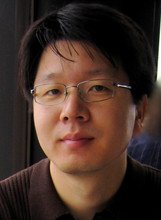
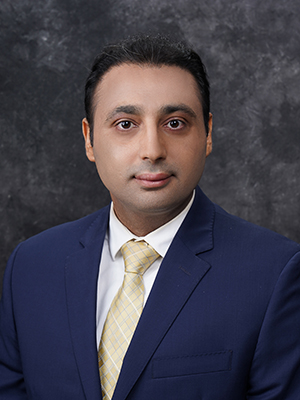
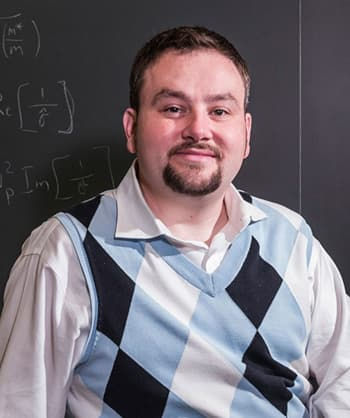
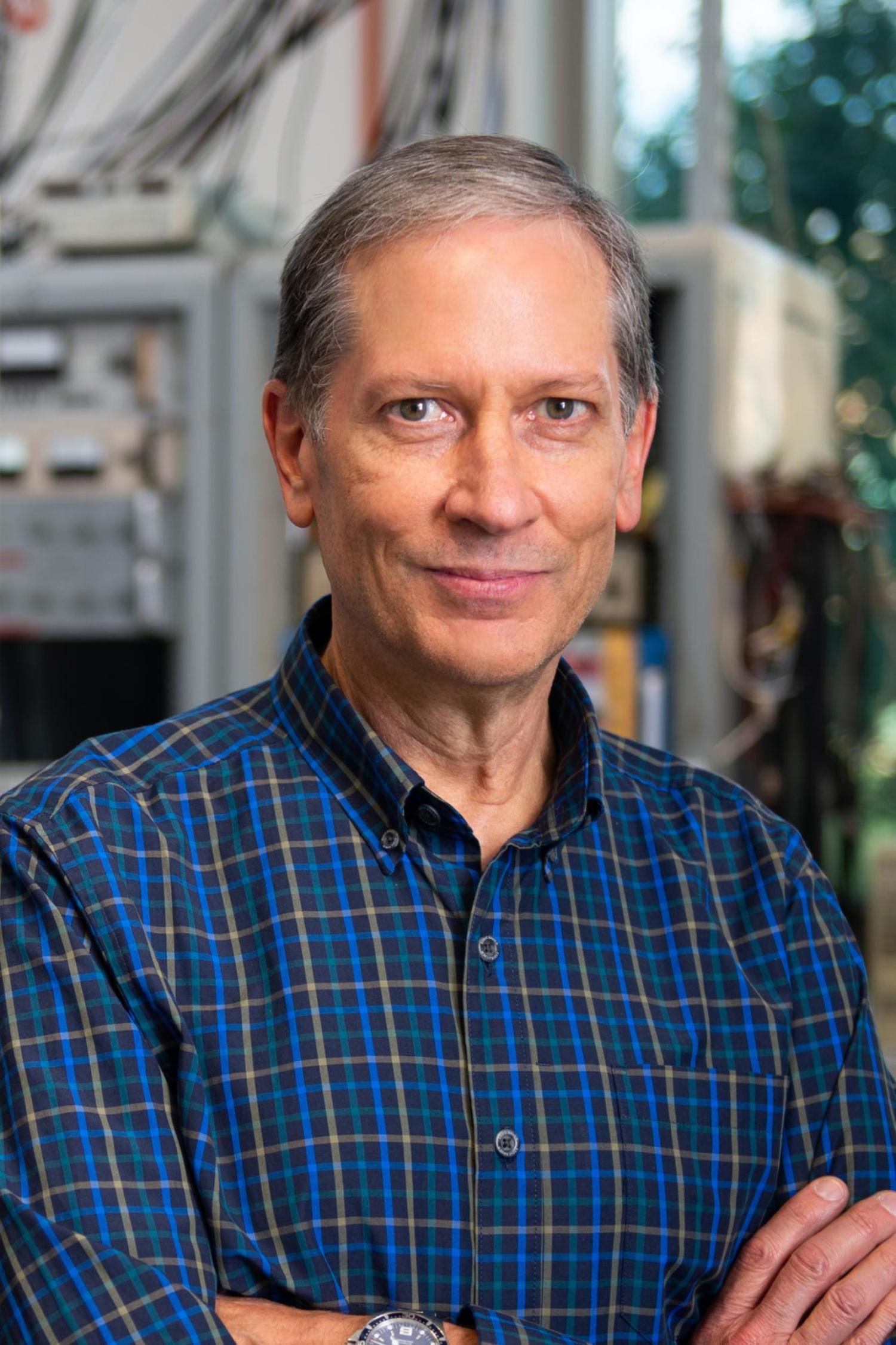
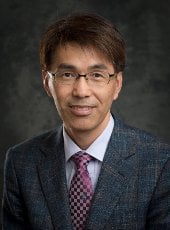
Prof. Dr. Jürgen König is a Professor at the University of Duisburg-Essen , contributing to projects within the Collaborative Research Centre 1242. His research focuses on Charge Carrier Dynamics in Nanostructures (Project A02) and Unifying Theoretical Description of Relaxation in Electron Systems (Project B07). Contact details include email: koenig@thp.uni-due.de . Research interests span Condensed Matter Physics , Quantum Transport , Nanostructures , and Electron Dynamics . His work often employs theoretical modeling of quantum systems, with recent publications analyzing phase transitions in 2D Ising systems Floquet engineering in superconductors nonlocal thermoelectric correlations Lee-Yang zero analysis of transport . Articles from 2017-2024 highlight expertise in quantum dot systems , spin dynamics , surface physics , and full counting statistics .
Dr. Stanko R. Brankovic is a Professor in the Department of Electrical & Computer Engineering at the University of Houston's Cullen College of Engineering, with additional appointments in the Department of Chemical & Biomolecular Engineering and the Department of Chemistry. His research spans electrocatalysis, sensors, electrochemical material science, and nanofabrication with particular focus on magnetic materials and nanostructures. Dr. Brankovic earned his BSE in Chemical and Biochemical Engineering from the University of Belgrade, Serbia (1994) and his PhD in Science and Engineering of Materials from Arizona State University (1999). Prior to his academic career, he worked at Seagate Research Center (2001-2005) and Brookhaven National Laboratory (1999-2001). His research interests include electrocatalysis (particularly monolayer catalyst design for fuel cells), sensor development (including ultrasound and magnetic field sensors), electrochemical material science and nanofabrication (focused on creating organized hetero-epitaxial metal and oxide nanostructures), and corrosion studies. His work has practical applications in magnetic recording, energy conversion, and sensor technologies. His recent publications demonstrate continued innovation in electrochemical synthesis, sensor development, and nanofabrication techniques, with emphasis on chloride sensing, hydrogen permeation barriers, electroless monolayer deposition, and magnetic materials for power applications. These works reflect his interdisciplinary approach spanning materials science, electrochemistry, and engineering applications. Fellow of the Electrochemical Society (2021) The Electrodeposition Research Award of The Electrochemical Society (2017) NSF Faculty Early Career Development Award (2010) University of Houston Award for Excellence in Research and Scholarship (2010) Cullen College of Engineering Junior Faculty Research Award (2009) Dr. Brankovic has mentored numerous graduate students including Qiuyi Yuan and Nikhil Dole, and has secured significant research funding from NSF, Department of Energy, Semiconductor Research Corporation, and industry partners including Baker Hughes and National Semiconductor. His Electrochemical Nanofabrication and Nanomaterials Synthesis (ECNFG) research group maintains specialized facilities including SPM Lab, ENNS Lab, Thin Films Lab, and Clean Room facilities.
Dr. Yu Zhang is a Lecturer of Data Science at the School of Business, UNSW Canberra. His academic career focuses on text mining, knowledge and information management, social computing, and bibliometric analysis, with interdisciplinary applications in areas such as sustainable logistics, supply chain management, and net-zero energy solutions. Fields of Interest: Text Mining, Information Management, Social Computing, Bibliometric Analysis, Machine Learning for Information Systems, Heterogeneous Network Analysis, Data Mining for Asset Management, Sustainable Logistics, Supply Chain Management, Net-zero Energy in Green Buildings, and Transportation. Grants: Served as CI in projects like "Online health monitoring in Li-ion batteries via trustworthy AI" (ACT Government, $1.22M) and "Delivering net-zero energy buildings" (TRaCE Lab to Market, $1.05M). Awards: Best Paper Award (Runner-up) at ADMA 2024 and Excellent Paper Award at ICEBE 2024. Teaching: Coordinated courses in Data Analytics, Workforce Planning Research, Business Capstone, and Logistics Intelligence with Big Data Analysis. Supervision: Guided research on topics like federated learning for healthcare fraud detection, blockchain-based carbon offset management, and tier-based supply chain visibility. His publications span materials science and photovoltaic technologies, with a focus on thin-film solar cells and defect passivation methods. For collaboration or supervision inquiries, contact him at m.yuzhang@unsw.edu.au .
Stacey F. Bent is the Jagdeep and Roshni Singh Professor in the School of Engineering at Stanford University, where she serves as Professor of Chemical Engineering with courtesy appointments in Chemistry, Electrical Engineering, and Materials Science and Engineering. She also holds the position of Vice Provost for Graduate Education and Postdoctoral Affairs and is a Senior Fellow at the Precourt Institute for Energy. Her academic journey began with a B.S. in Chemical Engineering from UC Berkeley (1987) followed by a Ph.D. in Chemistry from Stanford University (1992), after which she completed postdoctoral work at AT&T Bell Laboratories and served as an assistant professor at New York University before joining Stanford in 1998. Dr. Bent's research focuses on understanding and controlling surface and interfacial chemistry with applications in semiconductor processing, micro- and nanoelectronics, nanotechnology, and sustainable energy. Her group employs molecular-level approaches to study semiconductor surface functionalization, atomic layer deposition mechanisms, nanoscale light absorption materials, photovoltaic interface engineering, and catalyst/electrocatalyst deposition. Her lab maintains extensive facilities including over ten ALD/MLD reactors, ultra-high vacuum chambers with in situ XPS capabilities, and various characterization tools for materials analysis. Her recent publications reveal strong focus areas in atomic layer deposition techniques, battery interface engineering, catalyst design for syngas conversion, and nanoscale patterning technologies. The research spans fundamental surface science to practical energy applications, with particular emphasis on developing precise materials synthesis methods for advanced electronic and energy systems. Among her numerous accolades are election to the National Academy of Engineering (2020), the ACS Award in Surface Chemistry (2018), and the ALD Innovator Award (2021). She has also received multiple teaching awards including the Tau Beta Pi Award for Excellence in Undergraduate Teaching (2006) and the Stanford Medal for Faculty Excellence Fostering Undergraduate Research (2013). Braskem Award for Excellence in Materials Engineering and Science (AIChE) (2021) ALD (Atomic Layer Deposition) Innovator Award (2021) National Academy of Engineering (2020) ACS Award in Surface Chemistry (2018) Fellow of the American Chemical Society (2013) AVS Fellow (2006) Dr. Bent has mentored over 70 graduate students and postdocs who have gone on to successful careers in academia, industry, and government. Her research group maintains strong collaborations with national laboratories and industry partners, particularly in semiconductor manufacturing and energy technologies. She previously served as Director of the TomKat Center for Sustainable Energy for 10 years and as co-Director of the Center on Nanostructuring for Efficient Energy Conversion (CNEEC), a DOE Energy Frontier Research Center. The Bent Research Group operates state-of-the-art facilities including multiple ALD/MLD reactors capable of depositing over 30 materials, in situ characterization tools, and access to Stanford's shared equipment facilities for advanced materials analysis. The group's international composition (with members from over 10 countries) reflects its global impact in surface science and materials engineering.
Jeremy Baumberg is a Professor at the Cavendish Laboratory, University of Cambridge, leading research in nanoscience and nanotechnology. He specializes in designing nano-materials with unique optical properties, including plasmonic cavities and polymer opals, with applications in catalysis, sensing, and energy. His work bridges academia and industry through collaborations with Hitachi, IBM, and his spin-offs Mesophotonics and Base4. Research interests focus on light-matter interaction in nanoscale systems, quantum plasmonics, surface-enhanced Raman spectroscopy (SERS), and nanocavity engineering. Recent projects include developing plasmonic nanogap reactors, high-energy-density battery materials, and the open-source WaterScope platform for water quality monitoring. Awards : Faraday Medal (2017) Rumford Medal (2014) Young Medal (2013) Royal Society Fellowship (2011) Mullard Prize (2005) His lab, the Ray Dolby Centre, explores optomechanical systems, plasmonic sensors, and nanostructured materials. Baumberg advises ARIA and serves on the EPSRC Council, emphasizing interdisciplinary innovation and scalable nanotechnology solutions.
Mikko Ritala is a Professor at the University of Helsinki's Department of Chemistry. His research focuses on atomic layer deposition (ALD), thin film materials, and catalytic processes. He leads the HelsinkiALD research infrastructure and has been a project manager for initiatives like the Intel-Ritala 2023-2026 corporate-funded project. Ritala has received the Alfred Kordelin Foundation Award (2010) for his contributions to materials science. His work spans interdisciplinary areas including energy materials, biomedical coatings, and environmental applications of advanced materials. Key research interests include developing novel ALD processes for functional thin films, optimizing photocurrent responses in energy systems, and exploring catalytic etching techniques. He actively collaborates internationally and organizes conferences such as the Materials for Advanced Metallization Conference (MAM2025) and the International Conference on Atomic Layer Deposition (ALD 2024). Ritala's research group has published extensively (>625 outputs) on topics like ALD-grown oxides, carbides, and fluorides, as well as applications in photovoltaics and environmental engineering. The HelsinkiALD laboratory under his leadership serves as a hub for ALD innovation and industrial partnerships.
Sang-Hyun Oh is Distinguished McKnight University Professor and Sanford P. Bordeau Chair in Electrical and Computer Engineering at University of Minnesota. His research develops nano-optical tools for biomedical applications, specializing in plasmonic biosensors, nanophotonic devices, and optical manipulation techniques. Key innovations include nanofluidic platforms for single-molecule analysis, high-Q metasurfaces for vibrational spectroscopy, and waveguide-integrated optical tweezers. Recent projects focus on diagnostic technologies such as Nano-QuIC for Parkinson's detection and computational design of upconversion materials. His laboratory advances nanofabrication methods including template stripping and atomic-layer lithography to create plasmonic nanostructures with atomic-scale precision. Collaborative projects bridge photonics, neuroscience, and clinical medicine to develop next-generation biosensors.
Amir Asadi is an Associate Professor in the Department of Engineering Technology and Industrial Distribution at Texas A&M University, holding the Corrie & Jim Furber '64 Faculty Fellow position. His research focuses on scalable manufacturing of multifunctional composites, structural energy systems, and advanced materials design. He leads the Polymer Composites Advanced Manufacturing (PCAM) Lab, which explores bottom-up fabrication techniques and additive manufacturing processes. Asadi holds a Ph.D. in Mechanical and Manufacturing Engineering from the University of Manitoba (2013), an M.S. in Mechanical Engineering from Iran University of Science & Technology (2006), and a B.S. in Mechanical Engineering from the same institution (2004). His work bridges molecular-level interactions with macroscale material performance, targeting applications in aerospace, e-mobility, and energy storage. Key research interests include structural battery/supercapacitor composites, additive manufacturing of polymer composites, and fast-rate manufacturing of thermoplastics. He has pioneered methods like supercritical CO₂-assisted atomization and cellulose nanocrystal-enabled interface tailoring to enhance composite performance. Asadi has received the NSF CAREER Award (2022) and has been an invited speaker at major conferences such as the Brazilian Conference on Composite Materials (2021) and Chalmers University’s “Materials for Tomorrow” event (2020). His lab’s innovations aim to revolutionize lightweight, multifunctional materials for industrial sectors. His research outputs include over 50 peer-reviewed articles, covering topics from nanocomposite interfaces to 3D-printed structural batteries. He collaborates with industry partners like the Air Force Research Lab and focuses on translating lab-scale innovations into scalable manufacturing solutions.
Kenneth Burch is the John H. Rourke Professor of Physics and Chairperson of the Department of Physics at Boston College. He holds a Ph.D. from the University of California at San Diego, with prior degrees from UC Santa Cruz. His research focuses on spectroscopic investigations of novel solids, interfaces, and nano-materials, particularly in topological insulators, unconventional superconductors, and 2D atomic crystals. His work explores phenomena such as spin/valleytronics, thermoelectrics, and magnetic proximity effects. Education: B.S., University of California at Santa Cruz M.S., University of California at San Diego Ph.D., University of California at San Diego Research Interests: His studies emphasize the interplay between electronic structure, magnetism, and light-matter interactions in quantum materials. Key areas include: 2D van der Waals heterostructures Magnetic and topological phase transitions Ultrafast carrier dynamics in photodoped systems Design of novel materials for energy and sensing applications Recent Work Trends: Recent publications highlight advancements in layered magnetism (e.g., Cr2Te3 ferromagnetism), correlated insulators (La2O3Mn2Se2), and ultrafast dynamics in Mott insulators. His work often integrates optical spectroscopy, nanofabrication, and theoretical modeling to uncover emergent phenomena. Labs & Collaborations: His research group focuses on experimental condensed matter physics, with access to advanced facilities for nanoscale material synthesis and characterization. Collaborative projects include developing graphene-based sensors for environmental monitoring and studying topological phases in kagome lattices.
Timothy K. Minton is a Professor in the Department of Aerospace Engineering Sciences at the University of Colorado, Boulder, and a member of the Aerospace Mechanics Research Center (AMREC). He holds a PhD from the University of California, Berkeley (1986) and a BS from the University of Illinois, Urbana-Champaign (1980). His research focuses on gas-phase and gas-surface reaction dynamics, particularly in hypersonic flow environments and space material degradation. He has held editorial roles at The Journal of Spacecraft and Rockets and The Journal of Physical Chemistry , and has been recognized with prestigious awards including Fellowships from the American Physical Society (2015) and American Association for the Advancement of Science (2012). Dr. Minton’s work emphasizes understanding atomic oxygen interactions with satellite materials, shock layer chemistry, and material durability in low-Earth-orbit environments. His innovations include the development of the Table-Top Shock Tunnel (TTST) for rapid material testing and durable coatings for space applications. He has also contributed to advancing models for carbon oxidation and nitridation processes. His awards highlight leadership in aerospace and chemistry, including the NASA Monetary Award (1995) for semiconductor etching innovations and the Charles & Nora Wiley Award (2002) for meritorious research. He maintains a courtesy appointment in the Department of Chemistry at CU Boulder and actively collaborates with industry (e.g., Skeyeon, Inc.) and international institutions.
Riikka Puurunen is an Associate Professor at Aalto University's Department of Chemical and Metallurgical Engineering, leading the Catalysis group since 2017. Her work focuses on developing solid heterogeneous catalysts using atomic layer deposition (ALD), microreactors, and in situ testing methods to advance sustainable biomass-based solutions.
Silke A. Peeters is a Doctoral Candidate at Eindhoven University of Technology, affiliated with the Applied Physics and Science Education department and the Plasma & Materials Processing research group. Her work bridges materials science and quantum technology with a focus on plasma-assisted thin film deposition methods. Education : Bachelor's thesis (2020) on lightning initiation modeling; Master's thesis (2022) on superconducting tantalum carbonitride for quantum devices. Research interests span superconducting materials , atomic layer deposition , and quantum device fabrication . Her 2022-2025 publications demonstrate expertise in optimizing plasma-enhanced thin film processes for nanoscale superconducting films and atmospheric discharge modeling. Key subfields include corona inception mechanisms, quantum technology materials, and ion-energy-controlled deposition techniques. Recent work trends show specialization in: High-rate plasma-assisted deposition Superconducting nitride/carbonitride films Quantum device material synthesis Thundercloud hydrometeor electrodynamics Scientific recognition : NEVAC-prijs (2025) for student research Best Student Oral Presentation Award (2023) Best Presentation Award (2025) Active in science communication with media coverage in Blog Review (July 2022). Collaborations span Netherlands-based institutions and international networks in materials science and quantum engineering.
Professor Phil King leads a research group within the School of Physics and Astronomy at the University of St Andrews, where he is part of the Centre for Designer Quantum Materials. His research focuses on the electronic structure and many-body interactions of quantum materials using electron spectroscopy, particularly angle-resolved photoemission (ARPES), and creating new designer quantum materials through atomic layer-by-layer growth. King's research interests center on quantum materials, with particular emphasis on topological matter, transition-metal oxides, and 2D quantum materials. His group investigates strain and pressure tuning of quantum materials, photoemission spectroscopy of correlated systems, and engineering band structures in 2D conductors. They develop methods to exploit strong electronic interactions in 2D systems to create new functional materials with tunable properties. Their approach combines experimental screening of candidate materials, bottom-up atomic assembly of custom heterostructures, and advanced spectroscopic feedback. Analysis of King's recent publications reveals a strong focus on the electronic structure of quantum materials, particularly transition metal dichalcogenides, delafossite metals, and topological systems. His work frequently examines charge density waves, spin-orbit coupling effects, Van Hove singularities, and quantum phase transitions. A notable trend is the integration of materials synthesis with advanced spectroscopic characterization, enabling precise control over electronic properties through strain engineering, doping, and heterostructure formation. King actively supervises PhD students on projects related to quantum materials, including probing elastic coupling in exotic magnets, angle-resolved photoemission from tailored mesostructures, thermodynamics and spectroscopy, oxide metals, and gate tuning of 2D quantum materials. His research is supported by major funding sources that enable access to cutting-edge equipment and international facilities. The King Group operates advanced experimental facilities including a high-resolution lab-based ARPES system with multiple light sources, and two DCA R450 molecular-beam epitaxy systems optimized for transition-metal oxides and chalcogenides. They are developing the UK's first spin-resolved ARPES capability. The group regularly utilizes major international facilities including Diamond Light Source, Elettra, SOLEIL, and HiSOR synchrotrons, as well as the ARTEMIS facility for time-resolved studies.
Prof. Jay A. Gupta is a Professor and Vice Chair for Graduate Studies and Postdoctoral Affairs in the Department of Physics at The Ohio State University. His research focuses on atomic-scale studies of novel materials using scanning tunneling microscopy (STM) to address challenges in energy conversion and advanced computing. Key areas include magnetic skyrmions in chiral systems, semiconductor defects, 2D materials, and spintronics. He leads a laboratory equipped with four advanced STM systems and collaborates on NSF NeXUS, an ultrafast science facility. Education: B.S. Chemistry/Physics (UIUC), Ph.D. Physics (UCSB) Lab Locations: Physics Research Building (labs 0101/0105/0178) Key Projects: Spin-polarized STM of MnGe, defect-mediated surface chemistry in semiconductors, ultrafast laser-material interactions His group has trained over 30 graduate/undergraduate students and postdocs, many now in academia and industry. Research is supported by NSF, Department of Energy, and industrial partnerships.
Dr. Youngchul Ra is an Associate Professor in the Department of Mechanical and Aerospace Engineering at Michigan Technological University. He holds a PhD from MIT (1999) and degrees from Seoul National University. His expertise includes computational fluid dynamics (CFD), combustion modeling, chemical kinetics, and alternative fuel research. His work focuses on advanced combustion strategies like Gasoline Compression Ignition (GCI), engine CFD code development, and high-performance computing. Education: PhD in Mechanical Engineering, Massachusetts Institute of Technology (1999) Masters and Bachelors in Mechanical Engineering, Seoul National University Research Interests: Developing multi-component fuel models for real-world applications Optimizing six-stroke GCI engines with advanced valve technologies Reducing emissions via combustion control and injection strategies Parallel computing techniques for large-scale engine simulations Recent work emphasizes oxygenated fuels in GCI engines and parametric studies of combustion efficiency. His CFD models are validated against experimental data for accuracy. His research has led to advancements in low-temperature combustion and emission reduction without explicit awards listed. He collaborates on engine design optimization and fuel formulation projects.