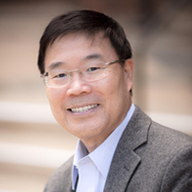
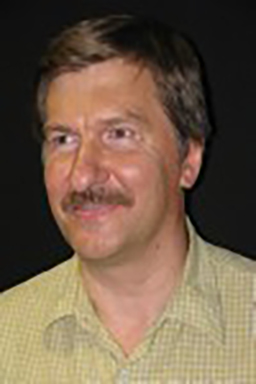
Fabian Fritz holds an M.Sc. degree and works at the Technical University of Munich (TUM) within the Chair of Aerodynamics and Fluid Mechanics . His research focuses on computational fluid dynamics (CFD) and numerical simulation of multiphase flows, particularly using Smoothed Particle Hydrodynamics (SPH) . He collaborates on projects like PBF-LB/M (additive manufacturing) and contributes to Lagrangian fluid mechanics benchmarking frameworks. Research Trends: His publications emphasize numerical methods (SPH, level-set, finite-volume), multiphase flow modeling , heat transfer , and thermoacoustic stability . Recent work includes hardware-agnostic code optimization and adaptive mesh refinement techniques. Education: Completed a master’s thesis on Diffusive-Interface Modeling of Multiphase Flows with Surface-Tension Effects , supervised by P.D. Dr.-Ing. habil. Stefan Adami.
Dr. Robert O’Connor is an Assistant Professor at the School of Physical Sciences, Dublin City University (DCU) , specializing in interface chemistry and thin film characterization. His work bridges semiconductor physics and energy harvesting technologies , with a focus on materials like high-κ dielectrics and III-V substrates. BSc in Applied Physics (2001), DCU PhD in Semiconductor Physics (2005), DCU His research employs X-ray photoelectron spectroscopy (XPS) and atomic layer deposition (ALD) to study material interfaces in devices such as MOSFETs and photoelectrochemical systems . He leads a 4-year SFI-funded project on solar water splitting for hydrogen fuel and collaborates with Trinity College Dublin (SPOKE project) and IMEC, Belgium on area-selective deposition techniques. His lab utilizes a state-of-the-art integrated ALD-XPS tool . His scientific awards include the Marie Curie Intra-European Fellowship , Irish Research Council EMBARK Fellowship , and SFI TIDA Award . Publications span high-κ dielectrics , self-assembled monolayers , and block copolymer lithography , with recent work on graphene oxide heterostructures and recyclability in additive manufacturing . He supervises 5 postgraduate students and teaches modules like Final Year Project (PS451) and Solid State Physics I (PS204) . Collaborations include institutions such as IMEC and Trinity College Dublin , with tools like the integrated ALD-XPS system at DCU.
Bart Somers is an Associate Professor at Eindhoven University of Technology , affiliated with the Department of Mechanical Engineering . His primary affiliations include the Power & Flow Group and his own research group, Group Somers , alongside cross-cutting roles in EAISI (Eindhoven Artificial Intelligence Systems Institute) and EIRES (Eindhoven Research on Innovation and Sustainability in Energy Systems). He focuses on advancing combustion science , sustainable fuels , and engine efficiency , leveraging computational fluid dynamics (CFD) and experimental methods. His research interests span alternative fuels (hydrogen, bio-oils, biofuels), high-pressure spray combustion , and low-emission engine design . He investigates combustion optimization through CFD tools like large-eddy simulation (LES) and flamelet-generated manifolds (FGM), emphasizing fuel stratification , ignition dynamics , and emission control . His work bridges experimental diagnostics (e.g., spray visualization, OH* chemiluminescence) and numerical modeling. Academically, he teaches courses such as Thermodynamics , Clean Engines and Future Fuels , and Sustainable Vehicles , integrating practical projects into curricula. His educational activities emphasize interdisciplinary sustainability and innovation, including honors programs focused on professional development. Recent publications highlight his contributions to hydrogen injection strategies, biofuel applications in genset engines, and optimization of diesel-biofuel blends. His work aligns with global sustainability goals, addressing energy transition challenges through advanced combustion technologies.
Anja Boisen is a Professor and Head of the Drug Delivery and Sensing Section at the Department of Health Technology, Technical University of Denmark (DTU). Her research focuses on advanced drug delivery systems, sensing technologies, and nanotechnology applications in biomedical engineering. She leads a multidisciplinary team developing innovative devices such as microcontainers, microneedles, and lab-on-a-disc platforms for targeted drug delivery and diagnostics. Her work contributes to UN Sustainable Development Goals, particularly in improving health and reducing inequalities. Key research areas include surface-enhanced Raman spectroscopy (SERS), microfabrication for medical devices, and biomaterials for tissue engineering. She has supervised multiple PhD students, including projects on oral drug delivery systems, gastrointestinal retention devices, and energy-harvesting materials for biomedical applications. Boisen’s team has pioneered technologies like self-unfolding foils for oral delivery and smart drug delivery microparticles. Their innovations aim to enhance therapeutic efficacy while minimizing side effects. She has been recognized with the Sensor Division Outstanding Achievement Award (2022) for her contributions to sensor technology. Her lab actively collaborates internationally, advancing applications in cancer therapy, antibiotic monitoring, and gut microbiota research. Current projects explore high-throughput 3D tumor modeling, SERS-based diagnostics, and biodegradable materials for bone fixation.
Professor Paul Midgley is a leading academic in Materials Science at the University of Cambridge's Department of Materials Science and Metallurgy, serving as Professor since 2007 and Head of Department from 2018–2020. He is a Fellow of Peterhouse College and holds multiple prestigious awards, including the Royal Society Fellowship and the Ernst Ruska Prize. Education: PhD in Physics (University of Bristol, 1991), MSc (Distinction) in Semiconductor Materials (1988), BSc (Hons) Physics (1987). Administration: Director of the Wolfson Electron Microscopy Suite, and active on various University committees including Research, Teaching, and REF. His research focuses on advanced electron microscopy techniques such as convergent beam diffraction, electron tomography, and nanostructure analysis, with applications in nanoscale materials science and 3D reconstruction using compressed sensing. He has pioneered methods like precession electron diffraction and multi-dimensional electron microscopy, contributing to fields like plasmonic nanoparticles and catalytic materials. Key Research Themes: Electron crystallography, nanomaterial characterization, energy materials, and defect analysis in perovskites. Midgley has delivered over 20 invited/plenary lectures globally, including at EUROMAT, the Welch Symposium, and the John Cowley Memorial Lecture. His grant income exceeds £16M as Principal Investigator. Labs/Teams: Leads the Wolfson Electron Microscopy Suite and collaborates internationally on microscopy advancements and materials innovation.
Dr. Joshua Brinkerhoff is an Associate Professor in Mechanical Engineering at the University of British Columbia Okanagan Campus. He serves as the Associate Director for Research & Industrial Partnerships in the School of Engineering and leads the UBC-Okanagan Computational Fluid Dynamics Laboratory. His research spans computational fluid dynamics, turbomachinery, multiphase flows, hydrogen safety, wind energy, and biofluid mechanics. He teaches courses in mechanics of materials, alternative energy systems, turbulence, computational fluid dynamics, and aircraft design. PhD, Aerospace Engineering (Carleton University, Ottawa, ON) BEng, Aerospace Engineering (Carleton University) Dr. Brinkerhoff’s research interests include: Computational Fluid Dynamics (CFD) for laminar-to-turbulent transition and instability analysis Wind energy systems and turbine aerodynamics Hydrogen storage and safety protocols for transportation Biofluid mechanics for respiratory diseases and aneurysm modeling Multiphase flows in industrial and environmental contexts His publications focus on CFD simulations for: Aerosol dispersion and mitigation in indoor environments Wind farm interactions and atmospheric gravity waves Cavitation and phase transitions in cryogenic and LNG systems Heat transfer optimization in industrial and thermal systems Instability dynamics in buoyancy-driven and swept flows Turbulent structures in fluidized beds and reactors Dr. Brinkerhoff has no listed scientific awards in the provided data but has extensive contributions to renewable energy, hydrogen safety, and medical fluid dynamics. His laboratory develops open-source tools like TOSCA for large-eddy simulations and investigates practical applications in urban air quality, dental aerosol control, and turbine wake modeling.
Cheuk Wai Tai is a Senior Staff Researcher at Stockholm University's Department of Environmental and Materials Chemistry since 2009. He manages the transmission electron microscopes and sample preparation equipment at the Electron Microscopy Center and serves as Section Editor for the Journal of Electronic Materials. His work focuses on quantitative structure characterization in functional materials research, particularly within nanoscience and nanotechnology contexts. Education: Ph.D. in Applied Physics, The Hong Kong Polytechnic University, 2004 M.Phil. in Applied Physics, The Hong Kong Polytechnic University, 2001 M.Sc. in Physics, The Chinese University of Hong Kong, 1998 B.Sc. (Hons) in Engineering Physics, The Hong Kong Polytechnic University, 1997 Dip. in Mechanical Engineering (Computer Aided Engineering), Institute of Vocational Education (formerly Haking Wong Technical Institute), Hong Kong, 1992 His research centers on structure-property relationships in functional materials through advanced electron microscopy techniques. Current specializations include Pair Distribution Function (ePDF) & Diffuse Scattering, Energy Materials characterization, and EM sample preparation methodology development. The group maintains strong focus on translating structural data into functional performance metrics for nanomaterials. Recent publications (2013-2019) demonstrate consistent emphasis on electron microscopy applications for energy storage materials (batteries, photocatalysts) and functional ceramics. Key trends include structural disorder analysis in piezoelectrics, development of quantitative TEM methods like SUePDF, and nanoscale characterization of electrocatalyst surface phases. His work bridges materials chemistry with advanced imaging techniques. Scientific recognition includes: Fellow of The Royal Microscopical Society (U.K.) Senior Member of IEEE Marie Curie Fellowship (2007-2009) from European Commission Sir Edward Youde Memorial Fellowship (2003/2004) from Hong Kong S.A.R. Government He teaches Solid State Chemistry (KZ7003) and leads Introduction to Analytical Electron Microscopy (KZ8009), having previously taught Advanced Transmission Electron Microscopy (KZ8010) before 2011. Major grants supporting his work include: "Quantitative structural characterisation using 3D electron-based pair distribution function" (Swedish Research Council) "A Multidimensional Toolkit for Modern Electron Microscopy" (Swedish Foundation for Strategic Research) "Mitigating Ni-rich Li-ion cathode side-reactions" (Swedish Energy Agency, Co-applicant) He leads the Cheuk-Wai Tai group within Stockholm University's chemistry department and oversees operations at the Electron Microscopy Center, where his team develops and applies advanced characterization techniques for functional materials research.
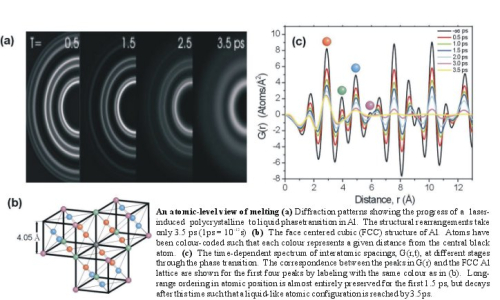
Bradley J. Siwick is an Associate Professor in the Department of Chemistry at McGill University, holding the Canada Research Chair in Ultrafast Science (Tier II). He specializes in developing ultrafast electron-based techniques to study atomic and molecular dynamics in materials and chemical systems. His work bridges chemical physics, materials science, and condensed matter physics, focusing on structural dynamics, phase transitions, and nonequilibrium states. Education: B.A.Sc. (Engineering Physics, University of Toronto, 1997), M.Sc. (Physics, 1998), Ph.D. (Physics, 2004). Postdoctoral training at FOM-AMOLF Amsterdam (2004–2006). Awards: NSERC Doctoral Prize (2005). Research interests include ultrafast electron diffraction/scattering, electron-phonon coupling, and imaging transient structural changes. Techniques developed in his lab combine electron microscopy with ultrafast laser spectroscopy to observe atomic motions on femtosecond timescales. Key areas of study are phase transitions in materials (e.g., VO₂, cuprates), nanocomposites, and extreme states of matter using facilities like the Advanced Laser Light Source (ALLS). Recent articles highlight advances in momentum-resolved phonon dynamics, polaron formation, and ultrafast imaging of 2D materials. His lab, based in Otto Maass and Rutherford buildings, collaborates on frontier projects in nonequilibrium materials science. Advising: Leads the Siwick Research Group, focusing on graduate students in chemical physics and materials science. Grants: Supported by NSERC and Canada Research Chairs funding. Labs and facilities: Otto Maass 25 laboratory and ALLS (Varennes, Quebec) for high-power laser experiments.
Joakim Odqvist is a Professor and Head of Department at the Structures unit within the Royal Institute of Technology (KTH). He specializes in materials science, with a focus on phase separation in alloys, nanostructure evolution, and the mechanical behavior of advanced materials. His research integrates experimental techniques like small-angle neutron scattering and atom probe tomography with computational modeling to study materials such as stainless steels, cemented carbides, and cast irons. Odqvist teaches courses in ceramic materials, material design, and materials structures, mentoring students at both undergraduate and graduate levels. His work addresses challenges in corrosion resistance, fatigue, and additive manufacturing, contributing to the development of high-performance materials for industrial applications. Research Interests: Phase separation mechanisms, spinodal decomposition in Fe-Cr alloys, nanostructure evolution in duplex stainless steels, diffusion kinetics, and the application of statistical models to hydrogen diffusion. His studies often bridge fundamental material science with practical engineering solutions, emphasizing predictive simulations and material design. Recent Articles: His publications focus on controlling nanostructures in super duplex steels, functional gradient carbides, and statistical models for hydrogen diffusion. Key themes include optimizing heat treatments to mitigate embrittlement, understanding precipitation kinetics in additively manufactured materials, and leveraging phase field modeling to predict material behavior. These studies highlight his role in advancing materials for harsh environments, such as aerospace and energy sectors.
Alberto G. Curto is an Assistant Professor at Eindhoven University of Technology, specializing in nanophotonics and semiconductor optoelectronics. He leads research on light-matter interactions at the nanoscale, focusing on atomically thin semiconductors and chiral nanophotonics applications. His work spans sensing, imaging, and spectroscopy, with contributions to directional light emission and chiral detection technologies. Education BSc in Physics, Universidad de Salamanca (2002–2007) MSc and PhD in Photonics, ICFO – The Institute of Photonic Sciences (2008–2013) Postdoctoral Fellow at Stanford University (2013–2016) Research Interests Curto’s research explores semiconductor nanophotonics for sensing and imaging, leveraging atomically thin materials and chiral optics. Key areas include: Enhanced light-matter interactions using nano-optical structures Chiral detection via dielectric resonators and metasurfaces Exciton dynamics in 2D semiconductors Publications His work emphasizes practical applications of nanophotonics, with recent studies on chiral sensing enhancement, silicon metasurfaces, and exciton manipulation. Over 47 peer-reviewed articles highlight his contributions to light confinement and directional emission. Awards ERC Starting Grant (2020) NWO START-UP Grant (2018) OSA Senior Member (2021) ICFO PhD Thesis Award (2014) Grants & Projects He leads the Zwaartekracht PSN Research Centre for Integrated Nanophotonics (2014–2025), focusing on nanowires, photonic crystals, and photonics applications. Labs & Teams His research group at TU Eindhoven develops novel nanophotonic devices and chiral sensing platforms, collaborating on projects like the ERC CHANSON grant.
Jian Peng is an Assistant Professor in the Department of Computer Science at the University of Illinois at Urbana-Champaign. His research focuses on computational biology, machine learning, and their applications to protein structure prediction, drug design, and molecular modeling. He has contributed to advancements in antibody engineering, protein-ligand docking, and generative models for biological systems. Key research areas include: Machine Learning for Molecular Modeling Protein Structure Prediction Antibody and Peptide Design Genomics and Single-Cell Analysis Structure-Based Drug Discovery His work emphasizes integrating deep learning techniques with biological datasets to address challenges in precision medicine, drug development, and systems biology. Notable achievements include developing the FastFold system to accelerate AlphaFold training and pioneering flow-based methods for antibody design. Awards include the Overton Prize (2020), recognizing contributions to computational biology. His research has been published in top journals and conferences, spanning topics from protein mutation prediction to geodesic-based immune complex modeling.
Cesare Franchini is a full Professor at the University of Vienna's Faculty of Physics, leading the Computational Materials Physics research group. His work focuses on theoretical understanding and computational modeling of quantum materials using first principles methods, particularly VASP. He maintains an active research program with numerous postdocs, PhD students, and collaborations across multiple institutions including the University of Bologna. Professor Franchini's research centers on quantum materials with many interacting degrees of freedom (lattice, spin, and electron orbital) that enable novel electronic and magnetic phases. His specific interests include metal-insulator transitions, polaron physics (electron-phonon interactions), non-collinear spin orderings, topological Dirac/Weyl phases, multiferroism, and superconductivity. He has increasingly incorporated machine learning data-driven tools and diagrammatic Monte Carlo techniques into his computational approaches. Analysis of his recent publications (2024-2025) reveals a strong focus on polaron physics across multiple material systems, with significant work on hematite, titanium dioxide, and quantum paraelectrics like KTaO3. His research increasingly integrates machine learning with traditional first-principles methods, particularly for studying hydrogen diffusion, surface science phenomena, and electronic structure calculations. There's also substantial work on single-atom catalysis and the application of advanced computational techniques to understand fundamental charge transport mechanisms in energy materials. Professor Franchini actively supervises numerous PhD students and postdocs, including Andrea Angeletti, Viktor Birschitzky, Lorenzo Celiberti, and several others working on diverse aspects of computational materials physics. He leads or participates in major research projects including TACO (Taming Complexity in Materials Modeling), DCAFM (Doctoral College Advanced Functional Materials), and the recently launched Spin-orbit entangled anharmonic polarons project. His group maintains strong collaborations with experimentalists at Charles University, Technical University of Vienna, and other international institutions.
Xiaoqing Pan is a Professor and Henry Samueli Endowed Chair in Engineering at the University of California, Irvine, with dual appointments in the Department of Materials Science and Engineering and the Department of Physics and Astronomy. He serves as Director of the Irvine Materials Research Institute (IMRI) and the Center for Complex and Active Materials (NSF MRSEC). A renowned electron microscopy expert, Pan has developed advanced transmission electron microscopy (TEM) techniques for atomic-scale material characterization. Ph.D., Universität des Saarlandes, Germany (1991) His research focuses on atomic-scale structure-property relationships in oxide heterostructures, ferroelectrics, nanocatalysts, and 2D functional materials. Pan leads development of novel 4D-STEM and momentum-resolved vibrational electron microscopy methods to study single-atom catalysts and complex oxides. With over 400 high-impact publications in Nature , Science , and Nature Materials , his work has been recognized by major fellowships and awards from the American Ceramic Society, American Physical Society, and National Science Foundation. Pan's recent work includes: Atomic-scale analysis of grain boundary phonon anisotropy Advances in FeSe/SrTiO 3 interface electron-phonon coupling Plastic waste upcycling through carbon intermediate interception Control of metal-support interactions in photocatalysts Strain engineering in high-entropy oxide films His laboratory at UCI represents the forefront of materials characterization technology development.
Dr. Yuri Rostovtsev is a Professor at the University of North Texas, specializing in quantum optics and atomic physics. He holds a Ph.D. from the Russian Academy of Sciences (1991). His office is located in GAB 525I and he can be contacted at (940) 565-3281. Research Interests: Dr. Rostovtsev's research focuses on quantum coherence phenomena, electromagnetically induced transparency, and matter-field interactions. His work spans theoretical and experimental investigations in quantum optics, including studies of quantum refraction, biophotons, and ultrafast processes in atomic and molecular systems. Recent Publications: His recent articles explore advanced quantum phenomena including single-photon interactions with atoms, quantum state engineering, plasmonic structures, and ultrafast dynamics in molecular systems. These publications demonstrate a consistent focus on quantum coherence effects and light-matter interactions at the quantum level. Scientific Awards: No awards mentioned in the provided text. Advising and Labs: No information available about students or research laboratories.
William A. Goddard, III is the Charles and Mary Ferkel Professor of Chemistry, Materials Science, and Applied Physics at the California Institute of Technology. With a career spanning over five decades, he has held positions from Noyes Research Fellow (1964–66) to his current professorship since 2001. His educational background includes a B.S. from UCLA (1960) and a Ph.D. from Caltech (1965). Quantum chemistry and first-principles simulations Multiscale modeling (QM→MD→mesoscale) Catalysis and protein structure prediction Nanotechnology and bionanotechnology Energy storage (batteries, supercapacitors) Recent publications emphasize applications in metal-organic frameworks , electrocatalysis , and space manufacturing , reflecting his interdisciplinary approach. His work on G-protein coupled receptors and Li-S batteries demonstrates methodological innovation through quantum mechanics and machine learning . Horizon Prize , Royal Society of Chemistry Over 1548 total publications (1967–2022) As Director of Caltech's Material and Process Simulation Center , he leads development of software like ReaxFF for reactive dynamics. He teaches Ch 120 ab (Nature of the Chemical Bond) and Ch 121 ab (Atomic-Level Simulations), emphasizing hands-on computational applications for experimentalists and theorists.