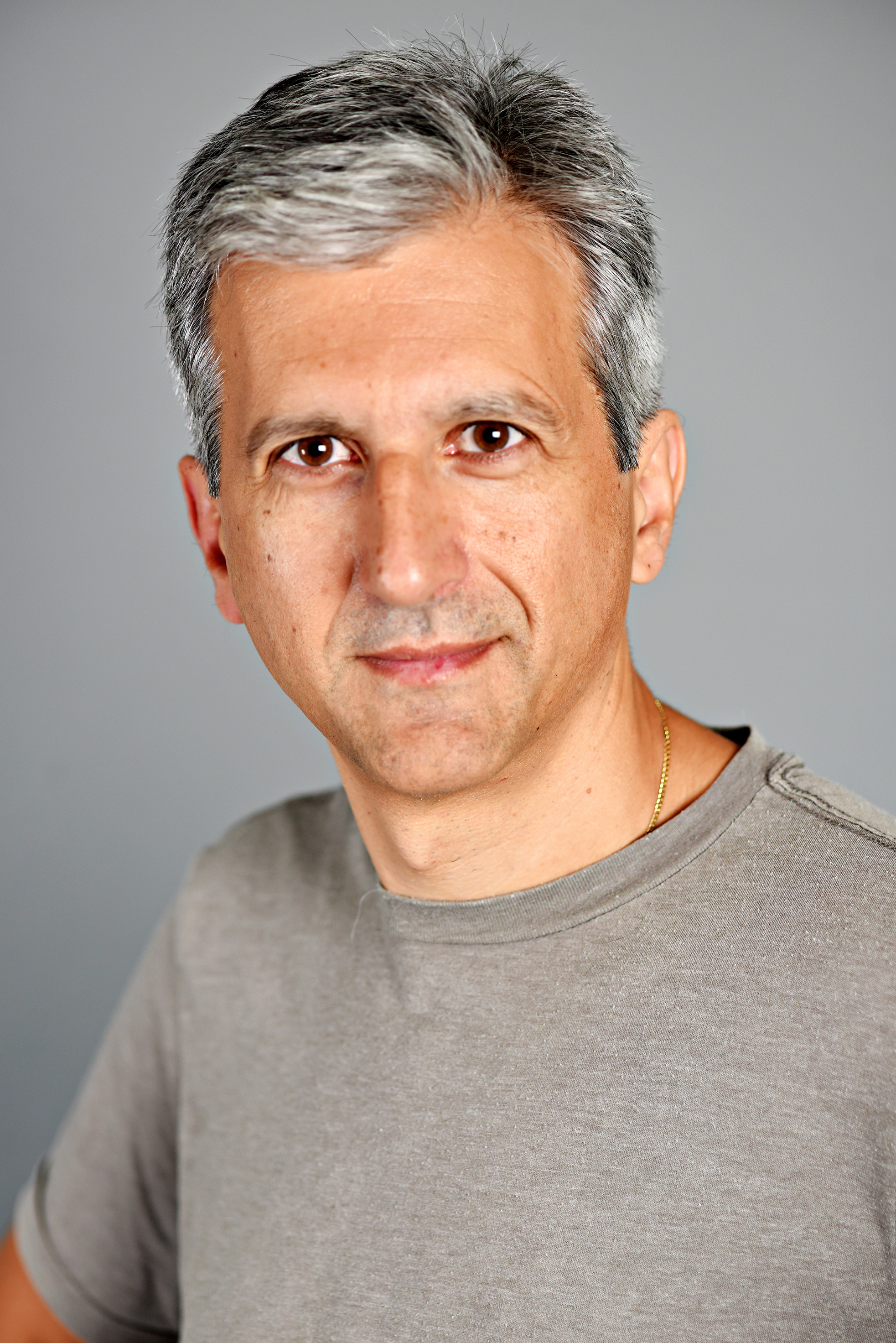
Kyros Kutulakos is a Professor in the Department of Computer Science at the University of Toronto, where he leads research in computational imaging and 3D sensing. His affiliations include the Toronto Computational Imaging Group, Computer Vision Group, Dynamic Graphics Project (DGP), and Vector Institute Group. He teaches graduate and undergraduate courses such as CSC320 (Introduction to Visual Computing) and CSC2530 (Computational Imaging & 3D Sensing). His research interests span computational imaging, non-line-of-sight imaging, single-photon detectors, 3D sensing, and neural rendering. Notable contributions include advancements in structured-light imaging, time-of-flight systems, and super-oscillatory microscopy. He has advised numerous PhD and MSc students, fostering cutting-edge research in imaging technologies. Kutulakos has received prestigious awards, including the Dean’s Research Excellence Award (2023) and multiple best paper prizes (e.g., Marr Prize at ICCV 2023). He has served as program chair for ICCV 2013, ICCP 2010, and CVPR 2003, contributing to academic leadership in computer vision. His work bridges optics, photonics, and computation, with applications in autonomous systems, medical imaging, and astronomy. Current research focuses on extreme imaging scenarios, such as imaging in pitch-black environments and around corners, leveraging novel sensor designs and computational techniques.
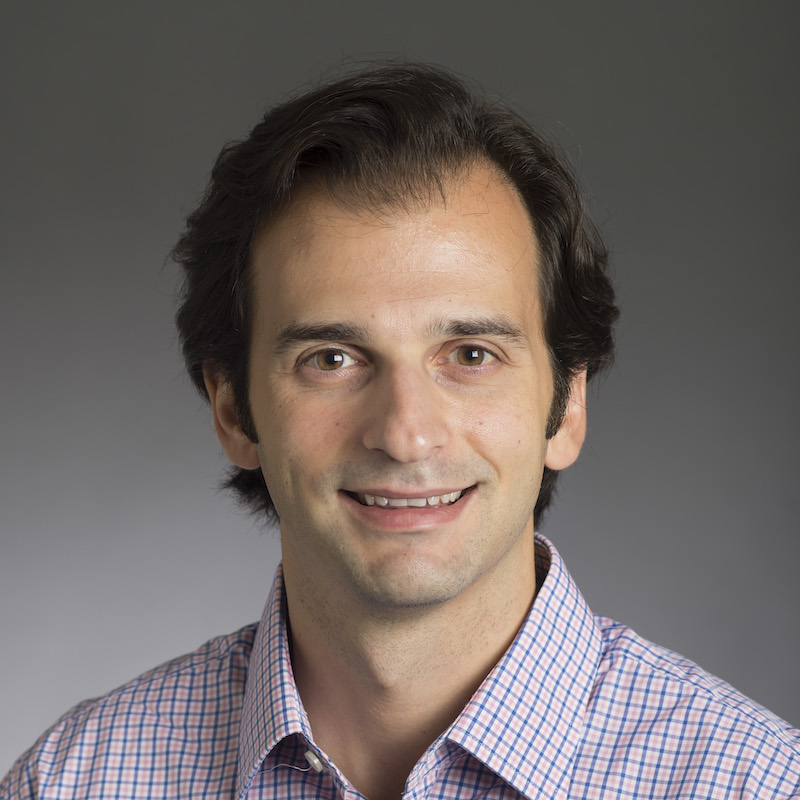
Maj Keith A. Wyman, PhD is a researcher affiliated with the Air Force Institute of Technology (AFIT), specializing in quantum optics and atmospheric photonics. His work focuses on photonic qubit propagation, atmospheric turbulence effects, and laser-based quantum technologies. He holds a PhD in Applied Physics from AFIT (2023), an M.S. in Applied Physics (2014), and dual B.S. degrees in Physics and Mathematics from the United States Air Force Academy (2012). Wyman’s research interests include developing atmospheric turbulence simulators, studying quantum communication protocols, and advancing laser technologies for free-space optical networks. His recent publications address photon pair indistinguishability, qubit degradation under turbulence, and sodium beacon systems for adaptive optics. He collaborates with institutions like Ohio State University’s Center for Quantum Information Science and Engineering. His academic contributions span conferences such as SPIE and FQMT, with a focus on experimental quantum systems and optical metrology. Wyman’s work bridges theoretical quantum mechanics with applied engineering solutions for military and civilian optical communication challenges.
Prof. Dr. Ana Bastos is a Research Professor and Group Leader at the Max Planck Institute for Biogeochemistry (MPI-BGC) in Germany, affiliated with Leipzig University's Institute for Earth System Science and Remote Sensing. She holds a PhD in Geophysical and Geoinformation Science (2015, U. Lisbon) and a BSc+MSc in Environment and Energy Engineering (2011, U. Lisbon). Her research bridges atmospheric science, ecology, and biogeochemistry to study carbon-cycle dynamics, climate extremes, and ecosystem disturbances. She leads major projects such as the ERC Starting Grant-funded ForExD initiative and contributes to global carbon cycle assessments like RECCAP-2. Key roles include membership in the World Climate Research Programme's Safe Landing Climates initiative and leadership in the ICOS-RI Drought Task Force. She has over 40 international conference presentations and organizes sessions at AGU and EGU meetings. Her awards include the EGU Outstanding Early Career Scientist Award (2022) and the Beutenberg Campus Award (2021). She actively mentors early-career researchers through PhD and postdoc programs focused on forest disturbance modeling and remote sensing applications.
Albert Presto is a Research Professor in the Department of Mechanical Engineering at Carnegie Mellon University with a courtesy appointment in Civil and Environmental Engineering. He serves as Director of the Center for Atmospheric Particle Studies (CAPS) and is a Faculty Affiliate at the Steinbrenner Institute for Environmental Education and Research. His work spans multiple interdisciplinary collaborations across environmental science, engineering, and public health domains. Department of Mechanical Engineering, College of Engineering Center for Atmospheric Particle Studies (CAPS) Steinbrenner Institute for Environmental Education and Research Africa Clean Air Network Advisory Council Health Effect Institute's Energy Review Committee Presto's research focuses on pollutant emissions from energy extraction and consumption and their subsequent atmospheric transformations. His work examines how gas and oil wells emit methane, how vehicles emit carbon monoxide and particulate matter, and how these pollutants undergo oxidation in the atmosphere to create secondary pollutants like ozone and secondary particulate matter. His approach combines ambient measurements, laboratory experiments, source testing of pollution sources, and atmospheric models to provide a holistic view of pollutant emissions and transformations. His recent publications reveal a strong emphasis on air quality monitoring technologies, particularly low-cost sensor networks deployed internationally. There's a clear trend toward studying air pollution in African cities (especially Nairobi, Kampala, and Addis Ababa), examining spatial and temporal variability of particulate matter, and investigating the health impacts of air pollution exposure. His work increasingly integrates machine learning approaches for pollution forecasting and leverages international collaborations to address global air quality challenges. Member of Africa Clean Air Network Advisory Council Collaborator with US embassies worldwide on air quality data collection Quoted in The Guardian on inequality of air pollution exposure, specifically noting how people of color are more likely to be exposed to harmful air pollution Collaborated on research regarding chemicals released during the Ohio train derailment Presto actively collaborates with medical professionals to develop neighborhood-by-neighborhood studies of pollutant exposure and to understand relationships between emissions and health effects like childhood asthma. His work includes investigating racial-ethnic exposure disparities to airborne pollutants and examining how proximity to pollution sources like fast-food restaurants affects pediatric asthma outcomes. He has received seed funding from the Scott Institute for Energy Innovation for research in clean hydrogen production, AI hardware efficiency, and decarbonizing transportation. As Director of CAPS, Presto leads a research team focused on atmospheric particle studies with applications ranging from local Pittsburgh air quality to global monitoring initiatives. His lab develops and deploys advanced air quality monitoring technologies, including low-cost sensor networks that have been implemented in multiple cities across Africa. The CAPS research group works at the intersection of environmental engineering, atmospheric science, and public health to address critical air quality challenges worldwide.
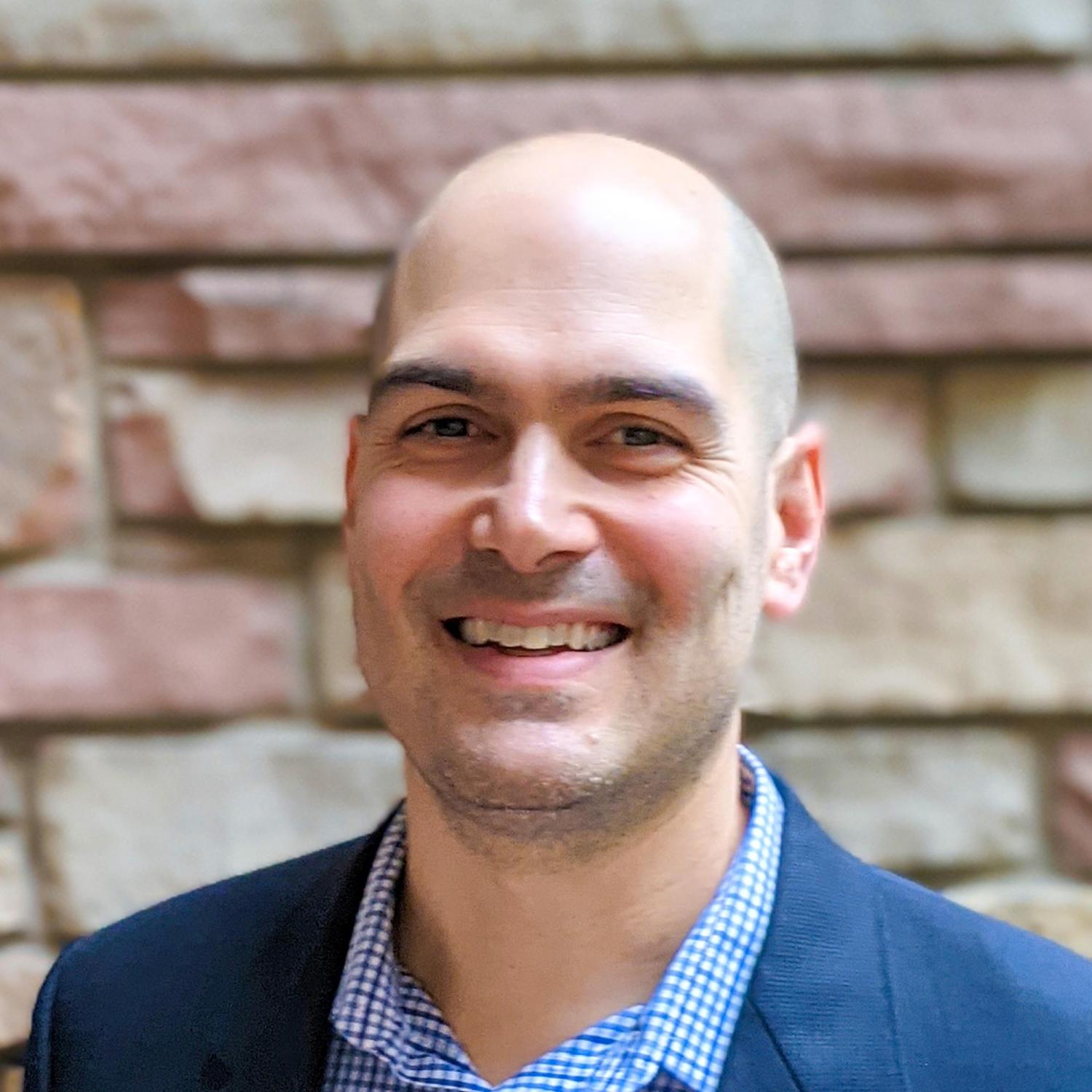
Ben Livneh is an Associate Professor at the University of Colorado Boulder , affiliated with both the Civil, Environmental, and Architectural Engineering Department and the Cooperative Institute for Research in Environmental Sciences (CIRES) . As Director of the Western Water Assessment , he bridges academic research with regional climate resilience initiatives. Ph.D. in Civil Engineering (Hydrology), University of Washington (2012) MESc in Civil Engineering, University of Western Ontario (2006) His research explores hydrologic responses to climate and land-cover changes , focusing on snowpack dynamics, wildfire impacts on water quality, sediment transport, and drought predictability. Key projects include simulations of montane snowpack for wolverine habitat preservation and post-fire landslide susceptibility analysis . Recent publications highlight continental-scale hydraulic geometry datasets , climate-energy nexus challenges , and global lake level reconstructions using satellite data. His work has been recognized by the AGU Hydrologic Sciences Early Career Award (2022) and NASA New Investigator Program (2018) . Scientific Awards AGU Hydrologic Sciences Early Career Award (2022) NASA New Investigator Award (2018) Symposium Scholar, DISCCRS VIII (2013) CIRES Visiting Fellowship (2012) Ben leads interdisciplinary collaborations with institutions like the University of Alaska Southeast and NOAA , addressing climate-water-energy-food nexus challenges through advanced modeling and remote sensing techniques.
Paul R Moorcroft is a Professor of Organismic and Evolutionary Biology at Harvard University and an Affiliate in the School of Engineering and Applied Sciences (SEAS). His research focuses on ecological dynamics of terrestrial plant communities, biosphere-atmosphere interactions, and mechanistic models of animal movement. He collaborates with institutions like NASA JPL on projects such as the ECOSTRESS mission, which investigates environmental processes using satellite data. His lab, the Moorcroft Lab, emphasizes fieldwork and interdisciplinary approaches, as seen in recent collaborations in Italy and Southeast Asia. Key research areas include tropical forest ecology, carbon cycling in peatlands, and the application of remote sensing technologies to environmental monitoring. His work bridges theoretical models with empirical data, addressing global challenges like climate change and biodiversity loss. Recent publications highlight contributions to quantifying carbon emissions from peatland drainage and improving satellite-based mapping of forest functional traits. His advising activities include mentoring graduate students like Rhemi Toth. Collaborations with NASA and academic partners underscore his role in advancing Earth systems science through interdisciplinary research.
John Paisley is an Associate Professor of Electrical Engineering at Columbia University's Fu Foundation School of Engineering and Applied Science, and a member of Columbia's Data Science Institute (DSI). He holds a B.S., M.S., and Ph.D. in Electrical and Computer Engineering from Duke University (2004-2010), followed by postdoctoral research in Computer Science at Princeton University and UC Berkeley. His research focuses on Bayesian models, posterior inference techniques for Big Data, and applications in data analysis, recommendation systems, information retrieval, and compressed sensing. He has pioneered methods like Bayesian Gaussian Process ODEs and Double Normalizing Flows, with recent work emphasizing uncertainty quantification in environmental modeling and neuroimaging analysis. His collaborative workflows (e.g., bneR ) address air pollution exposure and PM2.5 concentration uncertainties, combining Bayesian nonparametric ensembles with geospatial data. He has also developed frameworks for neural network interpretability, image denoising, and compressed sensing MRI. Paisley's work bridges statistical theory and applied machine learning, with applications in healthcare, environmental science, and geophysics. His academic contributions include over 50 publications since 2016, spanning topics like deep metric learning, adversarial learning, and variational inference optimization. He maintains an active research group and serves on editorial boards for machine learning and signal processing journals.
Steven Rogak is a Professor in the Department of Mechanical Engineering at the University of British Columbia's Faculty of Applied Science. He holds a P.Eng. license and degrees including a B.A.Sc. in Mechanical Engineering from UBC, and M.Sc. and Ph.D. from Caltech. P.Eng., University of British Columbia B.A.Sc., University of British Columbia M.Sc., Ph.D., California Institute of Technology His research focuses on aerosol science, particularly solid nanoparticles from combustion processes, their climate and health impacts, and mitigation strategies. Key areas include: Soot morphology and transport properties Engine emission reduction via fuel injectors Indoor air filtration systems Membrane-based energy exchangers Atmospheric particulate analysis The 15 most recent articles span experimental and theoretical studies on soot characterization, membrane technologies, and aerosol dynamics, with applications in climate modeling, healthcare ventilation, and sustainable materials. Collaborations include Westport Innovations and interdisciplinary teams. Rogak leads the Aerosol Laboratory at UBC, where he applies fluid mechanics and heat transfer fundamentals to address environmental and health challenges. He emphasizes experimental rigor and welcomes graduate students with expertise in these areas.
Gavin McNicol is an Assistant Professor in the Department of Earth and Environmental Sciences at the University of Illinois at Chicago (UIC). His research focuses on soil biogeochemistry and its connection to Earth’s climate system, particularly methane emissions from wetlands, temperate rainforests, and waste systems. He employs field measurements, laboratory experiments, and data science to study greenhouse gas dynamics across scales. McNicol teaches courses on data science (EAES 420) and climate-ecosystem interactions (EAES 579). His work integrates machine learning with satellite remote sensing to monitor global wetland methane emissions. Key collaborations include FLUXNET-CH4, CRMRCN, and the SOIL NGO in Haiti. McNicol holds a BS from the University of Stirling (2010) and a PhD from UC Berkeley (2016). Research interests span wetland methane budgets, carbon cycling in coastal ecosystems, and climate impacts of sanitation systems. He has secured grants from NASA, DOE, and NSF, totaling over $87,000. His team, the McNicol Lab, emphasizes interdisciplinary approaches combining fieldwork, lab analysis, and computational modeling. Recent publications (2023–2025) address global methane upscaling, tropical wetland monitoring gaps, and boreal-Arctic methane feedbacks. McNicol’s work bridges local measurements to global climate models, with applications in climate change mitigation and sustainable development.
Richard E. Turner is a Professor of Machine Learning at the University of Cambridge's Department of Engineering and Research Lead for AI for Weather Prediction at the Alan Turing Institute. He serves as Cambridge Lead for the EPSRC Probabilistic AI Hub and previously held roles including Visiting Researcher at Microsoft Research, Co-Director of the AI4ER CDT, and Course Director for the Machine Learning and Machine Intelligence MPhil program. Current research focuses on probabilistic machine learning fundamentals, environmental prediction (weather/climate), and spatio-temporal modeling combining deep learning with Bayesian methods Supervised 26 PhD students (13 graduated) and 7 research assistants/associates Secured over £30M in research funding from EPSRC, Microsoft, Toyota, Google, DeepMind, Amazon, and Improbable Featured in BBC Radio 5 Live's The Naked Scientist, BBC World Service's Click, and Wired Magazine His recent publications demonstrate expertise in diffusion models for PDE simulations, Gaussian Processes for environmental applications, and Bayesian methods for spatio-temporal forecasting. Key trends include climate modeling using ML, neural PDE solvers, and scalable probabilistic inference. Awards : Cambridge Students' Union Teaching Award for Lecturing; supervised Qualcomm Innovation Fellowship winner Collaborations : Microsoft Research (AI4Science), Alan Turing Institute, EPSRC Probabilistic AI Hub Turner leads the Turner Group within Cambridge's Machine Learning Group, focusing on uncertainty-aware ML for scientific applications. Current research assistants work on topics like meta-learning, Bayesian inference, and climate science applications.
Professor Ana Mijic is a leading academic in water systems integration at Imperial College London's Department of Civil and Environmental Engineering (Faculty of Engineering). Her work focuses on developing systems tools to balance economic growth with sustainable water use, flood management, and water quality under future uncertainties. She leads high-profile projects like the EPSRC VENTURA initiative and the NERC CAMELLIA impact programme, emphasizing adaptive planning and grey/green infrastructure integration in urban systems. Education: BEng (First Class) in Civil Engineering from the University of Belgrade (Serbia), MSc (Distinction) in Hydrology for Environmental Management, and PhD in Earth Science & Engineering from Imperial College London (2013). Previously served as a teaching assistant in Fluid Mechanics and Hydrometry at Belgrade University. Research interests include whole-water system modelling, socio-hydrological interactions, and nature-based solutions for resilient urban water systems. Her work bridges academia and practice through partnerships with regulators like the UK Environment Agency and global initiatives like the IAHS HELPING programme. Awards include the Satish Dhawan Visiting Chair Professorship (2022) and the 2019 Imperial President’s Award for Excellence in Research (as part of her Hydrology team). She co-leads Imperial’s Transition to Zero Pollution (TZP) Urban Ecosystems theme and serves on editorial boards for journals like Water Security . Her contributions span over 50 peer-reviewed articles (2020–2025), focusing on integrated water management frameworks, AI-driven monitoring, and systemic approaches to urban resilience. She advocates for participatory decision-making and policy coherence in water governance.
Veronika Eyring serves as Head of the Earth System Model Evaluation and Analysis Department at the German Aerospace Center (DLR) Institute of Atmospheric Physics and Professor of Climate Modelling at the University of Bremen. She holds dual appointments at these leading institutions, directing cutting-edge research at the intersection of climate science and artificial intelligence. Education: 2008: Habilitation in Environmental Physics at the University of Bremen 1999: PhD in Physics from the University of Bremen 1994: Diploma in Physics from the University of Erlangen Professor Eyring's research program focuses on improving climate models and projections through innovative integration of machine learning techniques and spaceborne Earth observations. Her work spans process-oriented modeling, development of observationally-based performance metrics, and understanding systematic biases in climate models. She has pioneered approaches to weighting model projections based on their performance using machine learning, significantly advancing the field of climate model evaluation. Her research has critical applications across multiple sectors including aeronautics, space research, transportation, and energy systems. Analysis of her recent publications reveals a clear trajectory toward deeper integration of machine learning with traditional climate modeling approaches. Her work has increasingly focused on developing community tools like the Earth System Model Evaluation Tool (ESMValTool) and leading major international initiatives such as the USMILE project (Understanding and Modelling the Earth System with Machine Learning). The publications span climate science, machine learning, Earth system modeling, and remote sensing, with specific emphasis on climate model evaluation, parameterization techniques, and improved climate projections. Scientific Awards: AGU Ambassador Award (2024) TUM Distinguished Affiliated Professor (2024) Gottfried Wilhelm Leibniz Prize (2021) ERC Synergy Grant (2019) Thomson Reuters Highly Cited Researcher (2016-2021) Top female researchers award, Helmholtz-Society (2015) Professor Eyring actively supervises a large research group comprising PhD students working on ML-based sea ice parameterizations, causal model evaluation for air-sea interactions, and machine learning-based detection of droughts in climate projections. She leads the prestigious ERC Synergy Grant USMILE and secured significant funding through the DFG Gottfried Wilhelm Leibniz Prize. Her research group at DLR includes multiple postdocs, research scientists, and software engineers working collaboratively on climate informatics projects. Professor Eyring leads the Earth System Model Evaluation and Analysis Department at DLR, which encompasses research groups focused on CMIP model evaluation, ESMValTool development, and machine learning applications in climate science. She founded and supervises the 'Climate Informatics' Group at the DLR Institute for Data Science in Jena. Her department maintains strong international collaborations, particularly with the National Center for Atmospheric Research (NCAR) in Boulder, Colorado, where she serves as an Affiliate Scientist.
Swiss Federal Institute of Technology in LausanneSwitzerland
Farhad Rachidi-Haeri is a Titular Professor and Head of the Electromagnetic Compatibility (EMC) Group at EPFL. His expertise spans EMC research, lightning electromagnetics, time reversal techniques, and fault location in power systems. He has led the EMC Group since the 1980s, with funding from the Swiss National Science Foundation, European Union, and private sector collaborations. His work involves international partnerships with institutions like the University of Toronto and KTH. Education: PhD in Electrical Engineering from EPFL (1991), M.S. from EPFL (1986). Roles: President of Swiss National Committee of URSI (2012–2020), Editor-in-Chief of IEEE Transactions on EMC (2013–2015), and member of the Academy of Sciences of Bologna Institute (2019). Research Focus: Lightning interaction with infrastructure, electromagnetic field modeling, time reversal applications for fault detection, and high-frequency transient analysis. His work bridges theoretical physics and engineering, addressing challenges in power systems, lightning protection, and aerospace. Awards: IEEE EMC Technical Achievement Award (2005), Berger Award (2016), and Distinguished Honorary Professor at Tsinghua University (2024). Over 400 peer-reviewed papers and 500 conference contributions reflect his prolific research output. Labs/Teams: Leads the EMC Laboratory at EPFL, focusing on experimental and numerical studies of electromagnetic phenomena. Collaborates with global networks on projects like Laser Lightning Control and structural lightning protection for wind turbines.
Roles & Affiliations: Daniel J. Jacob is the Vasco McCoy Family Professor of Atmospheric Chemistry and Environmental Engineering at Harvard University. He leads the Atmospheric Chemistry Modeling Group at the Harvard John A. Paulson School of Engineering and Applied Sciences, part of the Department of Earth and Planetary Sciences. He has held academic ranks including Gordon McKay Professor (1994-2004) and Associate/Assistant Professor (1991-1994), and was a postdoc at Harvard (1985-1987). Education: Ph.D. in Environmental Engineering Science from Caltech (1985), Ingenieur Chimiste from École Supérieure de Physique et Chimie Industrielles (1981), and earlier studies at Lycee du Parc (Lyon). Research Interests: Jacob's work focuses on atmospheric chemistry, climate modeling, and air quality. Key areas include methane emissions, tropospheric ozone, satellite remote sensing, and global biogeochemical cycles. His research integrates field campaigns (e.g., SEAC4RS, ARCTAS) and chemical transport models (GEOS-Chem) to address environmental challenges like pollution and climate change. Publications & Awards: Jacob has authored over 550 peer-reviewed publications, with an H-index of 145 (ISI) and 184 (Google Scholar). Notable awards include the Haagen-Smit Prize (2010), Macelwane Medal (1994), and recognition for teaching and climate science leadership. His work on methane emissions and air quality has been featured in Nature , Science , and AGU journals. Grants & Advising: Jacob advises numerous PhD students and postdocs, many of whom hold academic or research roles globally. He leads international initiatives like the Carbon Mapper project and chairs committees for NASA and the National Academies. His grants support studies on methane detection, aerosol chemistry, and climate policy. Labs & Collaborations: The Atmospheric Chemistry Modeling Group collaborates with NASA, NOAA, and institutions worldwide. Key projects include the GEOS-Chem model, TROPOMI satellite inversion analyses, and the Integrated Methane Inversion (IMI) tool for emissions monitoring.
Amir AghaKouchak is a Chancellor’s Professor in the Department of Civil and Environmental Engineering at the Samueli School of Engineering, University of California, Irvine (UCI). He directs the Center for Hydrometeorology and Remote Sensing (CHRS) and focuses on interdisciplinary research at the intersection of hydrology, climatology, statistics, and remote sensing. B.Sc. and M.Sc. in Civil Engineering (Water Resources), K.N. Toosi University of Technology, Tehran, Iran (2001, 2005) Ph.D. in Civil and Environmental Engineering, University of Stuttgart, Germany (2010) His research aims to leverage satellite data and ground observations to advance modeling of hydrologic extremes (droughts, floods, landslides) and develop decision-support systems for water resources management. Key areas include climate change impacts , stochastic modeling , and the water-energy nexus . Recent publications highlight his work on multi-hazard analysis, groundwater decline, wildfire resilience, and climate projections. Tools like MhAST and MvCAT demonstrate his methodological contributions to copula-based and multi-hazard modeling.