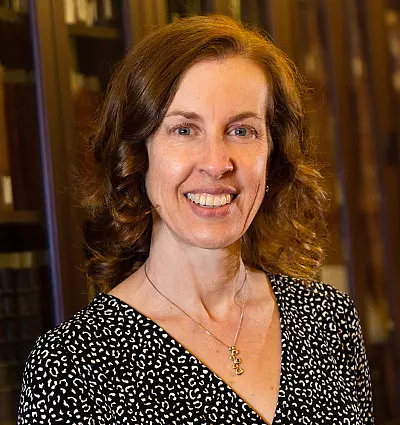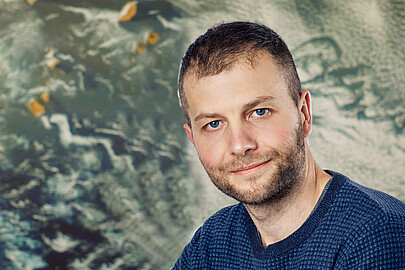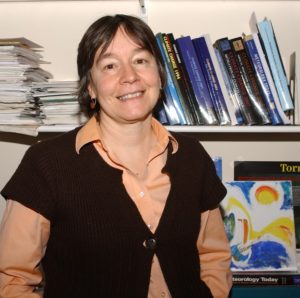
Gabriele Clarissa Hegerl is a distinguished Professor of Climate Science at the University of Edinburgh, where she conducts pioneering research on climate change detection and attribution. Her academic journey spans multiple prestigious institutions including the Max Planck Institute for Meteorology, University of Washington, Texas A&M, and Duke University. Dr. Hegerl's research focuses on understanding the causes of climate change from recent periods to the last millennium, with particular expertise in climate extremes including heat waves and compound extremes. She has made significant contributions to understanding volcanic impacts on historical climate patterns, detection of greenhouse warming signals, and the relationship between global warming and precipitation patterns. Her work bridges complex climate modeling with empirical evidence to constrain future climate projections. Analysis of her recent publications reveals a consistent focus on historical climate reconstruction, volcanic forcing impacts, and extreme event attribution. Her research demonstrates how climate models can be used to understand historical climate variability while highlighting limitations in simulating certain extreme events without accounting for land surface changes. The interdisciplinary nature of her work combines traditional climate science with emerging machine learning approaches. Fellow of the Royal Society Fellow of the Leopoldina Fellow of the Royal Society of Edinburgh Fellow of the American Geophysical Union Fellow of the American Meteorological Society Royal Society Wolfson Merit Award Hans Sigrist Prize of the University of Bern (2016) Dr. Hegerl has successfully secured and led multiple major research grants including the European Advanced Grant 'Transition into the Anthropocene (TITAN)' (2013-2019), and currently co-leads the World Climate Research Programme's 'safe landing climates' initiative. She supervises numerous PhD students working on cutting-edge climate research topics ranging from machine learning applications to volcanic impacts on climate. Following the death of her husband Tom Crowley in 2014, she reduced to 80% time to care for her children while maintaining an active research profile and significant contributions to the IPCC. She is actively involved with the World Climate Research Programme and serves on the steering group of the International Detection and Attribution Group, which she previously led as PI until 2010. Her collaborative approach has fostered international research teams working on projects including GloSAT, SECO, Imiracli, and the NERC large grant Huracan.