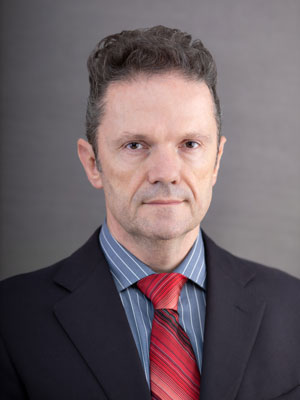
Jason Ritt is an Associate Professor of Brain Science (Research) and Scientific Director of Quantitative Neuroscience at the Robert J. and Nancy D. Carney Institute for Brain Science, Brown University. He holds affiliations with the Data Science Institute and collaborates across disciplines on quantitative research methods. Education : B.S., M.A., and Ph.D. in Neuroscience from Boston University (1997–2003). Research : Focuses on neural processing during active sensing and neuroengineering for neurostimulation. Combines electrophysiology, optogenetics, and theoretical approaches in rodent models. Develops closed-loop systems for studying sensory neural prosthetics and brain-machine interfaces. Key areas include synaptic diversity, neurocontrol algorithms, and sensory restoration. Teaching : Instructs NEUR 2100 NeuroPracticum, integrating hands-on neuroscience research training.
Tim Huh is a Professor and Chair of the Operations and Logistics Division at the University of British Columbia's Faculty of Commerce and Business Administration. He specializes in inventory control, supply chain management, and operations research, with a focus on dynamic decision-making under uncertainty. B.A., B.Math, M.Math from University of Waterloo M.A. from Regent College M.S., Ph.D. from Cornell University His research spans theoretical and applied topics including renewable energy systems, healthcare operations, and digital learning analytics. Recent work explores wind power storage optimization, asynchronous video usage in education, and multi-echelon inventory solutions. Scientific recognition includes the Canada Research Chair in Operations Excellence and Business Analytics He teaches core business analytics and operations management courses at both undergraduate and graduate levels, emphasizing quantitative decision-making and process fundamentals.
Joseph A. Campbell is an Assistant Professor in the Department of Computer Science at Purdue University, leading the Collaborative AI for Machines and People (CAMP) Lab. He holds a Ph.D., M.S., and B.S. in Computer Science and Computer Engineering from Arizona State University. Before academia, he worked as a software engineer for five years. Prior to Purdue, he was a Postdoctoral Fellow at Carnegie Mellon University's Robotics Institute. His research focuses on explainable machine learning and robotics, particularly how agents use explanations for self-improvement and decision-making. Key areas include theory of mind in multi-agent systems, lifelong learning, and interpretable transfer learning. His work bridges robotics and AI, with applications in human-robot interaction and prosthetic control. Notable publications include advancements in reinforcement learning with language models, multi-agent collaboration frameworks, and methods for enhancing state estimation in robots. His research has been presented at top conferences like NeurIPS, EMNLP, and CoRL. Dr. Campbell maintains an active GitHub profile (joe-campbell) with repositories such as Interaction Primitives for robotics applications. His lab, CAMP, explores AI systems that collaborate effectively with humans and other machines.
Dr. Reba Wissner is an Associate Professor of Musicology at the Schwob School of Music, Columbus State University, where she also serves as Interim Associate Dean in the Honors College. She specializes in film, television, and video game music, with a strong commitment to pedagogy and accessibility in higher education. Education: PhD, Musicology, Brandeis University, 2012 MFA, Musicology, Brandeis University, 2008 BA, Music and Italian, Hunter College, CUNY, 2005 Graduate Certificate, Higher Education Administration, Northeastern University, 2019 Graduate Certificate, Instructional Design, University of Wisconsin - Stout, 2020 Levels 1, 2, and 3 UDL Credentials, UDL-IRN Quality Matters Certified Peer Reviewer and Master Reviewer Dr. Wissner’s research centers on music in screen media, particularly Cold War-era television, and the intersection of music with cultural narratives. She is a leading voice in public musicology and Universal Design for Learning (UDL), advocating for inclusive and accessible music education. Her work spans historical analysis, pedagogical innovation, and interdisciplinary media studies. Her recent publications reflect a consistent focus on sonic storytelling, with books on The Twilight Zone , The Outer Limits , David Lynch, and Twin Peaks . She explores themes of nuclear anxiety, identity, and adaptation across media. Her editorial projects include the Oxford Handbook of Public Musicology and a guide on UDL in music history classrooms. Scientific Awards and Recognitions: Scholarship of Teaching and Learning Award, Columbus State University, 2022 Governor’s Teaching Fellow, Louise McBee Institute of Higher Education, 2022 Quality Matters Certified Peer Reviewer and Master Reviewer UDL Levels 1–3 Credentials Dr. Wissner has secured editorial contracts with Routledge and Oxford University Press, reflecting her leadership in the field. She mentors emerging scholars through collaborative editing and public scholarship initiatives. Her work in online learning and accessibility has shaped curriculum development and peer review standards. She leads the Public Musicology Certificate program and contributes to interdisciplinary studies and honors education. She is actively involved in research teams focused on media music and pedagogical innovation, integrating digital tools and inclusive design into music history education.
Dongwook Yoon is an Associate Professor at the Department of Computer Science , University of British Columbia , and serves as Director of the SOCIUS Lab . He actively contributes to research in Human-Computer Interaction, Human-AI Interaction, and Virtual/Augmented Reality as a member of the Designing for People (DFP) and CAIDA research clusters. Education : PhD in Computer Science from Cornell University (2017), MS (2009) and BS (2007) in Computer Science from Seoul National University Research Focus : Designing socio-technical systems that bridge the gap between technology and human social processes, with innovations in AR/VR, multimodal interaction, and inclusive design Article Trends show his work spans: Temporal and bichronous learning environments AI self-clones and ethical implications Income inequality in virtual platforms Enhanced multimodal collaboration in VR Eyes-reduced interfaces for situational impairments Speculative participatory design for gig economy challenges Scientific Awards include: Google Academic Research Award (2024) Best Paper Award at CHI 2024 High Impact Award in Educational Technology (2024) CHCCS/SCDHM Graphics Interface Early Career Award (2023) Multiple Honorable Mentions at CHI, DIS, and CSCW Students & Collaborators range from active PhD candidates (Anika Sayara, Yuri Kim) to notable alumni (Thitaree Tanprasert, Ashish Chopra) across his SOCIUS Lab projects. His research receives funding from NSERC , KIST , Adobe , Microsoft , and Google grants.
Jeff Offutt is a Professor and Chair of the Department of Computer Science at the University at Albany, College of Nanotechnology, Software, & Engineering. Previously, he was a Full Professor with Tenure in Software Engineering at George Mason University since 2005. He received his PhD in Information & Computer Science from the Georgia Institute of Technology in 1988. His research spans software testing, mutation testing, model-based testing, automatic test data generation, web application testing, and software engineering education. He has led significant projects such as the NSF-funded integration of CS into K-5 classrooms and the Google-funded SPARC project for scalable CS1/CS2 instruction. The 15 most recent articles reflect a continued focus on mutation testing cost reduction, model-based testing oracles, educational innovations, and security aspects of web applications. Trends include empirical validation, industrial applicability, and bridging theory with practice in software testing and engineering education. John Toups Presidential Medal for Excellence in Teaching (2020) George Mason University’s Alumni Association Faculty Member of the Year (2020) Outstanding Faculty Award from the State Council of Higher Education for Virginia (2019) Best Paper Award at ICST 2021 10-Year Most Influential Paper Award at MODELS 2020 George Mason University Teaching Excellence Award (2013) ACM Notable Article Award (2013) Jeff Offutt has mentored numerous graduate students including Upsorn Praphamontripong, Nan Li, and Yu-Seung Ma, and has led major grant-funded projects such as the SPARC educational model and NSF initiatives on K-5 CS integration. His textbook Introduction to Software Testing (with Paul Ammann) is widely adopted globally. He led the MS in Software Engineering program at GMU and developed several new courses in software testing, web engineering, and usability. He pioneered innovative teaching methods using web technologies and asynchronous learning models. He also co-founded the IEEE International Conference on Software Testing, Verification and Validation (ICST) and served as Editor-in-Chief of Software Testing, Verification and Reliability from 2007 to 2019.
Chang Hyun Park is an Assistant Professor at the Department of Information Technology, Uppsala University, where he is part of the Uppsala Architecture Research Team. His research focuses on computer architecture with emphasis on memory systems, virtualization, and system software optimization. Dr. Park completed his doctoral studies at KAIST (Korea Advanced Institute of Science and Technology) in South Korea, where he was advised by Professor Jaehyuk Huh. Prior to his current position, he served as a post-doctoral researcher at Uppsala University working with Professor David Black-Schaffer. Dr. Park's research spans several critical areas in computer architecture and systems: Virtual memory systems and address translation mechanisms Cache hierarchy optimization and memory systems design Support for non-volatile memory and heterogeneous memory systems Virtualization technology and optimizations for cloud environments High-speed I/O device integration and accelerator support His publication record demonstrates a consistent focus on improving memory system performance, particularly in virtualized environments. Over the past decade, his work has evolved from fundamental virtual memory optimizations to addressing challenges in emerging memory technologies and large-scale system architectures. Recent publications show increasing emphasis on heterogeneous memory systems, graph processing workloads, and hardware-software co-design approaches. Dr. Park actively collaborates with researchers at Uppsala University, particularly with Professor David Black-Schaffer, and maintains connections with his alma mater KAIST. His work appears regularly in top-tier computer architecture conferences including ISCA, MICRO, ASPLOS, and MEMSYS.
Neelakantan R. Krishnaswami is a Professor of Computer Science at the University of Cambridge's Computer Laboratory , and a Fellow of Trinity College . His research focuses on the intersection of program verification, programming language design, and foundational topics like type theory and semantics. His work spans areas such as refinement types, parser design, separation logic for systems software, and the semantics of reactive programming. Notable contributions include the Datafun language for higher-order Datalog and the λert type theory for explicit refinement types. He has also developed foundational frameworks for verifying imperative programs using advanced type systems and logical relations. Key publications include 'Explicit Refinement Types' (ICFP 2023), 'flap: A Deterministic Parser with Fused Lexing' (PLDI 2023), and 'CN: Verifying Systems C Code' (POPL 2023). His work frequently addresses challenges in efficiency, correctness, and modularity for both functional and imperative systems. His awards include Distinguished Paper Awards at PLDI 2019 and POPL 2020. His research integrates theoretical rigor with practical tooling, exemplified by contributions to languages like Coq, Lean, and Haskell.
Dr. Geoffrey L. Herman serves as the Severns Teaching Professor in the School of Computing and Data Science at the University of Illinois at Urbana-Champaign. He earned his Ph.D. in Electrical and Computer Engineering from UIUC as a Mavis Future Faculty Fellow and completed postdoctoral research at Purdue University's School of Engineering Education. His research focuses on understanding how students learn engineering and computing concepts and developing systemic approaches to improve teaching methods in higher education. With over $7 million in research funding and more than 120 peer-reviewed publications, his work spans educational technology, cognitive aspects of learning, and faculty development initiatives. His recent publications demonstrate a consistent focus on evidence-based instructional practices, assessment methodologies, and collaborative learning approaches, with particular emphasis on computer science education, proof writing tools like Proof Blocks, and mastery learning techniques. These works collectively advance the understanding of effective educational strategies in STEM fields. IEEE Education Society Mac Van Valkenburg Early Career Teaching Award Scott H. Fisher Computer Science Teaching Award Best paper award in the first 50 years of the ACM Special Interest Group, Computer Science Education As a mentor, Dr. Herman guides graduate students interested in engineering and computing education research, focusing on designing better instruction. He also works with undergraduates on improving educational experiences through platforms like PrairieLearn. His leadership extends to founding the Grainger College of Engineering's Strategic Instructional Innovations Program, which has secured millions in external funding. He serves on the Computer Research Association Education committee and as associate editor for the Journal of Engineering Education. Dr. Herman leads national workshops on professional development for computer science teaching faculty and has created peer mentoring networks through the Teaching Professionals Program, significantly impacting faculty development in engineering education.
Zoran Budimlić is an Instructional Associate Professor in the Department of Computer Science and Engineering at Texas A&M University. He also serves as Director of Undergraduate Studies for Galveston. His roles include teaching and academic leadership in computer science education and high-performance computing. He holds a Ph.D. in Computer Science from Rice University (2001) and a B.S. in Computer Science and Engineering from the University of Belgrade (1994). His research interests focus on high-performance and parallel computing, compiler optimizations, programming languages, runtime systems, and high-level programming models. He emphasizes improving educational practices in computer science through innovative methods and curricula. His recent publications span parallel algorithms, task parallelism integration with MPI, and compiler optimizations for performance. Earlier work includes contributions to Java runtime optimization and static analysis techniques. Zoran Budimlić has no explicitly listed scientific awards or grants in the provided text, but his contributions to parallel computing and compiler design are notable. He advises students in these areas but no names are provided in the text.
Sophie Othman is a Lecturer at the University of Franche-Comté, affiliated with the Centre de Linguistique Appliquée (CLA) and the DEFLET department. She is actively engaged in research and teaching in language didactics, digital education, and innovative pedagogical practices. Her work spans multiple roles in research coordination, program leadership, and international academic collaboration. Research Interests: Her primary research areas include digital technology in language teaching and learning, design of online and distance learning environments, digital engineering in education, pedagogical innovation, comodal and hybrid training models, MOOCs, e-portfolios, and teacher training in ICT. She explores how digital tools transform language education, especially in multilingual and multicultural contexts. The recent scholarly output shows a consistent focus on post-pandemic educational transformation, AI integration in learning systems, and the design of flexible pedagogical scenarios. Her publications appear in journals such as ALSIC and in international conference proceedings, reflecting a strong engagement with digital pedagogy and language education innovation. Leadership and Service: Vice-President, Scientific and Pedagogical Commission, CLA – University of Franche-Comté (2021–present) Co-Responsible, TIPED Research Program, ELLIADD (2017–present) Scientific Coordinator, Innov'FLE Thematic Thursdays (2022–present) Former Coordinator, Master 2 FLE 'Political and Digital Environments' and FLE Track at CTU Besançon (2018–2020) Scientific Committee Member for international conferences (e.g., ADCUEFE, CEDIL, UBEST, EIAH) Expert reviewer for language didactics journals and collective works International trainer for the French Ministry and OIF in over 15 countries Projects and Grants: #ApproprIA: AI Appropriation in Education (2025–...) UNPEAA: Digital Use by Allophone Adults (2024–...) Innov'FLE: Innovation in FLE Teaching (2022–...) HUMANE: Digital Humanities for Education (2019–2022) ANR-IDEFI Innovalangues (2013–2016) Advising and Grants: While no formal students are listed, she has supervised research teams and mentored junior researchers through collaborative projects and editorial roles. She has secured national and international funding, notably through the ANR-IDEFI program, and contributes to large-scale educational initiatives supported by governmental and Francophone institutions. Labs and Teams: She is affiliated with the ELLIADD research laboratory (University of Franche-Comté) and was previously associated with LIDILEM (Université Grenoble Alpes). She leads and participates in interdisciplinary research groups focused on digital language education, teacher training, and innovation in didactics.
Jennifer Richards serves as a Research Assistant Professor at Northwestern University's School of Education and Social Policy, Evanston, IL. Her work bridges science education research and K-12 classroom practice through research-practice partnerships focused on teacher learning and responsive pedagogy. Her educational background includes: PhD in Science Education, University of Maryland (2013) MEd in Secondary Science Education, University of Maryland (2008) BA in Biology and Political Science, University of Delaware (2006) Richards' research examines responsive learning environments that center students' ideas and experiences, alongside teacher practice dynamics across contexts. She employs discourse analysis and situative perspectives to investigate how teachers develop responsiveness to student thinking, particularly in science education settings. Her collaborative approach involves co-designing professional learning with educators to foster equitable classroom practices. Analysis of her 2020-2025 publications reveals consistent focus on teacher noticing, video-based professional development, and responsiveness mechanisms. Key trends include developing tools for analyzing classroom discourse (e.g., framing analysis lite), examining aesthetic dimensions of teaching, and exploring how teachers learn from self-captured classroom videos across mathematics and science contexts. No scientific awards were documented in the provided materials. Richards actively cultivates research-practice partnerships (RPPs) with school districts, evidenced by projects like expanding understanding of video-mediated teacher learning. While specific grant details are absent, her collaborative publications (e.g., Thompson et al., 2019 on networked PLCs) demonstrate sustained engagement with educational institutions to improve teaching practices. She collaborates extensively with scholars like Miriam G. Sherin in the Learning Sciences community, contributing to professional learning communities and video analysis initiatives. Her current work involves studying mechanisms for teacher learning from classroom video, though no dedicated lab name is specified in the materials.
Michelle Perry is a Professor in Educational Psychology at the University of Illinois, Urbana-Champaign, with appointments at the Beckman Institute for Advanced Science and Technology. Her research focuses on children's acquisition of mathematical concepts in elementary classrooms, teacher professional development through online platforms, and equity in STEM education. She has received NSF funding for projects examining gesture-based learning and statistical concept development. Education: Ph.D., The University of Chicago Research Interests: Mathematics education and cognitive development Online learning environments and teacher professional development Equity in STEM for underrepresented students Gesture-speech integration in education Statistical reasoning and virtual manipulatives Scientific Awards: Richard C. Anderson Professor of Cognitive Science of Teaching & Learning Recent Publications: 2025: Gesturing to understand abstract mathematical concepts 2025: Online video instruction and student engagement 2024: Teacher mindset theories and classroom observation skills 2023: Digital help-seeking and social presence Advising & Grants: Mentored NSF-funded projects on teacher development Collaborated with University of Chicago and NYU researchers
Matthew Duvall is a Lecturer at the University of Pennsylvania’s Graduate School of Education. His career spans roles as a computer programmer, high school teacher, instructional designer, and writer. His research focuses on leveraging technology to create inclusive learning experiences, particularly for underserved populations. He specializes in game-based learning, computational thinking, teacher professional development, and corporate training. Dr. Duvall’s work includes directing the Skyscraper Games project at Drexel University’s ExCITe Center, where middle school students designed video games displayed on Philadelphia’s Cira Centre. His dissertation explored using Goodreads to engage high school students in English language arts. He has also designed corporate training programs informed by learning science frameworks. His research trends emphasize bridging educational technology with practical applications, such as evaluating serious games, refining teacher feedback models, and integrating literacy tools like Goodreads into classrooms. His articles reflect a focus on equity, innovative pedagogy, and technology’s role in fostering authentic learning experiences. While no specific awards are listed, Dr. Duvall’s projects highlight impactful contributions to educational equity and technology integration. He collaborates with teams like the ExCITe Center and organizations serving individuals with autism, emphasizing collaborative approaches to educational innovation.
Joseph Devietti is an Associate Professor in the Department of Computer & Information Science at the University of Pennsylvania. His research focuses on improving programmability and performance of multiprocessor systems through architectural and programming model innovations. He actively advises PhD students and has supervised numerous graduates now employed at leading tech companies and academic institutions. Education: PhD (2012), MS (2009) in Computer Science and Engineering from University of Washington; BSE (2006) in Computer Science and BA (2006) in English from University of Pennsylvania. Employment: Associate Professor (2020–present), Assistant Professor (2013–2020) at University of Pennsylvania; Principal Scientist & Co-founder at Cloudseal, Inc. (2018–2020). Devietti’s research spans computer architecture, parallel programming, and deterministic execution. Key areas include cache/memory optimization (prefetching, false sharing repair), GPU programming models (race detection, block-size independence), and hardware-software co-design for concurrency safety. His recent work addresses dynamic runtime prefetch tuning (RPG 2 ), online code layout optimization (OCOLOS), and intelligent BTB prefetching (Twig) for data center applications. His publications from 2024–2017 reveal trends in instruction/cache optimization (2024–2020), GPU determinism (2018–2017), and race detection (2018–2016). Awards include the 2024 Penn Engineering Ford Motor Company Award, Radhia Cousot Best Paper (2018), and IEEE Micro Top Picks recognition (2023, 2009, 2008). Scientific Awards : 2024 Penn Engineering Ford Motor Company Award Radhia Cousot Young Researcher Best Paper Award (SAS 2018) IEEE Micro Top Picks (2023, 2009, 2008) Intel Early Career Faculty Honor Program (2013) Intel Ph.D. Fellowship (2011) Advising : Supervised 15+ PhD/Master’s students with placements at Google, Microsoft, Amazon, NYU, and the United States Naval Academy. Collaborations : Works with industry leaders (NVIDIA, Facebook) and academic institutions (University of Washington, Penn).