David W. Hogg is Professor of Physics and Data Science in the Center for Cosmology and Particle Physics in the Department of Physics at New York University. He serves as Senior Research Scientist in the Astronomical Data Group in the Center for Computational Astrophysics of the Flatiron Institute and maintains an affiliation with the Max-Planck-Institut für Astronomie in Heidelberg. His primary research focuses on observational cosmology, particularly approaches that use galaxies to infer physical properties of the Universe. He also conducts significant research on stellar kinematics in the Milky Way and the measurement and discovery of exoplanets. Across all domains, Hogg develops engineering systems and statistical methodologies that enable large-scale astrophysical projects for both his research group and the broader community. Recent work demonstrates expertise in robust statistical methods, particularly dimensionality reduction techniques like Robust-HMF. His research bridges theoretical statistics with practical applications in major astronomical surveys including Gaia, SDSS-V, and SPHEREx. He frequently explores connections between Bayesian and frequentist approaches to astronomical data analysis, with recent work on nuisance parameter integration, anomaly detection, and robust matrix factorization. Research supported by NYU, NASA, NSF, Moore Foundation, Sloan Foundation Additional support from Max Planck Society, Humboldt Foundation, ERC, Simons Foundation Hogg is actively involved in major astronomical projects including Astrometry.net, Gaia, and SDSS, with long-term comprehensive goals of analyzing all galaxies, stars, and astronomical images. His work emphasizes open science principles, reproducible research practices, and the development of publicly accessible tools for the astronomical community.
Dr. Torsten Bendl is a doctoral student and Researcher at the University of Regensburg's Institute of History, affiliated with the Junior Professorship for Public History and the Chair of History of Science. He focuses on the history of science popularization, astronomy, and material culture, particularly the use of glass plate slides in 19th-20th century astronomical communication. PhD topic: Dissemination of astronomical glass plate slides (1850-1950) Master's thesis: Karl Stöckl's scientific personas Bachelor's studies: Political science and history His research bridges the history of astronomy, science communication, and visual culture. He explores how projection technologies shaped public understanding of science and has contributed to academic and popular publications on these themes. Scientific awards include a doctoral scholarship from the Hans Böckler Foundation (2025). He has presented at international conferences in Munich, Wuppertal, and Halifax, focusing on scientific personas and astronomical outreach. As a teaching assistant, he co-organized seminars on Regensburg's astronomical heritage and historical instrument collections. He also serves as spokesperson for the Driburger Kreis network of early-career historians of science.
Prof. Katharina Thoma is a renowned opera director currently serving as Head of the Opera School at the University of Music Würzburg . She also holds the positions of Deputy Chair of the Music Academy and Dean of Studies . With a career spanning major European opera houses including the Royal Opera House Covent Garden and Glyndebourne Festival, she specializes in blending historical accuracy with modern theatrical innovation. Studied piano at Lübeck University of Music Resident director at Dortmund Opera (2011-2014) Visiting professor at Graz University of Music (2018) Freelance director since 2008 Katharina Thoma's research and practice focus on opera stage direction , scenic training for singers , and historical opera interpretation . Her work spans from Baroque masterpieces to contemporary political operas, emphasizing: Contextual authenticity in period-specific productions Modern reinterpretation of classical works Interdisciplinary approaches to staging Integration of visual and musical elements Training of next-generation opera performers Exploration of war-related themes in opera Notable productions include: 2024: Johann Strauss' The Bat (University of Music Würzburg) 2023: De Falla's El retablo de Maese Pedro 2022: Britten's The Rape of Lucretia 2019: Schönberg's Pierrot lunaire 2007: European Opera Directing Competition Finalist Her artistic contributions have been recognized with: Second Prize at the European Opera Directing Competition 'Camerata Nuova' (2007) Katharina Thoma actively mentors young singers and develops innovative opera productions at the University of Music Würzburg's Opera School. Her recent work includes: Wagner operas debut (2019/20 season) Collaboration with composers like Richard Jones and Christof Loy Participation in renowned festivals (Munich Biennale, Glyndebourne) The Opera School under her leadership focuses on comprehensive training combining: Historical performance practices Contemporary staging techniques Technical vocal training Interdisciplinary collaboration
Dr. Carolin Liefke serves as Deputy Head of the Haus der Astronomie (House of Astronomy) and Deputy Director of the IAU Office of Astronomy for Education at Heidelberg University. With over 20 years of experience in astronomy education and public outreach, she has been a research associate at the House of Astronomy since March 2010. She also serves as the National Outreach Coordinator for Germany of the International Astronomical Union. Dr. Liefke's research interests span stellar activity, X-ray astronomy, and innovative approaches to astronomy education. Her work focuses on developing educational resources that make astronomy accessible to diverse audiences, including the "telescope license" program for schools, the HdA partner school network, and the Pan-STARRS asteroid search project for students. She has taught numerous seminars at Heidelberg University covering astronomy topics from multi-wavelength observations to solar system studies. Her publications demonstrate consistent focus on translating complex astronomical concepts into classroom-appropriate materials. She maintains an active presence in science communication through her long-running blog "Astronomers do it at Night" and on social media as @astrophysikerin. Her approach emphasizes hands-on learning and connecting cutting-edge astronomical discoveries with school curricula. Deputy Head, Haus der Astronomie (HdA) Deputy Director, IAU Office of Astronomy for Education National Outreach Coordinator for Germany, International Astronomical Union Research Associate, House of Astronomy since 2010 Active blogger since 2009 on astronomy education
Siri Lamoureaux is an anthropologist and Assistant Professor in the Sociology Department (Workplace Studies) at the University of Siegen, Germany. She is affiliated with the SFB 1187 project "Media of Cooperation" and participates in the "Technoscapes in Africa" project with Richard Rottenburg and other members of the Law, Organisation, Science and Technology (LOST) network. She is also an associate of the Max Planck Institute for Social Anthropology and the Centre d'études et de documentation économiques, juridiques et sociales (CEDEJ Khartoum) based in Sudan, and an active member of AOEN, the Africa Off-Earth Network. Her educational background includes: PhD in Social Anthropology (2017), Martin Luther University / Max Planck Institute for Social Anthropology, with dissertation titled "Virtuous language: gendered morality and ethnonational politics among Moro Christians in Khartoum" MPhil in African Studies (2009), Leiden University, with thesis "Message in a Mobile: mixed messages, tales of missing and mobile communities at the University of Khartoum" Master of Arts in Linguistics (2004), University of Oregon, with thesis "Applicative Constructions in Maasai" Bachelor of Arts in Linguistics (1999), University of California, Santa Barbara Lamoureaux is an anthropologist drawing inspiration from pragmatist approaches in linguistic and semiotic anthropology, Science and Technology Studies (STS), and moral and feminist philosophy. Since 2008, she has conducted extensive fieldwork in Sudan, particularly in the Nuba Mountains, focusing on digital technologies and activism, gender, social and religious movements, morality, language and literacy, sexual violence, and ethnic identity. Her current research extends these interests into the field of space science, studying how spatial and terrestrial scientific objects are identified, documented, categorized, and made actionable through sensory media technology. She examines satellite assemblages in desertification projects in the Africa Sahel and the Square Kilometer Array, a radio telescope observatory spanning Africa and Australia. Her publication record shows a clear trajectory from early work on mobile phone communication in Khartoum to sophisticated analyses of complex technoscientific assemblages in space science projects. While maintaining a consistent theoretical grounding in linguistic anthropology and STS, her research has expanded to address how values, norms, chronotopes, spirituality, emotions, and cognitive models figure in knowledge construction across diverse contexts—from the streets of Khartoum to astronomical observatories spanning continents. Dr. Lamoureaux is actively involved in multiple research projects: Technoscapes in Africa : Examines the coproduction of technicisation and spatial orders across Africa by focusing on datafication and remote sensing in health and environment domains Visualizing the electromagnetic spectrum : Explores how spatial and terrestrial scientific objects are identified, categorized and made actionable by scholars, technicians, and sensory media technology Nuba Mountains Studies : Provides a platform for research on the Nuba Mountain region Adaptation and Creativity in Africa (Completed): Examined how technologies and significations are entwined while traveling Virtuous Language (Completed): Explored identity and gendered moral enactment through Christianity among the Moro Nuba in Sudan Her teaching portfolio reflects her interdisciplinary approach, including courses such as "Artificial Intelligence: promises and practices," "Language, Media and Technology," "Telescopes, satellites, drones and the sociology of 'seeing'," and "Black Lives Matter," demonstrating her commitment to connecting anthropological theory with contemporary technological and social justice issues.
Oliver Eberle is a Researcher at the Machine Learning Group within the Technical University of Berlin (TU Berlin), affiliated with BIFOLD – Berlin Institute for the Foundations of Learning and Data. He holds a Joint M.Sc. in Computational Neuroscience (2017) and a Ph.D. in Machine Learning (2022) from TU Berlin and Humboldt-Universität zu Berlin. His research focuses on Explainable AI (XAI), Natural Language Processing (NLP), and their applications in Digital Humanities and Cognitive Science. Notable projects include XAI methods for transformer architectures, historical corpus analysis, and collaborations with the Max Planck Institute for the History of Science on the Sphaera Corpus. Key contributions include developing frameworks like BiLRP for similarity models, MambaLRP for sequence models, and xMIL for medical imaging. His work bridges technical advancements in AI with interdisciplinary applications in humanities and science.
Jaime S. Cardoso is a prominent researcher at the University of Porto and Institute for Systems and Computer Engineering, Technology and Science (INESC TEC) in Portugal. His extensive publication record spanning two decades demonstrates his leadership in computer vision, medical image analysis, and pattern recognition. His research primarily focuses on applying artificial intelligence to healthcare challenges, particularly in medical imaging and diagnostics. Cardoso's research interests center on explainable AI for medical applications, biometrics, and computer vision. His work bridges the gap between theoretical machine learning and practical medical solutions, with significant contributions to breast cancer diagnosis, medical image segmentation, and biometric security systems. He has developed innovative approaches to medical image analysis, including virtual staining techniques and privacy-preserving explanation methods for medical AI systems. His recent publications (2023-2025) reveal a strong emphasis on explainable AI in medical contexts, with multiple papers addressing how to make deep learning models more transparent and trustworthy for healthcare applications. He has also made significant contributions to face recognition technology, video anomaly detection, and specialized medical imaging techniques for breast cancer and neonatal EEG analysis. Among his scientific contributions are numerous collaborations with researchers across Portugal and internationally. His work has appeared in top-tier journals including IEEE Access, Medical Image Analysis, and Neurocomputing, reflecting the high impact of his research. Cardoso has supervised numerous students who have become established researchers in their own right, including Ricardo P. M. Cruz, Kelwin Fernandes, and Ana Filipa Sequeira. His research group appears to focus on the intersection of deep learning, medical imaging, and biometrics, with strong connections to clinical applications.
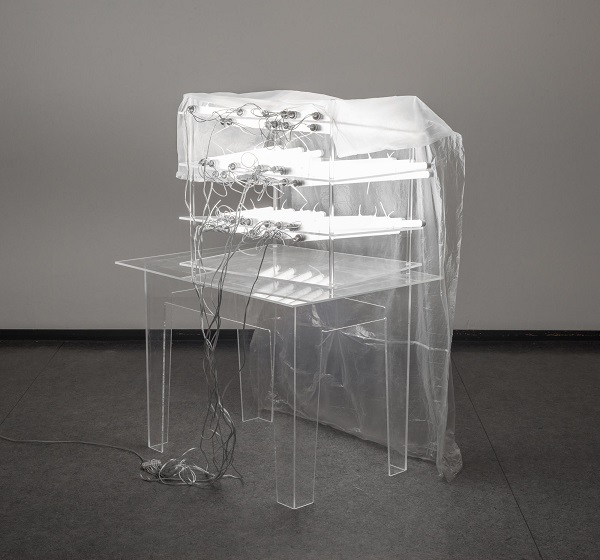
Christian Ertel is a contemporary artist and visiting professor specializing in light, object, and installation art. He is currently serving as Vertretungsprofessor for Painting and Graphics at the Academy of Fine Arts Munich during the summer semester 2025. He has previously taught at the State Academy of Fine Arts Karlsruhe, HfG Karlsruhe, and Hochschule Pforzheim, establishing a strong presence in German and international art education. His research and artistic practice centers on context-sensitive, site-specific installations that explore meaning shifts, spatial boundaries, and perception through the use of artificial light. Ertel's work blends formal minimalism with conceptual depth, engaging with historical, scientific, and sociopolitical themes. His fields of interest include installation art, light-based media, spatial perception, and interdisciplinary art practices. The body of his artistic output—treated as publications in the context of artistic research—demonstrates a consistent engagement with perception, material transformation, and conceptual minimalism. Recent works such as The Druse, Inverted (2009), Halocline (2018), and Immersion / Inversion (2015) reflect his interest in optical phenomena, immersive environments, and historical references, often blurring the boundaries between sculpture, architecture, and sensory experience. His scientific and artistic awards include: Work Grant from Kunstfonds Foundation (2022) Prize of the Toni Merz Foundation Sasbach (2011) Scholarship from the State of Baden-Württemberg, Cité Internationale des Arts, Paris (2009–2010) Project Grant from Akademie Schloss Solitude (2006) Multiple prizes from the State Academy of Fine Arts Karlsruhe (2002, 2003) Ertel has been awarded significant grants and residencies, including a postgraduate scholarship in Mexico City and a residency at Cité internationale des arts in Paris. He has exhibited widely in solo and group exhibitions across Europe and Japan, often in collaboration with other artists and institutions. His work is represented in catalogs and artist directories, including the New Museum's Younger Than Jesus directory (2009). He is affiliated with key artistic networks and has contributed to interdisciplinary dialogues, such as the Dialog–Trialog series. Christian Ertel's work is realized through a network of collaborations, institutional support, and artistic residencies. He has been associated with production galleries such as Alpineum Produzentengalerie and Ferenbalm-Gurbrü Station, and his projects often involve technical and conceptual teams, particularly for large-scale installations. His ongoing project The 3K Amps (since 2012) suggests sustained exploration in energy and light systems.
Prof. Dr. rer. nat. habil. Stephan Kopf is a faculty member at the Faculty of Spatial Information, where he holds the Professorship in Informatics and Geoinformatics. He actively contributes to research in geographic information systems (GIS), computer graphics, computer vision, and multimedia technologies. His academic leadership roles include serving as Dean and as a member of the Faculty Council, with advisory roles in the Senate. His research spans crowd simulation , image/video retargeting , augmented reality platforms , and interactive learning systems . He focuses on algorithm development for GIS, temporal effects in re-captured video, and scalable solutions for classroom interactivity. His work frequently integrates machine learning, mobile computing, and geospatial data. For teaching, he oversees courses such as Internet Technologies, Informatics, and Programming in degree programs like Geoinformatics/Management and Surveying. He supervises theses involving programming-centric topics like mobile app development , VR applications , and astronomical analysis of geospatial data .
Ákos Lédeczi is a prolific researcher with significant contributions to computer science, sensor networks, robotics, and K-12 education. His work spans hardware-software co-design, wireless localization, and accessible programming environments. Co-developed NetsBlox and DeepForge for novice-friendly distributed computing. Created PinPtr high-precision GPS cloud service and inTrack mobile node tracking systems. Pioneered Browser-based robotics simulation and smartphone IoT education for K-12 students. Explored RF interferometry , Doppler shift tracking , and acoustic shooter localization in urban environments. Contributed to medical capsule robot design and security co-design for embedded systems. His recent focus includes project-based AI curricula for female high school students and collaborative visual programming environments . While specific university affiliations aren't detailed here, his collaborations with Péter Völgyesi, Miklós Maróti, and others highlight his role in advancing distributed and sensor network research.
Omar W. Nasim is the Professor of History of Science at the University of Regensburg, affiliated with the Faculty of Philosophy, Arts, History, and Social Sciences and the Department of Philosophy. His work intersects philosophy, physics, art, and design, focusing on observational practices in the history of science and technology. Doctorate in Philosophy from the University of Toronto (2007) Habilitation at ETH Zurich (2012) Research interests include the visual and material cultures of science, particularly observational and visualization practices in nineteenth and twentieth-century astronomy. He explores how mundane objects like pencils, paper, and chairs shape scientific labor, emphasizing their cultural, gendered, and racialized underpinnings. His recent articles and books examine the epistemic and moral economies of scientific tools, the role of photography in astronomy, and the materiality of scientific practices. Notable awards include the Bertrand Russell Society’s Book of the Year Award (2009) and the History of Science Society’s Pfizer Award (2016). He supervises Masters and Doctoral students at the University of Regensburg, focusing on topics like the history of observational sciences, science-philosophy intersections, and decolonizing scientific practices. Current projects include a DFG-funded study on astronomy’s glass archive and a global history of ornamental arts’ influence on the human and mind sciences.
Oliver Baumann serves as Professor of Mathematics and Physics at the Department of Industrial Engineering within the Faculty of Engineering and Computer Science at Hamburg University of Applied Sciences (HAW Hamburg). His office is located in Room 0.17b at Ulmenliet 20, 21033 Hamburg, with office hours held Wednesdays 10:00–11:00 by email appointment. His academic background includes a physics diploma from CAU Kiel, a diploma thesis in applied optics at JGU Mainz, and a doctorate in astronomy from MPIA Heidelberg. Prior to his professorship, he worked as a scientific employee at Carl Zeiss AG in Oberkochen. Baumann's research spans applied and technical optics , experimental physics , and scientific image processing , with emphasis on optical measurement technology and precision mechanical-optical systems. His work bridges theoretical physics with industrial applications in aerospace, medical technology, and optical instrumentation. Key projects include radar system optimization for field mouse detection, fluorescence imaging evaluation in medical contexts, and photovoltaic-heat transport system design. His publications reveal strong focus on optical engineering (75% of works), instrumentation patents (60%), and educational methodologies (20%). Recent trends show increasing specialization in medical optics applications since 2016, alongside consistent contributions to astronomical instrumentation. Graduates' award for particularly dedicated teachers: 'Golden Duck' 2023 Graduates' award for particularly dedicated teachers: 'Golden Duck' 2019 Graduates' award for particularly dedicated teachers: 'Golden Duck' 2018 Graduates' award for particularly dedicated teachers: 'Golden Duck' 2017 Graduates' award for particularly dedicated teachers: 'Golden Duck' 2016 Baumann actively supervises graduate theses while serving as Chairman of the Examination Board for HWI bachelor's and master's programs. He holds multiple institutional roles including BAFöG representative, Deputy member of Faculty Council LS, and DAAD reviewer for Nigeria (PTDF). His professional affiliations include the European Optical Society (EOS), German Society for Applied Optics (DGaO), German Physical Society (DPG), and University Teachers' Association (hlb). His research activities center around precision mechanical-optical systems development, with emphasis on imaging technologies and measurement instrumentation. Current projects focus on optical metrology applications in aerospace and medical technology sectors.
Felix Blocher is a Professor of Near Eastern Archaeology at the Martin Luther University Halle-Wittenberg. His career spans institutions including Ludwig Maximilian University of Munich, Ruprecht-Karls-University Heidelberg, and significant excavation projects in Syria. Key affiliations include the German Oriental Society (Deutsche Orient-Gesellschaft), where he served as Deputy Secretary (1988-1994) and Secretary (2003-2015), and collaborative work with the Reiss Museum Mannheim. Born: 1956 in Basel, Switzerland Education: Doctorate (1985) and Habilitation (1995) in Near Eastern Archaeology Research Focus: Cylinder seals, Mesopotamian-Syrian cultural interactions, religious iconography, and Bronze Age stratigraphy. His work bridges epigraphic analysis with material culture studies, particularly in ancient Syria. Publications: Over 30 works including catalogues of Old Babylonian seal rolls, studies on Euphrates Valley stratigraphy, and reviews of key archaeological texts. His articles highlight interdisciplinary approaches combining art history and administrative archaeology. Scientific Contributions: DFG Postdoctoral Fellowship (1986-1989) Co-editor of Mitteilungen der Deutschen Orient-Gesellschaft (1988-1993, 2003-2014) Fieldwork: Deputy Director (1998-2010) and Editor (2000-2015) of Tall Munbaqa/Ekalte excavations in Syria, contributing to Late Bronze Age chronology.
Christiane Richter is a Laboratory Engineer at the Faculty of Spatial Information, HTW Dresden, specializing in remote sensing, photogrammetry, and cultural heritage conservation. She leads the NascaGIS project, digitizing the UNESCO World Heritage Nasca Lines. Her work integrates GIS, astronomical analysis, and archaeological research to preserve ancient Peruvian geoglyphs. She co-authored over 50 publications and presented at international conferences like CIPA and ISPRS. Richter also serves as President of the 'Dr. Maria Reiche' association, promoting Nasca's cultural heritage. Her recent projects include documenting ancient aqueducts in Peru using UAVs and GPS. She holds an M.Sc. in Geoinformatics and has collaborated with institutions like TU Prague and UNESCO. Affiliations: HTW Dresden, TU Prague, UNESCO projects Education: M.Sc. Geoinformatics (University of Salzburg), Diploma in Surveying (HTW Dresden) Key Projects: NascaGIS, Nasca Aqueducts Survey, DAI Erbil Project Research Interests: Combining geospatial technologies with archaeology to solve mysteries of ancient landscapes. Recent focus on 3D modeling of geoglyphs and analyzing Nasca's irrigation systems.
Thomas Wozniak is a Professor of Medieval History and Historical Auxiliary Sciences at Alpen-Adria-Universität Klagenfurt (since 2024) and currently holds a substitute professorship at the University of Bamberg (2024-2025). Previously, he served at the Leibniz Institute for the History and Culture of Eastern Europe (GWZO), Tübingen University, and as a visiting scholar at Weber State University (USA). He earned his doctorate at the University of Cologne (2006) and habilitation at Tübingen (2020). His research focuses on: Medieval urban, economic, and social history, especially Quedlinburg and Hanseatic networks Ottonian/Salian dynasties and Crusades Historical auxiliary sciences (chronology, diplomatics, epigraphy) Digital humanities and environmental history (extreme weather events) Recent publications emphasize material culture studies , including wax/slate/glass writing surfaces, crusader castles, and medieval graffiti. His work integrates archaeology, digital mapping, and interdisciplinary analysis of historical sources. Awards & Recognition: Title of apl. Professor (Tübingen, 2021) Supervision & Projects: He has advised doctoral candidates on topics like tournament culture and Cassiodorus. Current projects include: Historical writing surfaces (since 2019) Mediterranean castles (since 2013) EpiMedDat (digital epidemics database)