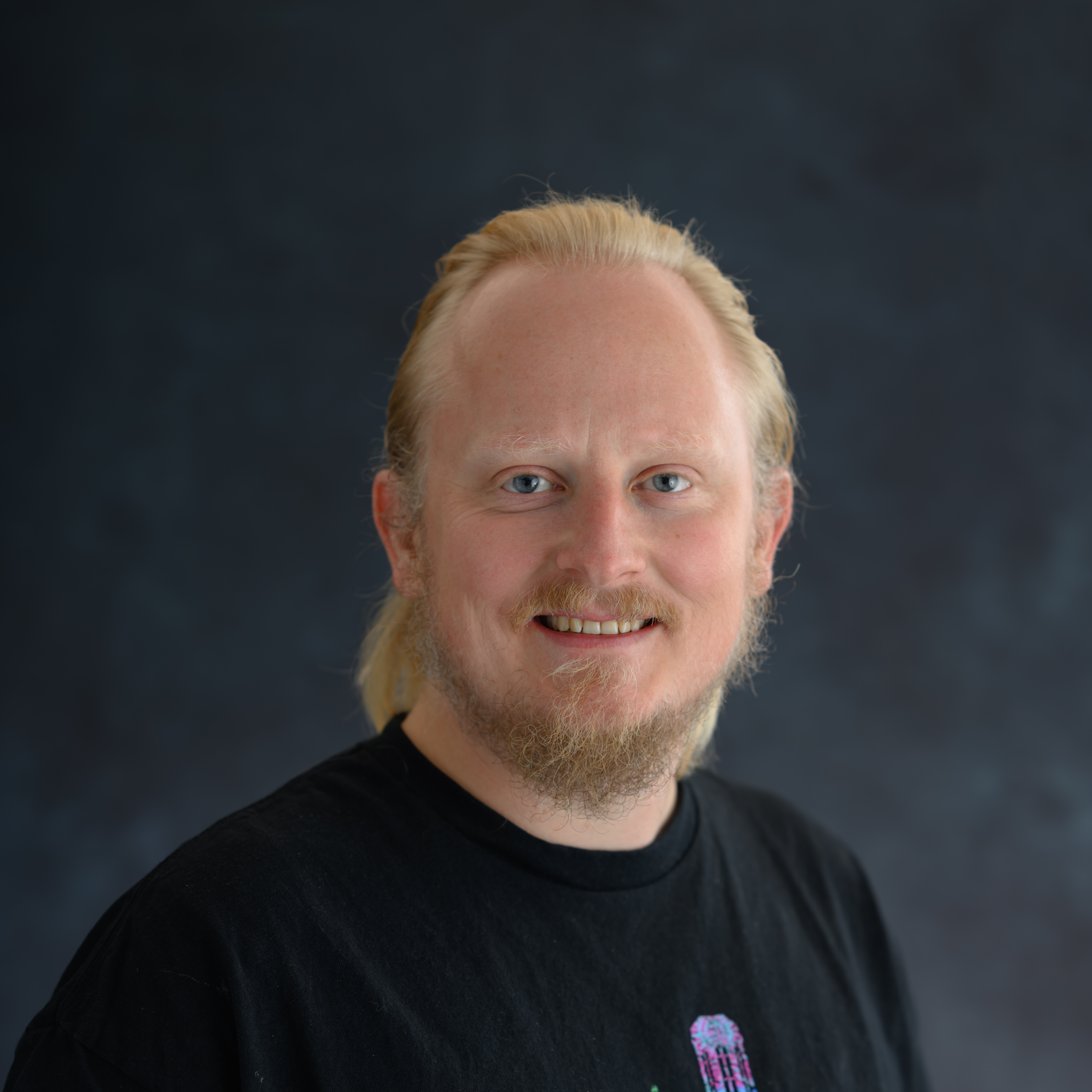
Professor Tom Bruce is a Personal Chair in Coastal and Maritime Hydromechanics at the University of Edinburgh's School of Engineering. He holds additional roles as Dean International - Students and Associate Schools Liaison Officer. His academic journey includes a BSc in Astrophysics (1987), MSc in Astronomical Technology (1988), and a PhD on 'Violent wave action at seawalls and breakwaters' (2006). His research focuses on wave-structure interaction, wave hydrodynamics, and flow measurement techniques like Particle Image Velocimetry (PIV). He is affiliated with the Energy Systems Research Institute and collaborates with the EPSRC Coastal Structures Network. Key interests include coastal defense systems, tidal energy converters, and failure analysis of historic structures. Recent projects include the EPSRC-funded IDCORE CDT in Offshore Renewable Energy and the EU-funded Marine Renewable Infrastructure Network. His work emphasizes experimental validation, numerical modeling, and interdisciplinary approaches to marine energy systems and coastal resilience. Labs/Teams: Active in the FloWave Ocean Energy Research Facility and collaborates with industry partners on tidal turbine optimization and wave energy converter design.
Kaze W. K. Wong serves as a research assistant professor in the Department of Applied Mathematics and Statistics at Johns Hopkins University and holds a part-time research software engineer position at the university's Data Science and AI Institute. His work bridges computational astrophysics, statistical methodology, and software engineering with significant contributions to open-source scientific tools. Education PhD in Physics and Astronomy, Johns Hopkins University (2021), recipient of the Gravitational Wave International Committee-Braccini Thesis Prize Research Focus Dr. Wong specializes in integrating deep learning with traditional statistical frameworks, particularly through deep learning-enhanced MCMC sampling and generative modeling for heterogeneous astronomical datasets . His research philosophy emphasizes production-grade open-source software development as critical infrastructure for scientific discovery, spanning digital twins, Bayesian inference, and data science applications. This interdisciplinary approach creates novel pathways for analyzing complex observational data in astronomy and beyond. Scientific Recognition 2021 Gravitational Wave International Committee-Braccini Thesis Prize for doctoral research 2024 Best Paper Award at the 38th Neural Information Processing Systems (NeurIPS) Conference Professional Background Prior to his current appointment, Dr. Wong was a Flatiron Research Fellow at the Center for Computational Astrophysics, Flatiron Institute in New York City. His career trajectory demonstrates a consistent focus on computationally intensive scientific problems requiring innovative methodological synthesis between machine learning and domain-specific physics.
Dr. V Anne Smith is a Senior Lecturer at the School of Biology, University of St Andrews. Her research focuses on interdisciplinary applications of Bayesian networks to address challenges in antibiotic resistance, ecological modeling, and exoplanet science. She leads projects investigating socio-environmental drivers of antimicrobial resistance in East Africa, poultry genetics, and science communication through science fiction analysis. Dr. Smith collaborates across disciplines, including with institutions like the HATUA and CARE Consortia, and actively engages in public science outreach through events like the World Science Fiction Convention. She advises three PhD students and has contributed to over 50 research outputs. Key honors include the 2010 Most Valuable Professional award in database operations. Her work integrates computational methods with biological, medical, and social data to inform policy and advance scientific understanding. Education details are not explicitly stated in the provided texts, but her extensive academic publications and supervisory roles indicate a strong academic background in biological sciences. Her research spans computational biology, epidemiology, and environmental science, with a focus on developing novel methodologies like Bayesian network modeling for complex systems. She is affiliated with multiple research centers at St Andrews, including the St Andrews Centre for Exoplanet Science and the Institute of Behavioural and Neural Sciences. Dr. Smith’s recent publications emphasize causal Bayesian network applications to combat AMR, poultry stress genetics, and exoplanet media representation. Her lab’s work bridges theory and practice, offering tools for policy analysis and public health intervention. She also contributes to open-access datasets and software, advancing reproducibility in ecological and biomedical research.
Mike Alexandersen is an Astronomer at the Minor Planet Center (MPC) within the Center for Astrophysics | Harvard & Smithsonian, serving as an MPC Fellow since 2020 and in his current role since October 2023. He holds a B.Sc. and M.Sc. in Astronomy from the University of Copenhagen (2007–2009) and a Ph.D. from the University of British Columbia (2015). His postdoctoral research at Academia Sinica Institute of Astronomy and Astrophysics (2015–2019) focused on Solar System dynamics. At the MPC, Alexandersen specializes in orbit determination of minor planets, Centaurs, and moons, alongside software development. Education: B.Sc. in Astronomy, University of Copenhagen (2007) M.Sc. in Astronomy, University of Copenhagen (2009) Ph.D. in Astronomy, University of British Columbia (2015) Research Interests: Mike’s work centers on discovering and tracking distant Solar System objects (Kuiper Belt objects, Centaurs, planetary moons) and simulating their dynamical behavior. His expertise in computational astrophysics supports orbit-fitting algorithms and software tools critical for MPC operations. Affiliations: Active member of the MPC and contributor to projects like the Magellan Telescopes and TESS exoplanet survey. Collaborates with institutions such as the Smithsonian Astrophysical Observatory and the University of Arizona.
Prof. Urs Hugentobler is a full professor at the Institute for Astronomical and Physical Geodesy at Technische Universität München (TUM), leading the Satellite Geodesy Department and the Forschungseinrichtung Satellitengeodäsie (FESG). His work focuses on precise geodetic applications of GNSS systems, satellite orbit determination, and Earth rotation studies. He holds a doctorate in astronomy from the University of Bern (1997) and has extensive experience with the ESA and international geodetic networks. Education: Master’s in theoretical physics (University of Bern, 1989), PhD in astronomy (University of Bern, 1997). Professional roles include leadership at the Bernese GPS Software group and the Wettzell Geodetic Observatory collaboration. His research emphasizes satellite gravimetry, solar radiation pressure modeling, and multi-technique geodetic observations. Research interests span satellite geodesy, GNSS applications, time/frequency transfer, and Earth system monitoring. Key contributions include advancements in Galileo and BeiDou satellite modeling, and the development of the Bernese GNSS Software. His work bridges geodesy with space science, addressing challenges in precision positioning and global reference frames. Publications highlight innovations in multi-GNSS analysis, satellite orbit determination, and Earth rotation parameters. His lab, FESG, supports TUM’s geodetic research and operational activities at Wettzell. Ongoing projects include the ESA Baltic+ and NEROGRAV initiatives, focusing on gravimetry and Earth dynamics.
Robert Lupton is a Researcher in the Department of Astrophysical Sciences at Princeton University, specializing in the development of algorithms for converting astronomical data into scientific insights with emphasis on optical data processing. His research focuses on: Astronomical Data Processing methodologies Algorithm design for optical instrumentation Large-scale sky survey systems Computational astronomy pipelines Lupton serves as Pipeline Scientist for the LSST (Large Synoptic Survey Telescope), Algorithms Lead for the 300-night SSP survey using Hyper-SuprimeCam on Subaru Telescope, and contributes to system software and 2-D pipelines for the Prime Focus Spectrograph (PFS) project. He is concurrently authoring a comprehensive book on astronomical image processing techniques. Current contact: rhl@astro.princeton.edu
Brian Broll is a Vanderbilt University researcher in the College of Engineering with a focus on computer science education , distributed computing , and machine learning accessibility . He has collaborated extensively with Dr. Ákos Lédeczi and other researchers to develop educational tools like NetsBlox and DeepForge for K-12 and higher education contexts.
Prof. José Joaquín De Rojas Roca de Togores is an Associate Professor in the Department of Civil Law at the University of Alicante, specializing in Insurance Law, Civil Liability, and Personal Injury Law. He is also Managing Partner at De Rojas Law Firm (since 1994) and Director of Legal Affairs at Grupo Maraz (since 2010). His teaching includes Introduction to Civil Law and Civil Law courses for Law and Criminology degrees. Academic Training: Bachelor's in Law, University of Alicante (1993) Research Interests span legal practice in insurance and civil liability, alongside astrophysics (High-Mass X-ray Binaries, Stellar Winds, Neutron Stars) and physics education innovations. His recent publications analyze orbital modulations in X-ray systems and Compton cooling effects, though these appear unrelated to his legal faculty role. Scientific Recognition includes the 2016 ISDE Award for Excellence in Legal Practice. He has not directed postgraduate theses in the last five years and lacks recent journal publications or research grants. Professional Network includes 16 specialized lawyers across Murcia, Elche, Alicante, Valencia, Balearic Islands, and Albacete. He also served as Claims Head for Helvetia Insurance's eastern region (1995-2001) and leads Civil Liability research at ISDE Higher Institute of Law and Economics (since 2015).
Aarya Patil is an LSST Discovery Alliance Catalyst Fellow at the Max Planck Institute for Astronomy in Heidelberg, Germany. She specializes in large-scale data-driven studies of the Milky Way's formation and evolution, leveraging computational methods and open-source software development. PhD in Astronomy & Astrophysics (University of Toronto) Key contributor to Astropy project (finance committee member) Active in science education through Astropy Training School and Pan-African School for Emerging Astronomers Research Focus Aarya's work combines galactic astrophysics with statistical computing , particularly through: Functional Principal Component Analysis (FPCA) of stellar spectra Chemical tagging validation via spectral structure analysis Development of open-source tools like fpca.py and delfiSpec Application of Sequential Neural Likelihood (SNL) for stellar parameter inference Scientific Contributions specdims repository implements methods to extract intrinsic spectral features while accounting for systematics, enabling studies of chemical homogeneity in galactic structures like the M67 open cluster. Awards & Recognition Data Sciences Institute Doctoral Student Fellowship (University of Toronto) Google Summer of Code participant (2017) and mentor (2021) Community Engagement Active in open science initiatives, Aarya serves on the Astropy project's finance committee and organizes educational programs bridging data science and astronomy.
Joshua S. Speagle is an Assistant Professor at the University of Toronto , specializing in computational astrophysics, Bayesian statistics, and machine learning applications to astronomical problems. His work bridges theoretical modeling with practical software development, notably as the creator of the dynesty package for dynamic nested sampling in Bayesian inference. Research Interests : Computational astrophysics and statistical methods Bayesian inference and dynamic nested sampling Stellar evolution and galaxy formation Machine learning for astronomical data analysis Recent Publications (2025–2024) focus on generative models for inverse problems, galaxy formation at high redshift, stellar oscillation analysis, and simulation-based inference techniques. His software tools like dynesty and brutus are widely used in the astronomical community for Bayesian posterior and evidence estimation. Contact: j.speagle@utoronto.ca | Personal Website | ORCID: 0000-0003-2573-9832
Gillian Beltz-Mohrmann serves as an Assistant Professor in the Department of Physics and the Program in Statistical and Data Sciences at Smith College. She recently completed a postdoctoral research fellowship in the Cosmological Physics and Advanced Computing Group at Argonne National Laboratory, bringing cutting-edge computational expertise to her academic position. Her academic credentials include: Ph.D. in Astrophysics from Vanderbilt University (2022) B.A. in Astrophysics from Wellesley College (2016) Professor Beltz-Mohrmann's research program sits at the critical intersection of large-scale structure, galaxy formation, and cosmology. She employs sophisticated computational approaches to investigate fundamental questions about dark matter and dark energy while advancing our understanding of galaxy evolution. Her methodology combines large-scale computer simulations with observational data to refine theoretical models of the universe's structure. She actively contributes to major cosmological initiatives as a member of both the Dark Energy Spectroscopic Instrument (DESI) Collaboration and the LSST Dark Energy Science Collaboration (DESC). Analysis of her publication record reveals a clear trajectory toward increasingly sophisticated computational methodologies in cosmology. Her recent work demonstrates significant integration of differentiable programming techniques with traditional astrophysical modeling, particularly evident in her 2024 paper on DiffOpt. The consistent focus across her publications centers on improving models of galaxy clustering, refining the galaxy-halo connection, and developing computational frameworks that bridge simulation and observation. Professor Beltz-Mohrmann maintains a strong commitment to inclusive practices within academia while actively participating in multiple research communities. Her scientific contributions extend beyond traditional publications to include meaningful engagement with open-source scientific software development, particularly through GitHub contributions to projects like DSPS (Differentiable Stellar Population Synthesis), Corrfunc, and halo_mass_correction. Her research program demonstrates integration across observational astronomy, theoretical cosmology, and advanced computational techniques, positioning her at the forefront of modern astrophysical research that leverages both traditional astronomical methods and contemporary data science approaches.
Dr. Maria Zamyatina is a Researcher at the University of Exeter , focusing on planetary climates and atmospheric chemistry . Her work integrates 3D chemistry-climate models with observational data, particularly using the Met Office Unified Model for exoplanet simulations. She specializes in the interplay between gas-phase chemistry and atmospheric dynamics to decode exoplanetary environments. Her research spans Earth-like planets , hot gas giants , and tidally locked systems , with a focus on chemical kinetics , quenching processes , and observational signatures . Notably, she leads efforts to enhance exoplanet configurations of climate models and develops tools like the Aeolus Python library for climate data analysis. Recent publications highlight her expertise in JWST spectroscopy , terminator asymmetries , and haze impacts on exoplanet atmospheres. She actively contributes to open-source scientific computing through GitHub repositories and participates in academic outreach via seminars and Python training initiatives.
Valerii Kleshchonok is a Professor at Taras Shevchenko National University of Kyiv, Ukraine, specializing in the Astronomy Department. He has held leadership roles in astrometry and small solar system bodies research since 2007, with prior positions as a researcher and department head at the same institution. Education: Focused on "Space factors of disasters on Earth: Observations, analysis, informatization" Research spans cometary physics, spectroscopy/photometry, lunar occultations, meteor anomalies, and development of astronomical instrumentation/software. His 2014 publications highlight expertise in lunar exosphere dynamics, comet spectroscopy, and meteor shower analysis, with sub-fields in observational techniques and planetary hazard assessment. Current projects emphasize refining comet classification, asteroid occultation studies, and dynamic modeling of potentially hazardous objects. Technical expertise includes astrometry, spectroscopy, photometry, and advanced astronomical observational methods. Contact: klev@observ.univ.kiev.ua
Dr Christopher Copperwheat is a Reader in Time Domain Astrophysics at the Astrophysics Research Institute of Liverpool John Moores University (LJMU), where he serves as Director of the Liverpool Telescope—the world's largest robotic telescope dedicated to science. He also acts as deputy LJMU Principal Investigator for the New Robotic Telescope currently in development. His academic appointments include Reader in Time Domain Astrophysics (since 2018), Liverpool Telescope Director (since June 2023), and previously served as Liverpool Telescope Astronomer in Charge (2015-2023). His educational background features a PhD from University College London (2003-2007) and an MSci (Hons) from University of Bristol (1999-2003), complemented by professional certifications including a Postgraduate Certificate in Academic Practice from LJMU (2019) and Level 4 Certificate in Leadership and Management from ILM (2019). Dr Copperwheat's research centers on time-domain astrophysics, with specific expertise in binary star evolution , white dwarf science , and gravitational wave astronomy . His work bridges observational astronomy with technological innovation through development of new instrumentation for the Liverpool Telescope and software solutions for robotic telescope scheduling. His recent publications reveal strong focus areas in robotic telescope systems, gravitational wave follow-up observations, cataclysmic variables, and machine learning applications for transient detection in large astronomical surveys. His scientific contributions have been recognized through the Vice Chancellor's Medal for Excellence in Research (2017), Fellowship in the Higher Education Academy (2019), and membership in prestigious organizations including the Royal Astronomical Society, International Astronomical Union, and European Astronomical Society. As an academic supervisor, Dr Copperwheat has led or co-supervised numerous PhD projects spanning relativistic explosions, telescope scheduling algorithms, and machine learning applications in astronomy. He has secured significant research funding from STFC, including multiple grants for Liverpool Telescope operations (2023-2027) and development of next-generation telescope control systems. Professionally, he represents LJMU on the international CCI committee for the Canarian observatories and serves on STFC's Projects Peer Review Panel. In teaching, he leads modules in Astronomical Techniques and Physics of Planets across LJMU's MSc and undergraduate programs.
Peter Melchior is an Assistant Professor of Astrophysical Sciences at Princeton University, with a joint appointment at the Center for Statistics and Machine Learning. He leads the Princeton Astro Data Lab, where his team develops novel algorithms to extract information from astronomical observations despite instrumental limitations and noise. His educational background includes a Ph.D. in Physics (2010) and a Diplom/M.S. in Physics (2006), both from the University of Heidelberg. Prior to his current position at Princeton, he held postdoctoral positions at The Ohio State University (2011-2015) and the University of Heidelberg (2010). Dr. Melchior's research focuses on statistical methods for large astronomical surveys. His primary interests include: Physics-based machine learning for astronomical data analysis Source separation and data fusion techniques Optimal combination of multiple datasets from different surveys Development of neural network approaches for astronomical problems Application of statistical methods to hydrologic modeling His recent publications demonstrate a strong trend toward interdisciplinary work that combines astronomy with machine learning and environmental science. The research spans from fundamental astronomical data analysis techniques to practical applications in water resource management across the United States. Among his notable achievements: PI of a project funded by the Schmidt Futures Foundation to optimize target selection for the Prime Focus Spectrograph survey Lead developer of the HydroGEN project funded by NSF for hydrologic scenario generation Author of approximately 300 papers in major peer-reviewed journals Developer of open-source software including pyGMMis for Gaussian mixture modeling Dr. Melchior actively mentors students and has organized the Undergraduate Summer Research Program and Data Science Seminar at Princeton. His work bridges astronomy, statistics, and machine learning, with growing applications in environmental science.