معرفی
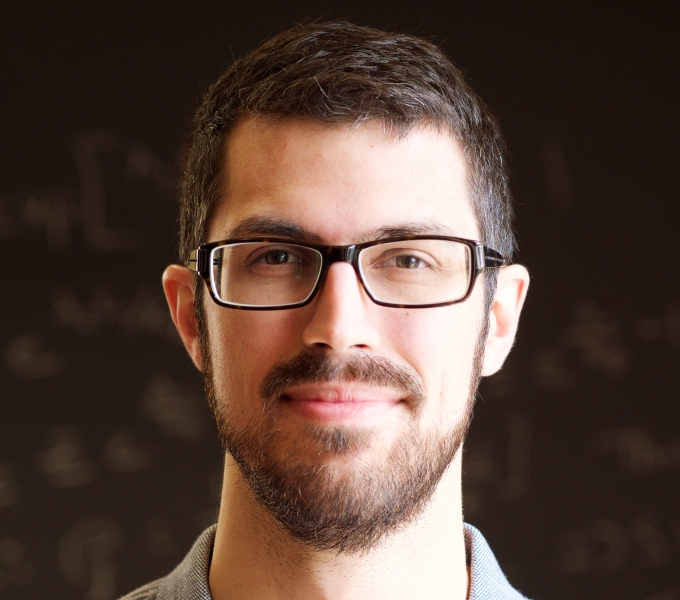
Gillian Beltz-Mohrmann serves as an Assistant Professor in the Department of Physics and the Program in Statistical and Data Sciences at Smith College. She recently completed a postdoctoral research fellowship in the Cosmological Physics and Advanced Computing Group at Argonne National Laboratory, bringing cutting-edge computational expertise to her academic position.
Her academic credentials include:
- Ph.D. in Astrophysics from Vanderbilt University (2022)
- B.A. in Astrophysics from Wellesley College (2016)
Professor Beltz-Mohrmann's research program sits at the critical intersection of large-scale structure, galaxy formation, and cosmology. She employs sophisticated computational approaches to investigate fundamental questions about dark matter and dark energy while advancing our understanding of galaxy evolution. Her methodology combines large-scale computer simulations with observational data to refine theoretical models of the universe's structure. She actively contributes to major cosmological initiatives as a member of both the Dark Energy Spectroscopic Instrument (DESI) Collaboration and the LSST Dark Energy Science Collaboration (DESC).
Analysis of her publication record reveals a clear trajectory toward increasingly sophisticated computational methodologies in cosmology. Her recent work demonstrates significant integration of differentiable programming techniques with traditional astrophysical modeling, particularly evident in her 2024 paper on DiffOpt. The consistent focus across her publications centers on improving models of galaxy clustering, refining the galaxy-halo connection, and developing computational frameworks that bridge simulation and observation.
Professor Beltz-Mohrmann maintains a strong commitment to inclusive practices within academia while actively participating in multiple research communities. Her scientific contributions extend beyond traditional publications to include meaningful engagement with open-source scientific software development, particularly through GitHub contributions to projects like DSPS (Differentiable Stellar Population Synthesis), Corrfunc, and halo_mass_correction.
Her research program demonstrates integration across observational astronomy, theoretical cosmology, and advanced computational techniques, positioning her at the forefront of modern astrophysical research that leverages both traditional astronomical methods and contemporary data science approaches.