Dragan Huterer is a Professor of Physics and Associate Chair for the Graduate Program at the University of Michigan. His research focuses on cosmology, particularly dark energy and large-scale structure, utilizing data from the Dark Energy Survey (DES) and the Dark Energy Spectroscopic Instrument (DESI) collaborations. He earned his Ph.D. from the University of Chicago (2001) and B.S. from MIT (1996). His work explores the nature of dark energy through cosmological probes like Type Ia supernovae, galaxy clustering, and cosmic microwave background anisotropies. Key contributions include co-leading DESI's first-year cosmological analysis, revealing unprecedented constraints on dark energy and neutrino masses. He also investigates the statistical isotropy of the universe and authored the textbook A Course in Cosmology: From Theory to Practice . Awards include the Friedrich Wilhelm Bessel Research Award (2019) and the Chambliss Astronomical Writing Award (2025). He has advised numerous graduate and undergraduate students, and his funding includes DOE, NSF, and NASA grants. Current projects include the Michigan Cosmology Summer School and leadership in the DESI Collaboration.
California Institute of Technology (Caltech)United States
Aaron Tohuvavohu is a Research Fellow in the Division of Physics, Mathematics, and Astronomy at the California Institute of Technology. His work focuses on high-energy astrophysics, particularly gamma-ray bursts (GRBs) and multi-messenger astronomy. He is deeply involved in the Neil Gehrels Swift Observatory mission, specializing in real-time localization of transient events using the BAT-GUANO pipeline and collaborating with gravitational-wave detectors like LIGO/Virgo/KAGRA. His research emphasizes rapid-response observations of GRBs and gravitational-wave events, leveraging the Interplanetary Network (IPN) for precise localization. He has contributed to studies of short-hard GRBs associated with compact object mergers and long-duration GRBs linked to hypernovae. Notable projects include the CASTOR mission concept for UV photometry and detector characterization for next-generation astronomical instruments. Aaron's recent work includes analyzing Swift/XRT and UVOT observations of GRB afterglows, setting upper limits for electromagnetic counterparts to gravitational-wave triggers, and improving IPN triangulation algorithms. His publications reflect a systematic approach to transient astronomy, integrating data from multiple observatories for comprehensive event characterization.
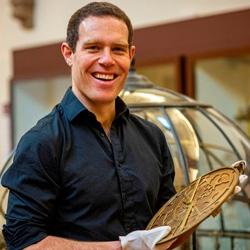
Joshua Nall is the Director of the Whipple Museum of the History of Science at the University of Cambridge's Department of History and Philosophy of Science, a role he has held since 2022. Previously, he served as Curator of Modern Sciences at the same museum from 2013. His research focuses on the material culture and mass media of the physical sciences, particularly exploring how scientific instruments and media shaped modern astronomy and imperial science. He has curated major exhibitions like Astronomy and Empire (2017) and co-edited influential volumes such as Victorian Material Culture: Science and Medicine (2022). Nall's 2019 book News from Mars won the Philip J. Pauly Prize, analyzing how mass media influenced 19th-century astronomical debates about potential life on Mars. His work bridges museum curation, historical scholarship, and digital humanities, notably through projects like Tools of Knowledge , which used data analysis to study the British instrument trade. He is also a leading voice in forgery studies, examining counterfeit scientific artifacts. Key interests include the history of scientific instruments, British imperial astronomy, and the social dimensions of science communication. His collaborative work extends to exhibitions like Craftswomen: Uncovering Hidden Labour in the History of Science , which highlighted overlooked contributions of women in scientific craftsmanship.
Noah Rubin is an Assistant Professor in the Department of Electrical and Computer Engineering at the University of California San Diego, joining in 2024. His research focuses on applied optics and photonics, particularly in diffractive optics, nanophotonics, and polarization optics. He investigates novel methods to control light polarization for applications in environmental and astrophysical remote sensing, imaging, and instrumentation. Rubin's work bridges fundamental optics and practical systems design, with potential for real-world impact in fields like astronomy and aerospace. Rubin holds a Ph.D. in Applied Physics from Harvard University (2020) and a BA in Physics from the University of Pennsylvania (2015). His postdoctoral research at Harvard explored metasurface-based devices for polarized light control, leading to an early-stage consumer product and NASA-related instrumentation advancements. He was named in Electro Optics Magazine’s 'Photonics 100' list in 2024, and his team received a NASA Instrument Incubator Program award in collaboration with the University of Arizona and Jet Propulsion Laboratory. Rubin’s research group at UCSD explores polarization-sensitive diffractive optics, compact polarization cameras, and metasurface-enabled technologies for NASA-relevant sensing applications. Notable achievements include cover features in Physics Today and fellowship awards for team members like Karl, a Ph.D. student supported by NASA’s FINESST program. His lab emphasizes interdisciplinary innovation, combining theoretical optics with experimental prototyping and industry partnerships.
Marilyn J Smith is the David S. Lewis Professor and Director of the Vertical Lift Research Center of Excellence (VLRCOE) at the Georgia Institute of Technology's Daniel Guggenheim School of Aerospace Engineering. She leads a seven-university consortium conducting vertical lift research for the U.S. Army, Navy, and NASA, and has secured over $200 million in collaborative research funding. Computational Nonlinear Computational Aeroelasticity Lab Director NASA FUN3D development team contributor Aerospace Systems Design Lab (ASDL) affiliate Her research spans unsteady aerodynamics, computational aeroelasticity, and sustainable energy applications across rotary-wing, fixed-wing, and launch vehicles. She serves on the Vertical Lift Consortium (VLC) Board of Directors and Vertical Flight Society (VFS) Board, while acting as VFS Deputy Technical Director for Aeromechanics and leading international NATO AVT panels on UAV aerodynamics. Recent publications focus on galaxy cluster cosmology, ship-helicopter dynamic interface modeling, and Type Ia supernova analysis. She has won prestigious awards including the AIAA Aerodynamics Award and multiple American Helicopter Society honors for research, mentoring, and service. 2022 AIAA Aerodynamics Award 2015 Best Paper Awards at AHS Forum 2014 & 2012 AHS Agusta-Westland International Fellowships Her laboratory work integrates high-performance computing with aerospace design and develops advanced turbulence models through partnerships with Georgia Tech Research Institute (GTRI). She contributes to public science communication with appearances on National Geographic, PBS, NPR, and local media.
Swiss Federal Institute of Technology in LausanneSwitzerland
Mohamed Bouri is a Senior Lecturer and Researcher at École Polytechnique Fédérale de Lausanne (EPFL), where he is affiliated with the School of Engineering (STI) and specifically the Microengineering Department (SCI-STI-MB). He is part of the ReHAssist research group (http://rehassist.epfl.ch), which focuses on rehabilitation robotics and human-robot interaction. His office is located in the MED Building (MED 3 1016) at Station 9, 1015 Lausanne. Dr. Bouri's research spans several key areas in robotics and rehabilitation engineering. His primary focus is on the development and control of exoskeleton systems for mobility assistance and rehabilitation. He has made significant contributions to hip exoskeleton technology, adaptive control strategies, and human-robot interaction paradigms. His work bridges engineering principles with clinical applications, particularly for individuals with mobility impairments and neurological conditions. Additional research interests include sensory substitution techniques, balance control systems, and astronomical instrumentation involving robotic fiber positioners for multi-object spectrographs. Analysis of Dr. Bouri's recent publications reveals a strong emphasis on practical applications of robotics in rehabilitation settings. His work increasingly focuses on user-centered design, adaptive control systems that respond to individual user needs, and ecological validity in testing environments. There's a clear trend toward developing systems that can function effectively in real-world scenarios rather than controlled laboratory settings. His research also shows growing integration of physiological feedback mechanisms and multimodal sensing to enhance human-robot cooperation, with applications spanning from Parkinson's disease rehabilitation to astronomical instrumentation. Dr. Bouri has supervised numerous doctoral students whose theses reflect the breadth of his research interests, including work on lower-limb exoskeletons, robotic control systems, and rehabilitation technologies. His collaborative approach is evident in the extensive list of co-authored publications across multiple institutions and disciplines, demonstrating his ability to bridge engineering with clinical and astronomical applications. Based at EPFL's Microengineering Department, Dr. Bouri leads research activities within the ReHAssist laboratory, which specializes in rehabilitation assistance technologies. The lab focuses on developing innovative robotic solutions for mobility assistance, with particular expertise in exoskeleton design, control algorithms, and human-robot interaction paradigms. His work on projects like TWIICE One has demonstrated real-world impact in assistive technology development.
Tamás Budavári is an Associate Professor in the Department of Applied Mathematics and Statistics at Johns Hopkins University (JHU), with joint appointments in Physics and Astronomy and a secondary appointment in Computer Science. He is affiliated with the Whiting School of Engineering and the Institute for Data-Intensive Engineering and Science (IDIES). His research focuses on computational and statistical methods for big data in astronomy and interdisciplinary applications such as urban blight analysis. Education: PhD in Astrophysics (2001), Eötvös Loránd University, Budapest Master’s in Theoretical Physics (1997), Eötvös Loránd University Research Interests: Budavári develops algorithms for handling large astronomical datasets, including Bayesian inference, streaming algorithms, and GPU-accelerated processing. His work includes SkyQuery (an online astronomy data tool), photometric redshift estimation, and cross-matching catalogs. He also applies computational methods to urban planning, such as optimizing strategies to address vacant housing in Baltimore City. Publications & Tools: Budavári’s recent work spans topics like deep learning for astronomical image restoration, combinatorial optimization for urban policy, and probabilistic catalog matching. His tools, such as CUDAHM and NWAY, enable scalable analysis of multi-epoch survey data and N-way catalog cross-identification. Awards & Grants: Recipient of the Gordon and Betty Moore Fellowship and SAMSI Research Fellowship Funded by NSF, STScI, NIH, and others Leadership & Outreach: He serves on the Steering Committee of the 21st Centuries Cities Initiative and is a founding editor of the Journal of Astronomy and Computing. His interdisciplinary work bridges astrophysics, data science, and urban systems.
Seb Falk is a College Fellow and Research Fellow at Girton College, University of Cambridge, and a Senior Admissions Tutor. He holds academic roles including Praelector and Director of Studies for the Cambridge Foundation Year. His research focuses on medieval mathematical sciences, particularly astronomy, navigation, and the history of scientific instruments and texts. Falk earned a BA in History and Spanish from Oxford University, followed by an MPhil and PhD in History and Philosophy of Science from Cambridge. His research explores the interplay between religion, literature, and science in the Middle Ages, challenging the 'Dark Ages' narrative. Key projects include studies on late medieval astronomical tables and instruments, and a global comparative analysis of natural sciences around the year 1000. Falk has published widely, including the acclaimed book The Light Ages (2020), which was shortlisted for the Hughes Prize and awarded the Osterbrock Prize in 2025. His articles span topics like medieval astronomical practices, manuscript studies, and the cultural history of science. Falk is also a sought-after media contributor, appearing on BBC programs and podcasts, and has engaged in public outreach through lectures and museum collaborations.
James R. Fienup is the Robert E. Hopkins Professor of Optics at the University of Rochester's Institute of Optics, with additional appointments as Distinguished Scientist at the Laboratory for Laser Energetics, Professor at the Center for Visual Science, Professor of Electrical and Computer Engineering, and Affiliated Faculty at the Goergen Institute for Data Science and Artificial Intelligence. His office is located at Wilmot 410, 275 Hutchison Rd., Rochester, NY. Education PhD in Applied Physics from Stanford University (1975) MS in Applied Physics from Stanford University (1972) BA in Physics & Mathematics (magna cum laude) from Holy Cross College (1970) Research Focus Professor Fienup's research specializes in imaging science , with emphasis on phase retrieval algorithms, unconventional imaging techniques, and wavefront sensing. His work spans computational methods for image reconstruction, sparse-aperture systems, and synthetic-aperture imaging. Recent innovations include applying machine learning to wavefront control and developing advanced digital holography techniques for 3D imaging through atmospheric turbulence. Publication Trends His recent articles (2018-2024) demonstrate a strong focus on computational imaging techniques, particularly phase retrieval algorithms applied to optical metrology and wavefront correction. Key themes include multi-plane digital holography, coronagraphic wavefront control for astronomical applications, machine learning-enhanced sensing, and novel approaches for segmented-aperture systems. His work consistently bridges theoretical optics with practical instrumentation challenges. Awards and Honors Lifetime Achievement Award, Hajim School of Engineering (2019) Emmett N. Leith Medal, Optical Society of America (2013) National Academy of Engineering Member (2012) Distinguished Visiting Scientist, JPL (2009) Fellow of OSA and SPIE International Prize in Optics (1983) Rudolf Kingslake Medal (1979) NSF Graduate Fellow (1970-1972) Professional Activities Professor Fienup has served as Editor-in-Chief of the Journal of the Optical Society of America A (1998-2003) and held editorial roles at Applied Optics and Optics Letters . He consults for NASA (James Webb Space Telescope, Hubble), national laboratories, and aerospace companies, and holds five patents in optical systems design.
Nabila Aghanim is an astrophysicist and cosmologist at the Institute of Space Astrophysics (IAS), a joint research unit of Université Paris-Saclay and the French National Center for Scientific Research (CNRS). Appointed as a CNRS Director of Research in 2010, she has held significant leadership roles including Deputy Director of the IAS and Director of the Science Observatory at Université Paris-Saclay from 2017 to 2021. Dr. Aghanim completed her PhD thesis at the IAS under the direction of Jean-Loup Puget in 1996. Following her doctorate, she served as a temporary teaching fellow (ATER) at Université Paris-Sud (now Université Paris-Saclay) for one year before undertaking post-doctoral fellowships at the University of California at Berkeley and with CNES. Nabila Aghanim's research focuses on cosmology and astrophysics, with particular emphasis on the cosmic microwave background (CMB), dark matter, and dark energy. Her work involves predicting physical models to measure theoretical scenarios and translating instrumental data into testable theories. She has been instrumental in major international space telescope projects, particularly the Planck mission which measured tiny temperature variations in the CMB - the fossil radiation from the Big Bang. Her current research includes the ByoPIC project (the Baryon Picture of the Cosmos), which aims to locate the 'missing' ordinary matter in the universe by combining Planck data with other information sources. She is also actively involved in the Euclid space telescope mission, contributing to the construction and scientific use of the VIS imager. 2022: Huy Duong Bui Grand Prize from the French Academy of Science 2017: CNRS Silver Medal 2017: ERC Advanced Fellowship for the ByoPIC project Dr. Aghanim serves on the scientific committee of CNES and the Council of the European Astronomical Society. Her research has significantly advanced our understanding of the cosmic web and the distribution of matter in the universe. She has coordinated international teams while analyzing satellite measurements, particularly during her leadership of one of the Planck scientific programs from 2009 to 2016. Currently, she is exploring mission concepts for observing fossil radiation to detect variations in its emission spectrum, which could reveal the thermal and energetic history of the universe from the Big Bang to the present day. She also participates in the CNES stratospheric balloon project 'BISOU' (Balloon Interferometer for Spectral Observations of the primordial Universe), focusing on scientific instrumentation.
Karl Ulrich Schreiber is an Adjunct Professor at the Department of Physics and Astronomy, University of Canterbury, New Zealand, and an apl. Professor at the Institute for Astronomical and Physical Geodesy at the Technical University of Munich (TUM). He is a scientist at the Geodetic Observatory Wettzell, jointly operated by TUM and the Bundesamt für Kartographie und Geodäsie (BKG). His work bridges fundamental physics and geodetic applications, with leadership roles in major international projects including ESA’s MAGIC/Science, QSG4EMT, and Baltic+ Theme 5, as well as DFG Research Units NEROGRAV and UPLIFT. His research focuses on Space Geodesy , Satellite and Lunar Laser Ranging , and Ring Laser Technology . He has pioneered the use of large ring laser gyroscopes for measuring Earth's rotation, polar motion, and seismic rotations. His work enables high-precision monitoring of geophysical phenomena such as Earth tides, Chandler wobble, and rotational ground motions from earthquakes. He is a key contributor to multi-technique co-location studies (VLBI, SLR, GNSS) and time transfer experiments, advancing the Global Geodetic Observing System (GGOS). His recent publications show a strong trend in developing and applying large-scale ring laser arrays (e.g., ROMY) for geophysical sensing, photon-counting laser ranging for space debris and satellite tracking, and optical timing systems for synchronization across geodetic networks. These efforts span disciplines including geodesy, seismology, quantum optics, and fundamental physics. Scientific contributions include: Development of the Wettzell Large Ring Laser (G-ring) for continuous Earth rotation monitoring. First direct measurements of Earth's diurnal polar motion and Chandler wobble using ring lasers. Pioneering work in rotational seismology, validating ring laser data against seismic arrays. Contributions to lunar laser ranging and its role in reference frame realization. Leadership in ESA and DFG projects advancing space geodesy and inertial sensing. He advises doctoral and master’s students within the DFG Research Training Group UPLIFT and collaborates with international institutions on instrumentation and data analysis. His lab at Wettzell hosts advanced laser ranging and ring laser systems, serving as a fundamental geodetic observatory. Future work includes enhancing clock ties for global geodesy, expanding multi-component rotation sensing, and advancing space-based geodetic technologies.
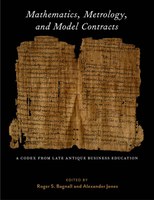
Alexander Jones is a Professor of the History of the Exact Sciences in Antiquity at New York University's Institute for the Study of the Ancient World (ISAW). He holds a Classics degree from the University of British Columbia and a PhD in the history of ancient mathematical sciences from Brown University. Previously, he served for sixteen years at the University of Toronto in the Classics Department and the Institute for the History and Philosophy of Science and Technology. His research focuses on the history and transmission of mathematical and astronomical knowledge across ancient cultures, with particular emphasis on Babylonian, Greek, and Roman contexts. Key areas include the Antikythera Mechanism, Ptolemaic astronomy, and the cultural exchanges between Mesopotamia and the Greco-Roman world. He has curated major exhibitions such as Before Pythagoras (2011) and Time and Cosmos in Greco-Roman Antiquity (2016-17). Education: B.A. Classics, University of British Columbia PhD History of Mathematical Sciences, Brown University His publications include groundbreaking editions of ancient scientific texts, such as Pappus of Alexandria's commentary on geometrical methods and fragments from the Oxyrhynchus papyri. His current research involves reconstructing ancient Babylonian chronology through the NEH-funded Shanati project. Awards: Guggenheim Fellowship Francis Bacon Award in the History of Science Membership in the Académie Internationale d'Histoire des Sciences As Principal Investigator of the Shanati project, he leads efforts to synchronize Babylonian calendars with the Julian calendar. His work bridges material culture and textual analysis, often involving interdisciplinary collaboration with archaeologists and historians of technology.
Robert M. Weikle, II is a Professor in the Charles L. Brown Department of Electrical and Computer Engineering at the University of Virginia, with a courtesy appointment in the Department of Physics. He earned his B.S. from Rice University (1986), M.S. (1987), and Ph.D. (1992) in Electrical Engineering from Caltech, followed by postdoctoral work at Chalmers University of Technology (1992). His research focuses on millimeter-wave and terahertz electronics , applied electromagnetics, integrated antennas, low-noise sensors, and heterogeneous integration of compound semiconductors. His work bridges electronics and photonics for spectrum access, with applications in astronomy, spectroscopy, and metrology. He has published extensively on micromachined silicon substrates, superconducting materials, and emerging technologies. Scientific Awards: IEEE Microwave Prize (1993) David A. Harrison III Award (1999) University of Virginia All-University Outstanding Teaching Award (2000) Edlich-Henderson Innovator of the Year (2016) Fulbright Scholar (2001) As Chief Technology Officer and co-founder of Dominion Microprobes, Inc., he commercializes micromachined wafer probes for high-frequency metrology. His lab, located in E220 Thornton Hall and the Jesse W. Beams Physics Building, has produced 15+ recent publications on submillimeter-wave devices, THz probes, and calibration techniques.
S. Prashant Kumar is a Postdoctoral Researcher at the Rank of Instructor at the University of Chicago and an Honorary Fellow at the Archives at NCBS (Tata Institute of Fundamental Research, Bengaluru). His research focuses on the history of science and empire, examining intersections between mathematics, astronomy, technology, and colonialism. He previously held roles including Visiting Assistant Professor of History at Haverford College and Postdoctoral Fellow in Global Intellectual History at Humboldt-Universität zu Berlin. Trained in theoretical physics, he earned his PhD in History and Sociology of Science from the University of Pennsylvania (2021). His current book project, The Light Threshers: Time, Caste, and Computational Labor in South Asia , traces how caste-organized labor in astral sciences and metallurgy were integrated into global time measurement systems from the late 18th century to mid-20th century. This work highlights the dialectic between chronometry and historical chronology in shaping postcolonial temporal frameworks. Key research interests include colonial-era scientific practices, the role of caste in technical labor, and the material culture of knowledge production. His publications span global aspects of Newtonianism, astronomical chronometry, and archival studies of Indian scientific heritage. He has curated the B.S. Madhava Rao Papers at NCBS archives and contributed to interdisciplinary projects linking literature (e.g., Borges) with mathematical concepts. Awards: Honorary Fellow at NCBS Archives Grants/Projects: Ongoing book project supported by IFK Vienna fellowship Labs/Teams: Collaborates with NCBS Archives and global intellectual history networks
Prof. Roland Pail is a full Professor of Astronomical and Physical Geodesy at the Technical University of Munich (TUM). He leads the Chair of Astronomical and Physical Geodesy, part of the TUM School of Engineering and Design. His research focuses on physical and numerical geodesy, global/regional gravity field modeling, and satellite gravity missions like GOCE, GRACE, and future initiatives like MAGIC. He has held leadership roles, including President of IAG Commission 2 (2015–2019) and Vice Dean of TUM's Department of Aerospace and Geodesy. Pail earned his doctorate (sub auspiciis praesidentis) from TU Graz (1999) and habilitation in 2002. He is a Fellow of the International Association of Geodesy and has received numerous awards for his contributions to geodesy. His work integrates satellite data with geophysical modeling to monitor mass transport processes (e.g., ocean circulation, ice melt) and Earth's interior dynamics. He collaborates internationally on missions such as the DFG Research Training Group UPLIFT and the MAGIC constellation. Key publications include gravity field models (e.g., XGM2016, GOCO06s) and studies on future mission design, stochastic modeling, and climate monitoring. Pail’s scientific awards include the IAG Fellowship (2011), Young Authors Award (2006), and the Allmer-Löschner Prize (2000). His research also addresses quantum sensor applications in satellite gravimetry and the development of next-generation gravity field retrieval techniques.