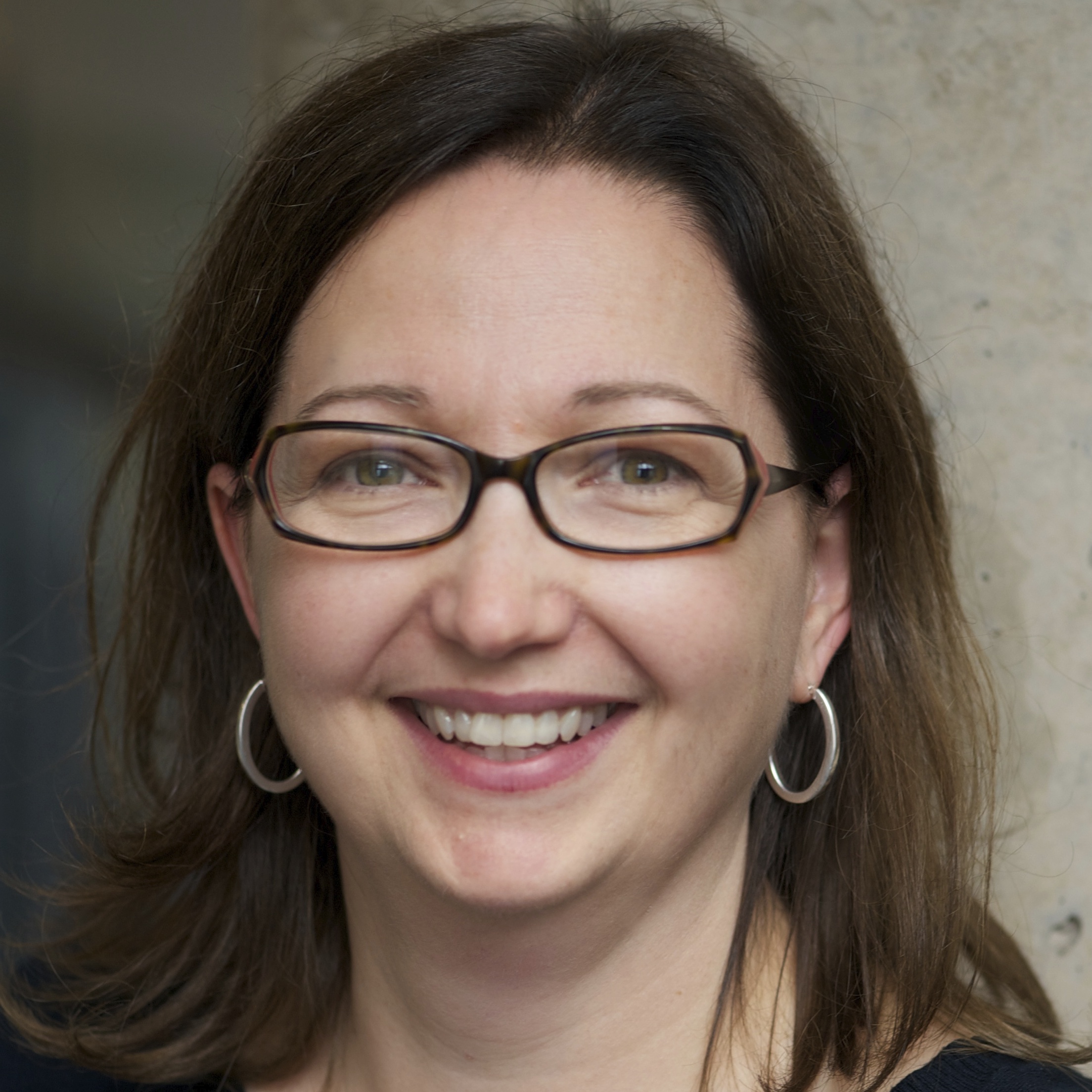
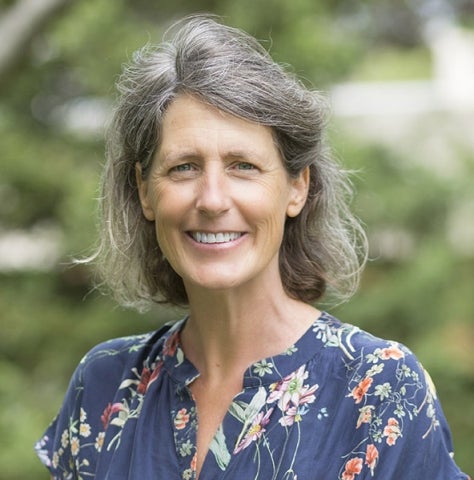
Elisa Baniassad is a Teaching Professor in the Department of Computer Science at the University of British Columbia (UBC), within the Faculty of Science. She specializes in software engineering education and has received numerous teaching accolades including the UBC Killam Teaching Prize and CS-Can/INFO-CAN Excellence in Teaching Award. Her courses focus on software construction, engineering principles, and advanced software design. Dr. Baniassad has taught CPSC 310 (Introduction to Software Engineering), CPSC 210 (Software Construction), and CPSC 410 (Advanced Software Engineering) across multiple terms since 2000. Her research interests span educational methodologies in software engineering, aspect-oriented programming, and the design of effective learning tools. Notable contributions include studies on team dynamics in software development, automated assessment techniques, and pedagogical frameworks for large-scale programming courses. She has authored over 50 peer-reviewed articles on topics ranging from mutation analysis in student tests to the efficacy of online learning environments. Awards include recognition for teaching excellence at UBC and contributions to computer science education. Her work emphasizes practical applications of software engineering principles in academic settings, with a focus on fostering student mastery through innovative assessment strategies and feedback mechanisms.
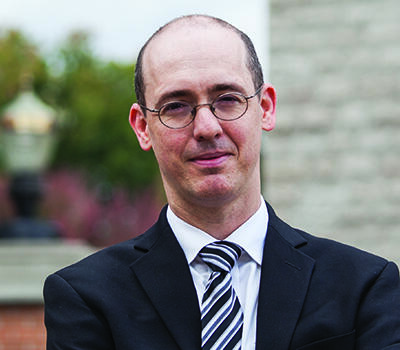
Dr. Tobias Bahr is a computer science education researcher at the Institute of Educational Science , University of Stuttgart , focusing on technology didactics. He holds a PhD (Dr. phil.) in educational science and teaches courses on computer science didactics, educational research methods, and quantitative methodologies. Education: 1. Staatsexamen in Mathematics and Computer Science (2014–2021), University of Stuttgart; Erasmus+ Exchange, University of Bergen (2017–2018) His research focuses include computational thinking , gender dynamics in STEM , and AI integration in education . He leads projects like MakeTechEarly (2024–2027) and LPI (2023–2025), examining interdisciplinary STEM programs and teacher training interventions. Recent publications analyze AI chatbot usage in higher education, hybrid teacher training models, and computational thinking in early education. He has presented at conferences including EDUCON , ISSEP , and WiPSCE , with a focus on empirical studies and evidence-based practices. Teaching portfolio includes Didactics of Computer Science I/II and Quantitative Research Methods . He has developed AI-assisted task differentiation tools and conducted workshops on agile teaching methods in computer science education.
Maria De-Arteaga is an Assistant Professor at the Information, Risk and Operation Management Department within the McCombs School of Business at the University of Texas at Austin. She holds joint appointments as a core faculty member in the Machine Learning Laboratory and as a researcher for Good Systems. She earned her PhD in Machine Learning and Public Policy from Carnegie Mellon University. Her research focuses on algorithmic fairness, human-AI complementarity, and the societal impacts of machine learning. Key areas include characterizing how historical biases are reproduced in ML systems, developing bias mitigation techniques, and improving human-AI collaboration frameworks. Her work bridges technical ML methods with public policy considerations. Recent publications demonstrate trends in fair decision-making systems, including studies on label indeterminacy problems, expert consistency modeling, and toxicity detection. Her interdisciplinary work spans healthcare, social computing, and human-AI interaction. She advises multiple graduate students including Terry Neumann (IROM), Yunyi Li (IROM), and Soumyajit Gupta (CS), along with undergraduate student Riya Cyriac. Previously advised researchers include postdoc Jakob Schoeffer and undergraduate Jennifer Mickel.
Shaun Nykvist is an academic affiliated with Queensland University of Technology, where he holds the role of Researcher. His work focuses on educational technology, digital pedagogy, and teacher education. He has a PhD in Education from QUT (2008) and has consistently contributed to scholarly discourse on topics such as technology integration, online learning environments, and STEM education. Key research interests include the impact of digital tools on teacher preparation, cross-campus learning environments, and global citizenship education in higher education. His work often emphasizes practical applications of technology in classrooms and institutional responses to challenges like the pandemic's disruption of traditional teaching methods. Recent publications highlight studies on teacher wellbeing amid technological shifts, innovative pedagogical frameworks (e.g., SAMR model), and cross-cultural adoption of digital tools in Vietnam. Collaborations include Nordic institutions and international networks exploring issues like student motivation in hybrid learning settings. Nykvist has co-authored over 50 peer-reviewed articles and book chapters, contributing to journals like Frontiers in Education and Journal of Research on Technology in Education . His work bridges theory and practice, advocating for systemic educational reforms to leverage digital innovation effectively.
Xumin Liu is a Professor in the Department of Computer Science at the Golisano College of Computing and Information Sciences, Rochester Institute of Technology (RIT). His research focuses on Artificial Intelligence, Data Science, Data Mining, and Service-Oriented Computing. He holds a PhD in Computer Science from Virginia Tech, an ME from Jinan University (China), and a BE from Dalian University of Technology (China). Education: BE in Computer Science, Dalian University of Technology (China) ME in Computer Science, Jinan University (China) PhD in Computer Science, Virginia Tech Research Interests: Artificial Intelligence Data Science Education and Applications Service-Oriented Computing (SOC) Machine Learning for Web Services Workflow Mining and Clustering Data Management and Analytics Publications highlight contributions to service mashup popularity prediction, workflow mining, and service recommendation systems. His recent work emphasizes bridging data science education for non-technical students and integrating SOC principles into curricula. Teaching Contributions: CSCI-621: Foundations of Database Systems CSCI-724: Web Services and Service-Oriented Computing ISCH-370: Principles of Data Science
Amy J. Ko is a Professor and Associate Dean for Academics at the Paul G. Allen School of Computer Science & Engineering and The Information School at the University of Washington, Seattle . She serves as Editor-in-Chief of ACM TOCE , co-directs Reciprocal Reviews and CS for All Washington , and leads the CENSOR Research Lab . Her work prioritizes equitable, liberatory computing education , bridging human-computer interaction and social justice . Research Focus: Equity in CS education, AI literacy, inclusive design, developer productivity, and ethical technology use Awards: Best Paper Award (2024, 2022) Diversity + Inclusion Award (2024) Most Influential Paper Honorable Mention (2014) Honorable Mention (2024, 2023) Publications: Over 184 works spanning program comprehension, assessment design, ethical pedagogy, and democratizing computing education Books: Foundations of Information , Critically Conscious Computing , and Teaching Accessible Computing Her Google Scholar profile reflects citations under her deadname, which she advocates to correct. She emphasizes student agency and community collaboration , particularly with marginalized groups in computing spaces.
Benedetta Catanzariti is a British Academy Postdoctoral Fellow at the University of Edinburgh's School of Social and Political Science, with dual affiliation as a PostDoctoral Affiliate at the Centre for Technomoral Futures within the Edinburgh Futures Institute. She actively contributes to the AI Ethics & Society network, focusing on the social, historical, and political dimensions of data-driven technologies through qualitative STS (Science and Technology Studies) methodologies. Her work critically examines machine learning data practices, classification systems in algorithmic decision-making, and engineering cultures across industry, research, and educational contexts. Education: PhD in Science, Technology and Innovation Studies, University of Edinburgh (2023) MScRes in Science and Technology Studies, University of Edinburgh (2019) Master in Philosophy, University of Turin (2016) Her research investigates how data objectivity claims emerge within specific cultural imaginaries, with current emphasis on translating medical uncertainty into diagnostic AI outputs. Recent projects analyze facial expression recognition in healthcare, generative AI threats to parliamentary democracy, and ethical integration in computer science curricula. She develops reflexive tools to address algorithmic harm while documenting global labor practices in AI development and anti-surveillance resistance tactics. Article trends reveal escalating focus on AI's societal crises: 2025 works dissect objectivity construction in data annotation and AI governance metaphors, while 2024 outputs target democratic vulnerabilities (Chamberfakes), CS curriculum politics, and translational ethics teaching. Medical AI and emotion recognition studies (2020-2023) establish foundations for current work on medical imaging uncertainty. All publications consistently apply STS lenses to expose hidden power structures in data systems. Scientific Awards: SPS Outstanding Dissertation Award (2023) for 'Seeing affect: knowledge infrastructures in facial expression recognition systems' AsSIST-UK Andrew Webster PhD Prize (2024) She supervises Oksana Dorofeeva (visiting PhD, Aarhus University) and four CDT project students (Jacqueline Rowe, Amanda Horzyka, Osman Batur Ince, Cyndie Demeocq), previously guiding Sandra Wheeler's MSc in Data Science for Health and Social Care. Funded by a British Academy Postdoctoral Fellowship (2023-2026) for 'Technology in Translation: Investigating Organizational Contexts of AI Development', she also secured DCMS Policy Fellowship support under AHRC's BRAID programme. Current teaching includes Data and AI Ethics as Practice (2025) and Data Ethics in Health and Social Care (2024). Operates within the Centre for Technomoral Futures and AI Ethics & Society network, collaborating with Scottish Centre for Crime & Justice Research on parliamentary democracy threats. Organizes key events like the 2024 'AI as the Broken Machine' conference and 2022 'Ethics of Care and Community in AI Practice' workshop, while developing conceptual tools for medical AI practitioners through her active British Academy project.
D. Robert Adams is a Professor at the College of Computing of Grand Valley State University . He serves as Associate Dean of Graduate Studies and Graduate Program Director for Data Science and Analytics . Based in office MAK C-2-112, he can be reached at adamsr@gvsu.edu or (616) 331-3885. Education Ph.D. in Computer Science (University of Kentucky, 1998) B.S. in Computer Science (Northern Kentucky University, 1991) His research interests focus on procedural content generation for games , digital humanities , and computer music . His scholarship bridges computational methods with creative applications, including algorithmic approaches to musical difficulty modeling and computational nutrition systems. Scientific contributions include: 2021 - NextTune: Computational music difficulty modeling 2017 - Personality analysis in computing education 2016 - Global collaboration frameworks in CS education Honors: Fulbright Scholar (2019, FH Joanneum, Austria) Glenn A. Niemeyer Award (2020, GVSU) As an academic advisor, he has guided student research projects including: 2024 - Dynamic Game Level Generation with Jeffrey Hackbarth 2024 - Secure Software Development Lifecycle with Reagan Ondiek 2021 - Cryptocurrency Gaming Applications with T. Nguyen
Scott Grissom is a Professor at Grand Valley State University’s College of Engineering and Computing , specifically within the Computer Science and Information Systems Department . His work focuses on transforming traditional lecture-based computer science education into interactive, student-centered environments through pedagogies like peer instruction , active learning , and collaborative learning . He has led multi-institutional studies on instructional practices and contributed to national discussions on evidence-based teaching methods in CS classrooms. Dr. Grissom’s research interests revolve around enhancing student engagement via algorithm visualization, digital libraries, and interactive pedagogical tools . His studies on peer instruction (e.g., “A Multi-institutional Study...”) and error analysis in recursive algorithms have significantly influenced CS2 curriculum design. He also explores the integration of mobile application development (e.g., iPhone curriculum adaptations) into traditional CS topics. His publications span journals like ACM Transactions on Computing Education and SIGCSE proceedings , with a focus on student-centered learning , instructional practices , and NSF grant opportunities . He has conducted workshops on funding competitive NSF proposals , emphasizing systematic strategies for converting ideas into successful grants. His collaborations include renowned figures like Renée McCauley , Laurie Murphy , and Leo Porter .
Thomas W. Price is an Assistant Professor in the Department of Computer Science at North Carolina State University's College of Engineering. He directs the Help through INTelligent Support (HINTS) Lab and is affiliated with NCSU's Center for Educational Informatics. His work bridges computer science, education, and artificial intelligence to create intelligent learning environments. Dr. Price earned his M.S. and Ph.D. in Computer Science from NC State University in 2015 and 2018 respectively, and was named the College of Engineering Doctoral Scholar of the Year in 2018. His research focuses on computing education with an emphasis on automatically generating programming hints and feedback using student data. He has evaluated innovative programming environments including block-based and frame-based systems, and designs intelligent support tools that integrate with these technologies. His work examines how students seek and use help in both classroom and online settings, with particular interest in open-ended programming projects, data-driven feedback systems, and understanding student programming behaviors. His recent publications reveal a strong trend toward integrating AI and educational data mining techniques to support programming education. His work spans from fundamental research on student help-seeking behaviors to practical tools that provide immediate feedback, detect student struggles, and offer personalized support. A significant portion of his recent work addresses emerging challenges like student use of generative AI tools and detecting AI-generated code submissions. College of Engineering Doctoral Scholar of the Year (2018) Exemplary Paper Award from International Conference on Educational Data Mining Exemplary Paper Award from ACM Technical Symposium on Computer Science Education Recognition by STARS Computing Corps for leadership in computing outreach Dr. Price mentors several Ph.D. students including James Skripchuk, John Thomas Bacher, and Keith Tran. He has secured over $4 million in research funding from the National Science Foundation for projects including infrastructure for sustainable innovation in computer science education, data-driven technologies for STEM instruction, and intelligent support for creative programming projects. His research has practical applications in classroom settings and aims to create scalable solutions that don't place additional burden on instructors. As director of the HINTS Lab, Dr. Price leads a team investigating how to re-imagine educational programming environments as adaptive, data-driven systems. The lab focuses on supporting students working in creative, open-ended contexts through automated tools for planning, hint generation, and progress monitoring. Their research emphasizes practical methods that can scale to new classrooms and contexts while providing personalized support tailored to individual student needs.
Dr. Diane Horton is a Teaching Professor in the Department of Computer Science at the University of Toronto. She co-leads the Embedded Ethics Education Initiative, a cross-disciplinary effort integrating ethics into computer science curricula. Her research focuses on educational pedagogy, particularly in ethics integration and online learning effectiveness. Leadership roles include: Former Associate Chair, Undergraduate (Department of Computer Science) Acting Director, University of Toronto Centre for Teaching Support and Innovation Co-chair, President's Teaching Academy Research highlights include: Longitudinal studies on embedded ethics education impact Co-designer of the Blocky game-based learning assignment Investigations into inverted classroom models and online CS education Awards include the 2015 President's Teaching Award (UofT's highest teaching honor), 2016 OCUFA Teaching Award, and 2024 Northrop Frye Team Award for the Embedded Ethics Initiative. She co-hosts the In the Loop podcast for CS undergraduates. Current projects include: Leadership in the Schwartz Reisman Institute for Technology and Society Development of ethics modules for CS curricula Professional development programs for educators
Stephen Ramsey, an Associate Professor at Oregon State University, holds dual appointments in the School of Electrical Engineering and Computer Science (College of Engineering) and the Department of Biomedical Sciences (Carlson College of Veterinary Medicine). With a PhD in Physics from the University of Maryland, his postdoctoral training in computational genomics at the University of Washington, and professional experience at the Institute for Systems Biology and Center for Infectious Disease Research, Ramsey bridges computational methods with biomedical applications. Education : Ph.D., Physics, University of Maryland; M.S., Physics, University of Maryland; Sc.B., Mathematical Physics, Brown University Ramsey specializes in computational systems biology , focusing on bioinformatics , biomedical knowledge graphs , and precision medicine . His research integrates machine learning , gene regulatory network modeling , and multi-omics data analysis to address challenges in rare disease diagnostics , drug monitoring , and inflammatory disease mechanisms . Current work includes AI-driven biomedical translation and electrochemical biosensor development for non-invasive diagnostics . Recent publications highlight knowledge graph applications in translational biomedicine , causal network inference in clinical-environmental data integration , and cross-species cancer transcriptomics . His team develops tools like RTX-KG2 and PloverDB to standardize biomedical data sharing and semantic reasoning . Scientific Awards : 2019 Zoetis Award (Carlson College of Veterinary Medicine) 2016 NSF CAREER Award 2016 PhRMA New Investigator Award 2010 NIH K25 Mentored Quantitative Research Award Ramsey advises in computational biology courses (CS 446/546) and contributes to biomedical AI through projects like mediKanren for rare disease diagnostics . His NSF-funded research explores gene expression noise and regulatory network dynamics , while NIH and PhRMA grants support his translational medicine initiatives. He leads the Ramsey Laboratory , which develops graph-based reasoning tools for biomedical data translation and multi-omics integration . The lab's work spans comparative oncology models, electrochemical biosensors , and knowledge graph infrastructure for clinical decision support .
John P. Dougherty is a Teaching Professor of Computer Science at Haverford College, PA. His primary affiliation is with the Department of Computer Science within the College of Arts and Sciences. Dougherty has collaborated with institutions like Drexel University and has been actively involved in computing education research since at least 2002. Focus areas include CS1 curriculum design, pedagogy for non-majors, and the integration of music/theatre into computing education. Contributed to debates on mathematics requirements for CS majors and the role of peer code review. Published extensively in Journal of Computing Sciences in Colleges and SIGCSE proceedings. Research Interests Explores innovative teaching methodologies, including project-based learning and interdisciplinary approaches. Specializes in understanding how foundational disciplines like mathematics impact student success in computing. Active in national conversations about the future of computing education through workshops and collaborative reports. Notable Contributions Lead author on influential papers addressing: Music-based concept reinforcement (2022) Mathematics perceptions in CS undergraduates (2023) Decadal trends in computing education research (2022 co-authored)
Frank Markert is an Associate Professor at the Technical University of Denmark (DTU) , Department of Civil and Mechanical Engineering, specializing in Structures and Safety. His research focuses on fire safety engineering, hydrogen safety, computational fluid dynamics (CFD), and risk assessment, with applications in tunnel safety, hydrogen refuelling stations, and emergency response systems. Education: While specific degrees are not listed, his role as Associate Professor and extensive research output suggest advanced qualifications in fire safety engineering or related fields. Research Interests: Fire safety and fire dynamics in structures Hydrogen safety, especially in confined spaces like tunnels Risk assessment and quantitative risk analysis (QRA) Computational modeling of fires and explosions Emergency response and crisis management systems Research Trends: His recent publications (2023–2025) emphasize hydrogen safety in transport systems, tunnel fire mitigation, and innovative fire suppression techniques. He actively explores the risks associated with hydrogen-powered vehicles and infrastructure, including boil-off gas management and explosion mitigation strategies. Scientific Awards: No specific awards are mentioned in the provided text. Advising and Grants: Main supervisor for PhD student Liu, W. in the project "Advanced fire engineering tool for integrated analysis of structural design parameters" (2020–2024). Principal Investigator (PI) for projects like FIRE21 (Nordic Fire and Rescue Services) and HyTunnel-CS (hydrogen safety in tunnels). Participant in EU projects such as K-FORCE (Knowledge FOr REsilient society) under Erasmus+. Labs and Teams: He is affiliated with the DTU Construct research group, focusing on civil and mechanical engineering structures and safety.
Zoë J. Wood is an Associate Professor in the Computer Science Department within the College of Engineering at California Polytechnic State University (Cal Poly). She leads the International Computer Engineering Experience (ICEX) program and serves as faculty advisor for Women Involved in Software and Hardware (W.I.S.H.), a student organization supporting female computing majors. Her educational background includes a Ph.D. and M.S. in Computer Science from the California Institute of Technology. Wood co-founded the interdisciplinary minor Computing for the Interactive Arts, reflecting her commitment to bridging artistic expression with technical skills. Wood's research spans computer graphics, scientific visualization, and computer science education, with a focus on geometric modeling and underwater archaeological visualization. Her work often integrates visual arts, mathematics, and computer science, creating innovative approaches to both research and teaching. Recent projects demonstrate an increasing emphasis on socially responsible computing, diversity in STEM, and community engagement. Her scholarly output shows a clear evolution from technical computer graphics research toward educational innovation and social impact, particularly in broadening participation in computing. The most recent publications focus on socially responsible computing, Latinx student retention, and community-based learning approaches in introductory courses. Wood actively promotes diversity in computing through multiple initiatives, including advising W.I.S.H., developing inclusive curricula, and conducting research on student belonging and retention. Her work with the Computing for the Interactive Arts program empowers students to realize artistic visions through coding. She teaches a range of courses from introductory computing with an arts focus (CSC 123) to advanced computer graphics (CSC/CPE 471), computer animation (CSC/CPE 474), and graduate-level computer graphics (CSC 572). Her teaching philosophy emphasizes creative approaches to computational thinking and technical skill development.




[1748004512].jpg)