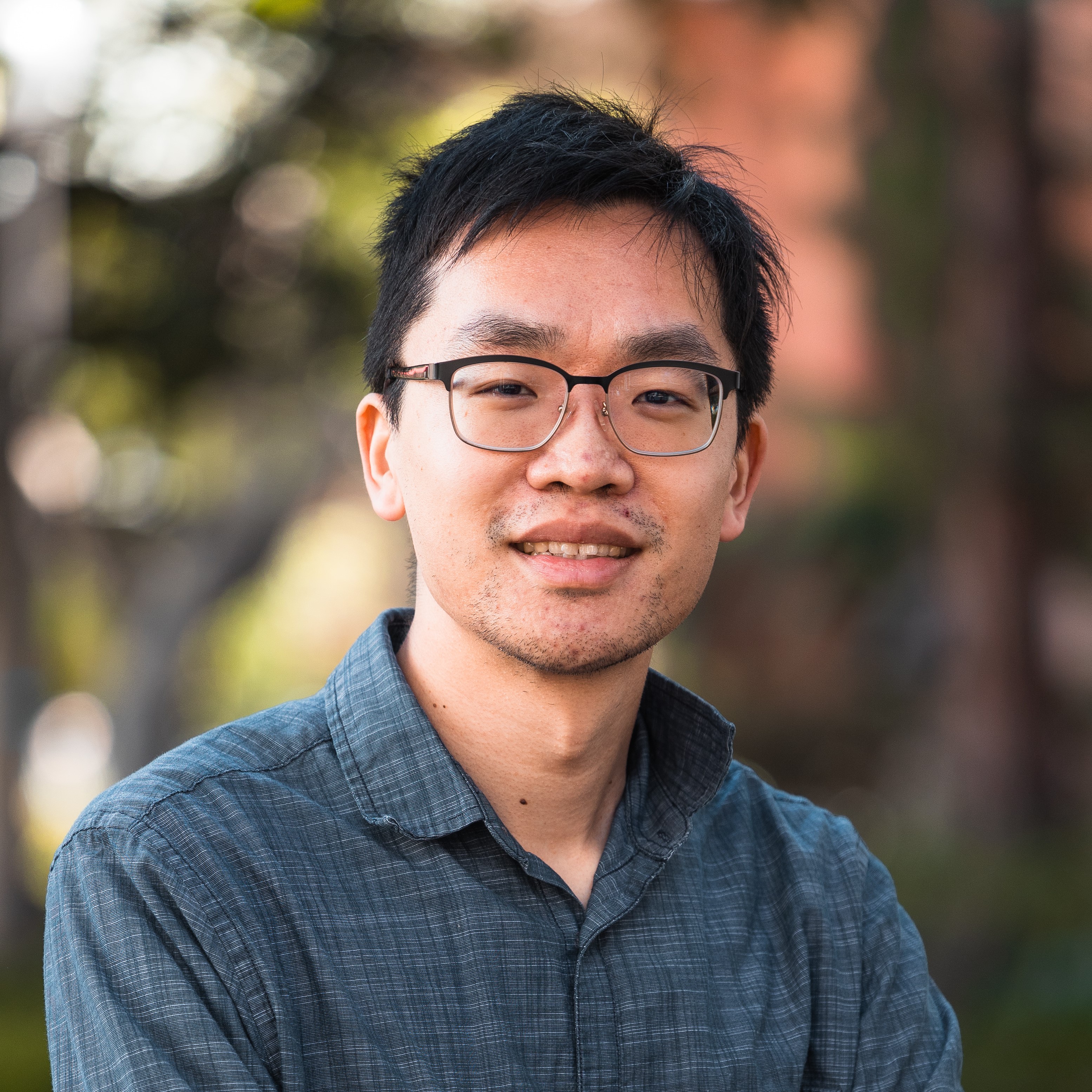
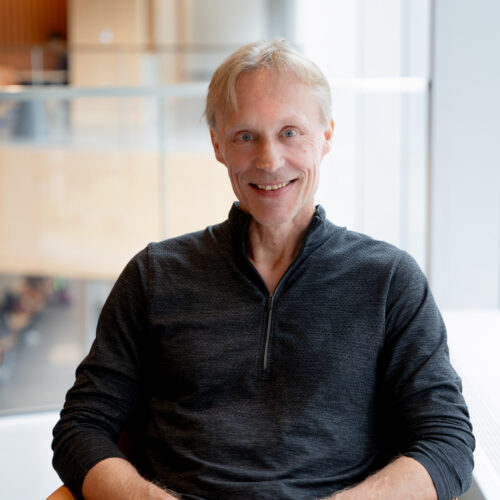
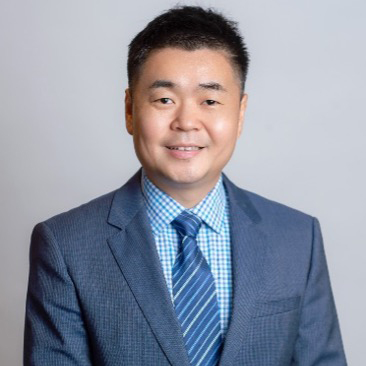
Dr. Hassan Qudrat-Ullah is a Professor at the School of Administrative Studies, York University, and Coordinator of the Certificate in Logistics Management. He holds a PhD in Decision Sciences from NUS Business School and completed a post-doctoral fellowship at Carnegie Mellon University. His research focuses on dynamic decision making, system dynamics modeling, energy planning, and interactive learning environments. He teaches courses on quantitative methods, logistics, and decision analysis, informed by global industry experience across 20+ countries. Research interests include sustainability, climate change, systems thinking, and educational applications of decision sciences. He serves as Editor-in-Chief of the International Journal of Complexity in Applied Science and Technology and is a member of IEEE, DSI, and the International System Dynamics Society. His work has been published in Energy , Decision Support Systems , and others. Key projects include studies on 'structured-debriefing in dynamic decision making' and renewable energy policies in Africa. His recent articles (2023–2025) address AI integration in energy governance, system dynamics for supply chain resilience, and education for sustainability. Hassan advocates for systems thinking in K-12 education and enjoys traveling (visited 129 countries) and bird-watching.
Robin Jia is an Assistant Professor in the Thomas Lord Department of Computer Science at the University of Southern California (USC) , where he leads the AI, Language, Learning, Generalization, and Robustness (Allegro) Lab . His research focuses on enhancing the reliability and robustness of large language models (LLMs) through mechanistic understanding, benchmarking under distribution shifts, and neurosymbolic integration. Key affiliations include collaborations with the USC Keck School of Medicine and contributions to legal frameworks like the EU's Digital Services Act. Robin's research spans multiple domains, including: Scientific analysis of LLM capabilities in in-context learning , data memorization , and numerical reasoning Advancements in robust NLP systems , emphasizing uncertainty estimation and calibration Development of methods combining LLMs with symbolic solvers for complex reasoning tasks Interdisciplinary applications in medicine and law , such as privacy-preserving synthetic data generation and medical misconception evaluation . His recent publications (2024-2025) address Fourier-based numerical embeddings (NeurIPS), neurosymbolic planning (NAACL), and multimodal benchmarking (COLM), with a strong emphasis on privacy , fairness , and transparency . Scientific awards include the Google Research Scholar Award (2023) , SoCalNLP Symposium Best Paper Awards , and ACL/EMNLP outstanding papers . He advises PhD students like Johnny Wei and Ameya Godbole, and has secured grants from the NSF , USC-Capital One , and USC-Amazon .
Tommi Jaakkola is the Thomas Siebel Professor of Electrical Engineering and Computer Science and the Institute for Data, Systems, and Society at the Massachusetts Institute of Technology. He received his MSc in theoretical physics from Helsinki University of Technology in 1992 and his PhD from MIT in computational neuroscience in 1997. After completing a postdoctoral position in computational molecular biology as a DOE/Sloan fellow at UCSC, he joined the MIT EECS faculty in 1998. His research advances how machines can learn, predict or control, and do so at scale in an efficient, principled, and interpretable manner. His work in machine learning extends from foundational theory to modern applications, focusing especially on statistical inference and estimation tasks that lie at the heart of complex learning problems. He designs new methods, theory and algorithms to automate the use and generation of semi-structured data such as natural language text, images, molecules, or strategies. Jaakkola applies and develops algorithms to solve multi-faceted recommender, retrieval, or inferential tasks (particularly in biomedical contexts), design and optimize molecules or reactions for drug design, and model strategic, game theoretic interactions. His recent work heavily focuses on diffusion models, protein structure prediction, molecular design, and generative AI, with significant publications in top conferences including ICML, NeurIPS, and ICLR. His scientific contributions span multiple disciplines with significant impact in both theoretical machine learning and practical applications in computational biology and chemistry, including notable work on antibiotic discovery published in Cell. Current advisees: Julia Balla, Bowen Jing, Hannes Stärk, Peter Holderrieth, Chenyu Wang Recent graduates: Gabriele Corso (Boltz PBC), Ezra Erives (DE Shaw), Jason Yim (Xaira) Jaakkola maintains an active research program through MIT's Computer Science and Artificial Intelligence Laboratory (CSAIL) and the Institute for Data, Systems, and Society (IDSS), with his office located in the Stata Center (32-G470). His work bridges theoretical machine learning with practical applications, making significant contributions to both the academic field and potential real-world impact in healthcare and drug discovery.
Sanjiv Singh is a Research Professor at the Robotics Institute within Carnegie Mellon University's School of Computer Science. His academic journey at CMU spans from Systems Scientist (1995-2001), to Senior Research Scientist (2001-2003), Associate Research Professor (2003-2007), and finally Research Professor since 2007. He also holds an adjunct faculty position in Mechanical Engineering since 2009. Singh serves as Editor-in-Chief of the Journal of Field Robotics, demonstrating his leadership in the robotics community. His educational background includes a Ph.D. and M.S. in Robotics from Carnegie Mellon University (1995, 1992), an M.S. in Electrical Engineering from Lehigh University (1985), and a B.S. in Computer Science from the University of Denver (1983). Dr. Singh's research focuses on three primary themes: Autonomous Navigation (developing motion planning and control for ground and air vehicles with applications in agriculture, exploration, and low-flying aircraft), Coordinated Multi-Robots (examining team-based tasks like structure assembly and search/rescue operations), and Forceful Interaction with the world (using physical models to enable robots to handle complex, high-force interactions). His work spans aerial robotics, agricultural and forestry robotics, mining robotics, 3D vision, sensing and perception, visual servoing, motion planning, and field service robotics. Analysis of his recent publications (2016-2020) reveals a strong focus on collision avoidance algorithms, sensor fusion techniques, and real-time navigation systems. His research demonstrates consistent advancement in SLAM (Simultaneous Localization and Mapping) technologies, particularly in GPS-denied environments, with increasing sophistication in handling complex aerial maneuvers and multi-robot coordination. Editor-in-Chief of Journal of Field Robotics Dr. Singh has advised numerous graduate students throughout his career, with current advisees including Matt Aasted (Ph.D), Andrew Chambers (M.S), Hugh Cover (M.S), Michael Dille (Ph.D), and Justin Haines (M.S). His past students include prominent researchers like Sebastian Scherer, Joe Djugash, Fred Heger, Geoff Hollinger, and Ji Zhang who have gone on to make significant contributions in robotics. His research has been supported through various projects including CASC (agricultural applications), Riverine, Transformer, Trestle, and Ember. His laboratory work focuses on developing practical robotic systems capable of operating in challenging real-world environments, with particular emphasis on agricultural applications, search and rescue operations, and coordinated multi-robot teams that can work effectively alongside humans.
Ole Winther is Professor in High dimensional biological data analysis/Machine learning at the Department of Biology, University of Copenhagen and Professor in Data science and complexity at DTU Compute, Technical University of Denmark. He serves as CRO and co-founder of raffle.ai, CTO and co-founder of FindZebra, Head of ELLIS Unit Copenhagen, and co-PI of the Machine Learning for Life Science Center. His research spans Bioinformatics , Machine Learning , and AI for Science , focusing on applying deep learning to biological sequence analysis, latent variable models, and medical NLP. Winther's work develops predictive and generative models for bioinformatics, with significant contributions to protein localization tools (SignalP, DeepLoc, DeepTMHMM), single-cell genomics, and novel deep learning architectures like variational autoencoders and diffusion models. Analysis of Winther's recent publications (2023-2025) reveals a strong trend toward integrating protein language models with traditional bioinformatics approaches and applying diffusion models to scientific problems. His work bridges theoretical machine learning advancements with practical applications in biology and medicine, particularly in protein sequence analysis, medical search engines, and scientific simulation acceleration. Winther currently supervises a diverse research group including Panagiotis Antoniadis, Rachael M. DeVries, Jun Wang, Beatrix M. G. Nielsen, Felix G. Teufel, Irene R. Rodriguez, Anders Christensen, and Christopher Heje Grønbech. His former students have established successful careers at institutions including Google, Apple, and various startups, with notable alumni like Casper Sønderby (Google Brain) and Søren Sønderby (Apple). He leads significant research initiatives including the ELLIS Unit Copenhagen and the Machine Learning for Life Science Center, while maintaining active industry partnerships through his co-founded companies raffle.ai (enterprise search using NLP) and FindZebra (search engine for rare diseases). His teaching includes Deep Learning courses at both DTU (02456) and University of Copenhagen (NDAK24002U).
Sean Cao serves as Associate Professor (with tenure) at the Robert H. Smith School of Business, University of Maryland, where he is Director and Co-founder of the AI Initiative for Capital Market Research. He also holds an affiliation as professor at Harvard Business School's D 3 Institute. His academic journey began with a Ph.D. from the University of Illinois at Urbana-Champaign. Dr. Cao's research focuses on the intersection of artificial intelligence and capital markets, with particular expertise in how machine learning transforms financial analysis, corporate disclosure practices, and investment decision-making. His work examines the evolving relationship between human analysts and AI systems, blockchain applications in financial reporting, and the strategic adaptation of corporate communications for machine readership. He has pioneered research on the "AI divide" among investor groups and developed frameworks for human-AI collaborative stock analysis. His publication portfolio spans top journals including Journal of Financial Economics, Review of Financial Studies, Journal of Accounting Research, and Management Science. The research demonstrates consistent thematic progression toward increasingly sophisticated AI applications in finance, with recent work exploring distributed ledger technologies for auditing, machine learning for extracting private information from disclosures, and the economics of greenwashing in ESG funds. His studies frequently combine textual analysis with traditional financial metrics to uncover novel market insights. Fama-DFA Prize from Journal of Financial Economics for best paper in capital markets and asset pricing Michael J. Brennan Award from Review of Financial Studies Deloitte Initiative for AI and Learning award for developing trustworthy AI for social equity PanAgora Asset Management's Dr. Richard A. Crowell Memorial Prize Multiple best paper awards from Midwest Finance Association, Global AI Finance Conference, and Asian Finance Association Dr. Cao has delivered over 200 invited research talks at major institutions including the Central Bank of Japan, Central Bank of Thailand, and U.S. Securities and Exchange Commission. He serves as Guest Associate Editor for Management Science and has co-chaired Review of Financial Studies conferences on FinTech and Machine Learning. His educational initiatives include a widely adopted free AI textbook for finance and accounting that has been implemented at universities worldwide including Indiana University, UT Dallas, and University of Minnesota. As Director of the AI Initiative for Capital Market Research, Dr. Cao leads a multidisciplinary team exploring practical AI applications in finance. The initiative has secured significant funding including a $150,000 grant from GRF CPAs & Advisors. His research group maintains strong industry connections through partnerships with regulatory bodies, financial institutions, and technology companies, facilitating the translation of academic research into practical financial applications.
Bo Dai is an Assistant Professor at the School of Computational Science and Engineering, Georgia Institute of Technology, and a Staff Research Scientist at Google DeepMind. His research focuses on Agent AI, Generative Models, and Representation Learning, aiming to create decision-making agents through world modeling. He holds a Ph.D. from Georgia Tech (2013–2018) and previously worked at Google Brain. Dai has authored numerous influential papers in top conferences like NeurIPS, ICML, and ICLR, and received the AISTATS Best Paper Award (2016). Education: Ph.D., School of Computational Science and Engineering, Georgia Tech (2013–2018) Research Interests: Reinforcement Learning and Representation Learning for decision-making agents Generative Models and their integration with Agent AI Provable and scalable algorithms for real-world applications His work bridges theory and practice, emphasizing spectral representations and provable guarantees in complex systems. Key Article Trends: His recent work emphasizes scalable spectral methods for multi-agent systems, diffusion policies, and representation-based techniques in reinforcement learning. He also explores LLM alignment and sim-to-real transfer learning. Awards: AISTATS Best Paper Award (2016) NeurIPS Workshop Best Paper (2017) Ross Fellowship (2011–2012) Advising & Grants: Supervises 6 current Ph.D. and M.S. students. Active in organizing workshops on reinforcement learning and serves as an Area Chair for top conferences. Labs & Software: Leads development of Representation-based Reinforcement Learning and Repr-Control toolboxes for nonlinear control and stochastic systems.
Lutz Schubert is a researcher at the Institute of Computer Science , University of Cologne. He focuses on efficient distributed and parallel execution environments for heterogeneous systems, notably the MyThOS operating system in collaboration with Brandenburg University of Technology, Cottbus-Senftenberg. His interdisciplinary work bridges computer science and digital archaeology , addressing modeling of non-deterministic events from sparse excavation data and exploring human behavior constraints in archaeological contexts. Research Interests Design of modular, scalable operating systems for distributed systems Optimization of execution environments for heterogeneous hardware Application of complex systems modeling to digital archaeology Statistical and probabilistic methods for archaeological interpretation Autonomic resource distribution and adaptation in computing Publication Trends : His work spans operating systems , parallel computing , and digital humanities , with recent emphasis on probabilistic reasoning in archaeology and adaptive OS design for multicore architectures. Labs & Collaborations : He collaborates with Brandenburg University of Technology on MyThOS and leads research in computational archaeology as chair of Computer Applications and Quantitative Methods in Archaeology (CAA) , Germany.
Aniket (Niki) Kittur is a Professor in the Human-Computer Interaction Institute (HCII) at Carnegie Mellon University's School of Computer Science. His research focuses on AI-augmented cognition, exploring how humans and computational systems can partner to accelerate knowledge acquisition and innovation. With over 100 peer-reviewed publications and 17 best paper awards or honorable mentions, Dr. Kittur has established himself as a leader in human-computer interaction and social computing. Dr. Kittur's research spans multiple interconnected areas focused on enhancing human cognition through technology. His work on crowd-augmented cognition examines how crowds and computation can collectively enhance human intellect. In social computing, he investigates how sociotechnical architectures can motivate and coordinate large groups for complex tasks. His research in data visualization and sensemaking explores how people collect, organize, and make decisions with online information. Most recently, his work has shifted toward LLM-augmented cognition, investigating how humans and large language models can work together in partnership to achieve better decisions and greater creativity than either could alone. Dr. Kittur's publications reveal a consistent trajectory toward increasingly sophisticated human-AI collaboration systems. Early work focused on crowdsourcing complex tasks (CrowdForge, CrowdSynthesis), then evolved to knowledge acceleration systems (Knowledge Accelerator, Fuse), and has recently centered on LLM-integrated cognition (Selenite, InkSpire, BioSpark). His research consistently demonstrates practical impact, with systems influencing products used by millions and receiving coverage in major media outlets including Nature News, The Economist, and The Wall Street Journal. Kavli fellow NSF CAREER award recipient Allen Newell Award for Research Excellence Inductee into the CHI Academy 17 best paper awards or honorable mentions across his publications Dr. Kittur has advised numerous students, including Andrew Kuznetsov, and has secured major research funding from NSF, NIH, Google, Microsoft, Bosch, Toyota, and other organizations. His Skeema browser extension project, which addresses tab overload through innovative project-based organization, has shown remarkable user retention and represents a practical application of his research on knowledge acceleration. His work with industry partners has influenced products used by millions, including Semantic Reader, Google Shopping, and Wikipedia features.
Romain Lopez is an Assistant Professor of Computer Science and Biology at New York University, with a joint appointment in the Courant Institute of Mathematical Sciences and the Department of Biology. He will be joining NYU in September 2025, bringing expertise at the intersection of machine learning and computational biology. Prior to joining NYU, he was a Postdoctoral Fellow at Genentech and Stanford Medicine from 2021 to 2025, working with Jonathan Pritchard and Aviv Regev. Dr. Lopez received his educational training at prestigious institutions: PhD in Computer Science (2021) from the University of California, Berkeley, advised by Mike Jordan and Nir Yosef M.S. in Applied Mathematics (2016) from École polytechnique, Palaiseau, France Dr. Lopez's research focuses on developing machine learning methods to understand biological systems at the cellular level. His work bridges computational techniques with biological applications, particularly in single-cell and spatial omics analysis. He pioneered probabilistic approaches for single-cell analysis with scVI and co-developed scvi-tools, now widely adopted tools in the field. His research spans deep generative models, causal inference, perturbation modeling, and representation learning for biological data. His publication record demonstrates a consistent trajectory of innovation in computational biology, with recent work focusing on spatial biology, disentangled representations of cellular perturbations, and causal modeling of cellular responses. He has made significant contributions to the field of single-cell analysis, developing methods that help scientists interpret complex cellular data and predict how cells respond to various perturbations. Dr. Lopez has received numerous honors and awards for his research: Best Paper Award from the ICML Workshop on AI for Science (2024) Best Paper Award Honorable Mention from the AAAI Conference on Artificial Intelligence (2021) Best Student Poster Award from the ICML Workshop on Computational Biology (2019) UC Berkeley EECS Departmental Graduate Fellowship (2016) Carnot Foundation Fellowship (2016) Monahan Foundation Fellowship (2016) French National Defence Medal, Bronze Echelon (2014) At NYU, Dr. Lopez will lead the Biological Machine Learning group, which develops probabilistic machine learning methods to uncover biological mechanisms governing cellular behavior and disease. His lab focuses on creating tools that transform complex cellular data into biological insights, with applications in understanding cancer, immune responses, and fundamental cellular processes. His work has significant implications for precision medicine and drug discovery.
Blase Ur is an Associate Professor of Computer Science at the University of Chicago, leading the UChicago SUPERgroup (Security, Usability, & Privacy Education & Research group). His research focuses on data-driven methods to improve online security, privacy, and usability of complex systems. He holds a PhD from Carnegie Mellon University and an AB from Harvard University. Education: PhD in Societal Computing, Carnegie Mellon University (2016) AB in Computer Science, Harvard University Research Interests: Blase's work spans computer security, privacy, HCI, and ethical AI. He develops tools like password meters, privacy transparency systems, and IoT security solutions. His SUPERgroup emphasizes interdisciplinary collaboration, with projects addressing data-driven decision-making and usability challenges in AI and IoT. Articles Trends: Recent work includes studies on ad transparency systems, user perceptions of privacy in AI, and barriers to passwordless authentication. Research often combines empirical user studies with technical implementations to bridge gaps between security mechanisms and user needs. Awards: NSF CAREER Award (2021) Quantrell Award for Teaching (2021) SIGCHI Outstanding Dissertation Award (2018) Advising & Grants: Advisor to PhD students like Kevin Bryson. Secured grants from NSF, Mozilla, and Meta. Active in outreach to broaden CS participation, including K-12 programs. Labs & Teams: Co-director of the SUPERgroup and affiliated with the Systems Group and CERES Center for Unstoppable Computing at UChicago.
Roberto Martin-Martin is an Assistant Professor of Computer Science at the University of Texas at Austin, where he leads the Robot Interactive Intelligence (RobIN) Lab. His research bridges robotics, computer vision, and machine learning to enable robots to operate autonomously in human-centric environments like homes and offices. Previously, he was a Postdoctoral Scholar at the Stanford Vision and Learning Lab working with Fei-Fei Li and Silvio Savarese, and an AI Researcher at Salesforce AI. Education: Ph.D. and M.Sc. in Robotics from Technische Universität Berlin (TUB), advised by Professor Oliver Brock B.Sc. from Universidad Politécnica de Madrid Dr. Martin-Martin's research focuses on developing AI algorithms that combine reinforcement learning and imitation learning with advanced planning and control to address core challenges in robot perception. His work spans mobile and whole-body manipulation, dexterous and contact-rich interactions, and long-horizon tasks in unstructured environments. He takes inspiration from human cognition through psychology and cognitive science to develop solutions for skills ranging from simple pick-and-place operations to complex tasks like cooking and furniture assembly. His recent publications demonstrate a strong trend toward enabling robots to learn from human demonstrations, particularly through video, and to safely adapt these demonstrations to their own morphology. There's significant emphasis on mobile manipulation, bimanual tasks, and developing hardware that supports robust robot learning through trial and error. His work shows increasing integration of large language models and vision-language models to enhance robot understanding and task execution. Scientific Awards: RSS Pioneer (2020) Winner of Amazon Picking Challenge (2015) RSS Best Systems Paper Award (2016) ICRA Best Paper Award IROS Best Mechanism Award Amazon Faculty Award AAAI Young Faculty IJCAI Early Faculty Nominated for Best Paper at IROS (2014, 2017) Dr. Martin-Martin advises PhD students including Arpit Bahety, who is working on mobile manipulation and learning. He serves as Chair of the IEEE Technical Committee on Mobile Manipulation and is a co-founder of QueerInRobotics. His research is supported by industry partnerships and academic funding sources that enable his lab to develop both hardware and software innovations in robotics. He directs the Robot Interactive Intelligence (RobIN) Lab at UT Austin, which takes a holistic approach to robot intelligence, developing both the hardware (like the BaRiFlex gripper) and software frameworks necessary for robots to learn from interaction. The lab's research addresses the full pipeline from perception to action, with particular emphasis on learning from human demonstrations, safe exploration, and adapting to novel objects and environments.
Jonas Fischer is the head of the Explainable Machine Learning group at the Max Planck Institute for Informatics, Department of Computer Vision and Machine Learning. His research focuses on interpreting complex machine learning models, particularly in genomics and healthcare, aiming to enhance robustness and alignment with human decision-making. Prior to his role at MPI, he was a postdoctoral fellow at Harvard University's Department of Biostatistics, where he worked on interpretable models for gene regulatory systems in cancer. Education: PhD in Computer Science from Saarland University (2022), with a thesis titled More than the sum of its parts , exploring the intersection of pattern mining and deep learning. He has contributed to advancing methods in neural network pruning, federated learning, and low-dimensional embeddings (e.g., dtSNE, Mercat). His work bridges computational biology, data mining, and machine learning, with applications in DNA methylation analysis, graph-based differential networks, and biomedical informatics. Key research areas include: (1) Explainable AI and neural network interpretability, (2) Biomedical applications of machine learning (e.g., gene regulatory networks, cancer genomics), (3) Low-dimensional embeddings and visualization techniques, (4) Federated learning for privacy-preserving collaborative models, and (5) Pattern mining for error analysis in NLP and classification tasks. Publications span top venues like NeurIPS, ICLR, Bioinformatics, and Genome Biology. His group develops tools such as BONOBO for omics data integration and node2vec2rank for scalable graph analysis. He actively collaborates with biomedical researchers to address challenges in data-driven healthcare and precision medicine.
Dr. Mo Rastgaar is a Professor at Purdue Polytechnic Institute, Purdue University. He holds a PhD in Mechanical Engineering from Virginia Tech (2008) and completed a postdoctoral fellowship at MIT's Newman Laboratory for Biomechanics and Human Rehabilitation. He leads the Human-Interactive Robotics Lab (HIRoLab), focused on assistive and rehabilitation robots for enhanced mobility, particularly lower-extremity devices. His research emphasizes understanding agile gait dynamics through human experiments and modeling. Research interests include assistive robotics, cyber-physical systems, dynamics, and control systems. Notable awards include the 2014 NSF CAREER Award. He has secured grants such as the 2019 NRI Collaborative Grant on robotic ankle prosthetics and 2020 grants for undersea infrastructure. Dr. Rastgaar's work bridges biomechanics, robotics, and clinical applications, advancing prosthetic designs and human-robot interaction. Key contributions include developing steerable powered ankle-foot prostheses and exploring multi-robot systems for underwater exploration. His labs integrate interdisciplinary approaches to solve complex mobility challenges, emphasizing both technical innovation and real-world clinical impact.
Jiaxuan You is an Assistant Professor at the Siebel School of Computing and Data Science, University of Illinois at Urbana-Champaign, leading the U Lab focused on achieving Artificial General Intelligence (AGI) in digital environments. His research spans graph neural networks (GNNs), relational data, foundation models, and machine learning systems. PhD and MS in Computer Science from Stanford University (2021) Developed GraphGym and PyTorch Geometric (PyG) for graph learning Core member at Kumo AI (2021-2023) His research explores: Graph-enhanced LLMs: Integrating relational structures into foundation models AGI Development: Self-optimizing AI agents and tool utilization ML Systems: Scalable architectures and redundancy-free computation Interdisciplinary Applications: Financial networks, crop yield prediction, and metro systems Recent publications focus on temporal reasoning, multi-agent dynamics, and hybrid architectures for LLMs. He actively develops open-source tools like DBGYM and GraphRouter. Scientific recognition includes: JPMC PhD Fellowship Baidu Scholarship Best Student Paper at AAAI 2017 World Bank Big Data Innovation Challenge winner He mentors PhD and intern students, emphasizing machine learning systems expertise. His lab collaborates on AGI workshops (e.g., ICLR 2024) and industry projects.