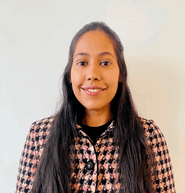
Dr. Johan Barthelemy is an Honorary Associate Professor at the University of Wollongong's Faculty of Sciences - SAEF, where he leads the SMART IoT Hub and Digital Living Lab. His research focuses on complex systems, agent-based simulation, AI for IoT, and smart cities. He holds a PhD in Applied Mathematics from the University of Namur (Belgium) and has contributed to projects like the mipfp statistical package for R. His work spans environmental monitoring, transportation modeling, and infrastructure resilience. He supervises higher-degree research students and collaborates with NVIDIA as a Deep Learning Institute Ambassador. Education: PhD in Applied Mathematics, University of Namur (2007–2014) MSc in Mathematics, University of Namur (2005–2007) BSc in Applied Mathematics, University of Namur (2003–2005) Research Interests: Agent-based simulation and synthetic population generation AI-driven video analytics for smart cities and environmental monitoring IoT sensor networks and edge computing GPU-based high-performance computing Climate change impact analysis via drones and multispectral imaging Funding & Projects: Lead investigator for ARC grants on future mobility and Antarctic environmental futures CSIRO-funded project on AI-driven sugarcane assessment Multiple University of Wollongong grants for IoT sensors, climate testing facilities, and disaster-resilient transport Labs & Collaborations: SMART Infrastructure Facility (UOW) Namur Center for Complex Systems (Belgium) NVIDIA Deep Learning Institute partnership
Kevin Heaslip is a Professor and Director of the Center for Transportation Research in the Department of Civil and Environmental Engineering at the University of Tennessee, Knoxville. He joined the university in 2022, bringing extensive experience from his prior role as Professor and CACI Faculty Fellow at Virginia Tech. Education: PhD in Civil and Environmental Engineering, University of Massachusetts Amherst, 2007 MS in Civil and Environmental Engineering, Virginia Tech, 2003 BS in Civil and Environmental Engineering, Virginia Tech, 2002 Dr. Heaslip's research focuses on the intersection of transportation engineering, intelligent systems, and cybersecurity. His work spans future transportation concepts such as electrified and automated vehicles, transportation operations including freeway and transit management, and cybersecurity for transportation and critical infrastructure. He applies advanced data analytics, machine learning, and cyber-physical systems modeling to real-world challenges in mobility and national security. The recent articles highlight a strong trend in leveraging big data and artificial intelligence for transportation mode detection, traffic event identification, and security risk assessment. His work increasingly integrates cybersecurity into transportation systems, particularly in autonomous and connected vehicles, reflecting the evolving technological landscape and national priorities in infrastructure protection. Scientific Awards and Recognitions: Virginia Tech G.V. Loganathan Faculty Achievement Award for Excellence in Civil Engineering Education (2019) Virginia Tech Favorite Faculty Award (2017) Outstanding Alumni, University of Massachusetts Institute of Transportation Engineers Student Chapter (2015) Outstanding Young Alumni, Virginia Tech Department of Civil & Environmental Engineering (2013-2014) USU Civil & Environmental Engineering Teacher of the Year (2014) USU Civil & Environmental Engineering Undergraduate Research Mentor of the Year (2013) USU Civil & Environmental Engineering Outstanding Researcher (2011, 2012) USU College of Engineering Undergraduate Research Mentor of the Year (2011) Dr. Heaslip has secured over $25 million in research grants and contracts from federal and state governments as well as industry partners. He has advised numerous students and mentored undergraduate researchers, receiving multiple awards for teaching and mentorship. His professional service includes membership in the American Society of Civil Engineers (ASCE), Institute of Transportation Engineers (ITE), and Transportation Research Board (TRB), as well as serving as an Appointed Member of the Resilient America Roundtable of the National Academy of Sciences from 2014 to 2020. He leads the Center for Transportation Research at UT Knoxville, a multidisciplinary lab focused on advancing transportation technologies and policies. The lab's research is organized around three thrusts: future transportation systems (electrified, connected, and automated vehicles), transportation operations (freeway, transit, and corridor management), and cybersecurity of transportation and critical infrastructure.
Sonakshi Garg is a Research Fellow (Postdoctoral fellow) at the Department of Computing Science, Umeå University, affiliated with the NAUSICA research group (PrivAcy-AWare traNSparent deCIsions). Her office is located at MIT House, MIT.A.420 in Umeå. Dr. Garg's research focuses on the intersection of artificial intelligence and data privacy, with specific expertise in: Privacy-preserving techniques for high-dimensional data and foundation models Synthetic data generation and distribution learning Differential privacy implementations in machine learning Federated learning security and adversarial robustness Geometric and manifold-based privacy methods Her publication portfolio demonstrates significant contributions to privacy-enhancing technologies, particularly through innovative combinations of k-anonymity with differential privacy, federated learning security frameworks, and manifold-based data protection methods. Recent works explore applications in autonomous driving security, COVID-19 forecasting, and Large Language Model privacy preservation. She collaborates with international researchers across Europe and contributes to major conferences including ESORICS, SEC, and SECRYPT. Dr. Garg is an active member of the NAUSICA research group, advancing privacy-aware decision systems through theoretical and applied research.
Dr. Tillman Weyde is a Reader in the Department of Computer Science at City, University of London , where he has been employed since 2021. He leads the Machine Intelligence and Media Informatics Research Group and is a member of the Machine Learning Group . Prior to this, he served as Senior Lecturer (2009–2021) and Lecturer (2005–2009) at City, and worked as a researcher at the University of Osnabrück (2001–2005), coordinating the MUSITECH project. His academic background includes PhD in Music Technology (2002), MSc in Computer Science (1999), and MSc in Mathematics, Music, Philosophy & Pedagogy (1994), all from the University of Osnabrück. Research Focus: Machine learning and signal processing methods for data analysis with applications in finance, audio, NLP, music, health, security, and education. His recent work emphasizes inductive biases in neural networks for rule-learning, extrapolation, generalization, and interpretability. Grants & Projects: Principal Investigator for the AHRC-funded Digital Music Lab (2012–2017) and Integrated Audio-Symbolic Model of Music Similarity (2017–present). Co-investigator in Innovate UK and EPSRC projects on safer gambling ( Advancing Consumer Protection , 2015–2018) and Raven (2012–2021). Collaborations: Affiliated with the Institute of Cognitive Science (Osnabrück), Intelligent Systems Research Laboratory (Reading), and the MPEG Ad-Hoc Group on Symbolic Music Representation. Awards: Co-author of the 2000 Comenius Medal-winning educational software Computer Courses in Music Ear Training and co-editor of the Osnabrück Series on Music and Computation . Publications: Over 150 peer-reviewed works including conference papers, journal articles, and book chapters, focusing on interdisciplinary applications of machine learning in music, health, and finance. Students: Supervised 13 PhD students across topics like grammar bias in neural networks, emotion recognition from audio, extrapolation behavior in neural networks, relation-based patterns, legal text parsing, and more.
Professor James Griffin is a leading scholar at the University of Exeter Law School specializing in Intellectual Property Law's intersection with emerging technologies. His research examines copyright frameworks for quantum computing, biological systems, and 3D printing, with significant contributions to digital watermarking and automated licensing systems. As Vice Chair of BILETA (2024-2027), he bridges academic research and policy development. His educational foundation includes a PhD from the University of Bristol (2002-2005), supported by a Law Department Scholarship and Graduate Teaching Assistantship. This training underpins his interdisciplinary approach combining legal theory with technological innovation. Griffin's research explores how Intellectual Property laws must evolve to address disruptive technologies. His monograph The State of Cultural Biology (2023) argues for historical awareness in regulating biological computing, while The State of Creativity (2019) examines societal development through creative frameworks. Current interests span copyright rationality, meme culture, and AI's impact on authorship, always emphasizing the legal-philosophical dimensions of technological change. Analysis of his recent publications reveals three dominant trajectories: blockchain authentication for 3D printing IP (2023), quantum computing's copyright implications (2024), and crisis-driven IP access models (2021). His work consistently bridges theoretical innovation with practical applications, particularly in watermarking technologies and cross-jurisdictional dispute resolution. Griffin has secured substantial research funding as Principal or Co-Investigator: 2024-2025: £167,156 Neuron Intelligence project (PI) 2021-2023: £82,218 AHRC grant for 3D printing in China 2015-2017: £97,000 AHRC-Newton Fund project on Chinese 3D printing Multiple EPSRC grants totaling over £60,000 for IP-technology convergence He leads the AHRC-funded 3D printing consortium involving Nottingham Ningbo, Essex, and Durham universities, driving practical implementations including patented watermarking systems (CN-107330844B). His current work with Yawning Titan on neuron intelligence exemplifies his commitment to translating theoretical frameworks into operational technologies for quantum watermarking and digital rights management.
Martin Wulf Gerdes is an Associate Professor at the Department of Information and Communication Technology, University of Agder, Norway. With a Ph.D. in eHealth and over two decades of experience in telecommunications and healthcare technology research, he focuses on developing user-friendly, interoperable eHealth solutions using ICT and IoT. His career spans roles at Ericsson Eurolab and academic leadership in Norway. Education: M.Sc. equivalent in General Electrical Engineering (1998) from RWTH Aachen, emphasizing ICT. Ph.D.: Information and Communication Technologies with eHealth specialization (2019) from University of Agder. Research Interests: Gerdes explores AI-driven decision support systems, distributed eHealth infrastructure, telemedicine, and assistive technologies for chronic disease management. His work bridges IoT, data privacy, and user-centered design in healthcare robotics. Teaching: Since 2014, he has taught at bachelor's and master's levels, currently leading courses in Communication & Cooperation, Technology Understanding, and seminar projects in eHealth. Scientific Publications: His 15 most recent articles (2020-2024) span AI in dental radiology, blood glucose prediction, digital twins, and ethical considerations in healthcare algorithms. Topics include IoT integration, data privacy, and pandemic analytics.
Ashwin Machanavajjhala is a Professor in the Department of Computer Science at Duke University's Pratt School of Engineering. With over 166 publications spanning from 2001 to 2025, his research has significantly impacted the fields of differential privacy, database systems, and data security. His recent work focuses on practical applications of differential privacy for government data releases, particularly for the US Census Bureau. Machanavajjhala's research primarily centers on differential privacy, with significant contributions to database systems, privacy-preserving data analysis, and statistical disclosure control. His work bridges theoretical foundations with real-world applications, particularly in government statistics and census data protection. He has developed numerous frameworks and algorithms including DPXPlain for explaining differentially private query results, PreFair for generating fair synthetic data, and various components of the US Census Bureau's disclosure avoidance system. His research demonstrates a consistent trajectory from theoretical privacy mechanisms toward practical implementations that balance privacy guarantees with data utility. His recent publications reveal a strong focus on applying differential privacy to census data (SafeTab, PHSafe), developing methods for explaining private query results (DPXPlain), addressing fairness in private data analysis (PreFair), and exploring privacy applications in blockchain technology. His work shows increasing engagement with government agencies, particularly the US Census Bureau, where his research has directly informed disclosure avoidance systems for the 2020 Census. Machanavajjhala has advised numerous PhD students who have become prominent researchers in privacy and databases, including Ryan McKenna, Xi He, Yuchao Tao, and David Pujol. His collaborative network includes leading researchers from major institutions, with frequent collaborations with Gerome Miklau, Michael Hay, and Daniel Kifer. His research has been consistently funded by major grants supporting privacy-preserving data analysis. He leads research on the Tumult Analytics framework, a robust and scalable differential privacy system, and has been instrumental in developing privacy technologies for the US Census Bureau's 2020 data release. His work demonstrates a commitment to making differential privacy practical for real-world statistical agencies and data providers.
Marika Apostolova Trpkovska is an Associate Professor at the Faculty of Contemporary Sciences and Technologies, South East European University (Tetovo, Macedonia). Her academic work spans cybersecurity, blockchain technology, and educational technology with a focus on Industrial IoT security, semantic web applications, and digital learning systems. PhD in Computer Science (Specialty: e-Medical Services based on Semantic Web) MSc in Software Development and Applications BSc in Computer Sciences Her research covers cybersecurity frameworks for Industrial IoT, blockchain applications in public administration, and educational technology innovations including VR/AR integration and gamification. She has published extensively in international conferences and journals on these topics, with recent works focusing on machine learning-enhanced security protocols and decentralized real estate management systems. Current publications (2023-2024) highlight her expertise in IIoT security standards, smart contract development using Ethereum/IPFS, and cybersecurity threat modeling. Earlier works examine e-learning systems implementation, gender disparities in CS research, and real-time operating system validation. She serves as part-time academic staff member while maintaining technical roles in learning management system administration (LIBRI, ANGEL) and teaching responsibilities across software engineering, algorithms, and programming disciplines.
Liane Huttner serves as a Lecturer in Private Law and Criminal Sciences at the Jean Monnet Faculty of Law, University of Paris-Saclay, specializing in legal frameworks governing digital environments with emphasis on human rights and democratic values amid technological change. She actively contributes to national academic discourse through conferences and collaborative research initiatives across French institutions. Dr. Huttner earned her PhD in Law from Paris 1 Panthéon-Sorbonne in 2022, defending her dissertation "The Algorithm's Decision: Private Law Study on Human-Machine Relations" under Judith Rochfeld's supervision, establishing her expertise in AI's legal implications. Her research spans critical digital law domains: Media and Information Law Digital Law Private Law Digital Democracy Internet Law Data Law Law and Technology Human Rights Digital Inequalities Digital Governance She investigates legal adaptation to technological evolution, advocating frameworks prioritizing human autonomy. Recent publications demonstrate her focus on emerging regulatory challenges: the 2024 monograph "The algorithm's decision" analyzes private law in human-machine interactions, while the 2025 work "New challenges in European consumer law" addresses digital technology, food, health, and environmental regulation. Both works underscore law's role as a critical counter-power protecting human freedom against technological dominance. Dr. Huttner collaborates extensively through the Institut Droit, Éthique, Patrimoine (IDEP) at Jean Monnet Faculty, engaging with Paris Panthéon-Sorbonne University, Nantes University, and others on interdisciplinary projects examining law, ethics, and technology governance in digital societies.
Gijs van Dijck is a Professor of Private Law at Maastricht University's Faculty of Law, where he heads the Maastricht Law and Tech Lab and serves as a Principal Investigator at the Brightlands Institute for Smart Society (BISS). His work bridges law and technology, focusing on artificial intelligence, data-driven legal analysis, and empirical research in contract, tort, and insolvency law. He has published in top-tier journals like the Oxford Journal of Legal Studies and collaborated with institutions such as Stanford University and the Netherlands eScience Center. His research explores the intersection of legal theory and computational methods, including network analysis of human rights precedents, hybrid retrieval systems for multilingual legal texts, and ethical frameworks for AI in law. Recent publications emphasize regulatory challenges in cybersecurity, open-texture in legal concepts, and responsible AI applications in jurisprudence. Van Dijck actively contributes to legal scholarship as a journal editor and advisor, while his teaching covers computational legal research and core private law subjects. His work reflects a commitment to interdisciplinary innovation in legal studies.
Prof. Dr.-Ing. André Nitze is a faculty member at the Brandenburg University of Technology in the Department of Economics . His research focuses on Internet of Things (IoT) , Digital Business Models , Software Architectures , Cloud Computing , Mobile Computing , and Predictive Analytics . He leads research projects on municipal LoRaWAN infrastructure, rural on-demand transport systems, and user-centered digitalization for sustainable development. Area of Expertise: IoT Applications, Software Engineering, Digital Transformation Current Research: Sustainable Municipal LoRaWAN, Rural Mobility Solutions Projects: risKI - KatKomm (2024-2026): Protocol development for disaster communication InNoWest (2023-2027): Subproject leader for digital sustainability OSLO (2023): Rural on-demand transport software architecture Awards: Best Paper Award at ICDS 2024 for work on LoRaWAN infrastructure Education & Supervision: M.Sc. and B.Sc. in Business Informatics Supervised over 15 theses including topics on GIS analysis, sensor networks, and AI applications
Rainer Mühlhoff is Professor of Ethics and Critical Theories of Artificial Intelligence at the University of Osnabrück, holding positions at both the Institute of Cognitive Science and Institute of Philosophy. He is also affiliated with the Weizenbaum Institut for the Networked Society in Berlin. His work bridges philosophy, mathematics, and computer science to critically examine the societal implications of AI and digital media. Mühlhoff's research focuses on the intersection of AI ethics, social philosophy, and power dynamics in digital systems. His work centers on analyzing AI as sociotechnical systems rather than purely technical artifacts, emphasizing how machine learning systems reproduce and amplify social inequalities through predictive analytics, data collection practices, and interface design. Key research areas include Predictive Privacy (examining how predictive analytics creates collective privacy risks), Purpose Limitation for AI (developing regulatory frameworks for AI systems), and the relationship between digital technology and authoritarian political movements. His publications reveal a consistent focus on power-aware AI ethics that moves beyond individualistic frameworks to analyze systemic issues. Mühlhoff's work connects philosophical traditions with contemporary technological challenges, particularly examining how AI systems function as prediction machines that reshape social reality through their cybernetic feedback loops. His recent books address both theoretical foundations of AI ethics and urgent political concerns about AI's relationship to emerging fascist tendencies. Mühlhoff leads the 'Ethics and critical theories of artificial intelligence' research group at Osnabrück and is actively involved in third-party funded research projects including SIMPORT (BMBF, 2020-2023) and the Excellence Cluster 'Science of Intelligence' at TU Berlin. His Data Ethics Outreach Lab (DEOL) serves as a scientific transfer platform translating research findings into practical applications and public discourse. Through his research team, Mühlhoff develops Ethics by Design approaches for human-computer interaction and investigates issues including digital disenfranchisement, the ethics of usability, and the relationship between digital media and affectivity. His work frequently appears in interdisciplinary venues and he regularly presents at major conferences including the Chaos Communication Congress and Oxford Internet Institute.
Pauline Phoa is an Assistant Professor at Utrecht University's School of Law, specializing in International and European Law. She is affiliated with the RENFORCE research group and Utrecht's 'Governing the Digital Society' initiative, focusing on EU competition law and the challenges posed by Big Tech ('Modern Bigness'). Utrecht University School of Law International and European Law RENFORCE Research Group Governing the Digital Society Her research bridges EU law with philosophical and literary methodologies, particularly through the Hermeneutic Approach inspired by Paul Ricoeur and James Boyd White. She investigates tensions between economic and fundamental rights in EU jurisprudence, as well as regulatory frameworks for digital platforms and sustainable policies (e.g., CRISPR food, circular economy). Recent publications highlight her expertise in EU internal market law , Big Tech regulation , and legal philosophy . Themes include digital governance, forensic culture, and EU citizenship rights. Stichting Praemium Erasmianum Dissertation Prize (2022) Vereniging voor Wijsbegeerte van het Recht Dissertation Prize (2023) Phoa co-organizes the Festival Europa and contributes to EU Law Live and SEW Tijdschrift . She supervised research in the ERC-funded 'Modern Bigness' project and serves on advisory boards for legal and policy initiatives.
Univ.-Prof. Dr. Andrea Gröppel-Klein is Professor of Business Administration (Marketing) and Director of the Institute for Consumer and Behavioral Research at Saarland University's Faculty of Empirical Human Sciences. She joined CEUS in 2021 and maintains active research collaborations across Europe. Her leadership extends to deputy directorship at the Europa-Institut (Economics Section), where she teaches interdisciplinary courses. Her research examines consumer behavior through innovative interdisciplinary methods including eye tracking, electrodermal response measurement, and facial expression analysis. Key focus areas include: Cross-cultural consumer behavior comparisons Impacts of digitalization, virtual worlds, and demographic shifts Consumer responses to crises (e.g., COVID-19, Ukraine war) Food/health policy through EU projects (FLABEL, CLYMBOL, mEATquality) Animal welfare economics and sustainable consumption Recent publications (2021-2024) demonstrate strong emphasis on digital transformation in marketing, particularly virtual influencers, AI interfaces, blockchain applications, and crisis-driven consumer behavior. Her work consistently integrates behavioral science with practical marketing implications. Honors include: OWL-Unternehmerpreis for doctoral research Büropa-Preis for habilitation excellence Lise-Meitner-Stipendium research grant She directs multiple EU-funded projects investigating meat quality perception and health labeling, while supervising doctoral candidates through the EIASM network. Her institute employs interdisciplinary teams using physiological measurement labs for consumer studies.
Prof. Dr. Karl-Josef Dietz holds a Professorial Chair (C4) in Biochemistry and Physiology of Plants at the Faculty of Biology, Bielefeld University since 1997. He is Head of the working group 'Biochemistry and Physiology of Plants' at the Center for Biotechnology (CeBiTec). His academic career spans prestigious institutions including Julius-Maximilians-Universität Würzburg (where he completed his PhD and Habilitation), Harvard University (postdoc position), and numerous international research stays in France, Japan, and the USA. Prof. Dietz's research focuses on plant stress responses, redox regulation, and photosynthesis. His work explores how plants acclimate to multiple environmental stresses through molecular signal integration, with particular emphasis on reactive oxygen species (ROS) signaling, thiol peroxidases, and oxylipin pathways. His laboratory investigates the mechanisms of redox regulation in chloroplasts and mitochondria, stress sensing, and plant defense responses against pathogens and abiotic challenges. His recent publications reveal a strong focus on redox biology, stress acclimatization mechanisms, and the role of peroxiredoxins in plant stress responses. His work spans both fundamental biochemical investigations and applied research in plant protection and stress tolerance. Scientific Awards and Recognition: Science Prize of the University Foundation Würzburg (1985) Gay-Lussac-Humboldt Prize (2012) Prof. Dietz has served in numerous leadership roles including Dean of the Faculty of Biology (2004-2006), President of the German Botanical Society (2012), and as a member of the Science Board of the German Research Foundation (DFG). He serves on the editorial boards of several prestigious journals including Journal of Experimental Botany, Physiologia Plantarum, and Plant Physiology. His professional activities demonstrate extensive involvement in national and international scientific communities, including the German Society of Botany, the American Society of Plant Biologists, and the Federation of European Societies of Plant Biology.