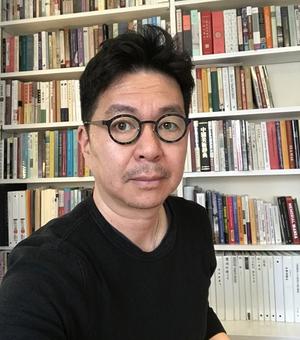
Prof. Dr. Christoph Ehland is a Professor of English Literature and Cultural Studies at the University of Paderborn since 2009. Previously, he served as an Assistant (2002-2009) and habilitated at the University of Würzburg (2007) with the venia legendi for English Philology. His academic journey includes a doctorate from Würzburg (2001) and studies in English, Latin, art history, and economics across Germany and the UK. Research Clusters: Early Modern Literature and Culture Romanticism and its Afterlives Middlebrow and Anglo-Indian Literature Literary Spatial Practices Mobility and Urban Studies His publications span monographs on picaresque archetypes, writer iconography, and Brexit's cultural implications. He co-edited volumes on Resistance and the City , Middlebrow Writing , and Perspectives on Mobility . Prof. Ehland actively engages in academic service , serving as Schatzmeister und Vorstandsmitglied of the International Association of University Professors of English (IAUPE) since 2023. He has delivered keynote lectures at institutions including Dresden, Innsbruck, and the University of London.
Prof. D.J. (Hans) Huisman is a Professor of Geoarchaeology and Archaeometry at the University of Groningen's Faculty of Arts. He holds additional roles as Senior Researcher at the Rijksdienst voor Cultureel Erfgoed (Amersfoort) and serves on editorial boards for the Journal of Archaeological Science and the Netherlands Isotope GEochemistry Laboratory (NIGEL). His research focuses on geoarchaeological methods, soil micromorphology, and archaeological heritage management, particularly in prehistoric landscapes and submerged environments. Recent work includes studies on Roman metalworking yards, Mesolithic hearth features, and the application of geophysical techniques for landscape analysis. His publications span experimental archaeology, material analysis, and ethical debates in archaeology. Research interests include the integration of micromorphological analysis with archaeological interpretation, the impact of environmental processes on site formation, and the role of interdisciplinary approaches in understanding prehistoric human-environment interactions. He has collaborated on projects such as the 'Finding Suitable Grounds' initiative exploring submerged Neolithic landscapes. His work contributes to UN Sustainable Development Goals related to sustainable management of cultural heritage and terrestrial ecosystems. Key projects: Magnetometer mapping of drowned prehistoric landscapes, ant nest morphology studies, and Roman metallurgy analysis External roles: Editorial board member and senior researcher in cultural heritage institutions Publications: 43+ peer-reviewed articles, datasets on prehistoric glass, and contributions to archaeological methodology debates
Samson Lim is a Lecturer in History at Monash University, specializing in Thai and Southeast Asian history, visual culture, and urban studies. He previously served as Associate Professor and Associate Head of the Humanities, Arts, and Social Sciences Cluster at Singapore University of Technology and Design (SUTD) from 2018–2022. His research explores the history of technology, urban development, and visual culture in Thailand, with a focus on policing, media, and socio-spatial dynamics. Lim holds a Ph.D. in History (2012) and an M.A. in History (2008), both from Cornell University, alongside an MRP in City and Regional Planning (1996) and a B.A. in Political Science (1994) from UCLA. He also earned a Certificate in Thai Studies from Thammasat University (2005). His research interests include the history of technology, urban studies, and interdisciplinary urban development projects. Notable projects include 'Slow Procession: A History of the Traffic Jam in Bangkok' (funded by Gerda Henkel Stiftung) and 'Archiving the Underclass' (funded by Singapore's Asian Research Institute). He collaborates on initiatives like 'Dense and Green Cities' (Future Cities Lab) and 'Asians Becoming Architects in Colonial Singapore' (National Heritage Board). Lim has received the National Day Medal of Honor (2022) for contributions to academia and public service. His work bridges historical scholarship with urban planning, emphasizing sustainable development and socio-spatial integration. He currently mentors PhD students in Thai history, technology, and urban studies. Key academic contributions include his monograph Siam’s New Detectives: Visualizing Crime and Conspiracy in Modern Thailand (2017) and articles on Bangkok’s urbanization, photography, and legal history. His recent work focuses on innovation districts, socio-spatial segregation, and Thailand’s socio-technical evolution.
Jacqueline Hylkema is an Assistant Professor of Cultural History at Leiden University College, part of Leiden University in The Hague. She also holds the position of Senior Scaliger Fellow at Leiden University Libraries' Scaliger Institute, where she is building a significant new Special Collection consisting of historical fakes and forgeries produced in the Dutch Republic between 1550 and 1800. Dr. Hylkema completed her doctoral dissertation 'The Rhetoric of Illusion: Persuasion and Response in Forgery, the Arts and Other Deceptions (1600-1750)' at Leiden University in 2019. Her research focuses on the complex relationship between deception, art, and scholarship in the early modern period, with particular emphasis on forgery in early modern print culture in the Dutch Republic and Britain. She examines how forgeries were created, perceived, and responded to within their cultural contexts, revealing broader cultural negotiations surrounding concepts of reality, authenticity, and originality. Her publications demonstrate a consistent analytical approach to historical deception cases, including The Originall of Idolatries (1624), Alexander Bendo's mountebank handbill (1676), George Psalmanazar's fabricated history of Formosa (1704), the Mary Toft rabbit-birth hoax (1726), and the Great Bottle Hoax (1749). These works reveal how creative forgeries without prototypes were woven into the fabric of reality and how they contributed to developing distinctions between fiction and scholarship. Shelby Cullom Davis Center Fellow, Spring 2026 Senior Scaliger Fellow at Leiden University Libraries' Scaliger Institute Through her scholarly work and collection-building efforts, Dr. Hylkema is establishing important infrastructure for the emerging field of forgery studies. Her interdisciplinary approach bridges cultural history, art history, intellectual history, and literary studies, providing valuable insights into how societies negotiate truth claims—a subject with significant contemporary relevance in our digital age of misinformation.
Jeremy R. Mumford is Associate Professor of History at Brown University, specializing in colonial Latin America with a focus on the Andean region. His research examines the integration of indigenous Andean societies into the Spanish colonial state, particularly in the decades following the conquest of Peru. He is affiliated with the Department of History within the Faculty of Arts and Sciences at Brown University. PhD, Yale University, 2005 MA, Columbia University, 1997 BA, Yale University, 1992 Mumford’s research interests center on colonial Latin America, the Andean region, indigenous peoples, legal history, and ethnohistory. He investigates how Andean elites navigated Spanish rule, the impact of forced resettlement policies, and indigenous engagement with colonial legal systems. His work bridges political, social, and cultural history, emphasizing indigenous agency and adaptation. His recent publications reflect a sustained focus on colonial Andean governance, legal practices, and cultural identity. Themes include the resettlement of indigenous populations, the construction of Andean space, judicial practices, and the persistence of Inca identity under colonial rule. His scholarship appears in leading journals such as the Hispanic American Historical Review and Colonial Latin American Historical Review . Residential Fellowship, Swedish Collegium for Advanced Study (2021–2022) Honorable mention, New England Council for Latin American Studies Best Book Prize (2013) Honorable mention, James Alexander Robertson Prize, Conference on Latin American History (2009) Michigan Society of Fellows, University of Michigan (2006–2009) Mary & Arthur Wright Prize, Yale University (2005) Fulbright-Hays Doctoral Dissertation Research Abroad Fellowship (2001–2002) Mumford has held prestigious fellowships and grants that have supported his archival research in Spain and Bolivia. His book Vertical Empire (2012) emerged from a dissertation that received multiple awards, including the Charlotte W. Newcombe Fellowship and the Mellon Postdoctoral Fellowship. He teaches undergraduate and graduate courses on colonial Latin America, the Andes, and historical methodology. He is an active scholar with no indication of retirement or emeritus status, and he contributes to the academic community through publications, book reviews, and participation in scholarly networks.
Erin Thompson serves as a Professor at John Jay College of Criminal Justice, part of the City University of New York (CUNY) system, and is recognized as America's only professor specializing in art crime. Her interdisciplinary work bridges art history, legal studies, and criminology with a focus on illicit cultural transactions. Her educational background features: Juris Doctor (J.D.) from Columbia Law School (2010) Doctor of Philosophy (Ph.D.) in Art History from Columbia University (2010) Certificate in Global Business Law through a joint program with Columbia Law School, Sciences Po, and Sorbonne University Bachelor of Arts (B.A.) in Art History and Philosophy from Barnard College (2002), magna cum laude and Phi Beta Kappa Professor Thompson's research examines critical intersections between art and criminal activity, including art theft networks, monument controversies, wartime cultural destruction, and ethical dilemmas in digital heritage reproduction. Her investigations extend to art created in constrained environments like Guantánamo Bay detention facilities. She actively contributes to public discourse through outlets such as Art in America , Hyperallergic , Smithsonian Magazine , and the New York Times , translating academic research for broader audiences. Her scholarly output includes the award-recognized book Possession: The Curious History of Private Collecting from Antiquity to the Present (Yale University Press, 2016), named a Best Book of 2016 by NPR, and Smashing Statues: The Rise and Fall of America’s Public Monuments (W.W. Norton, 2022), which analyzes America's contentious monument history through historical, legal, and social lenses. No scientific awards or honors were documented in the source material. The available information does not specify student advising activities, research grants, laboratory facilities, or collaborative research teams.
Paul Gillingham is a Professor of History and Director of Graduate Studies at Northwestern University’s Department of History within the Weinberg College of Arts & Sciences. He holds a DPhil from the University of Oxford (2006). His research focuses on politics, culture, and violence in modern Mexico, with particular attention to Latin American and Caribbean History, Political Policy, Legal Systems, and War/Imperial Dynamics. Education: DPhil in History, University of Oxford, 2006 Research Interests: Modern Mexico’s social, political, and cultural history Forging national identity through historical narratives Violence, memory, and authoritarianism in Latin America Key Contributions: Author of Unrevolutionary Mexico: The Birth of a Strange Dictatorship (2021) Recipient of the Mexican history prize for Cuauhtémoc’s Bones (2011) Co-editor of Dictablanda (2014) and Violence in Latin American History series Director of the Mexican Intelligence Digital Archives (MIDAS) project Teaching: Offers courses on Mexican history, Latin American modernity, and interdisciplinary topics like forgery and citizenship.
Dr. Rob van Gent is a Researcher at the Mathematical Institute within the Faculty of Science at Utrecht University. His work focuses on the history of astronomy, celestial cartography, and historical scientific instruments. He has contributed extensively to studies of star catalogs, medieval astronomical instruments like astrolabes, and the evolution of celestial maps from antiquity to modern times. Key research interests include the analysis of historical star atlases (e.g., Cellarius' Harmonia Macrocosmica), cross-cultural astronomy transmission (e.g., Al-Sufi's influence), and the digitization of historical astronomical resources. He served on the editorial board of KNAW Press from 2009 to 2010, reflecting his engagement in scholarly publishing. With over 44 publications, van Gent explores topics ranging from ancient eclipse records to the origins of telescopic technology. His work bridges historical documentation with modern astronomical practices, particularly through projects like the IAU Working Group on Star Names. He actively contributes to public understanding of astronomy history through publications and digitization efforts of rare celestial maps and instruments.
Badis Hammi is an Assistant Professor at Telecom SudParis, specializing in cybersecurity and network security. His research focuses on IoT security, blockchain applications, botnet detection, and vehicular networks. He has authored numerous peer-reviewed articles on topics such as malware analysis, phishing detection frameworks, and decentralized security solutions in smart homes and healthcare sectors. Education PhD in Cryptography and Security (2015), Université de Technologie de Troyes Research Interests Cybersecurity frameworks for IoT and blockchain systems Malware detection methodologies PKI security in cooperative intelligent transportation systems (C-ITS) Phishing prevention using graph neural networks Botnet activity analysis in cloud environments Recent Article Trends His recent work emphasizes blockchain's role in mitigating supply chain fraud, improving smart home security, and securing vehicular communications. He also explores machine learning approaches for detecting Sybil attacks and network anomalies in distributed systems. Grants & Advising Active in collaborative projects with industry partners on vehicular network security Advises on EU-funded initiatives for blockchain-based authentication systems Labs/Teams Affiliated with the SAMOVAR research lab at Telecom SudParis, focusing on network and system security.
Prof. Melanie Ulz is a Visiting Professor of Historical Image Studies at the University of Regensburg’s Faculty of Philosophy, Arts, History and Social Sciences. She has held visiting professorships at Bielefeld University (Gender Studies, 2021/22), Munich, Oldenburg, Zurich, and Heidelberg. From 2010-2016, she was a Junior Professor for Art History (18th–21st centuries) at the University of Osnabrück. Her research focuses on 18th–21st century art and cultural history, postcolonial and gender studies, transcultural object history, and migration visualization. She co-leads the DFG-funded project on 'Antigypsyism in Europe (1850-1950)'. Education: Doctorate (2005, University of Trier) on French history painting; postdoctoral work in Trier’s DFG Research Training Groups on Slavery and Media Studies. Research interests include colonialism’s visual culture, museum practices, abolitionism’s imagery, and European history painting’s racial/gender constructs. Her monographs address Napoleon’s Egyptian Campaign masculinity and Osnabrück’s architectural history. She edited volumes on migration visuality, slavery in art, and postcolonial museum studies. Recent publications analyze colonial world’s fairs, migration exhibition design, and postcolonial art historiography. Her work interrogates how visual media construct colonial power, racial hierarchies, and transnational identities. Current projects examine antigypsyism’s visual narratives and migration’s transcultural museum representations. Awards: None explicitly listed, but her extensive editorial and research leadership indicate significant academic recognition. Advising/Grants: Supervised numerous collaborative projects; co-spokesperson of the Ulm Association’s migration art working group (2018-2020). Active in interdisciplinary migration/film research initiatives. Labs/Teams: Collaborates in the DFG research group on Antigypsyism and the IMIS research network on migration visualization.
Murray McArthur is an Adjunct Professor at the University of Waterloo's Department of English Language and Literature. Born in 1953 in Winnipeg, he has held leadership roles as Undergraduate Chair (1993-1996) and Department Chair (1996-2004). He maintains academic ties with Europe through teaching in Nice (1993) and regular attendance at Joyce conferences. PhD (Western Ontario, 1985) MA (Western Ontario, 1979) BA (Manitoba, 1975) His research focuses on Modernist literature with particular emphasis on James Joyce and T.S. Eliot, exploring intertextual relationships through semiotic theory and philosophical frameworks. Current work examines the parallel creation timelines of Ulysses and The Waste Land in 1921-1922, highlighting cross-Channel creative influences. Publications reveal sustained engagement with Joyce studies, Modernist poetics, and semiotic analysis. Key themes include textual replication patterns, artistic identity formation, and the intersection of psychoanalytic theory with literary practice. His scholarship spans from foundational influence studies of Blake-Joyce to contemporary deconstructive approaches. McArthur's career demonstrates transatlantic academic connections, with teaching experience in Canada and France, and active participation in international conferences. His work bridges theoretical frameworks from Parisian new criticism to Canadian academic practice, maintaining relevance through ongoing research projects.
J.P. Park is the June and Simon Li Professor in the History of Chinese Art at the University of Oxford and a Fellow of Lincoln College. His research spans early modern Chinese and Korean art, with interdisciplinary approaches to print culture, cartography, and art forgery. Research interests include: Analysis of painting manuals as social capital in Late Ming China Challenging nationalist narratives in Korean art historiography through studies of true-view landscapes Historiographical forgeries in early modern China Contemporary critiques of globalization in East Asian art Conceptualizing 'pastmodern' traditions of avant-garde practices across China, Korea, and Japan Major Awards : 2020 – Charles Rufus Morey Book Award for 'A New Middle Kingdom' 2014 – Finalist for Charles Rufus Morey Book Award for 'Art by the Book' He has curated the 'Keeping It Real' exhibition (2012) and co-edited A Companion to Korean Art (2020). Current research explores premodern East Asian artistic innovations that predate Western postmodernist practices.
Joan Bosch Ballbona is a Professor of Art History at the University of Girona, specializing in Catalan art from the 16th to 18th centuries. He has held visiting positions at the universities of Sassari and Cagliari in Italy. Research focuses on Baroque art, altarpiece studies, and the reception of international artistic culture in Catalonia Curator of major exhibitions including De Flandes a Itàlia , Llums del Barroc , and Falsos Verdaders Recognized with five national and five autonomous research six-year periods His work combines critical analysis of Renaissance sculpture (e.g., Agustí Pujol), artistic workshops in the Principality of Catalonia, and the collection practices of the Toledo marquises. Recent publications examine Camillo Procaccini’s Spanish works and the influence of printed engravings on Baroque-era Catalan art. Scientific Awards: Five national research six-year periods Five autonomous research six-year periods Six teaching trams Three management trams Active in research projects and collaborations, particularly with Joaquim Garriga and Francesc Miralpeix, while also addressing challenges in public university funding and pedagogical trends.
Baybora Temel is an Associate Professor at Trakya University Faculty of Fine Arts , with a PhD in Computer Science from Marmara University (2009). His research merges Artificial Intelligence and Digital Art Analysis , focusing on Art Authentication via wavelet transforms and neural networks. Specializes in Painting Style Classification and Digital Art Forensics Recipient of Nuri Iyem Painting Competition Exhibition (2015) and Australian Embassy Painting Award (2009) Active in International Art Symposia (Odessa, Patras) and National Exhibitions His 15 most recent publications span Art Authentication (2008-2022) and Digital Art Analysis , employing Machine Learning for Cubist Painting Discrimination and Figurative Art Studies . He has curated exhibitions like Art Suites 26th International Art Workshop (2018) and participated in Balkan Exhibitions IV (2023).
Årstein Justnes is a Professor of Biblical Studies at the University of Agder's Department of Religion, Philosophy and History. He holds a Dr. theol. (2007), cand. mag. (1999), and cand. theol. (1994). His academic leadership roles include Vice Dean (2017–2019), Acting Dean (2017), and Head of Department (2007–2011). Research focuses on Dead Sea Scrolls provenance, manuscript forgery, digital humanities, and ancient languages. Key projects include the Toppforsk-funded 'The Lying Pen of Scribes' (2019–2024), analyzing unprovenanced fragments and forgery networks. He developed the Post-2002 Dead Sea Scrolls Database and published extensively on provenance ethics and forgery detection. Teaching includes courses on sacred texts, world religions, and biblical theology. His mindfulness training (MBSR, 2012) informs work-life balance initiatives. Collaborations span global institutions, including National Geographic investigations into Museum of the Bible forgeries. Professional membership includes Society of Biblical Literature, European Association of Biblical Studies, and Norwegian Non-Fiction Writers' Association. Recent activities include podcast series on Dead Sea Scrolls mysteries and public lectures on artifact authenticity.