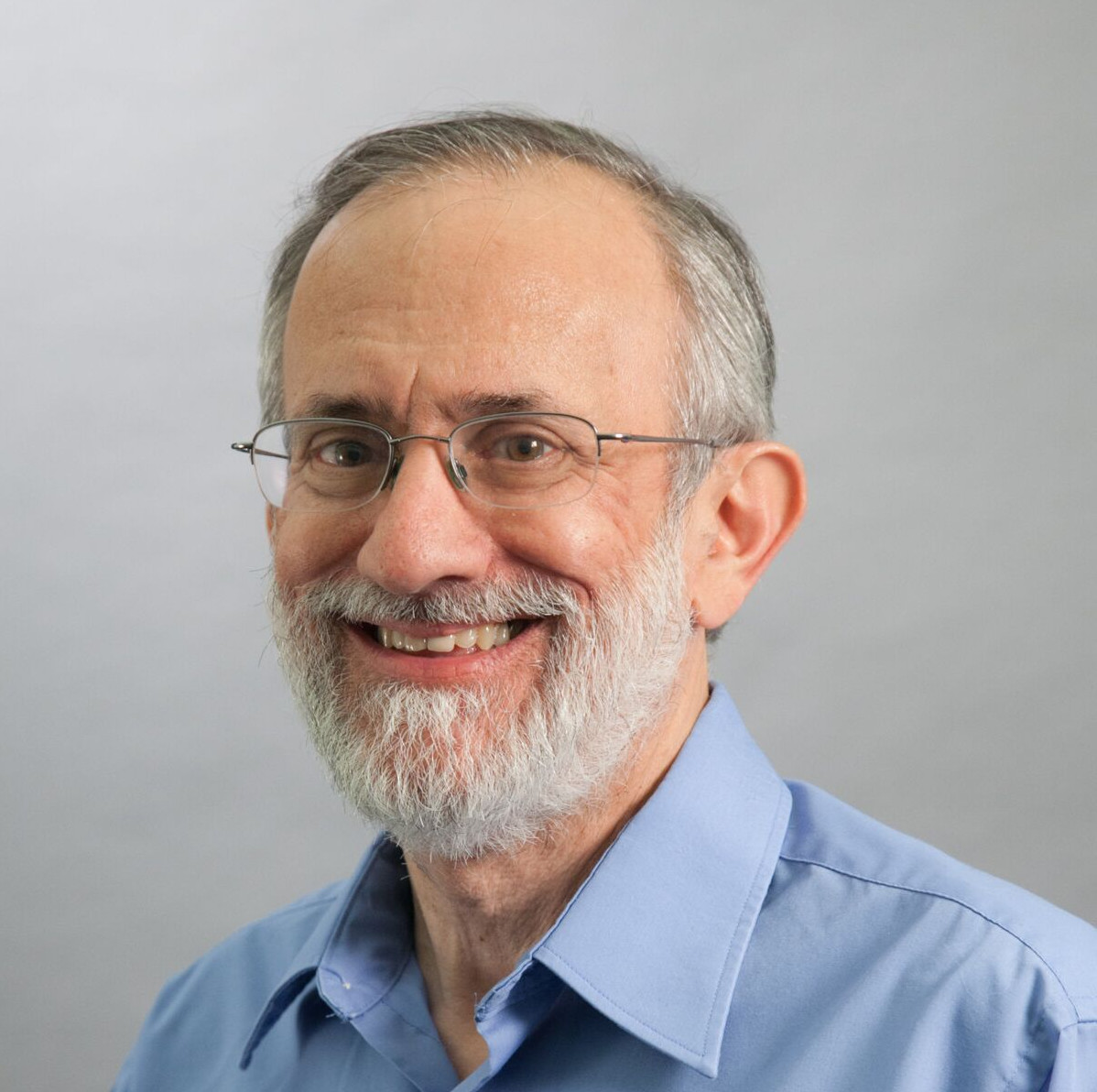
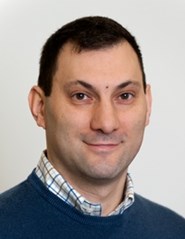
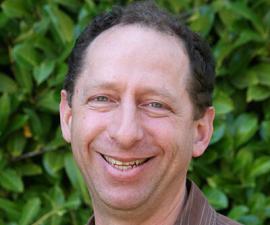
Roberta Gori is an Associate Professor at the Dipartimento di Informatica of the University of Pisa. Her research focuses on formal verification techniques for biological systems and floating-point intensive programs, leveraging abstract interpretation and coinductive methods. She collaborates with BUGSENG Srl on safety-critical systems verification and has led multiple projects including 'Metodi Informatici Integrati per la Biomedica' (UniPi 2020-2021) and PRIN initiatives since 2000. Her work bridges theoretical computer science with practical biomedical applications, addressing challenges in program obfuscation, numerical analysis, and systems biology. Education: Background in Computer Science with focus on formal methods Key research interests include: Verification of floating-point computations Modeling biological systems using reaction networks Formal program analysis and abstract interpretation Development of verification tools like FPSE and ECLAIR Notable collaborations include work with Simula Research Laboratory (Norway) and the University of Parma. Her contributions span over 60 publications, emphasizing both foundational theory and industrial applications in safety-critical domains.
Adly T. Fam is a Professor in the Department of Electrical Engineering at the University at Buffalo, School of Engineering and Applied Sciences. He has been a faculty member since 1977 and attained the rank of Professor in 1987. His research spans digital signal processing, arithmetic-intensive computing, communications, and radar systems. His educational qualifications include: PhD in Electrical Engineering from the University of California, Irvine (1977) MS in Electrical Engineering from the University of California, Irvine (1975) BS in Electrical Engineering from Cairo University (1968) Professor Fam's primary research interests are in digital signal processing with applications in radar and communications. He has pioneered work in logarithmic frequency domain waveform design for radar and communications, as well as efficient hardware implementations for arithmetic circuits. His research integrates theoretical system design with practical engineering solutions to address challenges in signal processing and communications. Analysis of his recent publications (2018-2023) reveals a strong focus on radar waveform design using logarithmic frequency domain techniques and innovations in digital circuit design for arithmetic operations. Key themes include multicarrier logarithmic warped frequency domain code waveforms for joint radar-communications systems and novel approaches to binary counters and multipliers that improve computational efficiency and reduce hardware complexity. Professor Fam has authored over 120 journal and conference publications and holds four patents in the areas of system theory, digital signal processing, arithmetic-intensive computing, computer arithmetic, radar, and communications codes.
Ian Grout serves as Associate Professor in the Department of Electronic and Computer Engineering within the Faculty of Science and Engineering at the University of Limerick, Ireland, and is affiliated with the Optical Fibre Sensors Research Centre. His academic career spans over 25 years with continuous research output since 1994, focusing on hardware design and engineering education methodologies. His educational background includes: Ph.D. in Electronic Engineering from Lancaster University (awarded 1994) B.Eng. in Electronic Engineering from Lancaster University (awarded 1991) Dr. Grout's research integrates Mixed-Signal Integrated Circuit Design, Test Technology Education, and Sensor System Design using FPGAs with innovative educational approaches. His work bridges theoretical hardware development and practical implementation, particularly in remote laboratory experimentation and mechatronics systems. The fingerprint analysis of his 152 publications reveals dominant expertise in Field Programmable Gate Arrays (100%), Computer Hardware (61%), and Application Specific Integrated Circuit design (61%), with significant contributions to Teaching and Learning methodologies (56%). Recent publications (2023-2024) demonstrate a clear trajectory toward optimizing hardware testability for emerging architectures like processing-in-memory cores while advancing educational tools for embedded systems programming. His work shows increasing integration of machine learning concepts with traditional circuit design and a sustained focus on practical educational implementations through European collaborations like the Erasmus+ DIG-SENSING program. Professional engagements include active membership in the Institution of Engineering and Technology (IET), International Microelectronics and Packaging Society (IMAPS), and service on the UK EPSRC Peer Review College. He previously chaired the Educational ECAD User Group (EEUG) from 2001-2002 and maintained committee membership until 2005. At the University of Limerick, Dr. Grout contributes to the Optical Fibre Sensors Research Centre where his FPGA-based sensor system designs support advancements in optical sensing technologies. His current work involves developing remote laboratory frameworks for electrical engineering education while maintaining active research in integrated circuit test methodologies.
Joel S. Emer is a Professor of the Practice in MIT's Department of Electrical Engineering and Computer Science (EECS) and a Senior Distinguished Research Scientist at NVIDIA. His research focuses on computer architecture, processor micro-architecture, and performance modeling. He has contributed to advancements in simultaneous multithreading, cache optimization, and reliability analysis. Emer holds over 25 patents and has published over 60 papers, earning awards like the IEEE Rau Award and induction into the National Academy of Engineering. Education: Ph.D., Electrical Engineering, University of Illinois Urbana-Champaign, 1979 M.S., Electrical Engineering, Purdue University, 1975 B.S., Electrical Engineering, Purdue University, 1974 (highest honors) Research interests include accelerator architectures for sparse computation and deep learning, spatial processing, memory hierarchy design, and reliability analysis. His work on Eyeriss and other accelerators has shaped energy-efficient neural network hardware. Recent projects explore hierarchical structured sparsity (HSS) and compute-in-memory (CIM) techniques. Key awards include the ISCA Best Paper Session (2024), IEEE Micro Top Picks (2024), and the SIGMICRO Test of Time Award (2022). He co-advises students with Prof. Vivienne Sze, focusing on sparse tensor acceleration and energy-efficient designs. Awards: 2023 IEEE Rau Award 2022 IASED Lifetime Achievement Award 2020 National Academy of Engineering Membership 2009 Eckert-Mauchly Award Grants and collaborations span industry partnerships (e.g., NVIDIA) and academic initiatives. Emer leads the Emze Group, exploring hardware-software co-design for emerging architectures. Current work includes sparse tensor accelerators (e.g., HighLight, Tailors) and modeling tools like Sparseloop and Accelergy.
Paolo Bientinesi is a Professor at the Department of Computing Science, Umeå University, and Director of the High Performance Computing Center North (HPC2N). His research bridges theoretical and applied computer science, focusing on optimizing computational workflows through domain-specific innovations. Research Interests: Core Areas: Automatic generation of algorithms and code, numerical linear algebra, tensor operations, performance modeling, and computer music. Interdisciplinary Applications: Materials science, molecular dynamics, computational chemistry, computational biology, and computational physics. His work emphasizes leveraging architecture-specific and problem-specific knowledge to develop high-performance solutions. Publication Trends (2022-2026): Recent articles demonstrate a focus on mixed-precision computing, tensor decompositions, linear algebra algorithms (e.g., FLOPs optimization, matrix chains), and music information retrieval (e.g., automatic drum transcription, DJ cue points). Work frequently intersects with parallel computing, performance diagnostics, and machine learning. Leadership: Heads the research group High-Performance and Automatic Computing , driving projects in algorithm automation and computational efficiency.
Antonio Rubio Solá is a Full Professor at the Universitat Politècnica de Catalunya (UPC), affiliated with the High Performance Integrated Circuits and Systems Design (HIPICS) group. He holds an M.S. in Industrial Engineering (1977) and a Ph.D. in Electronic Engineering (1982), both from UPC. His research focuses on semiconductor technology evolution, integrated circuit design, and memristor-based neuromorphic systems. Key interests include nanoelectronics, energy-efficient computing, and biomimetic circuits. Rubio has contributed to advancements in memristive logic, graphene nanoribbon devices, and fault-tolerant circuit architectures. His work bridges theoretical research and practical implementation, with notable contributions in neuromorphic hardware, in-memory computing, and radiation-hardened electronics. Recent publications emphasize memristor applications in biological systems emulation, stochastic resonance phenomena, and energy-efficient data processing. Rubio actively participates in Spain’s neuromorphic technology initiatives and promotes sustainable microelectronics education through digital tools. Publications are accessible via UPC FenixDoc and the HIPICS e-prints repository. His research is driven by interdisciplinary collaboration, addressing challenges in next-generation computing paradigms and emerging technologies.
Dor Abrahamson is a Professor of Learning Sciences and Human Development in the Graduate School of Education at the University of California Berkeley. He directs the Embodied Design Research Laboratory (EDRL) and has established himself as a leading design-based researcher in the field of mathematics education. His work bridges cognitive science, socio-cultural theory, and embodiment paradigms to create innovative learning environments that transform how students understand mathematical concepts. Abrahamson's research focuses on the relationship between physical action and conceptual learning, with particular emphasis on how embodied interaction facilitates mathematical understanding. His work spans intensive quantities like ratio, likelihood, and slope, as well as early algebra concepts. He develops experimental technological materials and activities that have potential for scale-up, while simultaneously refining theoretical constructs in the learning sciences and developing frameworks for educational design. His current projects include developing embodied-interaction technological systems for the guided reinvention of mathematical concepts, with recent work involving computer-embedded animated avatars that incorporate naturalistic gesture in face-to-face mathematics tutoring. Analysis of Abrahamson's recent publications reveals a strong focus on multimodal learning approaches, with significant attention to how gesture, eye-tracking, and physical manipulation contribute to mathematical understanding. His work increasingly integrates learning analytics, complex systems theory, and inclusive design principles, particularly in developing educational technologies for diverse learners. The research demonstrates a consistent trajectory toward understanding the micro-dynamics of learning through embodied interaction while creating practical educational interventions. National Academy of Education/Spencer Postdoctoral Fellowship for Seeing Chance Co-recipient of NSF grants for developing naturalistically gesturing interactive pedagogical avatars Co-recipient of NSF grants for fostering children's productive dispositions toward failure when programming Best Submission—Dr. Arthur I. Karshmer Award for Assistive Technology Research Finalist, Best Paper, IJCCI 2021 Abrahamson has secured significant research funding including NSF grants for developing gesturing avatars and for understanding how children approach programming failures. His work emphasizes collaborative, interdisciplinary research that brings together experts from education, cognitive science, movement science, and computer science. He has mentored numerous doctoral students and collaborators who have gone on to contribute significantly to the field of educational design. The Embodied Design Research Laboratory operates as a hub for innovative research that combines theoretical rigor with practical educational applications. The Embodied Design Research Laboratory (EDRL) represents a multi-disciplinary approach to educational design, inspired by the belief that all students can deeply understand mathematics. EDRL projects involve creating mixed-media materials that are iteratively refined based on empirical studies of student multimodal behaviors including speech, gesture, and eye-gaze. The lab has produced numerous technological innovations including motion sensor applications, touch screen interfaces, and agent-based simulations that support embodied mathematical learning.
Prof. Dr. Frank Domahs is a Professor of Applied Linguistics - Psycholinguistics at the University of Erfurt's Faculty of Philosophy and serves as Vice Dean for Research. He leads the Chair of Linguistics focusing on psycholinguistics and is affiliated with the certified graduate center 'Sprachbeherrschung' and the Department of Linguistics. His academic career includes extensive research in language processing, aphasia therapy, and neurolinguistics. Research interests span psycholinguistics, clinical linguistics, and neurophysiological foundations of language. Notable areas include word stress processing, numerical cognition, and rehabilitation of language disorders. He has contributed to influential studies such as the randomized trial on intensive aphasia therapy (The Lancet, 2017) and the development of diagnostic tools like the ESKOPA-TM material for assessing arithmetic disorders. Teaching focuses on clinical linguistics, language acquisition, and neurolinguistics. Recent courses include 'Diagnostics of linguistic abilities,' 'Neurolinguistics,' and 'Word prosody analysis.' His work emphasizes evidence-based interventions for speech disorders and cross-linguistic studies in language development. Publications highlight interdisciplinary approaches to language processing, combining behavioral experiments and neuroimaging. Key themes include the interaction of prosody, morphology, and semantics, as well as the cognitive underpinnings of numerical and linguistic systems. His research has been published in journals like Brain and Language , Frontiers in Psychology , and Neuropsychological Rehabilitation .
Annalisa Massini serves as Associate Professor in the Department of Computer Science at the University of Rome "La Sapienza", a position she has held since November 2001 following her appointment as Assistant Professor from 1996-2001. Education: 1989: Degree in Mathematics, University of Rome "La Sapienza" 1993: Ph.D. in Computer Science, University of Rome "La Sapienza" Research Focus: Her scholarly work centers on Mobile sensor networks and Interconnection networks , with significant contributions to Hybrid systems verification . Her research portfolio extends to Parallel computing methodologies, Computer arithmetic techniques, and innovative approaches to Graph drawing , demonstrating comprehensive expertise across theoretical and applied computer science domains. Academic Contributions: Dr. Massini teaches foundational courses including Digital Systems Design (formerly Computer Architecture I), Computer Architecture (formerly Computer Architecture II), and Intensive Computation. She supervises Bachelor's and Master's thesis projects, maintaining office hours by email appointment from her office in Building E (Viale Regina Elena 295), 2nd floor, room 206.
Klim Zaporojets is a Marie Skłodowska-Curie Postdoctoral Fellow in the Department of Computer Science at Aarhus University, where he conducts research within the Data-Intensive Systems Group. His work bridges theoretical advancements and practical applications in natural language understanding. His research focuses on information extraction systems that connect textual content with structured knowledge bases. His methodology emphasizes leveraging external knowledge sources to enhance information extraction performance, particularly in document-level contexts where entities evolve over time. His work spans temporal relation extraction, entity linking, and biomedical text mining applications. The publication record reveals a strong focus on document-level information extraction with increasing emphasis on temporal aspects and knowledge integration. Recent work explores large language model applications for graph learning and calibration challenges in LLMs, showing evolution from traditional NLP tasks to cutting-edge foundation model research. His publications appear in top-tier venues including ACL, EMNLP, CIKM, and NeurIPS. His scientific recognition includes the prestigious Marie Skłodowska-Curie Postdoctoral Fellowship, supporting his research at Aarhus University. His work has produced several influential datasets including DWIE, TempEL, and BioDEX that have become benchmarks in document-level information extraction. Zaporojets maintains active collaborations with researchers at Ghent University (evidenced by his ugent.be email address) and has contributed to multiple interdisciplinary projects spanning computational linguistics, healthcare informatics, and knowledge representation. His technical contributions include open-source implementations of his research, demonstrating commitment to reproducible science.