Oleksandr Kapranov is an Associate Professor of English at NLA University College's Teacher Education program. His work intersects discourse analysis, climate change communication, and English language teaching (ELT), with a focus on sustainable development education and intercultural communication. Research areas include political speeches (e.g., Keir Starmer, Rishi Sunak), corporate disclosures (Bank of England, Vedanta Resources), and media framing (Greenpeace branches, King Charles III). Key pedagogical interests: digital competence, beginner EFL training, and discourse markers in academic writing. His recent publications analyze climate change discourse through syntactic structures, metonymy, modality, and evidentiality, emphasizing institutional and political narratives. While no formal awards are listed, his work spans interdisciplinary collaborations with NGOs, governments, and universities.
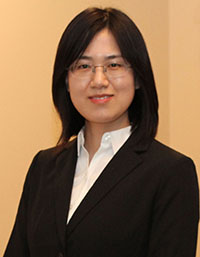
Ruihong Huang is an Associate Professor in the Department of Computer Science and Engineering at Texas A&M University, part of the College of Engineering. She holds a Ph.D. from the University of Utah (2014) and completed a postdoctoral fellowship at Stanford University. Her research focuses on Natural Language Processing (NLP) with emphasis on information extraction, event recognition, media bias analysis, and ethical AI applications. She teaches courses like Information Storage and Retrieval (CSCE 470), Natural Language Processing (CSCE 638), and has advised numerous PhD, Master’s, and undergraduate students. Key research contributions include work on event coreference resolution, discourse analysis, and detecting media bias through event relation graphs. Huang has developed benchmark datasets like UAL-Bench and EMONA, and her work spans applications in disaster management, fake news detection, and moral reasoning in LLMs. She is a recipient of the NSF CAREER Award and serves on program committees for top conferences like ACL and EMNLP. Her academic service includes roles as Area Chair for ACL 2024 and Senior Area Chair for EMNLP 2024. She maintains an active lab group focusing on NLP fundamentals and real-world applications, with projects involving propaganda identification, polarity calibration for opinion summarization, and multimodal dialog act classification. Huang has published over 80 papers in top-tier venues such as NAACL, EMNLP, ACL, and NeurIPS.
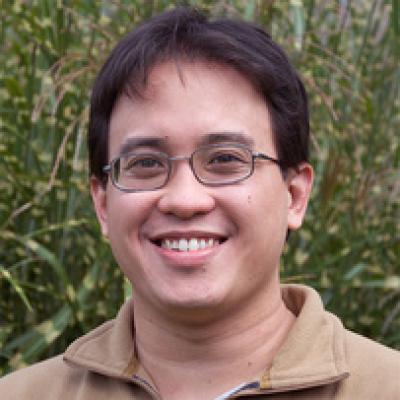
Brendan O'Connor is an Associate Professor in the Manning College of Information and Computer Sciences (CICS) at the University of Massachusetts Amherst. His research focuses on computational social science and natural language processing (NLP), particularly exploring how social factors influence language technologies and using text analysis to understand societal trends. His work includes studies on racial bias in NLP, political event analysis, and social media linguistics. He holds a PhD in Machine Learning from Carnegie Mellon University (2014) and dual MS/BS in Symbolic Systems from Stanford University (2006). Education: PhD in Machine Learning, Carnegie Mellon University (2014) MS in Symbolic Systems, Stanford University (2006) BS in Symbolic Systems, Stanford University (2006) Research interests span AI ethics, social media analysis, and computational methods for studying language and society. Notably, he investigates racial disparities in NLP systems, linguistic variation in African American English, and event detection in news and social media. His work has been recognized with NSF CAREER and Google Faculty awards, and his research has been cited thousands of times. His lab, the Statistical Social Language Analysis Lab, develops tools for analyzing large-scale text data. He is affiliated with the Center for Data Science, Center for Intelligent Information Retrieval, and Computational Social Science Institute. Recent projects include analyzing global news coverage of critical events and developing frameworks for zero-shot argument explication. Awards and Honors: NSF CAREER Award Google Faculty Research Award Best Paper Award Advising and Grants: O'Connor has advised projects on social media polling representativeness and demographic analysis. His grants include collaborative research on sociopolitical event extraction and bias mitigation in AI systems. He has also contributed to platforms like Rookie for news archive exploration and ezCoref for coreference resolution. Labs/Teams: Leads the Statistical Social Language Analysis Lab and collaborates with the UMass NLP Group and Harvard Institute for Quantitative Social Science. His work bridges NLP with social science methodologies, emphasizing transparency in algorithms and causal inference using text data.
Professor Kay O'Halloran serves as Chair Professor and Head of Department of Communication and Media within the School of the Arts at the University of Liverpool since August 2019. She concurrently holds the position of Co-Director for the Digital Media and Society Institute (DMSI), demonstrating significant leadership across academic and research domains. Her career spans prestigious institutions including Curtin University (2013-2019) and National University of Singapore (1998-2013), where she directed the Multimodal Analysis Lab and served as Deputy Director of the Interactive & Digital Media Institute. PhD from Murdoch University (1996) Postdoctoral position at Martin Luther University (1997-1998) Visiting Distinguished Professor at Shanghai Jiaotong University (2017-2020) Professor O'Halloran's research focuses on multimodal discourse analysis, particularly the interaction of language with visual and mathematical resources. Her pioneering work in systemic functional multimodal discourse analysis (SF-MDA) has significantly impacted mathematics education and digital communication studies. Current research emphasizes digital tools for multimodal analysis and mixed methods approaches to big data analytics, addressing contemporary challenges in misinformation and public health communication. Her recent publications reveal strong thematic concentration in pandemic-related communication analysis, misinformation resistance mechanisms, and multimodal argumentation across social and cultural contexts. The 15 most recent articles demonstrate consistent application of multimodal frameworks to urgent societal issues including public health crises, political discourse, and digital literacy challenges. Founding editor of Routledge Studies in Multimodality book series (57+ volumes) Over 150 publications in leading international journals 50+ plenary/keynote presentations globally Competitive funding from National Research Foundation, MOE Singapore, US Air Force, ARC, NHMRC, and others Professor O'Halloran has directed interdisciplinary research teams comprising social scientists, computer scientists, and designers. Her leadership extends to developing commercial multimodal analysis software (Multimodal Analysis Image and Video) adopted internationally. Current projects include Eurovision 2023 wellbeing evaluation and COVID-19 misinformation immunity development, demonstrating continued relevance to contemporary societal challenges.
Kent A. Ono is a Distinguished Professor in the Department of Communication at the University of Utah, where he has held faculty appointments since 2012. Previously, he served as Department Chair (2012-2017) and has held leadership positions including Director of Asian American Studies at UIUC (2002-2007) and Director of Cultural Studies at UC Davis (1999-2002). He earned his PhD in Rhetorical Studies from the University of Iowa (1992), MA from Miami University (1988), and BA from DePauw University (1987). Professor Ono's research examines critical media analysis through frameworks of race, gender, sexuality, and nation. His work spans rhetorical theory, intercultural communication, and cultural studies, with emphasis on: Representations of Asian Americans in media Immigration discourse and border rhetoric Postcolonial media criticism Critical race methodologies Transnational cultural flows His recent publications demonstrate sustained focus on immigration rhetoric, racial representation in media, and critical intercultural communication. Thematic analysis reveals consistent engagement with power structures, identity negotiation, and resistance narratives across 30+ years of scholarship, with emerging work on K-pop globalization and digital culture. Awards & Honors: Presidential Citation, National Communication Association (2024) Fellow, International Communication Association (2021) Douglas W. Ehninger Distinguished Rhetorical Scholar (2018) Distinguished Scholar Awards from NCA (2015, 2022), WSCA (2020) Teachers on Teaching Award, NCA (2015) He has held editorial leadership positions including Editor of Communication and Critical/Cultural Studies and co-editor of NYU Press's Critical Cultural Communication series. As NCA President (2020), he advanced equity initiatives and disciplinary transformation. Ono founded the Asian American Cultural Politics Research Cluster at UC Davis and secured grants including 'Portraits of Courage: Photographs by Shane Sato' (2019). He teaches graduate seminars in Rhetorical Studies and International Communication.
Eric Wilkinson is a Research Fellow in the Department of Philosophy at the University of British Columbia and previously served as a Visiting Assistant Professor at the University of Wisconsin-Milwaukee. He holds a PhD from McGill University and earned MAs in Political Science (York University) and Philosophy (University of Toronto). His research focuses on meta-ethics, normative ethics, political philosophy, and the history of philosophy, with notable work on Indigenous philosophy, multicultural nationhood, and logical rationalism. He is a Vanier Scholar and has contributed to debates on Canadian national identity, public policy, and the intersection of gender and historical philosophy. His teaching interests align with his research, emphasizing ethics, meta-ethics, and political philosophy. Education: PhD in Philosophy, McGill University MA in Political Science, York University MA in Philosophy, University of Toronto BA/BSc, University of Ottawa Research Highlights: Reconstructing Indigenous philosophical thought through oral traditions and European records. Advocating for multicultural nationhood as a cohesive framework for diverse societies. Exploring logical rationalism as a foundational theory in epistemology. Awards: Vanier Scholar (McGill University). Publications: Featured articles include work on Mersenne’s music theory, Anscombe’s philosophy of law, and the pragmatics of art ontology. Wilkinson’s work bridges academic philosophy with public engagement, as seen in his advocacy for accessible philosophy and potential interest in public office.
Bruce Ackerman is Sterling Professor of Law and Political Science at Yale University, holding one of the most prestigious academic positions at Yale. He has made significant contributions to constitutional law, political philosophy, and public policy over his distinguished career. His educational background includes an LL.B. from Yale (1967) and a B.A. from Harvard (1964). Ackerman has received numerous honors including the Henry Phillips Prize for lifetime achievement in Jurisprudence (2002), an Honorary Doctorate from the University of Milan (2023), and recognition as a Commander of the French Order of Merit. Ackerman's research focuses on American Constitutionalism, Comparative Constitutionalism, and Theories of Justice. His groundbreaking work includes the three-volume series We the People , which explores great turning points in American constitutional history. His scholarship has had global impact, influencing constitutional reforms in France, Brazil, Britain, and other countries. His recent work examines the constitutional challenges posed by the internet revolution and digital age. His publications reveal consistent engagement with constitutional crises across different nations and time periods, with particular attention to emergency powers, presidential authority, and democratic resilience. Ackerman's work connects historical constitutional development with contemporary challenges to democratic institutions. Commander of the French Order of Merit Henry Phillips Prize for lifetime achievement in Jurisprudence (2002) Honorary Doctorate from University of Milan (2023) Member of the American Law Institute Member of the American Academy of Arts and Sciences Named Leading Global Thinker by Foreign Policy magazine Ackerman has advised numerous governments and constitutional bodies worldwide. His work Before the Next Attack served as basis for French constitutional reform on emergency powers, while The Stakeholder Society influenced wealth distribution reforms in Brazil and Britain. He continues to actively engage with current constitutional challenges through scholarly publications, media commentary, and direct consultation with constitutional institutions globally.
Wolfgang R. Mann is a Professor of Philosophy and Director of Undergraduate Studies at Columbia University. He joined the Philosophy Department in 1992 and holds degrees from Princeton University (A.B., 1978; Ph.D., 1987). His research spans Ancient Philosophy, German Idealism, and Metaphysics, with a focus on theories of argumentation (logic/rhetoric), metaphysical contrasts in antiquity, and ethical concepts of freedom. He also explores English/German Romanticism (Wordsworth, Hölderlin) and the reception of classical antiquity in 19th-century thought. His work frequently bridges philosophical analysis with historical and literary methodologies. Professor Mann’s publications include The Discovery of Things: Aristotle’s Categories and Their Context (2000) and co-edited volumes like Oxford Studies in Ancient Philosophy (2011). His articles address topics such as Stoic paradoxes, Seneca’s ethical writings, and the intersection of ancient philosophy with political figures like Helvidius Priscus. His research emphasizes interdisciplinary approaches, blending metaphysics, ethics, and classical textual analysis. Though no specific awards are listed, his contributions to ancient philosophy and historiography reflect sustained scholarly engagement. His advising and grants focus on mentoring students in these areas, though specific grant details are not provided. His work contributes to both academic philosophy and the broader humanities through its rigorous historical contextualization.
Professor Michael Burke holds a full professorship in Rhetoric at Utrecht University (Faculty of Humanities) and teaches at University College Roosevelt (UCR) in Middelburg. Previously, he served as UU Honours Dean (2016–2021). His research focuses on rhetoric, stylistics, cognitive aspects of language, and education. He earned his Ph.D. in English Language and Literature from the University of Amsterdam, where he also completed his undergraduate studies. Research interests span written, oral, and digital rhetoric, emphasizing pedagogical, cognitive, stylistic, and neuroscientific dimensions. He has held visiting roles at institutions like the University of Cambridge and University of Bologna. Editorial roles include series editor for Routledge’s 'Research Monographs in Linguistics' and board memberships with journals like Language and Literature . Teaching includes undergraduate courses on classical rhetoric, argumentation, and public speaking at UCR, plus leadership and interdisciplinary research modules for Utrecht’s Honours College. He supervises PhD students in the UiL-OTS linguistics research school. Notable publications include The Routledge Handbook of Stylistics (2023) and studies on critical thinking, digital literacy, and cognitive literary science. Professional activities include keynote speaking at conferences like PCST and EARS, and contributions to projects such as ‘Undergraduate Research in the Netherlands’. His work bridges rhetoric, cognitive science, and education, emphasizing practical applications for students and educators.
Brendan T. O'Connor is an Associate Professor at the College of Information and Computer Sciences, University of Massachusetts Amherst, where he directs the SLANG Lab and serves as Associate Director of the Computational Social Science Institute. His research bridges statistical machine learning and natural language processing with social science applications, particularly using text data from news and social media to understand societal patterns. His work focuses on developing text analysis methods to answer social science questions in domains like political science and sociolinguistics. Current collaborative projects include combating misinformation, analyzing bias in news coverage, and developing tools for clinical discourse assessment using large language models. O'Connor's publications demonstrate a consistent focus on computational social science, with recent work exploring multilingual analysis, legal discourse patterns, and sociolinguistic variation. His methodological contributions span coreference resolution, event extraction, and argument mining. At UMass, he contributes to multiple research centers including the Computational Social Science Institute, UMass NLP group, and Centers for Data Science and Intelligent Information Retrieval. He teaches graduate seminars in natural language processing and maintains active collaborations across disciplines.
Mohammad Fazlhashemi is a Professor of Islamic Theology and Philosophy at Uppsala University's Department of Theology (Systematic Theology). His work bridges Islamic intellectual traditions with contemporary issues like democracy, environmental ethics, and interreligious dialogue. Current affiliations: Uppsala University, Faculty of Theology Key research areas: Islamic political philosophy, ecotheology, gender in Islam, and theological responses to modernity Email: mohammad.fazlhashemi@teol.uu.se Recent publications highlight trends in Islamic ecoethics (e.g., Islamic Ecotheology , 2025), critical analysis of classical texts (e.g., Critical-constructive interpretation of Islamic documents , 2024), and political theology (e.g., Justifying political decisions through theological arguments , 2016). His scholarship often engages comparative frameworks, as seen in works like Occidentalism (2005) and Shiʿite Salafism? (2022). Mohammad Fazlhashemi's impact spans both academic and public discourse, with contributions to debates on Islam and modernity in outlets like Expressen and Svenska Dagbladet . His co-authored book Visdomens hus: Muslimska idévärldar 600 - 2000 (2017) demonstrates his interest in Islamic intellectual history across eras.
Dr. Sumin Zhao is a Reader (Associate Professor) in Discourse Analysis at the University of Edinburgh's School of Philosophy, Psychology & Language Sciences. She holds a PhD in text linguistics from the University of Sydney and has held prestigious fellowships at the University of Southern Denmark and the University of Technology Sydney. Her research focuses on multimodal discourse analysis, social semiotics, and digital literacies, with particular attention to social media practices, immigrant families, and children's digital engagement. Education: PhD in Text Linguistics (Hallidayan tradition), University of Sydney Postdoctoral Fellowships at University of Southern Denmark (2016-2018) and University of Technology Sydney (2013-2016) Research Interests: Analysis of social media genres (e.g., selfies, shelfies, video-sharing platforms) Multimodal communication in transnational families Children's digital literacy practices and translanguaging Semiotic technologies in education and cultural studies Projects & Grants: Lead investigator for the PPLS Small Project Grant on emoji analysis (2021-2022) Pilot study on transnational family storytelling via social media (2020-2021) Awards: Carlsberg Distinguished Postdoctoral Fellowship (2016-2018) Chancellor's Postdoctoral Fellowship (2013-2016) Supervision & Labs: Supervises PhD students researching social media influencers, digital parenting, and transnational literacy practices Member of the International Collective of Research and Design in Children's Digital Books (www.childrensdigitalbooks.com)
Dr. Jean Goodwin is the SAS Institute Distinguished Professor of Rhetoric & Technical Communication at NC State University's Department of Communication, part of the College of Humanities and Social Sciences. She specializes in science communication ethics, civil argumentation, and the rhetoric of controversial scientific topics such as climate change and GMOs. Her work bridges theory and practice, including NSF-funded initiatives like Teaching Responsible Communication of Science, which develops case studies for STEM graduate students. She also leads the Leadership in Public Science cluster through NC State's Chancellor’s Faculty Excellence Program. Education: B.A. in Mathematics (University of Chicago, 1979), J.D. (University of Chicago, 1984), and Ph.D. in Communication/Rhetoric (University of Wisconsin-Madison, 1996). Her career includes over 25 years of teaching rhetoric and mentoring students across communication subfields. Research focuses on how scientists communicate effectively with non-experts, leveraging discourse analysis and conceptual frameworks like speech act theory. Key themes include trust-building in contentious contexts, ethical advocacy roles for scientists, and historical rhetorical strategies from Cicero to modern policy debates. Her work often intersects with civic engagement and interdisciplinary collaboration, such as organizing conferences for science communication scholars and advising organizations like the AAAS. Major publications explore ethical dimensions of science communication, including climate change advocacy, disinformation detection, and pandemic messaging. Awards include the EB Knight Journal Award (2007) and her distinguished professorship. Current initiatives emphasize translating scholarly insights into practical tools for scientists and fostering dialogue between scientific and public communities through funded research partnerships.
Joakim Nivre is a Professor at Uppsala University's Department of Linguistics and Philology. He is a leading researcher in computational linguistics, with a focus on dependency parsing, Universal Dependencies (UD) framework development, and multilingual NLP applications. His recent work explores LLMs in climate change discourse analysis, pharmacovigilance explainability, and historical text processing. Key research areas: Dependency parsing theory, Universal Dependencies standardization, LLM evaluation Collaborations: SweSAT-1.0 benchmark development, ClimateEval project, PARSEME integration His 2025-2023 publications demonstrate expertise in explainable AI for healthcare, synthetic data generation for idioms, and multilingual benchmark design. Notably, he co-developed SweSAT-1.0 to evaluate Swedish LLMs and contributed to typology-informed UD revisions. Despite extensive work in NLP, no scientific awards are mentioned in available texts.
Maksymilian Del Mar is Professor of Legal Theory and Legal Humanities in the Department of Law at Queen Mary University of London's School of Law. He has held this position since joining Queen Mary in 2011, contributing significantly to legal scholarship and education. His academic journey spans multiple disciplines and institutions, reflecting his interdisciplinary approach to legal studies. Professor Del Mar received his BA Hons/LLB Hons in philosophy, literature, and law from the University of Queensland, Australia (1999-2004), with an Honours dissertation in philosophy and literature on Italo Calvino. He then completed a Doctorate in Philosophy (PhD) at the University of Edinburgh (2006-2009), followed by a Doctorate in the Social Sciences (DSS) at the University of Lausanne (2009-2012). Prior to academia, he qualified as a lawyer in Brisbane, Australia, and worked as a Judge's Associate in the Supreme Court of Queensland. Professor Del Mar's research interests span the intersection of legal theory and legal humanities. His work explores the relations between legal theory and legal history, the history and historiography of politics and philosophy, and the theory and history of imagination, emotion, and related language arts. He has a particular focus on Scottish philosophers and jurists from the 18th to 20th centuries, including David Hume, Adam Smith, and Neil MacCormick. His current research projects examine the relations between character sketching and legal reasoning, and the imagination in eighteenth century Scotland. His scholarship reflects a commitment to building bridges across disciplines and articulating the essential role of arts and humanities in legal pedagogy and scholarship. His recent publications demonstrate a consistent focus on cognitive legal humanities, imagination in law, and the historical dimensions of legal reasoning. There is a clear trend toward interdisciplinary approaches that integrate insights from literature, rhetoric, cognitive science, and history into legal analysis. His work increasingly explores the embodied and affective dimensions of legal reasoning, moving beyond purely textual analysis to consider kinesic intelligence, emotional dimensions, and the materiality of legal practice. Professor Del Mar has received recognition for his work, including the IVR's Commendation for Excellence for 'Artefacts of Legal Inquiry'. Professor Del Mar actively supervises doctoral students working in legal theory and legal humanities, with a focus on the theory and history of common law reasoning, relations between law and cultural theory and history, the history and historiography of legal philosophy, law in a global context, and Scottish jurisprudence. His current and recent students include Isa Bellati, Luiza Tavares da Motta, Gabrielle Schwarzmann, and Adela Halo. His editorial work demonstrates significant scholarly activity, including editing the Law in Context series at Cambridge University Press, the Cambridge Elements in Legal Humanities, and the Encounters with Books from Other Disciplines series for the International Journal of Law in Context. He serves on the Editorial Board of Law & Literature. Professor Del Mar convenes the interdisciplinary research network on 'Imagination' at the Institute for the Humanities and Social Sciences at Queen Mary University of London. He previously founded and convened the Cotterrell Lectures in Sociological Jurisprudence (2015-2025) and the Centre for Law and Society in a Global Context (2013-18). He is also Co-Convenor of the Research Seminar series of the Queen Mary Centre for Eighteenth Century Studies and a Member of the Advisory Committee of the Centre for the History of Political Thought at Queen Mary.