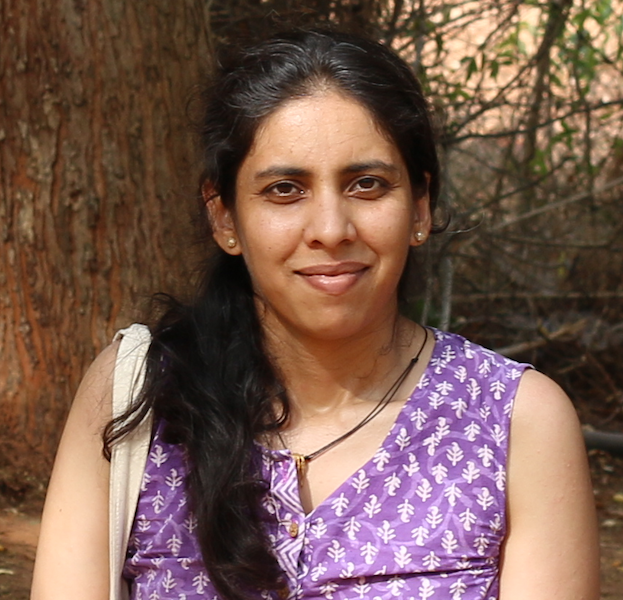
Ashwini Vaidya is an Assistant Professor in the Department of Humanities and Social Sciences at IIT Delhi, also affiliated with the Cognitive Science MSc program. Their research focuses on computational lexical semantics, argument structure, and lexical access, with a special emphasis on Indian subcontinent languages like Hindi, Marathi, Urdu, and Malayalam. Methodologies include both computational and experimental approaches. Recent work includes studies on Hindi ergative marking and light verb constructions, with papers accepted at Glossa Psycholinguistics and SCiL 2025 . Upcoming talks include a presentation at EEL 2025 in June 2025. Their team explores NLP dataset design and evaluation, particularly for under-resourced languages. No scientific awards are explicitly mentioned. Advising activities involve current students (names unspecified), and grants are not detailed in the provided text. Research collaborations likely exist through IIT Delhi’s interdisciplinary environment.
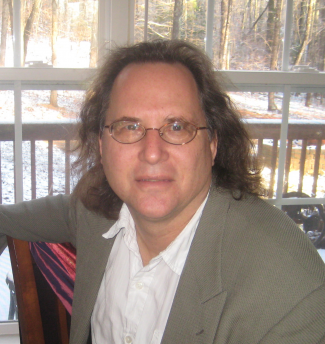
Dr. Kenneth Aizawa is a Professor of Philosophy at Rutgers University, Newark, specializing in the philosophy of science, philosophy of psychology, and philosophy of neuroscience. His research critically examines the boundaries of cognition, extended mind hypotheses, and the metaphysics of scientific explanation. He holds a Ph.D. in History and Philosophy of Science from the University of Pittsburgh (1989), an M.A. from the same institution (1988), and an A.B. in Philosophy from the University of Chicago (1983). His expertise includes topics such as multiple realizability, neurophilosophy, and the interplay between cognitive science and embodiment theories. He has authored/co-authored influential books like The Bounds of Cognition (2008) and edited volumes such as Scientific Composition and Metaphysical Ground (2016). His work often bridges philosophical analysis with scientific practice, addressing foundational questions in cognitive science and neuroscience. Recent publications explore 4E cognition (embodied, embedded, enactive, extended), the philosophical implications of computational models in cognitive science, and debates over cognitive autonomy. Notable contributions include critiques of the coupling-constitution fallacy in extended mind theories and analyses of realization and emergence in scientific contexts. Aizawa’s articles frequently engage interdisciplinary themes, offering rigorous critiques of reductionist approaches while advocating for nuanced, level-sensitive explanations in science. His work has appeared in journals like Philosophy and Phenomenological Research , Studies in History and Philosophy of Science , and Synthese , reflecting his commitment to bridging philosophy and empirical research.
Dr. Paulina Mazurkiewicz serves as Assistant Professor in the Department of Romance Linguistics at the Institute of Linguistics, Faculty of Humanities, John Paul II Catholic University of Lublin. Her academic profile spans legal linguistics, contrastive French-Polish terminology, and pandemic discourse analysis, with extensive contributions to cognitive metaphor studies and jurislinguistics. Her research focuses on legal terminology (particularly family law concepts like civil unions, filiation, and marriage annulment), Covid-19 discourse (analyzing conceptual metaphors in vaccination communication), and terminological innovation (neologisms derived from political proper names). She employs corpus-based methodologies and cognitive linguistic frameworks to examine cross-linguistic expression patterns. Analysis of her 15 most recent publications reveals a consistent trajectory in specialized discourse analysis , with increasing emphasis on crisis communication since 2020. Her work demonstrates methodological rigor in comparing French and Polish legal lexicons while exploring broader cognitive mechanisms in metaphor realization across Romance and Slavic languages. Medal Komisji Edukacji Narodowej (2024) Scientific editor for special issue 'Limites en la recherche linguistique' (Roczniki Humanistyczne, 2024) Reviewer for Revue Repères Dorif Dr. Mazurkiewicz actively contributes to academic service through conference organization (including 'Entre liberté et contrainte dans la recherche linguistique', 2022), editorial roles (Annals of the Humanities), and Erasmus+ collaborations. She coordinates the Faculty of Humanities' participation in the Lublin Science Festival and organizes national competitions like the Polish Knowledge of France Olympiad. Her research infrastructure includes collaborations with the European Network On Lexical Innovation (COST project), University of Ostrava (Erasmus+), and Polish Academy of Sciences Scientific Station in Paris. Current projects examine implicit communication in political discourse, particularly Emmanuel Macron's discursive strategies.
Jonathan Simon is an Assistant Professor in the Department of Philosophy at the University of Montreal , specializing in philosophy of mind, metaphysics, and meta-ethics. His research spans formal ontology, philosophy of science, and value theory. Education: PhD from NYU (2012), BA from Columbia University (2002, Magna Cum Laude) Awards: MacCracken Fellowship, Humboldt Foundation Research Fellowship, Adam Leroy Jones Prize in Logic His research focuses on the metaphysics of consciousness, including pain perception, non-orientable spatial experience, and quantum mechanics ontology. Recent projects explore AI consciousness and artificial moral perception . Key publications include Experiencing Left and Right in a Non-Orientable World (forthcoming) and Fragmenting the Wave Function (2019), blending philosophy of mind with quantum theory. Supervised master’s theses address topics like machine consciousness and moral psychology . Scientific Awards: MacCracken Fellowship (2004-2009) Humboldt Foundation Fellowship (2002-2004) Adam Leroy Jones Prize (2002) He has advised graduate students on thesis topics including artificial consciousness , utilitarian axiology , and metaphysics of nothingness , with current projects funded by FRQSC , CRSH , and Good Ventures Foundation .
Fred Adams is a prominent Professor specializing in Philosophy of Cognitive Science and Epistemology, with significant contributions to debates on extended cognition, mental representation, and knowledge theories. His career spans over four decades with continuous scholarly output. His educational foundation includes a 1982 dissertation on Goal-Directed Systems from The University of Wisconsin - Madison, establishing his early focus on cybernetic models of teleological behavior. This philosophical grounding evolved into interdisciplinary work bridging cognitive science and philosophy. Adams' research centers on critical examinations of extended cognition frameworks (notably in The Bounds of Cognition with Kenneth Aizawa), truth-tracking epistemology, and semantic theories of mental content. His work consistently challenges prevailing theories while developing nuanced alternatives, particularly regarding how cognitive systems interface with environmental information. Recent publications demonstrate sustained engagement with foundational epistemological problems through modal analyses of knowledge conditions. Analysis of his 15 most recent publications reveals consistent focus on epistemic justification frameworks, with growing emphasis on interdisciplinary cognitive science applications. His work shows particular expertise in adapting Nozick's tracking theory to contemporary challenges while maintaining philosophical rigor. Notable scholarly contributions include: Critical analysis of extended cognition hypotheses Development of fact-tracking knowledge models Refinements to causal theories of mental representation Interdisciplinary bridges between philosophy and cognitive neuroscience His advising and collaborative work shows strong mentorship patterns through co-authored publications with emerging scholars, particularly in consciousness studies and epistemology. While specific grant details aren't documented in the source text, his sustained publication record across multiple academic presses indicates successful research funding support throughout his career. Adams maintains active laboratory engagement through theoretical cognitive modeling, particularly in the philosophy-cognitive science interface, with ongoing collaborations examining neural correlates of semantic processing and epistemic justification frameworks.
Sebastian Fedden is Professor of General Linguistics at Sorbonne Nouvelle University, with additional teaching engagements at Ludwig-Maximilians-Universität München (2022-24). His administrative responsibilities include membership in the Conseil de Gestion (ILPGA), representation of LACITO at the Doctoral College, editorship of LACITO Publications, and coordination of research axes in the Labex-EFL project on grammatical typology. Fedden's research explores linguistic diversity through: Core frameworks: Canonical typology and language documentation Regional expertise: Papuan languages (Mian, Telefol, Tifal, Kibiri) Theoretical foci: Nominal classification systems (gender/classifiers), agreement phenomena, argument realization Interdisciplinary connections: Cognition-categorization interfaces, psycholinguistic validation His recent publications (2020-2022) demonstrate methodological diversity—combining discourse analysis, computational modeling, and diachronic approaches—to examine grammatical systems in Papuan languages, particularly agreement mechanics in Mian and grammaticalization pathways in Trans New Guinea. Fedden actively supervises doctoral candidates researching endangered languages: Moisés A. Veláquez (Kibiri grammar) and Neige Rochant (Baga Pukur grammar). He secures significant research funding including the ANR-DFG binational project Complex Predicates in Languages: Emergence, Typology, Evolution (2021-24) and ESRC UK Grant Optimal categorisation (2018-22). He coordinates research networks through LACITO and the Surrey Morphology Group, and organizes major linguistics events including DGfS workshops and the Current Trends in Papuan Linguistics conference.
Prof. Eva Schultze-Berndt is Professor of Linguistics at the University of Manchester, specializing in typology and documentation of Australian languages. With 40+ months of fieldwork, her research examines Western Mirndi languages (Jaminjung, Ngaliwurru) and Northern Australian Kriol. Research Focus: Schultze-Berndt's work addresses grammatical phenomena including complex predication, verb classification, spatial language, information structure, and modality systems. Her DoBeS-funded projects document Jaminjungan languages and analyze prosodic convergence in multilingual communities. Publication Trends: Recent articles (2017-2023) explore reflexive constructions, discontinuous NPs, and information structure in Australian languages. Earlier work established foundations on secondary predication, parts of speech, and verb classification typologies. Leadership: Coordinates international documentation projects; serves on editorial boards of Sprachtypologie und Universalienforschung and Oxford Studies in Typology.
Miriam Ossevoort serves as Head of the Department of Educational Quality at the Faculty of Economics and Business, University of Groningen. With a background spanning both biological sciences and educational research, she leads initiatives focused on curriculum development, educational policy, and quality assurance in higher education. Her career demonstrates a clear transition from immunology research to educational science. Her research interests center on curriculum development, education policy, quality assurance (including accreditation), assessment methods, teacher professionalization, and academic skills development in higher education. She has developed expertise in science education, particularly in helping students read and understand scientific research articles through argumentation techniques. Her work often explores how to improve educational quality through structured learning communities and professional development for educators. Dr. Ossevoort's publication record shows a clear evolution from immunology research in the 1990s-early 2000s to educational research from the mid-2000s onward. Her work consistently addresses how students engage with scientific literature, with particular attention to argumentation as a tool for understanding research. Recent publications focus on curriculum innovation, learning communities, and educational quality assurance in higher education settings. Her leadership role as Head of Educational Quality demonstrates her institutional impact in shaping educational practices. While specific awards aren't listed in the available information, her extensive publication record in educational research journals and conference proceedings indicates recognition within her field. Dr. Ossevoort has supervised educational research projects, particularly those examining how students interact with scientific literature. Her work has been supported through various educational initiatives at the University of Groningen, where she has played a key role in advancing teaching practices and educational quality across disciplines.
Ronald Endicott is an Associate Professor of Philosophy and Program Director for Cognitive Science at North Carolina State University's College of Humanities and Social Sciences. His primary affiliation is with the Department of Philosophy and Religious Studies. He holds a BA from Indiana University, an MA and PhD from the University of Michigan, specializing in Philosophy. His research focuses on philosophy of mind, foundations of cognitive science, and philosophy of science. Key themes include functional reduction theories, multiple realizability, and debates over physicalism. He has published extensively in top journals such as the Journal of Philosophy , Philosophical Studies , and Synthese , with notable contributions to interdisciplinary discussions bridging philosophy and cognitive science. Recent work emphasizes refining functional reduction models and addressing conceptual tensions between different philosophical traditions. His 2022 paper in ProtoSociology reimagines reductionist frameworks, while 2024's Frontiers in Psychology article explores embodied cognition critiques. Endicott has contributed entries to major reference works like the Cambridge Dictionary of Philosophy and has engaged critically with prominent figures such as John Searle and Jaegwon Kim. His career reflects a commitment to bridging analytical philosophy with contemporary scientific discourse.
Farrell Ackerman is a Professor in the Department of Linguistics at UC San Diego and serves as Director of the Human Development Program. His research focuses on lexical semantics, morphology, and syntax, with a particular emphasis on cross-linguistic typology within the Uralic family and the revitalization of Word & Paradigm models. His work on morphology as a complex adaptive system integrates insights from ecological developmental biology, utilizing information-theoretic measures to analyze cross-linguistic paradigm organization. He has conducted extensive fieldwork on the underdocumented Moro language in Sudan, supported by an NSF grant (BCS-0745973), collaborating with Sharon Rose and students. Recent research trends include entropy-based morphological analysis, correspondence-based mapping theory, and experimental approaches to morphological learnability. Key publications span topics like Finnish nominal inflection, Mandarin resultative compounds, and the low entropy conjecture in morphological systems. Awarded grants and collaborative workshops, including the 1st Language as a Complex Adaptive System Workshop, highlight his interdisciplinary approach combining linguistics with computational and biological models.
Anna Morbiato is an Associate Professor in the Department of Asian and North African Studies at Ca' Foscari University of Venice, where she teaches Chinese language and linguistics. She is a member of the Board of Directors of the Ca' Foscari School for International Education (CFSIE) and serves as Editor-in-Chief of the journal Annali di Ca’ Foscari Serie orientale . Her academic work bridges linguistics, cognitive science, and artificial intelligence. Education: PhD in Linguistics, University of Sydney (Cotutelle) PhD in Asian and African Studies, Ca' Foscari University of Venice MA in Technical and Scientific Translation, Ca' Foscari University of Venice (First Class Honours) BA in Translation and Interpretation, Ca' Foscari University of Venice (First Class Honours) Her research focuses on Chinese syntax, information structure, pragmatics, and second language acquisition, employing cognitive-functional and corpus-based methodologies. She has contributed extensively to the understanding of word order, topic structure, and anaphora in Mandarin, with applications in language teaching and AI. The recent publications of Anna Morbiato reveal a strong trend toward interdisciplinary research, particularly in human-centric AI and natural language understanding. Her work connects linguistic theory with practical applications in technology, focusing on how language encodes meaning in procedural and culinary texts. She integrates cognitive linguistics with corpus analysis and experimental data, especially in studying Italian learners of Chinese. Scientific Awards: Marie Skłodowska-Curie Actions Seal of Excellence (2018) Valedictorian, Ca’Foscari University (2018) Campus Mentis Award (2010) Chinese Bridge Competition 3rd Prize (2007) Multiple First Class Honours distinctions Anna Morbiato has supervised numerous BA and MA theses and is responsible for Chinese language instruction at her department. She has received competitive research grants from the European Union (Horizon 2020, PRIN), Australian Government (Endeavour), and the University of Sydney. Her leadership extends to organizing international conferences and serving on PhD committees and editorial boards. She is actively involved in the MUHAI (Meaning and Understanding in Human-centric AI) project, where she contributes case studies in cognitive semantics and pragmatics, and in the PRIN ACHIEVE project on Chinese verb complex acquisition. Her institutional roles include curriculum development, editorial leadership, and academic governance.
Dr. Abisoye Eleshin is a Research Fellow at the Institute of African and Diaspora Studies, University of Lagos, and serves as a Principal Investigator in the Africa Multiple Cluster of Excellence in African Studies (Knowledges Research Stream). She holds a Ph.D. in Yorùbá Linguistics with specialization in morphology and nominalisation. Her research spans multiple domains of African linguistics: Core focus on Yoruba language structure, dialectology, and sociolinguistic applications Specialization in morphological processes including prefixation, nominalisation, and negation Documentation of African languages with emphasis on Yoruba indigenous advertising and folktales Investigation of bi-dialectal communities as evidenced by her Epe, Lagos research project Her recent publications demonstrate consistent contributions to Yoruba linguistic theory, particularly in phonological-morphological interfaces and sociolinguistic applications. Current research includes a University of Lagos-funded project on Yoruba Indigenous Advertisement and collaboration on Yoruba folktale documentation funded by the University of Bayreuth. As an educator, she teaches courses on African language families, structural features of African languages, and sociolinguistic applications. Her work bridges theoretical linguistics with practical cultural documentation, including playwrighting focused on African sociocultural history.
Angel Luis Jimenez Fernandez is a Professor of English Philology at the University of Seville's Faculty of Philology, where he teaches courses in Generative Grammar, Contrastive Analysis of Spanish as L2 for English Speakers, and Mental Categories and Linguistic Structures. His research focuses on the syntax-discourse interface, particularly examining how information structure influences syntactic phenomena across languages. His research spans multiple areas of theoretical linguistics, with particular emphasis on information structure in the sentential, verbal, and nominal peripheries. He investigates how discourse features interact with syntactic structures in Romance and Germanic languages, specializing in English-Spanish comparative analysis. His work addresses phenomena such as negative preposing, focus fronting, dative constructions, and subject islands, exploring how these constructions vary across languages and dialects. His extensive publication record demonstrates consistent research productivity, with recent work examining Puerto Rican Spanish code-switching, inferential interrogatives in Spanish, and the relationship between verbal alternations and information structure. His research shows a clear trajectory from theoretical syntax to the syntax-discourse interface, with increasing attention to language acquisition and pedagogical applications. Professor Jimenez Fernandez actively supervises doctoral students and collaborates with international researchers across Europe and the Americas. His recent conference presentations indicate ongoing engagement with cutting-edge theoretical issues in generative linguistics, particularly regarding microvariation at the syntax-discourse interface and cross-linguistic comparisons of information structure phenomena.
Raul Aranovich is an Associate Professor in the Department of Linguistics at the University of California, Davis, where he has been a faculty member since 2001. Prior to his appointment at UC Davis, he held faculty positions at the Ohio State University and the University of Texas in San Antonio. He received his Ph.D. in Linguistics from UC San Diego in 1996 under the direction of Professors S.-Y. Kuroda and John Moore. Professor Aranovich is a theoretical linguist whose research focuses on the interfaces between syntax, morphology, and semantics, with particular attention to grammatical mismatches across these linguistic levels. His work spans both theoretical and empirical approaches, utilizing natural language processing and corpus linguistics tools. His primary language specializations include Spanish and other Romance languages, as well as Fijian and Shona, representing significant cross-linguistic diversity in his research portfolio. His recent publications demonstrate an expanding interdisciplinary focus, bridging traditional linguistic theory with computational applications, including work in cybersecurity and neural machine translation. This reflects his evolving research trajectory from purely theoretical syntax and morphology toward computational and applied linguistics. His work on computer-mediated communication represents a contemporary extension of his longstanding interest in language structure and variation. Among his notable recognitions is being named a Fellow of the Linguistic Society of America, highlighting his contributions to the field. Fellow, Linguistic Society of America Professor Aranovich's research demonstrates remarkable breadth across linguistic subfields and languages, connecting historical linguistic theory with contemporary computational approaches. His work on Romance languages maintains a strong theoretical foundation while his more recent cybersecurity and machine translation publications show successful adaptation to emerging interdisciplinary opportunities. His continued publication record through 2024 indicates active ongoing research contributions across multiple linguistic domains.
Mark Newson is an Associate Professor at the School of English and American Studies and a lecturer in the Department of English Linguistics at Eötvös Loránd University (ELTE) . He is also affiliated with the Általános Irodalomtudományi Kutatócsoport (General Literary Studies Research Group), where he holds a lecturer position. His research focuses on syntax , particularly case theory , generative grammar , and optimality theory . He has extensively studied syntactic movement phenomena, case assignment in English and Hungarian, and the role of functional categories in grammatical frameworks. Key trends in his publications include analyses of DP movement , modal auxiliaries , non-finite clause structures , and syntactic dependencies . His work often bridges theoretical linguistics with empirical studies of specific languages. Mark Newson maintains active academic collaboration through conferences like the Budapest Linguistics Conference (BLINC) and has contributed to the dissemination of linguistic theory, including translations of foundational works like Chomsky's Universal Grammar into Chinese.