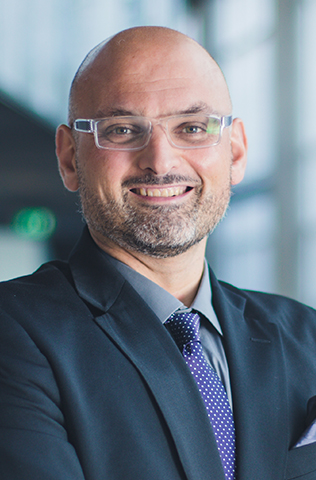
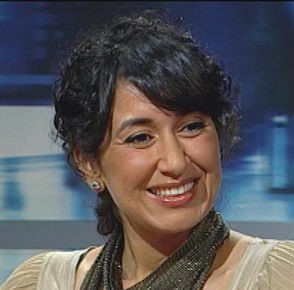
Marwan M. Kraidy is the Dean and CEO of Northwestern University in Qatar, overseeing academic and operational units including communication, journalism, and liberal arts programs. He holds the Anthony Shadid Chair in Global Media, Politics, and Culture. His research focuses on global communication, Arab media, digital culture, and geopolitics of media. Kraidy earned degrees from Notre-Dame University and Ohio University, and has held prestigious fellowships including the Andrew Carnegie and Guggenheim. He leads the Institute for Advanced Study in the Global South, fostering evidence-based storytelling on the Global South. His major publications include The Naked Blogger of Cairo (2016), which won multiple awards, and Reality Television and Arab Politics (2010). He has taught at universities globally and advised governments and institutions on media and cultural policy. Awarded over 50 honors, Kraidy’s work bridges theory and practice, emphasizing South-to-South relations and digital-native media spheres. His current projects explore war machines in the digital age and Turkish television’s geopolitical impact.
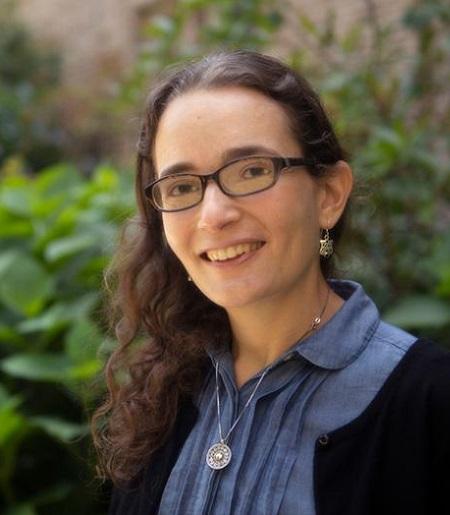
Julia Wurr is a Junior Professor of Postcolonial Studies at the Institute for English and American Studies, Carl von Ossietzky University of Oldenburg, within the School of Linguistics and Cultural Studies. Her research spans postcolonial theory, gender studies, medical humanities, and Anglophone literatures, with a strong focus on reproduction, biocapitalism, and neo-orientalism. Her research interests include postcolonial medical humanities, biocapitalism, reproductive studies, gender and sexuality, Indian and Arab Anglophone writing, and literary theory. She critically examines how literature engages with medical, demographic, and security discourses, particularly in postcolonial and diasporic contexts. The recent articles highlight a consistent engagement with themes of reproductive labor, surrogacy, racial capitalism, and narrative ethics. Her work bridges literary analysis with critical theory, feminist studies, and global health, often analyzing how fiction reflects and challenges structural inequalities in medicine, demography, and security. Associate Editor, Journal of Postcolonial Writing (2024–) Vice-President, GAPS (Association for Anglophone Postcolonial Studies) (2023–2025) Member, DFG Network 'Bioethik und strukturelle Ungerechtigkeit' Member, Gesellschaft für Anglophone Postcolonial Studies (GAPS) Member, Anglistikverband Julia Wurr advises emerging scholars and promotes PhD opportunities in German-speaking countries through her involvement with GAPS. She has delivered numerous invited talks at international institutions including Columbia University, UC Berkeley, IISER Bhopal, and the University of Washington, reflecting her growing academic influence. Her work is supported by interdisciplinary networks and collaborative research initiatives. She is also active in public scholarship and teacher training, as seen in her workshop on Sarfraz Manzoor’s memoir.
Ken Miichi is a Professor at the Graduate School of Asia-Pacific Studies, Waseda University (since 2019). His research focuses on Indonesian politics , political Islam , gender dynamics , and religious pluralism in Southeast Asia. He has received the Ishibashi Memorial Asia-Pacific Research Incentive Award (2002) and led numerous grants from Japan Society for the Promotion of Science , including projects on COVID-19 political impacts and conflict resolution in polarized societies . His work bridges academic research and public commentary , with contributions to books, edited volumes, and policy-oriented articles. Research Highlights : Anti-Feminist Discourse in Indonesia (2024) and Gender Politics in presidential elections (2020) Religious Pluralism in post-authoritarian Indonesia (2020) Indigenization of Islamism through grassroots networks (2023) Cultural Preservation of folk performing arts after disasters (2016) Scientific Awards : Ishibashi Memorial Asia-Pacific Research Incentive Award (2002) Grants include: Political Impact of the COVID-19 Crisis (2022-2027) Trust and Peacebuilding in Conflict-Affected Regions (2020-2025) Feminist Movements and Islam in Indonesia (2020-2024)
Tarik Oumazzane is an Assistant Professor in Middle East and North African Studies at the Faculty of Arts, University of Nottingham . His expertise spans North African Studies, Middle East Politics, Decolonization, and Peacebuilding , with a focus on Moroccan-British relations and South-South cooperation . Specializes in Political Economy of regional integration in the MENA region. Research interests include decolonization in Africa , Islamic history , and post-Arab Spring dynamics . Dr. Oumazzane has taught modules such as 'International History of the Middle East and North Africa' and 'Liberating Africa: Decolonisation, Development and the Cold War' . He has presented research at international conferences in Prague, Sarajevo, Athens, and London . His recent book, Regional Integration in the Middle East and North Africa , explores trade and peace dynamics. He is a member of academic associations including BRISMES, BISA, and ISA , and is fluent in English, Arabic, French, and Spanish .
Laila Shereen Sakr is an Assistant Professor of Film & Media Studies and Faculty Affiliate in Feminist Studies at the University of California, Santa Barbara. She co-founded Wireframe, a digital media studio focusing on critical game design, data visualization, VR/AR, and digital activism. Her research explores algorithmic culture, media theory/practice, and feminist Middle East studies through creative coding, data visualization, and immersive worldbuilding. Key projects include the VJ Um Amel data-body and R-Shief software system. Education: PhD in Media Arts + Practice (USC), M.F.A. in Digital Arts (UC Santa Cruz), M.A. in Arab Studies (Georgetown). Research interests span technocultural intersections, digital humanities, and global human rights. Her work examines social media's role in shaping virtual political identities and has been exhibited globally (e.g., SF MoMA, Jordan National Gallery of Art). She co-edits Media Theory and After Video , and collaborates with MIT's Global Media Technologies & Cultures Lab. Publications analyze Arab Spring media dynamics, digital dissidence in MENA, and feminist digital praxis. Her work has been featured in The Wall Street Journal , Science , and The Guardian . Her creative research bridges art and activism, emphasizing open-source Arabic localization. Current projects explore the ethical implications of data-driven narratives in post-revolutionary contexts.
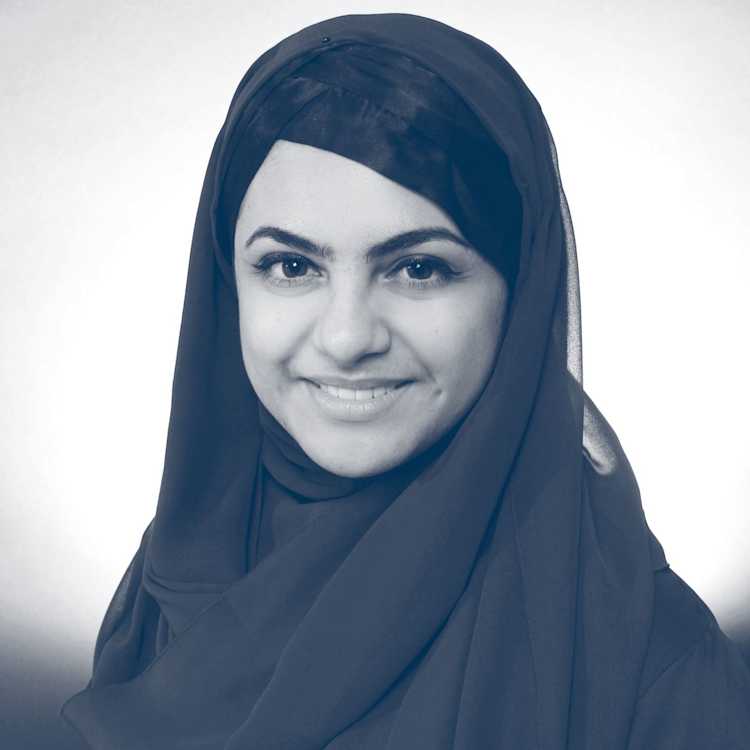
Hager Ali is a Doctoral Researcher at the German Institute for Global and Area Studies (GIGA), specifically affiliated with the GIGA Institute for Middle East Studies, and is part of the GIGA Doctoral Programme since October 2018. Ali also serves as an External Editor for the thematic series "Autocracies with Adjectives" at the Loop, ECPR's Political Science Blog since March 2022, and maintains a career as a freelance journalist since 2010. German Institute for Global and Area Studies (GIGA) - Institute for Middle East Studies (2018-present) Central European University (CEU) - Teaching appointments (2025) Institute for Peace Research and Security Policy (IFSH) - Teaching appointments (2024) Ali's research focuses on civil-military relations in the Middle East and North Africa, military coups and civilian control of armies, authoritarian regimes and institutions, regime stability and destabilization, party systems and cleavages, and German military deployments in the MENA-Region and Sahel. The doctoral dissertation examines "Praetorianism in the MENA-Region: Military Governance and Civilian Control across Regime Types." Ali's work demonstrates sophisticated methodological approaches to understanding authoritarian resilience and military politics through comparative analysis. Ali's publication record reveals a consistent focus on Sudanese politics and civil-military relations, with increasing attention to contemporary conflicts since 2022. The research combines theoretical insights from comparative authoritarianism studies with detailed empirical analysis of military institutions and political transitions in the Middle East and North Africa. Recent work shows a growing emphasis on practical policy implications, particularly regarding peace negotiations in Sudan and the role of civilian actors in conflict resolution. Shortlisted for the Best Blog Award of 2022 by ECPR's Political Science Blog "The Loop" (2023) Ali actively contributes to academic discourse through conference presentations, policy papers, and media commentary. Recent engagements include serving as a discussant at the ECPR General Conference 2024 on "Trends in autocratic practices and behaviors" and scheduled lectures on the Sudan conflict in 2025. Ali has established collaborations with institutions like the German Institute for International and Security Affairs (SWP) and maintains strong connections with academic networks across Europe. As a member of the GIGA research programme on Accountability and Participation, Ali contributes to interdisciplinary research on governance and political institutions. Ali participates in multiple ECPR Standing Groups including Political Methodology, Political Violence, Comparative Political Institutions, and Critical Peace and Conflict Studies, demonstrating engagement with diverse methodological and theoretical approaches to political science research.
Dina Bishara serves as Associate Professor of International and Comparative Labor at Cornell University, where she holds a joint appointment in the Department of Global Labor and Work within the School of Industrial and Labor Relations (ILR School). Her academic profile bridges political science and labor studies with a specialized focus on authoritarian regimes and democratic transitions in the Middle East and North Africa region, particularly examining Egypt and Tunisia as critical case studies. Bishara's research program centers on the dynamics of state-labor relations under authoritarian rule, analyzing how workers' movements and trade unions challenge repressive regimes through contentious politics. Her scholarship investigates the temporal and spatial dimensions of protest, the role of legacy unions in democratization processes, and the mobilization strategies of precarious and unemployed workers. This work is exemplified in her award-winning book Contesting Authoritarianism: Labor Challenges to the State in Egypt (Cambridge University Press, 2018), which establishes labor as a central actor in authoritarian breakdown. Analysis of her publication trajectory reveals a consistent scholarly focus on labor's political agency across 15 years of research, with increasing attention to democratic consolidation challenges in Tunisia and theoretical innovations in protest dynamics. Her work demonstrates methodological rigor through comparative case studies and fieldwork-based analysis of labor movements during critical political junctures. Bishara's scholarly contributions have been recognized through prestigious awards: State University of New York (SUNY) Chancellor's Award for Excellence in Scholarship and Creative Activities (2023) Best Fieldwork Award from the Middle East and North Africa Politics Section of the American Political Science Association (2022) SERMEISS Book Prize Honorable Mention (2019) Research Fellowships at Harvard University, University of Oxford, and German Institute for International and Security Affairs Her academic service includes presentations at leading institutions including Yale University and the American Political Science Association, while her teaching encompasses social movements, Middle East labor politics, and authoritarianism. Bishara maintains active scholarly engagement through her professional website (dinabishara.com) and ongoing research on democratic transitions in the MENA region.
Prof Barbara Lipietz is a Professor of Urban Development Planning at the Development Planning Unit, University College London (UCL), and serves as Vice Dean International of The Bartlett Faculty of the Built Environment. Her roles include leading the MSc Urban Development Planning program and directing academic internationalization efforts at The Bartlett. Her research focuses on urban equity, trans-local solidarity networks, and participatory urban planning practices, with a strong emphasis on the Global South. Key areas include housing rights, displacement dynamics in Nigeria, climate resilience, and co-production of knowledge for just urban futures. She critiques neoliberal urban development models and advocates for marginalized communities' inclusion in decision-making processes. Her work spans multiple continents, engaging with organizations like the Asian Coalition for Housing Rights and contributing to international frameworks such as the Sendai Guidelines for Disaster Resilient Urban Planning. She frequently publishes in peer-reviewed journals and policy platforms, emphasizing actionable research to bridge academic and activist agendas. Notable contributions include theoretical explorations of 'just cities,' critiques of 'world-class city' narratives, and analyses of urban transformations post-Arab Spring. Her pedagogical approach emphasizes experiential learning and partnerships with grassroots organizations.
Emma Sky is the founding director of Yale’s International Leadership Center and a Lecturer at the Yale Jackson School of Global Affairs. She teaches courses on great power competition, grand strategy, and Middle East politics. Her research focuses on conflict resolution, security sector reform, and regional stability in the Middle East and beyond. Her expertise stems from extensive fieldwork, including roles as political advisor to U.S. and NATO forces in Iraq and Afghanistan, Governorate Coordinator of Kirkuk, and development advisor for Palestinian institutions. She has also worked on poverty elimination and human rights initiatives across the Middle East, South Asia, and Africa. Sky authored The Unravelling: High Hopes and Missed Opportunities in Iraq (2015) and In a Time of Monsters: Travelling in a Middle East in Revolt (2019), analyzing post-conflict governance and regional instability. She serves as a trustee of the HALO Trust, a humanitarian NGO clearing landmines globally. Her courses include GLBL 101: Gateway to Global Affairs , Middle East Politics , and Great Power Competition and Cooperation . Her work bridges academia and practice, emphasizing strategic leadership in volatile contexts.
Heghnar Zeitlian Watenpaugh is Professor of Art History at the University of California, Davis, where she has been a faculty member since 2005. She is also a Faculty Associate in the Graduate Programs in Cultural Studies, Women and Gender Studies, Performance Studies, Jewish Studies, and Medieval and Early Modern Studies. Her research focuses on the visual cultures of the Middle East, particularly architectural preservation, museums, and cultural heritage. She earned her Ph.D., M.A., and B.A. (summa cum laude) from the University of California, Los Angeles, and an A.A. from Beirut University College. Her research has been supported by prestigious fellowships from the Guggenheim Foundation, the National Endowment for the Humanities, the J. Paul Getty Trust, Fulbright-Hays, and the Social Science Research Council. Watenpaugh’s research spans art and architectural history, cultural heritage, Islamic art, Ottoman urbanism, provenance and restitution, and the intersections of art, conflict, and human rights. Her work often centers on survivor objects—artifacts that endure genocide and displacement—and their role in justice and memory. She has published extensively in journals such as International Journal of Middle East Studies , Journal of the Society of Architectural Historians , and Muqarnas . Her recent publications, including The Missing Pages (2019) and several 2023 articles, reflect a strong trend toward the study of cultural survival, restitution, and the ethical dimensions of museum collections. Her scholarship bridges academic rigor with public engagement, appearing in The New York Times , Newsweek , and The Los Angeles Times , and featured in BBC podcasts. Spiro Kostof Book Award, Society of Architectural Historians (2006) Ömer Lütfi Barkan Article Prize, Ottoman and Turkish Studies Association (2015) Best Article Prize, Syrian Studies Association (2007) Gold Medal in World History, Independent Publisher Book Awards (2020) Book Award, Society for Armenian Studies (2020) Book Award, Ottoman and Turkish Studies Association (2020) Shortlisted, William Saroyan International Prize for Writing (Non-Fiction, 2020) Guggenheim Fellowship NEH Public Scholar Aga Khan Career Development Professor, MIT Watenpaugh has advised numerous scholarly initiatives and served on the boards of the Society of Architectural Historians, Historians of Islamic Art Association, and Syrian Studies Association. She is currently President of the American Research Institute of the South Caucasus. Her teaching includes courses on Islamic art, the Islamic city, arts of the Islamic book, and art, architecture, and human rights. She also leads seminars on visual theory, cultural conflict, and the exhibition of Islamic art. She is affiliated with multiple research centers and collaborates internationally on heritage preservation, particularly in post-conflict zones. Her public scholarship program at UC Davis reflects her commitment to bridging academic and public discourse on cultural heritage.
Mariann Vaczi is an Associate Professor at the University of Nevada, Reno, affiliated with the Center for Basque Studies and serving as Director of Graduate Studies. Her research explores the intersection of sport, physical culture, and national identity through anthropological frameworks. Ph.D., Basque Studies and Anthropology, University of Nevada, Reno (2013) M.A., English and American Studies, ELTE University, Budapest (2006) M.A., Sociology and Social Anthropology, Central European University, Budapest (2005) B.A., Anthropology, Saint Vincent College (2004) Her academic focus examines the moving body as a site of political struggle, particularly in sub-national contexts like Catalonia and the Basque Country. Key areas include cultural performance in sports, ethnonationalist movements, and the symbolic dimensions of soccer fandom. Recent publications analyze global sport dynamics, traditional physical practices (castells, pelota), and the role of sport in post-dictatorship societies. Her 2023 monograph Catalonia’s Human Towers investigates how bodily labor becomes national symbolism. Vaczi’s work bridges anthropological theory with empirical studies of sport as cultural resistance, emphasizing gender, identity, and the politics of heritage in European regional contexts. She teaches courses on Basque culture and global sport-society relationships.
Nessim Znaien serves as Assistant Professor of History of Colonial and Postcolonial Maghreb at Philipps University of Marburg's Center for Near and Middle Eastern Studies (CNMS) since 2022, where he heads the Maghreb Field of Expertise team. His academic trajectory spans French institutions including Aix-Marseille University and research roles at the French Research Institute on Contemporary Maghreb in Tunis. His educational background includes: PhD in History, Université Paris 1-Panthéon Sorbonne (2012-2017) with thesis 'The Grapes of domination. Social History of Alcohol in Tunisia under Protectorate (1881-1956)' MA in History, École Normale Supérieure de Lyon (2011-2012) CAPES in History (2009) Bachelor’s degree in Modern Standard Arabic, Aix-Marseille University (2014-2018) University degrees in Italian (B2) and Turkish (B1) from Aix-Marseille University (2018-2021) Znaien's research centers on 19th-20th century North African history through material and food studies, examining colonial societies' structures and Tunisian historiography. His work uniquely bridges alcohol history with broader socio-economic patterns, revealing how substances like wine, bread, and harissa became sites of colonial control, cultural resistance, and identity formation. This approach illuminates the intersection of environmental, economic, and cultural forces in Mediterranean colonial contexts. His extensive publication record demonstrates consistent thematic focus on colonial North Africa's social history, with recurring analysis of alcohol systems, food economies, and material culture. The work shows sophisticated methodological integration of environmental history, economic anthropology, and postcolonial theory, particularly examining how colonial policies reshaped local consumption patterns and production systems across Tunisia, Algeria, and Morocco. No scientific awards are documented in the provided materials. Znaien actively contributes to academic infrastructure through research leadership and peer review. He coordinated a €30,000 Foundation for Research on Alcoholism project (2014-2019) on 'Alcohol under the French Empire,' participated in ERC's TARICA project (2017-2020) analyzing post-Arab Spring North Africa, and contributed to the French 'Bourgeon Project' (2017-2019) on Muslim world alcohol histories. He serves on scientific boards for L'Année du Maghreb and the Digital Encyclopedia of European History, while reviewing for journals including Journal of Medical History and Journal of North African Studies. As head of the Maghreb Field of Expertise team at CNMS, Znaien directs research on contemporary North African societies while maintaining strong connections to Tunisian academic networks through his editorial roles and ongoing historiographical analyses of post-revolutionary Tunisia.
Stéphane Lacroix is an Associate Professor of Political Science at Sciences Po and a permanent researcher at the Centre for International Research (CERI). He serves as co-director of Sciences Po's Chair of Religious Studies. An Arabist specializing in the Middle East, Lacroix holds fluency in five languages: French (mother tongue), English, Arabic, Spanish, and functional Russian/German. His research focuses on religious politics in the Arab world, particularly examining Salafism, Islamic movements, and state-religion dynamics in Saudi Arabia and Egypt. Key themes include revolutionary Islamism, religious dissent, and political transitions following the Arab Uprisings. His methodological approach combines extensive field research with historical and political analysis. Lacroix's publications reveal consistent scholarly engagement with Middle Eastern religious politics across three decades. His work demonstrates evolving focus from Saudi Islamism (2010-2011) to Egyptian revolutionary dynamics (2015-2018), culminating in contemporary analyses of Salafism (2024). The publications show increasing interdisciplinary scope, integrating political science, religious studies, and security perspectives. Lacroix teaches graduate courses including: The Dynamics of Religion in the Contemporary World Islam and Politics in a Changing Middle East States and Social Transformation in the Arab World States and Societies in the Arab World Research Training Workshop on the Middle East As a core CERI researcher, Lacroix contributes to the center's mission of interdisciplinary international research. His leadership in the Chair of Religious Studies shapes academic discourse on religion's political dimensions. While specific grant details aren't public, his co-edited volumes with Cambridge University Press and Harvard University Press indicate significant research funding support.
Dr. Christian Morgner is a Senior Lecturer in Cultural and Creative Industries at the Sheffield University Management School. He holds a PhD and MA, with expertise in complexity studies, relational sociology, and cultural networks. His research focuses on: Global cultural processes and innovation Diversity and inclusivity in creative industries Network analysis in urban informal settlements Dementia care through arts interventions Media events and translation dynamics Recent publications analyze cultural transformations in Santiago de Chile, relational creativity in Olympic ceremonies, and digital heritage politics in China. He has secured grants including the Rutherford Fellowship and Japanese Society for the Promotion of Science funding. Scientific awards include: Rutherford Fellowship Japanese Society for the Promotion of Science Postdoctoral Research Fellowship He supervises PhD students and teaches modules on critical theories in cultural and creative industries, marketing, and branding.
Professor Miriyam Aouragh is a Digital Anthropologist at the University of Westminster, affiliated with the Communication and Media Research Institute (CAMRI). Her work critically examines the intersection of technology, revolution, and anti-capitalism across West Asia and North Africa, with a focus on Palestine, Lebanon, Jordan, and Morocco. Through ethnographic fieldwork and critical theory, she explores how digital infrastructures mediate resistance, memory, and identity under settler-colonialism and neoliberalism. Key Research Areas: Revolution, Infrastructure, Anti-Capitalism, Critical Race Theory, Digital Colonialism Awards: NIAS Fellowship (2023), Swiss Foundation Grant (2024), TNI Fellow (2023-2028) Academic Engagements: Co-Director, Arab Media Centre (2018-2020); Co-Lead, Global Media Research Group; Coordinator, Labor-Tech Social Justice Working Group Her publications, including Palestine Online (2011) and Infrastructures of Empire (forthcoming), analyze techno-social politics from the Arab Spring to Palestinian cyber resistance. She critiques Western liberal democratic narratives and advocates for decolonial digital praxis, arguing against corporate co-optation of social justice movements. Public Engagement: Aouragh is a vocal critic of Big Tech capitalism and Israeli digital occupation, delivering keynotes at events like the Tom Hurndall Memorial Lecture. She connects struggles across Palestine, Ferguson, and Standing Rock through frameworks of radical kinship and intersectionality.