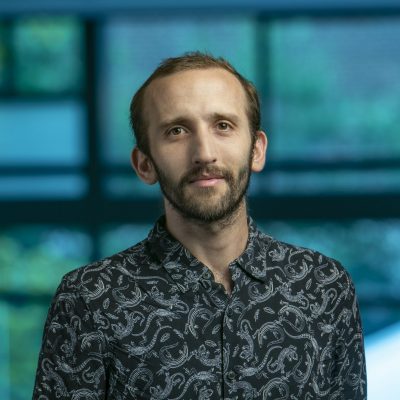
Erik Waingarten is an assistant professor at the University of Pennsylvania in the Computer and Information Science department. His research focuses on algorithms for massive datasets, including similarity search, streaming/sketching, property testing, and distribution testing. Former postdoctoral researcher at Stanford's CS Department under Moses Charikar PhD from Columbia University advised by Xi Chen and Rocco Servedio Key research areas: High-dimensional geometry Streaming algorithms Property testing Sketching techniques Clustering and metric optimization Recent article trends show expertise in: 2025 publications on monotonicity testing and metric property analysis 2024 work on Earth Mover's Distance and kernel evaluations 2023 papers on clustering, optimal transport, and MST algorithms 2022-2020 foundations in sublinear algorithms and entropy estimation Scientific recognition: NSF CAREER Award (2023) CCC Best Paper Award (2017) Invited to Journal of the ACM (2017) Academic advising includes PhD students: Ashwin Padaki Tian Zhang Nicolas Menand Krish Singal Junkai Song
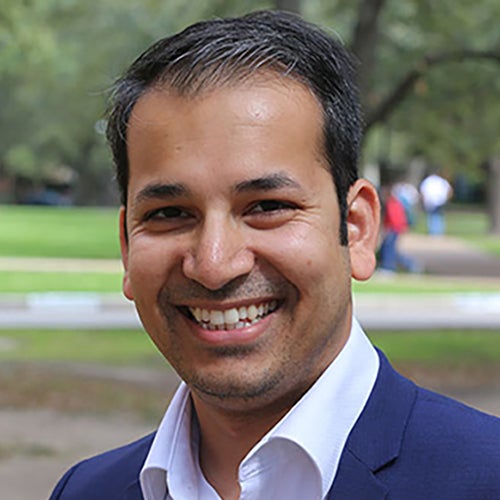
Ahmed El Alaoui is an Assistant Professor in the Department of Statistics and Data Science at Cornell University, with a secondary affiliation in the Department of Computer Science. He joined Cornell in 2021 after completing a postdoctoral fellowship at Stanford University under Andrea Montanari. His research focuses on high-dimensional statistics, probability theory, algorithms on random structures, and statistical physics, with particular emphasis on spin glasses and algorithmic thresholds. El Alaoui holds a PhD in Electrical Engineering and Computer Sciences from UC Berkeley (2018), advised by Michael I. Jordan, and a Master's from Ecole Normale Supérieure/Ecole des Ponts Paristech. His work bridges theoretical and applied domains, addressing challenges in high-dimensional inference, computational trade-offs, and probabilistic models. He has contributed to foundational results in random matrix theory, detection limits in spiked models, and algorithmic approaches to complex systems. His teaching includes courses on high-dimensional statistics, probability models, and theoretical computer science. He has been recognized for his innovative approaches to sampling and optimization in disordered systems, with publications in top journals like Annals of Probability and venues such as NeurIPS and FOCS. El Alaoui's research explores the interplay between statistical physics principles and algorithm design, aiming to uncover computational barriers in high-dimensional problems. His lab develops methodologies for analyzing complex systems and improving the efficiency of statistical estimation in challenging scenarios.
Kiwan Maeng is an Assistant Professor in Computer Science and Engineering, focusing on the intersection of machine learning systems, privacy-preserving techniques, and low-latency computing architectures. His research emphasizes algorithm-system co-design for scalable and secure AI implementations. Research Trends : His recent work explores retrieval-augmented generation systems, low-latency diffusion models, privacy-preserving federated learning, and energy-harvesting intermittent computing frameworks. Publications highlight collaborations across machine learning, cryptography, and hardware-software co-design. Key Projects : He leads a 3-year NSF SaTC grant (2024-2027) addressing privacy-preserving data embedding for untrusted ML services, and contributes to serverless video analytics frameworks (SVDE) and VR streaming optimization (PIRATE). Technical Contributions : His scholarship spans 17 conference contributions and 3 journal articles since 2007, with notable work on memory encryption for edge devices, secure MPC-based inference, and sustainable AI systems. Current research focuses on balancing privacy guarantees with model utility while optimizing for environmental efficiency.
Immanuel Trummer is a Professor of Computer Science at Cornell University, specializing in database systems, query optimization, and applications of large language models (LLMs) and quantum computing. He leads research projects such as DB-BERT, UDO, and SkinnerDB, focusing on automated database tuning, adaptive query processing, and leveraging LLMs for code synthesis and system optimization. His research interests span quantum computing for database optimization, cost-efficient LLM utilization, and voice-based data exploration. Key contributions include developing systems like CEDAR for claim verification, CodexDB for LLM-driven code generation, and ThalamusDB for multimodal data querying. Trummer has received prestigious awards, including the NSF CAREER Award (2023-2028) and the Best Demonstration Award at BDA 2020. His work has been funded by NSF, Google, Huawei, and others, supporting projects like quantum-index selection and misinformation detection. He advises graduate students in database systems and teaches advanced courses such as CS 6320 (Advanced Database Systems) and CS 7390 (Seminar in Database Systems). His research lab hosts open-source tools like JoinGym and maintains extensive collaborations in industry and academia.
Anshumali Shrivastava is an Associate Professor of Computer Science, Electrical and Computer Engineering, and Statistics at Rice University, affiliated with the George R. Brown School of Engineering. His research focuses on large-scale machine learning, randomized algorithms for big data, and graph mining. He holds a PhD from Cornell University (2015) and an MSc from the Indian Institute of Technology Kharagpur (2008). His research interests span scalable deep learning, efficient neural network inference, and probabilistic algorithms. He has pioneered techniques in compressed learning, hashing-based search, and distributed optimization for handling massive datasets. Notable contributions include methods for accelerating LLM inference, memory-efficient quantization, and graph processing algorithms. Teaching: Probabilistic Algorithms, Large-Scale ML, and Machine Learning Seminars Awards: Charles W. Duncan Jr. Achievement Award (2023), Young Faculty Research Award (2021), NSF CAREER Award (2017), and multiple best paper awards His work bridges algorithm design with practical applications in recommendation systems, genomics, and edge computing. Current efforts focus on sustainable AI, hardware-aware compression, and efficient training/inference pipelines for large models.
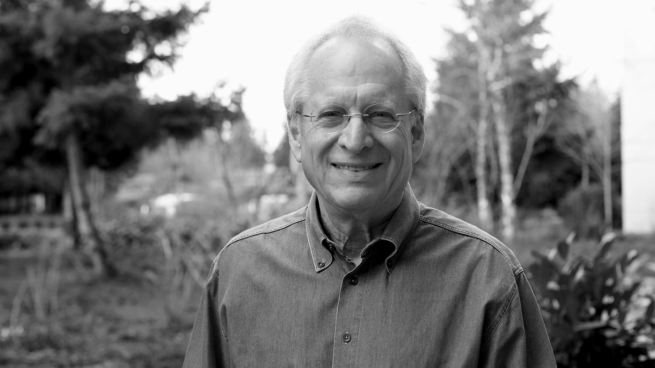
Dan Suciu is a Microsoft Endowed Professor in the Paul G. Allen School of Computer Science & Engineering at the University of Washington. His research focuses on data management, query optimization, probabilistic databases, parallel data processing, and information theory applications to databases. Awards : ACM Fellow (2011), American Academy of Arts and Sciences (2024), ACM SIGMOD Codd Innovation Award (2022), NSF Career Award (2001), Alfred P. Sloan Fellow (2001-2002). Research Trends : Recent work emphasizes cardinality estimation using Lp-norms, submodular width for query evaluation, dynamic query processing, and tensor program optimization. His publications highlight intersections between database systems and formal methods, driven by mathematical rigor. Key Collaborators : Mahmoud Abo Khamis, Dan Olteanu, Amir Shaikhha, Maximilian Schleich, Kyle Deeds, Moe Kayali. Advising : PhD students Gerome Miklau (2006), Christopher Re (2010), Paris Koutris (2016), Nilesh Dalvi (2008 runner-up), Yisu Remy Wang (2024 runner-up) have excelled in dissertation awards.
Phil Bernstein is a Distinguished Scientist in the Data Systems Group at Microsoft Research Redmond and an Affiliate Professor at the University of Washington where he occasionally teaches CSEP 545 Transaction Processing. With over four decades of pioneering work in database systems, he has made significant contributions across transaction processing, data integration, and distributed systems. His research interests focus on database systems, transaction processing, and data integration, with recent work on approximate nearest neighbor search over vector databases, improving database servers using disaggregated cloud resources, and the Orleans distributed systems programming framework. Bernstein's work on Orleans (2012-2019) resulted in an open-source framework widely used inside and outside Microsoft, with components addressing indexing, geo-distribution, and transactions. Bernstein has received numerous prestigious awards including being named a Fellow of the ACM and AAAS, receiving the SIGMOD Edgar F. Codd Innovations Award, and election to the National Academy of Engineering and Washington State Academy of Sciences. Fellow of the ACM Fellow of the AAAS SIGMOD Edgar F. Codd Innovations Award Member of the National Academy of Engineering Member of the Washington State Academy of Sciences As an active researcher and academic, Bernstein serves on numerous conference program committees including SIGMOD 2024 (keynotes), VLDB 2024 (Industry), and has held editorial positions for Information Systems and Springer Data-Centric Systems and Applications. His influential books, Principles of Transaction Processing (2009) and Concurrency Control and Recovery in Database Systems, remain foundational texts in the field.
Sainyam Galhotra is an Assistant Professor in the Department of Computer Science at Cornell University. His research focuses on developing data science tools for effective and responsible analytics, leveraging techniques from causal inference, data management, theoretical computer science, machine learning, and human-computer interaction to address challenges in trustworthy system design including robustness, explainability, and fairness. Education: Postdoc: University of Chicago PhD: University of Massachusetts Amherst (supervised by Barna Saha) BTech: Indian Institute of Technology Delhi (IIT Delhi) (supervised by Prof. Amitabha Bagchi) Research Interests: Dr. Galhotra's research spans several interconnected areas in data science and artificial intelligence. His work primarily focuses on Responsible Data Science , where he develops methods to ensure that data-driven systems operate fairly and transparently. Within this broad area, his specific interests include: Causal Inference techniques for understanding cause-effect relationships in complex data Algorithmic Fairness approaches to mitigate bias in machine learning systems Explainable AI methods that make black-box models more interpretable Data Management systems for efficient and reliable data processing Entity Resolution techniques for integrating data from multiple sources Trustworthy System Design that addresses robustness, explainability, and fairness His recent publications demonstrate a clear trend toward developing frameworks that combine causal reasoning with practical data management systems, particularly focusing on how to make data-driven decisions more transparent and equitable. The intersection of database systems with fairness considerations appears to be a particularly active area of his research. Scientific Awards: Rising Star in Data Science at the Data Science Institute, UChicago (Oct 2021) Computing Innovation Fellowship Award Recipient (by CRA, CCC and NSF) (Apr 2021) DAAD AInet Fellow (Feb 2021) ACM SIGMOD Entity Resolution Programming Contest – Top 5 finalist (May 2020) Most reproducible paper award in SIGMOD 2018 and 2019 (Jun 2019) First recipient of Krithi Ramamritham Computer Science Scholarship (Jun 2019) Best paper award in SIGSOFT FSE 2017 (May 2017) Dr. Galhotra is actively seeking students to collaborate with on his research projects. His work has been supported by various fellowships and awards, including the prestigious Computing Innovation Fellowship. He has mentored several students through his research projects, with a focus on developing the next generation of data scientists who can build responsible and trustworthy systems. His research group appears to focus on the intersection of database systems and responsible AI, developing tools like HypeR for causal reasoning, Ver for view discovery, and Nexus for correlation discovery in spatio-temporal data. This work suggests a cohesive research agenda centered around making data systems more transparent, fair, and user-friendly.
Felix Xiaozhu Lin serves as Associate Professor and William Wulf Faculty Fellow in the Department of Computer Science at the University of Virginia's School of Engineering and Applied Science, where he directs the Computer Science Ph.D. Program and MCS/MS Program. Previously a tenured Associate Professor at Purdue University's School of Electrical and Computer Engineering, Lin joined UVA Engineering in August 2020 after completing his doctoral research at Rice University. His educational credentials include: Ph.D. in Computer Science, Rice University (2014) M.S. in Computer Science, Tsinghua University (2008) B.S. in Automation, Tsinghua University (2006) Lin's research centers on systems software at the intersection of operating systems, compilers, and computer architecture, with emphasis on accelerating and safeguarding software systems. His current projects target on-device large language models and speech processing for low-cost hardware ( Analysis of his recent publications reveals a strong trajectory in edge computing and efficient AI systems. His research demonstrates increasing focus on hardware-software co-design for autonomous devices, with significant contributions in video analytics for energy-constrained cameras, kernel virtualization for heterogeneous architectures, and stream processing frameworks leveraging emerging memory technologies. The work consistently addresses real-world constraints like power limitations and network intermittency while maintaining rigorous academic standards. His scientific recognition includes: National Science Foundation CAREER Award (2019) Google Faculty Research Award (2016) NSF CISE Research Initiation Initiative Award (2015) ACM ASPLOS Best Paper Award (2014) Lin leads the XSEL research group mentoring graduate and undergraduate students in systems software development. His educational initiatives include CS4414/CS6456, a modern operating systems course featuring Arm64 baremetal kernel development, multicore systems, trusted execution environments, and filesystem forensics. The course's experiential approach has received strong student feedback for its modern content and practical relevance. His group actively recruits for projects spanning on-device AI, hardware-accelerated speech processing, and next-generation OS development. Based in Charlottesville, Virginia, Lin's research benefits from UVA's proximity to Shenandoah National Park and collaborative opportunities within the university's vibrant computing ecosystem, including the 2024 LLM Workshop he co-organized with Professor Yangfeng Ji.
Jacob Gardner is an Assistant Professor in the Department of Computer & Information Science at the School of Engineering and Applied Science, University of Pennsylvania. His research bridges machine learning and scientific discovery with emphasis on computational biology and molecular design. His primary research interests include: Machine Learning Bayesian Optimization Computational Biology Molecular Design Artificial Intelligence Gaussian Processes Analysis of his 2024-2025 publications reveals a dominant focus on Bayesian optimization techniques integrated with large language models for biological applications. Key trends include therapeutic design using knowledge distillation from scientific literature, RNA splicing prediction, antibiotic development, and scalable Gaussian process methods. His work consistently addresses dimensionality challenges in molecular modeling while improving computational efficiency for high-dimensional biological data. No scientific awards were mentioned in the provided text. No information regarding student advising or research grants was provided in the source material. His research appears supported by institutional initiatives including Penn AI, Innovation in Data Engineering and Science (IDEAS), and the Data Driven Discovery Initiative (DDDI).
Abolfazl Asudeh is an Associate Professor in the Department of Computer Science at the University of Illinois Chicago and director of the Innovative Data Exploration Laboratory (InDeX Lab) . He is a Senior Member of ACM and IEEE , serving as Associate Editor for IEEE Transactions on Knowledge and Data Engineering , VLDB Ambassador , and VLDB Endowment Liaison to NSF . His research focuses on Algorithm Design for Data and AI problems , emphasizing efficient, accurate, and responsible solutions through Approximation Algorithms , Randomized Methods , and Computational Geometry . Recent work explores LLM optimization ( Needle ), fair data structures ( FairHash ), and responsible AI frameworks ( Chameleon ). Scientific awards include Communications of the ACM Research Highlight Google Research Scholar Award SIGMOD 2019 Research Highlight Best of VLDB 2020 SIGMOD 2017 Reproducibility Award Grants: NSF IIS-2348919 (2024-2027): Fairness-aware Data Structures NSF IIS-2107290 (2021-2024): Collaborative Fairness Research The InDeX Lab develops systems like Needle (image retrieval) and RSR (matrix multiplication). His work integrates fairness , reliability , and computational efficiency across data structures , LLMs , and responsible AI implementations.
Arya Mazumdar is a tenured Professor of Data Science and Computer Science at the Halıcıoğlu Data Science Institute (HDSI) , part of the School of Computing, Information and Data Sciences at the University of California San Diego (UCSD). He also holds affiliations with the Computer Science and Engineering and Electrical and Computer Engineering departments at UCSD. Previously, he was an Assistant and Associate Professor at the University of Massachusetts Amherst (2015–2021), and held a postdoctoral position at MIT (2011–2012). He is an IEEE Distinguished Lecturer (2023–2024) and recipient of the NSF CAREER Award (2015–2020). Education : PhD in 2011 from the University of Maryland, College Park (advisor: Alexander Barg) Postdoctoral scholar at MIT (2011–2012, advisor: Greg Wornell) Internships at IBM Almaden (2010) and HP Labs (2008) Research Interests : Focus on algorithmic and statistical aspects of machine learning, error-correcting codes, optimization, signal processing, and distributed systems. Key areas include clustering algorithms, compressed sensing, federated learning, and information-theoretic foundations of data science. He has contributed to theoretical guarantees for learning mixtures, distributed optimization, and robust coding schemes. Recent Articles Trends : Recent work emphasizes distributed optimization (e.g., vqSGD, Byzantine-resilient algorithms), sparse recovery in high-dimensional models, and theoretical foundations of learning (e.g., support recovery, parameter estimation). His research bridges information theory and machine learning, with applications in storage systems and large-scale data processing. Awards & Roles : 2020 EURASIP JASP Best Paper Award Co-PI and co-leader of the NSF AI Institute for Learning-Enabled Optimization at Scale Editorships: IEEE Transactions on Information Theory and Foundations and Trends in Communications Grants & Labs : Leads the EnCORE Institute as UCSD Site Lead, focusing on theoretical perspectives of large language models and computational-statistical gaps. Active in organizing workshops on topics like LLMs, clustering, and distributed optimization. His research is funded by NSF and industry collaborations. Teaching : Courses include Algorithms for Data Science , Probability and Statistics for Data Science , and Coding Theory , emphasizing foundational theory and scalable methods.
Moïse Blanchard is an Assistant Professor and Tennenbaum Early Career Professor at the H. Milton Stewart School of Industrial and Systems Engineering at Georgia Institute of Technology, having joined in August 2025. Previously, he was a Postdoctoral Fellow at Columbia University Data Science Institute. His academic journey includes a Ph.D. in Operations Research from MIT (2024), and M.Sc. and B.Sc. degrees in Applied Mathematics from École Polytechnique. Blanchard's research focuses on the intersection of machine learning theory, statistics, and optimization. His work addresses fundamental questions in universal learning, online algorithms, and convex optimization under memory constraints. His research program explores learnability under minimal assumptions, query complexity/memory tradeoffs, and decision-making in adversarial environments. This work has significant implications for theoretical computer science, operations research, and statistical learning theory. His publications reveal a strong emphasis on foundational aspects of learning theory and optimization. Recent work demonstrates expertise in universal learning frameworks, memory-constrained optimization, and probabilistic analysis of combinatorial problems. His research often bridges theoretical computer science with practical optimization challenges, particularly in contexts where traditional i.i.d. assumptions don't hold. Columbia DSI postdoctoral fellowship, 2024 INFORMS Transportation Science & Logistics (TSL) best student paper award, 2023 Air Force Office of Scientific Research Grant (AFOSR), with Prof. Patrick Jaillet, 2023 COLT 2022 Best student paper runner-up Bronze medal, Alibaba Global Mathematics Competition, 2022 Blanchard has received significant research funding including an Air Force Office of Scientific Research Grant. His work has been recognized with multiple prestigious awards, including the INFORMS TSL best student paper award for his research on the k-Traveling Salesman Problem. His extensive publication record in top venues demonstrates a strong research trajectory with impactful contributions to theoretical machine learning and optimization.
Barzan Mozafari is an Associate Professor of Computer Science and Engineering at the University of Michigan, Ann Arbor, and leads a research group focused on scalable database systems and approximate computing. He holds a PhD from UCLA (2011) and was a Postdoctoral Associate at MIT. His research emphasizes data-intensive systems, combining statistical models, optimization, and machine learning to enhance database performance and predictability. Notable projects include BlinkDB (approximate query processing), DBSeer (database diagnosis), and VerdictDB (platform-independent AQP). He co-founded Keebo, advancing data learning technologies, and contributed to SnappyData (acquired by TIBCO). His work spans technical innovations like CATS/VATS scheduling algorithms (adopted in MySQL/MariaDB) and grants such as ConFlux (NSF-funded supercomputing-big data integration) and a smart black-box for autonomous vehicles. Awards include the NSF CAREER Award and Best Paper recognitions at SIGMOD and EuroSys. Teaching includes EECS 484/584 (Database Management Systems) and advanced topics courses. He advises students like Yongjoo Park (SIGMOD Dissertation Runner-Up), Jiamin Huang, and Boyu Tian.
Justin Thaler is an Associate Professor in the Department of Computer Science at Georgetown University, researching algorithms and computational complexity with focus on probabilistic proof systems, verifiable computation, and streaming algorithms. Education: PhD Computer Science, Harvard University BS Computer Science and Mathematics, Yale University Research Interests: Develops protocols for verifying computations (including zero-knowledge proofs), analyzes the power of low-degree polynomials, and designs efficient streaming/sketching algorithms for large datasets. Publications: Research advances theoretical foundations of proof systems, with recent work on SNARKs, lookup arguments, and Fiat-Shamir security. Authored the monograph 'Proofs, Arguments, and Zero-Knowledge'. Advising & Labs: Advises PhD students in theoretical computer science. Contributes to open-source projects including DataSketches library of streaming algorithms. Currently on leave at a16z crypto research.