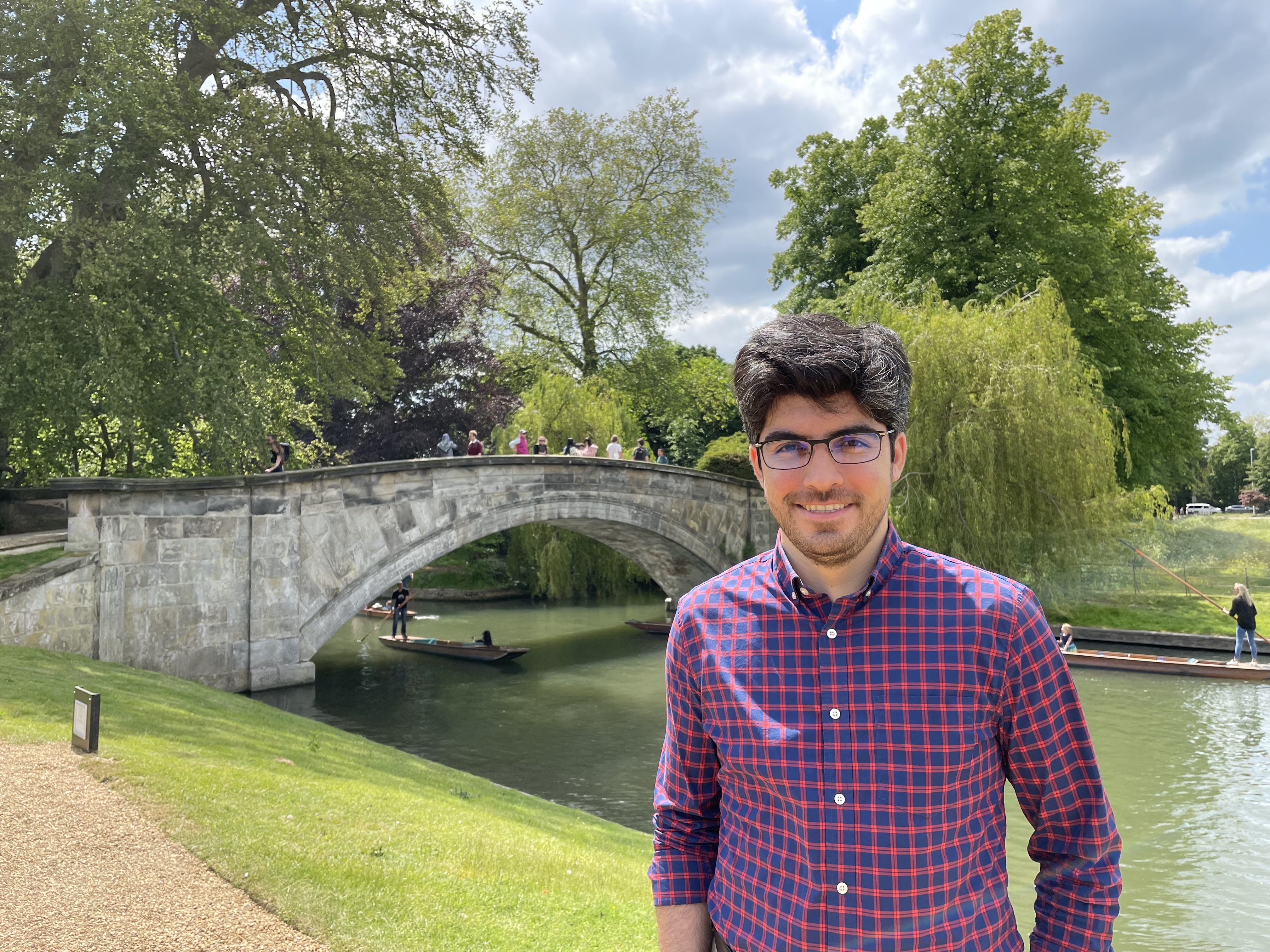
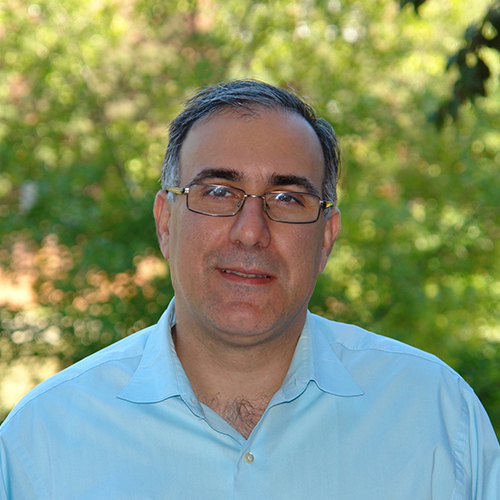
Jonas Latz is a Lecturer in Applied Mathematics at The University of Manchester. His research focuses on Bayesian inference, uncertainty quantification, stochastic processes, and their applications in computational mathematics and inverse problems. He has contributed to areas such as physics-informed neural networks, stochastic gradient methods, and medical imaging modeling. Key research interests include developing robust algorithms for Bayesian inverse problems, analyzing stochastic dynamical systems, and advancing numerical methods for partial differential equations. His work bridges theoretical foundations with practical applications in fields like tumor growth modeling and medical image reconstruction. Recent Achievements : Recipient of the SIAM Activity Group Uncertainty Quantification Early Career Prize (2024) SIAM Student Paper Prize (2020) SIGEST Award (2023) Dr. Latz collaborates internationally on topics such as adversarial machine learning, deep learning methods for PDEs, and stochastic sampling techniques. His research emphasizes rigorous mathematical analysis alongside computational innovation.
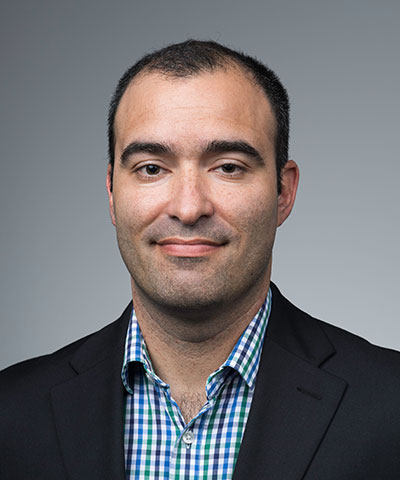
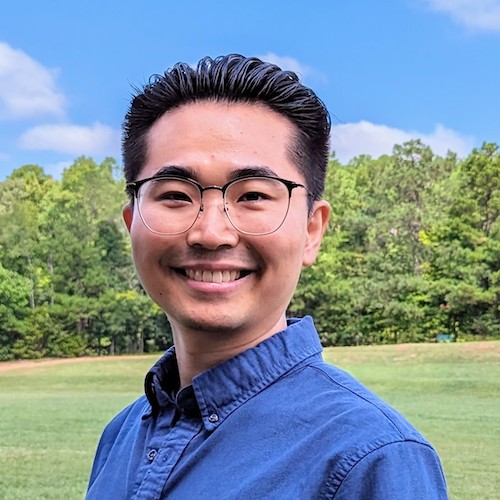
Wentao Li is a Lecturer in Statistics at the University of Manchester (2021–present). Previously, he held positions as Assistant Professor at the University of Hong Kong (2019–2021), Lecturer at Newcastle University (2017–2018), and Senior Research Associate at Lancaster University (2013–2017). He earned a PhD in Statistics from Rutgers University (2013), an M.S. from Colorado State University (2008), and a B.S. from the University of Science and Technology of China (2006). His research focuses on Bayesian asymptotic theory, computational methods, Monte Carlo techniques, and simulation-based inference, with applications to financial time series and state-space models. Recent work emphasizes developing algorithms like approximate Bayesian computation (ABC) and sequential Monte Carlo for intractable likelihood models. He supervises a 2025 PhD studentship on Bayesian computation. Key contributions include studies on ABC convergence, asymptotic efficiency, and scalable methods for big data. His work bridges theoretical foundations and practical applications in econometrics, population genetics, and other fields.
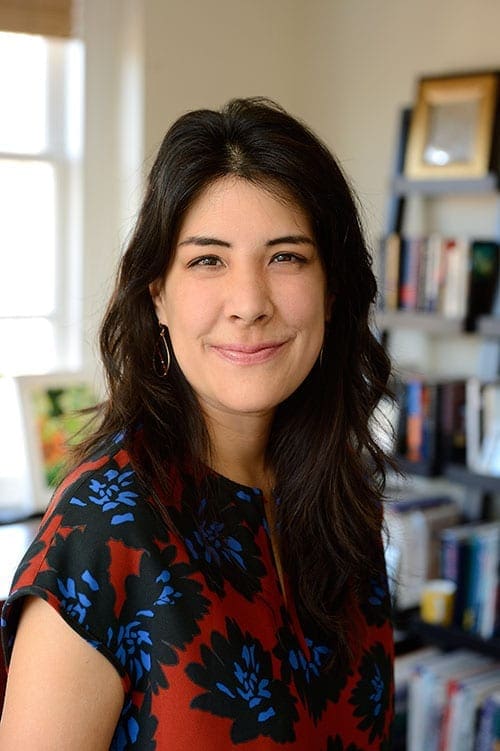
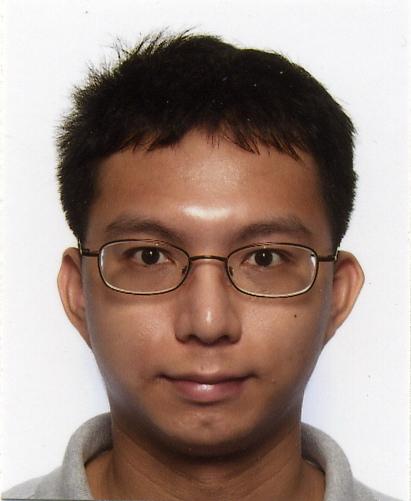
Dr. Timothy Waite is a Lecturer in Statistics at the University of Manchester, specializing in experimental design and Bayesian statistics. His academic work focuses on developing innovative statistical methodologies for complex modeling scenarios with applications across various domains. Dr. Waite's research interests span multiple areas of statistics with a particular focus on: Bayesian statistics and inference Optimal experimental design Nonlinear and generalized linear models Design of experiments Monte Carlo methods and simulation Statistical modeling for prediction and inference Analysis of Dr. Waite's publication record reveals a strong focus on advancing experimental design methodologies, particularly in Bayesian frameworks. His work consistently addresses challenges in high-dimensional spaces and nonlinear models, with applications ranging from debt recovery modeling to general statistical inference. A notable trend in his research is the development of efficient computational methods for optimal design problems, with increasing emphasis on robustness and practical applicability in recent years. His publications in top statistical journals demonstrate both theoretical rigor and practical relevance. Dr. Waite serves as a Principal Investigator for the Statistical Advisory Unit (SAU), a collaborative research initiative at the University of Manchester involving multiple faculty members. While specific details about his supervised students are limited in the available information, the mention of 'Supervised Work (1)' suggests he has mentored at least one graduate student or research assistant. His research contributes to the UN Sustainable Development Goals through the University's Digital Futures initiative, indicating applications of his statistical methodologies to broader societal challenges.
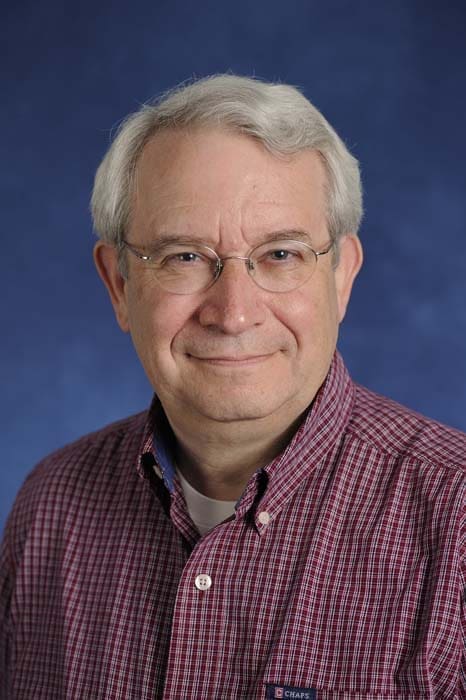
Dr. Amir Reza Asadi is a Leverhulme Early Career Fellow at the Statistical Laboratory, part of the Department of Pure Mathematics and Mathematical Statistics at the University of Cambridge (since September 2023). He is also a Fellow of the Isaac Newton Trust and a Postdoctoral Affiliate of Trinity College, Cambridge. Previously, he held a Postdoctoral Research Associate position at the same department (2021–2023) and completed his Ph.D. and M.A. in Electrical and Computer Engineering at Princeton University (2017–2021), following dual B.Sc. degrees in Mathematics and Electrical Engineering from Sharif University of Technology (2010–2015). His research focuses on machine learning, differential privacy, and information theory, with contributions to entropic regularization, generalization bounds, and privacy-preserving algorithms. His work bridges theoretical foundations and practical applications, such as neural network training and synthetic data generation. Education: B.Sc. in Mathematics & Electrical Engineering, Sharif University of Technology (2010–2015) M.A. in Electrical and Computer Engineering, Princeton University (2015–2017) Ph.D. in Electrical and Computer Engineering, Princeton University (2017–2021) His recent articles emphasize differential privacy in machine learning, entropy-based regularization techniques, and hierarchical learning models. He has organized workshops, including the 1st and 2nd Cambridge Information Theory Colloquia and the 8th London Symposium on Information Theory. His awards include the Leverhulme Early Career Fellowship, the Teaching Assistant Award from Princeton, and the Bronze Medal in the Iranian Mathematical Olympiad. Amir actively collaborates with institutions worldwide, including MIT, NYU, ETH Zürich, and the Institute for Advanced Study. His work reflects a commitment to advancing theoretical frameworks while addressing real-world challenges in data privacy and algorithmic fairness.
Gonzalo Mateos is an Associate Professor in the Department of Electrical and Computer Engineering and holds a secondary appointment in the Department of Computer Science at the University of Rochester. He is also the Asaro Biggar Family Fellow in Data Science and a member of the Goergen Institute for Data Science and Artificial Intelligence. Additionally, he serves as an Associate Editor for IEEE Transactions on Signal Processing and IEEE Transactions on Signal and Information Processing over Networks , and is part of the IEEE SigPort Editorial Board. Dr. Mateos earned his B.Sc. in Electrical Engineering from Universidad de la Republica, Uruguay in 2005. He then pursued graduate studies at the University of Minnesota, Twin Cities, where he received his M.Sc. in 2009 and Ph.D. in 2011. Prior to joining the University of Rochester in 2014, he worked as a Systems Engineer at Asea Brown Boveri (ABB) in Uruguay from 2004 to 2006 and served as a visiting scholar at Carnegie Mellon University's Computer Science Department during the 2013 academic year. His research interests focus on statistical learning from Big Data , network science , decentralized optimization , and graph signal processing , with applications in dynamic network health monitoring , social networks , power grid analysis , and large-scale data analytics . His work emphasizes blind deconvolution, graph topology inference, fairness-aware methodologies, and explainable AI for medical and engineering systems. Dr. Mateos has been honored with the NSF CAREER Award (2018), the IEEE Young Author Best Paper Award (2017), and multiple conference best paper awards including ICASSP 2018, SSP Workshop 2016, and SPAWC 2012. His doctoral research was recognized with the University of Minnesota's Best Dissertation Award (2013, Honorable Mention) in Physical Sciences and Engineering. In advising, he mentors graduate students in his research areas, though specific names are not listed here. His grants include the NSF CAREER Award, and he collaborates on projects like fairness-aware graph filter design and dynamic network monitoring. His research teams and labs operate within the Goergen Institute, focusing on interdisciplinary data science and AI applications. He actively contributes to the Hajim School of Engineering and the broader University of Rochester community, fostering innovation at the intersection of electrical engineering and computer science. His industry experience and academic roles reflect a commitment to both theoretical and practical advancements in networked systems and machine learning.
Dr George Stamatescu is a Research Fellow at the School of Economics and Public Policy, University of Adelaide. His research focuses on operations research, sequential decision making, and complex systems analysis. He is currently working on workforce planning for large-scale projects. Dr Stamatescu has experience in mathematical techniques for analytical system studies and has contributed to multi-camera tracking systems and neural network optimization research. Education details are not explicitly listed, but his professional roles include tutoring in Mathematics and Control Systems. He has supervised a Master's thesis titled 'Analysis of New Methods for Inference in Markov Decision Processes' (2021-2024). No scientific awards are mentioned in the provided texts. His work intersects with optimization theory and practical applications in health systems and project management. Dr Stamatescu's publications span operations research methodologies, machine learning, and surveillance technologies. His recent focus on workforce planning reflects his expertise in applying theoretical models to real-world logistical challenges.
Mitchell O’Sullivan is a PhD student at Queensland University of Technology (QUT), affiliated with the School of Mathematical Sciences. His research focuses on novel sequential Monte Carlo methods for approximate Bayesian computation (ABC) and dimensionality reduction techniques. Prior to this, he worked as an analyst modeling payments data to detect financial crime before returning to QUT in 2019 to complete his honours in Mathematics. Education: Bachelor of Mathematics (Honours) – Queensland University of Technology (2019) Research interests include Bayesian statistics, likelihood-free inference, machine learning, and high-performance computing. He is particularly enthusiastic about advancing computational methods for complex implicit models and leveraging modern computer hardware. Advising and Grants: No advising or grants listed. Labs/Teams: Affiliated with the QUT Centre for Data Science.
Lisa Feigenson is a Professor and Chair in the Department of Psychological & Brain Sciences at Johns Hopkins University, affiliated with the Krieger School of Arts & Sciences. She co-directs the Johns Hopkins University Laboratory for Child Development. Her research focuses on cognitive development, particularly numerical cognition and working memory, using behavioral methods to study infants, children, and adults. Feigenson holds a PhD from New York University. Her work explores how cognitive primitives develop across lifespan, including intuitive physics understanding, numerical abilities, and memory systems. Notable awards include the Troland Award (National Academy of Sciences), Boyd McCandless Award (APA), and McDonnell Scholar Award. Her lab investigates how infants and children process numerical information, working memory limits, and learning mechanisms triggered by expectation violations. Recent studies highlight resilience of numerical cognition in congenital blindness and links between approximate number systems and formal math skills. Feigenson has published extensively in top journals like Science, Nature, and PNAS. Her research bridges developmental psychology, cognitive neuroscience, and educational applications, emphasizing foundational cognitive capacities and their development.
Dr. Mark Flegg is a Senior Lecturer in the School of Mathematics at Monash University. He holds a PhD in mathematical modelling of aerosol physics from Queensland University of Technology (2010) and has completed postdoctoral research at the University of Oxford's Oxford Centre for Collaborative Applied Mathematics (OCCAM). His research focuses on applied mathematics in biological systems, including mathematical biology, cell biology, stochastic processes, and biomedical modelling. Education: PhD in Mathematical Modelling (Queensland University of Technology, 2010) Postdoctoral research at OCCAM, University of Oxford Research Interests: Mathematical Biology: Modelling malaria dynamics, wound healing, and developmental processes Stochastic Processes: Particle motion, enzyme kinetics, and reaction-diffusion systems Clinical Applications: Ultrasound in bone modelling and surgical site infection prevention Systems Biology: Signalling pathways (Wnt/β-catenin) and biochemical network analysis Projects & Grants: Controlling cell polarity and asymmetric cell division (ARC, 2016–2018) Stochastic mathematical modelling of the Wnt signalling pathway (ARC, 2014–2017) Lab Affiliation: Monash Academy for Cross and Interdisciplinary Mathematical Applications (MAXIMA), focusing on interdisciplinary research in mathematical sciences.
Richard Spady is a Research Professor of Economics at Johns Hopkins University's Krieger School of Arts & Sciences, a position he has held since 2010. He is also a Senior Research Fellow at Nuffield College, Oxford (since 1999) and has held academic roles at institutions such as the European University Institute and Northwestern University. Spady earned his B.A. in Economics and Philosophy from Haverford College (1973) and his Ph.D. in Economics from MIT (1978). His research focuses on econometrics, particularly methods for incorporating latent variables in structural models to analyze attitudes, skills, and their effects on behavior. Key areas include the impact of cultural/economic attitudes on voting, cognitive skills on life outcomes, and immigrant integration. He has contributed extensively to semiparametric methods and empirical likelihood techniques. Spady has advised numerous graduate students, including seven Ph.D. recipients at Johns Hopkins and three D.Phil. students at Oxford. His work has been supported by grants such as the ESRC, and he has presented at global conferences including the European Meeting of the Econometric Society. His teaching spans advanced econometrics, financial economics, and quantitative methods.
Alen Alexanderian is an Associate Professor in the Department of Mathematics at North Carolina State University (NC State), serving since 2022. Previously, he was an Assistant Professor at NC State (2015-2022), a Research Associate and Postdoctoral Fellow at The University of Texas at Austin’s ICES (2012-2015), and a Postdoctoral Fellow at Johns Hopkins University (2010-2012). He earned his PhD in Applied Mathematics from the University of Maryland, Baltimore County (2010), with prior degrees including an MS (2007) and BA in Mathematics (2005) from Hood College. His research focuses on numerical analysis, scientific computing, and uncertainty quantification. Key areas include numerical methods for inverse problems, optimization under uncertainty, Bayesian inversion, and sensitivity analysis. He develops algorithms for optimal experimental design and applies these to large-scale inverse problems in engineering and science. His recent work emphasizes hyper-differential sensitivity analysis, robust optimal design under model uncertainty, and applications in PDE-constrained optimization. His studies often bridge theoretical developments with practical implementations in fields like porous media flow, biotransport, and epidemiological models. Notable contributions include frameworks for Bayesian optimal sensor placement, variance-based sensitivity analysis techniques, and scalable computational methods for high-dimensional inverse problems. His research integrates mathematical rigor with computational efficiency, addressing challenges in data assimilation, model reduction, and risk-aware decision-making.
Yeonjong Shin is an Assistant Professor of Mathematics at North Carolina State University (NC State), with prior tenure-track roles at KAIST (South Korea) and Brown University (USA). His research focuses on applied and computational mathematics, particularly in artificial intelligence, scientific machine learning, and numerical methods for partial differential equations. He holds a Ph.D. in Mathematics from The Ohio State University (2018) and dual B.S. in Mathematics and B.A. in Economics from Yonsei University (2013), with military service as a KATUSA (2009–2011). Shin’s expertise includes approximation theory, numerical optimization, and uncertainty quantification. He leads research in AI-driven scientific computing, reduced order modeling, and physics-informed neural networks. His work bridges computational mathematics and machine learning, addressing challenges in data-driven dynamical systems and high-dimensional function approximation. He has published extensively in top journals like SIAM Journals, Neural Networks, and Comput. Methods Appl. Mech. Eng. Notable contributions include thermodynamics-informed latent space dynamics (tLaSDI), S-OPT hyper-reduction algorithms, and error analysis for neural network-based PDE solvers. Shin has taught courses at NC State, KAIST, and Brown, including statistical inference, numerical optimization, and computational linear algebra. He actively participates in conferences such as SIAM CSE, ICIAM, and KSIAM, and has delivered invited talks at institutions worldwide.
Ken M. L. Yiu is a Professor in the Department of Computing at Hong Kong Polytechnic University , Faculty of Engineering. He received his PhD and Bachelor's degree from the University of Hong Kong in 2006 and 2002, respectively, and was previously affiliated with Aalborg University (2006–2009). He is a leading researcher in databases, with a focus on spatiotemporal data, query processing, and multidimensional data management. PhD, University of Hong Kong (2006) Bachelor of Computer Engineering, University of Hong Kong (2002) His research interests lie at the intersection of database systems and spatial analytics. He investigates efficient indexing, query optimization, and privacy-preserving techniques for large-scale spatial and temporal datasets. His recent work explores learned index structures, GPU-accelerated query processing, and high-dimensional data retrieval. He has made significant contributions to spatial query processing, trajectory analytics, and location-based services. The trends in his recent publications (2021–2025) reflect a strong focus on high-performance database systems, including GPU acceleration (GHive), perfect hashing on GPUs (GPH), and learned cardinality estimation. His work increasingly integrates machine learning with traditional database techniques, as seen in AlayaDB for LLM inference and learning-based query optimization. He also continues to advance core database problems such as spatial indexing, trajectory analysis, and similarity search. SSTD 2025 10-Year Impact Award Ken Yiu has successfully led multiple competitive research projects funded by the Hong Kong GRF, including grants on learned index structures (2024–2026), smart memory for vector data mining (2021–2023), and efficient spatial data management (2017–2019). He has supervised numerous PhD and MPhil students, many of whom now hold academic positions (e.g., Bo Tang at SUSTech, Yu Li at HDU) or work in top tech companies (e.g., Huawei, Alibaba). His professional service is extensive, including roles as PI for major grants, area chair (ICDE 2024), and program committee member for top conferences like SIGMOD, VLDB, and ICDE. He is actively involved in research groups and projects related to database systems, particularly in spatiotemporal data management and efficient query processing. His lab collaborates closely with students and co-supervisors like Bo Tang on topics such as trajectory mining, spatial indexing, and learned databases. The research group maintains strong ties with international institutions and contributes to major open problems in database performance and scalability.
Thomas Dyhre Nielsen is a Professor (MSO) in the Department of Computer Science at Aalborg University . He is a member of the Distributed, Embedded and Intelligent Systems (DEIS) research group and contributes to the Artificial Intelligence and Machine Learning team at the university. His primary research interests lie in the theoretical and applied aspects of probabilistic graphical models , machine learning , and deep generative models . His work spans from foundational methods for learning and inference to the development of frameworks for solving complex decision problems. He is the co-author of the authoritative textbook Bayesian Networks and Decision Graphs . His recent research output reveals a strong trend towards interdisciplinary applications. His 15 most recent publications demonstrate significant work in bioinformatics , using graph neural networks and variational autoencoders for metagenomic binning, and in urban infrastructure , applying reinforcement learning and probabilistic models to optimize stormwater and wastewater management systems. He also has impactful research in healthcare , developing Bayesian network models for clinical risk prediction. Senior area editor for the International Journal of Approximate Reasoning . Principal or Co-Investigator on research projects such as the AMIDST project (developing a Java toolbox for scalable probabilistic machine learning) and PGM 2020 (organizing the International Conference on Probabilistic Graphical Models). Actively supervising research, as evidenced by a current opening for a PostDoc position in probabilistic machine learning. Professor Nielsen leads a research lab focused on probabilistic machine learning, which is part of the larger DEIS and AI/ML teams at Aalborg University. His group develops and applies advanced models to real-world problems in environmental science, healthcare, and intelligent systems.
Hila Peleg is an Assistant Professor in the Department of Computer Science at the Technion – Israel Institute of Technology, where she co-leads the TecSE lab with Prof. Shachar Itzhaky. Her research lies at the intersection of Programming Languages, Software Engineering, and Human-Computer Interaction, focusing on program synthesis and interactive developer tools. Her research interests center on creating intelligent, theory-driven tools that enhance programmer productivity and correctness. She explores interaction models that integrate formal methods like separation logic into practical synthesis systems, enabling more versatile and reliable code generation. Her work spans both foundational models and real-world applications, from web layout synthesis to computational crafting. The trend in her recent publications shows a strong focus on interactive and practical program synthesis, blending formal verification with user-centered design. She investigates how synthesis can be made more usable through live programming, best-effort results, co-design of tools and languages, and integration with developer workflows. Her work increasingly emphasizes the human aspect of programming tools. Distinguished Paper Award, PLDI 2021 Distinguished Artifact Award, SPLASH 2020 Hila Peleg advises multiple graduate students, including PhD and MSc candidates, and leads the ERC-funded EXPLOSYN project, which supports advanced research in program synthesis. She has taught advanced courses such as User-Centered Programming Tools and seminars in programming languages, and is actively involved in the academic community through conference service and organization. She is a core member of the TecSE lab, which focuses on advancing software engineering through programming language theory and interactive systems. The lab fosters interdisciplinary research at the boundary of formal methods and human-centered tool design.