Dietrich Klakow serves as an Associate Professor (o. Univ.-Prof.) and researcher at the German Research Center for Artificial Intelligence (DFKI) in Saarbrücken, specializing in language technology and multilingual systems. His research focuses on advancing Natural Language Processing through Machine Translation, Multilingualism, and Pre-trained Language Models, with particular expertise in Low-Resource Languages and Style Transfer. His methodology emphasizes self-supervised and unsupervised learning techniques to overcome data scarcity challenges in computational linguistics. Recent publications demonstrate consistent innovation in language modeling efficiency (2023), social media-driven style adaptation (2022), and neural machine translation for under-resourced languages (2021), revealing a research trajectory centered on practical NLP solutions for real-world linguistic diversity. He maintains active collaborations with leading researchers including Dana Ruiter, Josef van Genabith, and Cristina España-Bonet across major international conferences such as Interspeech and Machine Translation Summit.
Ann-Kathrin Mendl is a Researcher in the Department of Business Administration and Operations Research at the University of Hildesheim, affiliated with Faculty 4: Mathematics, Natural Sciences, Economics and Computer Science. Her work focuses on operations research, project management, and scheduling optimization. Her research includes solving complex problems like the Stochastic Resource-Constrained Project Scheduling Problem using advanced techniques such as Sample Average Approximation. She has contributed refereed conference proceedings, including a 2024 publication on flexible resource profiles in project scheduling.
Prof. Yuval Shavitt is a Professor at Tel Aviv University's School of Electrical Engineering within the Iby and Aladar Fleischman Faculty of Engineering. His research focuses on Internet measurement, network mapping, and security, where he leads the globally recognized DIMES project for large-scale Internet topology analysis. Based in the Computer and Software Engineering department, he maintains an active research program with continuous publications and international collaborations. His primary research interests encompass Internet measurement and characterization, network mapping and modeling, Internet routing security (particularly IP hijack attacks), artificial intelligence applications in networking, network motifs, transportation networks, QoS routing, peer-to-peer network data mining, and active networks. This work has established him as a leading figure in Internet topology research, with methodologies adopted by major scientific initiatives. His research bridges theoretical algorithms and practical network infrastructure challenges, emphasizing real-world applicability through distributed measurement systems. Analysis of his 2009-2018 publications reveals consistent focus on Internet topology mapping, IP geolocation accuracy, and network security vulnerabilities. Key trends include the development of structural approaches for PoP-level geolocation, quantification of measurement biases in topology mapping, and analysis of geopolitical impacts on network infrastructure (notably the 2011 Arab events). His work demonstrates increasing integration of AI techniques for networking challenges and growing emphasis on infrastructure security. Scientific Recognition: Best Student Paper Award at ConTel 2009 He has secured significant research funding, including an 8-year Israel Science Foundation Center of Excellence grant for Internet modeling (with Danny Dolev, Shlomo Havlin, and Sarit Kraus), and led DIMES through EU projects EVERGROW, MOMENT, OneLab II, and GN3. While student advisement isn't explicitly detailed in the source material, his extensive publication record suggests substantial mentorship activity. Current grants focus on AI-driven network analysis and infrastructure security. He directs the DIMES project, a volunteer-driven distributed measurement system with global reach that has generated foundational Internet topology data. The project operates through an international consortium including EU partners and has been featured in Science Magazine for its innovative approach. Current work involves AI4Net (Artificial Intelligence for Networking) and network motif analysis within the Computer and Software Engineering infrastructure at Tel Aviv University.
Prof. Noam Koenigstein is a Professor in the Department of Industrial Engineering at Tel Aviv University's Iby and Aladar Fleischman Faculty of Engineering. His research focuses on developing scalable machine learning solutions for real-world recommendation systems, with extensive industry collaborations including Microsoft (Xbox) and Yahoo! Music. His primary research interests include recommender systems, collaborative filtering, and neural approaches to user modeling. He pioneered neural item embedding techniques like Item2Vec and advanced Bayesian methods for diversity-aware recommendations using Determinantal Point Processes. His work consistently bridges theoretical machine learning with industrial-scale deployment challenges. Analysis of his publication record reveals a strong evolution from traditional matrix factorization toward deep learning and attention-based architectures, always emphasizing practical scalability and addressing cold-start problems. His research demonstrates exceptional continuity in solving core recommendation challenges across domains including e-commerce, music, and video services. Scientific recognition includes: Best paper runner up award at TVX 2014 for group viewing pattern analysis Prof. Koenigstein has led multiple industry-academia partnerships that produced deployable recommendation frameworks, notably for Xbox Movies and Windows Store. His invited RecSys 2017 talk highlighted critical gaps between academic research and industrial requirements in recommender systems, establishing him as a leading voice in practical recommendation science.
Marisa Ripoll is a Researcher at the Chair of Data Processing at the Technical University of Munich . Her work focuses on Natural Language Processing and Machine Learning , particularly in the domains of Hate Speech Detection and Sentiment Analysis . Her recent publications highlight the use of Transformer-Based Ensembles for multilingual hate speech detection and methods for end-to-end annotator bias approximation in crowdsourced sentiment analysis. These works emphasize robustness in computational models and ethical considerations in AI systems. For direct inquiries about courses or seminars, contact her via email at marisa.ripoll@tum.de or reach out to course-specific addresses such as cv.ldv@xcit.tum.de for Computer Vision or smi.ldv@xcit.tum.de for Seminar Machine Intelligence.
Andrei Caragea is a Researcher at the Mathematical Institute for Machine Learning and Data Science (MIDS) within the Faculty of Mathematics and Geography at Katholische Universität Eichstätt-Ingolstadt . His work bridges Gabor analysis , exponential bases , and neural network approximation theory , with side interests in number theory and classical geometry . Education : PhD in Mathematics (2023), Katholische Universität Eichstätt-Ingolstadt Key Collaborators : Prof. Götz Pfander, Felix Voigtlaender, Friedrich Philipp, Dae Gwan Lee His research explores structural limitations in time-frequency representations (Balian-Low theorems for subspaces) and dimension-independent approximation capabilities of complex-valued neural networks. Recent work demonstrates how modReLU-activated networks can overcome the curse of dimensionality for Barron-class classifiers. Publication Trends (2019-2023): 50% focus on Gabor systems and time-frequency invariance 40% on neural network expressivity with complex-valued architectures 10% on exponential basis constructions in signal processing Research Grants : DFG Project (2019-2025): Sampling theory and bases from exponential functions DFG Project (2015-2022): Covariance matrix estimation under sparsity
Frans A. Oliehoek is a Full Professor in Interactive Learning and Decision Making at the Department of Intelligent Systems, Delft University of Technology. He co-leads the Sequential Decision Making group and serves as director and co-founder of the ELLIS Delft Unit. His academic affiliations include senior membership at AAAI, board membership at IFAAMAS, and associate editor roles for JAIR and AIJ. His research focuses on interactive learning and decision making , integrating AI, machine learning, and game theory to develop algorithms for agents interacting in complex, dynamic environments. Key themes include Bayesian reinforcement learning , influence-based abstraction , multi-agent coordination , and uncertainty modeling in real-world applications like traffic control, human-AI collaboration, and e-commerce agents. Recent publications highlight advancements in Bayesian RL with factored POMDPs , multi-agent safety guarantees , and state abstraction . His work spans theoretical foundations (e.g., Nash equilibria, MDP homomorphic networks) and practical frameworks (e.g., SHARPIE for human-AI experiments). Scientific contributions include: ELLIS Fellowship Senior AAAI Membership Best Paper Award at ALA 2021 Outstanding Paper Award at RLC 2024 He has advised students like Miguel Suau and Robert Loftin, with applications in multi-agent reinforcement learning , Bayesian planning , and human-AI interaction . Collaborations span institutions like UC Berkeley, University of Amsterdam, and MIT.
Rossitza Pentcheva is a Professor at the University of Duisburg-Essen leading research in quantum materials and energy conversion through ab initio modeling. Her work focuses on transition metal oxides thermoelectric heterostructures photoelectrochemical water splitting spin-resolved electronic states strain and disorder effects in Heusler alloys at the nanoscale. Recent research trends include topological phases in oxide superlattices lattice-electronic coupling in magnetocaloric systems orbital engineering via geometric constraints machine-learned force fields for nonequilibrium dynamics defect-mediated tuning of oxygen evolution catalysts across collaborative projects like CRC1242 and TRR270. Her group has produced 12 doctoral graduates since 2019, with ongoing contributions to Nature Materials and Science publications. Selected scientific collaborations span institutions in Germany, US, Canada, and Italy, driving European patents and machine-learning frameworks for material discovery.
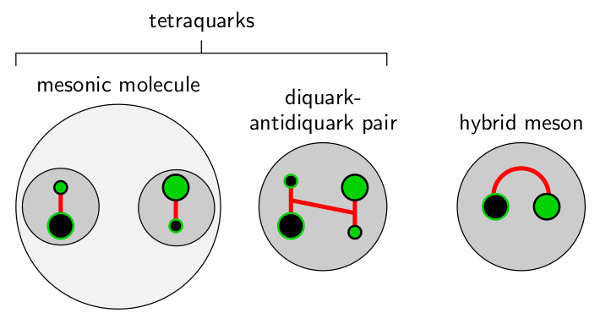
Prof. Marc Wagner is a Heisenberg Professor at the Institute of Theoretische Physik (Institute of Theoretical Physics) at Goethe University Frankfurt. His research focuses on theoretical particle physics and quantum field theory, with particular emphasis on lattice gauge theory applications to exotic hadron spectroscopy. Wagner completed his academic training with a Habilitation in 2015 on "Calculation of masses, decays and structure of hadrons using lattice QCD methods" at Goethe University Frankfurt. Prior to this, he earned his Doctoral Thesis in 2006 on "The pseudoparticle approach in SU(2) Yang-Mills theory" from Friedrich-Alexander-Universität Erlangen-Nürnberg, supervised by Prof. Frieder Lenz. His earlier studies included a Diplomarbeit in 2002 on surface reconstruction with B-Spline surfaces and a Studienarbeit in 2001 on surface reconstruction from point clouds, both at Friedrich-Alexander-Universität Erlangen-Nürnberg under Prof. Günther Greiner. Wagner's research program centers on lattice quantum chromodynamics (QCD) computations of exotic hadronic states. His group investigates exotic mesons from first principles using lattice QCD, with particular focus on tetraquarks (systems of two quarks and two antiquarks), hybrid mesons (quark-antiquark pairs with excited gluon fields), and mesonic molecules (bound states of two ordinary mesons). The group also studies inhomogeneous phases in QCD-inspired models as part of the DFG-funded Collaborative Research Center TransRegio 211 "Strong-interaction matter under extreme conditions" (Project A03). His recent publications demonstrate a strong focus on heavy exotic mesons, particularly tetraquarks containing bottom and charm quarks. The research combines advanced lattice QCD techniques with theoretical frameworks like the Born-Oppenheimer approximation to investigate the structure and binding mechanisms of these exotic states. The work has implications for understanding quantum chromodynamics in non-perturbative regimes and for interpreting experimental results from facilities like the LHC. As a Heisenberg Professor, Wagner holds one of Germany's most prestigious research positions, recognizing his significant contributions to theoretical particle physics. His work is supported through various research collaborations and funding mechanisms including the DFG Collaborative Research Center. Prof. Wagner actively supervises Bachelor's, Master's, and PhD students, guiding the next generation of theoretical particle physicists. His research group participates in international collaborations including the European Twisted Mass Collaboration (ETMC), contributing to the global effort in lattice QCD research. The research group maintains strong connections with experimental facilities and collaborates with physicists working at institutions like GSI Helmholtzzentrum für Schwerionenforschung. They regularly present their findings at international conferences including the annual Lattice Field Theory symposium and specialized workshops on hadron physics.
Prof. Jan Peters serves as Full Professor at the Faculty of Computer Science, Technical University Darmstadt, and heads the Systems AI for Robot Learning department at the German Research Center for Artificial Intelligence (DFKI) since 2022. A globally recognized leader in machine learning for robotics, his work bridges theoretical AI and practical robotic systems. His educational background includes: Diplom-Ingenieur in Electrical Engineering (TU München, 1996-2002) Diplom-Informatiker (Fern-Universität Hagen, 1996-2002) M.Sc. Computer Science (University of Southern California, 2001-2002) M.Sc. Aerospace & Mechanical Engineering (University of Southern California, 2004-2005) Ph.D. Computer Science (University of Southern California, 2007) His research pioneers adaptive machine learning for autonomous robots , specializing in reinforcement learning frameworks and real-world robot skill acquisition . Current work focuses on closing the reality gap between simulation and physical deployment through novel learning architectures. Recent publications (2025) reveal strong trends in adaptive reinforcement learning and vision-language model integration , featuring techniques like context-aware prompt learning and neural distillation for efficient policy transfer. These advances target scalable robot learning in unstructured environments. Major recognitions include: IEEE Fellow (2019) and ELLIS Fellow (2020) ERC Starting Grant (2016-2021) Dick Volz Best Thesis Award (2011) INNS Young Investigator Award (2013) Amazon Research Award (2021) As an advisor, he has mentored award-winning researchers including two Best European Robotics Ph.D. Thesis winners (Lutter, Kober) and finalists (Kroemer, Lioutikov). His research receives substantial funding from ERC, EU Horizon, and industry partnerships. He leads the Systems AI for Robot Learning department at DFKI and co-founded ELLIS Robot Learning unit "Closing the Reality Gap," driving collaborative research across European institutions while directing hessian.AI's robotics initiatives.
Prof. Dr. Manfred Hild serves as Professor and head of the Neurorobotics Research Laboratory at Berlin University of Applied Sciences and Technology (BHT), where he teaches in the Humanoid Robotics program. He is a key member of the HARMONICS research group at BHT. Dr. Hild's research spans humanoid robotics and sensorimotor control, distributed embedded systems, and the theory of nonlinear dynamic systems with emphasis on recurrent neural networks. His work also encompasses sound analysis and synthesis using programmable hardware like FPGAs. His laboratory develops complete autonomous robotic systems from electronics and mechanics through to cognitive processes and linguistic interfaces for human-machine interaction. Dr. Hild earned his doctorate with distinction from Humboldt University in Berlin in 2008 after completing studies in mathematics and psychology at University of Konstanz. Prior to BHT, he conducted research at SONY Computer Science Laboratory in Paris and Fraunhofer Institute for Autonomous Intelligent Systems. Approximately ten years ago, he founded the Neurorobotics Research Laboratory (NRL) in Berlin, where numerous national and international research projects have been conducted and dissertations supervised. Notably, some of Dr. Hild's doctoral students and former colleagues now work as robotics developers in space travel applications or lead robotics development departments at Amazon.
Prof. Uwe Bäsel is affiliated with the Faculty of Engineering at Leipzig University of Applied Sciences , focusing on Mechanical Engineering . His research spans geometry, kinematics, and probability theory, with applications in gear technology and random processes. He contributes to the EMB | Institute for Development-Oriented Mechanical Engineering , particularly in transmission technology and stochastic geometry. His work emphasizes non-uniform gear ratios , geometric probability , and kinematic synthesis . Key projects include modeling cam mechanisms for non-uniform motion and analyzing Buffon-Laplace needle problems. His publications address integral geometry, random point distances, and oloid properties. Prof. Bäsel’s recent research explores complex-valued functions in plane differential geometry , incomplete beta functions for motion transfer , and sinc integrals . He integrates mathematical rigor with engineering applications, particularly in transmission systems and geometric modeling.
Manfred Madritsch is a Senior Researcher at Montanuniversität Leoben , Austria. Previously, he served as an Associate Professor at Université de Lorraine, France (2012–2025) and an Assistant Professor at TU Graz, Austria (2009–2012). His research focuses on number theory and dynamical systems , particularly digit systems, normal numbers, and pseudorandom sequences. Research Interests: His work bridges analytical number theory, digital expansions, and uniform distribution of sequences. He explores connections between number systems, ergodic theory, and computational methods, often applying probabilistic and dynamical approaches to arithmetic problems. Recent Publications emphasize limit theorems for integer partitions, pseudorandom binary sequences, and sum-of-digits functions in canonical number systems. These articles reflect interdisciplinary efforts combining number theory, statistics, and algorithmic analysis. Students: He has mentored several PhD students, including Renan Laureti (2019–2025, with Yann Bugeaud) Hichem Zouari (2021–2024, with Mohamed Hbaib) Youssef Sadrati (2019–2023, with Youness Lamzuri) Slim Jmal (2020–2021) Stefan Planitzer (2015) Teaching: Madritsch has lectured on algebra, analysis, differential equations, and statistical inference, developing course materials in French and English for subjects like Calculs et Mathématiques , Théorie Ergodique , and Statistical Inference .
Adrian Sampson is an Associate Professor in the Department of Computer Science at Cornell University's Bowers College of Computing and Information Science. He leads the Capra research group, focusing on breaking down abstraction barriers and rethinking the hardware-software interface. Prior to his current position, he served as an Assistant Professor at Cornell University from 2016 to 2022 and completed his Ph.D. at the University of Washington in 2015 under advisors Luis Ceze and Dan Grossman. His research spans computer architecture, programming languages, and compilers, with a notable focus on approximate computing—the concept that computers can be more efficient if allowed to make controlled mistakes. Sampson has made significant contributions to hardware acceleration, FPGA programming, and type systems for heterogeneous computing. His work bridges the gap between software abstractions and hardware realities, particularly in the realm of accelerator design languages. The publications reveal a consistent trajectory in hardware-software co-design, with recent work focusing on predictable accelerator design, timeline types for hardware description, and geometry types for graphics programming. His research group has produced influential work on tools like Dahlia, a programming language that uses type systems to restrict high-level synthesis programs to subsets with predictable semantics and performance. Cornell Bowers CIS Ann S. Bowers Research Excellence Award (2024) Cornell Bowers CIS Computer Science Faculty of the Year (2024) Distinguished Artifact Awards (ASPLOS 2023, 2024) IEEE TCCA Young Computer Architect Award (2021) NSF CAREER award (2019) Google Faculty Research Award (2016) Sampson has advised numerous Ph.D. students whose dissertations cover topics like geometry types for graphics programming, lightweight formal methods, and compiler-driven autovectorization. His research has been supported by prestigious organizations including NSF, Google, and Microsoft Research. He serves on numerous program committees and has held leadership roles in the computer architecture and programming languages communities, including serving on the ACM SIGARCH Board of Directors.
Dr. George B. Mertzios is an Associate Professor at the Department of Computer Science, Durham University , UK. His career spans roles including Senior Lecturer (2015-2017) and Lecturer (2011-2015) at Durham, with additional positions as an Invited Assistant Professor at LaBRI, University of Bordeaux/CNRS, France (2012), and postdoctoral research fellowships at the University of Haifa and Technion, Israel (2010-2011). He earned his PhD in Computer Science from RWTH Aachen University (2009) and a Diplom in Mathematics from Technische Universität München (2005). Education PhD in Computer Science, RWTH Aachen University, 2009 Diplom in Mathematics (minor in Computer Science), Technische Universität München, 2005 Research Interests focus on efficient algorithms and computational complexity in temporal graphs , with significant contributions to dynamic network optimization , evolutionary graph theory , and parameterized complexity . His work bridges combinatorial optimization , algorithmic game theory , and intersection graph models . Scientific Activities include organizing Co-Chair of the PC for SAND 2026 Co-Organizer of Dagstuhl Seminar 26251 (2026) Organizer of the Algorithmic Aspects of Temporal Graphs workshops (2018-2025) His 15 most recent articles (2025-2021) address problems in temporal graph realization , dynamic network optimization , Hamiltonian cycles , and epidemic control on temporal networks , published in top venues like Theoretical Computer Science , Journal of Computer and System Sciences , and Algorithmica . Scientific Awards include a Gold Medal in the 1998 Balkan Mathematical Olympiad, Distinguished Diploma in the 1998 Bulgarian National Mathematical Competition, and Best Paper Awards at ALGOWIN 2025 and ICALP 2010 Track C. Research Supervision includes advising PhD students: David Fairbairn (in progress), David Kutner (2025), Nina Klobas (2024), Charles Murray (2021), Sepehr Meshkinfamfard (2016), Ioannis Lignos (2016) Postdoctoral researchers: Christoforos Raptopoulos (2020), Viktor Zamaraev (2017-2019), André Nichterlein (2016-2017), Archontia Giannopoulou (2014-2015), Konrad Dabrowski (2012-2013) Grants led include EPSRC grants EP/P020372/1 (2017-2020) on algorithmic aspects of temporal graphs and EP/K022660/1 (2013-2015) on intersection graph models. He also contributed to the EU IP MULTIPLEX (2012-2016).