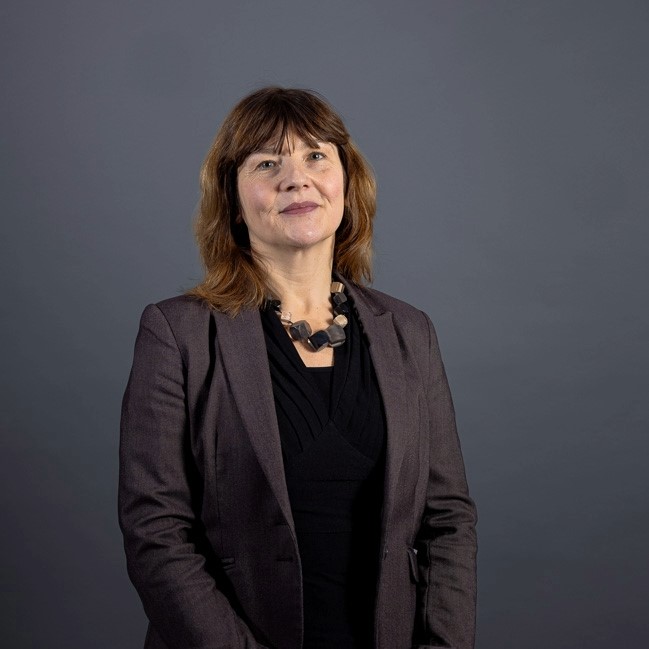
Dr. Olivia Ramsbottom is Senior Lecturer in Strategic Management with 16 years of professional management experience. She develops pedagogical tools blending theoretical models with practical application, currently editing Responsible Strategic Thinking for Business and Society: A Practical Guide . Her teaching spans Chartered Manager Degree Apprenticeships and Help to Grow programs. Research collaborations include workforce strategy in hospitality sectors and experiential learning frameworks for professional education.
Katyon Warrick is a Senior Lecturer at Buckinghamshire New University, specializing in primary care nursing. With over 14 years of experience as a registered nurse and current part-time practice nurse status, she integrates clinical expertise with academic leadership. Her collaborations span NHS England, Health Education England (HEE), BOB Integrated Care System (ICS), and Primary Care Networks (PCN), focusing on nurse apprenticeships, revalidation programs, and NMC standards implementation. BSc in Nursing Practice (University of Bedfordshire) Graduate Certificate in General Practice Nursing (Buckinghamshire New University) Research interests center on primary care nursing education , particularly in: Registered Nurse Degree Apprenticeship (RNDA) support Nursing Associate training Return-to-Practice programs Student supervision frameworks Scientific distinctions include: Queen's Nurse Member of the Queen Nurse Institute She leads part-time teaching initiatives in clinical skills, general practice nursing, and long-term condition management, while maintaining active clinical practice.
Amerin Aborjaily is an Assistant Professor at the JD Externship Program of Vermont Law and Graduate School, where she mentors students in off-campus apprenticeships for academic credit. Her role includes online instruction, site visits, and collaborative supervision with external partners. Education: BA from Skidmore College (2006) Juris Doctor (JD) from Northeastern University School of Law (2011) She brings extensive practical experience from four co-op apprenticeships at institutions like the U.S. Attorney’s Office and Disability Rights Legal Center, followed by roles in public agency law and state government, where she specialized in administrative law and legislative drafting.
Blythe de Oliveira Foster is a Lecturer in Theater Arts at the Massachusetts Institute of Technology, where she teaches acting and voice. She has extensive experience in directing and education, having worked at institutions such as the University of California Santa Barbara, Salem State University, and Phillips Exeter Academy. Her career emphasizes creative collaborations that bridge performance practice and community engagement. Her research and artistic interests span Acting , Voice Training , Devising and Site-specific Theater , and Playwriting , informed by international collaborations and apprenticeships with theater collectives like Bread & Puppet and Gardzienice. She specializes in community-engaged projects, such as serving as a liaison for Holcombe Waller’s Requiem Mass: A Queer Divine Rite . Honors : 2015 Hollywood Fringe Award for La La La Strada . Teaching Experience : Columbia University’s MFA Acting Program training, Linklater Voice Teacher certification workshops, and directing roles at UCSB, Salem State, and SF Playhouse. Ongoing Projects : Writing a play with music about her grandmother’s immigration journey from Brazil to Miami.
Professor Bonnie Slade is a Professor of Adult Education for Social Change at the University of Glasgow. Her work focuses on leveraging adult education as a tool for social justice and empowerment across workplace, higher education, and community contexts. She led the International Master in Adult Education for Social Change (2016–2024) and currently co-edits the Journal of Adult and Continuing Education . She sits on editorial boards for several journals including the International Journal of Lifelong Education and holds roles with organizations like the Universities Alliance on Lifelong Learning and PIMA (Promoting, Interrogating and Mobilising Adult Learning and Education). Education: PhD in Adult Education, University of Toronto (2008) SSHRC Postdoctoral Fellow at York University (2008–2010) Research Interests: Bonnie’s interdisciplinary research explores migration, labor market inclusion, gender/race intersections, and arts-informed methodologies. Her work critiques systemic barriers faced by racialized immigrants, particularly in professional sectors. Recent projects include studies on STEM student experiences in India/Rwanda and refugee integration through adult education. Grants: Bonnie has secured funding for projects including the GCID Small Grants Fund (2023–2024), UKRI GCRF Gendered Journeys (2020–2023), and Leverhulme Trust projects on medical professional migration (2013–2016). Supervision: Current PhD supervisees include Abimbola Abodunrin (Decolonizing HE) and Emily Thomson (Care Apprenticeships). Past students have pursued topics ranging from female engineering students in US evangelical contexts to training programs in Ontario’s nuclear sector. Labs/Teams: Central to her work are collaborative initiatives like the Learner-Centred Education for Migrants project (2016–2020) and the interdisciplinary Gendered Journeys study.
Dr. Queralt Capsada-Munsech is a Senior Lecturer (Associate Professor) in Sociology of Education at the University of Glasgow's School of Education. Her research focuses on educational inequalities, social stratification, and youth transitions between education and the labor market. She contributes to postgraduate programs including the MSc in Education, Public Policy and Equity, the Erasmus Mundus IntM GLOBED, and the Doctorate in Education (EdD). Her current projects include the UK-Ireland ALE policies research (ESRC-funded) examining adult learning statistics and the Mexico Youth Building Future pilot study (British Academy/Leverhulme-funded) analyzing apprenticeship policies. Past projects include the LIFETRACK and YOUNG_ADULLLT EU-funded initiatives investigating educational sorting impacts and lifelong learning policies for vulnerable youth. Her research highlights include cross-national analyses of overeducation risk, grammar school impacts on university access, and regional labor market effects on youth policy efficacy. She has held visiting positions at OECD, ESRI Dublin, and Amsterdam's AMCIS. Recent publications (2020-2025) focus on educational tracking, regional labor market dynamics, and policy frameworks for lifelong learning. Dr. Capsada-Munsech serves on editorial boards for the British Educational Research Journal and Sociology, and maintains active membership in the BSA and ISA RC28 networks. She advises PhD candidates like Paulina Bravo Contreras on education policy transfer mechanisms.
Jim Hordern is a Senior Lecturer in the Department of Education at the University of Bath. He holds a concurrent Visiting Professor position at the University of Derby (2021–2026). His research focuses on educational knowledge and practice, professional and vocational education, and higher education systems. Previously, he served as a Reader and Senior Lecturer at Bath Spa University, John Adams Research Fellow at the Institute of Education (IOE, London), and held roles in teacher training, workforce development, and policy evaluation across England and Wales. His editorial roles include Associate Editor of the Journal of Vocational Education and Training , and membership on editorial boards for British Journal of Educational Studies , Curriculum Journal , and others. He has led projects on degree apprenticeships, vocational education policy, and early years professional knowledge, funded by organizations like the Edge Foundation and the Society for Educational Studies. Research outputs emphasize critiques of educational policy frameworks (e.g., Early Career Framework, Core Content Framework), teacher expertise models, and sociological theories like Basil Bernstein’s code theory. His work intersects with UN Sustainable Development Goals related to quality education and lifelong learning. He has externally examined numerous doctoral students globally and contributes to international evaluations for bodies like the European Commission and South Africa’s National Research Foundation.
Dr. Justin Kunkle is a researcher and academic professional in the Department of Forestry at Michigan State University (MSU). He holds a Ph.D. in Forestry (2008) and a B.A. in Biology with an Environmental Studies minor (2000) from Franklin and Marshall College. His work focuses on bridging forest ecology research with initiatives to diversify natural resources education and career pathways for underrepresented groups. Dr. Kunkle co-developed the MSU Forestry Multicultural Apprenticeship Program, a residential program combining urban forestry training with college readiness for high school students from underserved communities. As Director of the Multicultural Scholars Program, he oversees a comprehensive support framework (financial, academic, social) for students pursuing forestry degrees through their transition into professional roles. He collaborates with community leaders in Detroit, Flint, and other Michigan cities to expand access to natural resources education. His research interests integrate plant ecophysiological studies (e.g., drought responses in seedlings, root nitrogen dynamics) with innovative educational models. Recent grants include $790,000 from USDA-NIFA to build forestry education pathways in rural/underrepresented communities and a $449,000 USDA grant for maple production training. He has secured over $1.7 million in funding since 2017, emphasizing diversity-focused forestry initiatives. Notable collaborations include partnerships with MSU's Institute of Agricultural Technology, Bay College, and Ecotek Labs to expand K-12 science education, as well as a 3+2 program with Medgar Evers College. His work emphasizes creating inclusive ecosystems in academia and natural resource sectors through structured mentorship and community engagement.
Patrick Lehnert is an Assistant Professor of Personnel Economics at the University of Zurich's Department of Business Administration, focusing on vocational education's impact on innovation and satellite data applications for economic analysis. He holds a PhD in Management and Economics from UZH (2020), an M.Sc. in Labor Market & Human Resources, and a B.A. in Business Studies from the University of Erlangen-Nuremberg. Prior to his academic role, he worked at the Institute for Employment Research (IAB) in Nuremberg (2016-2022). His research explores how vocational training systems influence innovation dynamics, including curriculum reforms' effects on graduate skills and wages. He also pioneers the use of satellite imagery to assess regional economic activity, addressing data gaps. Key areas include gender norms in occupational choices, intergenerational education mobility, and the role of applied sciences institutions in regional innovation ecosystems. Lehnert's work bridges theory and policy, with studies on apprenticeship systems, gendered career decisions, and the spatial distribution of innovation effects. He is affiliated with the Swiss Leading House VPET-ECON, a leading research hub for vocational education and economic studies.
Dr. Patrick McGurk is a Reader in Management Practice and Associate Dean, Education at Queen Mary University of London’s School of Business and Management. He leads education initiatives, sits on the School’s Steering Group (Senior Management Team), and is a member of the Department of People and Organisations. He holds a PhD from the London School of Economics and additional qualifications including Dipl. Betriebswirt, BA Hons, MA, and PGCE. His research focuses on employer engagement, public sector management, leadership development, and education policy. He has published widely on topics such as workforce development, apprenticeships, and social mobility. Notable contributions include co-authoring Employer Engagement (2023) and leading the BSc Business Management transformation project. McGurk’s scholarly work spans journals like the Journal of Education and Work and International Journal of Public Sector Management . He has advised on government skills initiatives, served on the Mayor of London’s Skills for Londoners Stakeholder Advisory Group, and contributes to public debates via media outlets like The Conversation and Times Higher Education. He supervises doctoral students and leads grants such as the £650,000 SKETCH Project (Student Knowledge Exchange Through Community Hubs). Awards include the Senior Fellow of the Higher Education Academy (SFHEA) and a Highly Commended Emerald Literati Award for his 2009 paper on public sector leadership.
Claire Revell is a Lecturer and Chair of the Industrial Advisory Board (Education) at Queen Mary University of London's School of Electronic Engineering and Computer Science. With over 20 years of experience, she specializes in employability, personal development, and higher education pedagogy. She co-founded the mySkills employability initiative and served as Industrial Placement Manager from 2009-2022, supporting hundreds of students in technology roles. She holds a CMI Level 5 qualification in Management Coaching and Mentoring and an ICF accredited Professional Coach Diploma. Her teaching focuses on final year undergraduate projects, MSc research projects, and professional development modules for degree apprenticeships. She emphasizes reflective practice, ethics in technology, and workplace skills. Claire is a Fellow of the Higher Education Academy and contributes to internal coaching networks at the university. Her research interests center on employability frameworks and industry-academia partnerships in engineering education.
Dr. Fokie Cnossen is an Associate Professor of Cognitive Engineering and Director of Education for the Bachelor's/Master's programs in Artificial Intelligence and Computational Cognitive Science at the University of Groningen. He holds a joint appointment in the Faculty of Science and Engineering and the Faculty of Medical Sciences. His academic roles emphasize bridging cognitive psychology, human factors, and AI to improve patient safety and medical education. Cnossen leads the Cognitive Engineering research group, focusing on medical technology design, skill acquisition, and human-robot interaction. Research interests include optimizing medical device usability, surgical training methods, and mitigating fatigue-related risks in healthcare. He has supervised numerous PhD and master’s students, with publications in journals like British Journal of Surgery and Radiotherapy and Oncology . Awards include the 2010 Best Teacher Award from the Faculty of Mathematics and Natural Sciences. Key collaborations involve the University Medical Center Groningen (UMCG), focusing on projects like 3D surgical planning tools, medical skill assessment, and AI-driven tumor segmentation interfaces. His work integrates cognitive science principles to enhance clinical workflows and medical education practices.
Patrick Sexton serves as the Assistant Dean of Educator Preparation and Undergraduate Programs at the University of Pennsylvania's Graduate School of Education (Penn GSE), where he is also a Senior Fellow. His roles involve supporting students, faculty, and leaders in programs such as the Urban Teaching Residency, Urban Teaching Apprenticeship, and Independent School Teaching Residency. He actively advocates for anti-racist and equitable educational systems through institutional partnerships. Previously, he spent 15 years at the University of Washington in Seattle as Assistant Dean for Teacher Education. Dr. Sexton’s work bridges teacher education and arts education, with a focus on theater arts as a tool for classroom engagement and innovative pedagogy. He has contributed to discussions on education policy, including redefining state standards and addressing disparities in reading/math proficiency. His media engagements highlight his advocacy for inclusive educational practices, such as opposing policies that alienate students from their identities. While no specific grants or labs are noted, his professional narrative emphasizes collaboration across urban and independent school contexts, leveraging theater techniques to enhance student engagement and content mastery. His career reflects a commitment to systemic change in teacher preparation and equitable educational access.
Yi-Chun (Shelly) Hong is an Assistant Professor in the Division of Educational Leadership and Innovation at Arizona State University's Mary Lou Fulton College for Teaching and Learning Innovation. She teaches in the Master of Educational Technology program and focuses on instructional design, bilingual education, and statistics integration in learning environments. Her doctorate is from the University of Georgia in Learning, Design, and Technology. Research Interests: Designing effective online collaborative learning environments Developing ill-structured problem-solving skills in engineering and education Interdisciplinary approaches to reflective thinking and case-based e-learning Teaching Roles: Master's program courses: Educational Technology, Learning Theories, Digital Learning Supervision of internships and research projects Collaborations: Projects with bilingual education, statistics, and medical education scholars Interdisciplinary research on engineering design reflection and statistics collaborative learning Publications span journals like Educational Technology Research and Development and British Journal of Educational Technology , focusing on reflective thinking assessment, online group work design, and case-based learning in STEM fields.
Dee Kallmeier is a Lecturer in Radiography at the University of Leicester's School of Healthcare, joining in February 2024 from Birmingham City University. She holds Health and Care Professions Council (HCPC) registration and has over 18 years of NHS experience, including roles as a Band 5 and Band 6 Diagnostic Radiographer specializing in cardiac and neuro interventional procedures. Her clinical expertise spans general radiography and cath lab coordination. Teaching Responsibilities: Undergraduate Diagnostic Radiography, Higher Apprenticeships, Operating Department Practitioner programs, and Paramedic Sciences since 2021. Committees: Active on the University of Leicester's EDI and Technology Committees, promoting equity and technological advancement in healthcare education. Research and Clinical Focus: Specializes in cross-sectional anatomy, pathophysiology, and projectional radiography, with clinical emphasis on interventional radiology techniques. Her professional development aligns with advancing student and colleague understanding through interdisciplinary collaboration.