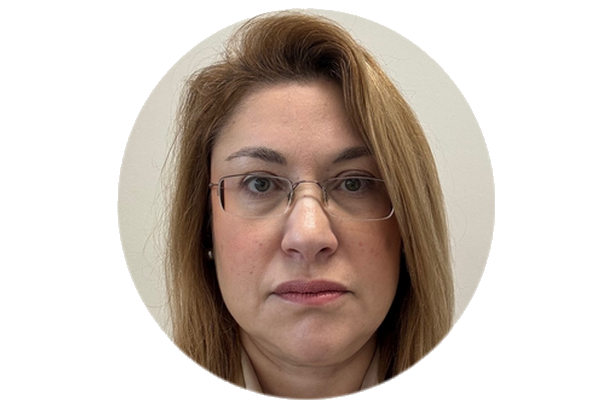
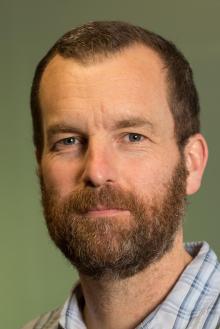
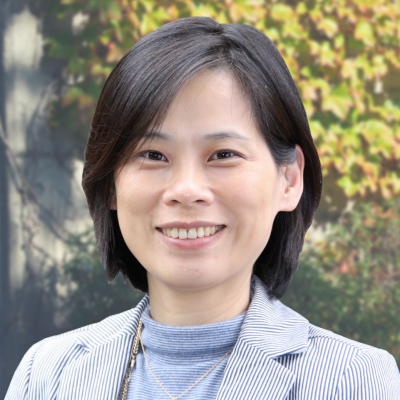
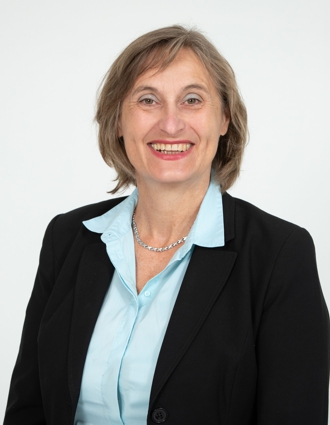
Fatemeh Yaghoobi is a Doctoral Researcher at Aalto University, affiliated with the Department of Electrical Engineering and Automation under the College of Engineering. She actively contributes to Sensor Informatics and Medical Technology research groups. Research Interests: Her work focuses on algorithm development for state estimation in nonlinear systems, leveraging Bayesian statistics and parallel computing. Key areas include probabilistic numerical methods, Kalman smoothers, and optimization techniques for machine learning applications. Publication Trends: Recent research highlights advancements in parallel-in-time computing for ODE solvers, statistical linear regression for state-space models, and iterative Kalman smoother algorithms. These publications reflect interdisciplinary applications in machine learning, signal processing, and computational mathematics. Contact: Email: fatemeh.yaghoobi@aalto.fi
Luca ZANNI is a Full Professor at the Department of Physical, Computer and Mathematical Sciences, Università di Modena e Reggio Emilia. His academic career spans numerical analysis, machine learning, and optimization methods, with a focus on gradient projection algorithms, stochastic gradient techniques, and their applications in imaging and deep learning. His research includes developing adaptive steplength rules for gradient methods, variance control in stochastic optimization, and GPU-accelerated reconstruction techniques for medical imaging. He teaches courses such as Numerical Calculation with Python, Fundamentals of Machine Learning, and Mathematical Methods for Machine Learning, covering topics like numerical optimization, support vector machines, and deep learning. He has contributed to methodologies for hyperparameter-free training, active set identification in constrained optimization, and edge-preserving image reconstruction. His work bridges theoretical advancements in optimization with practical implementations in large-scale machine learning and medical imaging applications.
Faiz Currim serves as Professor of Practice in Management Information Systems and Assistant Director of the INSITE: Center for Business Intelligence and Analytics at the University of Arizona's Eller College of Management. He joined the institution in 2011 after six years at the University of Iowa, having earned his PhD from the University of Arizona in 2004. His educational background includes: PhD in Management Information Systems, University of Arizona (2004) Dr. Currim's research focuses on data modeling, security, privacy, and specialized management of healthcare, temporal, and spatial data systems. His work bridges database theory with practical applications in urban mobility, patient care, and workplace wellbeing through advanced techniques including deep learning, network science, and big data analytics. Current projects address real-world challenges in healthcare analytics and smart city infrastructure. Analysis of his recent publications reveals strong trends in applying artificial intelligence to healthcare cost prediction and urban transportation systems, with consistent use of heterogeneous data sources and machine learning frameworks across diverse domains from patient monitoring to bike-sharing optimization. His scientific recognition includes: Best Paper Award at IEEE 2nd International Smart Cities Conference (2016) Dr. Currim directs the INSITE center's initiatives in business intelligence while teaching core courses including Enterprise Data Management and Business Data Communications. His academic leadership spans curriculum development in data security, XML schema, and spatial database applications, with active collaboration across healthcare and urban planning domains. He maintains leadership roles in professional organizations including the Association for Information Systems (AIS), INFORMS, and Association for Computing Machinery (ACM), driving interdisciplinary research through the INSITE center's industry partnerships and analytics projects.
Alfonso Carfora is Assistant Professor in Economic Statistics at the Department of Economics and Law, University of Macerata, and concurrently serves as a Research Fellow (RtD-B, STAT-02/A). He teaches Probability and Inference, Economic Statistics, Big Data and Microdata, and Panel Data Analysis, and advises the Italian Ministry of Economy and Finance on expenditure evaluation and management processes. Education Ph.D. in Applied Territorial Statistics, University of Naples Parthenope Research interests Carfora’s work centres on the quantitative evaluation of public policies, with particular attention to: Impact assessment of fiscal and energy policies on firms and households Measurement and modelling of tax evasion and the shadow economy Energy poverty dynamics and distributional effects of green transitions Applied econometrics and panel-data techniques Methodologically, he employs advanced econometric models, counterfactual impact evaluation, and multidimensional indicators, collaborating with national and international research groups and publishing extensively in high-impact journals. Publication trends Between 2021 and 2025 his output has focused on three converging themes: (1) drivers and consequences of energy poverty in Europe, (2) energy-transition pathways for SMEs and their policy implications, and (3) fiscal-policy evaluation, particularly regarding tax evasion and VAT-gap estimation. Scientific awards No specific awards listed in the provided material. Advising & grants Consultant, General Accounting Office, Ministry of Economy and Finance (ongoing) Former Head of Regulatory Impact Study and Evaluation Office, Italian Revenue Agency (2013-2023) Collaborates with domestic and international research consortia; specific grant details not provided. Laboratories & teams While no formal laboratory is mentioned, Carfora collaborates closely with research networks in applied statistics and energy economics, frequently co-authoring with colleagues from Macerata, Naples Parthenope, and international partners.
Hakan AYDOĞAN is an Assistant Professor in the Department of Forest Industry Engineering at the Faculty of Forestry, Kastamonu University, Turkey, where he also serves as Institute Deputy Director since 2023. Previously, he worked as a Research Assistant at the same institution from 2015-2022. His educational background includes: PhD in Quantitative Methods from Marmara University (2017-2022) Master's Degree in Business Administration from Brunel University, England (2013-2014) BSc in Forest Industry Engineering from Bartın Faculty of Forestry, Bülent Ecevit University (2005-2009) Dr. Aydoğan's research focuses on Forest Industry Management, with particular emphasis on optimization techniques, statistical quality control, and time series analysis in the wood products industry. His interdisciplinary work bridges forestry engineering with business administration, applying quantitative methods to solve industry challenges. His publication record demonstrates strong expertise in predictive modeling, particularly using artificial neural networks and regression methods for industrial applications. His scholarly impact is reflected in citation metrics: 54 citations and h-index of 4 in Google Scholar. His research spans wood product manufacturing, economic growth analysis, heat transfer prediction, and statistical quality control methods, with a recent shift toward renewable energy applications in forestry. Scientific recognition: YLSY Scholarship (1416 Law) from Ministry of National Education (2010) Faculty and Department First Place Plaket from Bartin University (2009) Dr. Aydoğan has successfully led multiple research projects including TÜBİTAK-funded initiatives on data analysis methods in forestry (2023) and thesis proposal training for graduate students (2024). He has established a robust research network with 16 collaborators, most frequently working with Osman Emre Özkan, Mustafa Öncel, and Hasan Vurdu. His teaching portfolio includes graduate courses in Optimization Techniques, Statistical Quality Control, and Advanced Statistics in Forest Industry, alongside undergraduate courses in Production Planning, Operations Research, and Investment Planning.
Seyed Jalaleddin Mousavirad (Jalal) serves as a Postdoctoral researcher at Mid Sweden University in Sundsvall, Sweden, within the Department of Computer and Electrical Engineering (DET) and affiliated with the STC Research Centre. His research focuses on advancing AI-driven solutions for sustainable technologies and complex optimization problems. He earned his PhD in Computer Engineering specializing in Artificial Intelligence from the University of Kashan, Iran. Previous academic appointments include Assistant Professor at Hakim Sabzevari University (Iran), instructor roles at the University of Tehran (2018-2019) and Azad University (2019-2020), and a Research Fellow position at the University of Beira Interior (Portugal) where he contributed to the European GreenStamp project on sustainable Android applications. Dr. Mousavirad's research spans Image Processing and Computer Vision, Machine Learning, Evolutionary Computation, and Applied Artificial Intelligence, with significant contributions in pattern recognition, metaheuristic algorithms, and neural network optimization. His work demonstrates strong interdisciplinary applications in healthcare diagnostics, power systems, and medical imaging. Recent publications reveal a pronounced trend toward federated learning frameworks for privacy-preserving medical analysis, adversarial robustness in diffusion models, and hybrid optimization techniques for ECG classification and brain tumor detection. This reflects a strategic focus on translating AI innovations into practical healthcare and sustainability solutions. He actively contributes to the academic community as a guest editor for journals including Computational Intelligence and Neuroscience, Entropy, and Mathematical Biosciences and Engineering. His editorial leadership extends to organizing special sessions at IEEE CEC and EvoApplications conferences. Dr. Mousavirad maintains extensive peer-review commitments across 50+ prestigious venues including IEEE Transactions on Evolutionary Computation and IEEE Transactions on Cybernetics. His collaborative research includes international engagements at Xi'an Jiaotong-Liverpool University (China) and current work within Mid Sweden University's STC Research Centre on energy-aware computing and neural network optimization.
Rosa Elvira Lillo Rodriguez is a Full Professor in the Statistics Department at Charles III University of Madrid, affiliated with both the Flores de Lemus Institute and the UC3M-Santander Big Data Institute. Her research spans multiple disciplines including Statistics, Computer Science, Medicine, and Environmental Sciences. Her primary research interests focus on advanced statistical methodologies, particularly in functional data analysis, multivariate statistics, and machine learning applications. She has developed innovative techniques for outlier detection, variable selection, and classification algorithms with applications across healthcare, engineering, and social sciences. Her work bridges theoretical statistics with practical implementations in real-world problems. Her publication portfolio shows a clear trend toward interdisciplinary research, with recent work applying statistical methods to COVID-19 detection, hydraulic system monitoring, intimate partner violence risk assessment, and neural network interpretability. The articles demonstrate expertise in developing robust statistical frameworks that handle complex, high-dimensional data while maintaining computational efficiency. Dr. Lillo Rodriguez has secured significant research funding as principal investigator for projects including 'Advanced Statistical Modeling for Complex Systems in Health, Industry and Society (ASMOCS)' funded by the Spanish National Research Agency (2023-2027) and the 'UC3M-Universia Chair of Data Economics and Responsible Artificial Intelligence' (2024-2026). She also serves as researcher on multiple European Commission projects. She has supervised numerous doctoral theses on topics including functional modeling techniques, variable selection algorithms, and spatial depth-based methods for functional data, demonstrating her commitment to training the next generation of statisticians. Her current research involves developing statistical frameworks for big data applications across multiple sectors including healthcare, finance, and public policy.
Irene Koronaki is a Professor at the National Technical University of Athens , affiliated with the School of Mechanical Engineering and the Thermal Engineering Section . She serves as Director of the Laboratory of Applied Thermodynamics, Cooling Technology & Refrigerated Vehicles since 2022 and has held academic roles at NTUA since 1999. Her research focuses include thermodynamics, heat pumps, energy efficiency, and renewable energy systems. Diploma in Mechanical Engineering, NTUA (1996) PhD in Thermal Engineering, NTUA (2000) Postdoctoral Researcher, NTUA (2002) Her research spans thermodynamics of cooling cycles, heat pumps, power cycles, energy saving in buildings, and thermal energy storage. She has pioneered work in nanofluids, solar cooling, and CO2 absorption systems. Her publications and projects reflect expertise in Stirling engines, hybrid solar collectors, and building energy optimization. Her recent articles highlight advancements in superfluid thermodynamics, solar PV/T systems, and medical robotics. Awards include the Edward F. Obert Award (2022) and leadership of the 2021 ASHRAE Student Design Competition winning team. She serves on ASME and ASHRAE committees and co-authored educational materials for refrigeration and energy inspection standards.
Professor Steven Roberts serves as Dean of the College of Business and Economics at the Australian National University (ANU). He previously held the role of Director at the Research School of Finance, Actuarial Studies & Statistics and has taught Actuarial Studies and Statistics courses within the university. Education: PhD in Statistics from Stanford University Masters in Statistics from Stanford University Research Interests : Steven specializes in Applied Statistics , with a focus on Lasso Regression for high-dimensional data analysis and Time Series Analysis in financial and environmental contexts. His work addresses Model Selection challenges and develops Re-sampling Methods for statistical robustness. Research Trends : His publications demonstrate interdisciplinary applications in Finance (portfolio theory, health insurance economics), Statistics (regression techniques, influence diagnostics), and Public Health (statistical epidemiology). Recent work explores Retirement Expenditure patterns and Actuarial Modelling . Collaborative Projects : Steven has contributed to key initiatives including: Min/Max Autocorrelation Factors in Time Series Studies of Air Pollution Health Effects (2014-2018) Retirement Savings Expenditure Modelling (2014) Bootstrap Methods for Evolutionary Kernel Time-Series Modelling (2009-2010) Air Pollution and Statistical Model Selection (2008-2011)
Amery Wu serves as Associate Professor and ECPS Graduate Advisor for Admissions and Scholarship at the University of British Columbia's Faculty of Education, specifically within the Department of Educational and Counselling Psychology, and Special Education. Based in Scarfe Library Block 287, Dr. Wu specializes in advanced quantitative methods for educational and psychological measurement. Dr. Wu's research focuses on applied statistical modeling in educational contexts, with particular expertise in test item performance analysis , globalization of testing through internet platforms , and longitudinal assessment methodologies . Their scholarly work bridges psychometrics with practical educational applications, examining how test design impacts diverse learner populations across international contexts. Key methodological contributions include innovations in mixed-effects modeling, differential item functioning analysis, and validation frameworks for complex assessment systems. Recent publications demonstrate a clear trajectory toward integrating response process data with performance outcomes , particularly through Bayesian modeling and advanced visualization techniques for online assessments. The research consistently addresses measurement challenges in high-stakes contexts including immigration language testing (CELPIP), health literacy instruments, and inclusive classroom models. Dr. Wu's work emphasizes the ecological validity of assessments within their sociocultural contexts. Teaching responsibilities include core methodology courses: EPSE 423 (Assessment of Classroom Learning), EPSE 481 (Introduction to Research in Education), EPSE 482 (Statistics for Educational Research), EPSE 483 (Reading Educational Research), and advanced graduate courses EPSE 592 (Experimental Designs) and EPSE 596 (Correlational Analysis). As Graduate Advisor for Admissions and Scholarship, Dr. Wu shapes the quantitative training of future educational researchers.
Jennifer Castle is the Director of Climate Econometrics at the University of Oxford and a Titular Associate Professor and Tutorial Fellow in Economics at Magdalen College. Her work bridges econometrics and climate-economic modeling, focusing on robust forecasting methodologies and empirical analysis of macroeconomic variables like inflation, unemployment, and climate impacts. Affiliation: University of Oxford, Magdalen College Research Themes: Climate econometrics, structural break analysis, general-to-specific modeling, and non-linear time series Research Interests center on disentangling complex climate-economic relationships and improving forecasting accuracy through rigorous model evaluation. She applies these methods to inflation dynamics, energy policy, and long-term climate transition scenarios. Recent Publications highlight her work on UK inflation forecasting challenges, cryptocurrency market stability, income inequality projections, and climate policy intervention points. Her research emphasizes model robustness in the face of structural shifts and data uncertainty.
Helga Wagner is an Associate Professor and Head of the Department of Medical Statistics and Biometrics at Johannes Kepler University Linz (JKU). She has held faculty positions at JKU since 2011, previously serving as a University Assistant and Lecturer. In 2010, she was a Visiting Professor at Ludwig Maximilians Universität München. She completed her Diploma in Statistics (1978), Doctoral Degree (2001), and Habilitation (2010) at JKU. Research Focus: Her statistical research specializes in: Bayesian model selection and variable selection State space modeling for complex systems Count data regression techniques Survival analysis methodologies MCMC computational approaches Treatment effects modeling Teaching: Currently instructs graduate courses including Survival Analysis, Advanced Regression Analysis, Applied Statistics, and seminars in Statistics and Data Science. Administrative Role: Leads the Medical Statistics and Biometrics department since 2019.
Gregorio Caetano is an Associate Professor of Economics at the University of Georgia, where he conducts research at the intersection of urban economics, public economics, and labor economics. His work focuses on neighborhood sorting, school segregation, and the valuation of public school quality, with significant contributions to methodological approaches in econometrics. His educational background includes a B.A. in Economics from Universidade Federal do Rio Grande do Sul (2000), an M.A. in Economics from Fundação Getúlio Vargas (FGV-RJ) (2003), and a Ph.D. in Economics from the University of California, Berkeley (2009). Caetano's research interests span social interactions, urban economics, local public economics, education, labor economics, and applied econometrics. His work often employs innovative econometric techniques, particularly bunching designs and regression discontinuity approaches, to study complex social phenomena. He has made significant contributions to understanding neighborhood sorting mechanisms, school segregation dynamics, and the economic valuation of public school quality. His publication record shows a consistent focus on methodological innovation applied to substantive questions in urban economics and education. Recent work demonstrates increasing sophistication in causal identification strategies, with multiple papers developing and applying bunching designs to address endogeneity concerns in studying educational outcomes, maternal labor supply effects, and neighborhood sorting patterns. Caetano is affiliated with the Inequality: Measurement, Interpretation, and Policy (MIP) research network, which connects his work to broader policy-relevant research on economic inequality. His research has been published in top economics journals including Journal of Labor Economics, Journal of Public Economics, Journal of Urban Economics, Quantitative Economics, and Journal of Applied Econometrics, demonstrating both methodological rigor and policy relevance.
Nathaniel E Helwig is an Associate Professor of Psychology and Statistics at the University of Minnesota, Twin Cities, affiliated with the Driven to Discover Research Facility (D2D). His research bridges statistical methodology and psychological inquiry, focusing on advanced analytical techniques. Research Interests Development of statistical learning frameworks Neuroscience applications through brain network analysis Computational modeling for behavioral and biological data Data analysis techniques for food choice and satisfaction Nonparametric regression and spline-based methods Dynamic modeling of physiological systems Grants & Collaborations NIH funding for visual field remapping in Central Scotomas (2020-2026) Alcohol use moderation studies in early adulthood (2019-2022) Intersegmental dynamic mechanisms of neck pain research (2019-2022) Neural disconnection and visual perception studies (2016-2022) Lab & Technical Contributions Developed Driven to Discover Research Facility (D2D) tools for data-intensive research Created open-access statistical software packages for tensor smoothing and permutation tests Applied cross-validated simultaneous component analysis for brain network modeling
Fan Yang Wallentin is a Professor in Statistics at Uppsala University, Sweden, where she works in the Department of Statistics. She serves as the Coordinator for International Exchange Programs and has been responsible for the statistical consultant service at the department since 2009. Her academic career is deeply rooted at Uppsala University, where she earned her PhD in Statistics in 1997. Her educational background includes: PhD in Statistics from Uppsala University (1997) Professor Wallentin's research primarily focuses on structural equation modeling and multivariate statistical analysis, with particular applications in social and behavioral sciences. Her work bridges theoretical statistical advancements with practical applications across diverse fields including public health, psychology, economics, and education. She has made significant contributions to psychometrics, particularly in the development and validation of measurement instruments used in healthcare and education settings. Her methodology work addresses specification issues, robustness properties, and computational aspects of statistical models. Her publication record demonstrates an evolving research trajectory that has recently incorporated pressing global issues such as the statistical analysis of the COVID-19 pandemic, while maintaining her core expertise in structural equation modeling and related methodologies. Her work often involves cross-disciplinary collaborations, reflecting the broad applicability of her statistical expertise across healthcare, energy policy, and development economics. Among her notable recognitions: Arnberg Prize from the Swedish Royal Academy of Sciences (2000) for her PhD thesis "Non-linear structural equation models: Simulation studies of the Kenny-Judd model" Professor Wallentin has extensive experience providing statistical consultation to researchers in social and behavioral sciences. Her role as Coordinator for International Exchange Programs suggests active engagement in global academic networks. Her research has been applied in diverse contexts including pandemic response analysis, women's empowerment through microfinance, healthcare quality assessment, and educational statistics, demonstrating the versatility and impact of her methodological contributions.