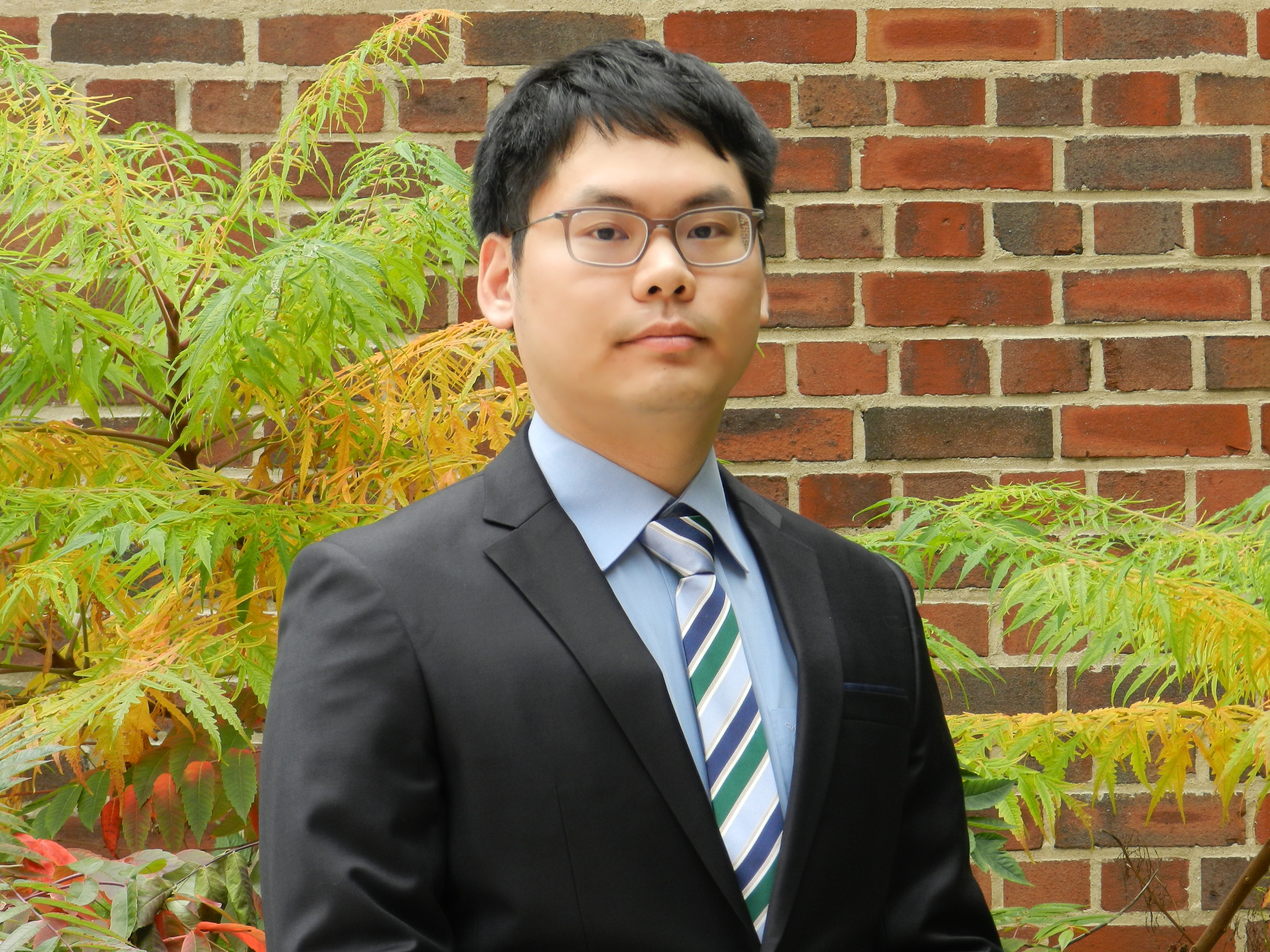
Wooyong Lee is a Lecturer in the Economics Discipline Group at the UTS Business School, University of Technology Sydney. He holds a PhD in Economics from the University of Chicago (2020), an MS in Statistics from the University of British Columbia (2014), and a BA in Economics and Statistics from Korea University (2012). His research focuses on econometrics and applied microeconomics, specializing in panel data methods, difference-in-differences frameworks, and dynamic models. He has developed methodologies addressing spillover effects in staggered DiD designs and partial identification in heterogeneous coefficient models. His work applies to real-world issues like lifecycle earnings dynamics and policy evaluation. Lee teaches econometrics at undergraduate and postgraduate levels and supervises research students. His publications appear in venues such as Statistical Inference for Stochastic Processes and peer-reviewed working papers. Research interests emphasize causal inference techniques, with contributions to handling unobserved heterogeneity and measurement errors in economic data. Ongoing work explores dynamic treatment choice models where treatment decisions respond to outcome shocks, challenging traditional parallel trends assumptions.
Anastasia Semykina is a Professor of Economics and Deputy Dean (Research and Innovation) at RMIT University's School of Economics, Finance & Marketing. She holds a PhD from Michigan State University (2006) and previously served as Charles and Joan Haworth Professor of Economics at Florida State University. Her expertise spans theoretical and applied econometrics, with a focus on panel data models, missing data estimation, and their application in labor economics, education economics, transition economies, and economic psychology. She teaches advanced econometrics and microeconomics courses at both undergraduate and graduate levels. Research Interests: Theoretical and Applied Econometrics Labor Economics Economics of Education Transition Economies Economics and Psychology Health Economics Her recent publications address topics such as panel data methodologies, healthcare cost-effectiveness analysis, and educational policy evaluation. She is actively involved in supervising PhD and Master's research students in econometrics and applied economics.
Dr. Metin Uyanik is a Senior Lecturer at the School of Economics, The University of Queensland. He holds a PhD from Johns Hopkins University (2016) and previously worked as a Postdoctoral Research Fellow at the University of Rochester's Wallis Institute of Political Economy. His research focuses on Economic Theory, Game Theory, Political Economy, Computational Economics, and Mathematical Economics. His work has been published in top-tier journals such as Economic Theory , Games and Economic Behavior , and Journal of Mathematical Economics . Education: Bachelor of Economics, Bogazici University Masters (Research) of Economics, Koc University Doctor of Philosophy, The Johns Hopkins University Research Interests: Dr. Uyanik's research bridges theoretical and applied economics, emphasizing foundational mathematical approaches. His work explores general equilibrium theory, discontinuous games, topological methods in economics, and welfare economics. Key themes include the analysis of non-convex economies, fixed-point theorems, and the integration of axiomatic frameworks with behavioral assumptions. Teaching: He teaches Advanced Microeconomics, Economics for Commerce, and Introduction to Strategic Thinking at UQ. His pedagogical focus includes mathematical rigor and practical applications of economic theory. Collaborations & Future Work: Collaborations with scholars like M. Ali Khan and Richard P. McLean highlight his engagement with complex theoretical frameworks. Ongoing projects include studies on large production economies, myersonian common knowledge, and computational methods in equilibrium analysis.
Nicholas Feltovich is a Professor of Economics at Monash University, specializing in experimental economics, game theory, and behavioral economics. His research focuses on understanding strategic behavior in markets, bargaining institutions, and decision-making under uncertainty, with notable contributions to schizophrenia-related loss aversion studies and experimental political science. He holds a PhD in Economics from the University of Pittsburgh (1997) and a BS in Mathematics from Virginia Tech (1991). Education PhD in Economics, University of Pittsburgh, 1997 BS in Mathematics, Virginia Polytechnic Institute and State University, 1991 Research Interests His work explores experimental investigations of market institutions, bargaining power dynamics, and social norms. Key topics include the effects of communication in strategic interactions, the role of fairness perceptions in pricing, and the application of neuroeconomic methods to study decision-making impairments in schizophrenia. He has conducted influential studies on corporate social responsibility, leadership in public goods provision, and the impact of leniency programs on collusion. Grant Activities Posted prices, bargaining and auctions : ARC-funded project (2014–2019) examining experimental economics of market mechanisms. Effect of bargaining power : ARC project (2013–2018) analyzing institutional and normative influences on bargaining outcomes. Collaborations He collaborates internationally on projects spanning behavioral ethics, experimental game theory, and schizophrenia-related economic behavior. His work contributes to the UN Sustainable Development Goal on Quality Education through applied research in decision-making frameworks.
Tunye Qiu is a recent PhD graduate in Economics from the Crawford School of Public Policy at the Australian National University (ANU) . He is currently on the job market and holds roles as a Senior Tutor and Associate Lecturer in the Research School of Economics (RSE) at ANU, where he has taught courses in microeconomics, macroeconomics, game theory, and policy impact evaluation since 2021. He also serves as the Program Manager of the China Economy Program and an Assistant Editor for the Journal of Chinese Economic and Foreign Trade Studies. Education : PhD in Economics (2024) at Crawford School, ANU; BEcon (ANU); MEcon (ANU). Research Interests : His work focuses on labor economics, urban economics, demographic economics, and development economics. He explores causal impacts of government policies on China’s housing market, fertility rates, land supply behavior, and housing demand, alongside international trade, labor markets in South Pacific countries, and educational outcomes in Australia. Teaching & Roles : Senior Tutor, Microeconomics 1 (2021-2024), Macroeconomics 1 (2024), Business Economics (2024), Strategic Thinking (2021-2023) at RSE, ANU. Teaching Quantitative Policy Impact Evaluation (2022-2024), Issues in Development Policy (2023-2024), and The Economic Way of Thinking (2023) at the Crawford School. Research Trends : His publications address housing affordability (2024), marriage delay (2024), policy impacts on housing prices (2024), land supply dynamics (2024), trade dynamics with China (2022), and migration patterns in China (2020). These works integrate causal inference methods and policy evaluation frameworks. Email : tunye.qiu@anu.edu.au
Ingebjorg Kristoffersen is a Lecturer in the Department of Economics at the UWA Business School, The University of Western Australia. She holds a PhD in Economics from UWA and a Master of Business (Finance) from Edith Cowan University. A Fellow of the Higher Education Academy since 2021, she specializes in applied microeconomics focusing on economic psychology, wellbeing, and gender issues. Her research explores how values, perceptions, and emotions influence economic behavior, particularly in areas like health, financial literacy, and gender roles. She has published in journals such as Journal of Economic Psychology and Health Promotion International . Currently, she teaches Microeconomics and research methods courses and serves as Undergraduate Coordinator for Economics. Dr. Kristoffersen contributes to initiatives like the National Indigenous Business Summer School and actively reviews for top academic journals. Her work aligns with UN Sustainable Development Goals related to education and gender equality.
Michael Ward is a Professor in the Department of Economics at Monash University, with a joint appointment at the Monash Sustainability Institute. His research focuses on applied microeconomics and econometrics, particularly addressing environmental and resource sustainability challenges such as water management, pollution regulation, land use policies, and biodiversity conservation. He joined Monash in 2012 after faculty positions at ANU and UC Berkeley. Ward has led multiple research projects, including the RACE for 2030 CRC (Cooperative Research Centre) and adaptive urban water management initiatives. He has been recognized with the 2008 Best Economics Paper Award from the Agricultural and Applied Economics Association for his work on food safety and nutrition. His research outputs span 23 peer-reviewed articles, including influential studies on regulatory compliance mechanisms, water pricing strategies, and biodiversity conservation. Ward collaborates internationally and contributes to the UN Sustainable Development Goals related to climate action and sustainable cities. Projects : RACE for 2030 CRC (2020–2031), Adaptive Urban Water Management (2012–2017), and household electricity use research (2022). Awards : 2008 Best Economics Paper Award for work on food safety and nutrition. Labs/Teams : Monash Sustainability Institute, interdisciplinary collaborations on energy and environmental policy.
Claudio Mezzetti is the Colin Clark Professor of Economics at the University of Queensland, School of Economics. His research focuses on microeconomic theory, particularly mechanism design, game theory, and their applications to antitrust, environmental regulation, and market design. He is a Fellow of the Econometric Society. Key Projects include Information and Market Design; Mediation and Analogical Argumentation (2019–2023) Technology Transforming Markets: Large-Scale Field Experiments in Electricity Use (2015–2018) Economic efficiency and the provision of incentives for information acquisition (2015–2016) His research explores strategic behavior in auctions, regulatory frameworks for pollution, and antitrust leniency policies. Recent work analyzes digital-age economic challenges like cybercrime impacts and public goods provision mechanisms. Scientific Awards: Fellow of the Econometric Society Grants and advising: His projects often involve interdisciplinary collaborations, such as with computer scientists on trust-based task allocation. He advises on policy-relevant issues in competition law and environmental economics. Labs/Teams: Active in research groups at the University of Queensland's School of Economics and collaborates internationally on market design and game theory applications.
Professor Selva Selvanathan is a Professor of Econometrics at Griffith University, affiliated with the Department of Accounting, Finance, and Economics at the Griffith Business School. He serves as Director of the Economics Policy Analysis Program (EPAP) and a member of the Griffith Asia Institute. His research focuses on applied econometrics, time series modeling, tourism and energy economics, and consumer demand analysis. He has authored/co-authored over 100 articles and multiple monographs, contributing to leading journals such as the Review of Economic Studies and Journal of Econometrics . Education: PhD in Economics (University of WA and Murdoch University, Australia), MSc (University of Bucharest, Romania), BSc (University of Jaffna, Sri Lanka). Research Interests: Professor Selvanathan’s work spans econometric methodologies, tourism economics, energy policy, and consumer behavior. His recent studies include modeling financial asset demand in Sri Lanka, analyzing alcohol consumption patterns in Australia, and exploring the gender dimensions of cleaner energy transitions. Awards and Honors: Pro-Vice Chancellor’s Research Excellence Award 2014 (Research Supervision) University of Western Australia Distinguished Teaching Award (1988) Griffith Awards for Excellence in Teaching 2005 – Innovation Across the Institution Grants and Collaborations: Leading projects funded by the Department of Foreign Affairs and Trade, Australian Research Council, and Griffith University. Notable grants include policy capacity-building initiatives in Vietnam and Sri Lanka, and studies on alcohol control measures. Advising and Mentorship: Supervised over 20 doctoral students, including works on foreign aid impacts, renewable energy transitions, and rural livelihoods. Current research includes market integration dynamics and energy policy effectiveness. Labs/Teams: Active in Griffith Asia Institute and EPAP, fostering interdisciplinary research on Asian economies and policy analysis.
Dr Gonzalo Castex Hernandez is a Senior Lecturer in the Department of Economics at the University of New South Wales (UNSW). He holds a Ph.D. in Economics from the University of Rochester. His research focuses on Macroeconomics, Labour Economics, and the Economics of Education, with particular emphasis on topics such as pension systems, juvenile crime determinants, and the impact of policy measures like minimum wage laws and non-pharmaceutical interventions during pandemics. He has contributed to edited volumes, including Changing Inflation Dynamics, Evolving Monetary Policy , and authored numerous peer-reviewed articles in journals such as Journal of Economic Dynamics and Control and Economic Modelling . His recent work explores nonlinear means-tested pension systems, the evolving relationship between capital and skill complementarity, and cross-country analyses of policy responses to crises like the 2020 pandemic. He maintains an active research agenda bridging theoretical models with empirical evidence, particularly in areas affecting public policy design and labor market dynamics. Dr Castex Hernandez’s academic contributions span multiple subfields, including public finance, development economics, and quantitative social science. He collaborates internationally with institutions such as the Central Bank of Chile and the ANU Crawford School of Public Policy. His ORCID profile ( 0000-0001-7943-8627 ) and personal website ( https://sites.google.com/site/gonzalocastex/ ) provide access to his full body of research.
Professor Isabella Dobrescu is Head of the School of Economics at the University of New South Wales (UNSW) Business School and co-chair of the STEP UP initiative in Education. She serves as an editor for the Journal of Pension Economics & Finance and maintains an active research program spanning labor economics, public finance, health economics, and applied econometrics. Her educational background includes a Ph.D. in Economics with Honors from the University of Padua (2009), an M.Sc. in Economic Mathematical Modeling Summa cum Laude from West University of Timisoara (2005), and dual bachelor's degrees in Economics from Nottingham Trent University and Finance Summa cum Laude from West University of Timisoara (2003). Dobrescu's research has evolved from structural work on consumption and saving dynamics to pioneering applications combining theory, empirical analysis, and randomized controlled trials to improve educational outcomes through technology. Her recent work focuses on financial literacy interventions for high school students through the STEP UP program, while maintaining her longstanding research on aging populations, retirement decision-making, and risk behavior. Her publication portfolio demonstrates consistent output across labor economics, health economics, and applied econometrics, with recent emphasis on educational technology interventions and financial decision-making in retirement contexts. The research shows methodological diversity spanning structural modeling, nonparametric partial identification techniques, and experimental approaches. UNSW Business School Research Impact Award (2021) UNSW President's Award for Building Collaborations (2019) UNSW Scientia Education Fellowship (2017) Australian Government Office of Learning & Teaching Citation (2016) ARC Early Career Research Fellowship (2012) Dobrescu has secured over AU$2.5 million in competitive research funding since 2010, including major ARC Linkage grants and substantial UNSW strategic investments. She leads the STEP UP initiative which has received over AU$650,000 in funding for financial literacy outreach programs. Her collaborative approach is evident in numerous multi-investigator projects with colleagues including Bateman, Thorp, Motta, and Newell across economics, finance, and education domains. As Head of the School of Economics and co-chair of STEP UP, Dobrescu leads research teams focused on educational interventions using technology, retirement decision-making, and the economics of aging. Her Playconomics platform represents a significant innovation in experiential economics education, receiving media coverage from major outlets including The Sydney Morning Herald and The Australian.
Junzhao Ma is a Senior Lecturer in the Department of Marketing at Monash University. He holds a BA in Economics from Yale University and a PhD in Marketing from the Kellogg School of Management, Northwestern University. Previously, he worked as a marketing analyst at Capital One Financial Corporation and JP Morgan and Co. Education: BA Economics (Yale University), PhD Marketing (Kellogg School, Northwestern University) His research focuses on technology adoption, e-commerce, real estate, and media's social impact, employing novel methodologies and data sources. He has contributed to journals like Journal of Retailing , International Journal of Research in Marketing , and Journal of Business Ethics . His work aligns with UN Sustainable Development Goals related to reduced inequalities and responsible consumption. Recent research highlights include studies on service robot anthropomorphism (2023), sex robots acceptance (2022), and media-driven consumption trends (2020). He has received Dean's Letters for Teaching Excellence in 2020 and 2021. Scientific Awards: Dean's Letter for Teaching Excellence (2020, 2021) Junzhao actively engages in academic service, including peer reviews for Asia Pacific Journal of Marketing and Logistics and presentations at the INFORMS Marketing Science Conference and Australian & New Zealand Marketing Academy Conference. He has served as Chief Investigator in projects like "Bridging the Intention-Behaviour Gap in the Australian Tourism Industry" (2022-2024) and "eBabies: Forecast and Implications for Society" (2020-2021).
Associate Professor Antonio Peyrache is a Deputy Head of School at the School of Economics, University of Queensland, within the Faculty of Business, Economics and Law. His research focuses on applied economics, econometrics, and productivity/efficiency analysis with particular emphasis on production systems, public sector efficiency, and systemic risk modeling. He leads the Centre for Efficiency and Productivity Analysis (CEPA), driving advancements in efficiency measurement methodologies. Key research interests include judicial system efficiency, banking systemic risk, and multilevel production networks. Recent work explores homothetic production technologies and optimal organizational structures for public institutions. Featured projects include analyzing productivity in Australian horticulture and European judicial systems. His expertise spans both theoretical contributions (e.g., decomposition frameworks) and applied policy analysis (e.g., healthcare delivery efficiency). Publications span journals like European Journal of Operational Research and Omega, with a focus on operational research techniques and their policy applications. He has directed projects funded by the Asian Productivity Organization and collaborated on EU-KLEMS growth accounting initiatives. Professional roles include editorial contributions and leadership in academic productivity analysis.
Dr. María Yanotti serves as a Senior Lecturer in Economics at the Tasmanian School of Business and Economics (TSBE) within the University of Tasmania. Her academic appointment is based at the Rivers Edge Building, Inveresk campus in Launceston, Tasmania. With a specialization in housing finance, banking, and household economics, Dr. Yanotti has established herself as an expert in mortgage markets and residential property investment, frequently sought for media commentary on these subjects. Dr. Yanotti's research interests span housing finance, mortgage markets, residential property investment, banking economics, and household financial decision-making. Her work frequently examines the intersection of financial systems and housing markets, with particular attention to Australian market dynamics. She has published extensively on mortgage choice determinants, financial inclusion, and the relationship between housing finance systems and economic outcomes. Her research methodology often combines economic theory with sophisticated statistical analysis to address practical questions in housing finance. Analysis of Dr. Yanotti's publication record reveals a strong focus on housing economics and mortgage markets, with significant contributions to understanding residential investment patterns, mortgage choice determinants, and housing finance systems. Her research spans both theoretical and applied economics, with numerous publications in leading domestic and international journals. She has also expanded her research interests to include environmental economics topics such as marine plastic pollution valuation and climate change impacts, demonstrating interdisciplinary reach while maintaining her core expertise in housing finance. Dr. Yanotti has received research funding from the Australian Housing and Urban Research Institute (AHURI) and is affiliated with the Economic Society of Australia and the Women in Economics Network. Her work on residential property investment, particularly the phenomenon of investors favoring properties near their own residence, has received significant attention in both academic and policy circles. At the University of Tasmania, Dr. Yanotti teaches across multiple economics and finance subjects including microeconomics, statistics and quantitative methods, economics for managers, finance for managers, and data analysis for managers. Her teaching reflects her research expertise, connecting theoretical economic concepts with practical applications in housing and financial markets.
Gregor Pfeifer is a Senior Lecturer in the School of Economics at the University of Sydney, affiliated with CESifo and IZA. Previously, he was a Senior Research Officer at University College London's Department of Economics. His research focuses on Health, Education, and Public Economics, emphasizing applied microeconometrics for policy evaluation. He holds a Ph.D. from Saarland University. **Education**: Ph.D., Saarland University (Germany). **Research Interests**: Applied Microeconomics, with a focus on causal inference in Health, Education, and Public Policy contexts. His work explores topics like school smoking bans, fuel price policies, and gender wage expectations. **Grants**: Received funding from the Baden-Wuerttemberg Stiftung (€118k, 2017–2019) for STEM education research, the German Research Foundation (€17k, 2017–2018) for school tracking effects, and seed grants for junior researcher networks. **Media**: His work on school smoking bans and gender wage expectations has been covered in outlets like *The Sunday Times* and *Frankfurter Allgemeine Zeitung*. **Affiliations**: Serves as an Associate Editor at *Empirical Economics*. Active in policy evaluation, synthetic control methods, and labor market dynamics.