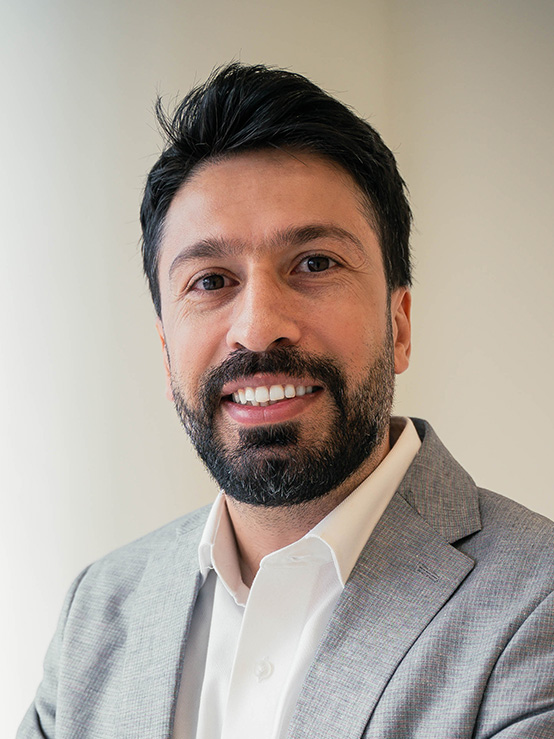
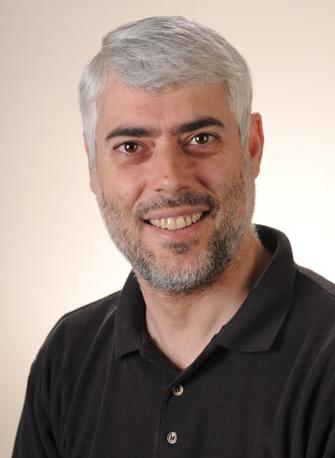
Paul Tupper is a Professor in the Department of Mathematics at Simon Fraser University (SFU), part of the Faculty of Science. He holds a Ph.D. in Scientific Computing from Stanford University (2002). His research focuses on applied mathematics with emphasis on mathematical modeling in epidemiology, speech perception, neural networks, and computational linguistics. He teaches advanced courses in probability, numerical linear algebra, and calculus for social sciences. His work bridges theoretical mathematics and real-world applications, particularly in understanding complex systems like disease transmission dynamics and cognitive processes. Recent studies include modeling the transition of pandemics to endemic states, genomic analysis of viral spread, and audio-visual perception mechanisms in speech. He actively contributes to public health policy discussions through epidemic modeling research. Professor Tupper's research has been published in high-impact journals and conferences, with notable contributions to diversity metrics in biology and geometry, stochastic differential equations, and connectionist models of linguistic phenomena. His courses reflect interdisciplinary interests, integrating mathematical rigor with practical computational methods.
Dr. Helen Cai is a Senior Lecturer in International Business and Circular Economy at Middlesex University Business School, where she serves as Programme Leader for the BA International Business Administration and BA Business Management (Top-Up). She also leads the Doctor of Business Administration (DBA) programme delivered in China through a partnership with United Business Institutions (UBI). Additionally, she holds a Full Visiting Professorship at Jiaxing University, China. Her academic leadership extends to editorial roles as Senior Editor of Cogent Business and Management and member of the editorial board of the Journal of World Business . She is Vice President of Marketing for the International Case Study Research Association (ICRA). Dr. Cai’s research focuses on international business, sustainability, green innovation, and corporate environmental governance. She employs advanced methodologies such as fuzzy-set qualitative comparative analysis (fsQCA), econometrics, and scientometric analysis. Her work addresses critical issues including green supply chains, carbon emissions, foreign direct investment, and institutional influences on innovation. The 15 most recent publications highlight a strong trend toward environmental sustainability, circular economy, and data-driven policy analysis. Her recent work spans blockchain in green supply chains, AI in rehabilitation, carbon governance, land use, and migration policy, demonstrating interdisciplinary breadth and policy relevance. Bronze award, The First National Collegiate Olympiad Mathematical Mirror Competition (2022) Honourable Mention, Interdisciplinary Contest in Modelling (2022) First Prize, Asia and Pacific Mathematical Contest in Modelling (2021) Third Prize, THE International Case Competition (2021) Dr. Cai has extensive supervisory experience, currently guiding multiple PhD candidates and having chaired over 30 DBA viva panels. She has supervised over 60 BA, 150 MSc, and 75 MBA dissertations. She has participated in 72 PhD/DBA committees in roles including external examiner, internal examiner, and panel chair. Her grants and funding are not explicitly mentioned, but her research output and editorial roles suggest sustained scholarly engagement. She leads research teams focused on circular economy and international business, and her future work is likely to expand into AI-driven sustainability analytics, cross-border green innovation, and climate governance. Her prior industry experience as a Senior Economist at China’s Central Bank enriches her applied research perspective.
Moosa Tatar is an Assistant Professor at the University of Houston College of Pharmacy , specializing in Pharmaceutical Health Outcomes and Policy . His research combines data science and applied econometrics to analyze public health policies, focusing on drug misuse , metabolic syndrome , liver diseases , and COVID-19 disparities. He holds dual PhDs in Health Services Research (University of Nebraska Medical Center) and Economics (University of Mazandaran), with expertise in machine learning , health equity , and vaccine policy modeling . PhD, Health Services Research, University of Nebraska Medical Center PhD, Economics, University of Mazandaran MA, Economics, Azad University BA, Economics, University of Sistan and Baluchistan His work addresses critical public health challenges through large-scale dataset analysis , including excess mortality during pandemics , vaccine inequality , and economic impacts of health policies . Key themes include social vulnerability , health disparities , and policy evaluation using machine learning and econometric modeling . Tatar's research has informed global and national health interventions related to prescription drug monitoring and hepatitis C screening . He is affiliated with the Society for Medical Decision Making , AcademyHealth , and American Public Health Association , serving as an ad hoc reviewer for journals like JAMA Pediatrics and Value in Health Regional Issues . His contact email is mtatar@Central.UH.EDU .
Bhushan Gopaluni is a Professor in the Department of Chemical and Biological Engineering at the University of British Columbia, where he also serves as Associate Dean for Education and Professional Development in the Faculty of Applied Science. He holds associate faculty positions in multiple interdisciplinary institutes including the Institute of Applied Mathematics, Institute for Computing, Information and Cognitive Systems, Pulp and Paper Center, and Clean Energy Research Center. He previously held the Elizabeth and Leslie Gould Teaching Professorship from 2014 to 2017. Education: Ph.D. in Chemical Engineering, University of Alberta (2003) Bachelor of Technology in Chemical Engineering, Indian Institute of Technology, Madras (1997) Research Interests: Professor Gopaluni's research spans several critical areas at the intersection of chemical engineering, machine learning, and process control. His primary focus includes the development of advanced process control strategies using reinforcement learning and machine learning techniques. He has made significant contributions to battery technology research, particularly in capacity estimation and remaining useful life prediction for lithium-ion batteries. His work also encompasses sustainable energy systems, industrial process monitoring, fault diagnosis, and the application of digital twin technology in chemical processes. His research methodology emphasizes the integration of data-driven approaches with fundamental process understanding, leading to practical solutions for complex industrial challenges. This includes the development of interpretable machine learning models for industrial applications, real-time optimization strategies, and advanced monitoring systems for process industries. Publications and Research Impact: Professor Gopaluni's recent publications demonstrate a strong focus on cutting-edge applications of machine learning in chemical engineering. His work prominently features battery technology and energy systems, with multiple papers addressing lithium-ion battery capacity estimation and management. He has also contributed significantly to process control applications, including drilling process monitoring, greenhouse gas reduction in marine transport, and renewable carbon tracking in biofuel processing. His research extends to advanced computational methods including deep learning, reinforcement learning, and causal discovery in industrial processes. Awards and Recognition: Killam Teaching Prize (University of British Columbia) Dean's Service Medal (University of British Columbia) D.G. Fisher Award in Process Control (Canadian Society for Chemical Engineers) Elizabeth and Leslie Gould Teaching Professor (2014-2017) Professional Service and Editorial Roles: Professor Gopaluni currently serves as Associate Editor for three prestigious journals: Journal of Process Control, The Journal of Franklin Institute, and Results in Control and Optimization. His service to the academic community extends through his role as Associate Dean for Education and Professional Development, where he oversees educational initiatives across the Faculty of Applied Science. Industry Experience: From 2003 to 2005, Professor Gopaluni worked as an engineering consultant at Matrikon Inc. (now Honeywell Process Solutions), where he designed and commissioned multivariable controllers for British Columbia's pulp and paper industry and implemented controller performance monitoring projects across oil & gas and chemical industries.
Bryan S. Graham is a Professor in the Department of Economics at the University of California, Berkeley, where he has held faculty positions since 2005, progressing from Assistant Professor to his current full Professor rank in 2017. His research focuses on the econometrics of social interactions and networks, with particular expertise in measuring the effects of stratification on inequality. He is an active member of the Inequality: Measurement, Interpretation, and Policy (MIP) Network and contributes significantly to the field of network econometrics. Professor Graham's educational background reflects exceptional academic achievement: B.A. in Quantitative Economics from Tufts University (1997), Summa Cum Laude, Phi Beta Kappa M.Phil. in Economics from Oxford University (2000) as a Rhodes Scholar Ph.D. in Economics from Harvard University (2005) His research program bridges theoretical econometric advances with practical applications to economic policy questions. Graham has pioneered methods for analyzing network data, identifying social interactions, and measuring segregation effects. His work appears in top journals including Econometrica, Review of Economic Studies, and Journal of Econometrics. He has authored the influential Handbook of Social Economics chapter on network econometrics and co-edited the comprehensive volume 'The Econometric Analysis of Network Data' (2020). Professor Graham's publications reveal a consistent focus on developing methodological tools for analyzing social networks and peer effects, with increasing sophistication in handling complex network structures and addressing identification challenges. His recent work has expanded into practical applications in education policy and spatial inequality while maintaining theoretical rigor in econometric methodology. His scientific contributions have been recognized through prestigious awards including election as Fellow of the International Association of Applied Econometrics (2023) and multiple competitive National Science Foundation grants totaling over $1 million. Early career recognition included the Rhodes Scholarship, Fulbright Scholarship, and National Science Foundation Graduate Fellowship. As an educator, Graham teaches undergraduate and graduate econometrics courses at UC Berkeley and has developed specialized short courses internationally on econometric methods for social spillovers and network data. He has served on numerous editorial boards including as Co-Editor of the Review of Economics and Statistics (2014-2019) and has organized major conferences including the Berkeley-Stanford Econometrics Jamborees. Beyond academia, he maintains active research affiliations with the National Bureau of Economic Research, Center for Evaluation and Development at the University of Mannheim, and the Human Capital and Economic Opportunity Working Group at INET.
Michael Hyland is an Associate Professor in the Department of Civil and Environmental Engineering at the Samueli School of Engineering, University of California, Irvine. His research focuses on the modeling, analysis, and optimization of smart urban transportation systems, with particular emphasis on shared autonomous vehicles, microtransit integration with fixed-route transit, and sustainable mobility solutions. He employs methodologies from operations research (optimization, Markov decision processes), statistical modeling (discrete choice, regression), and economic analysis to address challenges in urban mobility. Education: Ph.D., Civil and Environmental Engineering (Transportation), Northwestern University, 2018 M.Eng., Civil and Environmental Engineering (Transportation), Cornell University, 2013 B.S. Civil and Environmental Engineering, Cornell University, Magna Cum Laude, 2013 His recent research explores emerging mobility paradigms through topics such as dynamic fleet management, vehicle miles traveled (VMT) impacts, equity in job accessibility, electricity demand implications of e-bikes, and human-machine collaborative planning frameworks. The work often combines large-scale simulation with interpretable modeling techniques. Hyland leads the Hyland Lab , which develops computational tools for evaluating integrated transportation systems. The lab's work spans theoretical modeling (e.g., state-space representations, decomposition heuristics) and applied policy analysis (e.g., assessing Senate Bill 1 infrastructure projects, AV-era parking reforms, and micromobility deployment strategies).
Ayesha Ali is a Professor of Statistics and Director of the Master of Data Science program at the University of Guelph. She holds a PhD in Statistics from the University of Washington (2002) and has expertise in statistical methods for complex high-dimensional systems, including ecological networks, causal inference, and bioinformatics. Her research integrates graphical Markov models, machine learning, and statistical computing to address challenges in plant-pollinator networks, livestock genetics, and disease risk modeling. Education: B.Sc. Honours in Statistics and Actuarial Science, University of Western Ontario (1996) M.Sc. in Statistics, University of Toronto (1998) Ph.D. in Statistics, University of Washington (2002) Research Interests: Graphical Markov models and ecological networks Causal inference and longitudinal data analysis Machine learning and high-dimensional predictive modeling Statistical methods for livestock genetics and animal health Computational statistics and bioinformatics Articles Trends: Her recent work spans interdisciplinary applications, including veterinary oncology biomarker discovery, remote sensing for agricultural suitability, and pipeline development for cross-species transcriptomics. She emphasizes graphical structure exploitation in regression and predictive modeling, with contributions to both theoretical and applied statistical methodologies. Awards: Canadian Journal of Statistics Award (2020) for groundbreaking work on doubly sparse regression NSERC Discovery Grant (2018) NSERC Collaborative Research and Development Grant (2015) Advising & Grants: She has supervised numerous graduate and undergraduate students on projects ranging from plant-pollinator network analysis to bioinformatics. Her grants include NSERC-funded research on milk fatty acid genetics and statistical methods for clustered data. Labs/Teams: Involved in the Bioinformatics program at the University of Guelph, contributing to interdisciplinary research collaborations in ecology and animal science.
Xin Gao is a Professor in the Department of Mathematics and Statistics at York University, Toronto. His research focuses on Artificial Intelligence , Machine Learning , and Statistical Genetics , with applications in biomedical data analysis and planetary science. He leads the Artificial Intelligence and Machine Learning Lab , which has developed impactful tools like an online Type 2 Diabetes risk predictor using logistic regression and Mars rock composition analyzers for NASA. His methodological work includes penalized composite likelihood and multi-task feature learning , implemented in R packages FusionLearn and lassoGEE . Scientific Awards NSERC Discovery Acceleration Award ($120,000, 2018-2020) Key Software Contributions FusionLearn : Correlated multi-task feature learning lassoGEE : High-dimensional clustered/longitudinal data analysis Notable Collaborations Vector Institute (AI scholarship mentoring) Fields Institute (committee roles) International genomic data integration projects
Milica Popović Stijačić is an Assistant Professor at the Faculty of Media and Communications (Singidunum University), specializing in cognitive psychology, psycholinguistics, and experimental methodology. She earned her degrees in psychology (University of Novi Sad) and applied statistics (University of Novi Sad), with a doctoral thesis titled The influence of perceptual information in word processing - the perspective of embodied cognition . Graduate and Master's in Psychology, University of Novi Sad Master's in Applied Statistics, University of Novi Sad PhD in Cognitive Psychology, University of Novi Sad Her research focuses on perceptual richness in semantic processing, embodied cognition, and statistical modeling of cognitive tasks. She leads a student research group at the FMK Lab, collaborating on projects related to cognitive psychology presented at domestic and international conferences. Key publications include studies on attribute framing effects (2024), emotional word processing during the pandemic (2023), and perceptual influences on memory recall (2022). Recent collaborative work explores AI applications in sustainable fashion (2022) and socioeconomic impacts on preschool intelligence (2020). She contributes to methodological advancements through comparative statistical approaches (2018) and investigates multisensory learning mechanisms (2015). Current collaborations include projects on sensorimotor deficits in psychosis/dementia (University of Zagreb, since 2021) and research on fundamental psychic processes (Ministry of Serbia-funded, 2018-2020). Teaching responsibilities include courses on lower/higher cognitive processes, contemporary psychological research, and scientific methodology.
Prof. Dr. Kumru Didem Atalay is a distinguished academic at Başkent University, specializing in Industrial Engineering . With a PhD in Statistics from Ankara University (2007), she has made significant contributions to Operations Research , Fuzzy Logic , and Decision Support Systems . Her work bridges statistical analysis with real-world applications in healthcare logistics, pandemic response, and manufacturing optimization. Education: PhD (2007), MS (2000), BS (1998) in Statistics from Ankara University Current Role: Professor in Industrial Engineering at Başkent University Her research focuses on stochastic processes , fuzzy modeling , and healthcare operations , particularly in pandemic-era service quality and microchannel manufacturing. She has developed innovative methods for project scheduling , risk analysis , and multi-criteria decision-making . Recent publications examine Covid-19's impact on education quality and fuzzy linear programming for project scheduling . She applies intuitionistic fuzzy models to optimize manufacturing systems and hesitant fuzzy regression for pandemic death count estimation. Scientific recognition includes a Runner-up Prize at the 15th ICMSEM (2021) and a Bronze Medal at ISIF21 (1970). She supervises advanced research on topics like multi-trip home healthcare routing and fuzzy quality function deployment .
Joel Sokol is the Harold E. Smalley Professor in the H. Milton Stewart School of Industrial and Systems Engineering at Georgia Tech. He serves as Director of the interdisciplinary Master of Science in Analytics (MSA) degree, offered both on-campus and online. His academic journey began with a Ph.D. in Operations Research from MIT (1999), followed by bachelor's degrees in Mathematics, Computer Science, and Applied Sciences in Engineering from Rutgers University (1994). Education Ph.D. in Operations Research (MIT, 1999) B.S./B.A. in Mathematics, Computer Science, Applied Sciences in Engineering (Rutgers, 1994) Dr. Sokol's research focuses on Sports Analytics , Health Informatics , and Supply Chain Optimization . He pioneered the LRMC (Logistic Regression/Markov Chain) method for NCAA basketball tournament predictions, which has become an industry standard. His work extends to organ transplantation logistics, maritime shipping networks, and semiconductor manufacturing optimization, blending machine learning with traditional operations research techniques. The articles reflect his interdisciplinary expertise: 2025 introduced a Smart Stadium Testbed for real-time sports analytics, while 2024 addressed Language Model Safety . Earlier publications (2023–2018) focused on transplant survival modeling, vaccine scheduling, and maritime logistics, showcasing his ability to apply analytics to diverse domains. Scientific Awards EURO Management Science Strategic Innovation Prize (2008) Cozzarelli Prize finalist (non-sports research) Georgia Tech's highest teaching awards (multiple years) INFORMS and IISE recognitions for curriculum development As a leader in analytics education, Sokol co-founded the INFORMS Sports Operations Research section and served as INFORMS Vice President of Education. His work has practical applications in professional sports, healthcare, and industry, with methodologies adopted by teams, medical institutions, and global logistics networks.
Daniel W. Apley is Professor of Industrial Engineering and Management Sciences at the McCormick School of Engineering and Applied Science, Northwestern University, where he has served since 2003. He is Editor-in-Chief-Elect of Technometrics and previously Editor-in-Chief of the Journal of Quality Technology . He is also affiliated with Northwestern’s Master of Science in Machine Learning and Data Science Program. Education PhD Mechanical Engineering, University of Michigan, Ann Arbor MS Electrical Engineering, University of Michigan, Ann Arbor MS Mechanical Engineering, University of Michigan, Ann Arbor BS Mechanical Engineering, University of Michigan, Ann Arbor Research Interests Professor Apley is an industrial statistician whose work sits at the intersection of engineering modeling, statistical analysis, and predictive analytics. His major thrusts include statistical modeling of complex engineering and enterprise systems, machine learning for manufacturing data, quality engineering and Six Sigma methodologies, and computer-experiment–based design optimization under uncertainty. Recent applications span healthcare risk modeling, credit-risk analytics, materials microstructure prediction, and autonomous process control. Scientific Awards NSF CAREER Award IIE Transactions Best Paper Award (Quality & Reliability) Wilcoxon Prize for best practical application paper in Technometrics Teaching & Advising At Northwestern he teaches undergraduate courses in Statistical Methods for Quality Improvement, Introductory Statistics, and Statistical Tools for Data Mining, as well as graduate courses in Predictive Analytics, Engineering Applications of Data Mining, and Intermediate Statistics. His research has been supported by numerous industrial partners and federal agencies, underscoring a strong record of funded graduate and post-doctoral advising. Leadership & Service Beyond editorial roles, Professor Apley has chaired the Quality, Statistics & Reliability Section of INFORMS and served as Director of the Manufacturing and Design Engineering Program at Northwestern, shaping interdisciplinary curriculum and research initiatives.
Jeremy Gaskins, PhD, is an Associate Professor in the Department of Bioinformatics & Biostatistics at the University of Louisville's School of Public Health and Information Sciences (SPHIS). He joined UofL in 2013 as an Assistant Professor, earning tenure and promotion to his current rank in 2019. His expertise lies in Bayesian statistical methods for complex data structures, including longitudinal analysis, missing data imputation, and joint modeling of mixed data types. He collaborates with researchers across multiple departments, including OB/GYN, Radiation Oncology, and Surgery. Education: Ph.D. (2013) in Statistics, University of Florida B.S. (2007) in Mathematics and Applied Mathematics, Auburn University Research Interests: Development of Bayesian methods for longitudinal and clustered data Computational strategies for complex model inference Applications in medical and public health research Missing data mechanisms and imputation techniques Teaching: PHST 661: Probability PHST 662: Mathematical Statistics Collaborations & Labs: Active collaborations with UofL medical departments on applied health research Focus on translational statistics for biomedical and public health problems
Alison M. Ferris is an Assistant Professor in the Department of Mechanical and Aerospace Engineering at Princeton University conducting experimental research at the intersection of chemical kinetics, optical diagnostics, and sustainable fuel development using shock wave methodologies. Her educational background includes: Ph.D. in Mechanical Engineering from Stanford University (2021) M.S. in Mechanical Engineering from the University of Wisconsin-Madison (2014) B.S. in Mechanical Engineering from Columbia University (2012) Dr. Ferris's research focuses on high-temperature reaction chemistry for sustainable aviation fuels (SAFs), combining shock tube experiments with laser-based diagnostics to measure key reaction rates and develop predictive models. Current projects investigate the link between aviation particulates and contrail formation, low-carbon fuel kinetics, and data-driven approaches for accelerating SAF development through machine learning and optical sensing techniques. Analysis of her 15 most recent publications (2019-2024) reveals dominant themes in sustainable aviation fuels, ammonia combustion for zero-carbon propulsion, and advanced diagnostic development. Her work consistently employs shock tube platforms for high-temperature flame speed measurements while increasingly integrating machine learning for fuel property prediction, demonstrating evolution from fundamental kinetics toward applied sustainable fuel solutions. Scientific awards: No awards were documented in the provided information. Dr. Ferris leads the Ferris Lab where she advises graduate researchers in combustion science, though specific student names and grant details were not provided in the source material. The Ferris Lab (D324 Engineering Quadrangle) maintains three core research thrusts: Sustainable Fuels development using machine learning, Chemical Kinetics investigations of reaction pathways, and Flame Dynamics studies of alternative fuels at extreme conditions through shock wave methodologies.
Dr. José Luis Calvo Rolle serves as a Professor in the Department of Industrial Engineering at the School of Engineering, Universidade da Coruña (UDC), specializing in Systems Engineering and Automation. His research focuses on intelligent control systems, fault detection, and virtual instrumentation within the Cybernetic Science and Technology Research Group. Teaches across multiple programs including Master's in Industrial Computing and Robotics, Textile Technology, and Occupational Risk Prevention Coordinates thesis supervision across Industrial Engineering and related disciplines His research spans intelligent control systems and optimization, with significant contributions in virtual sensors, fault detection, and AI-driven modeling for industrial applications. Current projects integrate machine learning with industrial processes for naval construction, wastewater treatment, and precision livestock farming, demonstrating cross-disciplinary impact from energy systems to agricultural technology. Recent publications reveal strong trends in applying deep learning to industrial metaverse frameworks, wastewater optimization, and livestock monitoring systems. His work bridges theoretical control engineering with practical implementations in energy management, naval manufacturing, and sustainable agriculture, frequently utilizing dimensionality reduction and one-class classification techniques. Dr. Calvo Rolle actively mentors students through thesis supervision across multiple engineering disciplines and coordinates research projects with diverse funding sources including the European Commission, Spanish National Research Agency, and industrial partners like Navantia and Telefónica. His laboratory work centers on the Cybernetic Science and Technology Research Group, developing testbeds for industrial automation, virtual instrumentation, and AI-driven monitoring systems. Current initiatives include digital twin implementations for naval manufacturing and smart energy management systems.