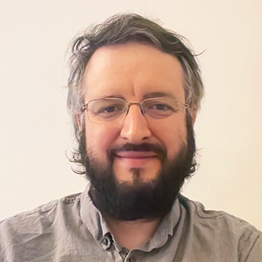
Matthew Reason is a Professor of Theatre and founding Director of the Institute for Social Justice at York St John University. He leads the AHRC-funded 'I’m Me' project, exploring identity and representation in learning disability arts. His research focuses on participatory methodologies, audience experience, and the intersection of performance with social justice issues. His work spans theatre for children, liveness in performance, and creative approaches to documenting live art. He has published widely on topics including audience research, dance spectatorship, and the ethics of inclusive research practices. Key projects include studies on prison and military audiences, and the role of drawing as a research tool. Matthew actively engages with communities through collaborative projects, emphasizing co-productive research that fosters societal change. His leadership at the Institute for Social Justice drives interdisciplinary initiatives to advance equity across multiple sectors.
Jo Angouri is a Professor in Applied Linguistics at the University of Warwick. She serves as Deputy Pro-Vice-Chancellor for Education and Internationalisation, leading initiatives in international education strategy and intercultural experience. As co-founder of international research networks (Warwick-Monash Migration Identity Translation Network, AILA Migrants in Working Life Network), she bridges academic and non-academic stakeholders. Her editorial roles include founding editor of Multilingual Matters' Language at Work series and co-editor of Discourse Approaches to Politics, Society and Culture at John Benjamins. Her research spans sociolinguistics, pragmatics, and discourse analysis, focusing on: medical emergency communication (risk negotiation in critical care dispatch, obstetric teamwork), multilingual workplace practices (language policy, cross-cultural collaboration), political discourse (Grexit/Brexit framing, crisis narratives), and educational innovation (transnational learning communities, digital pedagogy). She has held visiting positions at Aalto University (Visiting Distinguished Professor, School of Business) and Monash University (Visiting Professor Affiliate). Scientific Awards: National Teaching Fellow, International Subject Chair Linguistics on Scopus Board, BAAL Book Prize shortlist (2019, 2022). Current funded projects include: Welsh Government's 999 R.E.S.P.O.N.D. (2022-2025), British Academy's Intercultural Communication in Construction Industry (2015-2018). Key collaborations include work with Dr. Shawnea Ting (medical dispatch research), Prof. Rebecca Piekkari (multilingual organizations), and Prof. Dimitrios Siassakos (obstetric communication). Her methodological approach combines discourse analysis with mixed-methods research, as seen in projects involving 999 call analysis, medical simulation studies, and multinational corporate investigations.
Pablo Calleja is a Research Fellow at the Faculty of Computer Science, Polytechnic University of Madrid (UPM), where he has been a member of the Ontology Engineering Group (OEG) since March 2014. His research focuses on Natural Language Processing (NLP), medical terminology mapping, and legal domain applications. He holds a degree in Computer Engineering from San Pablo CEU University (2013) and has prior industry experience as a software developer at IECISA (2008–2011) and a collaboration grant at the Open Access Classroom, San Pablo CEU University (2011–2013). Key contributions include projects like Drugs4covid for pandemic drug discovery, TermitUp for terminological enrichment, and esT5s , a Spanish text summarization model. His work spans legal knowledge graphs, multilingual compliance systems, and NER techniques for academic content analysis. He has also explored accessibility multimedia services and semantic graph applications in tourism ( DBtravel ). Professional roles include collaboration grants at UPM and active participation in interdisciplinary projects such as SNOMED-CT annotation for medical technical sheets. Research trends emphasize cross-domain adaptation (e.g., K-Flares), data augmentation (Widaug), and multilingual NLP solutions. Advising and grants: His current position is supported by a collaboration grant at OEG. Earlier grants include work at San Pablo CEU University. No formal advisees are listed, but he contributes to collaborative research teams. Labs and teams: Core member of the Ontology Engineering Group (OEG), focusing on knowledge representation, NLP, and applied informatics in healthcare and law domains.
Erel Levine is an Associate Professor in the Department of Bioengineering at Northeastern University's College of Engineering, with an additional affiliation in the Chemical Engineering department. He joined the bioengineering department in January 2019 and maintains an active research program focused on complex biological systems. His educational background includes a Ph.D. in Theoretical Physics from the Weizmann Institute of Science (2005), an M.Sc. in Applied Physics from the same institution (1999), and a B.Sc. in Computer Sciences and Physics from Hebrew University in Jerusalem (1997). Levine's research program centers on systems and synthetic biology of the Brain-Immune-Gut super-system, with particular emphasis on host-microbe interactions and deep learning applications in biological data interpretation. His laboratory develops innovative approaches combining quantitative experiments, computational models, and machine learning to study distributed biological systems across multiple scales. His recent publications demonstrate a strong focus on microfluidic platforms for C. elegans research, spatial organization of membrane proteins, feeding dynamics, and gene regulation mechanisms. The work spans molecular, cellular, and organismal levels, with applications to understanding microbiome dynamics and gut-brain interactions. His scientific recognition includes the 2025 Fostering Engineering Innovation in Education Award and a National Science Foundation Postdoctoral Fellowship from the Center for Theoretical Biological Physics. 2025 Fostering Engineering Innovation in Education Award National Science Foundation Postdoctoral Fellowship, Center for Theoretical Biological Physics Professor Levine actively mentors undergraduate students who have received prestigious awards including the AJC Merit Research Scholarship and PEAK Experiences Awards. His research is supported by grants including a National Science Foundation award for 'Sub-Cellular Localization and Small RNA and Regulation of the Outer Membrane' as Principal Investigator. The Levine Lab operates from Lab 415 Mugar at Northeastern University, utilizing advanced microfluidics, deep learning, and imaging technologies to study biological systems. The lab has developed automated high-resolution imaging platforms that combine microscopy, active deep learning, and multiplexed microfluidics to study host-microbiome interactions in real time.
Dr. Naomi Norton serves as Lecturer in Music Education at the University of York's School of Arts and Creative Technologies, where she concurrently holds leadership positions as School Wellbeing Lead, Musicians' Health and Wellness Coordinator, and Chair of the Musicians' Health and Wellness Group. Her professional mission centers on eliminating barriers to musical proficiency related to health, socioeconomic status, and wellbeing, driving her multifaceted career in teaching, research, consultancy, and performance. Dr. Norton's academic foundation includes a BA in Music (2011) and MMus in Applied Psychology of Music (2012, Santander scholarship) from the University of Leeds, followed by AHRC-funded doctoral research at the Royal Northern College of Music (validated by Manchester Metropolitan University, 2016). Her dissertation examined health promotion in instrumental/vocal lessons from UK teachers' perspectives. BA in Music (2011), University of Leeds MMus in Applied Psychology of Music (2012), University of Leeds PhD in Music (2016), Royal Northern College of Music / Manchester Metropolitan University Her research program critically investigates intersections between music education, health psychology, and behavioral science, with particular emphasis on teacher perspectives in health promotion. She pioneers applications of frameworks like the Behaviour Change Wheel to develop evidence-based wellness strategies for musicians, addressing physical, mental, and occupational health dimensions across educational and professional contexts. This work consistently challenges systemic barriers to musical participation while advancing pedagogical approaches that integrate wellbeing into core music training. Analysis of her publication record (2014-2021) reveals evolving scholarship from foundational demographic studies of UK music teachers toward practical implementation of health promotion models. Key thematic threads include teacher health status, interdisciplinary collaboration models, and curriculum-integrated wellness education, with increasing focus on ensemble settings and behavioral change methodologies. This trajectory demonstrates growing influence in establishing health promotion as essential infrastructure within music education ecosystems. Dr. Norton has secured competitive research funding including an Arts and Humanities Research Council grant for doctoral studies and Santander scholarship support for her Master's degree. Her teaching portfolio spans undergraduate BA Music modules (Musicians' Health and Wellness, Creative and Professional Practice) and postgraduate instruction across MA Music Education, MA Community Music, and MA Vocal Studies pathways, where she specifically teaches Instrumental/Vocal Teaching and Group Teaching Leadership. Professionally, she contributes to the International Society for Music Education as committee member for the Music Health and Wellness Special Interest Group, while leading institutional change through York's Musicians' Health and Wellness Group to coordinate cross-departmental wellbeing initiatives for students and staff.
Madhav Erraguntla is a Teaching Professor of Industrial & Systems Engineering at Texas A&M University , affiliated with the TEES Center for Remote Health Technologies and Systems . He holds the Mike and Sugar Barnes APT Faculty Fellow title. His research focuses on applying machine learning and AI to healthcare and supply chain management, particularly in diabetes, wearable sensor technologies, and predictive modeling. With over 25 years of industry experience, Dr. Erraguntla has contributed to analytics at AT&T (smart home technologies) and i2 Technologies (retail CRM systems). He leads projects funded by DoD, HHS, and NASA, including national blood inventory surveillance systems. He is a Professional Engineer in Texas and a member of the Institute of Industrial and Systems Engineers (IISE). Education : Ph.D., Industrial Engineering, Texas A&M University (1996); M.Tech., Industrial Engineering, NITIE, India (1989) Key Projects : SBIR grants, mosquito population modeling, diabetes management algorithms, and wearable sensor development His work bridges healthcare innovation and engineering, emphasizing real-world applications in diabetes, emergency hospital management, and public health surveillance. Recent research highlights include AI-driven glucose forecasting, hypoglycemia detection systems, and environmental impacts on disease vectors like Zika virus transmission.
Dr. Lauren Miller-Lewis is a Lecturer in Positive Psychology at CQUniversity Australia, affiliated with the School of Health, Medical and Applied Sciences under the College of Psychology. She holds a B.Psych (Hons) and PhD from Flinders University (2004). Her career includes a NHMRC Postdoctoral Fellowship at the University of Adelaide and roles at Flinders University’s Research Centre for Palliative Care, Death and Dying. She joined CQUni in 2019. Her research focuses on lifespan developmental psychology, mental health resilience, and end-of-life care. Key areas include mortality acceptance, death coping, and palliative care innovation. She teaches in the Graduate Certificate/Diploma/Master of Applied Positive Psychology programs. Publications emphasize palliative care resources (e.g., CarerHelp Toolkit), death doula roles, and pandemic impacts on grief. She is a member of the Cluster for Resilience and Wellbeing (CReW) and supervises students in clinical and developmental psychology. Her work bridges theory and practice, emphasizing person-centered bio-psycho-social approaches to healthcare.
Dr. Julian Hough is an Associate Professor of Human-Computer Interaction at Swansea University, affiliated with the School of Mathematics and Computer Science under the Faculty of Science and Engineering. His research focuses on improving human-agent interaction through Natural Language Processing (NLP) and AI, emphasizing ethical and quality outcomes in human-robot collaboration. His work spans Human-Robot Interaction (HRI), dialogue systems, and cognitive applications of speech technology. Notable projects include the FLUIDITY initiative exploring virtual reality platforms for HRI and the ARCIDUCA project annotating dialogue using conversational agents in games. He has secured significant grants, including a £587,000 EPSRC New Investigator Award for FLUIDITY and a £1.09M EPSRC grant for ARCIDUCA. Research interests include multimodal communication, disfluency analysis in dialogue, and applying LLMs to word sense disambiguation. His work often bridges computational linguistics with practical robotics and health technology, such as analyzing wearable sleep-tracker subjectivity and detecting Alzheimer’s through speech patterns. Collaborations span institutions globally, with contributions to workshops and conferences on HRI and dialogue systems. He actively supervises postgraduate research in areas like incremental intention recognition and computational law semantics.
Aanuoluwapo Ojelade is a Distinguished Research Fellow in the Department of Industrial and Systems Engineering at the University at Buffalo, School of Engineering and Applied Sciences. His work bridges occupational ergonomics, biomechanics, and construction safety through advanced technologies. Education: PhD, Industrial and Systems Engineering, Virginia Tech University MEng, Industrial and Systems Engineering, Virginia Tech University BEng, Civil Engineering, Osun State University Research Interests: Focus on exoskeleton technology for construction workers, biomechanical analysis of manual tasks, and motion capture systems for ergonomic evaluation. His studies address physical demand reduction, workplace interventions, and technology adoption barriers. Recent Article Trends: Leverage machine learning (random forest, recurrent neural networks) for ergonomic analysis, compare exoskeleton efficacy across industries (construction, mining), and evaluate demographic impacts on technology readiness. Markerless motion capture and EMG-based force prediction are recurring methodologies. Contact: 317 Bell Hall, University at Buffalo, aojelade@buffalo.edu, (716) 645-4721.
Brian Mitchell is a Teaching Professor in the Department of Computer Science at Drexel University's College of Computing & Informatics (CCI). He brings over two decades of combined industry and academic experience, transitioning fully into academia in 2022 after serving as a Distinguished Engineer at a Fortune 15 company. His work bridges cutting-edge research and practical innovation in software systems. Drexel University, College of Computing & Informatics, Department of Computer Science Education: PhD in Computer Science, Drexel University MS in Computer Science, Drexel University BS in Computer Science, Drexel University ME in Computer & Telecommunication Engineering, Widener University Brian Mitchell's research centers on the intersection of Software Engineering, Software Architecture, Cloud Native Computing, and AI . His early foundational work helped establish the field of Search-Based Software Engineering (SBSE) , particularly in automated software clustering and architecture recovery. Recently, his focus has shifted to modern challenges in cloud-native environments , including misconfiguration detection, malware analysis, and resilient system design. He integrates security, scalability, and intelligent automation into software engineering practices. His recent publications reflect a clear trend toward AI-enhanced cloud-native systems , emphasizing automated analysis, security, and architectural robustness. These works appear in AI and cloud computing venues, showing interdisciplinary engagement. The evolution from source code clustering to cloud-native engineering illustrates his adaptability and leadership in emerging domains. Scientific Awards: Best Paper Award, GECCO'03 Best Paper Award, WCRE'01 Brian is actively involved in mentoring students and encourages research collaboration, particularly with those seeking deeper engagement beyond coursework. He emphasizes hands-on learning and uses modern tools like GitHub and Discord in his teaching. While no specific grants are listed, his industry leadership in digital innovation and open-source contributions suggests strong applied research support. He previously led large engineering teams and drove disruptive technological adoption in enterprise settings. Though no formal lab name is mentioned, his research group appears focused on software architecture, cloud systems, and AI-driven engineering , likely operating under informal or course-based research initiatives. His website and GitHub presence (@ArchitectingSoftware) suggest an active, open, and collaborative environment for student research.
Bettina Grün is an Associate Professor and Deputy Head of the Institute for Statistics and Mathematics at Vienna University of Economics and Business (WU). Her research focuses on Bayesian mixture models, cluster analysis, and applying statistical methods to sustainability, tourism, and environmental studies. She has led multiple research projects, including studies on environmental behavior in tourism and advanced text modeling in economics. Grün holds a PhD in Technical Mathematics from TU Wien (2006) and a Habilitation in Statistics from Johannes Kepler University Linz (2012). She has authored over 150 publications in top journals like Journal of Environmental Management and Expert Systems with Applications . Her work emphasizes practical applications, such as reducing hotel waste through behavioral interventions and developing R packages like movMF and circlus for statistical clustering. Grün has received awards including the AIEST Best Contribution Award (2019) and the MRS Silver Medal (2016). Grün teaches courses on statistical modeling and leads projects like Analysis of Central Bank Communication (2022–2026) and Environmentally Friendly Behavior in Tourism (2019–2024).
Domenico Cicchella is an Associate Professor in the Department of Science and Technology at the University of Sannio, Italy, specializing in Geochemistry and Volcanology (GEO/08). With over two decades of academic experience, he has established himself as a leading researcher in environmental geochemistry, particularly in soil and water contamination studies in the Campania region of southern Italy. His research interests span multiple critical areas of environmental geochemistry: Urban and regional geochemical mapping Heavy metal and potentially toxic element (PTE) analysis in soils Environmental risk assessment methodologies Application of advanced statistical techniques to geochemical data Water pollution monitoring and assessment Integration of compositional data analysis with machine learning approaches Geochemical background determination Analysis of his publication record reveals a strong focus on developing innovative methodologies for environmental assessment, particularly through the "Campania Trasparente" project - a comprehensive multimedia monitoring initiative. His work increasingly incorporates advanced data analysis techniques including compositional data analysis, multivariate statistics, and machine learning applications to address complex environmental challenges in urban and regional settings. His research spans from fundamental geochemical studies to practical applications for environmental management and public health protection. Professor Cicchella maintains an active research profile with numerous collaborations across Italy and internationally, contributing significantly to our understanding of environmental contamination patterns and developing practical approaches for risk assessment and management. His work has appeared in leading journals including Journal of Geochemical Exploration, Applied Geochemistry, and Science of the Total Environment, demonstrating both academic rigor and practical relevance to environmental challenges.
Prof. Sebastian Kaiser is a full professor at the University of Duisburg-Essen's Institute for Combustion and Gas Dynamics, where he leads research on reactive fluid dynamics since 2011. His academic background includes a Bachelor's from Dartmouth College, Diplomingenieur from RWTH Aachen, and PhD from Yale University, followed by postdoctoral work at Sandia National Laboratories. Research Focus: Kaiser specializes in optical diagnostics for reactive systems with emphases on: High-speed imaging of combustion processes Nanoparticle synthesis via spray-flame techniques Tribology and fluid-structure interactions Engine diagnostics using laser-based methods His work bridges experimental techniques and simulation development for energy and propulsion systems. Publication Trends: Recent articles (2023-2025) demonstrate consistent focus on advanced optical diagnostics applied to combustion systems, nanoparticle synthesis, and engine research. Key methodologies include laser-induced fluorescence, high-speed imaging, and machine learning for fluid dynamics analysis. Awards & Honors: Harding-Bliss Prize for Engineering Excellence (Yale, 2005) SAE Excellence in Oral Presentation Award (2008) NRW Returning Scientists Grant (2010) Professional Affiliations: Member of Society of Automotive Engineers (SAE) and The Combustion Institute, with extensive experimental facilities for reactive flow characterization.
Christopher J. Vargo is an Associate Professor at the Leeds School of Business , University of Colorado Boulder, with appointments in Organizational Leadership and Information Analytics . He bridges computational methods with communication theory to analyze social media, advertising, and news data. His work spans disciplines like machine learning , political communication , and electronic word of mouth (eWOM) , reflecting his expertise in computational social science . His research focuses on leveraging machine learning and large language models (LLMs) for computational content analysis , particularly in new media landscapes. He has published extensively in journals such as the Journal of Communication , New Media & Society , and Journal of Interactive Advertising , with a book on machine learning applications in content analysis available via open access from CU Boulder’s Library. As an educator, Vargo teaches advertising analytics at undergraduate and graduate levels, alongside quantitative research methods for doctoral students. He also directs the CMCI/Leeds Marketing and Business Analytics partnership , aiming to enhance industry-aligned data skills among CU graduates. Vargo’s professional background includes real-world experience at Sony BMG Music, Porter Novelli, and Fox/DreamWorks, complemented by IT industry work . He applies this expertise through his company, socialcontext.ai , and as a technical consultant in legal cases involving digital advertising , platform analytics , and forensic data analysis .
Prof. Georg Jäggle is a Professor of Vocational Education at the University College of Teacher Education Vienna (PH Wien), specializing in educational robotics, STEM pedagogy, and sustainability education. He leads the Department of Vocational Education within the Institute for Secondary Level Vocational Education (I:SBB). His work integrates technology-enhanced learning environments, focusing on project-based methodologies to bridge gaps between education and industry needs. Key projects include the Recycling Heroes initiative (2022–2024), which employs citizen science to promote circular economy awareness, and the EU-funded ER4STEM project (2017–2018), fostering STEM engagement through robotics. Prof. Jäggle holds a Dipl.-Ing. (FH) and a Dr. in engineering education, with prior industry experience as an engineer and vocational school teacher. His research emphasizes digital competence development, intergenerational learning, and inclusive education strategies. He has coordinated interdisciplinary teams across 10+ EU and national projects, including RoboCoop (2018–2022) and Makers@school (2017–2019), which implemented robotics and maker culture in schools. His teaching spans applied mathematics, engineering, and automation technology at both academic and vocational levels. Research interests include technology integration in vocational training, lifelong learning frameworks, and the impact of educational robotics on student motivation. Recent publications (2022–2024) explore STEM career self-efficacy, sustainability curriculum innovation, and cross-generational robotics collaboration. He currently serves in the Center for Research Management (Zentrum Forschungsmanagement) at PH Wien, advancing applied research in MINT (STEM) education and educational technology.

/prod01/yorksjacuk/media/content-assets/staff-profile-images/MATTHEW-REASON-4.jpg)