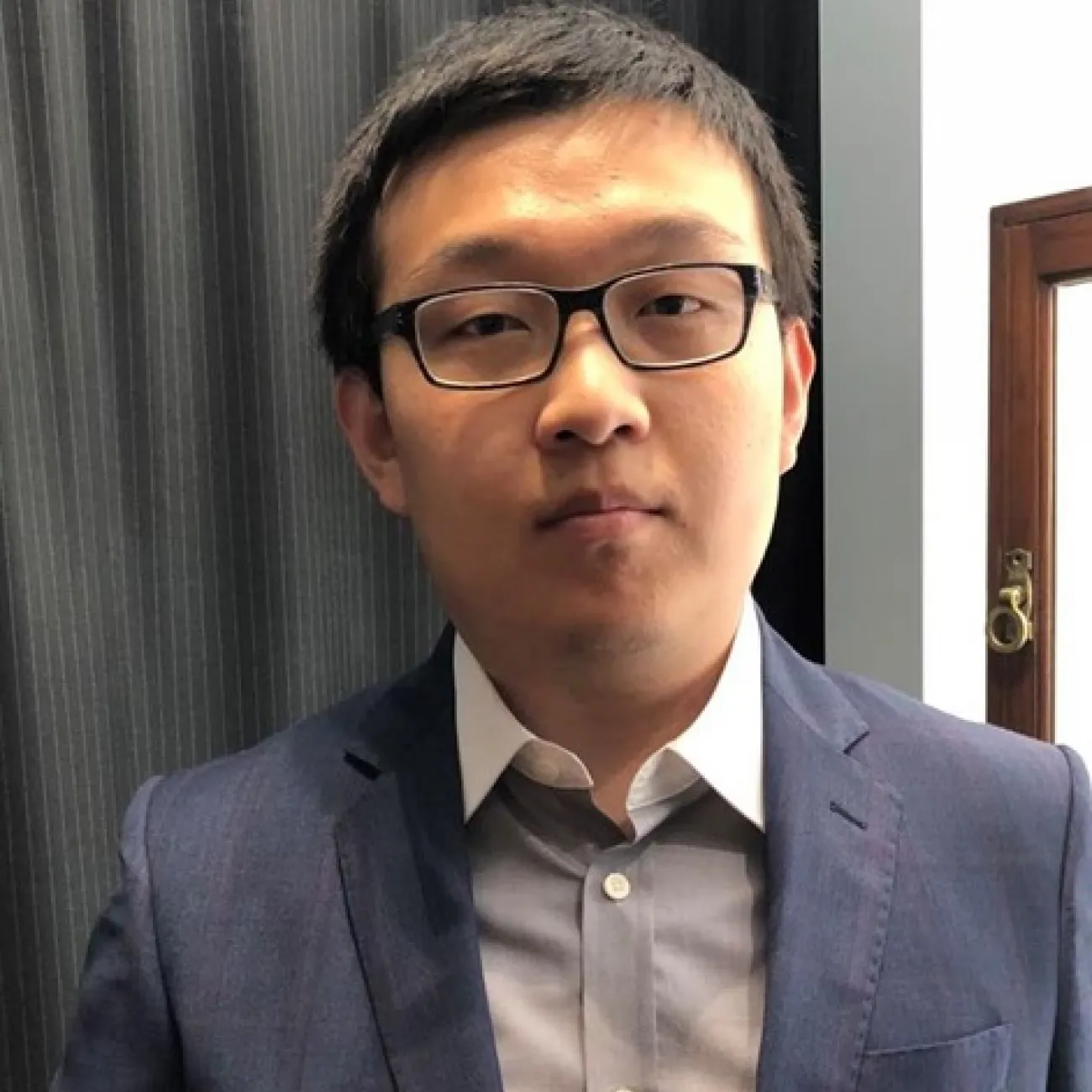
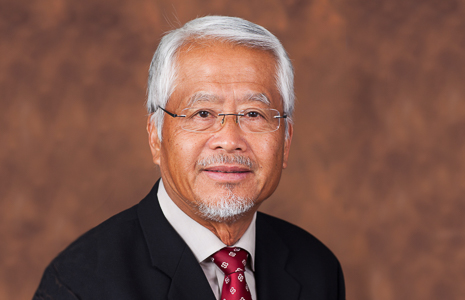
Mark Sculpher is a Professor of Health Economics and Head of the Centre for Health Economics at the University of York , a role he has held since 1997. He co-directs the Policy Research Unit in Economic Evaluation of Health and Care Interventions (EEPRU) and has contributed extensively to health economics research. Research Focus: Economic evaluation in health, decision analytic modeling, pharmaceutical policy, and global health. Key Contributions: Co-authored seminal textbooks like Methods for the Economic Evaluation of Health Care Programmes and Decision Modelling for Health Economic Evaluation . Member of the Second Panel on Cost-Effectiveness in Health and Medicine. Advisory Roles: Former member of NICE committees, UK Health Select Committee on Orkambi availability, and Portuguese National Authority for Medicines. Awards: Elected Fellow of the Academy of Medical Sciences (2024), NIHR Senior Investigator (Emeritus), and former ISPOR President. Recent Publications emphasize dynamic efficiency in pharmaceutical innovation, real-world evidence frameworks, and global health applications. His work spans cost-effectiveness analysis for vaccines, antimicrobial resistance, and equity-focused evaluations in low- and middle-income countries. Scientific Recognition: Includes Fellow of the Academy of Medical Sciences (2024) NIHR Senior Investigator (Emeritus) Former President of ISPOR Editorial roles in Pharmacoeconomics and Applied Health Economics and Health Policy
Núria Agell Jané is a Full Professor at ESADE Business School , Universitat Ramon Llull, specializing in Artificial Intelligence and Decision-Making Systems. She leads the JUICE (Judgements and Decisions in the Market Place) research group and the ESADE D3 - Institute for Data-Driven Decisions . Doctorate in Applied Mathematics (Qualitative Reasoning Modelling), UPC-BarcelonaTech Bachelor's in Mathematics, University of Barcelona Her research focuses on Artificial Intelligence , Decision-Making Systems , and Fuzzy Logic , with applications in Business, Marketing, and Sustainability. Recent publications emphasize Hesitant Fuzzy Linguistic Term Sets , Consensus Modeling , and AI in Sustainable Development . She coordinates multiple publicly and privately funded projects applying AI to Business and Marketing challenges. As PhD Programme Director (2005-2013) and current Department Director of Operations, Innovation and Data Sciences , she has shaped academic and research strategies at ESADE. Her work spans collaborations with institutions like LAAS-CNRS (France) and University of Edinburgh Business School , with over 40 journal publications and 50 conference contributions. She has directly supervised 11 PhD students in AI and Decision Sciences.
Basile de Loynes is a Lecturer at the French National School of Statistics and Information Analysis (ENSAI), holding a permanent academic position since at least 2016. He maintains a dual affiliation as a CREST (Center for Research in Economics and Statistics) Affiliated Member, contributing to interdisciplinary economic-statistical research. His academic trajectory includes a postdoctoral position at the University of Neuchâtel (2012), followed by temporary lecturer roles at the University of Burgundy (2013-2014) and University of Strasbourg (2014-2016). His research centers on advanced probability theory with specific expertise in stochastic processes on non-Euclidean structures. Key areas include: Random walks on algebraic structures (groups, groupoids, tilings, graphs) Poisson-Martin boundary theory and potential analysis Long memory processes and invariance principles Graph signal processing with Fourier/wavelet methods His publication record shows consistent output in top-tier journals since 2012, with recent work (2021-2023) focusing on graph-based signal denoising and differential privacy applications. Analysis of his 10 most recent publications reveals a strong methodological thread connecting classical probability theory with modern graph-based signal processing. Approximately 60% of his work since 2016 involves graph-structured stochastic models, demonstrating an evolving research trajectory from theoretical random walk properties toward applied graph signal analysis. The recurring subfields across publications include Markov additive processes, spectral graph theory, and wavelet transforms on non-Euclidean domains. His academic service includes developing comprehensive teaching materials for core probability and measure theory courses at ENSAI, with publicly available lecture notes and examinations dating back to 2016.
Professor Fang Liu serves as a Professor of Operations Management at Durham University Business School (DUBS). She joined Durham University in 2023 after academic positions at The University of Chinese Academy and Nanyang Technological University, bringing extensive expertise in supply chain systems and operational resilience. Her educational foundation includes a doctoral degree in Operations Management from Duke University's Fuqua School of Business, USA. Liu's research centers on Supply Chain Resilience, Inventory Management, E-commerce and Warehouse Management, and Corporate Social Responsibility and Sustainability. Her work develops innovative frameworks for mitigating disruption risks while optimizing resource allocation, with direct applications in global logistics networks and sustainable operations. She bridges theoretical rigor with practical implementation across diverse sectors. Analysis of her publication trajectory reveals a strategic evolution from foundational inventory theory toward contemporary challenges in e-commerce logistics and sustainable supply chains. Her recent work increasingly addresses healthcare operations and carbon-neutral supply chain design, consistently published in premier journals like Operations Research and Production and Operations Management. Professor Liu has secured multiple competitive research grants as Principal or co-Principal Investigator. She actively translates academic insights into practice through collaborations with organizations including Cummins, Singapore IFRC, and Meide, focusing on operational optimization and resilience building. While specific lab structures aren't detailed, her industry partnerships demonstrate applied research engagement, particularly in developing solutions for complex operational challenges faced by multinational corporations and humanitarian organizations.
Umar Iqbal is an Assistant Professor in the Department of Computer Science and Engineering at Washington University in St. Louis , where he investigates transparency and control mechanisms in computing systems to enhance user privacy and security. His work intersects computer security, privacy, and technology policy with a focus on web tracking, IoT, and agentic systems. Research Themes : Web security, emerging technology privacy, regulatory compliance under CCPA/GDPR, and tracking mitigation Scientific Awards : Best paper award at ACM Internet Measurement Conference (IMC), 2023 Caspar Bowden Award for Outstanding Research in PET Runner-Up, 2024 Best applied research paper (3rd) at CSAW NYU Tandon, 2020 Collaborations : Regularly works with researchers like Franziska Roesner, Tadayoshi Kohno, and Zubair Shafiq His publication portfolio spans 2016-2025 with impactful work on browser fingerprinting (IEEE Oakland 2021), ad blocking (IEEE Oakland 2020), and LLM platform security (AIES 2024). Current research includes privacy implications of AI systems and regulatory auditing frameworks.
João Tovar Jalles serves as a Senior Associate Professor of Economics at the University of Lisbon's Lisbon School of Economics and Management (ISEG), with over 15 years of expertise spanning macroeconomics, public finance, and applied econometrics. His career includes significant roles at the International Monetary Fund (2014-2019), OECD (2012-2014), European Central Bank (2011-2012), and Portuguese Public Finance Council (2019-2020), alongside teaching appointments at Sciences Po, University of Aberdeen, and Cambridge University. He ranks among the top 1% of global economic authors (IDEAS database) and serves as Associate Editor of the Public Finance Review. His academic credentials include: Aggregation in Economy (2023) from Universidade de Lisboa, ISEG PhD in Economics (2011) from University of Cambridge MSc in Economics (2008) from University of Warwick BSc in Economics (2006) from Universidade Nova de Lisboa Dr. Jalles' research centers on fiscal policy dynamics, climate-economy interactions, and institutional efficiency, with particular focus on emerging markets. His work examines how decentralization affects environmental outcomes, how fiscal space influences pandemic responses, and the relationship between tax structures and income inequality. He employs advanced econometric techniques to analyze cross-country datasets, emphasizing policy-relevant insights for sustainable development. Recent publications (2024-2025) reveal a pronounced shift toward integrating climate risk into macroeconomic modeling, with 60% of his work now addressing environmental-fiscal linkages. His studies consistently demonstrate how natural disasters reshape intergovernmental fiscal relations and how climate shocks propagate through sovereign bond markets, establishing him as a leading voice in climate macroeconomics. Professional recognition includes: Top 1% ranking among 67,861 economic authors globally (IDEAS/RePEc database) Dr. Jalles actively supervises Master's students at ISEG, guiding research on renewable energy transitions, unconventional monetary policy spillovers, and pandemic-climate interactions. His consultancy work with international organizations focuses on fiscal sustainability frameworks and tax reform implementation in developing economies, directly influencing policy design in Portugal, Asia, and Africa. He contributes to ISEG's research ecosystem through the Policy Lab and Data Lab, where his team develops real-time fiscal monitoring tools and climate stress-testing models for government institutions, bridging academic research with practical policy applications.
Jane Harford is a researcher at Flinders University with a focus on public health, oral health, and health economics. She holds a PhD in Public Health from The University of Adelaide and has contributed to significant studies on the burden of oral diseases in Australia and intergenerational changes in oral health. Bachelor of Business (Health Administration) - South Australian Institute of Technology Graduate Diploma in Social Sciences (Policy and Administration) - Flinders University Graduate Diploma in Applied Economics - The University of Adelaide Doctor of Philosophy (Public Health) - The University of Adelaide Her research spans health policy, economic evaluations of dental care, and geriatric health. She has secured multiple NH&MRC grants, including a 2016 Partnership Grant for a longitudinal study on oral diseases in Australia. 2016 NH&MRC Partnership Grant: Delivering effective dental healthcare in 2020–2030 2015 Barbara Kidman Fellowship 2013 NH&MRC Project Grant: Oral health and general health of older Australian men 2011 NH&MRC Project Grant: Intergenerational change in oral health 2008 NH&MRC Project Grant: Economic evaluation of publicly funded dental care 2008 Faculty of Health Sciences Research Development Award 2004 NH&MRC Capacity Building Grant (Named Investigator) 1998 NH&MRC Public Health Post-graduate Research Scholarship Jane coordinates courses such as HLTH3116 Legal and Ethical Aspects of Health Care and HLTH1306 Understanding Health, Illness, and Health and Social Care in Australia. She is actively engaged in professional work through the Australian Health Promotion Association (SA Branch).
Marko Terviö is Professor of Economics at Aalto University School of Business, where he teaches intermediate microeconomics and labor economics. He is affiliated with Helsinki GSE (Helsinki Graduate School of Economics), a collaboration between Aalto University, University of Helsinki, and Hanken School of Economics. His research focuses on labor market dynamics, economic inequality, housing economics, and institutional design. Professor Terviö employs theoretical models combined with empirical analysis to address questions about talent markets, wage determination, housing policy, and political economics. His work demonstrates particular expertise in assignment models applied to housing and labor markets, with significant contributions to understanding cognitive ability and earnings, superstar phenomena in labor markets, and housing policy impacts. His publication record spans top economics journals including Review of Economic Studies , American Economic Review , Journal of Political Economy , and Economic Journal . Recent work (2022-2025) shows continued high-impact research in labor economics and housing markets, with publications in European Sociological Review and Economic Journal . His research demonstrates consistent methodological rigor combining theoretical modeling with empirical validation. Professor Terviö has contributed significantly to Finnish economic policy discussions, notably as lead author of the influential 2018 report 'On the transfer of residential plots in Helsinki' for the Aalto Economic Institute. This work provided economic analysis of land allocation practices in Helsinki, examining how residential plots should be priced and allocated to maximize economic efficiency while considering urban development goals.
Dr Hao Dong serves as Senior Lecturer in Management at the University of Southampton Business School, where he directs the Strategy & Collaboration for the Advanced Project Management Research Centre (APROM). His academic work bridges socioeconomics and business studies to explore how responsible management practices can advance sustainability. Dong holds leadership roles including SBS' PhD Liaison Officer, Web Champion, and member of the Ethics, Responsibility and Sustainability Committee. Hao Dong's research spans several interconnected domains focused on modern management challenges. His primary interests include Agile project management methodologies, digital transformation and AI integration in business processes, and cultural entrepreneurship with emphasis on supply chain dynamics. He also explores co-operative business models and Austrian economics principles, applying these frameworks to address contemporary organizational challenges. His work demonstrates how project management intersects with sustainability, digital innovation, and economic resilience across various sectors including public administration, healthcare, and agriculture. Dong's recent publications reveal a strong focus on the intersection of digital transformation and project management, with increasing attention to sustainability applications. His work examines how Agile methodologies adapt to digital environments, how open government data creates value, and how supply chains can achieve greater resilience. His research shows a clear trajectory toward integrating traditional project management frameworks with emerging digital technologies while maintaining focus on human-centered approaches and sustainable outcomes. Hao Dong has received numerous professional recognitions including Top 10% SSRN Author (2021), multiple Blackboard and VLE Awards nominations and shortlists (2022-2024), The Vice-Chancellor's Awards nominations across multiple years, and recognition for supervising the Southampton Business School Best Dissertation (2022). His professional affiliations include British Academy of Management (BAM), Association for Project Management (APM), Mises Institute, UK Society for Co-operative Studies (UKSCS), and Institute of Directors (IoD). As a supervisor, Dong currently guides four PhD students working on Business Studies & Management topics, including research on digital transformation, supply chain risk, and project management. His research portfolio includes significant funding from diverse sources including the ESRC Impact Acceleration Account, APM (Association for Project Management), and various internal university grants. His current projects span digital transformation in public and private sector project management, international co-operatives in the post-pandemic era, and supply chain sustainability in the Global South. Dong leads the Advanced Project Management Research Centre (APROM) as Director of Strategy & Collaboration, fostering interdisciplinary research that connects academic theory with practical project management applications. His work bridges academic research with industry practice through collaborations with professional bodies like APM and through his policy and consulting advisory roles.
Oksana Tokarchuk is an Assistant Professor at the Competence Centre in Tourism Management and Tourism Economics (TOMTE) within the Faculty of Economics and Management at Free University of Bolzano, Italy. Her research focuses on behavioral economics, consumer behavior, and tourism's impact on quality of life, with specialized work on mental budgeting and cultural event expenditure patterns. She holds a PhD in Economics and Management. Core Research Areas: Tourism economics, mental accounting, behavioral modeling, applied statistics, and urban cultural tourism development Key Publication Trends: Recent articles analyze pandemic-driven teleworking (2021), Christmas market spending behaviors (2015-2017), and tourism's effects on resident well-being. Her methodological approach combines ordered-probit selection models with path analysis. Collaborations: Regularly works with Juan Gabriel Brida (Economic Dynamics, Uruguay) and Roberto Gabriele (University of Trento) on tourism behavior studies.
Professor Cem Evrendilek is a faculty member in the Department of Computer Engineering at Izmir University of Economics, Turkey, holding the rank of Professor with current active status. His institutional email is cem.evrendilek@ieu.edu.tr. His research spans algorithmic complexity and geometric computation, with primary focus areas including: Computational Geometry (specializing in orthogonal polygon covering problems) Wireless Sensor Network Localization (energy-efficient methods and trilateration) NP-hard Problem Analysis (proving complexity for geometric and network problems) Approximation Algorithms for combinatorial optimization Analysis of his 2008-2018 publications reveals consistent work on geometric covering problems and sensor network localization. Key trends include proving NP-completeness for orthogonal polygon covering variants, developing energy-efficient mobile beacon localization techniques, and analyzing trilateration with noisy measurements. His work frequently intersects computational geometry with practical wireless network applications, demonstrating strong theoretical foundations applied to real-world constraints. Collaborative patterns show frequent co-authorship with Hüseyin Akcan (on localization algorithms), Burkay Genç, and Brahim Hnich (on computational geometry problems).
Nan-Yao Su is a Professor at the University of Florida 's Department of Entomology and Nematology, based at the Fort Lauderdale Research and Education Center . Renowned as an authority on termites, his work focuses on termite biology, population ecology, and innovative control strategies. Established the Sentricon baiting system for termite population control, reducing global pesticide use by over 9,000 metric tons. Recipient of the Presidential Green Chemistry Challenge Award for environmentally sustainable pest management. Technical advisor to governments of New Zealand, China, and Vietnam on termite issues. Research Interests span termite foraging behaviors, microbe interactions within colonies, and development of novel termite control tools. His work bridges fundamental biology with practical area-wide management programs, funded by royalty income from the Sentricon system and USDA-ARS grants. Scientific Contributions include over 260 peer-reviewed publications, with key studies on Formosan subterranean termites' economic impact (e.g., $300M annual losses in New Orleans) and drywood termite dispersal mechanisms. His research has led to standardized identification keys for Florida termites and advanced detection methods like termite-sniffing dogs and chemical barriers. Publications reveal a focus on invasive termite species, chitin synthesis inhibitors, and eco-friendly pest management. Awards include: Presidential Green Chemistry Challenge Award (2019) Establishment of the Nan-Yao Su Award for Innovation in Entomology
Franziska Klügl is a Professor in Computer Science at Örebro University's Faculty of Business, Science and Engineering, affiliated with the Center for Applied Autonomous Sensor Systems (AASS). She currently leads the KKS-funded TeamRob project on Human-Robot Teamwork and serves as Deputy Dean of the faculty since January 2023, chairing the academic appointment committee. Previously, she headed the Computer Science department (2020-2022) and served on the faculty board (2019-2022). Her research focuses on: Multi-agent systems : Development of languages, processes, and tools for agent-based simulation Interdisciplinary applications : Transportation, economics, epidemics, production, and mining simulations Simulation engineering : Integrating AI, machine learning, and formal methods to create accessible modeling tools for domain experts She created SeSAm , a visual programming tool for agent-based simulation that enables rapid prototyping of complex models. Analysis of her recent publications reveals three dominant themes: Human-robot collaboration frameworks and intention recognition systems Economic impacts of automation on labor markets and engineering services Advanced simulation methodologies using affordance theory and reinforcement learning She teaches software engineering, multi-agent systems, and agent-based modeling across multiple programs, including the WASP AI&ML PhD course. She leads research groups at the Machine Perception and Interaction Lab and oversees the TeamRob human-robot teamwork project.
Dr. María Yanotti serves as a Senior Lecturer in Economics at the Tasmanian School of Business and Economics (TSBE) within the University of Tasmania. Her academic appointment is based at the Rivers Edge Building, Inveresk campus in Launceston, Tasmania. With a specialization in housing finance, banking, and household economics, Dr. Yanotti has established herself as an expert in mortgage markets and residential property investment, frequently sought for media commentary on these subjects. Dr. Yanotti's research interests span housing finance, mortgage markets, residential property investment, banking economics, and household financial decision-making. Her work frequently examines the intersection of financial systems and housing markets, with particular attention to Australian market dynamics. She has published extensively on mortgage choice determinants, financial inclusion, and the relationship between housing finance systems and economic outcomes. Her research methodology often combines economic theory with sophisticated statistical analysis to address practical questions in housing finance. Analysis of Dr. Yanotti's publication record reveals a strong focus on housing economics and mortgage markets, with significant contributions to understanding residential investment patterns, mortgage choice determinants, and housing finance systems. Her research spans both theoretical and applied economics, with numerous publications in leading domestic and international journals. She has also expanded her research interests to include environmental economics topics such as marine plastic pollution valuation and climate change impacts, demonstrating interdisciplinary reach while maintaining her core expertise in housing finance. Dr. Yanotti has received research funding from the Australian Housing and Urban Research Institute (AHURI) and is affiliated with the Economic Society of Australia and the Women in Economics Network. Her work on residential property investment, particularly the phenomenon of investors favoring properties near their own residence, has received significant attention in both academic and policy circles. At the University of Tasmania, Dr. Yanotti teaches across multiple economics and finance subjects including microeconomics, statistics and quantitative methods, economics for managers, finance for managers, and data analysis for managers. Her teaching reflects her research expertise, connecting theoretical economic concepts with practical applications in housing and financial markets.
Senior Professor Song-Ping Zhu is a faculty member at the School of Mathematics and Applied Statistics, University of Wollongong (2022–present). He earned a B.E. in Engineering Mechanics (1982) from Huazhong University of Science & Technology, followed by M.S. in Applied Mechanics (1985), M.S. in Applied Mathematics (1988), and Ph.D. in Fluid Mechanics (1987) from the University of Michigan. His career includes roles as Lecturer (1991), Senior Lecturer (1995), Associate Professor (1997), and Professor (2007) before becoming Senior Professor in 2015. Expertise : Mathematical and Computational Finance, Nonlinear Waves, Renewable Energy Key Contributions : Development of numerical techniques for pricing exotic options, modeling wave interactions in renewable energy systems, and advancing boundary element methods. Recent research trends focus on stochastic volatility models, regime-switching derivatives, and machine learning applications in finance. His computational methods span integral equations, finite element analysis, and neural networks.