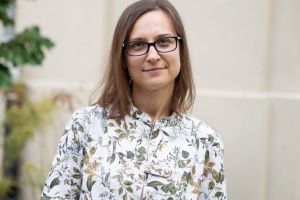
Daria Hemmerling , PhD, Eng., is a Lecturer at the Department of Metrology and Electronics under the Faculty of Electrical Engineering, Automatics, Computer Science and Biomedical Engineering at AGH University of Science and Technology in Kraków. Her research focuses on the intersection of biomedical engineering, voice analysis, and artificial intelligence, particularly for neurological and cardiovascular disease diagnostics. Research Interests : Applying mixed reality and AI for Parkinson’s disease assessment Voice/speech biomarkers for heart failure and neurodegenerative disorders Deep learning techniques in medical imaging (e.g., skull segmentation/reconstruction) Haptic feedback systems for multisensory interaction Simulation training in electrophysiology education Unsupervised learning and modality translation in biomedical signal processing Scientific Trends : Her recent work emphasizes multimodal diagnostic systems integrating voice analysis, VR/MR visualization, and deep learning. She explores explainable AI for medical classification tasks, data augmentation strategies, and innovative haptic/gamification interfaces.
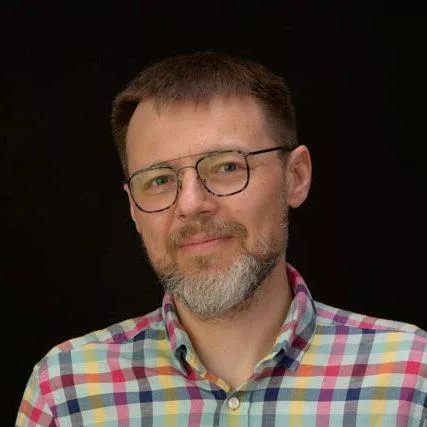
Igor Wojnicki is a Professor at AGH University of Science and Technology's Faculty of Electrical Engineering, Automatics, Computer Science and Biomedical Engineering, where he serves as Vice-Dean of the Faculty of Cooperation and Education. His primary affiliation is with the Department of Applied Informatics, where he maintains an active research laboratory focused on knowledge engineering and smart systems. His research spans multiple domains with evolving focus: Early career: Deductive databases and rule-based inference engines (PhD thesis on "A Rule-based Inference Engine Extending Knowledge Processing Capabilities of Relational Database Management Systems") Mid-career: Graph-based knowledge representation and Tabular Trees (XTT predecessor) Current focus: Smart city applications, particularly energy-efficient lighting control systems and graph-based urban data integration His recent publications demonstrate a clear trajectory toward applied urban computing, with over 15 significant papers in the last five years addressing smart city infrastructure optimization. Key themes include dynamic street lighting control, graph-based computational methods for urban environments, and energy conservation in public infrastructure. Wojnicki actively contributes to academic-practical collaboration through initiatives like the Green AGH Campus Project and IBM academic partnerships. His technical leadership includes development of the ReDaReS system for relational database knowledge processing and the Jelly View technology for advanced database queries. His laboratory maintains strong industry connections, particularly with IBM through student internship programs and technology transfer initiatives. The team produces both theoretical frameworks and practical implementations, with notable outputs including the Osiris GUI system and Magellan GPS software for Poland.
Dr. hab. Magdalena Skurzok is an Associate Professor at Jagiellonian University in Krakow, Poland, affiliated with the Faculty of Physics, Astronomy and Applied Computer Science. She conducts research in nuclear physics with a focus on exotic nuclear matter, particularly mesic nuclei and mesonic atoms. Her work bridges fundamental particle physics with practical medical applications through advanced detector systems including the J-PET scanner and SIDDHARTA-2 apparatus. Her educational background includes: Habilitation thesis: "Investigation of exotic nuclear matter in the form of mesic nuclei and mesonic atoms" (2024) Doctoral thesis: "Search for eta-mesic helium via dd -> 3Henpi0 reaction by means of the WASA-at-COSY facility" (2016) Diploma thesis: "Feasibility study of eta-mesic nuclei production by means of the WASA-at-COSY and COSY-TOF facilities" (2010) Dr. Skurzok's research primarily focuses on nuclear physics, particularly the investigation of exotic nuclear matter in the form of mesic nuclei and mesonic atoms. Her work explores the bound states of the eta meson with light atomic nuclei and kaon atoms, contributing to our understanding of strong interactions in nuclear systems. She is also involved in PET tomography research, developing novel imaging techniques with applications in medical diagnostics. Her experimental work utilizes advanced detector systems including the J-PET scanner and the SIDDHARTA-2 apparatus at the DAFNE collider. Analysis of Dr. Skurzok's recent publications reveals a strong focus on kaonic atoms research, precision X-ray spectroscopy, and PET imaging technology development. Her work bridges fundamental nuclear physics with practical medical applications, particularly in brain imaging and cancer diagnostics. The interdisciplinary nature of her research connects particle physics, nuclear spectroscopy, and medical imaging technologies. Dr. Skurzok is actively involved in several major research collaborations: SIDDHARTA-2 experiment at DAFNE collider for kaonic atoms research J-PET collaboration developing novel PET imaging technology AMADEUS experiment investigating low-energy K- interactions with nuclei WASA-at-COSY facility for mesic nuclei research Her laboratory work primarily involves the SIDDHARTA-2 apparatus for X-ray spectroscopy of kaonic atoms and the J-PET scanner for positron emission tomography. These advanced detector systems enable precision measurements of exotic nuclear phenomena and innovative medical imaging applications. Dr. Skurzok's research group collaborates extensively with international institutions including CERN, GSI, and various European research centers.
Jacob Fish holds the Rosalind and John J. Redfern Jr. Chair in Engineering at Columbia University's Department of Civil Engineering and Engineering Mechanics within the Fu Foundation School of Engineering and Applied Science. His research program focuses on computational mechanics and multiscale modeling with applications across material science and structural engineering. His research interests center on developing advanced computational frameworks for multiscale analysis of heterogeneous materials. Key areas include computational continua, atomistic-to-continuum coupling, fracture mechanics of composites, and thermomechanical modeling of advanced materials. His work bridges theoretical developments with practical engineering applications through reduced-order modeling and data-physics integration. His recent publications demonstrate strong trends in multiscale computational engineering, particularly in homogenization techniques, phase-field fracture modeling, and data-driven approaches for material behavior prediction. The research spans from atomistic simulations to structural-scale analysis with emphasis on computational efficiency and physical fidelity. Fellow, U.S. Association for Computational Mechanics (USACM) Computational Structural Mechanics Award, 2005 Fellow, International Association for Computational Mechanics (IACM), 2002 National Science Foundation Presidential Young Investigator Award, 1992 Walter P. Murphy Fellowship, Northwestern University, 1986 Fish serves as Editor-in-Chief of the International Journal for Multiscale Computational Engineering and has secured numerous research grants focused on multiscale modeling of advanced materials. His collaborative network spans multiple institutions and disciplines, particularly in computational mechanics and material science. His laboratory develops computational frameworks for multiscale analysis with applications in structural engineering, material science, and biomechanics, focusing on efficient algorithms for complex material behavior prediction.
John Hughes, PhD, is an Associate Professor and Chair of the Department of Biostatistics and Health Data Science at Lehigh University's College of Health. With nearly 30 years of experience in higher education, he has held positions at institutions including Frostburg State University, the University of Minnesota, and Pennsylvania State University. His methodological research focuses on statistical models for dependent data, Bayesian methods, and spatial and spatiotemporal analysis. He has developed numerous software packages for R and Perl, including copCAR , ngspatial , and krippendorffsalpha . Dr. Hughes' interdisciplinary work spans environmental health, bioimaging, vaccine hesitancy, and spatial epidemiology of HPV-related cancers. He has consulted for organizations such as the Courage Kenny Research Center and Temple University. His education includes a PhD in Statistics from Penn State University and an MS in Applied Computer Science from Frostburg State University. His research emphasizes statistical computing and the application of advanced models to health data. Recent work includes methodologies for agreement coefficients, environmental noise measurement, and spatial analysis of vaccination refusal patterns. Dr. Hughes teaches courses in biostatistics, data science, and programming, reflecting his dual role as a teacher-scholar. Professional contributions include software development, collaborative research projects, and academic leadership. His work bridges computational innovation and real-world health challenges, positioning him as a key figure in modern biostatistical research.
Joanna Dolińska is an Assistant Professor at the Faculty of Artes Liberales, University of Warsaw, specializing in linguistics with a focus on computational linguistics, language documentation, sociolinguistics, and historical linguistics. She has held prestigious research positions including Post-Doctoral Fellowships at the Smithsonian Institution (USA) and Max Planck Institute for Geoanthropology (Germany), as well as visiting researcher appointments at University of Cambridge, University of Groningen, Mahidol University, and University of Strasbourg. Dr. Dolińska earned her PhD in Comparative Altaic Linguistics from the University of Warsaw in 2019, following Master's degrees in Applied Linguistics (2011) and Oriental Studies (2015), and a Bachelor's degree in Oriental Studies (2012). Her academic journey included study periods at the National University of Mongolia, University of Leipzig, and University of Duisburg-Essen. Her research interests center on the application of natural language processing tools to low-resource languages, with particular focus on Mongolic and Tungusic languages, minority languages of Thailand and Alaska, and the Altaic language family. Dr. Dolińska leads the project "Interdependence of multilingualism and biodiversity in the Chiang Mai and Satun provinces in Thailand" at the University of Warsaw, and has been intensively studying Thai language for the past two years. Her scholarly work demonstrates a consistent focus on language documentation, computational approaches to linguistic analysis, and the preservation of endangered languages. She has published extensively on Mongolic languages, particularly Dagur, and has contributed significantly to the debate on the Altaic language family hypothesis through comparative analysis of grammatical structures. Dr. Dolińska has received recognition through research stays at prestigious institutions worldwide, including recent appointments at the Smithsonian Institution (2023-2024), Mahidol University (2023), University of Groningen (2023), University of Strasbourg (2023), University of Cambridge (2022), and Max Planck Institute for Geoanthropology (2020-2021). She actively collaborates with language communities in Thailand, Myanmar, and other regions with linguistic diversity, focusing on community-based approaches to language preservation and the development of digital tools for minority languages. Her work bridges theoretical linguistics with practical applications for language documentation and revitalization.
Michał Turek is a Professor at the Department of Applied Informatics within the Faculty of Electrical Engineering, Automatics, Computer Science and Biomedical Engineering at AGH University of Science and Technology in Kraków, Poland. His primary workplace is located in room 303a of building C-2, and he maintains active contact through email (mitu@agh.edu.pl) and phone (+48 12 617 52 03), indicating current academic engagement. His research spans Software Engineering with particular emphasis on Workflow Management Systems integration with industrial applications, Image Analysis for 3D surface inspection, and Agile Methodologies implementation. Turek has pioneered innovations in Scrum adaptation for multi-project environments and software product lines, while developing formal verification frameworks for business processes and service-oriented architectures. His work bridges theoretical computer science with practical industrial solutions, especially in automated damage identification systems and workflow optimization. Analysis of his 15 most recent publications reveals consistent focus on workflow system intelligence (2020-2022), with significant contributions to automatic correction mechanisms and smart procedure integration. Earlier works (2010-2016) demonstrate deep expertise in formal verification methods, Scrum economics, and 3D surface analysis techniques. The publications show interdisciplinary convergence between software engineering, computer vision, and industrial automation, with recurring themes of system resilience and process optimization across both English and Polish scholarly outputs.
Aleksandra Knapińska is a doctoral researcher at the Wrocław University of Science and Technology, Faculty of Electronics, Photonics and Microsystems, Department of Computer Networks and Systems. She is an active member of multiple research teams including the Computer Networks Team, Machine Learning Team, and Advanced Data Analysis Methods Team. Her work is primarily associated with the MAAN project focused on optimizing multilayer application-aware networks. Her research interests center on network optimization , machine learning for traffic prediction , and multi-criteria optimization in optical and multilayer networks . She applies advanced data analysis and machine learning techniques to model and predict time-varying network traffic, particularly in backbone and optical networks. Her work bridges theoretical modeling with practical network performance evaluation. The most recent articles highlight a strong trend in using machine learning—especially ensemble and neural network models—for short-term and long-term network traffic forecasting. These publications emphasize challenges such as feature selection, bandwidth blocking, node failure resilience, and traffic fragmentation in spectrally-spatially flexible optical networks. The research is deeply applied, targeting real-world network performance improvements. Scientific profiles: Google Scholar ResearchGate ORCID: 0000-0003-2654-4893 She is involved in supervising diploma theses and has participated in international research collaborations, including an internship at Politecnico di Torino, Italy, under the InterDocSchool program. She has presented her work at major conferences such as GLOBECOM, ONDM, RNDM, and CNSM. Her PhD thesis, titled "Optimization of multilayer networks with time-varying traffic aided by traffic prediction", is supervised by Prof. Krzysztof Walkowiak, with Dr. Piotr Lechowicz as co-supervisor. She is part of ongoing research projects including: Dark-Box Optimization – Developing highly effective general-purpose optimizers Evolutionary methods for multi-criteria optimization with many criteria Advanced optimization of multi-layer application-aware networks (MAAN) Using multi-criteria optimization in classifier training for decision-making tasks
Dr. Magdalena Zabielska is an Assistant Professor at the Faculty of English, Adam Mickiewicz University (UAM) in Poznań, Poland. She earned her M.A. (2006) and Ph.D. (2010) in English from Poznań, specializing in sociolinguistics and discourse analysis. Her primary research explores medical communication, cross-cultural healthcare interactions, and digital discourse, with ongoing projects on migrant patient experiences and pandemic-related language. Research Focus: Zabielska investigates how language shapes healthcare experiences, analyzing professional medical texts, online patient forums, and crisis communication. Her work bridges sociolinguistics with applied contexts like migration medicine and public health messaging, employing methods from discourse analysis to thematic interpretation. Recent Publications: Her 2022-2024 articles reveal concentrated work on pandemic discourse, war narratives in digital media, and structural analysis of medical genres. Trends include heightened focus on marginalized voices (migrants, patients) and cross-cultural institutional communication. Awards & Projects: Rector's Awards for teaching excellence (2014) and research (2015, 2018) Principal Investigator for two major projects: 1) Communication challenges for foreign patients in Poznań (NSC-funded, 2020-2021); 2) COVID-19 discourse in medical vs. public spheres (AMU-funded, 2020-2021) Collaborations & Service: She co-organizes international conferences (e.g., COMET 2025), reviews for linguistics journals, and partners with researchers like Kiełkiewicz-Janowiak on medical discourse studies. Her teaching covers academic writing, healthcare communication, and sociolinguistics.
Radosław Kaczan, Ph.D., Assistant Professor at SWPS University's Faculty of Psychology in Warsaw, specializes in developmental psychology with a focus on creating diagnostic tools for children and adolescents. His work addresses peer violence in schools through research and implementation of prevention programs like RESQL. He contributes to standardizing learning outcomes and collaborates with academic and professional organizations. Education: Ph.D. in Psychology His research spans developmental psychology, educational psychology, and inclusion studies. Key projects include the RESQL bullying prevention system and analyses of vocational education pathways. Awards highlight his innovative impact, particularly with RESQL's recognition as social innovation and Mazovia's Innovator. Recent publications reflect his expertise in early childhood assessment, working memory's role in learning, and identity formation challenges. He actively participates in academic conferences and collaborates with institutions like the Bullying Research Center (BRC). Teaching responsibilities include human development psychology courses. Scientific Awards: Genius Universitatis 2025 competition success Best Social Innovation (RESQL System) Innovator of Masovia (RESQL System) Positive Impact Startup 2022 by Leon Kozminski Academy Warsaw Booster'21 winner (RESQL System) Polish Science Gala 2022 award (RESQL System) PRom Association awards Dr. Kaczan's work integrates research on cognitive development, bullying prevention, and inclusive education policies. His lab collaborations, particularly with the Bullying Research Center, drive practical implementations nationwide. He remains engaged in advancing educational frameworks through both academic and applied research.
Dr. Viktor Melnyk serves as an Assistant Professor in the Department of Applied Computer Science at the Institute of Mathematics, Informatics and Landscape Architecture within the Faculty of Natural Sciences and Technology at John Paul II Catholic University of Lublin. His academic activities span teaching, research, and extensive student supervision across multiple years. His research interests focus on cybersecurity, cryptography, and FPGA-based systems, with particular expertise in wireless network security (especially IEEE 802.15.4), hardware acceleration, and machine learning applications in electronic design. His work bridges theoretical computer science with practical security implementations, evident in his numerous publications and student thesis topics. Analysis of Dr. Melnyk's recent publications reveals a consistent focus on hardware security implementations, particularly for low-rate wireless networks and reconfigurable computing systems. His research trajectory shows increasing integration of machine learning techniques with traditional security protocols, reflecting broader trends in the field. The publications demonstrate both theoretical depth and practical implementation focus, with many papers addressing specific hardware implementations. Dr. Melnyk has served as an Independent External Expert for evaluating grant proposals in the European COST Open Call competition, indicating professional recognition of his expertise. His contributions to the academic community extend to reviewing numerous scientific articles across various domains including biomedical data processing, cyber-physical systems, and cloud computing. His academic advising is exceptionally active, with documentation of supervising over 100 diploma theses from 2015 through 2025 across both Bachelor's and Master's levels. The thesis topics consistently align with his research interests, covering cybersecurity, cryptography, network security, and hardware implementations. He teaches courses including 'Operating Systems,' 'Network Data Protection Technologies,' and 'Multimedia Systems,' with teaching materials adapted for remote delivery during the pandemic period.
Prof. Grzegorz J. Nalepa holds the position of Full Professor at the Faculty of Physics, Astronomy, and Applied Computer Science, Jagiellonian University, Poland. He leads the Jagiellonian Human-Centered Artificial Intelligence Lab and is involved in international projects such as the CHISTERA XPM initiative on explainable AI in predictive maintenance. His academic journey includes a PhD (2004), habilitation (2012), and a philosophy MA (2012). Research focuses on AI, affective computing, context-aware systems, and explainable AI (XAI). He has authored over 200 papers, two monographs, and edited volumes. Key projects include the BIRAFFE2 dataset for emotion-based personalization and the GEIST team's semantic wiki tools. Holds leadership roles in conferences (e.g., ECAI 2023) and serves on editorial boards of journals like Sensors and Intelligent Sensors Section . Awards include the 2018 Outstanding Monograph Prize and multiple AGH-UST Rector's Prizes for scientific achievements. Advises PhD and master students, supervising 36 MSc theses. Active in professional organizations like the Polish Alliance for AI and the IEEE Computational Collective Intelligence TC. His contributions span industrial collaborations, software tools (e.g., InXAI, LUX, KnAC), and international research networks.
Ireneusz Winnicki is a **Full Professor** at the **Military University of Technology**, affiliated with the **Faculty of Civil Engineering, Geodesy and Transport**. His research focuses on **meteorological modeling**, **numerical methods**, **remote sensing**, and **applied mathematics**, with applications in transport safety and environmental monitoring. **Research Interests**: He specializes in advanced numerical techniques for solving nonlinear systems (e.g., Newton’s method), high-order differential equation modeling (Beam–Warming, Lax-Wendroff), and radar-based precipitation intensity analysis. His work integrates atmospheric dynamics, image processing (Laplace contour filters), and parallel computing for weather forecasting and hazard prediction. **Collaborations and Impact**: He has extensive collaborations, notably with **Sławomir Pietrek** (14 joint publications). His research addresses critical challenges like frontogenesis/frontolysis modeling, MODIS satellite data analysis for visibility prediction, and urban development cartography in protected areas. **Awards and Recognition**: No scientific awards are explicitly mentioned in the provided texts. **Advising and Grants**: No advised students or specific grants are listed, though his work suggests involvement in research projects related to meteorological radar systems and numerical modeling.
Tadeusz Więckowski is a Professor and Head of the Department of Telecommunications and Teleinformatics at the Faculty of Information and Communication Technology, Wrocław University of Science and Technology. His work bridges advanced electromagnetic theory with practical telecommunications systems. His research interests include: Electromagnetic Compatibility (EMC) of devices and systems Antenna theory and design Radio wave propagation Radiocommunication systems Gyrotron and microwave source technologies Testing methodologies for EMC infrastructure The recent publications highlight a strong focus on high-frequency electromagnetic systems, particularly gyrotrons for spectroscopy and electromagnetic compatibility testing. His work spans both theoretical modeling and experimental validation, with applications in telecommunications, broadcasting (e.g., DAB), and scientific instrumentation. There is also engagement with modern topics such as IoT testing, intrusion detection, and neural networks for document verification, indicating interdisciplinary reach. Tadeusz Więckowski leads the Department of Telecommunications and Teleinformatics, which is involved in the operation of the Laboratory for Electromagnetic Compatibility. This infrastructure supports advanced research in signal integrity and system compatibility.
Dr. hab. Artur Dąbrowski is a Professor at the Department of Machine Dynamics - Division of Dynamics, Lodz University of Technology, Poland. His research focuses on Nonlinear Dynamics , Chaos Theory , and Mechanical Engineering , with a particular emphasis on Lyapunov exponent estimation, synchronization in chaotic systems, and control optimization. Key research areas include: Nonlinear Dynamics and Chaos Quantification Control Theory and Optimization Mechanical Systems and Oscillators Lyapunov Exponent Algorithms Surface Micro-Geometry in Bearings Vehicle Crashworthiness and Energy Flow His publications reveal a consistent focus on analyzing complex systems with reduced data, developing novel methods for chaos detection, and applying these insights to mechanical engineering challenges.