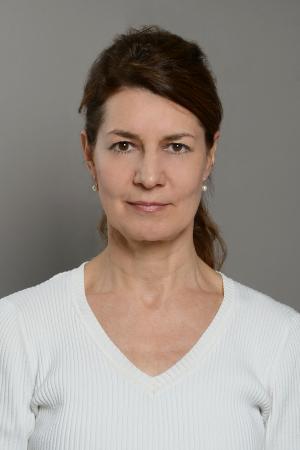
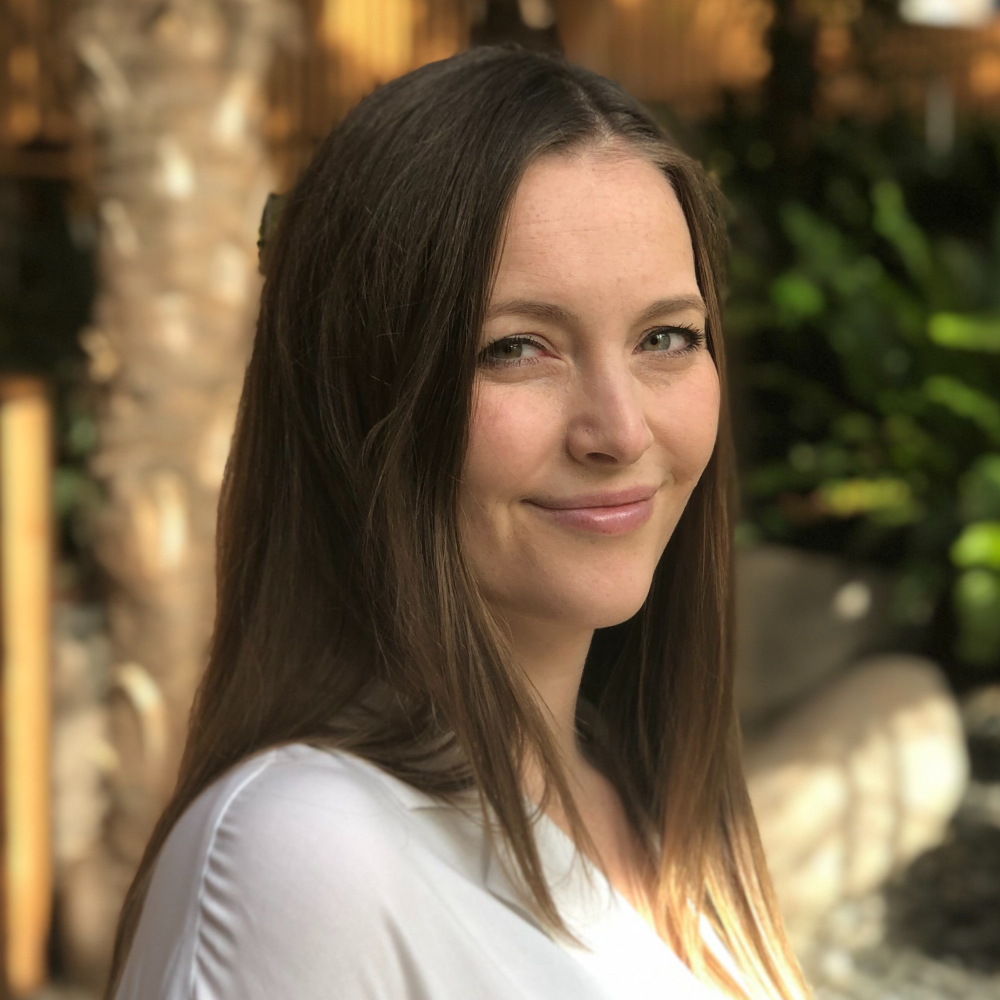
Dr. Elena Koucherik serves as Instructor and Calculus Coordinator in the Mathematics Department at the University of Missouri's College of Arts and Science. She earned her Ph.D. (2008) and M.S. (1998) in Mathematics from the University of Missouri. Her pedagogical focus centers on calculus instruction optimization and curriculum development for multivariable calculus and differential equations courses. She emphasizes conceptual understanding through applied problem-solving frameworks. As coordinator for Calculus II and III sequences, she oversees instructional standards and assessment methodologies across multiple course sections, ensuring pedagogical coherence in foundational mathematics education.
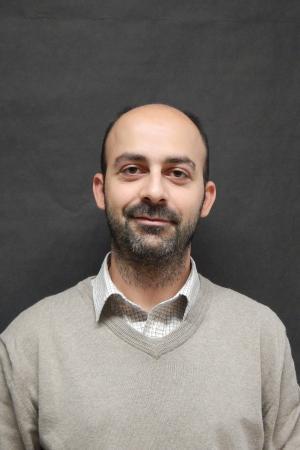
Petros Valettas is an Associate Professor at the University of Missouri, holding dual appointments in the Department of Mathematics and the Department of Electrical Engineering and Computer Science. His research focuses on Asymptotic Convex Geometry, Geometric Functional Analysis, High-Dimensional Probability, and Probabilistic Methods in Analysis and Geometry. He has taught advanced courses such as High-Dimensional Probability, Analysis of Boolean Functions, and Advanced Calculus I, alongside foundational courses like Discrete Mathematical Structures and Calculus I/II. Dr. Valettas’ work explores the interplay between probability, geometry, and functional analysis, with contributions to topics like concentration inequalities, convex body properties, and stochastic processes. His recent publications address areas such as Gaussian convex bodies, hypercontractivity in normed spaces, and decomposition methods for high-dimensional random arrays. He has authored a monograph, Geometry of Isotropic Convex Bodies , and maintains an active role in academic seminars and curriculum development. His teaching spans undergraduate and graduate levels, emphasizing rigorous mathematical foundations and modern applications. Collaborations with co-authors like Paouris and Giannopoulos highlight his engagement with leading figures in geometric analysis. No scientific awards are explicitly mentioned, though his prolific publication record underscores sustained academic excellence.
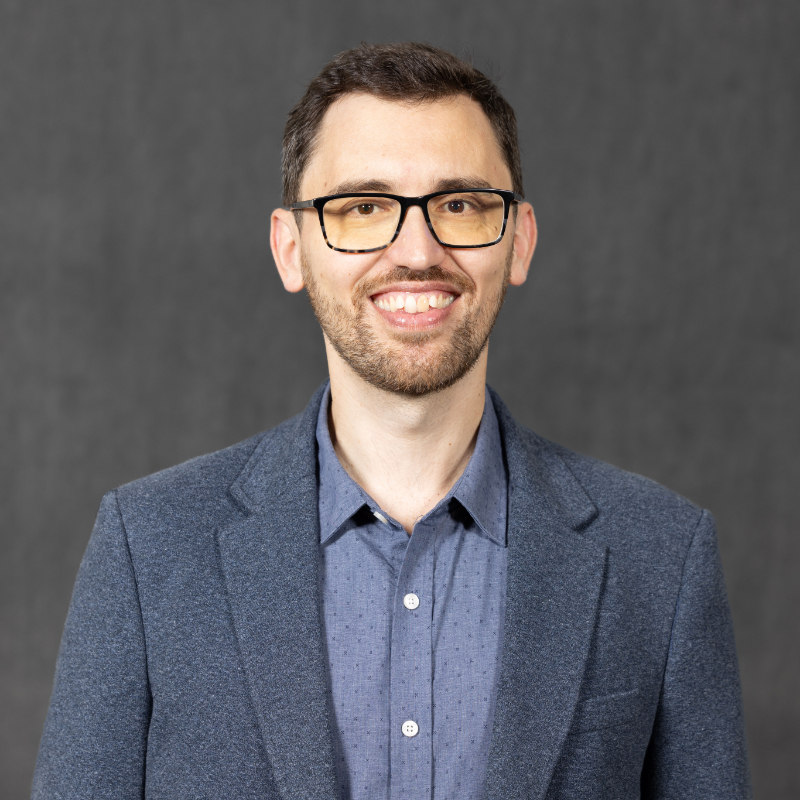
Keino Brown is a Lecturer at the City College of New York (CCNY) in the Department of Mathematics, with a consistent teaching history spanning over a decade. He has instructed courses such as Calculus II, III, Advanced Calculus I, and Theory of Numbers, demonstrating expertise in foundational and advanced mathematics topics. His office hours are held in MR 334, and he is reachable via (212) 650-5155 or kbrown4@ccny.cuny.edu. Recent news highlights his involvement with CCNY’s mathematics program, including student milestones like Kadar He’s transition to a PhD program and Nicholas Videen’s graduation. Teaching Focus: Calculus, Advanced Calculus, Number Theory. Active Semesters: Regularly teaches during Fall and Spring terms, with no assigned classes for Summer 2025. Research Interests: Applied Mathematics, Mathematical Analysis, and Number Theory inferred from course offerings.
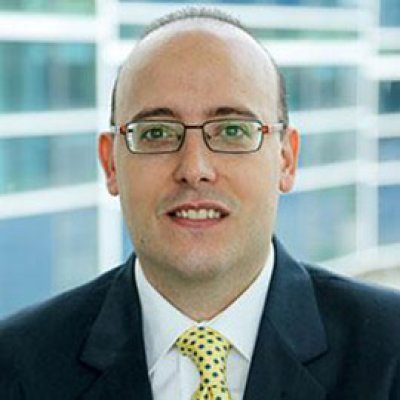
Lyndon Haynes is a Lecturer at the City College of New York (CCNY), where he teaches undergraduate mathematics courses. He has taught multiple sections of Math 19000: College Algebra and Trigonometry and Math 20500: Elements of Calculus across semesters in 2024 and 2025. His office is located in MR 326, and he can be reached at (212) 650-5105. Fields of Interest: Mathematics, Applied Mathematics, Algebra, Trigonometry, Calculus, and Mathematics Education. These areas align with his instructional focus on foundational and applied mathematical concepts. Teaching History: 2025 Summer: Math 19000-1XW (College Algebra and Trigonometry), NAC 4/113 2025 Spring: Math 20500-CD (Elements of Calculus) 2025 Winter: Math 19000-WS (College Algebra and Trigonometry) 2024 Fall: Math 19000-C, Math 19000-E2 2024 Summer: Math 19000-3AA, Math 19000-3AA3
Gennady Yassiyevich is an Lecturer in the Department of Mathematics at the City College of New York (CCNY) , part of the CUNY system . He has taught a variety of advanced mathematics courses, including Elements of Combinatorics , Advanced Calculus , Probability Theory , and Linear Algebra , primarily at the undergraduate level. His teaching spans multiple semesters from 2011 to 2025, with recent courses in Summer 2025 such as Math 36500-1XC on Elements of Combinatorics. Contact: gyassiyevich@ccny.cuny.edu . Office hours: Tuesdays and Thursdays, 3–4pm. Office: MR 326.
Bruce Piper is an Associate Professor in the Department of Mathematical Sciences at Rensselaer Polytechnic Institute, with contact information including email piperb@rpi.edu and phone number 518-276-6892. His research interests include: Mathematics Education Computer Aided Geometric Design Approximation Theory Shape Preserving Interpolation Data Analysis Techniques Dr. Piper's work spans both theoretical and applied mathematics. In theoretical domains, he has investigated shape preserving interpolation, specifically focusing on the preservation of monotonic curvature and 3-convexity problems. He has developed novel surface representations for convexity preserving interpolation. His applied research bridges mathematical techniques with antenna engineering, particularly in spherical conformal antenna design using NURBS techniques and electromagnetic modeling of conformal wideband antennas. His publication record reveals a progression from geometric design fundamentals to practical engineering applications. The research shows strong interdisciplinary connections between pure mathematics and electrical engineering, with significant contributions to both fields. His work on cubic spirals and Hermite interpolation has theoretical importance, while his antenna modeling research has practical implications for wireless communications technology. Dr. Piper has contributed to mathematics education through curriculum development for undergraduate math majors, creating courses that teach data visualization, classification, clustering, and ridge regression. He has also implemented mentorship programs where upper-class students guide first-year students in Calculus courses to improve STEM retention rates.
Dr. Fernando Charro is an Associate Professor in the Department of Mathematics at Wayne State University , affiliated with the College of Liberal Arts and Sciences . He earned his Ph.D. in Mathematics from Universidad Autónoma de Madrid in 2009 and has held academic positions including Fulbright Visiting Scholar at The University of Texas at Austin (2010-2012) and Juan de la Cierva Fellow at Universitat Politècnica de Catalunya (2014-2017). Research Focus: Unified methods for degenerate fully nonlinear equations, qualitative properties of solutions, and applications in optimal control, geometry, image processing, and optimal transport. Teaching & Outreach: Leads the Undergraduate Mathematics Research Seminar (UMRS), organized SIAM symposiums, and designed STEM Day outreach activities tied to game theory and PDEs. Scientific Awards: CLAS Excellence in Teaching Award 2024 University Research Grant 2021-2022 Juan de la Cierva Fellow 2014-2017 Fulbright Visiting Scholar 2010-2012 Prior work includes structural hypotheses in existence/uniqueness results for nonlinear equations. He serves on the CLAS Faculty Council, Academic Senate, and Curriculum and Instruction Committee since 2022.
Carlo Cafaro is Associate Professor in the Department of Nanoscale Science & Engineering at the University at Albany. His research examines foundations of theoretical physics including quantum information theory, relativity, and mathematical physics. Education: PhD Physics, University at Albany MA Theoretical Physics, University of Pisa Research develops information geometric approaches to quantum complexity, quantum error correction methods for combating decoherence, and geometric Clifford algebra applications in electrodynamics. Current projects analyze quantum evolution curvature in magnetic fields and thermodynamic universality in black hole radiation. Holds editorial appointments at International Journal of Theoretical Physics, Foundations, Quantum Reports, and Entropy. Received multiple Air Force Research Laboratory fellowships for quantum networking infrastructure research. Teaching includes Physics I/II, Calculus, Differential Equations, Quantum Foundations, and graduate seminars in applied mathematics.
Binan Gu serves as an Assistant Research Professor in the Department of Mathematical Sciences at Worcester Polytechnic Institute (WPI), where he conducts research at the intersection of applied mathematics, fluid dynamics, and network theory. His work is closely affiliated with the Complex Fluids and Soft Matter (CFSM) research group at NJIT. Education NJIT, PhD in Mathematical Sciences, 2022 Courant Institute of Mathematical Sciences, M.S. in Mathematics, 2016 University of Southern California, B.S. in Mathematics, B.A. in Economics, 2013 Research Focus Dr. Gu specializes in mathematical and stochastic modeling of complex physical systems, with particular emphasis on fluid dynamics in porous media and network-based phenomena . His work combines rigorous mathematical analysis with practical applications in membrane filtration, geothermal energy systems, and random media characterization. He develops sophisticated models using partial differential equations, stochastic processes, and spectral graph theory to address fundamental questions about transport phenomena in complex systems. Publication Trends Gu's recent publications reveal a strong focus on membrane filtration systems and pore network modeling, with increasing sophistication in representing geometric complexity and dynamic processes. His work bridges theoretical mathematics with practical engineering applications, particularly in understanding how pore connectivity, size distribution, and fluid properties affect filtration performance. The incorporation of topological data analysis in his most recent work demonstrates an expanding methodological toolkit for characterizing complex media. Teaching and Mentorship Dr. Gu has taught multiple undergraduate mathematics courses including Calculus I and II, and Numerical Methods for Linear and Nonlinear Systems. His teaching materials demonstrate a commitment to clear exposition of complex mathematical concepts with practical computational applications. He has co-hosted the Optimization and Machine Learning Seminar series, facilitating interdisciplinary research discussions. Research Infrastructure Gu's research is conducted within the Complex Fluids and Soft Matter (CFSM) group framework, which provides computational resources and collaborative opportunities for investigating transport phenomena in complex media. His work on geothermal harnessing models demonstrates integration of multiple physical processes (fluid flow, thermal transport, chemical reactions) within single theoretical frameworks.
Jeremy L. Martin is a Professor and Director of Graduate Studies in the Department of Mathematics at the University of Kansas. His research focuses on algebraic combinatorics, algebraic geometry, and discrete geometry, with particular interests in simplicial complexes, hyperplane arrangements, and combinatorial Hopf algebras. He actively organizes conferences such as the Graduate Research Workshop in Combinatorics (GRWC) and the Great Plains Combinatorics Conference. Dr. Martin advises current graduate students including Mark Denker and May Bee Trist. He has contributed to foundational work in matroid theory, Ehrhart theory, and the combinatorics of simplicial complexes. His teaching spans advanced courses in algebraic combinatorics, graph theory, and calculus, emphasizing honors education. He is a Handling Editor for Combinatorial Theory and previously led Frontiers for Young Minds , promoting science communication for younger audiences. He is a core member of the KU Combinatorics Group and has organized workshops and seminars, fostering collaboration in discrete mathematics. His research bridges pure and applied mathematics, leveraging combinatorial techniques to address problems in algebraic geometry and topology.
Ambar N Sengupta is a Professor and Department Head at the University of Connecticut's Department of Mathematics. His research spans probability, geometry in infinite dimensions, category-theoretic geometry, mathematical questions in quantum theory, and mathematical finance. Research Interests: His work explores geometric and probabilistic problems in low-dimensional gauge theories, infinite-dimensional stochastic analysis, and financial mathematics. Recent articles focus on variational principles in dissipative systems, Chern-Simons theory, and categorical geometric structures. Education & Affiliations: While formal education details are unspecified, his academic affiliation with the University of Connecticut is central. He has contributed to journals like the Journal of Stochastic Analysis and presented on high-frequency data applications. Publications: Recent articles (2024–2017) address variational methods in nonconservative mechanics, gauge theories, and infinite-dimensional geometry, with keywords spanning quantum field theory, stochastic analysis, and category theory.
Dr. Chris Antonopoulos is a Lecturer in Applied Mathematics at the University of Essex, affiliated with the School of Mathematics, Statistics and Actuarial Science (SMSAS) and the Department of Mathematical Sciences. His research focuses on dynamical systems, chaotic systems, computational neuroscience, and complex networks, with particular emphasis on neural synchronization, network inference, and mathematical tools for analyzing brain dynamics. He holds a PhD from the University of Patras (2007), specialized in Hamiltonian systems and statistical mechanics. Key research areas include: Computational neuroscience: Development of mathematical tools to study neural synchrony, brain plasticity, and disorders like epilepsy. Network inference: Using mutual information and statistical tests to infer connectivity in systems like brain networks and financial markets. Nonlinear dynamics: Analysis of chaos, energy localization in Hamiltonian systems, and q-statistics in non-extensive systems. Applications: Modeling pandemic spread (e.g., SIR models for COVID-19), time-series forecasting, and machine learning integration. Professional affiliations include the Institute of Mathematics and its Applications (MIMA), London Mathematical Society (LMS), and status as a Fellow of the Higher Education Academy (FHEA). His work combines analytical and numerical methods, including Lyapunov exponents, bifurcation analysis, and SALI/GALI chaos indicators. Collaborations span interdisciplinary fields, from neuroscience to statistical physics.
Dr. Joseph Bailey is a Lecturer at the University of Essex, affiliated with the School of Mathematics, Statistics and Actuarial Science (SMSAS). He holds a BSc in Mathematics from the University of Warwick (2009), an MSc from Birkbeck, University of London (2014), and a PhD in Mathematical Biology from Essex (2019). His research focuses on mathematical biology/ecology, individual/group movement, random walk theory, and data analysis, with notable contributions to ecological modeling and educational methodologies. Dr. Bailey’s work bridges theoretical frameworks and applied ecological questions, including animal movement patterns, trap efficiency simulations, and calculus education. He has secured grants from the Royal Society and London Mathematical Society for projects on chemotaxis-driven movement and random-walk coefficients. His teaching includes foundational courses in calculus and data science, emphasizing interdisciplinary applications. Current supervisees include Thita Sawaengha (PhD, Data Science) and Farah Manzoor (PhD, Mathematics). He has published widely in journals like Ecology, Ecological Modelling, and the Journal of the Royal Society Interface. His research also extends to applied projects like fraud detection via Innovate UK’s KTP initiatives. Key collaborations include work with the Royal Society on collective navigation models and with international teams on arthropod movement studies. His work often integrates statistical methods with ecological data, contributing to both theoretical advancements and practical field applications.
Dr. Jessica Claridge is a Lecturer in Mathematics at the University of Essex, affiliated with the School of Mathematics, Statistics and Actuarial Science and the Department of Mathematical Sciences. She holds a PhD in Mathematics from Royal Holloway, University of London (2017) and an MSci in Mathematics from Queen Mary University of London (2012). Her research focuses on network coding, finite field theory, and mathematics education. She has held roles including Lecturer in Mathematics (2019–present), Lecturer in Mathematics and Statistics with the Essex Pathways Department (2017–2019), and FMSP Area Coordinator (2017). Her research explores network coding protocols, finite field applications, and calculus pedagogy. Recent work bridges theoretical channel capacity analysis with practical educational insights, such as student perceptions of calculus across disciplines. She contributes to both technical (e.g., error-correcting codes) and pedagogical advancements (e.g., curriculum development). Teaching responsibilities span undergraduate and foundational mathematics modules, with a focus on enhancing student engagement and interdisciplinary understanding. Current activities include advising on module development and maintaining a research agenda in applied mathematics and education.
Dr. John O'Hara is an Honorary Senior Lecturer at the University of Essex's School of Mathematics, Statistics and Actuarial Science. He holds additional affiliations as a Research Fellow at Stellenbosch University and an Honorary Associate Professor at the University of Cape Town. His expertise spans financial mathematics, machine learning in finance, stochastic processes, and quantitative finance. Education: BSc in Pure Mathematics, University of Ulster (1976) PGCE in Education, Queen’s University Belfast (1977) MSc in Probability Theory (Hilbert Spaces), Queen’s University Belfast (1981) PhD in Differential Equations, University of the Witwatersrand (1991) His research focuses on financial mathematics and machine learning applications in finance, including volatility modeling, option pricing, and algorithmic trading strategies. O'Hara is a Fellow of the Institute of Mathematics and its Applications and a member of the London Mathematical Society. He previously directed the Centre for Computational Finance and Economic Agents (CCFEA) at Essex and has held academic leadership roles in Southern African institutions. Awards and Memberships: Fellow of the Institute of Mathematics and its Applications London Mathematical Society Membership Professional Activities: O'Hara has contributed to interdisciplinary research at the intersection of finance and computational methods. His work emphasizes symmetry analysis in financial PDE models and innovative applications of wavelet transforms to option pricing. He has supervised multiple research projects in computational finance and maintains active collaborations across institutions. Labs and Centers: Director, CCFEA (2019–2021) Research Fellow, School for Data Science and Computational Thinking, Stellenbosch University