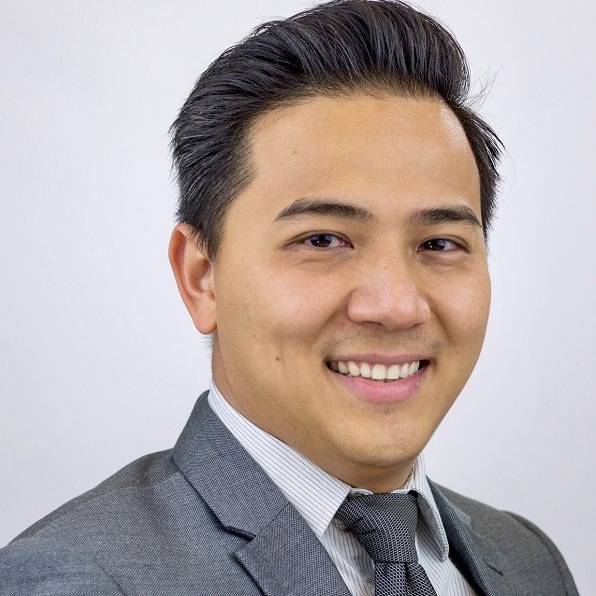
Professor Paul Fearnhead is a leading academic in Statistics at Lancaster University 's School of Mathematical Sciences . His research focuses on Bayesian and Computational Statistics , with applications in Anomaly Detection , Continuous-time Markov Processes , and Changepoint Analysis . Department: Mathematics and Statistics Academic Rank: Professor Email: p.fearnhead@lancaster.ac.uk His work bridges theoretical statistics and computational efficiency, notably through pruning techniques for change detection and novel Monte Carlo methods. Current projects include AI Hub initiatives, probabilistic AI foundations, and real-time anomaly detection in streaming data. Research outputs span Bayesian Analysis , Time Series Modeling , and Scalable Statistical Algorithms , with applications in fields like astronomy and epidemiology. Recent publications emphasize simulation-based composite likelihoods and efficient distributed changepoint detection. Scientific contributions include leadership roles in the STOR-i Centre for Doctoral Training and Data Science Institute (DSI) projects such as CoSInES and Statscale. He supervises PhD students including Dylan Bahia, Yuntang Fan, and Ziyang Yang.
Scott T. Acton is the Lawrence R. Quarles Professor and Chair of Electrical and Computer Engineering at the University of Virginia, with a courtesy appointment in Biomedical Engineering. He leads the VIVA lab, specializing in biological image analysis, machine learning, and AI for education. His research spans medical imaging, signal processing, and computer vision. Professor Acton holds a B.S. (Virginia Tech, 1988), M.S. (UT Austin, 1990), and Ph.D. (UT Austin, 1993) in Electrical Engineering. He has authored over 325 publications and served as Editor-in-Chief of IEEE Transactions on Image Processing and General Co-Chair of the IEEE International Symposium on Biomedical Imaging. His research interests include bioimage analysis, machine learning applications, and medical imaging technologies. The VIVA lab focuses on problems like cell tracking in bacterial biofilms, gait recognition using LiDAR, and AI-driven classroom activity analysis. Awards: IEEE Fellow (2013), All-University Teaching Award (2009), Outstanding Young Electrical Engineer (1996). Courses Taught: How the iPhone Works, Digital Image Processing, Signals and Systems. Labs/Teams: VIVA - Virginia Image and Video Analysis lab. Recent work emphasizes AI for education (e.g., automated classroom activity classification) and medical imaging advancements like 3D biofilm segmentation and LiDAR-based human identification. His contributions bridge engineering and healthcare, with applications in neuroscience and clinical decision support.
Andrew Rice is a Professor of Computer Science at the University of Cambridge's Department of Computer Science and Technology, and holds the Hassabis Fellowship in Computer Science. He is also the Director of Studies in Computer Science at Queens' College. His research focuses on programming languages, software engineering, and machine learning applications in software development. He leads projects like Isaac Computer Science and ALTA (Automated Language Teaching and Assessment), advancing adaptive learning technologies. His work includes static analysis tools such as Error Prone at Google, energy efficiency studies in computing infrastructure, and contributions to the Computing for the Future of the Planet initiative. His teaching emphasizes practical skill development through flipped classrooms and video lectures, earning him the 2014 Pilkington Prize for teaching excellence. He has held visiting roles at Google and collaborated on energy consumption research for mobile devices and data centers. His research spans systems, networking, and natural language processing, with a strong focus on applying computational methods to real-world challenges. Key Projects: Isaac Physics/Computer Science, ALTA, Error Prone Static Analysis Research Themes: Programming Languages, Machine Learning, Energy Efficiency Awards: Pilkington Prize (2014)
Professor Jiti Gao is a Donald Cochrane Chair in Econometrics & Business Statistics at Monash University's Faculty of Business and Economics. He leads the Department of Econometrics and Business Statistics, specializing in non- and semi-parametric econometrics, time-series analysis, and panel data methodologies. His research focuses on developing statistical models for climate change, energy demand, and financial forecasting. Affiliations: Monash University, Impact Labs Grants: Multiple ARC Discovery Projects (e.g., 2020–2025 on climate-energy time series, 2017–2020 on econometric model building) Collaborations: CSIRO, Yale University, and international partners from China, Norway, and Singapore Research interests include climate econometrics, financial time series, and policy evaluation. Over 136 publications span econometric theory and applications, with recent work on nonlinear trending models and quantile regression. His grants emphasize methodological advancements in time series and panel data analysis. Awards: Not explicitly mentioned, but recognition includes Australian Professorial Fellow status and international research leadership roles. Advising/Grants: Primary Investigator on multiple ARC-funded projects, focusing on climate modeling and financial econometrics Labs/Teams: Part of Monash's Impact Labs and collaborates with global institutions on climate and econometric initiatives
Professor Ashley Braganza serves as Dean of Brunel Business School at Brunel University London and holds the Chair in Business Transformation. He founded and co-directs Brunel's interdisciplinary Research Centre for Artificial Intelligence (established 2018), which includes a dedicated AI Lab and forms part of Brunel's broader AI Ecosystem. His leadership secured £3.5 million in grants during the 2022/23 academic year and a recent €5.8 million ELOQUENCE EU project (2024-2027). His academic qualifications include a PhD in Organisational Change and Information Systems from Cranfield University and an MBA in Strategic Management Responsibility from the University of Strathclyde. Professor Braganza's research centers on artificial intelligence, big data, change management, strategy implementation, process and knowledge management, and transformation-enabled information systems . His practice-based approach stems from over 40 major consultancy projects with global organizations including BT, Microsoft, McDonald's, Astra Zeneca, and UN agencies. He champions interdisciplinary experiential learning and rigorous academic research with real-world applications. Analysis of his 15 most recent publications reveals dominant trends in applying AI and digital technologies to healthcare supply chains, blockchain governance, and socioeconomic challenges like digital poverty. His work consistently bridges operations management, information systems, and social sciences while examining human-organizational impacts of technological transformation. His distinguished recognition includes: Election to the British Academy of Management College of Fellows for 25+ years of scholarly contribution and community service Professor Braganza has directed significant research initiatives including the British Academy-funded digital poverty study in Margate, UK-India collaborative projects on AI in healthcare productivity, and curriculum development for special needs trainers. His consultancy assignments with major corporations have co-created practical frameworks for implementing complex organizational change programs. He founded and chairs the British Academy of Management Special Interest Group in Transformation, Change and Development, and directs Brunel's AI: Social and Digital Innovation Research Centre, fostering cross-disciplinary collaboration through the Operations and Information Systems Management Research Group (OISM).
Nick Koudas is a Professor in the Department of Computer Science at the University of Toronto, specializing in large-scale data management, data systems, and applied machine learning. His research integrates machine learning techniques into scalable data platforms to enhance the analysis of massive datasets. He holds a PhD from the University of Toronto, an MSc from the University of Maryland, and a Bachelor's degree from the University of Patras. Education: PhD, University of Toronto MSc, University of Maryland at College Park Bachelor's degree, University of Patras, Greece Research Interests: Relational Deep Dive (ReDD): Natural language query execution over unstructured documents Streaming Video Queries (SVQ): Interactive query processing for video streams Reliable Text-to-SQL: Generating accurate SQL queries with human-in-the-loop assistance Machine Learning Integration in Data Systems Publications: Focus on video analytics, query processing, and reliable natural language interfaces. Notable works include optimizing video queries, declarative frameworks for temporal constraints, and abstention-based SQL generation. Awards: Inventor of the Year (1st Prize), University of Toronto (2011) Best Paper Awards at international conferences Entrepreneurship & Advising: Co-founder of Sysomos (Meltwater Group), Aislelabs (Constellation Software), and Workorb Advisor to mapintent and ktau Labs & Teams: Leads research groups developing systems like ReDD and SVQ, emphasizing collaboration between academia and industry.
Rick Hoyle is a Professor of Psychology and Neuroscience at Duke University, where he serves as Associate Chair of the Department of Psychology and Neuroscience. He is also a Faculty Network Member of the Duke Institute for Brain Sciences. His academic career spans decades, with significant contributions to understanding self-regulation and adolescent development. Dr. Hoyle earned his B.A. from Appalachian State University (1983), followed by an M.A. (1986) and Ph.D. (1988) from the University of North Carolina, Chapel Hill. He progressed from Assistant to Associate to Full Professor at the University of Kentucky from 1989 to 2003 before joining Duke University. His research focuses on how adolescents and emerging adults manage goal pursuit through self-regulation, taking a broad view that accounts for personality, environment, cognition, emotion, and social influences. He employs longitudinal methods with repeated assessments, sometimes spanning years with data collection multiple times per year, or intensive studies with assessments several times daily. His lab develops innovative measurement tools including self-report measures of self-control and grit, as well as unobtrusive approaches using mobile phones and wearable devices to track goal pursuit in natural settings. His recent publications reveal a strong focus on self-regulation in digital contexts, adolescent substance use, socioeconomic influences on development, and innovative measurement approaches. His work increasingly integrates technology (social media analysis, wearable devices) with traditional psychological research methods to understand real-world behavior. Fellow, Association for Psychological Science (2013) Dr. Hoyle has secured numerous research grants totaling millions of dollars, including the current Real-Time and Randomized Tests of Social Media and Mental Health Links in Early Adolescence (2024-2029), NCCU Duke - Substance Use Research & Education (2024-2029), and Mid-Life Health Inequalities in the Rural South: Risk and Resilience (2023-2028). His grant portfolio demonstrates sustained funding for research on adolescent development, substance use, self-regulation, and health disparities. He teaches advanced courses including Applied Structural Equation Modeling and Psychology and Neuroscience Grant Writing, mentoring the next generation of researchers in quantitative methods and research design. His work through the Center for the Study of Adolescent Risk and Resilience (2008-2025) has established a significant research infrastructure for longitudinal studies of adolescent development. Current projects examine social media effects on mental health, substance use patterns, and the impact of environmental factors on adolescent well-being using innovative digital tracking methods.
Xiaofeng Shao is a Professor of Statistics & Data Science at Washington University in St. Louis, with a joint appointment in the Department of Economics. He holds a PhD from the University of Chicago and previously served at the University of Illinois at Urbana-Champaign for 18 years. He is a Fellow of the Institute of Mathematical Statistics and the American Statistical Association. His research focuses on econometrics, time series analysis, change-point detection, high-dimensional statistics, nonparametric methods, and functional data analysis. Recent work emphasizes object-valued time series modeling and machine learning applications in high-dimensional and imaging data. Notable contributions include the dependent wild bootstrap method and self-normalization techniques for time series inference. Key awards include Fellowships from leading statistical societies. His publications span over 20 years, addressing topics like change-point detection in climate projections, statistical methods for COVID-19 infection trends, and high-dimensional dependence testing.
Tamás Budavári is an Associate Professor in the Department of Applied Mathematics and Statistics at Johns Hopkins University (JHU), with joint appointments in Physics and Astronomy and a secondary appointment in Computer Science. He is affiliated with the Whiting School of Engineering and the Institute for Data-Intensive Engineering and Science (IDIES). His research focuses on computational and statistical methods for big data in astronomy and interdisciplinary applications such as urban blight analysis. Education: PhD in Astrophysics (2001), Eötvös Loránd University, Budapest Master’s in Theoretical Physics (1997), Eötvös Loránd University Research Interests: Budavári develops algorithms for handling large astronomical datasets, including Bayesian inference, streaming algorithms, and GPU-accelerated processing. His work includes SkyQuery (an online astronomy data tool), photometric redshift estimation, and cross-matching catalogs. He also applies computational methods to urban planning, such as optimizing strategies to address vacant housing in Baltimore City. Publications & Tools: Budavári’s recent work spans topics like deep learning for astronomical image restoration, combinatorial optimization for urban policy, and probabilistic catalog matching. His tools, such as CUDAHM and NWAY, enable scalable analysis of multi-epoch survey data and N-way catalog cross-identification. Awards & Grants: Recipient of the Gordon and Betty Moore Fellowship and SAMSI Research Fellowship Funded by NSF, STScI, NIH, and others Leadership & Outreach: He serves on the Steering Committee of the 21st Centuries Cities Initiative and is a founding editor of the Journal of Astronomy and Computing. His interdisciplinary work bridges astrophysics, data science, and urban systems.
Mazdak Nik-Bakht is an Associate Professor at Concordia University's School of Building, Civil, and Environmental Engineering. His work bridges construction engineering with digital innovation, focusing on smart infrastructure and sustainable development. PhD, Construction Engineering & Mgmt., University of Toronto PhD, Structural Engineering, Iran University of Science & Technology MASc & BASc, Structural and Civil Engineering, Iran University of Science & Technology His research integrates Artificial Intelligence and Social Network Analysis into construction management systems. Key areas include: Smart infrastructure and urban computing Deconstruction and circular economy principles Building Information Modeling (BIM) and digital twinning Process mining in Architecture, Engineering, and Construction (AEC) industry Decision models in construction project management Semantic computing and computational linguistics applications Recent publications show a focus on BIM analytics , urban resilience , and social media's role in infrastructure planning . Papers often combine AI and network theory to solve complex construction challenges. 2015 Outstanding paper award - Built Environment Project and Asset Management journal He teaches courses on: Big Data Analytics for Smart City Infrastructure Building Information Modeling (BIM) for Construction Building Economics Project Cost Estimating
Dr. Li Wan is an Associate Professor in Urban Planning and Development at the Department of Land Economy, University of Cambridge, and a Fellow of Gonville and Caius College. He serves as Director for the MPhil in Planning, Growth and Regeneration and is a co-investigator of the Centre for Smart Infrastructure and Construction. Dr. Wan is also a Trustee of the IJURR Foundation and leads a research group focused on understanding urban land and transport development through applied modeling and data analytics. Dr. Wan holds a BArch, MPhil, and PhD from the University of Cambridge. Prior to joining Land Economy, he worked in Architecture and Engineering Departments, giving him a highly interdisciplinary perspective. His research focuses on spatial economic modeling of urban land use and transport systems, with recent interests including strategic planning at city/regional levels, impact studies of flexible working, micromobility, and electric vehicles. Dr. Wan's research group has produced significant work in city digital twins, as evidenced by his 2023 book Digital Twins for Smart Cities: Conceptualisation, challenges and practices . His publications span urban analytics, transport emissions, spatial equilibrium modeling, and economic geography, demonstrating the interdisciplinary nature of his work. Recent research trends show increasing focus on post-pandemic urban dynamics, digital governance, and sustainable mobility solutions. His research group has secured funding from initiatives like AI@Cam for projects examining how local authorities use AI for urban decision-making. Dr. Wan actively supervises PhD and MPhil students, with his group comprising researchers working on diverse urban topics from land-use efficiency to micromobility impacts. As an educator, Dr. Wan teaches courses including Tripos Paper 10 - The Built Environment, PGR01 - Urban and Environmental Planning, PGR02 - Urban and Housing Policy, PGR05 - Place-based Policy, and RM03 – Spatial Analysis and Modelling. His group has presented at major international conferences including CUPUM and ICML, reflecting his active engagement in the academic community.
See Kiong Ng serves as Professor of Practice in the Department of Computer Science at the School of Computing, National University of Singapore (NUS), while concurrently holding leadership roles as Director of AI Technology at AI Singapore and Deputy Director of NUS's Institute of Data Science (IDS). His work focuses on translational data science research and developing integrated capabilities for Singapore's Smart Nation initiative through industry and public agency collaborations. His academic credentials include a B.S. in Applied Mathematics (Computer Science Track) from Carnegie Mellon University (1989), an M.S.E. in Computer & Information Science (Artificial Intelligence) from the University of Pennsylvania (1990), and a Ph.D. in Computer Science from Carnegie Mellon University (1998), supported by Singapore's National Computer Board overseas scholarship. Professor Ng's research bridges artificial intelligence with real-world applications across diverse domains. His primary interests span Data Mining, Machine Learning, Natural Language Processing, Smart Cities, and Computational Biology, with emphasis on extracting value from big data through interdisciplinary approaches. He actively pioneers applications in urban systems and bioinformatics, demonstrating data science's transformative potential beyond traditional boundaries. His publication record reveals consistent innovation in algorithm development for complex data challenges, with recent work focusing on taxonomy construction, single-cell genomics analysis, urban transportation systems, and imbalanced time series classification. These contributions demonstrate his commitment to solving practical problems through cutting-edge data science techniques. His major recognitions include: MTI Borderless Award (2014) as Green Growth Working Group project member Minister for National Development's R&D Award 2017 (Distinguished Award) for city-level analytics platform innovation A*STAR Borderless Award (2014) as Urban Systems Initiative team leader MTI Innovation Award (2013) for Strategic Technology Translation in Business Analytics Professor Ng has established significant research infrastructure including founding A*STAR's Data Analytics Department and leading the Urban Systems Initiative. His translational research model emphasizes industry partnerships and practical implementation, particularly in smart city development where he connects data science with urban planning challenges across Singapore's government agencies.
Jon Atle Gulla is a Professor at NTNU and Director of the Norwegian Research Centre for AI Innovation (NorwAI). He holds academic leadership roles, including former Head of the Department of Computer Science and Informatics at NTNU. His expertise spans Semantics, Language Technology, Recommender Systems, and AI-driven innovation. He has nearly 150 international publications and advised over 100 students across MSc, PhD, and postdoctoral levels. Education: MSc in Computer Science (1988), PhD in Computer Science (1993) from Norwegian Institute of Technology (NTH) MSc in Linguistics (1995), University of Trondheim MSc in Management (Sloan fellowship, 2003), London Business School Research interests focus on Semantics and Language Technology applied to Recommender Systems, Information Retrieval, and Text Analysis. He explores AI-based innovations in digitalization and entrepreneurship, advising industry on AI adoption and commercialization. Notable projects include Big Data collaborations with DNB, RecTech for news recommendation, and Trondheim Analytica analyzing political texts/social media. Publications emphasize AI applications in news recommendation, political text analysis, and Scandinavian language models. His work addresses ethical AI, copyright implications, and cross-lingual NLP challenges. Awards: Member of the Royal Norwegian Society of Arts and Sciences. Advising/grants: Supervised 30 PhD students and 70 MSc students. Involved in startups like Fast Search & Transfer (acquired by Microsoft) and Mito.ai/Strise.ai. Active in reviewing for journals like Data & Knowledge Engineering and conferences like ACL. Labs/teams: Leads NorwAI, co-founder of INRA and NOBIDS workshops. Collaborates with industry and academia on AI-driven solutions.
N. Rich Nguyen is an Assistant Professor in the Department of Computer Science at the University of Virginia (UVA), where he joined in August 2018. He's part of the School of Engineering and Applied Science and is on a teaching track , focusing on making machine learning accessible and engaging for all students. Research and Innovation: Rich Nguyen's research interests include biomedical image analysis , machine learning , and computer science education . He aims to reinvent instructional activities to make them adaptive and engaging by incorporating art and music elements to help everyone learn coding. Notable research contributions include: Floodwatch : A system for flood monitoring using crowdsourced images TuneScope : A digital music creation tool combining SoundScope and Snaps! technology CAD Library : Open-source design tools for educators AI for early sepsis detection : Highlighted in UVA Today Teaching Accomplishments: Before UVA, Rich taught computer science courses at UNC Charlotte for four years to a total of 1,458 students. At UVA, he teaches several courses including: CS 4774: Machine Learning (multiple semesters) CS 2501: Machine Learning for All (launched in Fall 2021) SYS 6016 / SDS 6050: Deep Learning CS 2150: Data and Program Representation (multiple semesters) CS 6316: Machine Learning (Graduate Level) CS 2910: CS Education Practicum (for Teaching Assistants) He previously taught at UNC Charlotte: ITCS 1600: Computing Professionals ITCS 2600: Computing Professionals for Transfer Students ITCS 4156: Introduction to Machine Learning ITCS 2215: Design and Analysis of Algorithms Academic Achievements: Rich Nguyen has received several notable awards and grants: Google Faculty Award for Machine Learning Education with TensorFlow (2019) Best Paper Award at IEEE BigDataSE (2022) Best Poster Award at SITE Conference (2022) CCI Faculty Innovation Award (2018) NSF grants for Smart and Connected Communities (2022) and Computational Thinking (2021) 3 Cavaliers Grant on Coding and Music (2021) Student Mentorship: Rich has mentored numerous students and teaching assistants who have achieved recognition. Notable students include: Joy Qiu - Published in Clinical Infectious Diseases Louisa Edwards and Zach Boner - Invited to Ken Ono Podcast Mike Ferguson - Winner of CS Louis T. Rader Undergraduate Teaching Award He has also served as faculty advisor for HooHacks (UVA's hackathon) and co-founded CharlotteHack at UNC Charlotte. Labs and Collaborations: Rich Nguyen leads the ML4VA (Machine Learning for Virginia) initiative, engaging students in project-based learning to apply machine learning to real-world problems affecting Virginia communities. He collaborates with institutions for symposiums on smart cities, particularly with ASEAN universities, and has partnered with Premier Healthcare for hackathons and with Glen Bull on educational technology projects.
Stephen Marshall is Professor of Urban Morphology and Urban Design at The Bartlett School of Planning, University College London. He also served as Visiting Professor at the Department of Architecture and Urban Studies, Politecnico di Milano, Italy from 2019 to 2021. With over twenty-five years of experience in the built environment fields, initially in consultancy and subsequently in academia, Professor Marshall has established himself as a leading expert in urban morphology and design. His educational background includes a Doctor of Philosophy from University College London (2001), a Postgraduate Diploma from Edinburgh College of Art (1995), a Master of Science from the University of Leeds (1989), and a Bachelor of Engineering from the University of Glasgow (1988). Professor Marshall's principal research focuses on urban morphology and street layout, examining their relationships with urban formative processes including urban design, coding and planning. His work bridges urban design theory with practical applications, exploring how cities evolve through complex interactions of physical form, social processes, and planning interventions. He has written or edited several influential books including 'Streets and Patterns' (2005), 'Cities, Design and Evolution' (2009), and 'Urban Coding and Planning' (2011). His recent publications reveal a growing interest in applying complexity science to urban morphology, with particular attention to biological analogies for understanding self-organizing cities. He has pioneered research on digital participation methods in urban planning, exploring how online platforms can enhance public engagement in urban space design. His work consistently bridges theoretical urban morphology with practical applications for contemporary urban challenges like pandemic adaptation and sustainable transport. Professor Marshall has served as Chair of the Editorial Board of Urban Design and Planning from its launch to 2012, and is now co-editor of Built Environment journal. His editorial work has significantly shaped scholarly discourse in urban planning and design. He leads several significant research initiatives including the Incubators of Public Spaces project, which explores digital platforms for co-creating urban spaces, and the Self-Organising Built Environment project, which investigates biological analogies in urbanism. These projects reflect his interdisciplinary approach to understanding and shaping urban environments, connecting with Sustainable Development Goal 11 (Sustainable Cities and Communities).