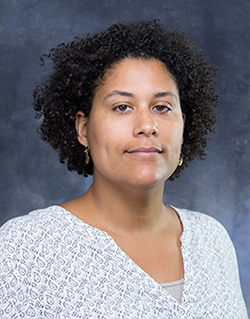
Ida Hummelstedt is a Postdoctoral Researcher at the Department of Education , University of Helsinki. Her work focuses on diversity, multilingualism, and social justice in education , particularly analyzing racism in Finnish school systems and cultural capital dynamics. Current projects: BMR-Hummelstedt 25-27 , SKF-Hummelstedt 25-27 , RILSE: Racism in Lower Secondary Education Education: Utbildningsledarskap (Åbo Akademi, 2013), Pedagogie magister (Åbo Akademi, 2011) Research spans ethnographic studies on racialized positionality, critical analysis of multicultural education, and investigations into institutional racism. Recent publications examine racial humor in schools, cultural capital recognition, and teacher intervention strategies. Active in academic events including the Nordic Educational Research Association Conference and invited talks on anti-racism. Collaborates with scholars like Matikainen-Soreau, Loukola, and Holm. Media contributor on political normalization of racism in educational contexts.
Dr Jason Ran is a Lecturer at Edinburgh Napier University, School of Applied Sciences, specializing in sociology of migration, family studies, and social policy . Prior roles include Lecturer and Academic Lead at Waikato Institute of Technology, New Zealand, focusing on social work education. Education: PhD in Social Policy (Massey University), Master’s in International Development Studies (Chulalongkorn University), Master de Sciences Humaines et Sociales (Université Paris Nanterre), Bachelor’s in Social Work (South-Central University for Nationalities). His research examines the interplay between transnational migration regimes (immigration policies, technologies, socioeconomic factors) and immigrant agency , particularly among Chinese communities in Australasia and Europe. Using narrative and ethnographic methods , he analyzes how migration policies affect family structures and social systems. Recent publications focus on mental health during the pandemic , neoliberal immigration regimes , and transnational family remittances . He has received awards for emerging research and diversity inclusion , and his editorial roles include Associate Editor for International Migration Review and Book Review Editor for New Zealand Sociology . He supervises PhD students in migration studies and family dynamics. Grants: Health Research Council of New Zealand (NZ$ 350,325), Waikato Institute of Technology funding (NZ$ 9,600).
Rachel Afi Quinn is an Associate Professor in the Department of Comparative Cultural Studies and the Women’s, Gender & Sexuality Studies Program at the University of Houston, College of Liberal Arts and Social Sciences. Her transnational feminist cultural studies scholarship centers on mixed race, gender and sexuality, social media, and visual culture in the African Diaspora, with critical focus on Dominican identity and Caribbean queer activism. Education Ph.D. and M.A. in American Culture, University of Michigan, Ann Arbor B.A. in African American Studies (concentration in Cultural Anthropology), Wesleyan University Dr. Quinn's research traverses Transnational Feminist Cultural Studies, African Diaspora Studies, Critical Mixed Race Studies, and Race & Visual Culture, examining how identity is constructed through digital media, film, and artistic expression. Her work interrogates Black female masculinities, LGBT activism in Latin America/Caribbean, and community-engaged scholarship, consistently highlighting Dominican cultural production and resistance. Her publication trajectory (2012-2024) reveals deepening engagement with Black feminist digital praxis, visual sovereignty, and transnational solidarity. Recent works analyze Afro-Dominican feminist movements, mixed-race representation in Hollywood, and public scholarship as political action, demonstrating methodological innovation through documentary filmmaking and digital humanities. Scientific Awards 2018 Ross M. Lence Award for Teaching Excellence 2018-19 Career Enhancement Fellowship (Woodrow Wilson Foundation) Schomburg Center for Research in Black Culture Fellowship (2022-23) NEH Faculty Award (2023-2024) for Philippa Duke Schuyler biography Dr. Quinn mentors students in cultural studies and gender/sexuality research through community-engaged pedagogy. Her grant portfolio includes NEH and Schomburg funding supporting ethnographic research on Dominican visual culture and Black feminist biography. She co-founded South Asian Youth in Houston Unite (SAYHU) and the UH Critical Disability Studies Initiative, demonstrating commitment to intersectional justice. She actively participates in Imagining America @ UH (fostering public scholarship), Black. Migration. Houston. (digital humanities project centering Blackness in migration studies), and #Ferguson resource curation. Her collaborative initiatives bridge academic research with grassroots activism, particularly through the UH Critical Disability Studies speaker series and SAYHU's social justice programming.
Ima Jackson is a Professor in the Department of Nursing at Glasgow Caledonian University. She specializes in community-engaged research addressing racial justice, migration, and public policy. Her work emphasizes anti-racism and intersectional approaches, particularly through collaborations with marginalized communities in Scotland. Research focuses include: Co-producing inclusive policies with adversely racialized communities Anti-racism observatory development for public sector accountability Health equity for migrant populations Key contributions: Co-chair of Scotland’s National Advisory Council on Women and Girls (2020-22) Former Board Chair of CCA Glasgow (2016-2022) Co-leads the Scottish Migrant and Ethnic Health Research Strategy Network (SMEHRS) Recent publications explore anti-racist policy frameworks, mental health equity for racialized groups, and healthcare accessibility for immigrant populations. Grants include leadership roles in Scottish Government-funded initiatives like the Skills Recognition Hub for the Common Good (2018-2019).
Denise Davis, MD is a Professor and Associate Director for Faculty Development at the Center of Excellence in Primary Care Education at the San Francisco VA. She specializes in health professions education, focusing on communication skills, feedback, mentorship, and fostering inclusive learning environments. Her work emphasizes improving patient experience through effective clinical communication and addressing systemic inequities in healthcare education. Education: BA/MD Program, University of Missouri-Kansas City School of Medicine (1981-1986) Internal Medicine Residency, Kaiser Foundation Hospital (1989) American Academy on Communication in Healthcare Residency (2010) Diversity, Equity, and Inclusion Training, UC Faculty Development (2017) Research Interests: Dr. Davis investigates communication strategies to enhance clinical teamwork, reduce workplace discrimination, and promote diversity in medical training. She designs curricula addressing professional identity formation and cultural competency, with a focus on marginalized communities. Her work bridges communication theory with practical applications in high-stress clinical environments. Awards: 2021 Excellence in Teaching Award (Academy on Communication in Healthcare) 2018 Martin Luther King Leadership Award (UCSF) 2013 Alpha Omega Alpha Medical Honor Society Grants & Leadership: Leads initiatives on racial trauma protocols in medical schools and peer support ambassador programs. Facilitates retreats for interprofessional teams and advises on institutional culture change. Her work is supported by UCSF and VA grants focused on educational equity. Labs/Teams: Central to the San Francisco VA’s Primary Care Education Center, collaborating with the UCSF Department of Family & Community Medicine and national medical education consortia.
Dr. Tam Cane is an Associate Professor in Social Work and Social Care at the University of Sussex, School of Education and Social Work. She joined in 2018 as Course Lead for the BA Social Work program and previously held leadership roles in MA/BA programs. Her research focuses on anti-racist social work practice, transracial adoption frameworks (AFDiT), HIV/AIDS reproductive health, and contextual safeguarding. Key contributions include the BRAC2eD model for debiasing adoption assessments and the AFDiT framework co-created with transracial adoptees. Dr. Cane leads funded projects such as 'Hidden in Plain Sight: Exploring Brighton's Colonial Heritage' (PI) and 'Anti-racist Framework for Decision Making in Adoption' (PI). She co-investigates initiatives like designing 'safe spaces' for Black children in care placements and evaluating anti-racist practices in regional services. Teaching specialties include social work values, ethics, and modules on adversarial environments, risk management, and professional development. Notable awards include the 2021 'Navigating White Privilege Educational Video.' She supervises PhD students in adoption, HIV studies, race/racism, and leadership. Her work emphasizes decolonizing education, foster care equity, and intersectional advocacy.
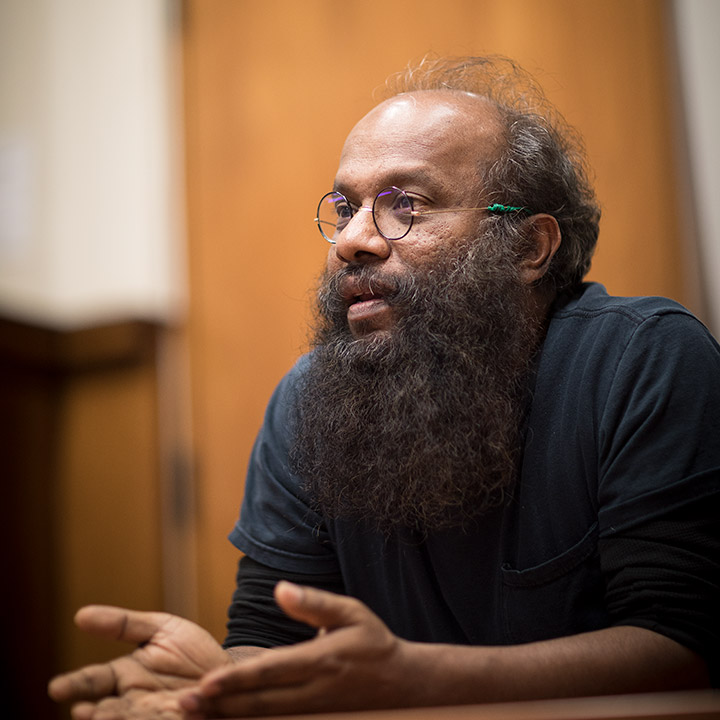
Jude Fernando is an Associate Professor at Clark University's Department of Sustainability and Social Justice, specializing in political economy, South Asian studies, and critical development theory. His research focuses on NGOs, sustainable development, and post-conflict reconstruction in Sri Lanka and Bangladesh. He holds a Ph.D. in Economics, Anthropology, and South Asian History from the University of Pennsylvania (1998) and a B.A. in Applied Economics from the University of Peradeniya (1986). His work critiques neoliberalism's impact on civil society and explores multispecies justice frameworks to address ecological and social crises. Key contributions include analyzing microfinance NGOs' controversial roles in South Asia and advocating for child-centered education initiatives through the Alfa Children and Youth Training Institute (ACUIS), established post-2004 Tsunami. His recent research examines Sri Lanka's economic collapse and the 2023 citizen uprising against racial capitalism. He has received grants such as USAID's Climate Change Adaptation initiative (2021-2022) and contributed to international conferences on South Asia. Notable publications include Political Economy of NGOs: State Formation in Sri Lanka and Bangladesh (2011) and articles on virocene theory, war memorials, and hyper-religiosity's role in ethnic conflict. Academic engagements include teaching at the University of Arizona and University of Colombo, alongside consultancy work for the Asia Foundation and World Bank. His research bridges academic inquiry with practical solutions through initiatives like ACUIS, emphasizing long-term educational and vocational training for displaced youth.
Temidayo Eseonu is a Lecturer in Politics and Policy at Lancaster University's Department of Politics, Philosophy and Religion. They specialize in racial justice, critical race theory, and participatory policy processes. Eseonu's work employs new institutionalism to analyze barriers and enablers of equitable policy design and implementation, emphasizing spaces where racially minoritized voices shape political outcomes. They founded the Racial Equity in Policy Network, a UK-based initiative connecting policymakers at all levels to address systemic racial inequalities. Research interests include intersections of race and urban governance, co-production of knowledge between communities and institutions, and democratic participation frameworks. Current projects involve a book merging critical race theory with democratic practice, and a study on belonging in education among minoritized youth in Manchester. Teaching focuses on race-related topics in politics and policy, including POLI100 (race, racism, and anti-racism) and PPR.397 (real-world policymaking theory and practice). They also supervise public policy PhD students interested in racial equity and policy design. Scientific Awards: President's Distinguished Achievement Award (University of Manchester) Richard Chapman Prize Active in grants and projects such as Horizon Europe's INSPIRE initiative (2024-2027), Creative Methodologies for Inclusive Healthcare (2025), and Community Dialogue (2024-2025). Engages in public outreach via events like the National Centre for Research Methods conference and the Royal Society of Arts Urban Futures Commission.
Dr. Craig Jones serves as a Lecturer in Management and Society at the Lancaster University Management School (LUMS), part of Lancaster University. His academic affiliations include the Work and Technology department and active participation in research groups such as the Centre for Scholarship and Innovation in Management Education, Critical Geographies, and the Pentland Centre. His research focuses on critical explorations of outer space ethics, reflexivity in academic practice, and postcolonial critiques of space narratives. Key areas include the socio-political implications of space privatization, decolonial approaches to space exploration, and researcher well-being in academia. Notable recent work includes analyzing the ethical dimensions of asteroid mining, critiquing Eurocentric space discourses, and examining the personal and professional challenges of academic research processes. His work frequently intersects with themes of environmental justice, critical theory, and futurism. Dr. Jones has received prestigious awards including the ESRC 1+3 Studentship Award and ESRC Postdoctoral Fellowship. His publications span academic journals and invited talks, demonstrating a commitment to interdisciplinary dialogue and public engagement with complex socio-scientific issues.
Cinnamon Bloss is a tenured Professor in Public Health, Psychiatry, and Medicine at the University of California San Diego (UCSD), serving as Founding Director of the Center for Empathy and Technology and Associate Director of the Institute for Empathy and Compassion. She holds leadership roles as Associate Dean for Academic Affairs in the Herbert Wertheim School of Public Health and previously served as a licensed clinical psychologist. Her research focuses on the societal and ethical implications of emerging technologies, including genomic sequencing, gene drives, and digital health tools. Dr. Bloss leads interdisciplinary projects funded by NIH, DARPA, and philanthropic organizations. Notable contributions include developing frameworks for stakeholder engagement in gene drive research and creating measures of empathy in healthcare. She chairs the NIH Novel and Exceptional Technology and Research Advisory Committee, advising on ethical and safety aspects of biotechnologies. Her work bridges science policy, public health, and empathy-driven clinical practices. Research areas span precision medicine, technology adoption, and health equity, with over 100 publications. Awards include the Carmel Prize for Research Excellence and the 2022 American Society of Human Genetics Mentorship Award. She pioneered a Technology and Precision Health concentration in UCSD’s MPH program and has mentored over 50 trainees. Key projects include studies on genomic utility perception, privacy in health data, and community engagement in biotechnology. She actively addresses ethical challenges in genomic medicine, digital surveillance, and global health interventions, advocating for compassionate and equitable science.
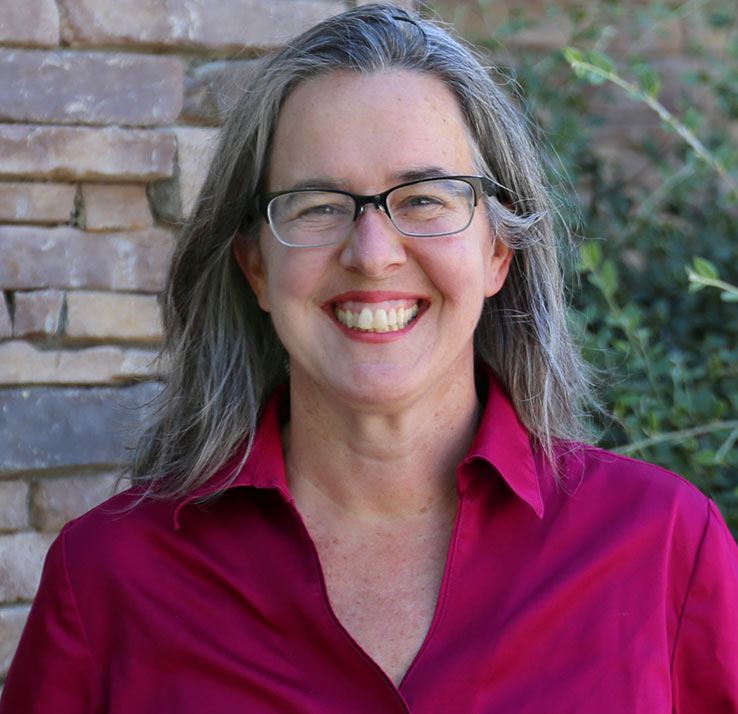
Sarah Brill Thach is an Assistant Professor and Co-Director of the UNC Asheville - UNC Gillings MPH Program at the Gillings School of Global Public Health, University of North Carolina at Chapel Hill. She leads the Place-Based Health Concentration and teaches courses in public health theory and practice. Her research focuses on rural health policy, community engagement in healthcare, and interprofessional education. She holds affiliations with the UNC Health Sciences at Mountain Area Health Education Center (MAHEC) in Asheville, NC. Education: MPH in Health Behavior & Health Education, UNC Chapel Hill (1997) BA in Social Anthropology & Women’s Studies, Harvard University (1991) Research Interests: Intersection of public health and primary care, rural healthcare access, and community-engaged interventions. Key initiatives include: Training primary care providers in geriatric care Developing school-based health centers Evaluating community health assessments in Western NC Pioneering PBS series-based social determinants of health education Teaching & Service: Leads practicum opportunities for Asheville students, teaches place-based public health courses, and serves on MAHEC's Interprofessional Education Team. Previously led anti-racism community dialogues and workshops. Awards: 2022 Rural Health Policy Fellow (National Rural Health Association) 2019 Distinguished Fellow Award 2013-2015 Jim Bernstein Community Health Leadership Fellow Labs/Teams: Collaborates with the Gillings Innovation Labs and North Carolina Institute for Public Health on rural health initiatives.
Sowmya Maheswaran is a Research Fellow and PhD candidate at Humboldt University Berlin, affiliated with the Institute for European Ethnology (IfEE) and the Berlin Institute for Empirical Integration and Migration Research (BIM). She currently works as a research associate in the project 'Transforming Solidarities. Practices and Infrastructures in the Migration Society' at Humboldt University, Berlin University Alliance. Her educational background includes a Master of Arts in Ethnology from Goethe University Frankfurt am Main (2020), a Second Bachelor of Arts in Ethnology (2019), and a First Bachelor of Arts in Educational Sciences/Pedagogy (2017). Her research focuses on global cultures of resistance, transnational organization, and political subjectivation in contexts of violence and displacement. Specifically, she examines postcolonial negotiations of racism, nationalism, and migration/flight, particularly in war and post-war situations. Her PhD research takes an ethnographic approach to Tamil movements and struggles in Sri Lanka and the diaspora. Additionally, she collaborates with Timo Dorsch on research concerning logics of violence and global capitalism through infrastructure and development projects in Mexico and Sri Lanka. Her methodological approach emphasizes critical ethnography as a tool for understanding political subjectivity in marginalized communities. Her publications demonstrate a consistent focus on Sri Lankan politics, migration, and resistance movements, with particular emphasis on Tamil experiences. Her work spans academic journals, policy-oriented publications, and journalistic outlets, showing her commitment to both scholarly and public-facing scholarship that bridges academic research with real-world political concerns. Hans-Böckler Foundation Doctoral Scholarship As a Research Fellow, she has been actively involved in research projects since 2021, including her current role as a research associate. Her work bridges academic research with political consultancy and journalism, particularly on human rights topics and Sri Lanka. She has served as a freelance research and political consultant on human rights topics since 2020, and as a freelance journalist since 2019, primarily focusing on Sri Lanka. Her research contributes to understanding how marginalized communities organize resistance and build solidarity across borders under conditions of violence and displacement.
Anna Livia Brand is an Associate Professor at the University of California, Berkeley, affiliated with the Department of Landscape Architecture & Environmental Planning. Her research critically examines racial landscapes, spatial justice, and Black geographies, focusing on how planning and design perpetuate racial exclusion. She holds a PhD in Urban Planning from MIT, an MURP from the University of New Orleans, and a BArch from Tulane University. Brand teaches courses such as LDARCH140 Social and Psychological Factors in Open Space Design and LDARCH254 Racial Landscapes . Her work bridges academia and activism, emphasizing Black place-making and anti-racist methodologies. Notable research includes studies on New Orleans's Claiborne Avenue and Montgomery's memorial landscapes. Her publications explore themes like racial capitalism, emancipatory green justice, and the spatial legacies of systemic racism. She has contributed to ACME: An International Journal for Critical Geographies , Environment and Planning D , and edited volumes on Black geographies and urban justice. Brand’s community engagement focuses on marginalized urban communities, advocating for equitable planning through frameworks like reparative spatial practices and decolonial methodologies. Her work challenges conventional urban theories to center racialized spatial experiences and liberatory urban futures.
Dr. Anna Hood is a Lecturer in Psychology at the Division of Psychology & Mental Health, University of Manchester, and Policy Director of the Manchester Centre for Health Psychology. She holds a PhD from Washington University in St. Louis and is licensed as a clinical health psychologist in the US and HCPC-registered in the UK. Her work focuses on biological, psychological, and social challenges in young people with chronic pain, particularly sickle cell disease. She advocates for anti-racism frameworks in healthcare and co-develops patient-centered interventions. Education: PhD in Biological Interventions to Improve Cognition in Children with Sickle Cell Disease (Washington University, 2018), MA in Psychology (Washington University, 2014), BA (California State University, 2012). Research emphasizes decolonizing psychology curricula, pain inequities, and improving patient engagement. She collaborates internationally on projects addressing structural barriers and health disparities. Notable awards include the American Society of Hematology Abstract Achievement Award and the Edward A. Bouchet Fellowship. Her grants include NIH-funded research and leadership in initiatives like the Excellence in Diversity PhD Scholarship Programme. Labs/Teams: Manchester Centre for Health Psychology, Engage-HU Study Team, ENTRUST-PE Framework Collaborative.
Sheryl Reimer-Kirkham is the Dean of Nursing at Trinity Western University (TWU), appointed in 2019. She holds a PhD in Nursing from the University of British Columbia (UBC), alongside degrees from UBC and the University of Victoria. Her research focuses on equity, healthcare ethics, spirituality, and global health, with notable projects addressing human rights and albinism in Sub-Saharan Africa and religious pluralism in healthcare settings. She leads international initiatives like the 'Mothering & Albinism' project, advocating for marginalized communities. Reimer-Kirkham is a Fellow of the Canadian Academy of Nursing and a member of the Royal Society of Canada’s College of New Scholars. She teaches advanced nursing philosophy, ethics, and knowledge translation, emphasizing equity and postcolonial feminist frameworks. Her work bridges academia, policy, and clinical practice, fostering global health equity and ethical care. Education: PhD in Nursing, University of British Columbia Masters of Science in Nursing, University of British Columbia Bachelor of Science in Nursing, University of Victoria Research Interests: Reimer-Kirkham’s work explores the intersection of religion, race, gender, and equity in healthcare. Key areas include spiritual caregiving, palliative care ethics, cultural safety, and human rights advocacy for marginalized groups. She develops frameworks like the Knowledge-AS-Action model to enhance knowledge translation in nursing education and practice. Grants & Projects: CIHR-funded project ($489,600) on human rights and albinism in Tanzania, South Africa, and Ghana SSHRC Insight Grant ($289,592) on mothering and albinism resilience Global collaborations addressing prayer in healthcare and equity in palliative care Awards & Affiliations: Co-Director, TWU Centre for Equity & Global Engagement Adjunct Associate Professorships at University of Calgary and University of Victoria Member, Royal Society of Canada’s College of New Scholars Recipient of UBC’s Centenary Medal of Distinction (2019) Teaching & Leadership: Reimer-Kirkham teaches courses in nursing philosophy, ethics, and global health policy. She champions equity-oriented education and innovative clinical placements. Her leadership in TWU’s nursing program emphasizes interdisciplinary collaboration and social justice. Labs & Teams: She leads the Mothering & Albinism research team and collaborates with global networks on human rights advocacy. Her work integrates participatory methods and policy engagement to address systemic inequities.