Heejoo Kim is an Assistant Professor in Motion Design and Animation at the University of Connecticut . Her work focuses on the intersection of digital media and visual storytelling, with an emphasis on animation techniques and motion design principles. Email: heejoo.kim@uconn.edu Contact: Based at the Storrs campus
Lillian Fritz-Laylin is a Professor in the Department of Biology at the University of Massachusetts Amherst, where her research program investigates the evolution and diversification of cellular motility mechanisms across eukaryotic lineages. Her work bridges cell biology, evolutionary genomics, and biophysics to understand fundamental questions about cytoskeletal evolution. Her educational background includes: B.A. from the University of California, Berkeley (2003) Ph.D. from the University of California, Berkeley (2010) Postdoctoral training at the University of California, San Francisco (2010-2017) Dr. Fritz-Laylin's research centers on Quantitative Evolutionary Cell Biology, specifically examining how cell crawling mechanisms evolved through comparative studies of diverse organisms including Naegleria gruberi, Batrachochytrium dendrobatidis, human neutrophils, and insect cells. Her lab integrates comparative genomics, phylogenetics, and advanced microscopy to dissect the molecular basis of cytoskeletal networks, with particular focus on actin and microtubule dynamics. This approach reveals both conserved core mechanisms and lineage-specific innovations in cellular motility. Analysis of her publication record shows consistent emphasis on protist genomics and cytoskeletal evolution, with frequent use of Naegleria as a model system. Her work demonstrates how molecular adaptations in cytoskeletal regulators drive phenotypic diversity across eukaryotes, while maintaining core cellular functions. The research spans evolutionary cell biology, quantitative imaging, and the application of genomic tools to non-traditional model organisms. Scientific awards: No awards were documented in the provided materials. Regarding advising and grants, the available documentation does not specify current advisees or active grant funding, though her extensive publication record suggests ongoing research support. The Fritz-Laylin Lab operates at the intersection of multiple disciplines, utilizing a unique combination of free-living protists, fungal pathogens, and human cells to investigate evolutionary principles of cellular organization. The lab's collaborative approach connects molecular cell biology with broad evolutionary questions, maintaining active partnerships across microbiology, genomics, and biophysics research communities.
Jeremiah D. Davis is a Professor and Director of the National Poultry Technology Center in the Department of Biosystems Engineering at Auburn University's College of Engineering. His expertise focuses on engineering solutions for sustainable and efficient poultry production systems. His educational background includes: Ph.D. in Agricultural Engineering from Iowa State University M.S. in Biosystems and Agricultural Engineering from the University of Kentucky B.S. in Agricultural Engineering from Texas A&M University Dr. Davis's research centers on commercial poultry housing systems, environmental control for animal housing, instrumentation and sampling methods, water and energy conservation in agriculture, and animal instrumentation and tracking. His work integrates engineering principles with animal science to enhance welfare, sustainability, and productivity in poultry operations through innovations in lighting, thermal management, and resource efficiency. Analysis of his 2023-2025 publications reveals dominant themes in optimizing broiler house environments, particularly lighting systems (including GAP-certified natural illumination and LED technology), thermal performance, feed efficiency, and water conservation. His research demonstrates strong industry relevance through field validation of protocols for feed spillage measurement and spatial modeling of environmental parameters. No specific scientific awards were mentioned in the provided text. Information regarding Dr. Davis's student advising activities and research grants was not available in the source material. As Director of the National Poultry Technology Center, he leads research initiatives focused on developing practical engineering solutions for poultry housing, environmental control systems, and resource conservation technologies serving the global poultry industry.
Jack Beck is a Professor and Undergraduate Program Director for Production in the School of Film and Animation at Rochester Institute of Technology's College of Art and Design. He holds an MFA from the University of Iowa and a BA from Denison University. Beck's research focuses on film sound theory, cinematic AI representations, and image-sound relationships in media. His scholarly work investigates voice-body dualities, dialogue manipulation as aesthetic strategy, and Bressonian complementarity principles. Recent publications analyze the integration of artificial intelligence in cinematic narratives and the development of balanced audiovisual referent systems. Creative outputs include award-winning films like 'Stari Grad' (screened at 117 festivals internationally) and multimedia installations exploring electronic image manipulation. Beck teaches graduate and undergraduate courses in production processes, film sound theory, and thesis development, emphasizing both technical filmmaking skills and theoretical frameworks for audiovisual design.
Professor Adriana Ianieri is a Full Professor at the University of Parma's Department of Food and Pharmaceutical Sciences, specializing in Food Inspection and Hygiene. With 30 years of expertise, her research focuses on microbiological risks in food of animal origin, pathogenic bacteria (e.g., Salmonella, Campylobacter), biofilm formation, antibiotic resistance, and decontamination technologies. She has held leadership roles, including Director of the Department of Food Sciences at the University of Teramo (2001–2004) and Director of a postgraduate school in Food Inspection (1999–2005). She is a member of EFSA expert panels, the CNSA National Committee for Food Safety (Ministry of Health), and the Scientific Committee for a Sino-European PhD program. She coordinates national and EU projects, including the COST Action on bacterial colonization in food environments. Her teaching spans Food Hygiene, Biotechnology in Food Quality, and Veterinary Medicine courses. She has published over 200 papers, emphasizing food safety, microbial contamination, and biotechnological solutions. Her work bridges academia and practical applications, addressing both microbiological and chemical risks in food systems.
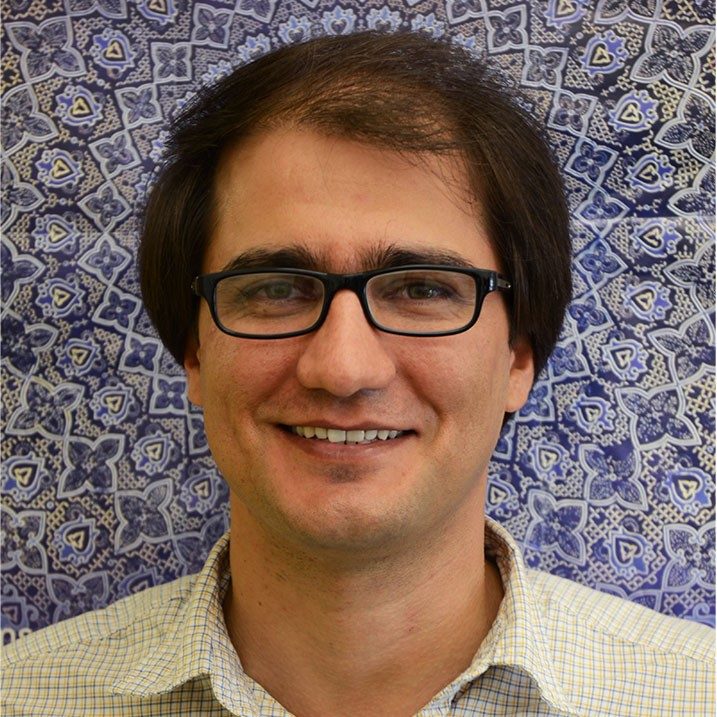
Hodjat Pendar is an Instructor in the Department of Mechanical Engineering at Virginia Tech, part of the College of Engineering. His research focuses on biomechanics, animal locomotion, robotics, and inverse problems, with particular emphasis on insect physiology and fluid dynamics. He holds a Ph.D. in Engineering Mechanics from Virginia Tech (2015), and M.Sc. and B.Sc. degrees in Mechanical Engineering from Sharif University of Technology (2004 and 2002, respectively). His research interests span biomechanical systems analysis, including the study of animal locomotion mechanics, fluid-structure interactions in robotics, and physiological responses to environmental factors like gravity. His work integrates computational tools for data inversion and uncertainty estimation, particularly in respirometry systems, and explores functional compartmentalization in insect circulatory systems. Pendar’s publications highlight trends in biomimetic robotics design, optimization of caudal fin dynamics for swimming efficiency, and the mechanical adaptations of insects to gravitational and hemolymph pressure challenges. His studies bridge mechanical engineering principles with biological systems, offering insights into both natural and engineered systems. No scientific awards are explicitly listed for Dr. Pendar. His advising and grant activities are not detailed in the provided information, and no affiliated labs or teams are mentioned.
Marcia Ostrom is an Associate Professor and Extension Specialist in the School of the Environment and Food Systems Program at Washington State University. She leads interdisciplinary research and extension programs focused on sustainability and equity in food systems, including initiatives like the Small Farms Program , Cultivating Success Program , and Immigrants in Agriculture Program . Her work addresses systemic inequities in agricultural extension and has been recognized with awards from institutions including the Fulbright Program and W.K. Kellogg Foundation. Dr. Ostrom holds a Ph.D. in Agroecology from the University of Wisconsin, an M.S. in Agriculture from Cornell University, and an A.B. in Environmental Science from Harvard University. She teaches undergraduate and graduate courses on sustainable agriculture and advises students in agroecology and food systems research. Her research interests span agroecology , environmental sociology , and participatory action research , with a focus on values-based supply chains , policy reforms , and community engagement . Recent work includes pioneering silvopasture systems to mitigate wildfire risk and advancing racial equity in cooperative extension programs through the Coming Together for Racial Understanding (CTRU) initiative. Her publications between 2000-2024 reflect a sustained commitment to equity-driven innovation , farmer-led research , and systemic change . Key themes include participatory approaches to urban agriculture, gender dynamics in farmers markets, and the socio-ecological impacts of agroecological practices. Awards: WSU Excellence Award, Fulbright Fellowship, Kellogg Foundation Grant Grants: W.K. Kellogg Foundation, USDA-NIFA Labs/Teams: Food Systems Program, CTRU Leadership Team
Audrey Ruple, DVM, MS, PhD, DACVPM, MRCVS, is an Associate Professor in Quantitative Epidemiology at the Department of Population Health Sciences, Virginia-Maryland College of Veterinary Medicine, Virginia Tech. She also serves as the Metcalf Professor of Veterinary Medical Informatics and Program Director of the Biomedical and Veterinary Sciences Graduate Program. Her research focuses on One Health, the intersection of human, animal, and environmental health, with a particular emphasis on cancer and aging in companion dogs as models for improving human and animal health outcomes. Dr. Ruple has held academic positions at Purdue University (2015–2021) before joining Virginia Tech in 2021. Education includes a PhD in Cell and Molecular Biology (2014) and DVM (2008) from Colorado State University, alongside an MS in Epidemiology (2011) and BS in Microbiology (2002). Board-certified by the American College of Veterinary Preventive Medicine (2013) and a member of the Royal College of Veterinary Surgeons, she actively contributes to professional organizations like the American College of Veterinary Preventive Medicine and the American College of Epidemiology. Her research integrates epidemiological methods and One Health principles to address complex health challenges. Notable work includes the Dog Aging Project, a large-scale initiative leveraging canine models to study aging mechanisms and environmental health impacts. Key areas include cancer biology, environmental contaminant exposure, and the role of diet and lifestyle in canine health. Dr. Ruple’s publications emphasize predictive modeling using veterinary data to inform human public health strategies and advancing evidence-based veterinary practices. Professional memberships span veterinary epidemiology, public health, and cancer research organizations. Her academic leadership includes roles in graduate program direction and cross-disciplinary initiatives bridging animal and human health research.
Holly Vickery is a Lecturer in Animal Behaviour and Welfare at Harper Adams University. She specializes in applied research, participatory engagement, and science communication, aiming to bridge academic findings with practical stakeholder applications. Her academic department is Animal Health, Behaviour and Welfare, and she is part of the Animal Behaviour and Welfare Research Group. Educationally, she earned a first-class BSc in Animal Behaviour and Welfare from the University of Bristol (2018) and a PhD from the University of Reading (2022), focusing on goat kid behavior during milk feeding and weaning. Her teaching roles include Module Leader for 'Advances in Farm Animal Health, Welfare, and Behaviour' and 'Principles of Animal Behaviour and Welfare,' alongside tutoring in Animal Welfare Ethics, Research Methods, and Production Science. She holds leadership roles as Deputy Chair of the British Society of Animal Science’s Early Careers Committee and Impact and Outreach Officer for the Animal Welfare Research Network’s Early Careers group. Holly received the 2022 RSPCA/BSAS PRAISE award for her impactful early-career research. Her work emphasizes translational science and community engagement, though specific grants or lab affiliations are not detailed in the text.
Anna Oriolo is an Associate Professor of International Law and Lecturer of EU Law and International Criminal Law at the University of Salerno, Department of Legal Sciences (School of Law). Her research focuses on international criminal law, European Union law, constitutional law, and judicial cooperation, with a particular emphasis on human rights, religious freedom, and legal jurisprudence. She has contributed extensively to analyzing case law from international tribunals and European courts, addressing topics such as religious attire bans, corporate social responsibility, maritime security, and water resource management. Her academic work includes over 95 papers and two books, with recent publications exploring the legitimacy of European 'burqa ban' policies, EU animal welfare law, and child protection in tourism sectors. She has also examined judicial precedents from the European Court of Human Rights and international criminal tribunals, contributing to the understanding of non-discrimination standards and legal frameworks for combating piracy and terrorism. While no specific scientific awards are listed, her scholarly contributions reflect a deep engagement with interdisciplinary legal issues, balancing national and international legal perspectives. She advises on legal education and policy, though no student names or grants are explicitly mentioned in the provided texts.
Steve Higgins, Ph.D., is an Adjunct Assistant Professor and Director of Environmental Compliance at the University of Kentucky's Martin-Gatton College of Agriculture, Food and Environment. His work focuses on environmental compliance and agricultural engineering solutions for livestock management. Higgins recently authored AEN-179: Water Barriers for Cattle , addressing water quality and contamination prevention in livestock systems. His research emphasizes sustainable practices to reduce environmental impacts while improving animal welfare. Education: Ph.D. in Agricultural Engineering (Inferred from title) Higgins' expertise lies at the intersection of engineering and environmental science, with a focus on livestock infrastructure design. His publication highlights practical solutions to prevent water contamination from feed, manure, and sediment in cattle watering systems, leveraging anaerobic fermentation principles and barrier technologies. This aligns with broader efforts to enhance biosecurity and resource efficiency in agricultural operations.
Gary Bader is a Professor at The Donnelly Centre, University of Toronto, specializing in Computational Biology and Systems Biology. His research focuses on integrating molecular interaction networks, pathway analysis, and 'omics data to understand disease mechanisms and develop clinical models. He leads the Bader Lab, which develops computational tools like Cytoscape and Pathway Commons, and explores single-cell genomics to study tissue function, cancer, and regenerative processes. Education: BSc Biochemistry (McGill University), PhD Biochemistry (University of Toronto), Postdoc at Memorial Sloan-Kettering Cancer Center. Affiliations: Donnelly Centre, Department of Molecular Genetics, Department of Computer Science, Lunenfeld-Tanenbaum Research Institute, Princess Margaret Cancer Centre, and CIFAR MacMillan Multiscale Program. Research interests include causal mechanistic modeling of disease (e.g., pediatric ependymoma therapies), ecosystem theories of tissue function, and open-source bioinformatics tools. Recent work emphasizes single-cell and spatial transcriptomics to map cellular heterogeneity in diseases like cancer, liver pathologies, and neurological disorders. Collaborations span computational methods, stem cell biology, and clinical translation.
Susan Jeavons is a Senior Lecturer in Companion Animal Health and Welfare within the Department of Animal Health, Behaviour and Welfare at Harper Adams University. She leads modules including Applied Companion Animal Health, Welfare and Behaviour; Companion Animal Studies; Animal Ethics; Principles of Animal Behaviour and Welfare; and Animal Management and Welfare. She also serves as a guest lecturer for the Harper Keele Veterinary School. Her expertise encompasses animal collection management, welfare ethics, companion animal behavior (with specialization in rabbit husbandry), and animal-related legislation. She chairs the Academic Misconduct Panel and Mitigating Circumstances Panel, and is Deputy Chair of the Quality Standards Committee. She holds a Fellowship from the Higher Education Academy (FHEA).
Lois Balmer is a Principle Research Fellow at the UWA Medical School, specializing in Internal Medicine at The University of Western Australia. Her research focuses on genetics, mouse models, and nutrition science, with contributions to the UN Sustainable Development Goals related to health and well-being. Her work explores topics such as dietary components like S-methyl cysteine sulfoxide, genetic diversity in mouse strains, and their implications for human health. Recent studies include analyzing Brassica vegetables' nutrient changes during cooking and developing food composition databases for dietary assessment. Dr. Balmer has led grants investigating cell-cell communication in nerve repair and collaborated on projects involving genetically diverse mouse models. Her publications span food science, immunology, and genetic studies, with a focus on translating biochemical findings into practical health insights. She has supervised research contributing to over 26 publications and actively collaborates internationally, as evidenced by her extensive network and contributions to peer-reviewed journals. Her work bridges molecular biology and public health, emphasizing the application of scientific findings to real-world health challenges.
Chris Eliasmith is a Professor jointly appointed in the Systems Design Engineering and Philosophy departments at the University of Waterloo, with a cross-appointment to Computer Science. He is the Founding Director of the Centre for Theoretical Neuroscience and holds the Canada Research Chair in Theoretical Neuroscience. His research focuses on mathematical modeling of neural systems, including the Neural Engineering Framework (NEF) and Semantic Pointer Architecture (SPA), which underpin the world’s largest functional brain simulation, Spaun. He leads the Computational Neuroscience Research Group (CNRG), advancing neuromorphic computing, spiking neural networks, and cognitive modeling. Education: PhD in Neuroscience & Psychology (2000), Washington University in St. Louis MA in Philosophy (1995), University of Waterloo BASc in Systems Design Engineering (1994), University of Waterloo Research: His work integrates theoretical neuroscience with practical applications in robotics, AI, and neuromorphic hardware. Key contributions include the NEF, Spaun, and innovations like the Legendre Memory Unit (LMU) and Spatial Semantic Pointers (SSPs). His lab explores adaptive neural systems, decision-making models, and biologically plausible machine learning algorithms. Teaching: Recent courses include SYDE 556 (Simulating Neurobiological Systems), SYDE 750 (Topics in Systems Modelling), and PHIL 356 (Intelligence in Machines, Humans, and Other Animals). Awards: 2015 NSERC Polanyi Prize Labs & Projects: The CNRG develops tools like Nengo for simulating large-scale neural systems and collaborates on neuromorphic hardware platforms such as Loihi. Current projects span neural robotics, cognitive architectures, and biologically inspired AI systems.