Prof. Dr. Michaela Hau is a leading researcher in evolutionary physiology and endocrinology at the Max Planck Institute for Biological Intelligence in Seewiesen. Her work focuses on understanding how animals adapt physiologically to environmental challenges, particularly through studies on birds. She leads a research group investigating reproductive endocrinology, circadian systems, and stress hormone dynamics. Her team's recent work, including a 2022 study on great tits' glucocorticoid plasticity in response to temperature fluctuations, highlights her expertise in climate change biology and physiological adaptation. Michaela Hau's research integrates field studies with experimental approaches, emphasizing the interplay between ecology, evolution, and physiology. She has collaborated with institutions like the Düsseldorf University of Applied Sciences on innovative data visualization projects, such as student Evi Hoang's interactive website interpreting stress hormone data. Her research has been published in high-impact journals, addressing topics like hormone-environment interactions and the fitness consequences of reproductive strategies. Her advisory role includes mentoring PhD students like Marlene Oefele, who won a poster prize at an international symposium. While no personal awards are explicitly listed, her contributions have advanced understanding of avian endocrinology and climate resilience mechanisms.
Dr. Lawton Stewart serves as a Professor and Extension Coordinator in the Department of Animal and Dairy Science at the University of Georgia's College of Agricultural & Environmental Sciences. With over 15 years of experience at UGA, Dr. Stewart leads statewide extension and applied research initiatives focused on beef cattle production systems in Georgia, building a synergistic program that leverages knowledge, collaboration, communication, and technology to improve the livelihood of Georgia's beef cattle producers. Dr. Stewart's educational background includes: B.S. in Animal Science from the University of Georgia M.S. in Agronomy with emphasis in Forage Management from the University of Florida Ph.D. in Animal Science with emphasis in Ruminant Nutrition and Forage Utilization from Virginia Tech Post-Doctoral Research Fellowship at the University of Kentucky investigating nitrogen metabolism in ruminants Dr. Stewart's research and extension program focuses on beef cattle nutrition, management, and forage systems, with particular emphasis on improving production efficiency in Georgia's diverse beef operations. His work integrates fundamental animal science research with practical extension programming to address challenges specific to southeastern US agriculture. Key areas include optimizing beef-forage systems, evaluating preconditioning and backgrounding strategies, developing sustainable parasite control methods, and investigating the impacts of nutrition on reproductive performance. He actively explores opportunities in beef cattle production such as stockering and retained ownership to enhance producer profitability. Analysis of Dr. Stewart's recent scholarly output reveals a strong thematic focus on integrated beef-forage systems, with particular attention to alfalfa-bermudagrass mixtures, nutritional impacts on reproductive physiology, and innovative management strategies for southeastern production environments. His publications bridge fundamental research with practical applications, addressing challenges like cotton byproduct utilization, baleage production, and sustainable grazing systems while maintaining scientific rigor through collaborations across multiple institutions. Dr. Stewart has received recognition for his contributions to student development: Student Career Success Influencer Award (2023) As an active researcher, Dr. Stewart manages a substantial portfolio of funded projects totaling significant grant support, primarily through the Georgia Commodities Commission for Beef, Cotton Incorporated, Merck & Co., and the Georgia Farm Bureau Federation. His research program includes studies on parasite control, forage improvement, cotton byproduct utilization, and sustainable beef production systems. He coordinates the UGA Beef Team, providing travel and educational support for student competitions including the Elite Stockman Short Course and Top Hand Stockmanship and Stewardship Contest, demonstrating his commitment to developing the next generation of agricultural leaders. Dr. Stewart participates in multiple interdisciplinary research teams focused on beef-forage systems across the southeastern United States, collaborating with agronomists, animal scientists, and extension specialists to address complex challenges in beef production. His program maintains strong industry partnerships that ensure research addresses practical on-farm challenges while advancing scientific understanding of beef cattle production systems in the southeastern agricultural environment.
Professor Ufuk Karadavut serves at Karabük University Faculty of Medicine, Department of Basic Medical Sciences, where he holds the position of Professor and currently serves as Vice Dean. Previously, he was Dean of the Faculty of Medicine from 2021-2022 and has held multiple leadership roles including Head of Department since 2020. With an extensive publication record of 493 works and significant contributions to both medical and agricultural statistics, his career spans multiple Turkish universities including Ahi Evran University and Bingöl University. PhD, Selçuk University, Institute of Science (2001-2005) Bachelor's Degree, Ankara University, Faculty of Agriculture, Department of Animal Science (1987-1991) Professor Karadavut's research spans biostatistics, medical informatics, and agricultural statistics, with particular expertise in statistical experimental design. His work bridges healthcare applications (medical informatics, clinical data analysis) with agricultural science (crop breeding, animal husbandry). He has developed statistical methodologies applicable across diverse fields, from analyzing palliative care outcomes to optimizing chickpea breeding programs for drought tolerance. His research demonstrates a consistent pattern of applying advanced statistical techniques to solve practical problems in both medical and agricultural contexts. Analysis of his recent publications reveals a strong focus on applying statistical methodologies to address contemporary challenges. In medical informatics, he examines healthcare quality, medical education, and pandemic impacts. In agricultural science, his work centers on crop improvement (particularly chickpeas and other legumes) and animal breeding. His statistical approaches include multivariate analysis, QTL mapping, growth modeling, and machine learning techniques, demonstrating methodological versatility across disciplinary boundaries. While specific awards aren't detailed in the available information, his h-index of 11 (UNIS) and 8 (WoS), along with 583 total citations, indicate significant scholarly impact. His research has attracted funding from major Turkish research bodies including TÜBİTAK and university-supported projects. Professor Karadavut has supervised 13 theses across multiple institutions and taught diverse courses ranging from medical bioinformatics to agricultural statistics. His research portfolio includes 31 projects, with recent work focusing on climate change adaptation in livestock, medical informatics applications, and advanced statistical methodologies for agricultural research. He has collaborated extensively with researchers across multiple Turkish institutions, demonstrating strong interdisciplinary networking capabilities.
Prof. Dr. Volker Stefanski is a University Professor (W3) at the University of Hohenheim's Faculty of Agricultural Sciences, leading the Department of Behavioral Physiology of Livestock. He holds a Dr. rer. nat. from Bielefeld University (1991) and has held roles including Postdoc at UCLA (1993-1995), Research Associate and Privatdozent at the University of Bayreuth (1995-2005), and Head of Immunology at the Leibniz Institute for Zoo and Wildlife Research (2006-2009). His research focuses on stress biology, immunology, and animal physiology, particularly in livestock like pigs and laboratory models. Key areas include hormonal stress responses, immune system dynamics, and the interplay between social stress and health outcomes in animals. His work spans from molecular mechanisms (e.g., catecholamine effects on Salmonella) to applied studies on housing conditions and immunological practices in agriculture. Selected projects explore diurnal rhythms in pig immunity, microbiome shifts due to diets, and maternal stress impacts on offspring. His research emphasizes translational applications for improving animal welfare and disease resistance in farming systems. He contributes to interdisciplinary collaborations, integrating physiology, immunology, and behavioral studies.
Dr. Angela Maria Gonella-Diaza is an Assistant Professor in Beef Cattle Reproduction at the University of Florida's North Florida Research and Education Center. Born in Colombia, her early exposure to agricultural production shaped her career in veterinary science and reproductive physiology. She earned her DVM from the National University of Colombia, followed by a Master's in Reproductive Physiology and a Ph.D. at the University of São Paulo, Brazil. Her postdoctoral research focused on molecular patterns of reproductive tract receptivity in beef cows. Dr. Gonella-Diaza's work emphasizes improving reproductive efficiency in Bos indicus breeds through molecular, metabolomic, and genetic approaches. Her research interests include heat stress mitigation strategies, embryo transfer optimization, and the role of metabolomics in bovine reproduction. She has developed protocols for estrus synchronization and pregnancy diagnostics, contributing to practical advancements in beef cattle management. Key themes in her work include understanding how environmental factors like temperature and dietary supplements influence reproductive outcomes and offspring health. Dr. Gonella-Diaza has published extensively on topics such as conceptus survival mechanisms, maternal-offspring metabolic interactions, and the application of microRNA profiling to predict placental phenotypes. Her research bridges fundamental biology with applied agricultural solutions, aiming to enhance livestock productivity and sustainability in subtropical climates.
Cameron Muir is an Associate Professor in the Department of Psychology at Brock University. He holds a Ph.D. from McMaster University. His research focuses on behavioral neuroendocrinology, reproductive and stress physiology, and hormonal mechanisms in human sexual behavior and stress adaptation. He investigates steroid hormones' roles in reproduction, stress, aggression, and pheromonal communication, with a particular interest in how psychological events and environmental factors influence hormonal changes. Dr. Muir has conducted extensive studies on hormonal biomarkers (e.g., saliva, perspiration) and their relationship to stress, sexual behavior, and environmental estrogens. His work bridges animal models (rodent studies) and human research, exploring how steroids act as stress hormones and potential pheromones in mammals. His publications span stress physiology in children and athletes, hormonal disruptions in mice, and methodological advancements in steroid measurement. While no explicit awards are listed, his contributions to endocrinology and behavioral science are evident through his prolific research output. Dr. Muir’s advising and grants focus on interdisciplinary projects, though no specific grants or student advisees are detailed here. His research lab likely explores hormonal adaptations in dynamic environments, though no lab name is provided.
Dr. Hannah Stark is an Associate Professor and Head of English and Writing at the University of Tasmania's School of Humanities. Her work bridges literary studies, philosophy, and environmental humanities, focusing on themes like extinction, queer theory, and love's political dimensions. She leads the ARC-funded 'Beyond Extinction' project reconstructing the Thylacine archive. A 2018 Vice-Chancellor’s Award winner, she also coordinates researcher development programs. Education: PhD in Deleuze's Differential Ontology and the Problem of Ethics (University of Adelaide, 2011) BA (Hons) English (University of Adelaide, 2005) Research Interests: Feminist and queer theory applied to climate change and extinction Philosophies of love and posthuman kinship Nonhuman turn and critical plant studies Anthropocene cultural narratives and public sentiment Her Extinction and Memorial Culture (2023) and Feminist Theory After Deleuze (2016) exemplify her interdisciplinary approach. Key Projects: ARC-funded 'Beyond Extinction' (2020–2025) 'How to Do Politics with Love' (with Timothy Laurie) Awards & Recognition: 2018 Vice-Chancellor’s Exceptional Researcher Development Award ERS Theme Small Grants Award Supervision & Grants: Guided 9+ doctoral students on topics like posthumanism and climate fiction Secured $213k ARC funding for Thylacine research Coordinated Go8 Future Research Leaders Program (2019) Labs/Teams: Collaborates with global institutions like the University of Edinburgh on projects linking love ethics to environmental stewardship.
Dr. hab. Danuta Majewska is a Professor at the West Pomeranian University of Technology in Szczecin, Faculty of Biotechnology and Animal Breeding, Department of Monogastric Animal Sciences. She specializes in ratite breeding and poultry nutrition research, with particular focus on emus, ostriches, and quails. Her educational background includes: 1995: Master of Science in Animal Science, Agricultural University of Szczecin 1999: PhD in Agricultural Sciences, Agricultural University of Szczecin 2012: Habilitation in Agricultural Sciences, West Pomeranian University of Technology Professor Majewska's research focuses on breeding utility and improvement of techniques for emus and ostriches, evaluation of egg quality across various ratites, and assessment of commercial ratite products. Her work in poultry nutrition explores the use of oligosaccharides from lupin and pea seeds as natural productivity and immunity stimulators, along with quail nutrition optimization. Her research bridges theoretical knowledge with practical applications in modern poultry farming. Analysis of her publication record shows consistent research focus on ratite biology, particularly emu and ostrich reproduction and product quality. Her work demonstrates strong interdisciplinary connections between animal science, nutrition, and food chemistry, with increasing emphasis on practical applications for commercial poultry production. Her scientific contributions have been recognized through various academic achievements, though specific awards are not detailed in the available information. Professor Majewska has been actively involved in academic mentorship and research supervision, contributing to the development of young scientists in the field of animal science and biotechnology. Her research activities are closely associated with the Poultry Workshop at the Department of Monogastric Animal Sciences, where she conducts experimental studies on ratite breeding and nutrition.
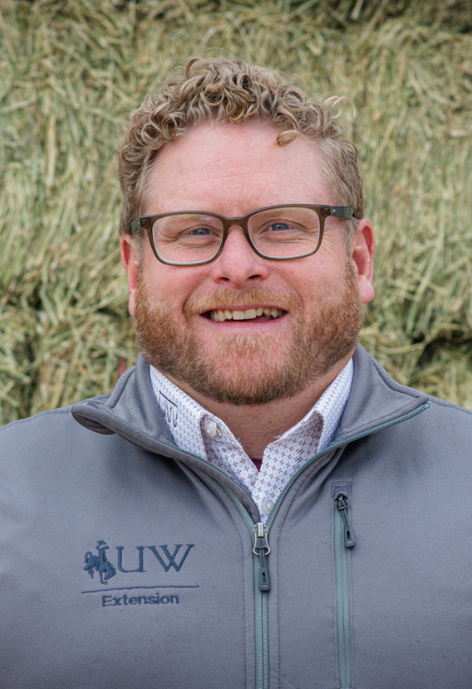
Dr. Whit Stewart is an Associate Professor and Extension Sheep Specialist at the University of Wyoming , affiliated with the Department of Animal Science . His work integrates research, teaching, and extension to enhance the sustainability, productivity, and resilience of the U.S. sheep industry. Education: B.S. in Agriculture Education, Brigham Young University - Idaho M.S. in Animal Science, Oregon State University Ph.D. in Animal Science, New Mexico State University Research Interests focus on alternative feedstuffs, mineral supplementation, range sheep crossbreeding, and the role of plant secondary compounds in sheep production systems. His teaching portfolio includes advanced sheep production, wool evaluation, and lamb feeding systems. Extension Interests emphasize adopting emerging technologies, on-farm research, and decision-making tools for producers. He also serves as faculty advisor to the UW Collegiate Wool Growers and coach of the UW Intercollegiate Wool Judging Team. Professional Experience spans roles at the University of Wyoming (2017–present), Montana State University (2015–2017), and prior positions in research and extension.
Cathy Whiting serves as a Professor in the Biology Department at the University of North Georgia, where she has taught since 2013 following prior appointments at Gainesville State College (1999-2012) and Wingate University (1994-1998). Her career spans over three decades with dual specializations in Vertebrate Physiology and Biology Education. Her educational background includes: Ph.D. in Zoology from the University of Florida (1994) M.S.T. in Zoology from the University of Florida (1989) B.S. in Biology from the University of Georgia (1985) Dr. Whiting's research integrates experimental physiology and pedagogical innovation. Current projects examine reptile reproductive biology through polypeptide growth factors, murine tissue responses to e-cigarette exposure including inflammatory markers, and concept mapping efficacy in medical/biology education. Her teaching philosophy emphasizes active learning techniques across courses like Human Anatomy and Physiology, Animal Physiology, and Histology. Recent publications demonstrate her commitment to evidence-based teaching, particularly the 2022 study on Biology Boot Camp's impact on freshman performance and her 2018 laboratory manual advancing student-centered anatomy education. She actively advises students in Biology, Pre-Medicine, Pre-Physician Assistant, Pre-Veterinary Medicine, and Pre-Nursing tracks while serving as Faculty Advisor for Baptist Collegiate Ministries.
Dr. Alexander Little serves as an Assistant Professor in the Department of Biology within McMaster University's Faculty of Science. His research bridges molecular mechanisms with ecological consequences across diverse animal systems. His primary research domains include: Animal physiological ecology and environmental stress responses Thyroid hormone signaling in thermal adaptation Epigenetic regulation of developmental plasticity Metabolic and cardiovascular adaptations in ectotherms Ecotoxicological impacts of environmental contaminants Over the past decade, his publication record demonstrates consistent focus on how environmental variation shapes physiological performance through molecular pathways. His work frequently examines thyroid hormone-mediated mechanisms linking environmental cues to epigenetic changes, particularly in thermal acclimation contexts. Recent articles highlight emerging concerns about climate change impacts on ectotherm physiology, with specific attention to sex-specific vulnerabilities and recovery dynamics following environmental stressors. Dr. Little actively contributes to academic training through courses including Environmental Physiology (BIOLOGY 728), Animal Physiology - Regulatory Systems (BIOLOGY 3UU3), and Cell Physiology (BIOLOGY 3P03).
Ružica Trailović is an Associate Professor at the Department of Animal Husbandry within the Faculty of Veterinary Medicine at the University of Belgrade. She teaches a diverse range of courses including Clinical Pathology and Therapy of Hoofed Animals, Clinical Pathology and Therapy of Cats, Animal Husbandry, Cynology and Feline Science, Breeding and Care of Sports Horses, Sports Medicine, Breeding and Care of Dogs and Cats, Veterinary Genetics, and Biotechnology in Veterinary Medicine. Her educational background, while not explicitly detailed in the provided text, is evident from her extensive scholarly work and teaching responsibilities. She holds a doctorate (dr) and has achieved the rank of Associate Professor (vanredni profesor) at a prestigious Serbian academic institution. Professor Trailović's research focuses primarily on veterinary genetics and the conservation of autochthonous Balkan livestock breeds. Her work spans multiple species including sheep (particularly Zackel, Pramenka, and Karakachan breeds), horses (Yugoslav Trotters), dogs (Yugoslav Shepherds), goats, and donkeys. She has made significant contributions to understanding blood protein polymorphisms, genetic diversity, morphometric characteristics, and welfare assessment of traditional Balkan animal breeds. Her research methodology often combines classical animal husbandry approaches with modern genetic and biochemical analysis techniques. Her publication record shows a consistent research trajectory from the 1990s through 2020, with particular emphasis on preserving Balkan native livestock breeds through scientific documentation and genetic analysis. Her work demonstrates strong regional collaboration across Southeast Europe, particularly with researchers from Serbia, Kosovo, Macedonia, and other Balkan countries. Professor Trailović has co-authored numerous textbooks including 'Animal Husbandry - Farm and Social Animals' (2020), 'Animal Husbandry - Practical Guide' (multiple editions from 2007-2018), 'Horse Breeding and Equestrian Sports' (2009), and 'Diagnosis and Therapy of Horse Diseases' (2009), establishing herself as a leading authority in Serbian veterinary education. She has been actively involved in mentoring students through research projects, thesis supervision, and classroom instruction across multiple veterinary disciplines. Her teaching portfolio reflects comprehensive expertise spanning from basic animal husbandry to specialized clinical and genetic topics in veterinary medicine. Professor Trailović is part of a well-established research group at the University of Belgrade's Faculty of Veterinary Medicine, collaborating extensively with colleagues including Mila Savić, Vladimir Dimitrijević, and Dragiša Trailović (possibly a relative given the shared surname), indicating a strong research tradition in animal genetics and breeding at this institution.
Wen Huang is an Associate Professor at the Michigan State University , affiliated with the BioMolecular Science Gateway Faculty and the Genetics & Genome Sciences Program . His research integrates genetics, genomics, and bioinformatics to study complex traits in Drosophila melanogaster and livestock species. Research Interests : Elucidating genetic architectures of quantitative traits Transposon dynamics and alternative splicing regulation Livestock genomics for agricultural improvement Publication Trends : Recent work focuses on genome-wide association studies (GWAS), telomere-to-telomere assemblies, and multi-omic analyses of gene regulation in pigs and Drosophila . Collaborative Initiatives : Co-leads large-scale projects like FarmGTEx and RT2T Consortium, aiming to improve functional annotation of animal genomes.
Mellissa Crosswhite is an Assistant Professor in the Department of Animal and Food Sciences at Oklahoma State University, where she focuses on applied ruminant reproductive physiology, particularly in beef cattle and on-farm research. She holds a PhD in Animal Sciences from North Dakota State University (2017), an MS (2014), and a BS from the University of Florida (2012). Her teaching responsibilities include courses on livestock anatomy and physiology, animal growth, and professional development. She also advises undergraduate students and leads organizations such as Sigma Alpha and the Oklahoma Collegiate Cattlemen's Association. Her research explores reproductive success in livestock, with a focus on hormonal interventions and nutritional impacts during gestation. Recent work includes optimizing estrus synchronization protocols and studying the effects of trace minerals on pregnancy outcomes. She has secured funding from the USDA NCR-SARE for projects like the 'Effects of pre-breeding administration of injectable trace mineral supplements on subsequent reproductive performance in beef herds.' Teaching methodologies emphasize active learning and peer-led teams to enhance student engagement. Her scholarly contributions span 15+ peer-reviewed articles, focusing on topics like CIDR device efficacy, opioid pharmacology in veterinary contexts, and cultural intelligence in agricultural education.
Dr. Sarah Collins is a Professor in Musicology at the Conservatorium of Music, University of Western Australia (UWA). She also serves as Deputy Dean (HDR Supervision and Research Training) at UWA and holds roles including Chair of the UWA Animal Ethics Committee and Co-editor of Music & Letters (Oxford UP). Her research focuses on the intersections of music, aesthetics, and intellectual history, with notable expertise in modernism, cultural history, and political theory. Education: Collins holds a PhD in Cultural History and Musicology from the University of Queensland (2010), a Bachelor of Music (Hons) in Musicology and Performance (2006), and a Bachelor of Laws (2011), also from UQ. Research Interests: Her work examines music’s role in late-nineteenth and early-twentieth-century cultural and political contexts, including modernist ideologies, aesthetic liberalism, and the relationship between music and literature. Recent projects include an ARC-funded study on automated labor’s cultural history and collaborations with interdisciplinary groups like the UWA Tech & Policy Lab. Publications and Awards: Collins has authored acclaimed books such as Lateness and Modernism (2019) and edited volumes like Music and Victorian Liberalism (2019). She is a Fellow of the Australian Academy of the Humanities and recipient of the prestigious Dent Medal (2024), McCredie Musicological Award (2019), and other honors. Teaching and Engagement: She teaches courses on contemporary debates in music, music and society, and sound studies. Public engagements include talks on AI, generative creativity, and music’s societal roles, featured in venues like the BBC Radio and WA Museum Boola Bardip.