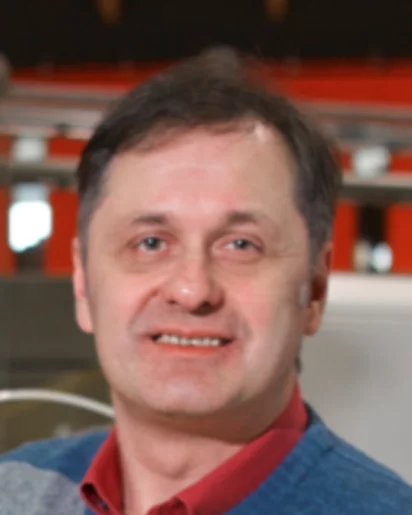
Thomas Allison is an Associate Professor in Physics and Astronomy at Stony Brook University, specializing in ultrafast spectroscopy techniques. He leads research on frequency comb development and time-resolved dynamics. Research Focus: Develops advanced laser systems including cavity-enhanced frequency combs for applications in time-resolved photoemission (tr-ARPES) and transient absorption spectroscopy. Studies ultrafast electron dynamics in graphene, 2D materials, and molecular systems with femtosecond resolution. Recent publications emphasize materials characterization (50%) and instrumentation development (40%). Research is funded by NSF, DOE, and AFOSR, including a major MRI award for broadband frequency comb development. Laboratory Facilities: Operates state-of-the-art laser labs with capabilities in time-of-flight momentum microscopy, cavity-enhanced ultrafast spectroscopy, and high-harmonic generation. Current projects include NSF NeXUS facility development for advanced XUV sources. Students & Training: Mentored 5 Ph.D. graduates and multiple postdocs in laser physics and spectroscopy. Current group includes 3 graduate students and 2 postdocs developing novel spectroscopic methods.
Zhonghui Nie is a researcher at the Advanced Research Center for Nanolithography (ARCNL) in the Netherlands, specializing in ultrafast spectroscopy and extreme ultraviolet (EUV) science. His work bridges experimental physics and nanoscale metrology, with a focus on developing table-top soft X-ray sources for applications in the water window spectral region. PhD in physics from Nanjing University (2019) Postdoctoral research at Nanjing University of Science and Technology Current affiliation: ARCNL (since June 2021) Zhonghui Nie's research centers on ultrafast light-matter interactions in strongly correlated materials , using advanced techniques like high harmonic generation spectroscopy . His work includes investigating photo-induced metal-insulator transitions and designing time-resolved angle-resolved photoelectron emission spectroscopy (TR-ARPES) systems. At ARCNL, Nie leads efforts in creating intense soft X-ray sources for nano-optics and materials science applications. His technical expertise spans lattice-electron coupling and correlated material dynamics , with implications for nanotechnology and quantum materials research.
Prof. Dr. Helmut Zacharias is a distinguished Professor of Experimental Physics at the Physical Institute of the University of Münster, where he leads a dynamic research group focused on ultrafast surface dynamics, quantum materials, and molecular spintronics. He is affiliated with the Center for Soft Nanoscience (SoN) and the Center for Nanotechnology (CeNTech), and has led numerous national and international research projects funded by DFG, EU Horizon 2020, and Volkswagen Foundation. His education includes a Dr. rer. nat. from the University of Bielefeld (1978) and habilitation there in 1984. He has held leadership roles as Managing Director of the Physical Institute, Dean of the Physics Department, and co-founder of CeNTech and SoN. He has also served on the ERC Starting Grant Panel and organized major international conferences. PhD, University of Bielefeld (1978) Habilitation, University of Bielefeld (1984) His research centers on chiral molecule-based spin filters , graphene and nanoribbons , ultrafast electron dynamics , and interstellar photochemistry . His group uses advanced techniques such as time-resolved photoemission, high-harmonic generation, and free-electron lasers (FLASH, European XFEL) to probe electron behavior at surfaces. The work has significant implications for spintronics, quantum computing, and astrochemistry. The recent publications reflect a strong focus on chirality-induced spin selectivity (CISS) , electron dynamics in 2D materials , and ultrafast pump-probe experiments at FELs . Themes include spin filtering through DNA and bacteriorhodopsin layers, band structure engineering in graphene nanoribbons, and desorption dynamics in interstellar ice analogs. His scientific honors include: Habilitation Prize, Westfälisch-Lippische Universitätsgesellschaft (1984) Heisenberg Fellowship, DFG (1986) Prof. Zacharias has supervised over 30 doctoral students and numerous master’s and bachelor’s candidates, fostering a strong training environment. His group has received significant funding for projects such as CHIRAL (spintronics), EUROPAH (interstellar molecules), and development of optical systems for FLASH and European XFEL. He collaborates internationally with institutions including Weizmann Institute, Max Planck Institutes, TU Berlin, and UC Berkeley. His laboratory specializes in ultrafast laser systems, including OPCPA, Mott polarimeters, and PEEM setups, enabling cutting-edge experiments in surface science and quantum materials. The group continues to push boundaries in understanding electron-spin interactions in chiral systems and dynamics in low-dimensional carbon materials.
V. Music is a Research Fellow specializing in ultrafast molecular dynamics using free-electron laser technology. They completed their PhD at the University of Kassel in 2024 with a dissertation titled 'Towards the investigation of ultrafast dynamics in chiral systems using free-electron lasers.' Their primary affiliation appears to be with research groups utilizing facilities like the European XFEL and FLASH (Free-Electron-LASer in Hamburg). Dr. Music's research focuses on the interaction of intense XUV/X-ray radiation with chiral and polyatomic molecules. Their work encompasses photodissociation studies, photoelectron circular dichroism, and ultrafast structural dynamics. They have made significant contributions to understanding wavelength-dependent fragmentation patterns, particularly in chiral systems like 1-iodo-2-methyl-butane. Recent publications demonstrate expertise in advanced experimental techniques including pump-probe schemes, ion velocity-map imaging, and electron time-of-flight spectroscopy. Their research often involves collaboration with major European facilities like the Small Quantum Systems (SQS) instrument at European XFEL and the FLASH facility in Hamburg. Key research trends include the study of chiral photochemistry, molecular fragmentation dynamics under intense X-ray pulses, and the development of methodologies for time-resolved, site-specific investigations of randomly orientated chiral molecules. Their work bridges atomic, molecular, and optical physics with chemical dynamics. Dr. Music has established themselves as a significant contributor to the field of ultrafast molecular science with numerous publications in high-impact journals including Scientific Reports, Physical Review series, and Nature Communications.
Langer, B. is a researcher affiliated with DESY (Deutsches Elektronen-Synchrotron) specializing in atomic physics and spectroscopy. Their work primarily focuses on photoionization processes, electron correlation phenomena, and angular distribution measurements of electrons following atomic excitation. Langer's research interests span atomic physics with emphasis on photoionization dynamics, Auger spectroscopy, and electron correlation effects. Their work often involves precise measurements of angular distributions of electrons following photoexcitation, providing insights into quantum mechanical processes at the atomic level. Much of their research utilizes synchrotron radiation sources to probe atomic structure and dynamics with high precision. Langer's publication record shows a consistent focus on experimental atomic physics from the early 1990s through the late 1990s, with particular attention to helium, argon, xenon, and krypton systems. Their work demonstrates expertise in interpreting complex electron emission patterns and testing theoretical models against experimental data. Langer has collaborated extensively with researchers including Becker, U., Wehlitz, R., Berrah, N., and others at major research facilities. Their publications appear in prestigious journals including Physical Review Letters, Journal of Physics B, and Physica Scripta, indicating significant contributions to the field of atomic physics.
Meng Han is an active Assistant Professor in the Department of Physics at Kansas State University, affiliated with the James R. Macdonald Laboratory (JRML). He leads an experimental research group focused on cutting-edge ultrafast laser technologies and their applications in attosecond science and remote sensing. His work bridges fundamental quantum dynamics with practical instrumentation development. Education PhD in Optics, Peking University (2015-2020) Postdoctoral Research, ETH Zurich (2020-2023) as Marie Skłodowska-Curie Fellow His research centers on CEP-stabilized near-single-cycle laser systems, short isolated attosecond pulse generation, and laser-induced plasma phenomena for remote sensing applications. Current projects include air lasing, fluorescence diagnostics, and acoustic wave generation from plasmas, enabling breakthroughs in atmospheric monitoring and quantum control. His group actively develops novel laser technologies for water-window soft X-ray applications. Analysis of his 15 most recent publications reveals dominant trends in attosecond metrology, chiral photoionization dynamics, and laser-plasma interactions. His work consistently appears in top-tier journals including Nature, Science Advances, and Physical Review Letters, demonstrating leadership in quantum electron dynamics and strong-field physics. Key innovations include CEP-dependent air sensing techniques and attosecond chronoscopy methods for measuring fundamental quantum processes. Scientific Awards Marie Skłodowska-Curie Fellowship (FP-RESOMUS) Professor Han mentors a dynamic research team including postdocs (Mahmudul Hasan, Jingsong Gao), graduate students (Zach Eisenhutt, Yiming Yuan), and undergraduate researchers (Caitlin Solis). His group has secured significant infrastructure including industrial Yb-based lasers and custom pulse compression systems. Recent grants support the development of water-window attosecond pulses and angle-resolved photoelectron streaking experiments. The JRML group operates a state-of-the-art attosecond science facility featuring CEP-stabilized laser systems, vacuum chambers for molecular beam experiments, and advanced detection systems. Recent milestones include generating single isolated attosecond pulses (2025), measuring laser-waveform-dependent air fluorescence (2024), and direct acoustic detection of CEP in ambient air (2024). The lab continues to pioneer techniques for quantum control and remote atmospheric sensing.
Jayita Nayak is an Assistant Professor in the Department of Physics at Indian Institute of Technology Kanpur . She specializes in condensed-matter experimentation and electronic-structure studies, employing advanced spectroscopic techniques such as angle-resolved photoemission spectroscopy (ARPES) and hard X-ray photoelectron spectroscopy. Education PhD (Physics), Devi Ahilya Viswavidyalaya, Indore (2015) MSc (Physics), University of Burdwan, West Bengal (2007) BSc (Physics Hons.), M. U. C. Women’s College under University of Burdwan (2005) Research Interests Her research focuses on the electronic structure of complex quantum materials. Using ARPES , she investigates topological insulators and high-temperature superconductors, probing their surface states and correlation effects. She also applies hard X-ray photoelectron spectroscopy to study quasicrystals and Heusler alloys, revealing bulk electronic signatures and magnetic ordering phenomena. Scientific Awards & Fellowships Joint Entrance Screening Test (JEST) – All India Rank 80 (2008) Junior Research Fellowship, CSIR, Government of India (2008) UGC-NET (LS), University Grants Commission (2006) Professional & Post-doctoral Experience Post-doctoral researcher, University of California, Davis (Jun 2018 – Feb 2019, Advisor: Dr. Inna Vishik) Post-doctoral researcher, Max Planck Institute for Chemical Physics of Solids, Germany (Apr 2015 – May 2018, Advisors: Prof. Claudia Felser & Dr. Gerhard H. Fecher) She is based in office SL-217 of the Department of Physics, IIT Kanpur, and can be reached at jnayak@iitk.ac.in or jayitanayak@gmail.com .
Dr. Arnaud Rouzée is a Department Head A1 and Project Coordinator of 'Time-resolved XUV science' at the Max Born Institute in Berlin. His research focuses on strong field processes and ultrafast imaging techniques using XUV and X-ray radiation to study molecular dynamics. He earned his Ph.D. in 2007 from Dijon University, with a thesis on laser-induced molecular alignment. He has held roles including Postdoctoral Fellow at AMOLF and guest scientist at the Max Born Institute. His work explores multielectron dynamics, electron-nuclear couplings, and imaging extended systems like clusters. Education: Ph.D. (2004-2007): Dijon University, Thesis: 'Laser-induced molecular alignment of asymmetric top molecules' Lecturer (2004-2007) at Dijon University via French CIES Monitor Research Focus: Strong field ionization Ultrafast XUV/X-ray imaging Femtosecond/attosecond molecular dynamics Projects: Coordinator of Project 2.1: 'Time-resolved XUV science' Member of Project 2.2: 'Strong-field few-body physics' His 2024 publications include studies on nitrogen dioxide photochemistry and molecular photoswitches, while 2023 works address CS2 structural dynamics and CF3I photoionization. Key themes are ultrafast spectroscopy, Coulomb explosion imaging, and laser-driven molecular control. No scientific awards are explicitly listed.
Fulvio Pamigiani is Professor of Condensed Matter Physics at the Department of Physics, Faculty of Science, University of Trieste. He also serves as a Member of the Global Faculty at the University of Cologne, contributing to the Quantum Matter and Information Key Profile Area (KPA III). His educational background includes a 'laurea' in physics from the University of Milan in 1973. Professor Pamigiani's research interests focus on condensed matter physics, particularly the non-equilibrium properties of strongly correlated electron systems and magnetics dynamics in high temperature superconductors. His work involves radiation-matter interactions using advanced and coherent light sources such as synchrotrons and Free Electron Lasers. He has dedicated significant effort to planning and designing new experiments and instrumentation for time-resolved and spin resolved ARPES (Angle Resolved Photoelectron Spectroscopy). Throughout his career, Professor Pamigiani has held significant research positions including visiting scientist roles at IBM Research Centers in California and collaboration with Lawrence Berkeley National Laboratory (LBNL). He has coordinated major research projects including the Fermi@elettra free electron laser project and multiple MIUR-PRIN projects on femtosecond time-resolved experiments. Zernike professor by the University of Groningen (The Netherlands) for the academic year 2012 Professor Pamigiani has served as editor for prestigious journals including Nuclear Instruments and Methods In Physics Research (A) since 2006 and PHYSICS LETTERS REPORTS since 2012. He has co-authored approximately 220 articles in prestigious physics journals. At the University of Cologne, Professor Pamigiani contributes through lectures to Master's and PhD students on radiation-matter interactions and engages in joint research activities with colleagues in the QM2 area, particularly with Prof. P.H.M. van Loosdrecht.
Stephen M Hayden is a Professor of Physics at the School of Physics, University of Bristol. Holding a Ph.D. from the University of Cambridge (Cantab.), he leads research in condensed matter physics with a focus on quantum materials and electron behavior in solids. His work bridges experimental techniques with theoretical understanding of complex electronic states. His research interests center on understanding novel electronic states in solids, particularly high-temperature superconductivity and the fractional quantum Hall effect. Hayden's group investigates these phenomena by measuring low-energy magnetic and electronic excitations in materials, with current focus on layered transition metal oxide systems such as ruthenates and cuprates. His fingerprint reveals significant contributions to photoemission spectroscopy (42%), photoelectron spectroscopy (37%), neutron diffraction (34%), and related fields in condensed matter physics. Analysis of his recent publications shows a strong trend toward quantum materials research, particularly cuprate superconductors and nickelates. His work combines traditional condensed matter techniques like neutron scattering with emerging computational approaches including machine learning for analyzing dynamical correlations in quantum systems. The research spans fundamental quantum phenomena to potential applications in next-generation electronic materials. Hayden has led multiple significant research projects including the EPSRC Equipment Award for a High Pressure Oxygen Furnace (2020-2022), research on Electronic Nematic Phases in Correlated Electron Systems (2012-2016), and earlier work on Novel Quantum Order in Interacting Electron Metals (2004-2009). He maintains active collaborations through memberships in organizations including the Technical University of Munich (2013-2017), Science and Technologies Facilities Council (2013-2016), and Diamond Light Source Ltd (since 2011). His research group, part of the Quantum & Soft Matter research theme at Bristol, utilizes facilities at Institut Laue-Langevin and other major research centers for neutron scattering experiments.
Dr. Viktoriia Kornich is a Temporary Lecturer (Habilitandin) and Junior Group Leader at the Chair of Theoretical Physics IV, University of Würzburg, Germany. She holds a PhD from the University of Basel and has held research positions at leading institutions including the University of Luxembourg, University of Wisconsin-Madison, and Delft University of Technology. Her research focuses on non-Hermitian superconductivity, topological quantum materials, Majorana fermions, and quantum nanostructures. Key areas include Andreev bound states, PT-symmetric systems, and phonon-mediated effects in quantum devices. Her work bridges theoretical condensed matter physics with quantum computing applications. Since 2023, she leads a research group within the Collaborative Research Center (SFB) 1170, exploring frontier topics in theoretical physics. Recent publications highlight advancements in non-Hermitian superconductors, Majorana-based quantum operations, and hybrid nanostructures. Her contributions have been disseminated through high-impact journals, with a focus on experimental可观测性 of topological phases. Dr. Kornich's academic journey includes a B.S. and M.S. from Moscow Institute of Physics and Technology, followed by doctoral and postdoctoral training in Switzerland, Luxembourg, and the U.S. She is affiliated with the University of Würzburg's Physics Department, contributing to both teaching and cutting-edge research initiatives in quantum materials and theoretical physics.
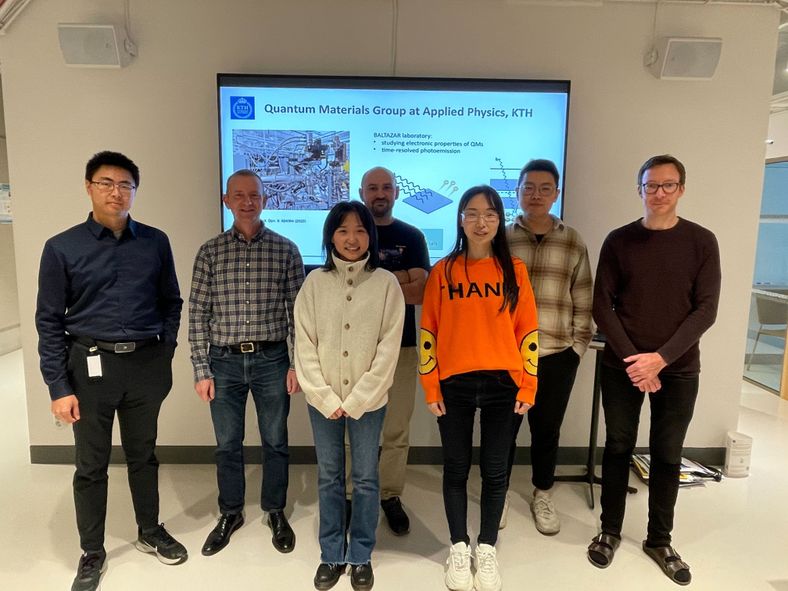
Oscar Tjernberg is a Professor of Quantum Matter at KTH Royal Institute of Technology's Department of Light and Material Physics. He leads a research group focused on quantum materials, particularly exploring superconductivity, topological materials, and strongly correlated electron systems. His work uses advanced experimental techniques such as time- and angle-resolved photoelectron spectroscopy (tr-ARPES) and utilizes facilities like the BALTAZAR laboratory. Research interests include the interplay between quantum effects and macroscopic properties in materials like cuprate superconductors, topological crystalline insulators, and Weyl semimetals. Key contributions include studies of Bogoliubov quasiparticle dynamics in electron-doped cuprates, emergence of Weyl fermions in magnetic materials, and development of ultrafast light sources for spectroscopy. His experimental portfolio includes collaborations with synchrotron light sources and free electron lasers, enabling high-resolution investigations of electronic structures. Current projects include Cooper pair spectroscopy (COPS) to directly probe superconducting mechanisms and topological materials with noncentrosymmetric structures. Notable grants and funding come from the Knut and Alice Wallenberg Foundation, Olle Engkvist Foundation, and Carl Trygger Foundation. He teaches the Degree Project in Applied Physics (Second Cycle) and actively supervises research in his group.
Vladimir Strokov is a beamline scientist at the Paul Scherrer Institute (PSI), affiliated with the Center for Photon Science and the Laboratory for Advanced Spectroscopy and X-ray Sources. Since 2023, he has also taught a course on Electron Spectroscopy for master's and PhD students at the University of Zurich. With over 260 publications, his career spans research positions at institutions across Europe, including Chalmers University of Technology and Universität Augsburg. Education: Graduated from the Physics Faculty of St. Petersburg State University PhD from the Research Institute of Physics of St. Petersburg State University Habilitation (senior doctorate) from the Institute of Analytic Instrumentation, St. Petersburg Research focuses on quantum materials using advanced spectroscopic techniques, particularly soft-X-ray Angle-Resolved Photoelectron Spectroscopy (ARPES). His work targets: Electronic structure of bulk materials, nanostructures, and impurities Instrumentation development for synchrotron beamlines and spin-resolved detectors Applications in correlated oxides, semiconductor heterostructures, and topological materials Publications emphasize ARPES methodology and quantum materials analysis, with trends including: Beamline design and spectrometer innovation Electronic structure of oxide interfaces and heterojunctions Many-body effects in correlated electron systems Spin-resolved spectroscopy techniques Institutional leadership includes: Design/operation of the ADRESS beamline at Swiss Light Source Development of the iMott multichannel spin analyzer Optics design for high-resolution X-ray spectrometers
Jacques GHIJSEN is a researcher specializing in material science, electronic structure, and spectroscopy techniques. He has served as Principal Investigator (PI) on multiple projects including studies of transition-metal substituted semiconductors, workfunction optimization in superlattices, and photoelectron analysis of solid-solid interfaces. His research leverages synchrotron radiation facilities like ESRF and Hasylab. Research Interests: His work focuses on carbon nanotubes, photoemission spectroscopy, electronic properties of surfaces/interfaces, and nanomaterial characterization. Key methodologies include angle-resolved photoemission, X-ray spectroscopy, and chemical modification techniques. Publications: His 136 research outputs demonstrate consistent focus on advanced spectroscopy applications in material science, with recent work emphasizing spatial resolution in photoemission, graphene doping mechanisms, and carbon nanotube functionalization. Professional Activities: Actively participates in scientific conferences and committees, including ESRF Council meetings and COST Action MP0901 NanoTP. Organized events for the F.R.S.-FNRS synchrotron radiation contact group. Supervision: Oversaw 7 research works, though specific student names are unavailable.
Alexie BOYER is a CNRS Researcher at the Institut de Physique et Chimie des Matériaux de Strasbourg (IPCMS), affiliated with the University of Strasbourg, where he works in the Department of Ultrafast Optics and Nanophotonics (DON). His research focuses on ultrafast molecular dynamics in gas and liquid phases using extreme ultraviolet (XUV) light to probe electronic (attosecond scale) and vibrational (picosecond scale) processes through advanced photoelectron spectroscopy techniques. Education PhD in Ultrafast Physics (2022) from Université Claude Bernard Lyon 1, thesis titled: ‘Attosecond and femtosecond dynamics induced by ultrafast XUV photoionisation in neutral molecules and complex biomolecular ions’ Master’s degree in Atomic and Molecular Physics, Condensed Matter and Optics (2019) from Université Claude Bernard Lyon 1 Bachelor’s degree in Physical Chemistry (2017) from Université de Lorraine Research Focus Dr. BOYER investigates photoionization-triggered dynamics across timescales, with expertise in: Attosecond interferometry for molecular charge distribution mapping Isotope effects in ultrafast internal conversion processes Conical intersections in organic molecules probed by XUV light Solvent and substituent effects on biomolecular relaxation Vibrational energy transfer in polycyclic aromatic hydrocarbons Publication Trends His recent articles consistently explore time-resolved molecular dynamics using XUV/X-ray techniques, with emphasis on isotope effects (deuterium), methyl substitution impacts on aromatic systems, conical intersections in heterocycles, and charge distribution metrology. Biomolecular applications have increased since 2022, particularly for nucleobases and peptides. Awards and Recognition PhD thesis price Saint-Gobain 2022 (Société Française de Physique) JSPS Postdoctoral Fellowship (2022-2024) at Kyoto University Laboratory Context At IPCMS-DON, Dr. BOYER utilizes high-harmonic generation light sources and develops attosecond-resolved spectroscopic methods to study quantum dynamics in complex molecular systems, with ongoing work extending to biological environments.