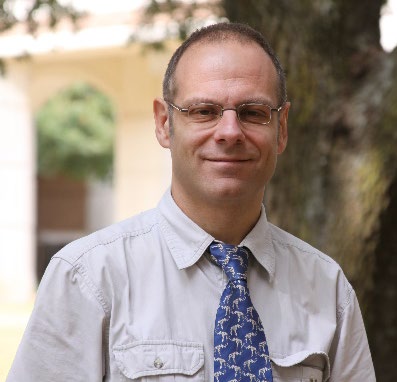
Marleen Henkens is an Education/Research Officer at Wageningen University's Virology department, focusing on virus-vector interactions and RNA interference mechanisms in mosquito cells. Research areas: Flavivirus infections, superinfection exclusion, mosquito-borne arboviruses (West Nile, Zika, Chikungunya), and small RNA sequencing. Collaborative work: Experimental transmission studies of ZIKV/USUV in Aedes japonicus, and genotype analyses of Spodoptera litura nucleopolyhedrovirus. Her recent publications highlight trends in RNAi-mediated viral exclusion dynamics and ecological adaptation of insect-specific flaviviruses, with cross-disciplinary implications for vector biology and antiviral strategies. She has contributed to datasets on mosquito transcriptomics and viral ecology.
Robert Carey is a Professor of Biology and Director of Biochemistry & Molecular Biology at Lebanon Valley College. His research focuses on plant genetics and evolutionary biology, particularly the molecular mechanisms of plant growth and development. Education: B.A. from Hiram College Ph.D. from The Pennsylvania State University Research examines the evolution of gene families in plants , with specific emphasis on expansin superfamily proteins in cell walls. His work spans comparative genomics of angiosperms, bryophytes, and gymnosperms to understand evolutionary conservation and divergence. Publications reveal trends in plant cell wall protein analysis across species like Amborella trichopoda , Selaginella moellendorffii , and mosses. Studies integrate genomic history, phylogenetics, and functional biology to map gene family dynamics. Scientific awards: Thomas Rhys Vickroy Distinguished Teaching Award (2017) His advising includes students like Seader V.H. , Jennifer M. Thornsberry , and Nathan K. Hepler , who have coauthored research on expansin superfamily evolution.
Dr. Nicholas Rowe is a CNRS Research Director (DR-2) affiliated with AMAP (Botanique et Bioinformatique de l’Architecture des Plantes) in Montpellier, France. His research focuses on the biomechanics of plant growth forms, examining evolutionary adaptations across diverse habitats and plant groups. Research combines living tropical plant studies (South America, Madagascar, Southeast Asia) with fossil record analyses to investigate biomechanical trait evolution Fieldwork-driven methodology utilizes specialized measuring devices and lab-based biomechanical analysis His work addresses fundamental questions about plant architecture evolution and its role in angiosperm diversification. Key affiliations include the AMAP biomechanics lab in Montpellier and CNRS (French National Center for Scientific Research). Education: Ph.D. in Botany from the University of Bristol (1986).
Nan Crystal Arens is a Professor of Geoscience and Chair of the Geoscience Department at Hobart and William Smith Colleges (HWS), where she has been a faculty member since 2001. She holds degrees from The Pennsylvania State University (B.S., M.S.) and Harvard University (M.A., Ph.D.). Her academic work bridges geoscience, environmental studies, and science education. B.S., The Pennsylvania State University, 1987 M.S., The Pennsylvania State University, 1988 M.A., Harvard University, 1991 Ph.D., Harvard University, 1993 Her research spans paleobotany, macroevolution, and Earth history, with recent emphasis on environmental microplastics and the application of remote sensing to pollution mapping. She is particularly known for the 'Press-Pulse' theory of mass extinction, developed with Ian D. West, which has found applications beyond paleontology, including in cancer research. Collaborating with Prof. Emily Fisher in Psychological Science, she investigates how science education can reduce motivated reasoning about climate change. Her work often involves student co-authors, reflecting her commitment to undergraduate research mentorship. Her publications reveal a strong interdisciplinary trend, combining geoscience with psychology, environmental health, and data analytics. Key themes include climate change education, fossil flora analysis, and innovative methods for detecting environmental contamination. She teaches courses such as Introduction to Geology, Earth History, and Data Analytics Capstone, emphasizing research, statistical methods, and scientific communication. Geoscience education and motivated reasoning Environmental microplastics in precipitation Remote sensing of mercury pollution Press-Pulse theory of extinction Angiosperm evolution in the Cretaceous Nan Crystal Arens is actively engaged in professional service, including board membership at the Paleontological Research Institute and editorial work for the American Fern Journal. Her scholarly collaborations extend across disciplines and institutions, and she has mentored numerous undergraduate researchers. She has also contributed to science communication through public relations and freelance writing earlier in her career.
Shannon Straub is an Associate Professor of Biology at Hobart and William Smith Colleges, where she also serves as Co-Chair of the Biochemistry program and Chair of the Biology Department. She joined the faculty in 2014 and is based in Eaton Hall. She earned her Ph.D. from Cornell University and her B.A. from the University of Colorado. Institution: Hobart and William Smith Colleges School: School of Sciences Department: Department of Biology Position: Associate Professor, Co-Chair (Biochemistry), Chair (Biology) Her research lies at the intersection of plant systematics, phylogenomics, and genome evolution, with a primary focus on the milkweed and dogbane family (Apocynaceae). She investigates evolutionary relationships across multiple scales—from species diversification in Asclepias to deep phylogenetic patterns across the family—using hundreds of nuclear genes and whole chloroplast genomes. A key interest is the evolution of pyrrolizidine alkaloid biosynthesis, a chemical defense pathway, and how genomic data can inform ecological and evolutionary hypotheses such as defense de-escalation. Her recent publications highlight methodological innovations (e.g., Hyb-Seq, indel coding pipelines) and large-scale genomic resources (e.g., a draft genome for Asclepias syriaca ). These works span leading journals like American Journal of Botany , PeerJ , and New Phytologist , reflecting interdisciplinary contributions to molecular evolution, bioinformatics, and plant systematics. American Society of Plant Taxonomists Botanical Society of America Society of Systematic Biologists She teaches foundational and advanced courses including BIOL 167 (Plants & People), BIOL 220 (General Genetics), BIOL 228 (The Biology of Plants), BIOL 380 (Genomics), and BIOL 460 (Senior Seminar - Genome Collisions). Her teaching integrates molecular techniques with evolutionary theory and emphasizes student engagement in genomic research. There are no listed students or awards in the provided text, but her leadership roles suggest active mentorship and departmental service. Her research lab generates genomic and transcriptomic datasets that support both her own studies and collaborative efforts in plant evolutionary biology. She is actively involved in advancing phylogenomic methods and applying them to resolve complex evolutionary histories in plants.
Prof. Jens O. Herrle is a Full Professor of Micropaleontology and Paleoceanography at Goethe University Frankfurt's Institute of Geosciences. His research focuses on the effects of climate change on marine ecosystems, paleoceanographic processes, and the evolution of calcareous microorganisms. He leads the Micropaleontology & Paleoceanography Group, collaborating with the Integrated Ocean Drilling Program (IODP). Herrle holds a PhD from the University of Tübingen and a Diploma in Geology from Ruhr-University Bochum. His research investigates Ceno- and Mesozoic climate extremes, including Oceanic Anoxic Events and their impacts on marine biogeochemical cycles. Key methods include biostratigraphy, stable isotopes, and trace element analysis. Herrle has advised PhD students like Jessica Zirkel and Rim Zrida. Notable awards include the Joubin James Guest Professorship (2015–2016) and the Alfried Krupp Fellowship (2009). Publications emphasize coccolithophore evolution, paleoenvironmental reconstruction, and the interplay between biotic changes and global climate. His work contributes to understanding future climate change impacts through geological records of Earth system perturbations.
Mercè Galbany Casals is a Professor in the Department of Animal Biology, Plant Biology and Ecology at Universitat Autònoma de Barcelona. Her work focuses on phylogenetics, biogeography, and evolutionary biology of Asteraceae (specifically Helichrysum species), with contributions to understanding plant invasions and climate stability. She leads the EVOLUTIONARY AND BIOGEOGRAPHIC HISTORY OF HELICHRYSUM IN THE AFROMONTANE AND AFROALPINE ARCHIPELAGOS project (2020–2024). Her research integrates cladistics, molecular phylogenetics, and ecological modeling, addressing topics like lineage diversification in Madagascar’s mountains and climate stability over geological timescales. Collaborations span global institutions, including work on angiosperm evolution and invasive species dynamics in Mediterranean and Asian regions.
Dr. Tianhua He serves as an Adjunct Research Fellow at the School of Molecular and Life Sciences within the Faculty of Science and Engineering at Curtin University, Perth, Australia. His research activities are centered in Room 224 of the Applied Science Building (Building 311) on the Curtin Perth campus, where he maintains active laboratory and computational research operations. His research portfolio spans multiple interconnected domains: Evolutionary adaptations to fire in Proteaceae and other fire-prone ecosystems Genomic architecture of crop adaptation, particularly in barley Plant ecology and community assembly in biodiversity hotspots Statistical and methodological approaches in ecological research Conservation genetics of endangered plant species Recent publications (2022-2025) reveal a strategic research trajectory integrating classical plant ecology with cutting-edge genomics. His work demonstrates consistent leadership in elucidating fire adaptation mechanisms across geological timescales while simultaneously applying genomic insights to contemporary crop improvement challenges. Notable trends include increasing international collaboration networks, methodological innovations in statistical ecology, and translational applications of basic research to agricultural sustainability. Dr. He maintains extensive research partnerships across global institutions, particularly with Australian universities and international consortia focused on plant genomics and ecological resilience. His collaborative approach is evidenced by frequent multi-institutional publications with large author teams addressing complex questions in plant evolution and crop science.
Barbara S. Carlsward is a Professor in the Department of Biological Sciences at Eastern Illinois University (EIU). Her research integrates plant anatomy and molecular phylogenetics to investigate plant evolution, with a focus on the Orchidaceae family and economically significant species like the ghost orchid ( Dendrophylax lindenii ). She collaborates with researchers at the University of Florida and contributes to projects examining diverse plant groups including Saxifragales, Caryophyllales, and Malvaceae. Ph.D., M.S. in Botany, University of Florida B.S. in Physics, University of Florida Dr. Carlsward's research interests center on: Orchidaceae evolution and taxonomy Molecular phylogenetics applications Plant anatomical adaptations Mycorrhizal community interactions Industrial hemp fiber ecology Floral biology and pollination mechanisms Her publication record shows a strong focus on plant structure-function relationships, particularly in orchids, with collaborative work extending to materials science (synthetic fiber analysis) and agroforestry (chestnut seedling research). She actively mentors students at EIU through research opportunities and teaches courses like BIO 1550G-003 and BIO 3612-001.
Michael J. Moore is a Professor of Biology at Oberlin College in the College of Arts and Sciences. His research focuses on plant systematics, with particular interests in flowering plant evolution, molecular phylogenetics, and phylogeography. Dr. Moore's laboratory investigates evolutionary relationships among plants by generating and analyzing DNA sequence data, with special emphasis on the desert Southwest flora and the diverse plant order Caryophyllales. Dr. Moore's research interests include: Plant Systematics and Evolutionary Biology Molecular Phylogenetics and Phylogeography Gypsum Endemism in the Chihuahuan Desert Evolution of Breeding Systems in Hawaiian Plants Flowering Plant Phylogenomics Adaptation to Extreme Environments His lab conducts research that spans fieldwork, laboratory work, and computational analysis. Students in the Moore Lab learn various techniques including DNA isolation, sequence editing and analysis, and cloning. During summers, the lab often conducts expeditions to the desert Southwest to collect plants for research. Dr. Moore's work has significantly contributed to understanding angiosperm phylogeny, particularly through plastid genome sequencing. Dr. Moore has received funding for his research, including being part of a team that secured a $500,000 grant from the National Science Foundation to purchase and install a high-performance computing cluster at Oberlin College. His research has been featured in media outlets such as the "In Defense of Plants" podcast. Dr. Moore teaches several courses including Organismal Biology (BIOL 100), Plant Systematics (BIOL 323/324), Biogeography (BIOL 423), and a First-Year Seminar on biodiversity conservation. He emphasizes hands-on learning and research opportunities for undergraduate students.
Wesley Crump serves as an Extension Assistant Professor in the Department of Horticulture at Utah State University's College of Agriculture and Applied Sciences. His work bridges academic research and community engagement in Wasatch County, Utah. Research Focus: Molecular genetics of sweet cherry quality traits (fruit size, cracking resistance, firmness) and phylogenetic studies of Penstemon species Community Programs: Leads the Wasatch Back Fruit Tree Project (citizen science for local adaptation research), Master Gardener program coordination, and soil testing outreach Outreach Activities: Delivers monthly gardening tips, cooking/textile workshops, and 4-H youth programs His scientific publications emphasize genomic prediction, DNA test development, and comparative plastome analysis. Current projects involve documenting locally adapted fruit trees (apple/peach) through public participation.
David Alvarez-Ponce is an Associate Professor in the Department of Biology at the University of Nevada, Reno. His research focuses on evolutionary genetics, comparative genomics, and bioinformatics, particularly how evolutionary forces like purifying and positive selection shape genetic diversity. He leads the Bioinformatics & Genome Evolution Lab , which investigates molecular networks (metabolic, signal transduction, protein-protein interactions) and their evolutionary dynamics. Ph.D. , Genetics, University of Barcelona (2010) M.S. , Genetics, University of Barcelona (2007) B.S. , Biology, University of Barcelona (2005) B.S. , Computer Science, Open University of Catalonia (2015) His work explores the origins of eukaryotes through genomic fusion, organismal adaptation to temperature extremes, and the development of bioinformatics software. Recent publications highlight trends in genomic architecture, protein evolution, and pathogen genomics. He has received the Mousel-Feltner Award for Excellence in Research and the Zuckerkandl Prize for his contributions to molecular evolution. Current research integrates large-scale comparative genomics to decode evolutionary patterns in gene networks, with a focus on DNA variability and natural selection. His lab also examines the interplay between gene duplication, network centrality, and epigenetic regulation. Students and collaborators in his lab engage in multidisciplinary projects spanning computational biology, plant pathology, and conservation genetics.
Matyas Buzgo is an Associate Professor in the Department of Biological Sciences at Louisiana State University Shreveport (LSUS) within the College of Arts & Sciences. Since joining LSUS in 2007, he has focused on plant developmental biology, evolutionary botany, and pharmacognosy, mentoring numerous undergraduate researchers through projects involving fern gametophyte development, KNOX/WOX gene phylogeny, and medicinal plant studies. Education : PhD in Botany (University of Zurich, 1999), MS in Botany (University of Zurich). Research interests span plant developmental morphology, evolutionary genetics of flowering plants, pharmacognosy, and fern gametophyte biology. His work often integrates molecular phylogenetics and comparative staging of reproductive structures across species with diverse ecological niches. Recent publications emphasize evolutionary developmental biology, fern reproduction, and genetic regulation of plant morphology, reflecting collaborations with students and institutions like LSUHSC and the University of Texas at Tyler. Key themes include MADS-box genes, KNOX/WOX gene evolution, and ecological adaptation in non-traditional plant models. Buzgo teaches foundational and advanced biology courses, including General Biology, Evolution, and Pharmacognosy. He has served as graduate faculty since 2013 and maintains an active research program with undergraduate scholars, particularly in plant genetics and aquaponics projects.
Rajiv Parvathaneni is a Research Fellow at the University of Georgia within the College of Agricultural & Environmental Sciences , specifically affiliated with the Crop & Soil Sciences department. His research focuses on plant genetics and pathology, with a particular emphasis on turfgrass diseases and genomic mechanisms in crops. Current position: Post Doctoral Candidate Institution: University of Georgia Contact: rajiv555@uga.edu Dr. Parvathaneni's research spans genomics of fungal pathogens affecting turfgrass, gene regulation in stress-resilient crops like sorghum and maize, and molecular characterization of agronomic traits in pearl millet. His recent work includes genome assembly of Clarireedia monteithiana (2024) and analysis of drought response mechanisms in Sorghum bicolor (2020). Publications highlight his expertise in plant-microbe interactions , gene structure evolution , and non-coding RNA regulation . Active in the Turfgrass Research and Education Center , he contributes to understanding pathogenesis factors and improving crop resilience through genetic studies.
Professor Angela Moles is a plant ecologist at the University of New South Wales (UNSW Sydney), where she holds the rank of Professor in the School of Biological, Earth and Environmental Sciences (BEES). She is Acting Director of “Inspiring Ecology Teaching” for the Ecological Society of Australia, Chair of the BEES Equity, Diversity and Inclusion committee, and serves on the NSW Threatened Species Scientific Committee, the NSW Biodiversity Conservation Advisory Panel, and the ARC College of Experts. Education Postgraduate Diploma in Higher Education (Learning & Teaching), Macquarie University, 2006 PhD in Ecology, Macquarie University, 2004 BSc(Hons) in Botany & Ecology, Victoria University of Wellington, 1997 Research Focus Professor Moles leads the Big Ecology Lab , an international and highly collaborative group that tackles large-scale questions in plant ecology and global change biology. Her team combines field experiments, synthesis of global datasets, glasshouse studies of rapid evolution, and analyses of herbarium and seed-bank specimens. Core themes include: How Australian plant communities are responding to rapid climate change The ecology and evolution of introduced species, including whether some are evolving into new ‘native’ species Global patterns in seed ecology, plant–animal interactions, and plant defence strategies Quantifying selective processes that generate worldwide variation in plant form and function Research Outputs & Trends With >170 peer-reviewed publications, her recent work (2022–2025) is dominated by studies on climate-driven shifts in flowering phenology, the evolution of invasiveness, global gradients in seed traits, and novel methodological advances—from non-destructive chlorophyll spectrometry to citizen-science training apps. These studies collectively inform both fundamental ecology and practical conservation under rapid global change. Awards & Honours Distinguished Fellow, International Biogeography Society (2022) Nancy Millis Medal for Women in Science, Australian Academy of Science (2021) Frank Fenner Prize for Life Scientist of the Year (2013) Australian Ecology Research Award, Ecological Society of Australia (2018) Edgeworth David Medal, Royal Society of NSW (2010) L’Oréal-UNESCO For Women in Science Fellowship (2008) Research Supervision & Funding Professor Moles has supervised 20+ PhD and >30 honours students to completion. Current PhD candidates include Karen Zeng, Giancarlo Chiarenza, Joe Atkinson, Frederick Dadzie, Inna Osmolovsky, Marcus Greenwood, and Iain Campbell. Her lab’s research is supported by the Australian Research Council (ARC), Hermon Slade Foundation, and industry partners. She actively seeks motivated graduate students interested in large-scale ecology, invasion biology, or climate-change impacts. Laboratory & Facilities The Big Ecology Lab is housed in the Biological Sciences Building (D26, 4th floor east) and the Samuels Building at UNSW. Facilities include controlled-environment glasshouses, field experimental sites across Australia and >75 global study locations, and access to Australia’s herbaria and seed banks. Weekly lab meetings and an inclusive, collaborative culture are hallmarks of the group.