
Prof. Dr. Kianoosh Rezania is a Professor of West Asian Religious History and Director of the Käte Hamburger Kolleg Dynamics of Religious History at Ruhr University Bochum. His research focuses on Zoroastrianism, Iranian religions, and the history of religions, with a particular emphasis on ancient Iranian languages and interreligious dynamics. He holds a Ph.D. from Georg-August University Göttingen and has conducted extensive research on topics such as Zoroastrian cosmology, Sasanian-Zoroastrian interactions, and the transmission of religious texts. His work combines philological analysis with historical and cultural studies approaches. Rezania's academic career includes roles as a research associate at Göttingen University and his habilitation project on spatial concepts in early Zoroastrianism. He has directed major research initiatives like the Graduate School of Metaphor and Religion (GSMR) and the Käte Hamburger Kolleg. His publications span monographs, edited volumes, and peer-reviewed articles exploring themes such as religious economics, Middle Persian lexicography, and cross-cultural exchanges between the Safavid and Mughal empires. His current projects include the 'Zoroastrian Middle Persian: Digital Corpus and Dictionary' initiative and studies on Pahlavi literature's interreligious context. He collaborates internationally, leading interdisciplinary teams and contributing to digital humanities efforts in religious studies.
جستجوی استاد راهنمای دانشگاهی
برای مسیر پژوهشیتان، استاد راهنما، استاد دانشگاه و پژوهشگر مناسب را پیدا کنید و با آنها ارتباط بگیرید.
نمایش ۱-۱۵ از ۱۲۲ استاد راهنما
اطلاعات پروفایلها از صفحات عمومی دانشگاهها گرفته شده و ممکن است بهروز نباشد.

Alexandra von Lievenمشاهده پروفایل
مدرس ارشد
Dr. Alexandra von Lieven is a Senior Lecturer in the Department of Egyptology at the Free University of Berlin , specializing in Ancient Egyptian mythology, religious studies, and cultural history. She held a fellowship at the Lichtenberg-Kolleg (University of Göttingen) from October 2010 to July 2011. Her research focuses on divine norm transgression in Egyptian myths, analyzing hierarchies, gender roles, and legal frameworks. She explores comparative phenomena in other ancient mythologies to distinguish Egyptian-specific traits from cultural universals. Education : Egyptology and Comparative Religious Studies, with additional studies in Ancient Near Eastern Archaeology, Classical Archaeology, and Indology at the University of Tübingen. Research Highlights : Compiling a comprehensive inventory of deities involved in norm transgression; identifying mythemes related to rape, hierarchies, and gender in the Osiris myth; comparative analysis with other ancient mythologies. Key Publications : Studies on celestial mythology, Thoth's role in cross-cultural traditions, Seth cult sites, divine manifestations in nature, and rituals for goddesses.
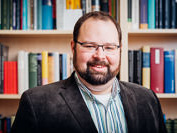
Jonathan Miles Robker is a Lecturer (Privatdozent) at the University of Münster's Faculty of Protestant Theology. He holds a Habilitation in Old Testament (2018), Doctor of Theology (2011), Master of Theological Studies (2006), and dual Bachelor's degrees in History and Philosophy (2003). Since 2020, he serves as Editor for Biblical Studies and has held research positions at the university since 2013. His research focuses on textual criticism, ancient Near Eastern epigraphy, Deuteronomistic history, and literary analysis of biblical texts. Primary interests include the Book of Kings, history of Israel, and comparative ancient Near Eastern traditions. Robker's publications demonstrate consistent engagement with textual variants across ancient manuscripts, particularly examining the Deuteronomistic History through Septuagint and Masoretic textual traditions. His works frequently analyze political theology, prophetic literature, and the development of biblical canons.
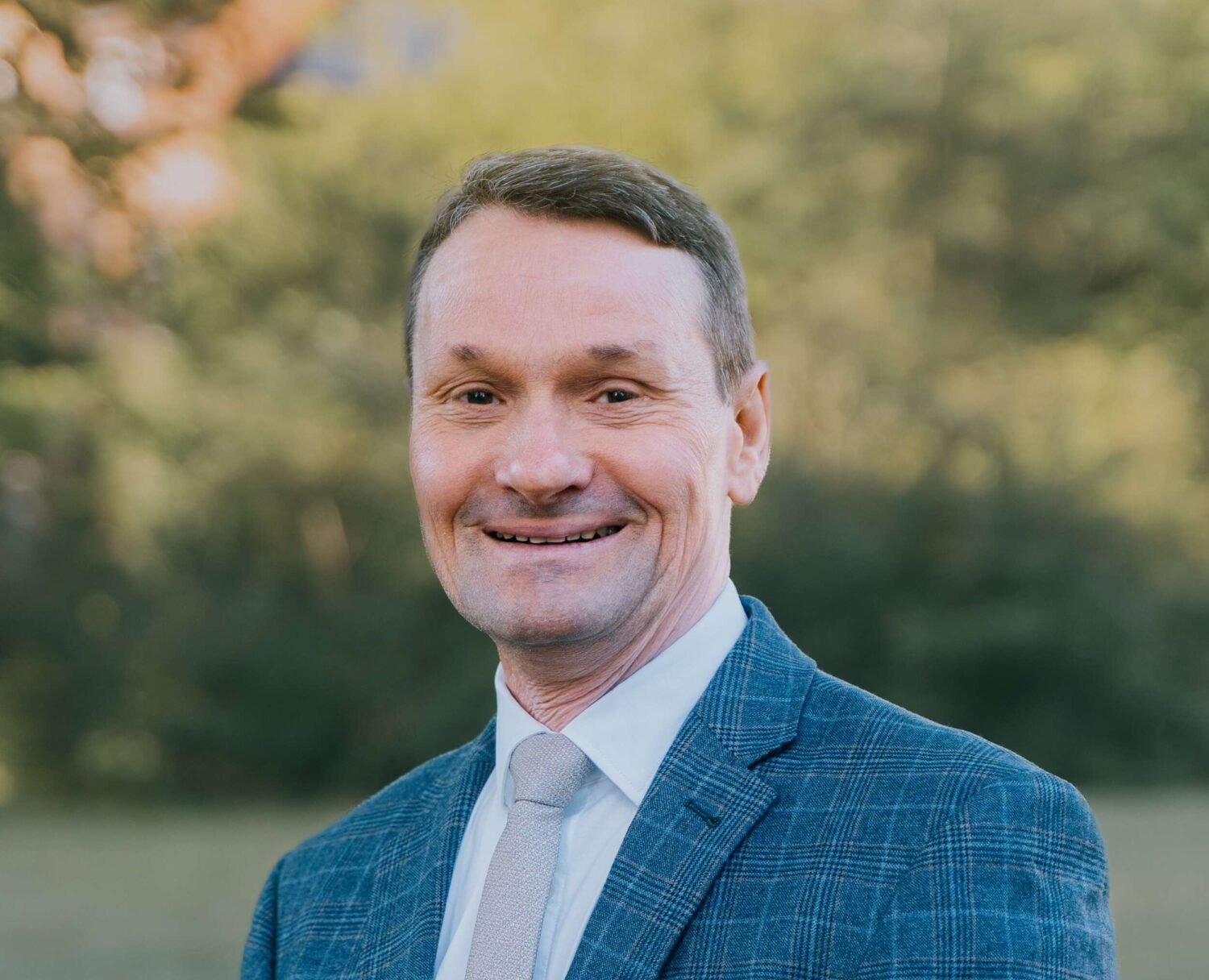
Prof. Martin Klingbeil is a theologian and biblical scholar affiliated with the Theologische Hochschule Friedensau , where he serves as Professor für Altes Testament . His research focuses on the Old Testament , Hebrew Poetry , Biblical Archaeology , and Ancient Near Eastern Iconography , often bridging textual analysis with material evidence. Klingbeil holds a D.Litt. from Stellenbosch University and has contributed extensively to peer-reviewed journals and edited volumes. He is a co-editor of Khirbet Qeiyafa Excavation Reports and serves as Consulting Editor for Davar Logos . His work frequently examines the interplay between biblical texts and their archaeological contexts, particularly through sites like Khirbet Qeiyafa and Lachish . As an active member of academic societies such as the Society of Biblical Literature and American Schools of Oriental Research , Klingbeil has organized and presented at numerous international symposia. His editorial and fieldwork contributions underscore his dedication to interdisciplinary biblical studies.
Friederike Neumann is a Researcher at the Institute for Protestant Theology and Religious Education within Faculty IV - Humanities and Social Sciences at the University of Oldenburg. She has held a permanent position since 2022 and has been affiliated with the university since 2014. Academic Education : Diploma in Protestant Theology (University of Göttingen, 2009), Doctorate (Dr. theol., 2016), Habilitation (2025, Old Testament). Her research focuses on the theological and literary history of the Old Testament , with particular emphasis on the Pentateuch , Psalms , and Jeremiah . She specializes in redaction criticism, intertextuality, and the formation of biblical Israel's conceptual identity. Her publications and lectures (e.g., at SBL and IOSOT conferences) explore themes such as the final redaction of the Psalter , Jacob-Laban narratives , and violence in Exodus . Key trends include analyses of liturgical theology, post-exilic influences, and geopolitical contexts in the Ancient Near East. Scientific Awards : DAAD scholarship (2006–2007) DFG fellowship 'Images of Gods – Images of God – Worldviews' (2009–2014) She supervises bachelor's and master's theses in Old Testament studies and contributes to archaeological projects (e.g., Tel Azekah excavation, 2018). Her teaching covers exegetical methods , Pentateuch , Psalms , and identity in the Old Testament .
Jens Kamlah serves as Professor of Biblical Archaeology and Director of the Institute of Biblical Archaeology at the University of Tübingen's Faculty of Protestant Theology. Appointed full Professor in 2018 and Pro-Dean since 2025, he concurrently chairs the German Palestine Association (DPV) since 2012 and leads the German-Lebanese Tell el-Burak excavation project since 2001. His academic journey began with studies in Protestant Theology, Ancient Oriental Studies, Egyptology, and Pre-Protohistory at Mainz and Tübingen (1983-1990). He earned his doctorate from Tübingen in 1999 with research on the Zeraqon Survey and completed his habilitation at Kiel University in 2005 on Phoenician and Israelite temple cults. Kamlah's research synthesizes archaeological evidence with biblical exegesis to reconstruct Levantine religious and social history. His work prioritizes Phoenician archaeology, temple studies, and the interplay between material culture and textual sources in ancient Israel. He examines how agricultural practices, trade networks, and urban development shaped religious institutions across the Iron Age Levant. His publication record (2006-2016) reveals consistent focus on Phoenician temple architecture, Middle Bronze Age chronology, and cross-cultural exchange. Key themes include Tell el-Burak's stratigraphy, Sidon's regional economy, and comparative analyses of Levantine sanctuaries. His approach integrates radiocarbon dating, surface survey methodology, and iconographic studies to address historiographical gaps. Kamlah directs multiple major research initiatives including SFB 1070 'ResourceCultures' (agriculture and exchange networks), the DFG Phoenician trade network, and the Encyclopedia of Material Culture of the Biblical World. His institutional leadership extends to the German Archaeologists' Association board (2006-2016) and Tübingen's Equal Opportunities Committee since 2019. As Director of the Institute since 2010, he oversees excavations at Tell el-Burak and coordinates international collaborations through the Institute for Cultures of the Ancient Orient (IANES). His team integrates German, Lebanese, and international scholars in multidisciplinary studies of Phoenician harbor cities and Bronze Age settlement patterns.
James W. Watts is a Professor of Hebrew Bible and ancient Near Eastern textual traditions in the Department of Religion at Syracuse University's College of Arts and Sciences. He has been at Syracuse since 1999, serving as Chair of the Department of Religion from 2009-2015 and as William P. Tolley Professor in the Humanities from 2011-2013. Watts also served as Visiting Research Fellow at the Käte Hamburger Kolleg, Ruhr Universität Bochum from 2015-2016. His educational background includes: Ph.D. in Hebrew Bible/Old Testament from Yale University (1990) M.Div. and Th.M. in New Testament from Southern Seminary (1985-1986) B.A. in Philosophy from Pomona College (1982) Watts specializes in the literature and religion of the Hebrew Bible, particularly the Pentateuch, sacrifice, law, and narrative genres. His research explores ancient Near Eastern religious rhetoric, ritual theory, comparative scriptures, and iconic books. His work bridges textual analysis with ritual studies, examining how sacred texts function as physical objects within religious communities and how they acquire iconic status across cultures. His recent publications reveal a growing focus on the materiality of scripture, ritual performance, and the social power of sacred texts. Watts has increasingly examined how biblical texts, particularly Leviticus, have been used to construct social boundaries related to race, diet, and purity. His work connects ancient textual traditions with contemporary issues of social justice, censorship, and religious authority in digital contexts. Among his notable achievements: William P. Tolley Professor in the Humanities (2011-2013) Secretary-Treasurer of The Society for Comparative Research on Iconic and Performative Texts (2010-present) Editor of the Equinox book series, Comparative Research on Iconic and Performative Texts (2017-present) Chair of the Pentateuch Section of the Society of Biblical Literature (1998-2003) Watts has directed graduate studies in the Department of Religion (2006-2009, 2023-2025) and undergraduate studies (2000-2004). He has supervised numerous student research projects on iconic books, biblical ritual texts, normative texts, and scripturalization. His academic leadership extends to the Renée Crown Honors Program and the SU Humanities Council. Watts leads the Iconic Books Project, which analyzes the functions of scriptures in cross-cultural and trans-historical perspectives. This project has developed into the Society for Comparative Research on Iconic and Performative Texts (SCRIPT), of which he serves as Secretary-Treasure. His work continues to explore the relationship between textual practices, ritual performance, and the social power of sacred texts.
- Hebrew Bible
- Old Testament Studies
- Pentateuch
- +۷ مورد دیگر
Wiebke Meinhold is a Professor of Ancient Near Eastern Philology at the University of Tübingen's Faculty of Humanities. Her career spans key roles in Assyriology, including scientific collaborations at institutions like the University of Geneva and Heidelberg Academy of Sciences. Education: MA in Assyriology, Semitic Studies, and Greek from Heidelberg and Leiden (2001) Doctorate: University of Leipzig (2006) Research focuses on cultural and religious history of the Ancient Near East, with specific attention to Mesopotamian deities, legal traditions, and social structures. Her work includes analysis of cuneiform legal texts from Nippur and studies on temple economies. Recent publications emphasize inheritance practices across Old Babylonian cities and the socio-economic role of prebends. She contributes to academic discourse through editorial work and participation in international conferences. Organizations: Member of Deutsche Orient-Gesellschaft (DOG) and International Association for Assyriology (IAA) In university governance, she holds leadership roles as Executive Director of the Institute for Ancient Near Eastern Cultures (2021-2023, 2025+) and Equality Commissioner in the Faculty of Humanities (2025+).
Dr. Andreas Fuchs is an außerplanmäßiger Professor (Extraordinary Professor) at the Institute of Ancient Near Eastern Studies within the Faculty of Humanities at the University of Tübingen, Germany. He has held this position since 2004, following his habilitation in Cultural Sciences at the University of Tübingen in 2004. His academic career includes previous positions as a scientific assistant at the University of Tübingen (1999-2004) and at Friedrich-Schiller-University Jena (1994-1998). His educational background includes: Studies in Assyriology, Arabic, and Ethnology at Georg-August-University Göttingen (starting 1980) PhD in 1993 Habilitation at the Faculty of Cultural Sciences, University of Tübingen (2004) Professor Fuchs specializes in the Neo-Assyrian Period of Ancient Near Eastern history, with research focusing on royal inscriptions and letters, cultural history, historical topography, and military history of Ancient Western Asia. His work bridges philological analysis with historical and archaeological approaches to understand the political, military, and cultural dynamics of the Assyrian Empire. His expertise extends to the broader context of the Ancient Near East, including neighboring regions such as Anatolia, Iran, and Mesopotamia. His scholarly publications demonstrate consistent focus on military history, royal inscriptions, and political dynamics across the Neo-Assyrian period. Recent works examine communications systems in the Iron Age, the Medes and Mannea kingdoms, and the historical accuracy of Assyrian royal chronology. His research shows particular interest in how military organization, resource management, and communication systems contributed to imperial stability. He is an active member of the Deutsche Orient-Gesellschaft (German Oriental Society) and participates in several major research projects, including the publication of texts from archaeological excavations at Tell Halaf (Syria) and Sirkeli-Höyök (Turkey), as well as contributing to the Collaborative Research Center "Resources" with his project on "Resource acquisition and empire building." Professor Fuchs is currently working on a comprehensive monograph on the Neo-Assyrian Empire and other scholarly works examining Assyrian dynasties and royal inscriptions.

Sara Kipfer is a Professor of Protestant Theology with a focus on Old Testament Studies at TU Dortmund University, effective February 1, 2023. She holds a Licentiate (2007), Doctorate (2013), and Habilitation (2021) from the University of Bern and Heidelberg. Her research spans extreme climate events in the southern Levant, political power dynamics in ancient Israel and Judah (10th–9th centuries BCE), and body/emotion concepts in the Hebrew Bible and ancient Near Eastern iconography. Key research projects include 'Emotions in the Old Testament' (Bern) and a visiting scholar stint at the University of Chicago (2015–2016). Her work bridges biblical exegesis, environmental humanities, and reception history. Recent publications (2021–2024) address famine narratives, fear in ancient texts, and geopolitical interpretations of Samuel's narratives. She has held academic positions at Heidelberg University (2017–2022) and collaborated with institutions like Oxford's Centre for Reception History of the Bible (2011).
Professor Peter Funke is a Senior Professor of Ancient History at the Westfälische Wilhelms-Universität Münster, where he leads the Cluster of Excellence 'Religion and Politics in Premodernity and Modernity' and directs the Seminar für Alte Geschichte. He has held significant academic leadership roles, including serving as Vice President of the German Research Foundation (DFG) and as a member of numerous international scholarly committees. His research focuses on ancient state systems, religious history, and historical geography, with particular expertise in ancient Greek federalism and interstate relations. Funke's academic journey includes a Habilitation from the University of Cologne (1985) and a PhD from the same institution (1978). His career spans over four decades, during which he has held professorships at the University of Siegen and Münster, and has directed major research initiatives like the SFB 1776 and the Cluster of Excellence. His research interests are centered on the political and religious dynamics of ancient Greek states, including studies on federal leagues like the Aetolian and Achaean confederations. He has authored or edited over 150 publications, including seminal works on Hellenistic political structures and the role of sanctuaries in governance. Funke has been awarded prestigious honors such as the Ausonius-Preis (2019) and the Kongress-Preis (2019), and is a member of institutions like the Berlin-Brandenburg Academy of Sciences. His advisory roles include leading the German Archaeological Institute's Athen branch and serving on editorial boards for journals like Klio and Digitales Classicist Online . In addition to his academic work, Funke has supervised numerous doctoral and postdoctoral researchers, contributing to the training of the next generation of ancient historians. His interdisciplinary projects incorporate digital humanities methodologies, exemplified by his work on the Inscriptiones Graecae corpus.
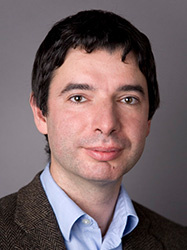
Johannes Schnocks is a Professor of History and Religion of the Old Testament at the Catholic Theological Faculty of the University of Münster, a position he has held since March 2012. He actively participates in the Cluster of Excellence 'Religion and Politics' and serves as a Member of the General Assembly. His research focuses on Psalm studies, Books of Maccabees, divine and human violence in the Old Testament, resurrection ideas, and Job research. His academic journey includes a 2008 Habilitation in Old Testament Studies at the University of Bonn, a 2002 doctorate under advisors H.-J. Fabry and F.-L. Hossfeld, and theological studies at the University of Bonn and Dormitio Abbey in Jerusalem from 1989-1995. He was a scholarship recipient of the German Academic Scholarship Foundation from 1990-1998. Professor Schnocks' research interests center on the complex relationship between divine and human violence in biblical texts, particularly in the Psalms and Maccabean literature. His work explores theological responses to violence, identity construction in ancient Israel, and the reception history of biblical texts across Jewish and Christian traditions. He examines how ancient communities grappled with questions of suffering, divine justice, and human agency. His recent scholarly output demonstrates a consistent focus on Psalm interpretation (particularly Psalms 35-39, 73, and 90-106), violence in scripture, and Jewish-Christian dialogue. His publications reveal an interdisciplinary approach combining textual criticism, historical analysis, and theological reflection, with increasing attention to reception history and contemporary ethical implications of ancient texts. As an educator, Schnocks has supervised doctoral students including Katharina Viktoria Fockenbrock (2023) and Kathrin Gies (2020). He has led several significant research projects including the Cluster of Excellence project C3-18 on 'Concepts of Overcoming Violence in the Old Testament and its Reception' (2019-2025), and previously headed projects D2-10 and D1 on violence in biblical texts. He maintains active involvement in academic organizations including the Society of Biblical Literature since 2008 and serves on the editorial board of 'Wissenschaftliche Monographien zum Alten und Neuen Testament' since 2011. His current teaching includes lectures on Old Testament literature history, Ezekiel, and Old Testament theologies, as well as seminars on Psalms and their reception in Judaism and Christianity.
Adrian Marschner is a Researcher at the Eberhard Karls University of Tübingen, affiliated with the Protestant Theological Faculty's Chair of Old Testament Theology under Prof. Dr. Martin Leuenberger. His work focuses on Old Testament exegesis, Semitic languages, and biblical archaeology. He holds a DAAD scholarship for his 2017–2018 participation in the Theological Study Year in Jerusalem, where he earned certificates in archaeology and interreligious dialogue. Since 2022, he serves as an elected representative for mid-level academic staff in the Faculty Council. Education includes studies in law (2014–2015), Protestant theology at the Universities of Tübingen (2015–2018) and Bonn (2019–2021), and a 2021 first theological examination with the Evangelical Church in the Rhineland. He specialized in Semitic languages (2018–2023) and university didactics, earning a Baden-Württemberg teaching certificate. His research integrates archaeological findings with biblical texts, as seen in his 2019 article on Sennacherib’s Lachish campaign. Marschner’s interests span Iron Age Mediterranean connectivity, biblical historiography, and pedagogical methods in theological education. He participated in the 2023 Tell el-'Orēme excavation under the Kinneret Regional Project, contributing to archaeological fieldwork in biblical archaeology. His awards include scholarships from the German Academic Foundation and DAAD.
Prof. Dr. Winfried Held is the Managing Director ( Geschäftsführender Direktor ) and Chair Holder ( Lehrstuhlinhaber ) of the Department of Archaeology at the Faculty of History and Cultural Sciences, Philipps University of Marburg. He has held this position since 2008 and leads multiple international research projects focusing on ancient architecture, Anatolian and Near Eastern archaeology, and nautical studies. His academic background includes: M.A. from Freie Universität Berlin (1991) Ph.D. from Freie Universität Berlin (1995) Habilitation from Universität Würzburg (2004) Prof. Held's research focuses on ancient architecture with particular emphasis on Seleucid architecture, Carian studies, and the transition from Achaemenid to Hellenistic periods in the Levant. His work spans Anatolian archaeology, Near Eastern archaeology from Achaemenid to Parthian periods, and nautical archaeology, with field projects across Turkey, Lebanon, Jordan, and Saudi Arabia. His approach integrates architectural analysis with cultural and historical contexts to understand ancient societies. His recent publications demonstrate a strong focus on temple architecture across the Eastern Mediterranean, particularly Seleucid-era structures, Carian sanctuaries, and monumental buildings in Anatolia and the Levant. There's a clear trajectory toward interdisciplinary studies combining architectural analysis with cultural history, as evidenced by his work on the Donuk Taş temple in Tarsus (purported to be the largest temple of the ancient world), the BERYTOS project on ancient Beirut, and underwater archaeology in the Red Sea. Prof. Held has led multiple DFG-funded research projects including: "Die Architektur der Seleukiden" (The Architecture of the Seleucids) "Vom Karischen Bund zur griechischen Polis" (From the Carian League to the Greek Polis) "Berytos. Archäologie einer antiken Handelsmetropole in der Levante" (Berytos. Archaeology of an ancient trading metropolis in the Levant) "Der Donuk Taş in Tarsos" (The Donuk Taş in Tarsos) "Mare Erythraeum. Seefahrt und Handel im Roten Meer" (Mare Erythraeum. Navigation and trade in the Red Sea) Prof. Held co-directs the "Marburger Unterwassersurvey" (Marburg Underwater Survey) project in Saudi Arabia and leads the "BERYTOS Project" on ancient Beirut's archaeology. His team includes international collaborators from Germany, Lebanon, Jordan, and Saudi Arabia, working on interdisciplinary research that bridges archaeology, architecture, and maritime studies.
Dr. Stefan Bojowald is a Lecturer in the Egyptology department at the Institute of Archaeology and Cultural Anthropology, University of Bonn. He holds a doctorate completed between 2014 and 2017 and has been actively contributing to the field through teaching and extensive scholarly publication. His institutional affiliations include membership in ATINER, Academic Genesis, and the Alliance Academy of Sciences, reflecting his engagement with international academic networks. Doctoral studies: 2014–2017 Master's degree: 2001 Studies: Egyptology, Classical Archaeology, Classical Philology, Semitic Studies, and Studies of the Christian Orient (1992–2000) Stefan Bojowald's research is deeply rooted in philological and linguistic analysis of ancient Egyptian and Coptic texts. His primary interests include Egyptian lexicography and phonology, with a particular focus on sound changes and word origins. He investigates cultural and linguistic contacts between Egypt and the Near East, drawing parallels between Egyptian, Hebrew, Akkadian, and Ugaritic languages. A distinctive aspect of his work is Egyptian ornithology—the study of birds in ancient Egyptian literature and symbolism. Additionally, he explores Coptic monasticism, especially through the lens of the Vita of Pachom , analyzing textual details, moral themes, and biblical intertextuality. His scholarship often bridges linguistic precision with cultural and religious interpretation. His recent publications, spanning from 2021 to 2025, reveal a consistent output in high-quality journals such as Aula Orientalis , Göttinger Miszellen , N.A.B.U. , and Le Muséon . These articles primarily focus on etymological investigations, phonological shifts (e.g., loss of 'q', 'n', 'h'), lexical analysis of specific terms, and comparative studies across Semitic and Afro-Asiatic languages. A significant trend is his exploration of linguistic survivals from ancient Egyptian into Coptic, metaphorical language in religious texts, and the interpretation of monastic literature. His 2023 monograph on the Vita of Pachom underscores his expertise in Coptic hagiography. While no scientific awards are listed in the provided text, Bojowald’s extensive publication record in specialized Egyptological and Coptic journals demonstrates scholarly recognition and contribution to the field. Dr. Bojowald advises students in Egyptology and Coptic studies, particularly through his courses in Coptic language (Koptisch I + II) and Coptic reading. There is no public information on external research grants he may have received. He is an active academic with a strong focus on textual analysis and linguistic research. There is no information provided about specific research labs or collaborative teams led by Dr. Bojowald. However, his membership in academic platforms and frequent publication in collaborative journals suggest participation in broader scholarly communities and networks within Egyptology and Coptic studies.