James Alexandre Goulet is a Professor in the Department of Civil, Geological and Mining Engineering at Polytechnique Montréal. His research focuses on Machine Learning Methods for Civil Engineering applications such as structural health monitoring (SHM) and infrastructure maintenance planning. He leads the Canari project for online change point detection in SHM and contributes to open-source libraries like cuTAGI for Bayesian neural networks. Affiliations : Chair in Machine Learning for Infrastructure Monitoring at Polytechnique Montréal, IVADO Institute member, and GRS (Structural Engineering Research Group) member Expertise : Building engineering, structural safety, applied probability, learning theories Recent research trends include Bayesian state-space models, LSTM neural network integration for infrastructure forecasting, and uncertainty quantification in SHM systems. His work emphasizes probabilistic methods and analytical inference over black-box approaches. Teaching includes courses on structural reliability and probabilistic data analysis for civil engineers. He supervises graduate students in topics ranging from damage detection algorithms to stochastic deterioration modeling of infrastructures.
Mark Jenkinson is a Professor of NeuroImaging at the University of Oxford's Nuffield Department of Clinical Neurosciences and also holds positions at the University of Adelaide's Australian Institute for Machine Learning and the South Australian Health and Medical Research Institute (SAHMRI). He heads the Structural Modelling and Analysis Group at the FMRIB Centre, where his research focuses on multimodal population modeling and structural brain segmentation. Education: DPhil in Robotics Research (University of Oxford, 1999) BSc (Hons I) in Mathematical Physics (University of Adelaide, 1994) BE (Hons I) in Electrical and Electronic Engineering (University of Adelaide, 1993) Professor Jenkinson's research spans two major themes: multimodal modeling of populations to describe disease processes and apply to individual patient diagnoses, and structural segmentation and analysis of brain anatomy and pathology, particularly focusing on sub-cortical structures and lesions. His work integrates advanced computational methods with neuroimaging to develop tools for understanding neurological disorders. As the developer of key components of the FMRIB Software Library (FSL), he has significantly contributed to standard neuroimaging analysis pipelines used worldwide. His recent publications demonstrate a strong focus on deep learning applications in neuroimaging, uncertainty quantification in medical AI, and advanced segmentation techniques. There's a clear trend toward developing more robust, anatomically plausible models that preserve topological structures while improving diagnostic capabilities for conditions like multiple sclerosis, Huntington's, and Parkinson's diseases. Scientific Awards: Highly Cited Researcher (Clarivate Analytics 2018-2021, Thomson Reuters 2014-2016) ISMRM Outstanding Teacher Award (2009, 2014) Teaching Excellence Award, University of Oxford (2012) David Phillips Fellowship from BBSRC (2005-2010) Professor Jenkinson has supervised over 25 doctoral students whose work spans brain segmentation, connectivity analysis, and clinical applications of neuroimaging. His research is supported by significant grants including the Medical Research Future Fund (AU$2m), Wellcome Trust Centre for Integrative Neuroimaging (£11m), and NIH Human Connectome Project (US$30m), reflecting the high impact and translational potential of his work. As head of the Structural Modelling and Analysis Group at FMRIB, Jenkinson leads a team developing the FSL (FMRIB Software Library), one of the most widely used neuroimaging analysis packages globally. His group collaborates extensively with clinical researchers on applications ranging from multiple sclerosis to traumatic brain injury, translating computational advances into clinical practice.
David A. Foster is a Professor in the Department of Geological Sciences at the University of Florida, affiliated with the College of Liberal Arts and Sciences. His research integrates thermochronology, structural geology, and petrology to investigate tectonic and magmatic processes, with a recent focus on enhanced weathering of basaltic rocks for carbon sequestration. He leads the Thermochronology Lab, providing analytical services for mineral separation, Ar/Ar dating, and thermal modeling. Research interests span: Tectonics & Geodynamics : Orogenic collapse, terrane accretion, and supercontinent cycles. Thermochronology : Application of temperature-sensitive isotopic systems to crustal evolution. Surface Processes : Links between tectonic uplift, erosion, and carbon capture via rock weathering. His publications emphasize regional tectonics (e.g., Andes, Appalachians, Cordillera), utilizing geochronology, isotope geochemistry, and structural analysis. Recent work explores collisional orogens, basin provenance, and magmatic arcs, with recurring themes of extensional collapse and paleogeographic reconstructions. Educational contributions include co-authoring the comprehensive textbook Geology of National Parks , now in its 8th edition, which synthesizes geological features of U.S. national parks in the context of plate tectonics and landscape formation.
Gireeja Ranade is an Assistant Teaching Professor in the Department of Electrical Engineering and Computer Sciences at the University of California, Berkeley. She previously served as a Researcher at Microsoft Research AI in the Adaptive Systems and Interaction Group. Her educational background includes a PhD in Electrical Engineering and Computer Science from UC Berkeley and an undergraduate degree from MIT. Research Focus Prof. Ranade's research spans control theory, information theory, and machine learning, with applications in wireless communication, algorithmic fairness, and misinformation analysis. Her work addresses fundamental challenges in system stabilization under uncertainty, real-time control optimization, and equitable resource allocation. She maintains strong collaborations across disciplines, resulting in publications at premier venues like IEEE Transactions on Automatic Control, PNAS, and The Web Conference. Her recent publications demonstrate a consistent focus on robustness in control systems, fairness in algorithmic decision-making, and analysis of information propagation in online ecosystems. The work frequently combines theoretical rigor with practical implementations in robotics, networking, and social systems. Awards and Recognition 2017 UC Berkeley Electrical Engineering Award for Outstanding Teaching 2020 UC Berkeley Award for Extraordinary Teaching in Extraordinary Times Academic Leadership Prof. Ranade leads a dynamic research group including PhD candidates, master's students, and undergraduates. She has advised over 25 students on projects ranging from neural network controllers to fairness metrics in resource allocation. She founded the CalMentors program, which connects UC Berkeley students with K-12 learners for tutoring support during the COVID-19 pandemic. Educational Innovation She co-designed and teaches UC Berkeley's introductory EECS 16A/B sequence, integrating linear algebra with applications in machine learning and circuit design. She has also developed courses on optimization (EECS127/227A) and data science (Data 102), with publicly available lecture videos demonstrating her teaching methodology.
Dr. Daniel Read is a Senior Lecturer at the Institute for Sport Business , Loughborough University London. His interdisciplinary research addresses critical integrity issues in sport through qualitative and quantitative methodologies, focusing on athlete welfare, governance, sponsorship, fan behavior, and digital media. PhD in Sport Business (Loughborough University London) MRes in Psychology BSc in Sports Science and Physiology Dan's current projects examine: Athlete welfare (care-seeking behavior, medicine misuse, education) Commercial innovation vs. sporting tradition Digital divide impacts on sport access 21st-century sport governance He collaborates with organizations such as the World Anti-Doping Agency , FIFA , World Rugby , and the Professional Footballers’ Association . His teaching expertise spans research methods, data analytics, sport integrity, and digital media, alongside PhD supervision.
Lorin M. Hitt serves as the Zhang Jindong Professor of Operations, Information and Decisions at the University of Pennsylvania's Wharton School. His distinguished career spans multiple domains at the intersection of information technology, economics, and business strategy. As a leading scholar in IT productivity and innovation, he maintains an active research agenda while teaching undergraduate and graduate courses in information systems and data analysis. Professor Hitt's research interests focus on the relationship between information technology and productivity, with particular emphasis on complementary factors such as organizational design and human capital that affect the value of IT investments. His current work explores the economics of IT labor mobility, enterprise software contracting, recommender systems' influence on consumer behavior, measurement of intangible assets, and pricing information goods. His research increasingly examines IT deployment in healthcare settings and the role of the IT workforce in relation to issues like offshoring and the H1-B visa program. His research publications demonstrate consistent contributions to top-tier journals, with recent work analyzing how data analytics mitigates post-IPO innovation decline, digital capital accumulation in superstar firms, and the relationship between analytics skills and firm productivity. His publication record shows sustained scholarly output across multiple domains of information systems research. Best Paper Runner-up – Management Science, 2014 Best Paper – Information Systems Research, 2013 Multiple Wharton Excellence in Teaching Awards (2003, 2007-2008, 2011) David Hauck Award for Distinguished Teaching, 1999 National Science Foundation Career Grant Recipient, 1998 Lindback Award for Distinguished Teaching, 1998 Professor Hitt teaches multiple courses including OPIM101 (Introduction to OPIM), OPIM105 (Data Analysis in VBA and SQL), OPIM469 (Information Strategy and Economics), and OPIM955 (Doctoral Seminar in IS Economics). His teaching focuses on information systems management, economics, data analysis, and advanced analytical methods. Beyond academia, he consults on IT outsourcing agreements and IT investment evaluation, and occasionally serves as an expert witness in technology-related litigation.
Florian Zettelmeyer is the Nancy L. Ertle Professor of Marketing at Northwestern University's Kellogg School of Management and Faculty Director of the Program on Data Analytics at Kellogg. He also serves as a senior science leader at Amazon, leading the Advertising Economics organization. His research focuses on marketing analytics, digital advertising, and the economic implications of artificial intelligence in business. PhD in Management Science from MIT (1996) Vordiplom in Business Engineering from University of Karlsruhe (1992) MS in Economics from University of Warwick (1991) Professor Zettelmeyer specializes in analyzing how analytics and AI transform firms, with notable work on advertising measurement, pricing strategies, and consumer decision-making in automotive markets. His publications span journals like Marketing Science, Management Science, and American Economic Review, emphasizing empirical validation through field experiments. He has received prestigious awards including the John D.C. Little Award (twice), Sales SIG Excellence in Research Award, and multiple teaching honors such as the Sidney J. Levy Teaching Award and L. G. Lavengood Outstanding Professor of the Year Award. His research frequently appears in top-tier journals and working paper series.
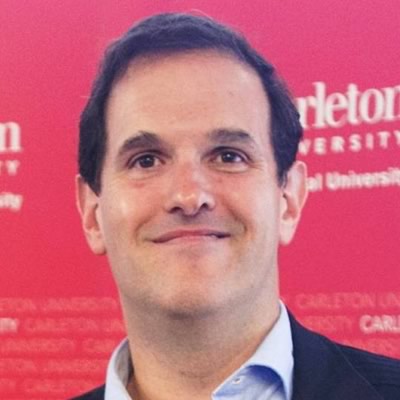
Dr. Gabriel Wainer is a Professor in the Department of Systems and Computer Engineering at Carleton University's Faculty of Engineering and Design. He leads the Advanced Real-Time Simulation Lab and specializes in modeling and simulation methodologies, particularly focusing on discrete event systems, real-time modeling, cellular automata, and DEVS formalism. Research Interests: Discrete event systems, DEVS formalism, cellular automata, real-time simulation, IoT applications, and parallel/distributed simulation Affiliation: Carleton University Recent publications highlight his work in advanced simulation frameworks, energy-efficient 5G systems using deep reinforcement learning, and pandemic modeling with cellular automata. His lab develops tools like PROMETHEUS and Devsmap for standardized DEVS model representation, while also exploring applications in wireless communication, building energy systems, and behavioral epidemiology.
Dr. June Cao is an Associate Professor at the University of Southampton . Her research focuses on Environmental, Social, and Governance (ESG) Accounting , Corporate Social Responsibility (CSR) , and Sustainability Reporting , with a particular emphasis on Greenwashing , Carbon Emission Trading , and Accounting Education . Key research areas include ESG, CSR, and sustainability frameworks. Prominent publications analyze environmental regulation, green revenues, and digital transformation in sustainability. Her recent work explores greenwashing behaviors, peer benchmarking, and labor investment dynamics. Scientific Awards : None explicitly mentioned in the data. Notable collaborations include co-authoring papers with scholars from Curtin University , Satya Wacana Christian University , and Xiamen University . Her contributions to Systematic Literature Reviews and Bibliometric Analysis highlight her methodological expertise.
Danielle Butler is a Visiting Fellow at the National Centre for Epidemiology and Population Health, Australian National University, and a part-time General Practitioner/Researcher at the Institute of Urban Indigenous Health. With 20+ years clinical experience and a PhD (2018), her work focuses on healthcare access equity for underserved populations through linked data analysis, mixed-methods research, and telehealth evaluation. Current projects: Enhancing Safe Telehealth , Patient-Centered Medical Homes , Primary Care Data Linkage Key collaborations: ANU, IUIH, Australian Institute of Health and Welfare Her research combines multilevel modeling of administrative data with participatory action research to evaluate primary care innovations. Recent work examines telehealth impacts , out-of-pocket costs , and Aboriginal health service models . Publications span BMJ Open , BMC Health Services Research , and Health Policy , with emphasis on systematic reviews , linked data methodology , and health equity metrics . Research fingerprint shows dominant themes: Primary Health Care (100%), Aboriginal and Torres Strait Islander Health (66%), Health Services Research (49%), and Telehealth (100%).
Dr. Tommaso Gabrieli is an Associate Professor in Real Estate at the Bartlett School of Planning, University College London (UCL), where he has been employed since September 2015. His academic career spans multiple institutions including the University of Reading, City University London, University of Warwick, and the Catholic University of Milan. His educational background includes: PhD in Economics from the University of Warwick (2009) MSc in Economics from the London School of Economics and Political Science (2003) Fellowship of the Higher Education Academy from the University of Reading (2013) As a theoretical economist trained in the ambrosian tradition of social welfare, Gabrieli's research focuses on the economic analysis of urban policy issues. His expertise encompasses economic modeling of real estate markets, financial viability of urban projects, multi-dimensional value measurements, and value-capture mechanisms. He has developed novel interdisciplinary methods bridging urban planning and design with economics, making him one of few economists actively collaborating with urban planning scholars in the UK. His work addresses Sustainable Development Goals including No Poverty, Good Health, Decent Work, Reduced Inequalities, Sustainable Cities, and Climate Action. His recent publications demonstrate a strong focus on urban design governance, value capture mechanisms, and the interface between economic theory and urban planning practice. The research spans theoretical explorations of post-growth planning and practical applications in land value recovery, particularly examining implications for housing affordability, wealth distribution, and community wellbeing in both urban and rural contexts. His work often integrates behavioral economics with spatial planning considerations. Professional recognition includes: Fellow of the Higher Education Academy Gabrieli has extensive experience supervising PhD and MSc dissertations across multiple institutions. His teaching portfolio includes Real Estate Appraisal and Valuation at UCL, where he leads relevant modules for both undergraduate and graduate programs. He has contributed to significant research projects including 'Street Appeal' commissioned by Transport for London and the Horizon 2020-funded 'UrbanMaestro' project worth 1 million Euros. His research impact has been formally recognized by Transport for London. Currently, he leads the 'Future Urban Growth Lab' project, funded by UCL Knowledge Exchange and Innovation Funding, in partnership with the Royal Town Planning Institute and Politecnico of Turin. This project aims to operationalize an urban growth model prototype for use by local authorities in planning future city development, bridging academic research with practical planning applications.
Cecilia R. Aragon is a Professor in the Department of Human Centered Design & Engineering at the University of Washington, where she also serves as an Adjunct Professor in Computer Science & Engineering, Electrical and Computer Engineering, and the Information School. She is additionally a Senior Data Science Fellow at the eScience Institute. Aragon directs the Human-Centered Data Science Lab and has made significant contributions at the intersection of human-computer interaction and data science. Her research interests focus on human-centered data science, human-centered artificial intelligence, human-centered machine learning, human-computer interaction (HCI), computer-supported cooperative work (CSCW), visual analytics, aviation and astronautics sociotechnical systems, and emotion in informal text communication. Aragon's work bridges technical and social aspects of data science, particularly examining how humans interact with and gain insight from large datasets through both quantitative and qualitative methods. Aragon's recent publications demonstrate a strong focus on understanding online communities, sentiment analysis, distributed mentoring systems, and the ethical implications of AI. Her work spans multiple disciplines including social computing, data visualization, and astrophysics data analysis, showing her interdisciplinary approach to human-centered data science. Presidential Early Career Award for Scientists and Engineers (PECASE) 2008 Fulbright Fellowship 2017-18 HCDE Faculty Innovator in Research Award, University of Washington, 2015 Distinguished Alumni Award, Computer Science, University of California, Berkeley, 2013 Top 25 Women of the Year, Hispanic Business Magazine, 2009 Aragon has secured over $28 million in research funding from organizations including the National Science Foundation, National Institute of Standards and Technology, Department of Energy, Gordon and Betty Moore Foundation, Alfred P. Sloan Foundation, Washington Research Foundation, and industry partners like Microsoft and Intel. Her educational background includes a Ph.D. in Computer Science from UC Berkeley (2004), an M.S. in Computer Science from UC Berkeley, and a B.S. with Honors in Mathematics from Caltech. She leads the Human-Centered Data Science Lab and is affiliated with the eScience Institute, the Nearby Supernova Factory, and various research groups focused on data-intensive scientific collaborations. Her work on collaborative visual analytics systems like Sunfall has had significant impact in both academic and applied settings.
Aleksandr (Sasha) Aravkin is Associate Professor in the Department of Applied Mathematics and Adjunct Associate Professor of Health Metrics Sciences, Mathematics, and Statistics at the University of Washington. He serves as Director of Mathematical Sciences at the Institute for Health Metrics and Evaluation (IHME), where he leads the Mathematical Sciences and Computational Algorithms team and contributes to strategic direction for applying mathematical sciences to analytic challenges. Dr. Aravkin earned his PhD in Mathematics (Optimization) and MS in Statistics from the University of Washington in 2010, following a BSc in Mathematics and Computer Science in 2004. His educational background forms the foundation for his interdisciplinary research approach. His research expertise spans large scale optimization, machine learning, data science, convex and variational analysis, algorithm design, robust statistics, inverse problems, and uncertainty quantification . These methodologies are applied across diverse domains including health metrics, computational medicine, tracking and navigation, seismic imaging, computational finance, and neuroscience. Dr. Aravkin has pioneered approaches for fusing physics-based and data-driven models, enabling innovative solutions to complex problems. Dr. Aravkin's publication record demonstrates a strong focus on health metrics and Global Burden of Disease studies, with recent work emphasizing meta-analytic approaches for risk-outcome relationships. His research spans epidemiological modeling, health effects of various exposures, and forecasting disease burden across populations. The publications reveal a consistent pattern of high-impact work in top journals including The Lancet and Nature Medicine, often addressing critical public health questions through rigorous statistical and mathematical frameworks. At IHME, Dr. Aravkin has led significant projects including the Burden of Proof Studies (2019-2024) which analyzed 153 risk-outcome pairs, and COVID-19 Modeling (2020-2023) where his team developed forecasting models and excess mortality estimation methods. He has also been instrumental in developing the Evidence Score model, requiring novel algorithmic approaches. His work bridges theoretical mathematical sciences with practical applications to improve global health policy and practice.
Michael Pyrcz is a Professor in the Hildebrand Department of Petroleum and Geosystems Engineering and holds the rank of Associate Professor in the Jackson School of Geosciences at the University of Texas at Austin. He is the recipient of the B. J. Lancaster Professorship in Petroleum Engineering and the George H. Fancher Centennial Teaching Fellowship in Petroleum Engineering. His research focuses on subsurface data analytics, geostatistics, and machine learning applications in energy systems and CO2 sequestration. Pyrcz teaches widely, including through online lectures and GitHub workflows, and has authored over 50 peer-reviewed publications and a textbook on spatial data analytics. His work integrates machine learning with geoscience challenges, such as uncertainty quantification in reservoir modeling and CO2 storage site evaluation. He leads initiatives in energy data analytics through the Freshman Research Initiative and collaborates with industry on workflow development. Key research areas include generative AI for subsurface models, stochastic methods for fracture networks, and anomaly detection in geologic monitoring. Education: Background in petroleum engineering and geosciences (details not explicitly provided). Grants/Advising: Extensive industry collaboration and mentorship roles at Chevron prior to UT Austin. Labs/Teams: Maintains active GitHub repositories (GeostatsGuy), YouTube lecture series (GeostatsGuyLectures), and social media outreach (X/GeostatsGuy).
Kerry Fang is an Associate Professor in the Department of Urban & Regional Planning at the University of Illinois Urbana-Champaign. Her research focuses on economic development, land use policy, and their socio-environmental consequences, with interdisciplinary methods spanning economics, statistics, geography, sociology, and computer science. She examines global contexts including the U.S., China, Australia, and Russia. Education: PhD, Urban and Regional Planning and Design, University of Maryland, College Park (2018) MA, Land Management, Zhejiang University (2013) BA, Land Management, Zhejiang University (2011) Research Interests: Corruption in economic development projects Land use programs for coastal resilience Text-mining of planning literature Her work bridges theory and practice, addressing questions like regional inequality and policy efficacy in job creation and innovation. Her recent articles explore topics such as communication networks in development projects, minority-owned business data utilization, and integrating urban data science into economic development curricula. These contributions highlight interdisciplinary approaches to urban challenges. No scientific awards were explicitly mentioned in the provided text. Teaching and Advising: Teaches courses like UP 545: Economic Development Policy and Land Use and Environmental Planning. She advises students on topics intersecting economic development and spatial policy, though specific advisee names are not listed. Labs/Teams: No specific lab or team affiliations were detailed, though her work likely involves collaborations with interdisciplinary research groups.