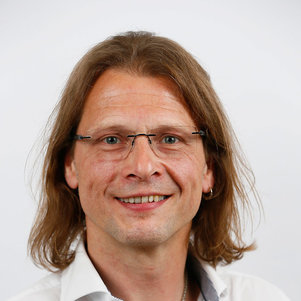
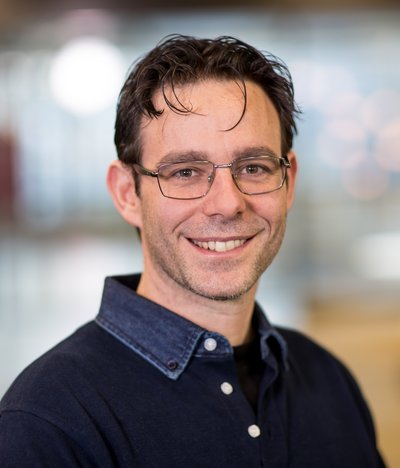
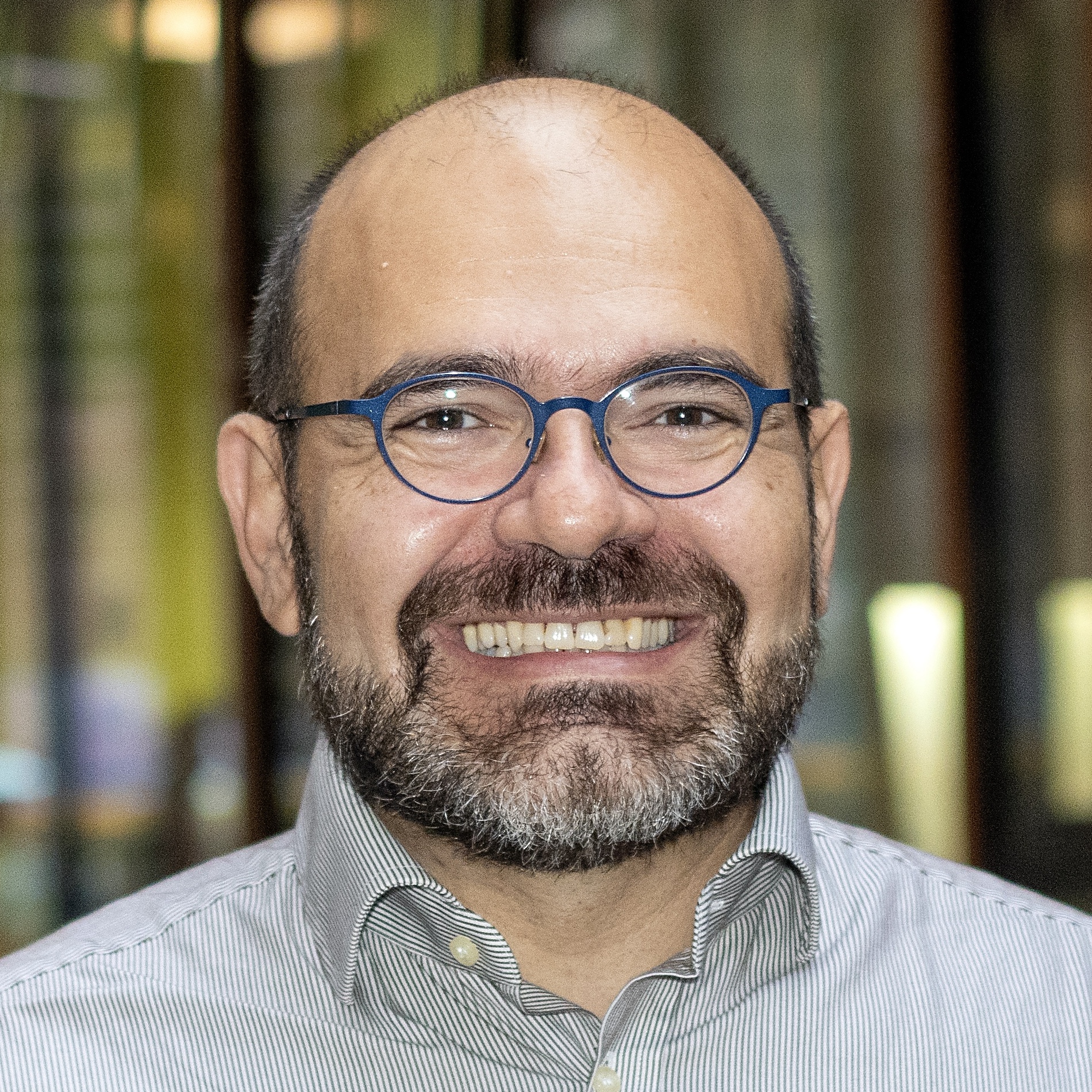
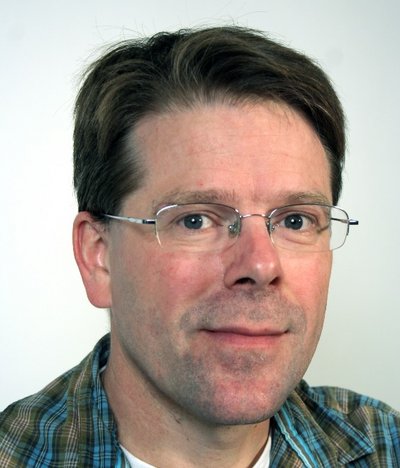
Rik Crutzen is a Full Professor at the Faculty of Health, Medicine and Life Sciences, Maastricht University, specializing in health promotion and digital interventions. His research focuses on leveraging technology to improve health behaviors across diverse populations, including adolescents, older adults, and immigrant communities. He leads projects in the CAPHRI research group for Promoting Health & Personalised Care. Research trends include: Digital health innovations (e.g., helplines, apps, algorithms) Chronic disease management (post-COVID-19, dementia risk) Health equity in immigrant populations (cervical cancer, maternal care) Behavioral interventions (physical activity, sleep, STI prevention) Systematic reviews and mixed-methods studies He has supervised 22 academic works and contributed to datasets on activity patterns and sleep-activity correlations. His work spans public health policy, health education, and technology integration.
Raquel Fernández is Full Professor of Computational Linguistics and Dialogue Systems at the University of Amsterdam, where she leads the Dialogue Modelling Group at the Institute for Logic, Language & Computation (ILLC). As Vice-Director for Research at ILLC and a Fellow of the ELLIS Society, she bridges computational linguistics, cognitive science, and artificial intelligence through her research on language use in multimodal and conversational contexts. PhD in Computational Linguistics from King's College London Prior research positions at University of Potsdam and Stanford University's CSLI Her work explores how cognitive constraints, social interaction, and perception shape language use, with a focus on: Visually-grounded language processing Multimodal dialogue modeling Model uncertainty and calibration Language grounding in multimodal data Language learning and semantic change Dialogue reference resolution Recent publications analyze multimodal reasoning limitations, cross-lingual knowledge consistency, and uncertainty modeling in dialogue systems. She has received multiple accolades including an ERC Consolidator Grant , NWO VENI/VIDI/Aspasia fellowships , and EMNLP/GenBench awards . Outstanding Paper Award (EMNLP 2023) Best Data Award (GenBench Workshop 2023) ELLIS Society Fellow ERC Consolidator Grant #819455 recipient NWO VENI/VIDI/Aspasia awardee As a leader in academic service, she serves on the SIGDAT Executive Committee and chairs multiple conference committees. Her lab develops models for multimodal dialogue, visual storytelling, and grounded language understanding.
Prof. Hans van Lint is a Professor of Traffic Simulation and Computing at Delft University of Technology (TU Delft), where he holds the Anthony van Leeuwenhoek Chair since 2013. He is affiliated with the Department of Transport & Planning within the Faculty of Civil Engineering and Geosciences. His research focuses on the intersection of traffic flow theory, data analytics, and traffic simulation, with applications in estimating and predicting traffic states in networks. He has supervised numerous PhD students and contributed to valorization projects translating research into practical solutions. Van Lint earned his MSc in Civil Engineering in 1997 and returned to TU Delft for his PhD, which he completed in 2004 on 'Freeway Travel Time Prediction.' He has held roles including Assistant Professor (until 2009), Associate Professor, and has served as Director of Education for the MSc Transport, Infrastructure and Logistics program from 2010–2016. His research interests include traffic simulation frameworks, data assimilation techniques, and the development of tools for traffic state estimation. He has authored influential papers on topics such as microscopic traffic modeling, congestion pattern analysis, and macroscopic fundamental diagrams. His work emphasizes bridging theoretical models with real-world applications, enhancing traffic management and infrastructure planning. Van Lint teaches courses like 'Transport & Planning' and 'Interdisciplinary Fundamentals,' reflecting his commitment to both research and education. He actively contributes to TU Delft's labs, including the Traffic Dynamics, Modelling and Control Lab, advancing interdisciplinary approaches to mobility challenges.
Massimo Mischi is a Full Professor at the Faculty of Electrical Engineering of the Eindhoven University of Technology (TU/e) and chairs the Signal Processing Systems (SPS) Division , the largest division at TU/e with over 250 researchers. He founded the Biomedical Diagnostics (BM/d) Lab in 2012, which now includes 180 researchers and clinical/industrial advisors, focusing on biomedical signal processing for diagnostics and monitoring.
Ibo van de Poel is a Full Professor at Delft University of Technology , within the Faculty of Technology, Policy and Management , specifically in the Section Philosophy . He holds the prestigious Antoni van Leeuwenhoek professorship , awarded to excellent young researchers, and is a leading figure in Design for Values , engineering ethics , and technology as social experimentation . Education: Van de Poel studied Philosophy of Science, Technology and Society at the University of Twente , with a propaedeutic exam in Mechanical Engineering . He earned his PhD in Science and Technology Studies (STS) in 1998 from the University of Twente , under the supervision of Prof. Dr. A. Rip. Research Interests: His research spans three major themes: Design for Values : Investigating how moral values can be integrated into engineering design, including empirical studies on how engineers handle value conflicts. Moral Responsibility in R&D Networks : Exploring the "problem of many hands" in large-scale research and development projects, developing formalizations and empirical methods. Ethics of Emerging Technologies : Examining ethical issues in new technologies like nanotechnology and synthetic biology , with a focus on technology as social experimentation . Publications and Impact: Van de Poel has authored over 25 international peer-reviewed articles and 15 book contributions . He is co-editor of major works including the Handbook of Philosophy of Technology and the Engineering Sciences (Elsevier, 2009), Philosophy and Engineering (Springer, 2010), and Ethics, Engineering and Technology (Wiley-Blackwell, 2011). His recent work includes leading the VICI project "New Technologies as Social Experiments" , funded by NWO. Scientific Awards: Antoni van Leeuwenhoek Professorship (TU Delft) VICI Grant for "New Technologies as Social Experiments: Conditions for Morally Responsible Experimentation" Advising and Grants: Van de Poel has led and contributed to multiple high-impact projects, including: NWO Project on "Moral Responsibility in R&D Networks" (2007–2012) EU Project on ethical issues in synthetic biology (2009–2011) VICI Project on "New Technologies as Social Experiments" (ongoing) He has also supervised PhD students and contributed to educational innovations, including the development of the AGORA web-based program and the first Dutch textbook on ethics and technology . Labs and Teams: Van de Poel is an active member of 4TU.Ethics & Technology , a federation of Dutch technical universities focused on ethics and technology. He contributes to the Simon Stevin Series in the Ethics of Technology and participates in various reading groups and PhD communities within the network.
Prof. Dr. Dennis Herhausen is a Full Professor of Marketing and Head of the Marketing Department at Vrije Universiteit Amsterdam’s School of Business and Economics. Previously, he held positions as Associate Professor at KEDGE Business School, Visiting Professor at the University of St. Gallen, and Assistant Professor at the University of St. Gallen. His research focuses on digital communication, customer journeys, multichannel management, and social media strategies, with publications in top-tier journals like the Journal of Marketing and Journal of Marketing Research. His work addresses critical issues such as online firestorm mitigation, complaint de-escalation, and gig economy communication. He has been awarded multiple prestigious prizes, including the 2021 CBSIG Consumer Research Award and the 2019 William R. Davidson Award. Education: PhD in Marketing from University of St. Gallen (2011) Teaching: Courses on Customer Experience Management, Survey Research Methods, and Thesis Guidance Research Interests: His work explores digital marketing strategies, customer-centric innovations, and the dynamics of online platforms. Recent studies address topics like business-to-investor marketing signals, privacy orientation measurement, and machine learning biases in marketing. He actively contributes to editorial boards of journals including Journal of Marketing and Journal of Interactive Marketing. Awards: 2021 CBSIG Consumer Research in Practice Award 2021 Retail & Pricing SIG Best Paper Award 2021 SERVSIG Best Services Article Award 2020 William R. Davidson Award Grants & Editorial Work: His research has been funded by national/international grants, and he serves on multiple editorial boards. Notable datasets include studies on online retailer strategies and virtual brand sabotage responses.
Prof. Ivo J.B.F. Adan is a Full Professor at Eindhoven University of Technology (TU/e), holding chairs in both Industrial Engineering & Innovation Sciences and Mechanical Engineering. His research focuses on stochastic operations research, queueing models, and manufacturing systems design. He has held visiting positions at the University of North Carolina and was part-time professor at the University of Amsterdam (2008–2011). Education: MSc and PhD in Mathematics from TU/e Affiliations: Eurandom Senior Fellow, Beta Research Director, editorial roles at Queueing Systems and Probability in Engineering and Informational Sciences His work addresses warehouse optimization, transportation logistics, and semiconductor manufacturing. Notable achievements include: Developed analytical models for zone picking systems and conveyor networks Advanced understanding of FCFS infinite bipartite matching systems Recipient of multiple best paper awards including the IE&IS Valorization Prize (2023) Current projects include the DigiTwop digital twin-based warehouse optimization initiative and modular construction research. He teaches courses on stochastic modeling, manufacturing systems, and smart industry applications.
Ioannis Athanasiadis is a Full Professor and Chair of Artificial Intelligence at Wageningen University & Research (The Netherlands). He leads the Artificial Intelligence (AIN) group, focusing on advancing AI methods for global challenges in agriculture, ecology, and sustainability. Previously, he was faculty at the Dalle Molle Institute for Artificial Intelligence (IDSIA, Switzerland) and the Democritus University of Thrace (Greece). He holds a PhD (2005, cum laude) in Electrical and Computer Engineering from Aristotle University of Thessaloniki. His research integrates machine learning, knowledge engineering, and environmental modeling to address food security, climate adaptation, and ecosystem services. He leads initiatives like AgML (AgMIP's machine learning benchmarking effort) and coordinates European grants such as LTER-LIFE and CYBELE . Prof. Athanasiadis has supervised over 40 PhD/postdoc researchers and serves as Editor of Environmental Modelling and Software . He collaborates internationally on projects involving AI for crop modeling, digital twins, and sustainable agriculture. His team develops frameworks like Crop2ML and PyCrop2ML to enhance interoperability between process-based models and machine learning systems.
Theo Arentze is a Full Professor at Eindhoven University of Technology (TU/e) in the Department of the Built Environment, leading the Real Estate Management and Development group. He is affiliated with EAISI Health and EAISI Mobility research institutes. Education: MSc in Psychology (Cognitive Psychology & AI) from Groningen University, PhD from TU/e Urban Planning Research: Spatial choice behavior, decision support systems, activity-based modeling, agent-based simulation His research integrates bounded rationality into spatial choice models to enhance behavioral realism, with applications in real-estate management , neighborhood development , healthy cities , and hybrid work environments . Recent work includes child-friendly urban planning and energy-efficient housing impacts . Prominent article themes include: Hybrid work location decisions Urban public space affective experiences Child friendliness in residential choices Sustainable energy preferences Spatial decision support systems Social network modeling Scientific recognition includes: Best Poster Award (2025) - Computational Urban Planning Conference Long Paper of Distinction (2021) - Healthy Buildings Europe EuroFM Best Paper Award (2017) Pyke Johnson Award (2016) As an educator, he teaches courses in Urban Planning , Housing Economics , and Quantitative Research Methods . His multidisciplinary team combines expertise from psychology, sociology, and urban economics to create high-quality built environments through behavioral research.
Dr. Peter Fokker is a Researcher at Utrecht University's Faculty of Geosciences, specifically within the Department of Earth Sciences and the Experimental Rock Deformation/HPT group. He is affiliated with the Research Programme in Earth Sciences Utrecht (DES/IVAU) and has been actively publishing in geomechanics, subsidence modeling, and induced seismicity for over three decades. His work primarily focuses on the application of geomechanical principles to understand and model subsurface processes related to resource extraction and geothermal energy. Dr. Fokker's research interests span several interconnected domains in geomechanics and subsurface engineering. His primary focus is on experimental rock deformation , studying how rocks behave under various stress conditions. He has made significant contributions to subsidence modeling , particularly in the context of gas field depletion in the Netherlands. His work on induced seismicity has helped understand the relationship between subsurface operations and seismic events. Additional interests include geothermal energy systems , reservoir engineering , and the application of data assimilation techniques to improve subsurface characterization. His research often bridges theoretical models with practical applications in energy resource management. An analysis of Dr. Fokker's recent publications (2020-2025) reveals a strong focus on practical applications of geomechanics to real-world challenges. His work increasingly integrates InSAR technology and data assimilation methods to monitor and model subsidence processes. There's a clear emphasis on geothermal energy applications , reflecting growing interest in sustainable energy solutions. His research also demonstrates a sophisticated approach to modeling complex reservoir behaviors across multiple scales, from laboratory experiments to field-scale operations. The interdisciplinary nature of his work is evident in collaborations spanning geology, engineering, and environmental science. Dr. Fokker has supervised multiple research projects and students throughout his career, as indicated by the "Supervised Work (4)" reference in his profile. His research has been supported by various grants focused on subsidence modeling, geomechanics of energy resources, and induced seismicity. He has been involved in significant collaborative efforts, including the Dutch National Scientific Research Program on Land Subsidence. Dr. Fokker is part of the Experimental Rock Deformation/HPT group at Utrecht University, which conducts laboratory experiments and develops theoretical models to understand rock behavior under various conditions. His work contributes to the broader research ecosystem focused on sustainable resource management and understanding subsurface processes, with particular relevance to the Dutch context of gas extraction and land subsidence.
Gamze Z. Dane is a tenured Assistant Professor at the Department of Built Environment of Eindhoven University of Technology (TU/e), affiliated with EAISI Mobility and EAISI Health. She leads the Digital City Program (2020-2024) and specializes in decision-support systems, GIS, urban informatics, and data analytics for sustainable urban development. Her research integrates citizens into urban decision-making using digital tools like VR twins and data-driven approaches. Education: PhD in Urban Planning, MSc in Geographical Information Systems (GIS) and Decision Making. Research Interests: Focuses on human-environment interaction, transdisciplinary urban projects, and the impact of digitalization on cities. She develops tools for public participation and uses big data to analyze citizen behavior and urban experiences. Projects: Principal Investigator for EU/national projects involving cities like Eindhoven, Bologna, and Lisbon. Notable projects include UBeX Urban Behavior eXtended reality lab (2024-2026) and ROCK (2017-2020). Awards: Cuperusprijs 2020 (2nd place for student thesis) Drivers of Change Exhibition 2021 ISPRS International Journal Cover Story (2020) Teaching & Innovation: Coordinates courses like Smart Cities and Urban Redevelopment. Developed online teaching materials using VR, drones, and mobile apps. Guest lectures at Istanbul Technical University and visiting scholar at National University of Singapore. Labs & Networks: Leads the UBeX lab exploring immersive technologies for urban analysis. Active in academic networks including Urban Planning journals and international conferences.
Mykola Pechenizkiy is a Full Professor at the Department of Mathematics and Computer Science at Eindhoven University of Technology (TU/e), holding the Data Mining Chair. He also serves as an Adjunct Professor in Data Mining for Industrial Applications at the University of Jyväskylä. His research focuses on predictive analytics, data mining, and responsible AI, addressing real-world challenges in industry, healthcare, and education. He leads the Customer Journey research program at the Data Science Center Eindhoven, emphasizing ethical and transparent analytics. Academically, he holds a PhD from the University of Jyväskylä (2005) and has held visiting researcher positions at institutions like Columbia University and NYU. He has co-authored over 300 peer-reviewed publications and serves on editorial boards and committees for leading conferences (e.g., AAAI, IJCAI). He is the President of the International Educational Data Mining Society (IEDMS). His research interests include concept drift adaptation, sparsity techniques in neural networks, and fairness-aware AI. He has led projects such as the TKI PPS KPN Smart Two initiative and collaborates with industries like ASML, Philips, and Rabobank. His work contributes to UN SDGs, particularly in sustainable development through AI-driven solutions. Awards: Best Demo Paper Award (IEEE ICDE 2023), Best Paper Awards (ALA 2022, LoG 2022), and SensorKDD 2009 recognition. Grants/Projects: Active projects include TKI PPS KPN Smart Two (2019–2025) and Smart One W&I TKI KPN Flagship (2018–2022). Labs/Teams: Affiliated with EAISI Health, SIKS Scientific Board, and the University of Waikato’s AI Institute.
Dr. Jennifer Koch is an Associate Professor at the Laboratory of Geo-information Science and Remote Sensing, part of Wageningen University & Research. Previously, she served as an Associate Professor and Associate Research Director at the University of Oklahoma's Data Institute for Societal Challenges. Her research integrates data-driven methods like simulation modeling to address socio-economic and climate change challenges, focusing on sustainable urbanization and environmental management. Education: She holds a Diplom (Univ.) in Geoecology from the University of Bayreuth and a Dr.-Ing. in Electrical Engineering/Computer Science from the University of Kassel. She teaches courses on geo-information management and data analytics. Research emphasizes multi-scale modeling, stakeholder engagement, and participatory approaches to socio-ecological systems. Recent work explores urban growth in Africa, methane emission monitoring, and renewable energy siting. Articles highlight interdisciplinary methods in GIS, climate policy, and community geography. Professional service includes roles with iEMSs, IALE, and the AAG. No ancillary activities reported. Her work bridges technical geospatial tools with societal challenges, emphasizing practical policy applications.
Wiebe M. de Vos is a Full Professor at the MESA+ Institute, University of Twente, where he leads research in advanced membrane technologies. His work bridges fundamental polymer chemistry and practical applications in water treatment and sustainability. Full Professor, MESA+ Institute, University of Twente His research focuses on membrane science, particularly polyelectrolyte multilayer systems, nanofiltration, and sustainable material design. He investigates how surface chemistry, phase separation, and polymer interactions influence membrane performance in complex aqueous environments. His work addresses critical challenges such as nanoplastics removal, salinity management, and micropollutant degradation. The recent publications highlight a strong trend in developing next-generation membranes with enhanced stability, selectivity, and environmental compatibility. His team explores pH-responsive systems, biocatalytic membranes, and scalable fabrication methods, contributing significantly to both academic knowledge and industrial applications in water purification. No scientific awards were mentioned in the provided text. Dr. de Vos has supervised 22 academic works, indicating active mentorship of Master’s and PhD students. While specific grants are not detailed, his extensive research output and dataset publications suggest sustained funding and collaborative projects. His research integrates experimental design, material characterization, and process engineering. His work is conducted within the MESA+ Institute, a leading nanotechnology research center, fostering interdisciplinary collaboration in materials science and engineering.
Anne Margriet Pot is an endowed professor at the Erasmus School of Health Policy & Management (ESHPM), Erasmus University Rotterdam, with a focus on Health Care Governance. She also holds the position of extraordinary professor at Optentia, North West University, South Africa. Additionally, she serves as a strategic advisor for Long-Term Care at the Health and Youth Care Inspectorate, Ministry of Health, the Netherlands, and is President-elect of the International Psychogeriatric Association. She co-chairs the Lancet Commission on Long-Term Care for Older Persons and has advised the World Health Organization (2014–2018). Her research is deeply rooted in improving the mental health and quality of life of older adults, particularly through innovations in long-term care. Key areas include the measurement of care quality, development of technology-based interventions for mental well-being, and the use of narrative methods in care regulation. Her work significantly contributes to the UN Sustainable Development Goals, especially those related to health and well-being. The most recent publications highlight a strong trend toward meta-analytic and scoping review methodologies, focusing on subthreshold depression interventions, narrative approaches in youth and elderly care, and inclusive regulatory frameworks. These works reflect a shift toward evidence synthesis and policy-oriented research with global applicability. President-elect, International Psychogeriatric Association Co-chair, The Lancet Commission on Long-Term Care for Older Persons Strategic Advisor, Long-Term Care, Health and Youth Care Inspectorate, Netherlands Former Advisor, World Health Organization (2014–2018) She has authored over 235 publications, including the influential Dutch Manual on Geropsychology and a recent book on caregiver dilemmas. She is currently establishing a research program on person-centred and integrated long-term care regulation at ESHPM. Her work bridges clinical psychology, health policy, and public governance, with strong international collaborations, particularly in Africa and through global health initiatives. While no formal students are listed, her leadership in large-scale research projects suggests mentorship and team-based research training. She is actively involved in multiple research networks and has contributed to policy development at national and international levels. Her interdisciplinary approach integrates psychology, public health, and narrative ethics to transform long-term care systems.