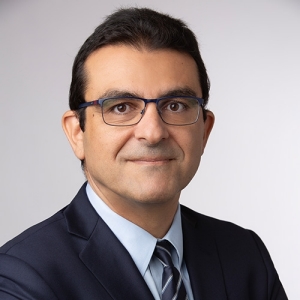
Christine Cukar-Capizzi is an Assistant Professor at the Yale Child Study Center , part of the Yale School of Medicine. She specializes in the assessment and treatment of Autism Spectrum Disorder (ASD), with clinical roles in the Developmental Disabilities Clinic and Outpatient Clinic. Her research focuses on evaluating behavioral interventions for children with ASD and clinical characterization in federally-funded ASD studies. Education: PsyD in Clinical Psychology, University of Hartford (2018) MA in Clinical Psychology, University of Hartford (2015) MS in Special Education (ASD Concentration), Southern Connecticut State University (2008) Key Roles: Board Certified Behavior Analyst (BCBA) Post-doctoral training at Yale Child Study Center Consultation and behavioral support for ASD families Labs/Teams: McPartland Lab (affiliated with the Child Study Center).
Professor Canan Kocabasoglu Hillmer is a Reader in Operations and Supply Chain Management at Bayes Business School (part of City, University of London). She joined Bayes in 2008, previously holding a position at the University of Kansas. Her research focuses on supply chain collaboration, risk management, strategic sourcing, and new product development investments. She serves as Area Editor for Purchasing & Strategic Sourcing in the International Journal of Operations & Production Management . Her work explores how organizational risk propensity and stakeholders influence investments in new product development, as well as methods to manage employee performance using statistical tools. Her teaching includes executive programs such as the Executive MBA and MSc Global Supply Chain Management. She directed the Bayes Global Women’s Leadership Programme from 2017 to 2021. Her research has been funded by the Institute of Supply Management and has led to over 20 journal articles and conference papers. Notable contributions include analyzing supply chain disruptions (e.g., the 2011 Japanese earthquake), supply chain paradoxes, and the integration of supply networks with internal operations. She also engages in professional activities like editorial roles and conference presentations globally.
Associate Professor Surya Janakiraman is an expert in Accounting at the Naveen Jindal School of Management , University of Texas at Dallas. His research spans executive compensation contracts , cost behavior , and information technology applications in finance . PhD (1993) and AM (1991) from University of Pennsylvania MBA (1985) from Indian Institute of Management BTech (1981) from Indian Institute of Technology His work focuses on: Design of executive compensation contracts Cost behavior and cost management Performance measurement systems Impact of regulation on financial disclosures Technology adoption in business processes Recent publications examine corporate governance frameworks , audit fee dynamics , and cost stickiness phenomena , with methodological expertise in empirical accounting analysis and multi-criteria decision modeling . Scientific recognition includes the 1998 Financial Executives Research Foundation grant . His teaching portfolio covers managerial accounting, business valuation, and empirical research methods.
Dr. Yuan Zhang is an Associate Professor of Management at the University of Texas at Dallas (UT Dallas) since 2012, previously serving as an Assistant Professor at Columbia University (2003–2012). She holds a Ph.D. in Accounting from the University of Southern California (2003) and a B.S. in Accounting from Tsinghua University (1998). Her research focuses on financial accounting reporting, the role of financial analysts, options markets, and securities regulations. Key areas include investment efficiency post-internal control disclosures, analyst behavior, and market reactions. She has published in top journals such as Journal of Accounting & Economics , Journal of Accounting Research , and Review of Accounting Studies . Teaching interests include Financial Accounting and Financial Statement Analysis. She has taught courses at both undergraduate and graduate levels, including Columbia’s MBA core courses and executive education programs. Her honors include the Teaching Excellence Award (Columbia, 2009) and prestigious fellowships from the SEC, USC, and Hong Kong’s HSBC. Zhang advises doctoral students, including notable placements at St. Louis University, Rutgers, INSEAD, and the University of Toronto. Her service roles include reviewing for major conferences and journals, organizing academic events, and contributing to search committees at Columbia. Her work bridges accounting practices with broader economic and regulatory impacts, emphasizing real-world implications for capital markets and corporate governance.
Dr. Aamir Amin is a Senior Lecturer at the University of Portsmouth, affiliated with the School of Organisations, Systems, and People within the Faculty of Business and Law. He holds a PhD in Information Technology (Software Engineering) from Universiti Teknologi Petronas, Malaysia. His career spans academia and industry, including roles in Pakistan and Malaysia. He specializes in teaching digital technology modules and advises PhD students in software engineering, knowledge management, and cybersecurity. Current Position: Senior Lecturer at University of Portsmouth Previous Roles: Assistant Professor at Universiti Tunku Abdul Rahman (UTAR), Malaysia; Research Analyst at Thomson Reuters Research Interests: Amin's work bridges technology, organizations, and society. Key areas include creativity in software engineering, knowledge sharing dynamics, and cyberbullying prevention. His recent studies explore corporate governance, digital marketing strategies, and youth cyber wellness. Teaching: Coordinates modules like Digital Technology and Innovation (PG), Digital Technology in Business (PG-Apprentice), and Electronic and Mobile Commerce (UG). Holds Alibaba Teacher certification and mentors in the Unovate Incubator program. Grants/Advising: Actively supervises PhD students and contributes to research projects, though specific grants are not detailed. His work is published in journals like Cogent Economics and Finance and Information and Software Technology. Labs/Teams: Affiliated with the Centre for Operational Research & Logistics at the University of Portsmouth.
Triin Kurrikoff is a Lecturer in Biological Psychology at the University of Tartu's Faculty of Social Sciences, Institute of Psychology (since 2022) and a Research Fellow in Neuropsychopharmacology at the Faculty of Science and Technology's Institute of Chemistry (since 2021). She holds a Doctorate in Psychology (2012) and a Master's in Public Health (2006) from the University of Tartu. Primary appointments: 0.20 FTE in Psychology, 0.80 FTE in Chemistry Previous roles: Data analyst, health sociology specialist, and research roles across psychology and chemistry Her research focuses on behavioral genetics, neuropsychopharmacology, and the interplay between gene variants and environmental factors in mental health. Key areas include anxiety, substance use, impulsivity, and aggression. She has co-authored over 25 peer-reviewed articles and contributed to long-term cohort studies like the Estonian Longitudinal Children Study (ELIKTU). Major awards include a 2013 publication stipend and recognition for graduate research. She supervises students in public health and psychology, and participates in grants exploring neurobiology, resilience, and youth skills.
Phuong-Anh Nguyen is Assistant Professor of Finance in the School of Administrative Studies at York University. She holds a PhD in Finance from Virginia Tech. Her research investigates how labor demographics shape corporate innovation, the financial implications of technology spillovers, and the impact of long-term investors on CSR value creation. Key Findings: Firms in younger labor markets produce significantly more innovation (Rev. Financ. Stud., 2023) Technology spillovers increase leverage by enhancing asset redeployability (Eur. Financ. Manag., 2021) Personal catastrophic experiences reduce risk-taking by professional investors (Financ. Manag., 2021) Long-term investors enable CSR activities to create shareholder value through risk reduction (J. Bank. Financ., 2020) Her work has earned multiple best paper awards and been covered by Forbes, Oxford Business Law Blog, and the Wall Street Journal.
Dr. Jenny Gu is an Associate Professor of Finance at the Gupta College of Business, University of Dallas. She holds a PhD in Finance from the University of Arkansas (2011) and previously worked as a financial analyst in California and a finance manager at Bank of Communications in Shanghai, China. She joined UD in 2011 and teaches courses including Managerial Finance, Investments, and Portfolio Management. Dr. Gu is the founder and faculty advisor of the University of Dallas Student Investment Fund (SMIF) since 2013, emphasizing experiential learning and student success in financial leadership. Her research focuses on risk management, banking, bond ratings, and the impact of ethical practices on business value. She has published in journals like Business and Society Review , Journal of Corporate Finance , and Journal of Economics and Finance . Her work addresses policy implications for financial regulation and informs students about the ethical and regulatory environment in finance. Dr. Gu advises students for CFA program scholarships and supports initiatives like the Texas Investment Portfolio Manager’s Competition. Her academic contributions bridge theory and practice, driven by her industry experience and commitment to fostering ethical financial leaders.
Brittney V. Root is a PhD candidate at Vrije Universiteit Amsterdam, affiliated with the Faculty of Behavioural and Movement Sciences and the LEARN! Learning Sciences group. She holds certifications as a Board Certified Behavior Analyst and SKJ registered Orthopedagoog. Her research focuses on educational trajectories of students with special needs, particularly those with autism, and factors influencing their schooling experiences. She is advised by Prof. dr. Martijn Meeter, Dr. Mariëtte Huizinga, and Dr. Anika Bexkens. Education: MA in Special Education (2018, award date 18 May 2018), BA in Psychology (2014, award date 18 Jun 2014). Research explores implementation of evidence-based practices in schools, disparities in autism services, and policy analysis. Her work contributes to UN Sustainable Development Goal 4 (Quality Education). Current project: 'Predicting Learning in Special Education' (2022–2026). Professional roles include director of Ancillary Activities Pedagogical and Behavioral Support Consultation Services (2023–2050) and prior experience as a research assistant at San Diego State University's CASRC.
Steve Foerster is a Professor of Finance at the Ivey Business School, Western University, where he has taught since 1987. He holds a PhD from the Wharton School and is a Chartered Financial Analyst (CFA). His research focuses on investments, portfolio management, and behavioral finance, with over 50 publications in leading journals like the Journal of Financial Economics and Journal of Finance . He has authored influential textbooks such as Financial Management: Concepts and Applications and co-authored In Pursuit of the Perfect Portfolio , exploring investment history and theory. Education: BA (Honors Business Administration) from Western University; MA and PhD from Wharton School, University of Pennsylvania. Research Interests: Investments, portfolio diversification, behavioral finance, and IPO dynamics. His work has earned awards including the Carol Stephenson Excellence in Teaching Award and the Amundi Smith Breeden Prize. He has advised on pension boards and served on editorial boards of journals like the Financial Analysts Journal . His blog, The Perfect Portfolio Investing Blog , offers insights into investing principles and market trends.
Felipe Restrepo is an Associate Professor of Finance and the Paul Desmarais/London Life Faculty Fellow in Finance at the Ivey Business School, Western University. He holds a PhD and MSc in Finance from Boston College, and a BS in Economics from EAFIT University. His research focuses on corporate finance, financial intermediation, and the real effects of bank transaction taxes, credit ratings, and IPO pricing. He teaches in the HBA and MSc programs, and has won multiple awards including the David G. Burgoyne Teaching Award (2019, 2024) and Ivey’s Early Career Research Impact Award (2021). Before academia, he worked in Colombia’s financial industry as a Project Manager at Bancolombia and a Quantitative Analyst at Valores Bancolombia. His work has been published in top journals like the Journal of Finance and Journal of Financial Economics. Education: PhD in Finance, Boston College (2014) MSc in Finance, Boston College (2009) BS in Economics, EAFIT University (2004) Research Interests: Professor Restrepo examines how financial policies and institutions influence corporate behavior. Key areas include the impact of bank transaction taxes on economic growth, credit rating policies on firm decisions, and IPO pricing dynamics. His work bridges corporate finance and financial intermediation, with implications for regulatory and market practices. Awards: David G. Burgoyne Teaching Award (2019, 2024) Ivey Early Career Research Impact Award (2021) Paul Desmarais/London Life Faculty Fellowship Teaching & Grants: He teaches Finance, Global Corporate Finance, and Learning Through Action courses. His industry experience informs his academic contributions, and he has secured significant institutional support through fellowships. Labs/Teams: Engaged in collaborative research on financial markets and policy, with ongoing projects on credit rating information leakage and underwriter reputation in equity markets.
Jeongsik Lee is an Associate Professor in the Department of Management at LeBow College of Business, Drexel University. His research focuses on technology management, innovation economics, knowledge integration, and social networks in organizational contexts. Areas of Expertise: Technology Management Economics of Innovation Social Networks Knowledge Integration Platform Competition Strategic Management His research investigates how firms and individuals leverage knowledge, networks, and innovation strategies to achieve competitive advantage. He employs empirical and quantitative methods, often using patent, publication, and market data to analyze innovation dynamics in high-tech industries such as IT, nanotechnology, and biotechnology. His recent publications (2022–2024) reflect a strong focus on knowledge integration post-hiring, the value of rare technologies, signaling in online communities, and software-driven innovation in hardware markets. These works span disciplines including strategic management, information systems, and operations, indicating interdisciplinary engagement across top-tier journals like Research Policy , Strategic Management Journal , and MIS Quarterly . Scientific Awards: 2016 Best Conference Paper (OCIS Division), Academy of Management 2016 Research Excellence Award, LeBow College of Business, Drexel University 2013 Core Professor of the Year (M.S. Program), Georgia Institute of Technology 2012 Professor of the Year (M.S. Program), Georgia Institute of Technology Grants and Funding: Dr. Lee has secured multiple research grants, including from the National Nanotechnology Infrastructure Network (SEI Seed Grant), the NET Institute, and Korea Institute of Science & Technology Information (KISTI), supporting studies on technology commercialization, platform entry strategies, and societal issues in nanotechnology. His grant history reflects a sustained research agenda at the intersection of innovation, policy, and market dynamics. Professional Background: Prior to academia, he served as Deputy Head, Economist, and Senior Analyst at the Bank of Korea (1987–2002), bringing real-world economic and policy experience into his scholarly work. Book Chapters and Proceedings: He has contributed to academic volumes on employee mobility, technological leadership in nanotechnology, and combinatorial innovation, and has presented at the Academy of Management Annual Meeting on topics such as knowledge sharing and startup survival.
Guido Baltussen is Full Professor in Finance at Erasmus School of Economics, Erasmus University Rotterdam, holding the Chair in Behavioral Finance and Financial Markets. He is also a fellow at the Tinbergen Institute and ERIM, recognized as high-performance research centers. His academic work is complemented by a professional role at Northern Trust Asset Management, where he leads quantitative investment strategies in equities and fixed income. His research expertise spans Behavioral Finance , Market Anomalies , Factor-based Investing , Asset Pricing , and Investor Decision-Making . He investigates how psychological factors influence financial markets, with a focus on portfolio construction and the performance of factor premiums across global markets. His recent publications reveal a strong trend in analyzing long-term financial datasets, market inefficiencies, and the practical application of behavioral insights in investment strategies. He combines rigorous empirical analysis with experimental methods, often leveraging real-world data from financial markets and game shows to test economic theories. Outstanding Investment Paper award, Eastern Finance Association (2012) Second prize, Quantpedia Awards (2025) Guido advises graduate students through a master's seminar in 'Behavioral Investing' and has contributed to practitioner knowledge via columns for IEX.nl and publications in the Financial Analyst Journal and Journal of Portfolio Management . His research has been supported by robust datasets spanning over 150 years, reflecting deep engagement with both historical and contemporary financial phenomena. He has collaborated extensively with institutions and professionals in the asset management industry, bridging academic rigor with practical investment solutions. He leads a research team focused on behavioral finance and quantitative strategies, contributing to both academic knowledge and industry innovation. His work continues to explore the boundaries between behavioral theory and market outcomes, with ongoing projects in global factor investing and bond return predictability.
Marios Panayides is an Associate Professor of Finance at the University of Oklahoma’s Price College of Business. He holds a Ph.D. from Yale University, an M.A. in Statistics from Yale, and M.A. and B.A. degrees in Mathematical Sciences from the University of Oxford. His research focuses on market microstructure, market efficiency, information dissemination, econometric techniques, and industrial organization. His work has been published in top-tier journals such as the Journal of Financial Economics and Journal of Financial and Quantitative Analysis . He has received the Best Paper Award at the Multinational Finance Society (2015) and the Financial Management Association (2009). Additionally, he has earned multiple teaching awards at both undergraduate and graduate levels. Prior to his current position, Panayides was a faculty member at the University of Utah, University of Pittsburgh, and University of Cyprus. He also served as a visiting professor at Bocconi University and Université Paris-Dauphine. His research explores topics such as common ownership effects, algorithmic trading impacts, and corporate event-driven trading dynamics. He has contributed to understanding liquidity provision in automated markets and cross-market trading behaviors. Education: Ph.D., Yale University M.A., Statistics, Yale University M.A., Mathematical Sciences, University of Oxford B.A., Mathematical Sciences (First Class Honors), University of Oxford His research has addressed challenges in emerging markets, including market-making frameworks and regulatory frameworks. Panayides has collaborated on projects analyzing trading fees, intermarket competition, and the effects of high-frequency trading on corporate innovation and analyst research production. His work bridges theoretical econometric models with real-world financial market dynamics. Awards & Honors: Best Paper Award (Multinational Finance Society, 2015) Best Paper Award (Financial Management Association, 2009) Teaching Excellence Awards at Undergraduate and MBA levels Panayides’ advising and grants focus on corporate finance, market structure, and algorithmic trading. His labs and research teams actively investigate topics such as liquidity dynamics, regulatory policy implications, and the role of information dissemination in financial markets.
Li Ang Zhang is a Professor of Policy Analysis at the RAND School of Public Policy and an Information Scientist at RAND, where he also serves as Codirector of the Center for Scalable Computing and Analysis. His work bridges artificial intelligence, machine learning, and national defense policy, with a focus on real-world implementation challenges and strategic applications. His research expertise spans Artificial Intelligence , Machine Learning , Modeling and Simulation , and Science and Technology Policy . He investigates AI’s role in defense contexts, including space domain awareness, adversarial robustness, mission planning, and human resource management. His work emphasizes the operational feasibility and limitations of AI systems in military settings. The 15 most recent publications illustrate a consistent focus on applying AI and ML to U.S. Air Force and Space Force missions. Key themes include AI for sense-making, red-teaming large language models, predictive maintenance, and infrastructure resilience. These works reflect a strong policy-analytic approach grounded in technical modeling and data science. While no formal awards are listed, his research is highly influential in defense and technology policy circles. His projects often involve collaboration with the Department of the Air Force and U.S. Space Force, suggesting significant grant funding and policy impact. He applies natural language processing, optimization, and machine learning to complex decision-making problems in defense and public health. Li Ang Zhang advises no named students in the provided text. However, as a professor and codirector at RAND, he likely mentors junior researchers and contributes to training the next generation of policy analysts. His leadership in the Center for Scalable Computing and Analysis underscores his role in advancing computational methods for public policy challenges.