Michael J. Schlosser is a faculty member at the Faculty of Mathematics , University of Vienna. His research focuses on combinatorics, number theory, and special functions, with a particular emphasis on hypergeometric and q-series, elliptic extensions, and rook theory. He has authored numerous publications in collaboration with prominent mathematicians such as Victor Guo, Meesue Yoo, and Christian Krattenthaler. Research Interests : Combinatorics and hypergeometric series Elliptic functions and their applications Partition theory and supercongruences Matrix inversions and determinant evaluations Students : Josef Küstner (Ph.D., 2022) Christian Stump (Ph.D., 2008) Editorial Roles : Associate Editor, Journal of Mathematical Analysis and Applications Editorial Board Member, The Ramanujan Journal Editorial Board Member, Journal of Algebraic Combinatorics
Zachariah Addison is an Assistant Professor of Physics at Wellesley College, specializing in quantum condensed matter theory. His research focuses on topological and geometric aspects of electronic dynamics, particularly in quantum materials like topological insulators, skyrmion phases, and chiral magnets. He explores phenomena such as anomalous Hall effects, nonlinear optical responses, and quantum transport using quantum field theory methods. Education: B.S. in Physics from MIT, M.S. and Ph.D. in Physics from the University of Pennsylvania. Addison teaches a range of physics courses emphasizing hands-on learning through computational tools (Mathematica, GUI) and experimental demonstrations. He actively involves students in research projects, fostering thesis work and publication opportunities. Professional contributions include peer review for journals like Physical Review B and editorship of an open-access journal special edition. He is developing a textbook series for introductory physics curricula. Outside academia, Addison is an avid classical violinist and chamber music performer. His recent research trends emphasize topological transport mechanisms in magnetic systems, with publications analyzing Hall effects in chiral magnets and quantum valley hall edge states in graphene. Key themes include the interplay of topology, spin-orbit coupling, and nonlinear responses in functional materials.
Andrei Khrennikov is Professor of Mathematics at the Department of Mathematics, Linnaeus University, where he also serves as director of the International Center for Mathematical Modeling (ICMM) . He leads a vibrant research group focused on interdisciplinary modeling in physics, biology, cognition, and social systems. Research Interests: His work spans a vast interdisciplinary landscape, including mathematical physics, p-adic and non-Archimedean analysis, quantum foundations, quantum-like modeling of cognition and decision-making, econophysics, and biological dynamics . He is a pioneer in applying quantum probability and formalism outside quantum physics, especially in psychology and social sciences. The Växjö series of quantum theory conferences , which he organizes, is the longest-running continuous conference series on quantum foundations, fostering dialogue between theorists, experimentalists, and philosophers. His recent publications (2021–2025) show a strong focus on quantum cognition, p-adic biology, entanglement models, and social laser theory , often leveraging generalized probability and open quantum systems frameworks. Scientific Contributions: Developed quantum-like models for cognition, decision-making, and biological processes. Pioneered use of p-adic and ultrametric analysis in genetics and brain dynamics. Advanced classical random field models as alternatives to quantum interpretations. Introduced the social laser model for collective emotional amplification in societies. He is actively involved in major research projects such as QUARTZ (Quantum Information Access and Retrieval Theory) and DYNALIFE (Information, Coding, and Biological Function) . His work bridges mathematics, physics, and cognitive science, promoting a unified framework for understanding complex systems through quantum-inspired tools.
Margiolakis Irini is a Professor at the Department of Cell & Developmental Genetics Biology, University of Patras. Her research focuses on structural biology, protein crystallography, and pharmaceutical applications using synchrotron radiation and X-ray diffraction. She actively collaborates with institutions like the European Synchrotron Radiation Facility (ESRF) and contributes to international crystallography networks. University: University of Patras Department: Cell & Developmental Genetics Biology Email: imargiola@upatras.gr | margiolaki@esrf.fr Research Interests: Structural analysis of proteins and peptides, drug design, insulin polymorphism studies, virus-derived macromolecules, and development of advanced diffraction methods. Her work bridges biophysics, pharmaceutical sciences, and materials science, with a focus on vaccine and diabetes drug development. Recent Article Trends: Publications emphasize synergistic NMR-X-ray powder diffraction approaches for polymorph screening, humidity effects on crystal structures, and pharmaceutical peptide design (e.g., Octreotide, insulin variants). Collaborative efforts span virology (Dengue, Arenaviridae) and methodological innovations in macromolecular crystallography. Scientific Awards: Unesco L'Oreal Fellow (2010) for Young Women in Life Sciences Leadership & Networks: Co-organizer of international crystallography workshops, member of European Powder Diffraction Committee, and co-editor of Acta Crystallographica . Leads initiatives for Greece's integration into synchrotron radiation research via the Greek Synchrotron User Network (GrSUN).
Dr. Paul Henderson is a Lecturer in Machine Learning at the School of Computing Science, University of Glasgow. He holds a BA in Mathematics (University of Cambridge, 2009), an MSc in Informatics (University of Edinburgh, 2010), and a PhD in Computer Vision (University of Edinburgh, 2018). His research focuses on generative AI, probabilistic machine learning, and minimally-supervised approaches to 3D computer vision, with applications in healthcare, computer graphics, and physical sciences. Education: PhD in Computer Vision (University of Edinburgh, 2018) MSc in Informatics (University of Edinburgh, 2010) BA in Mathematics (University of Cambridge, 2009) His work spans generative models, medical imaging, and robotics. Notable contributions include datasets like Flat’n’Fold and techniques in diffusion models for text-to-image retrieval. He has received grants including the Royal Society Research Grant (2022-2023) and the Vesuvius Challenge Autosegmentation Prize (2025). He supervises PhD students in topics such as medical image segmentation and generative AI. Teaching: CS5002 Advanced Programming, CS4061/CS5014 Machine Learning.
Bauyrzhan Primkulov is an Assistant Professor of Mechanical Engineering at Yale University. His research focuses on interfacial fluid dynamics and soft matter physics, with emphasis on fluid-fluid displacement in disordered environments and hydrodynamic pilot-wave theory. He holds a Ph.D. from MIT (2022) and B.Sc./M.Sc. from the University of Alberta. Primkulov's work bridges theoretical and experimental approaches to address energy and environmental challenges. His team investigates phenomena such as capillary flow dynamics in porous media, wettability effects on displacement patterns, and pilot-wave systems that mimic quantum behaviors. Key contributions include advancing Lenormand's phase diagram for multiphase flows and studying avalanches in imbibition processes. Recipient of InterPore PoreLab Award (2024) and MIT's CEE Best Doctoral Thesis (2022) Expertise spans experimental hydrodynamics, multiphase flow modeling, and granular media mechanics Active in developing novel methods like photoporomechanics to visualize stress fields in fluid-filled granular systems His recent studies explore crossover dynamics between stick-slip and steady sliding regimes in viscous slugs, as well as confinement effects in pilot-wave hydrodynamics. Primkulov collaborates across disciplines to translate fundamental fluid mechanics insights into practical solutions for energy storage and environmental systems.
Dr. Catherine Rychert is an Associate Professor in the Department of Geology and Geophysics at the University of Southampton, where she conducts cutting-edge research in seismology and marine geophysics. She is a member of both the Geology and Geophysics research group and the Southampton Marine and Maritime Institute, contributing significantly to our understanding of Earth's interior structure and dynamics through advanced seismic imaging techniques. Her research focuses on several key areas: Seismic imaging of lithosphere-asthenosphere boundary Subduction zone dynamics and slab structure Continental rifting processes Seafloor spreading mechanisms Mantle flow patterns and upwellings Development of novel seismic sensing technologies Dr. Rychert's recent publications (2023-2025) demonstrate a strong focus on applying advanced seismic techniques across diverse tectonic settings including subduction zones (Lesser Antilles, Cascadia, Hikurangi), mid-ocean ridges (Mid-Atlantic Ridge), and continental rift systems (East African Rift). A notable trend is her increasing use of distributed acoustic sensing technology for both terrestrial and planetary applications, showing interdisciplinary reach beyond traditional Earth science. Dr. Rychert actively supervises PhD students, including William Arnold Buffett working on the INSPIRE project. She has secured significant research funding from diverse sources including the European Union (EURO-LAB project), National Geographic Society, and Natural Environment Research Council (NERC). Her collaborative network includes Dr. Nicholas Harmon and Professor Derek Keir, with whom she frequently publishes. Her research team conducts fieldwork and data analysis focused on understanding fundamental Earth structure and processes through innovative seismic methodologies, contributing to both theoretical understanding and practical applications in hazard assessment and resource exploration.
Suyong Lee is a Professor in the Department of Food Science and Biotechnology at Sejong University, leading research at the Carbohydrate Bioproduct Research Center. His work bridges food science, artificial intelligence, and advanced processing technologies to develop innovative food systems. His research focuses on Artificial intelligence for food systems , Alternative food processing , and Food Texture Design , with particular emphasis on hydrocolloids, oleogels, and plant-based analogues. His laboratory specializes in rheo-processing technologies that integrate machine learning with hyperspectral imaging for non-destructive food analysis. Analysis of his recent publications reveals strong trends in AI-driven food characterization, with 60% of his 2023-2025 work applying machine learning to predict food properties. His research spans from fundamental carbohydrate chemistry to applied product development, particularly in sugar reduction, fat replacement, and gluten-free systems. Over 130 peer-reviewed research papers More than 30 patent applications h-index of 47 with 6548 citations He actively supervises research in food texture engineering and maintains strong industry collaborations, particularly in developing plant-based meat and dairy alternatives using hydrocolloid-based technologies. His laboratory operates cutting-edge facilities for rheological analysis, hyperspectral imaging, and AI modeling of food systems.
Paul D. Brooks is a Professor in the Department of Geology/Geophysics at the University of Utah, where he has been a faculty member since July 2014. His research focuses on understanding water, energy, and biogeochemical cycling in seasonally snow-covered catchments, with increasing emphasis on predicting how climate and land use changes impact snow accumulation, ablation, and snowmelt-derived surface and ground water resources. His educational background includes a BS in Biology and Chemistry from Florida State University, followed by an MS in Ecohydrology (1991) and PhD in Biogeochemistry (1995), both from the University of Colorado, Boulder. Prior to his position at the University of Utah, Dr. Brooks was a Professor in the Department of Hydrology and Water Resources at the University of Arizona from December 2000 to June 2014. Dr. Brooks' research spans multiple disciplines within earth sciences, focusing primarily on hydrology, ecohydrology, and biogeochemical cycling in mountainous, snow-dominated environments. His work examines how climate change affects snowmelt processes, groundwater-surface water interactions, and water resource availability in the western United States. He employs a combination of field measurements, isotope hydrology, and modeling approaches to understand complex hydrological processes across multiple spatial and temporal scales. His research increasingly involves collaboration with stakeholders to translate scientific findings into practical water resource management applications. Analysis of Dr. Brooks' recent publications reveals a strong focus on groundwater-surface water interactions in snowmelt-dominated systems, with particular attention to how climate change affects streamflow generation processes. His work bridges fundamental hydrological science with practical water resource concerns, examining topics such as runoff efficiency, groundwater storage dynamics, and the impacts of land cover changes on hydrological processes. A significant portion of his recent research investigates the Western United States water resources under changing climate conditions. AGU Fellow (American Geophysical Union) Dr. Brooks actively mentors graduate students through thesis research (both PhD and Master's level) as evidenced by his teaching activities. His lab conducts research supported by various grants focused on understanding water resources in mountainous regions, particularly examining how climate change affects snowmelt hydrology and water availability. He collaborates extensively with researchers across multiple institutions, as demonstrated by his numerous co-authored publications with scientists from various universities and research organizations. Dr. Brooks leads research efforts through his lab at the University of Utah and is involved with the Wasatch Environmental Observatory, a mountain-to-urban research network in the semi-arid Western US. His work integrates field measurements across complex terrain to understand how topography, vegetation, and climate interact to control water, energy, and biogeochemical cycling in seasonally snow-covered environments.
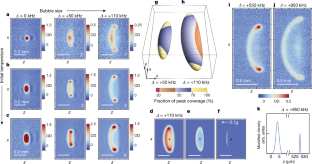
Smitha Vishveshwara is a Professor in the Department of Physics at the University of Illinois at Urbana-Champaign. She holds affiliations with the university’s Materials Research Laboratory and Beckman Institute. Her interdisciplinary work bridges quantum condensed matter theory, biophysics, and artistic expression. PhD in Theoretical Physics (University of California, Santa Barbara, 2002) Postdoctoral Researcher (2002–2005) in the Department of Physics at UIUC Her research focuses on quantum systems, including: Strongly correlated systems in low dimensions (Luttinger liquids, induced superconductivity in nanotubes) Topological order and Majorana fermions in superconductors Quench dynamics in spin chains and optical lattices Microgravity Bose-Einstein condensates and quantum bubbles Biophysics applications (protein networks via percolation theory) Gravitational parallels in quantum Hall systems Recent publications reveal trends in quantum Hall interferometry, Majorana detection schemes, and microgravity condensate dynamics. Awards include the NSF CAREER Award, Simons Fellowship, and APS Fellowship. She teaches courses like “Where the Arts Meets Physics” and has co-created art-science projects such as Quantum Voyages and Quantum Rhapsodies .
Fabio Biancalana is an Associate Professor at Heriot-Watt University's School of Engineering & Physical Sciences and leads the Nonlinear Photonic Nanostructures group. He holds affiliations with the Institute of Photonics and Quantum Sciences. His research focuses on nonlinear optics, photonic crystal fibers, graphene-based photonics, and theoretical models of relativistic systems. He earned his Laurea in Theoretical Particle Physics from the University of Roma III (2001) and a PhD in nonlinear optics from the University of Bath (UK). Notable awards include the Deryck Chesterman Medal (2005), IRCSET Postdoctoral Fellowship (2006), and EPSRC Fellowship (2007). Research interests span nonlinear phenomena in photonic nanostructures, quantum optics, and condensed matter systems. Recent work includes studies on graphene's nonlinear properties, epsilon-near-zero regimes in optical fibers, and gravitational analogues in combinatorial systems. His publications explore topics like optical fission, soliton dynamics, and frequency conversion in novel materials. Awards and recognitions highlight his contributions to photonics and theoretical physics. He collaborates internationally, with recent work addressing black hole analogs and topological photonics. His group's activities include experimental and theoretical studies on advanced optical materials and devices.
Lindsay McHenry is Professor and Department Chair of Geosciences at the University of Wisconsin-Milwaukee. She holds a Ph.D. from Rutgers University, an M.S. from Dartmouth College, and a B.S. from Dartmouth College. Her research focuses on using volcanic ash composition to correlate archaeological sites in East Africa and identifying terrestrial analogues for Martian surface minerals. Her research interests include tephrostratigraphy for human evolution studies, Mars geology analogs, sulfate mineral formation processes, and paleolimnology of saline-alkaline systems. Recent publications demonstrate strong focus on Martian analog studies using terrestrial environments (Iceland, East African lakes), mineral mapping with remote sensing/ML techniques, and paleolake reconstruction. Work increasingly incorporates drone technology and machine learning for planetary exploration applications.
Young-Hoon Ahn is an Associate Professor in the Department of Chemistry at Drexel University, serving as Chair of the Chemistry Graduate Program Committee. His research focuses on cysteine-based redox signaling in physiology and diseases, particularly using chemical tools to study glutathionylation. He holds a PhD from New York University and has held academic positions at Wayne State University and Drexel University since 2012. Education: PhD (2007, NYU), MS (2001, POSTECH), BS (1999, POSTECH). Postdoctoral training at Johns Hopkins University School of Medicine (2008-2012). Research Interests: Development of chemical probes for glutathione biology, functional studies of protein glutathionylation in cancer and cardiovascular systems, and covalent small-molecule inhibitors targeting cysteine residues. His interdisciplinary approach combines synthetic chemistry, proteomics, bioinformatics, and mouse models. Publications emphasize glutathionylation mechanisms in cellular stress and disease, with recent work on E-cadherin stability, cardiomyocyte biology, and SMYD2 regulation. His lab employs clickable glutathione strategies and bioorthogonal chemistry for redox proteomics.
Manuel Crespo-Ballesteros is a Research Fellow at the Aston Institute of Photonic Technologies (AiPT) within the College of Engineering and Physical Sciences at Aston University. He holds a BEng in Electronics and Automation Engineering from the Technical University of Cartagena (2007), an MSc in Theoretical Physics from the University of Murcia (2012), and a PhD in Radar Systems from the University of Birmingham (2016). His research focuses on Surface Nanoscale Axial Photonics (SNAP) technology, particularly microresonators, nonlinear optics, and optical frequency combs. He has contributed to advancements in microresonator fabrication, resonant tunneling phenomena, light-by-light transportation, and parametrically modulated frequency combs. His work bridges quantum mechanics and photonics, with applications in sensing, communications, and optical computing. Education: BEng in Electronics and Automation Engineering, Technical University of Cartagena, Spain (2007) MSc in Theoretical Physics, University of Murcia, Spain (2012) PhD in Radar Systems, University of Birmingham, UK (2016) Research Interests: Crespo-Ballesteros investigates microresonators created via SNAP technology, emphasizing their picometer precision and quantum-mechanical analogies. Key areas include resonant tunneling, nonlinear soliton-based light transport, and parametric frequency comb generation. His work explores applications ranging from high-speed communications to quantum physics simulations, such as black hole analogues using time-dependent potentials. Grants and Labs: Active in AiPT’s advanced photonics research, his lab develops cutting-edge SNAP microresonators with applications in precision spectroscopy and sensing. Collaborations include projects on fiber-optic bending-induced tunability and soliton-based transportation systems.
Dr. Robert V. O'Toole serves as Professor of Orthopaedics at the University of Maryland School of Medicine, holding key leadership roles including Vice-Chair for Research, Chief of Orthopaedics at R Adams Cowley Shock Trauma Center, and Director of Clinical Research. He also leads the Orthopaedic Traumatology Fellowship Program and heads the Division of Orthopaedic Trauma within the Department of Orthopaedics. His educational background includes a BS and MS in Mechanical Engineering from Carnegie Mellon and Stanford Universities, followed by an MD from Harvard Medical School. His clinical training encompasses General Surgery internship at Brigham and Women's Hospital, Orthopaedic Residency through Harvard Combined Program, and Orthopaedic Trauma Fellowship at University of Maryland's Shock Trauma Center. Dr. O'Toole's research focuses on critical areas of orthopaedic trauma including surgical site infection prevention, pelvic and acetabular fracture management, biomechanics of fracture fixation, and complications like compartment syndrome and nonunion. His work integrates clinical trials, biomechanical studies, and retrospective analyses to address high-impact trauma challenges. His publication record demonstrates consistent contributions to orthopaedic trauma literature, with recent work emphasizing infection prevention strategies, pelvic fracture outcomes, and biomechanical optimization of fracture fixation techniques across high-impact journals like Journal of Orthopaedic Trauma and Injury . Shock Trauma Hero Award, Clinical Service (2014, 2015) Top 10 Orthopaedic Trauma Association Papers (2014, 2015) Orthopedics This Week's 19 Best Orthopedic Traumatologists in North America (2015) Carnegie Mellon Football Man of the Year Award (2015) Elected Faculty Marshall by medical students (2016) As Program Director for the Orthopaedic Traumatology Fellowship, he mentors future trauma specialists while securing over $30 million in research funding. His active grants include Department of Defense projects on infection prevention and blood clot management, supported by a 10-member research team conducting 16 prospective clinical trials. He directs one of the nation's largest orthopaedic trauma research groups at Shock Trauma Center, collaborating with the Major Extremity Trauma Research Consortium (METRC) to advance evidence-based trauma care through integrated clinical research infrastructure.