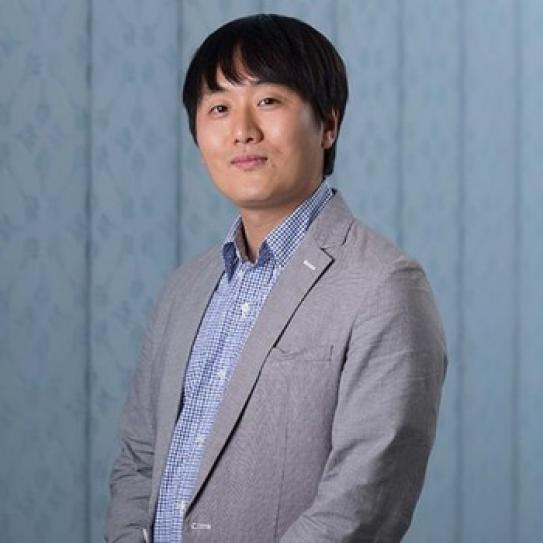
Sohmyung Ha is an Associate Professor of Electrical Engineering and Bioengineering at NYU Abu Dhabi and holds a Global Network position at NYU Tandon School of Engineering. He leads the Integrated BioElectronics Laboratory, focusing on advancing silicon integrated technologies for biomedical applications such as implantable devices and wearable sensors. His expertise spans biomedical circuits, neural interfaces, and wireless power systems. Education: MS (2004, KAIST), PhD (2016, UC San Diego) with a Best Thesis Award. Prior industry experience includes analog circuit design at Samsung Electronics (2006-2010). Academic affiliations include NYU Abu Dhabi, NYU Tandon, and global collaborations. Research interests include high-performance biomedical sensors, neural prosthetics, and energy-efficient bioelectronic systems. Notable achievements include a Best Paper Award (ISCAS 2024) and innovations in impedance spectroscopy and neural interface ICs. Current projects emphasize closed-loop neural interfaces, subcutaneous glucose monitoring, and retinal prostheses. His lab develops miniaturized, power-autonomous systems for healthcare applications.
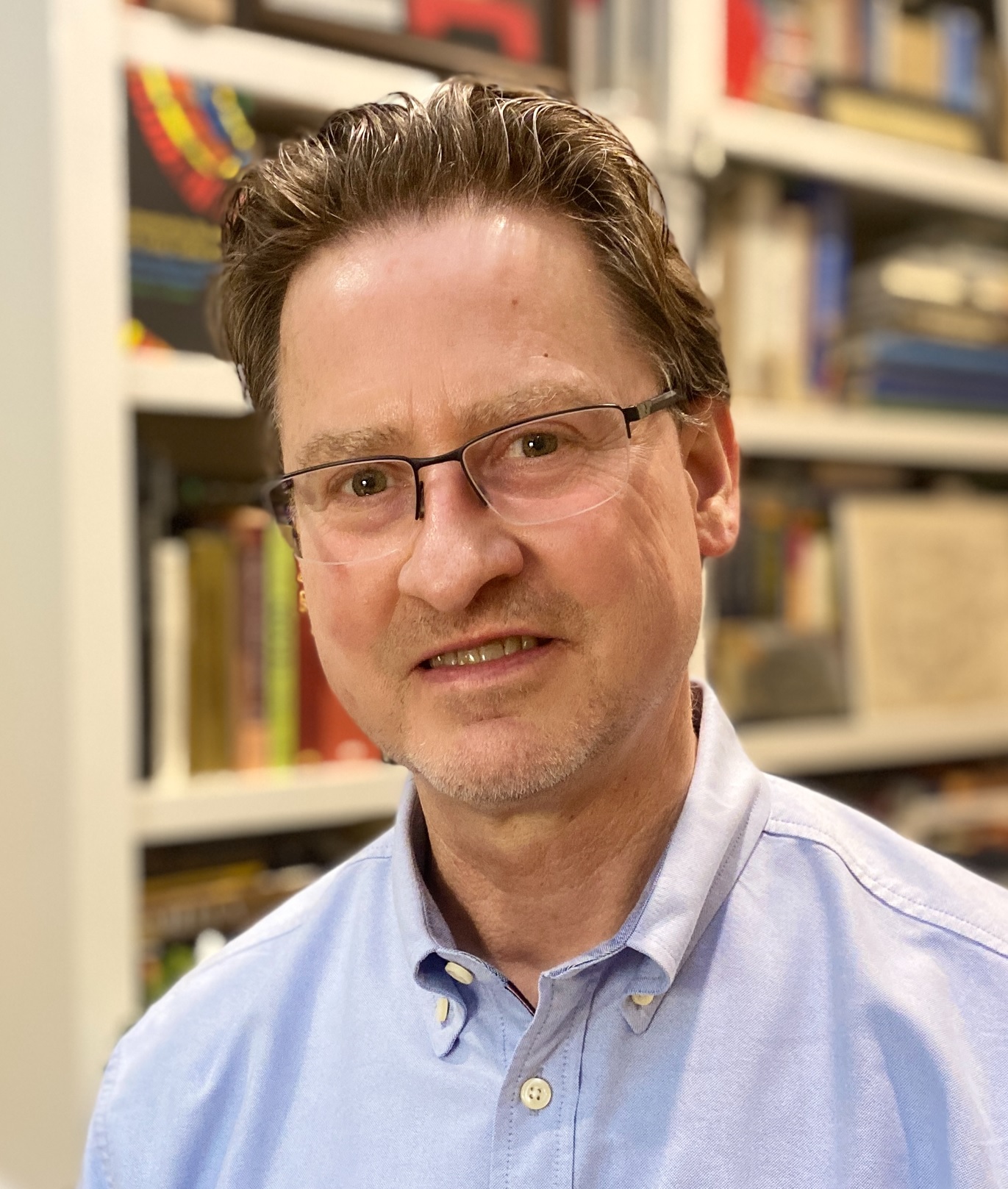
David Blaauw is the Kensall D. Wise Collegiate Professor of Electrical Engineering and Computer Science (EECS) at the University of Michigan. His research focuses on ultra-low-power analog/mixed-signal circuits, mm-scale sensors, neural networks, and biomedical applications. He leads the Blaauw Lab, which has pioneered innovations like the Michigan Micro Mote (M^3) and neural recording probes. His work emphasizes real-world deployability, with applications in environmental monitoring (e.g., monarch butterflies), medical devices, and robotics. Education: B.S. in Physics and Computer Science, Duke University (1986) Ph.D. in Computer Science, University of Illinois Urbana-Champaign (1991) Research Interests: Blaauw’s lab explores ultra-low-power computing, mm-scale systems, RF communication, in-memory computing, and genomics acceleration. Key projects include: Millimeter-scale computers (e.g., 0.04mm³ temperature sensors) Wireless neural interfaces for brain-machine communication Energy-efficient accelerators for edge AI and genomics Micro-robotics with sensing/actuation/computation Awards: IEEE Fellow 2016 SIA-SRC Faculty Award Motorola Innovation Award Best Paper Awards at ISSCC, ISCA, and RFIC Advising & Impact: Over 600 publications, 65 patents, and 4 startup companies spun from his lab. Current research includes genome sequencing accelerators (GenAx) and neural recording dust for brain mapping. He directs the Michigan Integrated Circuits Lab and chairs major conferences like ISSCC and DAC. Labs/Teams: Blaauw Lab (University of Michigan) Michigan Integrated Circuits Lab (MICAL)
Alyssa B. Apsel is a Professor of Electrical and Computer Engineering at Cornell University since 2002 and a Visiting Professor at Imperial College London. She became the IBM Professor of Engineering in 2023 and Director of Electrical and Computer Engineering at Cornell in 2018. Education: B.S., Electrical Engineering, Swarthmore College (1995) M.S., Electrical Engineering, California Institute of Technology (1996) Ph.D., Electrical Engineering, Johns Hopkins University (2002) Research Focus: She specializes in power-aware mixed-signal circuits for scaled CMOS and modern systems. Her group explores cost-effective designs addressing device scaling challenges (variation, noise, reduced analog performance) through analog/mixed-signal innovation, particularly in IoT radios and reconfigurable multi-standard wireless systems. Key areas: RF circuits, VLSI integration, biomedical telemetry, and low-power design. Publication Trends: Her 2016 work spans RF transceiver design, thermometer DAC calibration, biomedical ICs with UWB telemetry, and jitter-measurement circuits. These reflect her expertise in low-power wireless systems, analog/mixed-signal design, and biomedical electronics. Awards: IEEE Fellow (2020) IEEE CAS Distinguished Lecturer (2018-2019) ISLPED Design Contest Second Place (2010) Multiple Student Paper Awards (2000, 1995) Fellowships: Abel Wolman (1997), Caltech Institute (1995) Grants & Leadership: She founded EchoICs, which received a $275,000 NSF STTR Phase I Award (2024) for flexible spectrum radios. Her lab focuses on RF interfaces for implantable electronics and photonic integration.
Professor John D. Cressler is a tenured faculty member at the Georgia Institute of Technology, holding a position within the School of Electrical and Computer Engineering in the College of Engineering. His research focuses on cutting-edge semiconductor technologies, particularly silicon-germanium heterojunction bipolar transistors (SiGe HBTs) for mixed-signal applications spanning RF, microwave, mm-wave, analog, and digital domains. His research interests center on atomic-scale bandgap engineering for next-generation semiconductor devices, with emphasis on SiGe HBT technology development, radiation-hardened circuits for space applications, cryogenic electronics, and device-circuit interactions. His team explores fundamental device theory, broadband noise analysis, profile optimization, 2-D/3-D simulation, compact modeling, and radiation effects. Current projects include Europa-surface mission electronics, D-band/sub-THz systems, and radiation-tolerant receiver designs. Analysis of his 15 most recent publications (2024-2025) reveals a dominant focus on radiation-hardened electronics for space applications (40% of works), millimeter-wave circuit design (30%), and SiGe HBT reliability optimization (30%). Key trends include Europa mission electronics development, D-band/sub-THz circuit innovation, and advanced radiation mitigation techniques using SiGe BiCMOS technology. Professor Cressler teaches multiple courses including ECE 3040 (Microelectronic Circuits), ECE 3450 (Semiconductor Devices), ECE 6444 (Silicon-Based Heterostructure Devices and Circuits), and the interdisciplinary IAC 2002 course on Science, Engineering and Religion. His research is supported by industrial collaborations and Georgia Tech facilities including the Georgia Electronic Design Center (GEDC), NanoTECH, and C-STAR.
Bertan Bakkaloglu is the On Semiconductor Professor in the School of Electrical, Computer and Energy Engineering at Arizona State University (ASU), where he has been since 2004. Prior to ASU, he worked at Texas Instruments focusing on analog, mixed-signal, and RF SoC development for communication transceivers. His research expertise spans RF and mixed-signal IC design, wireless/wireline communication systems, and broadband communication systems. Education: Ph.D. in Electrical Engineering, Oregon State University (1995) M.S.C. in Electrical Engineering, University of Houston (1992) Research Interests: RF and mixed-signal integrated circuits Power management ICs (including LDO regulators and DC-DC converters) High-efficiency power delivery systems Radiation-hardened electronics for space applications MEMS-based sensor systems Biomedical circuits for implantable devices Grants & Collaborations: Over 40+ funded research projects with institutions like NASA/JPL, BAE Systems, and NSF, focusing on power electronics, space systems, and biomedical applications Key projects include radiation-hardened converters, self-calibrating DACs, and implantable medical device circuits Industry partnerships with Texas Instruments, Space Micro, and FLIR Professional Activities: Technical committee member for IEEE Radio Frequency Integrated Circuits Conference Founding chair of IEEE Solid-State Circuits Society Phoenix Chapter
Ningyuan Cao is an Assistant Professor in the Department of Electrical Engineering at the University of Notre Dame, College of Engineering. He leads the Circuit and System Intelligence Research Lab , focusing on the intersection of advanced hardware design and real-time/low-power machine learning applications. Education : Ph.D., Electrical and Electronics Engineering, Georgia Institute of Technology (2020) M.S., Electrical Engineering, Columbia University (2015) B.S., Electrical and Electronics Engineering, Shanghai Jiao Tong University (2013) His research investigates custom analog/mixed-signal circuits , digital architecture , and micro-system design for machine learning acceleration, distributed intelligence, and data-driven IC design automation. Key application domains include Internet-of-Everything, tactile internet, and mixed reality systems. Recent publications highlight work on Bayesian neural networks , privacy-preserving bio-signal encoders , transformer-based surrogate models , and compute-in-memory architectures . Technical themes span neuromorphic computing, uncertainty quantification, and hardware security.
Nicola Peserico is a Research Professor in the Department of Electrical & Computer Engineering at the University of Florida, affiliated with the College of Engineering. His primary research focus is on Integrated Optical Circuits and Silicon Photonics, with an emphasis on heterogeneous integration, hardware for Machine Learning/Neural Networks, and biosensing applications using integrated photonics. Education: Ph.D. (2018), M.S. (2014), and B.S. (2011) in Telecommunication Engineering from Politecnico di Milano. His research explores cutting-edge photonic technologies for accelerating neural networks, including Fourier-based convolution operations, reconfigurable circuits for solving PDEs, and energy-efficient optical interconnects. Recent work highlights advancements in photonic-electronic ICs, thermal management in photonic systems, and overcoming bottlenecks in memory and compute architectures. His publications emphasize photonic tensor cores, joint transform correlators, and silicon photonics integration for AI acceleration. Notable contributions include roadmap analyses for neuromorphic photonics and innovative packaging strategies for photonic neural network accelerators. No scientific awards or grants are explicitly listed in the provided texts. His advising record is not documented here. Labs/Teams: His work is part of broader efforts in photonic computing and AI hardware acceleration at the University of Florida, leveraging silicon photonics for next-generation computing systems.
Kofi M. Odame is an Associate Professor of Engineering at Dartmouth College, leading the Electrical & Computer Engineering program area. His research focuses on ultra-low-power analog integrated circuits for biomedical devices and sensor systems. He holds a BSc, MSc from Cornell University (2002-2004) and a PhD from Georgia Institute of Technology (2008). Education: BSc, Electrical and Computer Engineering, Cornell University, 2002 MSc, Electrical and Computer Engineering, Cornell University, 2004 PhD, Electrical and Computer Engineering, Georgia Institute of Technology, 2008 Research interests include analog IC design for biomedical applications, low-power sensor interfaces, and nonlinear signal processing. His work develops circuits for implantable/wearable devices and next-gen image sensors. Recent projects involve asthma monitoring, cardiac output tracking, and pulmonary imaging. Notable awards include the Jeff Crowe '78 Grand Prize (2019) and Analog Devices Career Development Professorship (2008–2012). He serves on NIH study sections for clinical informatics and holds IEEE Senior Member status. Advising and grants: Leads the Analog Lab, advises on NIH-funded projects, and collaborates with industry via TandemLaunch venture advisement. Courses taught include analog circuit design and biomedical systems. Labs/Teams: Directs the Analog Lab focusing on low-power biomedical circuits and sensor systems.
Dr. Sungyong Jung is a Research Professor in the Electrical Engineering Department at The University of Texas at Arlington. He leads the Integrated Sensing Circuits and Systems (ISCS) Laboratory, focusing on advancing integrated circuit (IC) design and embedded systems for applications in bio/chemical sensing, radar systems, and opto-electronics. His teaching responsibilities include courses like Digital VLSI Design, Analog Integrated Circuit Design, and Dissertation Research supervision. Research interests emphasize practical transitions from academic research to real-world applications through high-quality circuit design education and cutting-edge projects. The ISCS Lab collaborates globally to innovate in wireless systems, sensor networks, and embedded system solutions. Contact information includes the lab's Engineering Laboratory Building address and his email jung@uta.edu.
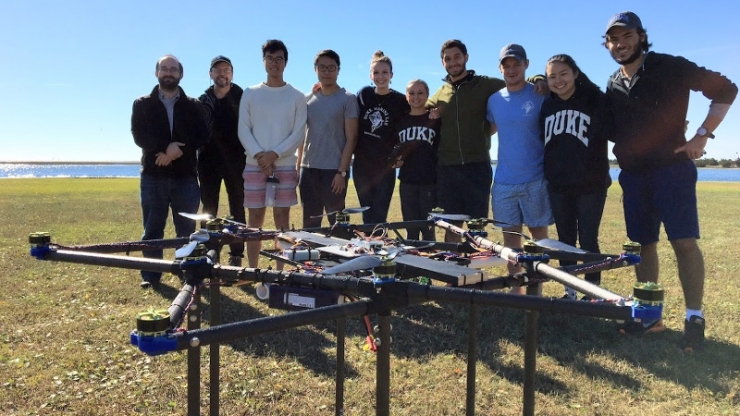
Martin Brooke is an Associate Professor of Electrical and Computer Engineering at Duke University's Pratt School of Engineering. He earned his B.E. in Electrical Engineering (First Class Honors) from Auckland University, New Zealand (1981), followed by M.S. (1984) and Ph.D. (1988) degrees from the University of Southern California. His career includes positions at Georgia Institute of Technology (1988-2003) before joining Duke. Dr. Brooke's research spans analog/RF/optoelectronic circuits, sensor interfaces, and deployable sensor systems with applications in ocean engineering and biomedical imaging. He leads innovative projects including ocean pH monitoring sensors and X Prize seafloor mapping initiatives, focusing on solving 'open-ended problems' through interdisciplinary approaches combining engineering with marine science. His extensive publication record (160+ articles) demonstrates consistent focus on sensor technologies, integrated circuits, and engineering education. Recent works emphasize biomedical applications (cancer margin assessment), environmental monitoring (ocean sensors), and educational innovations (remote microelectronics labs), showing a trend toward multidisciplinary solutions for real-world challenges. Awards and Honors: Capers and Marion McDonald Award for Teaching/Research Excellence (2022) Georgia Tech Outstanding Thesis Advisor Award (2003) IEEE Midwest Symposium Best Paper Award (1992) NSF Research Initiation Award (1990) Analog Devices Career Development Award (1988-1993) He has graduated 23 PhD students and mentors teams for major challenges like the X Prize ocean robotics competition. His research group develops deployable sensor systems with funding from NSF, X Prize Foundation, and industry partners. Current projects include drone-based ocean floor mapping systems and advanced pH sensors for marine ecosystem monitoring. Dr. Brooke leads the Brooke Research Group focusing on analog/RF systems and sensor integration. The team collaborates with Duke Marine Lab on ocean engineering initiatives and maintains eight U.S. patents. Future work emphasizes scalable sensor networks for environmental monitoring and biomedical diagnostics.
Alan Mantooth is a Distinguished Professor holding the Twenty-First Century Research Leadership Chair in Engineering within the Department of Electrical Engineering at the University of Arkansas, Fayetteville. He serves as Director of the National Center for Reliable Electric Power Transmission (NCREPT), Executive Director for GRAPES (NSF I/UCRC) and SEEDS (DoE Center), and Deputy Director of the NSF Engineering Research Center for Power Optimization of Electro-Thermal Systems (POETS). His educational background includes: B.S. in Electrical Engineering, University of Arkansas M.S. in Electrical Engineering, University of Arkansas Ph.D. in Electrical Engineering, Georgia Institute of Technology Dr. Mantooth's research centers on analog/mixed-signal IC design, power electronics CAD, and semiconductor device modeling with emphasis on harsh-environment applications. His pioneering work in silicon carbide (SiC) and gallium nitride (GaN) power systems has enabled high-temperature operation for electric vehicles and renewable energy infrastructure, significantly advancing reliability in extreme conditions. His 2025 publications reveal strong trends toward AI-driven power electronics (e.g., SolarFormer++ for PV profiling), wide-bandgap device modeling (β-Ga2O3, SiC), and innovative packaging solutions. Key themes include reliability engineering for extreme environments, multi-physics optimization, and explainable AI for safety-critical power systems. Major scientific recognition includes: IEEE Fellow (2009) for power electronic device modeling Three R&D 100 Awards (2009, 2014, 2016) for SiC power modules IEEE Power Electronics Society Technical Achievement Award (2019) Multiple university teaching/research awards including SEC Faculty Achievement Award (2015) As an exceptional mentor (UA Outstanding Mentor 2006-2008), he co-founded Lynguent and Ozark Integrated Circuits. His centers NCREPT, GRAPES, and SEEDS have secured major funding from NSF, DoE, and industry partners, supporting over 350 refereed publications and numerous patents. Current research focuses on AI-enhanced power electronics, recyclable packaging, and next-generation wide-bandgap device characterization. He leads the NCREPT test facility and multi-institutional teams developing grid-connected power electronic systems, secure energy delivery architectures, and thermal management solutions for high-power-density applications, with direct impact on electric transportation and renewable energy integration.
Professor Vishal Saxena is a faculty member in the Department of Electrical and Computer Engineering at the University of Delaware since 2019. Previously, he held positions at Boise State University (2010–2016) as Assistant and Associate Professor, and served as the Micron Endowed Professor of Microelectronics at the University of Idaho (2016–2019). His research focuses on analog electronic and photonic integrated circuits (ICs), particularly in sustaining IC design advancements post-Moore scaling through hybrid CMOS-photonic integration, neuromorphic computing, and energy-efficient embedded intelligence. Dr. Saxena earned his B.Tech. in Electrical Engineering from IIT Madras (2002), followed by M.S. and Ph.D. in Electrical and Computer Engineering from Boise State University (2007–2010). He has industry experience in semiconductor and telecommunication engineering. His work is supported by NSF, AFOSR, DARPA, NASA, and industry collaborators. Notable awards include the NSF CAREER (2015), AFOSR YIP (2016), and DARPA YFA (2019). His research interests span silicon photonic ICs for optical interconnects, RF photonic systems, neuromorphic circuits using emerging NVM devices, and high-speed analog-to-digital converters. He has pioneered compact modeling techniques for photonic components and developed energy-efficient architectures for spiking neural networks. Dr. Saxena’s publications reflect advancements in photonic integration, neuromorphic hardware, and mixed-signal IC design. He actively contributes to the IEEE community through editorial roles and conference steering committees, including MWSCAS and ISCAS.
Jason T. Stauth is an Associate Professor of Engineering and Director of the Partner School Dual Degree Program at Dartmouth College's Thayer School of Engineering. He specializes in high-frequency and chip-scale power electronics, photovoltaic systems, battery management, and integrated circuit design. His research focuses on energy-efficient power conversion systems and technology entrepreneurship. Education: BA in Physics, Colby College (1999) BE in Engineering Sciences, Dartmouth (2000) MS in Electrical Engineering, UC Berkeley (2006) PhD in Electrical Engineering, UC Berkeley (2008) Research Interests: Dr. Stauth's work emphasizes miniaturized power electronics, resonant switched-capacitor converters, and energy management for renewable systems. His lab develops high-efficiency circuits for applications in robotics, medical devices, and industrial automation. Awards: Thayer Outstanding Service Award for Faculty (2025) Advising & Grants: Advises PhD students Yanqiao Li and Bahlakoana Mabetha. Recent grants include NSF I-Corps funding for commercializing haptics technology through their venture 'uDrive.' Collaborates with UC San Diego on power electronics advancements. Labs & Teams: Leads the Power and Integrated Electronics Research Lab and the Power Management Integration Center (PMIC).
Andrew Sternberg is an Adjunct Assistant Professor of Electrical Engineering at Vanderbilt University's School of Engineering. He holds a B.S. in Engineering Science from Lipscomb University (1999), and M.S. and Ph.D. in Electrical Engineering from Vanderbilt University (2003 and 2006). He works at the Institute for Space and Defense Electronics (ISDE) as a Research Engineer and focuses on single-event effect testing in semiconductor devices, radiation-hardened circuit design, and analog/mixed-signal systems. His research spans single-event burnout in Ga2O3 and SiC devices, pulsed-laser-induced testing methodologies, and radiation effects in nanoscale FinFETs. Notable contributions include over 100 peer-reviewed publications on semiconductor radiation tolerance, including work on the RadFxSat-2 space mission to study microelectronics in orbit. Key research areas include: Cyber-physical systems reliability Risk assessment for radiation environments Space and defense electronics hardening His recent articles (2023–2025) emphasize: SiC power device radiation tolerance Advanced laser-based testing techniques Failure mechanisms in wide-bandgap semiconductors He collaborates with NASA and industry partners on radiation-effects mitigation strategies for aerospace applications.
Jeff Dix is an Assistant Professor in the Department of Electrical Engineering at the University of Arkansas, College of Engineering. He received his B.S., M.S., and Ph.D. in Electrical Engineering from the University of Tennessee at Knoxville in 2013, 2015, and 2018, respectively. He leads the Integrated Systems Laboratory for ANalog Design (ISLAND), focusing on analog/mixed-signal integrated circuits for energy-efficient applications. B.S., Electrical Engineering, University of Tennessee at Knoxville M.S., Electrical Engineering, University of Tennessee at Knoxville Ph.D., Electrical Engineering, University of Tennessee at Knoxville His research spans four key areas: (1) Neural network/neuromorphic hardware for IoT/edge computing; (2) Extreme environment IC design (radiation-hardening, temperature extremes); (3) Subthreshold/weak inversion IC design for ultra-low power; and (4) Power electronics for electric vehicles and micro-grids. His work emphasizes energy efficiency and robustness in specialized operational contexts. Recent publications highlight trends in radiation-hardened analog circuits (2021), RF energy harvesting (2022), and neuromorphic hardware (2023). Key keywords include Integrated Circuit Design, Machine Learning Hardware, and Low Power Electronics. He teaches courses in analog/digital IC design, microelectronics, and neural network hardware, including Circuits I (ELEG 2103), Electronics II (ELEG 3223), and IC Design Lab I (ELEG 4243L/5253L).