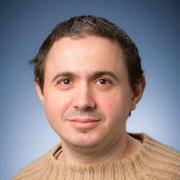
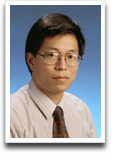
Shiyu Su is an Assistant Professor in the Department of Electrical and Computer Engineering at the University of Waterloo. His research focuses on high-speed data converters, wireless transceivers, digital phase-locked loops (PLL), and AI-assisted analog/mixed-signal design automation. He holds a Ph.D. from the University of Southern California (2019) and teaches courses such as ECE 340 (Electronic Circuits 2) and ECE 432 (Radio Frequency Integrated Devices and Circuits). Education: B.S. from Beijing University of Post and Telecommunication (China) and Queen Mary, University of London (UK), 2011; M.S. and Ph.D. from USC, 2013 and 2019, all in electrical engineering. Research Interests: High-speed ADCs/DACs RF/mm-wave transceivers Time-approximation filters (TAF) Analog/mixed-signal design automation Memristor-based computing Biomedical interfaces Key Awards: IEEE SSCS Predoctoral Achievement Award (2017–2018) Best Student Paper Award at IEEE RFIC (2022) Ming Hsieh Institute Scholar (2019–2020) Lab Focus: The Shiyu Su Lab develops integrated circuits for communications, sensing, and computing, with a focus on AI-driven methodologies and digital-analog co-design. Collaborations include work with Prof. Wei Wu (USC) on memristor-based systems.
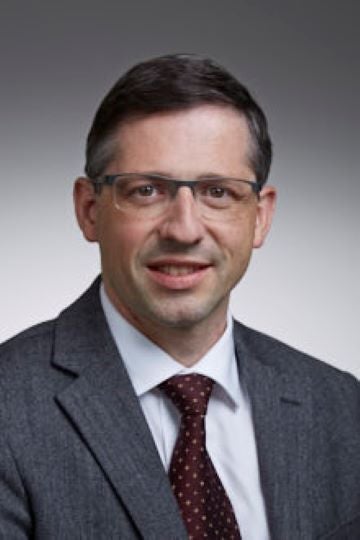
Nicola Nicolici is a Professor in the Department of Electrical and Computer Engineering at McMaster University. His research focuses on methods and algorithms for the design of digital integrated circuits and systems, with significant contributions in manufacturing test, post-silicon validation and debug. His work has expanded to include embedded systems, low-energy computing, and custom hardware-accelerated computing systems. Professor Nicolici's research interests span multiple areas of digital system design and validation. His early work focused on manufacturing test methodologies and power-aware testing strategies for integrated circuits. More recently, he has made significant contributions to post-silicon validation techniques, including constrained-random stimuli generation, trace signal selection, and bit-flip detection. His research has evolved to address emerging challenges in embedded computing systems, low-energy design, and specialized hardware acceleration for various applications including deep neural networks and signal processing. His recent publications reveal a strong trend toward hardware acceleration for specialized computing tasks. The research spans matrix multiplication algorithms (Strassen and Karatsuba), memory system optimization (DDR5 calibration), FPGA-based radar processing, and neural network acceleration. His work consistently bridges theoretical algorithm development with practical hardware implementation considerations, particularly focusing on precision analysis, fault tolerance, and energy efficiency. The research demonstrates a clear progression from traditional digital circuit testing to more complex system-level validation and acceleration techniques. Professor Nicolici has been actively involved in teaching courses related to system-on-chip design and test, digital systems, and embedded systems. His teaching portfolio includes advanced courses such as System-on-Chip (SOC) Design and Test and Digital Systems Design , reflecting his expertise in the field. While specific grant information isn't detailed in the provided text, his extensive publication record suggests ongoing research funding support. His research has contributed significantly to the fields of digital circuit testing, post-silicon validation, and hardware acceleration. The work has practical applications in semiconductor manufacturing, embedded systems design, and specialized computing architectures. His recent focus on neural network acceleration and memory system optimization reflects the evolving landscape of computer architecture research.
Mark R. Greenstreet is a Professor in the Department of Computer Science at the University of British Columbia (UBC). He holds a BSc from Caltech (1981), MA (1988), and PhD (1993) in Computer Science from Princeton University. His primary research focuses on formal verification of analog and mixed-signal (AMS) circuits, VLSI design, and hybrid systems. Notable contributions include the STARI signaling technique, tools like Coho for reachability analysis, and PReach for parallel model checking. He has advised numerous graduate students and collaborators, including Brad Bingham, Chao Yan, and Yan Peng. His work has been recognized with a Best Paper Award at the ASYNC Symposium. Supported by NSERC, Intel, and Oracle, his research bridges theoretical foundations and practical challenges in circuit design and verification. He teaches courses on formal methods, computer architecture, and automata theory at UBC.
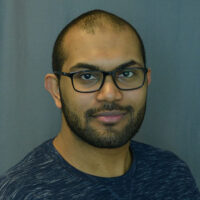
Dr. Mohamed Elamien is an Assistant Professor in the Department of Electrical and Computer Engineering at McMaster University . His research focuses on automating high-performance integrated circuit (IC) design, addressing Power-Performance-Area (PPA) challenges in semiconductors, and developing self-powered platforms for emerging technologies like biomedical and IoT applications. He holds a BSc (Highest Honors) and MSc from the University of Sharjah (2015–2017), and a PhD in Electrical and Computer Engineering from the University of Calgary (2021). Prior to academia, he worked as a senior analog/mixed-signal circuit design engineer at Synopsys (2022). Education: BSc (Highest Honors) in Electrical & Electronics Engineering – University of Sharjah (2015) MSc in Electrical & Electronics Engineering – University of Sharjah (2017) PhD in Electrical & Computer Engineering – University of Calgary (2021) His research interests span analog and mixed-signal circuit design , CMOS integrated circuits , biomedical technologies , and energy-efficient systems . He has developed innovative designs for oscillators, filters, and low-power circuits with applications in IoT and healthcare. His work emphasizes automation and symbolic math tools to streamline circuit synthesis. Dr. Elamien has published extensively in top-tier journals like IEEE Transactions on VLSI Systems and IEEE Transactions on Microwave Theory and Techniques , focusing on topics such as all-pass filters , low-power oscillators , and AI-driven circuit design . His articles often address challenges in high-frequency communication systems and noise reduction . Awards: Alberta Innovates Graduate Student Award (2020 – Technology Category) Alberta Graduate Excellence Scholarship (2019–2020) 2022 Schulich School of Engineering Graduate Student Research Excellence Award He currently teaches ELECENG 2CJ4: Circuits and Systems and ELECENG 3TP3: Signals and Systems , emphasizing advanced circuit analysis and systems theory. His lab explores next-generation circuit architectures for energy-efficient and biomedical applications.
Stefano Gregori is a Professor at the University of Guelph's School of Engineering. He specializes in analog and mixed-signal integrated circuit design, with a focus on low-power systems, sensor networks, and microsystem integration. His research involves collaborations with industry leaders like STMicroelectronics and TSMC, emphasizing practical applications in IoT, energy efficiency, and biomedical devices. He holds a PhD and is a Professional Engineer (PEng). His work bridges theoretical design and real-world applications, such as secure cryptographic circuits and sustainable materials for biomedical composites. He actively supervises graduate students and has mentored numerous scholars, many of whom now work in leading tech companies like Qualcomm and Thales. Gregori's funding sources include NSERC, CMC Microsystems, and the Ontario Centres of Excellence. He emphasizes ethics in engineering, advocating for safety and environmental responsibility. His lab, located in Richards Building Room 3521, focuses on cutting-edge projects like energy-efficient audio amplifiers and blockchain-based IoT security.
Dr. Peter Levine is an Associate Professor in the Department of Electrical and Computer Engineering at the University of Waterloo, where he also serves as a First Year Academic Advisor. His research focuses on developing CMOS integrated circuits that bridge biology and digital systems, with applications in biosensors and advanced imaging. He leads the Silicon Bioelectronics (SiBio) Laboratory and has been recognized with awards including the Teledyne DALSA Componentware/CAD Award and the IEEE Best Paper Award. Education: Ph.D. (Columbia University, 2009), M.Eng. (McGill University, 2004), B.Eng. (McGill University, 2002). Research interests include CMOS analog/mixed-signal ICs, electrochemical biosensors, and visible/IR/X-ray imagers. Recent work emphasizes monolithic amorphous-selenium/CMOS integration for high-resolution biomedical imaging and photon-counting detectors. His team innovates in sensor design, material integration, and signal processing. Teaching includes courses like ECE 340 (Electronic Circuits 2) and ECE 636 (Advanced Analog Integrated Circuits). He actively supervises graduate students and holds Sole-Supervisory Privilege Status (SSPS). Awards: 2016 Teledyne DALSA Award, 2015 IEEE MWSCAS Best Paper, 2005 Intel Ph.D. Fellowship. His lab collaborates on projects involving CMOS-based biosensors, X-ray detectors, and lab-on-a-chip systems. Over 20 patents and 40+ publications reflect his contributions to semiconductor-based biomedical engineering and electronics innovation.
Safieddin Safavi-Naeini was a Professor in the Department of Electrical and Computer Engineering and Director of the Centre for Intelligent Antenna and Radio Systems (CIARS) at his university. He specialized in advanced antenna systems, microwave engineering, radar technologies, and biomedical sensor design. His work emphasized high-frequency systems, phased array antennas, and mm-wave applications. Research Focus: His research spanned antenna design (e.g., defected ground structures, SIW-integrated arrays), mm-wave radar systems (including FMCW and SAR imaging), non-invasive biomedical sensors (e.g., glucose monitoring via microwave sensors), and satellite communication systems. He contributed to RFIC design, power amplifier technologies, and novel metamaterial-based components. Technological Contributions: Key innovations included tunable phase shifters, low-cost phased arrays for 5G/SATCOM, and compact high-gain antenna arrays. His work in graphene-based nonlinear optics and THz sources expanded into emerging applications like terahertz integrated circuits. Awards & Recognition: While no specific awards are listed, his prolific publication record and leadership in CIARS highlight his impactful contributions to the field. Advising & Labs: As director of CIARS, he oversaw research in intelligent antenna systems and radar imaging. His team developed cutting-edge systems like the 3D-printed scanning lens antenna and mm-wave FMCW target simulators.
Prof. Frederic Nabki is an Associate Professor of Electrical Engineering at the École de technologie supérieure (Québec, Canada). He holds a B.Eng. (Honors) and Ph.D. in Electrical Engineering from McGill University. His primary research focuses on MEMS integration with CMOS systems, RF integrated circuits (RFICs), and ultra-wideband (UWB) systems. He leads the Microtechnology and Microsystems Laboratory (Micro²) and co-directs the CoFaMic Research Centre at UQAM, exploring novel MEMS fabrication processes and hybrid RF-MEMS systems. Education: B.Eng. (McGill, 2003), Ph.D. (McGill, 2010) Affiliations: IEEE Montreal Section Secretary Labs: CoFaMic (UQAM), Micro² (ETS) His research interests span MEMS resonators, phase-locked loops, and UWB transceivers. Notable contributions include patents in MEMS-CMOS integration and book chapters on MEMS resonators. He has secured funding from NSERC, CFI, and ReSMiQ, focusing on miniaturization, energy efficiency, and system-level integration challenges. Recent work emphasizes energy-efficient UWB systems, terahertz modulation, and deep learning-enhanced ultrasonic sensors. His interdisciplinary approach bridges microelectromechanical and electronic systems for applications in healthcare, aerospace, and industrial IoT. Awards: Governor General of Canada’s Academic Bronze Medal (2025). Grants and collaborations include NSF-funded projects on MEMS fabrication and partnerships with Quebec’s Microsystems Strategic Alliance. He advises on emerging trends in hybrid RF-MEMS systems and low-power sensor networks.
Dr. Lihong Zhang is a Full Professor in the Department of Electrical and Computer Engineering at Memorial University of Newfoundland. He holds a PhD in Electrical Engineering from Otto-von-Guericke University (Germany) and has held post-doctoral positions at Concordia University, Dalhousie University, and the University of Washington. His research focuses on VLSI design automation, analog/mixed-signal circuits, MEMS, energy harvesting, and biomedical instrumentation. Dr. Zhang leads the CADLAMS lab, supported by NSERC, CFI, and industry partners. Education: B.E. (H.U.S.T. Wuhan), M.Sc. (Eng.) (H.U.S.T. Wuhan), Ph.D. (Otto-von-Guericke University, Germany). Research Interests: VLSI design automation, MEMS design, renewable energy harvesting, microfluidics, wireless sensor networks, and EDA tools. His work addresses challenges in nanometer-scale technologies, including layout-dependent effects and manufacturability. Awards: 2008 CFI Leaders Opportunity Fund, 2016 Memorial University Research Excellence Award. Grants include funding from NSERC, CFI, and industry collaborations. Students and Collaborations: Supervises over 50 graduate students and collaborates with industry partners like Cadence, Synopsys, and IBM. Active in editorial roles for IEEE journals and conference organization. Lab Infrastructure: CADLAMS lab includes advanced computing resources, EDA software, and lab equipment for circuit prototyping and testing.
Carlos E. Christoffersen serves as Professor and Chair of the Department of Electrical and Computer Engineering at Lakehead University, where he has been a faculty member since January 2002. A Professional Engineer (PEng), he maintains active research and teaching responsibilities in electrical engineering. His academic background includes: Electronic Engineer from National University of Rosario, Rosario, Argentina MSc in Electrical Engineering from North Carolina State University PhD in Electrical Engineering from North Carolina State University Professor Christoffersen specializes in integrated circuit design with emphasis on analog, RF, and mixed-signal systems for biomedical applications. His expertise extends to circuit modeling and simulation, where he develops advanced algorithms for steady-state and transient analysis, oscillator characterization, electrical-thermal co-simulation, and nonlinear modeling. He applies object-oriented programming techniques to scientific computing challenges in circuit simulator architecture. He leads the Cardoon Electronic Circuit Simulator project and maintains industry collaboration through Cadence Design Systems resources. His research bridges theoretical algorithms with practical electronic design automation tools for biomedical engineering applications. No scientific awards were documented in the source material. Information regarding student supervision, grant funding, and detailed laboratory operations was not provided in the available texts.
James Barby is an Associate Professor in the Department of Electrical and Computer Engineering at the University of Waterloo. His research focuses on mixed-mode modeling, analog/mixed-signal circuits, and VLSI systems simulation. He holds a PhD from the University of Waterloo (1986) and has extensive academic credentials including a Master's (1981) and Bachelor's (1979) from Ontario institutions. PhD: University of Waterloo, 1986 MASc: University of Waterloo, 1981 BTech: Ryerson Polytechnical Institute, 1979 Dr. Barby's research interests include switched network simulation for communications/power electronics, transistor model approximations, and analysis methods for digital/analog VLSI systems. His work bridges theoretical modeling with practical circuit design applications. Selected publications span IEEE journals and conferences from 1990–1995, emphasizing mixed-mode simulation methodologies and ASIC design challenges. He has contributed to benchmarking frameworks for circuit simulators and functional analog simulators for multilevel systems. Teaching includes MTE 220 (Sensors and Instrumentation) in recent years. Currently not accepting graduate students.
Professor Vincent Gaudet is a Professor in the Department of Electrical and Computer Engineering at the University of Waterloo. He holds a Ph.D. (2003) and M.A.Sc. (1997) from the University of Toronto and a B.Sc. (1995) from the University of Manitoba. His research focuses on high-performance microelectronic circuits for information processing, including stochastic computing, error-correcting codes (LDPC/Turbo), and biomedical applications such as neural recording systems. He has held visiting roles at Tohoku University and Northeastern University, and has served as Chair of the IEEE Technical Committee on Multiple-Valued Logic (2016-2017). Education: B.Sc. (1995), M.A.Sc. (1997), Ph.D. (2003) in Electrical Engineering Editorial Roles: IEEE Transactions on Circuits and Systems, ISSCC Technical Editor His research interests span VLSI design, low-power circuits, biomedical instrumentation, and machine learning applications in medical imaging. He has pioneered FPGA implementations of stochastic decoders and AI-driven diagnostic tools for PET imaging. Notable awards include the Petro Canada Young Innovator Award (2009) and Engineering Society Teaching Excellence Award (2015). Teaching focuses on digital/analog circuit design (ECE 240/340/445/637), with contributions to the 8th edition of the textbook Microelectronic Circuits . He has held leadership roles including Department Chair (2016-2020) and Associate Chair for Undergraduate Studies (2013-2016). Grants & Labs: Active in microsystems design and biomedical engineering research groups Patents: Includes circuit design innovations for LDPC decoders and biomedical instrumentation
Fei Yuan is a Full Professor in the Department of Electrical and Computer Engineering at Toronto Metropolitan University (formerly Ryerson University). He holds a B.Eng. from Shandong University, an M.A.Sc. in Chemical Engineering, and a Ph.D. in Electrical Engineering from the University of Waterloo. His career includes roles as Lecturer at Changzhou Institute of Technology, Visiting Professor at Humber College and Lambton College, and Controls Engineer at Paton Controls Limited. At Toronto Metropolitan University, he served as Associate Chair for Undergraduate Studies, Department Chair (2010–2015), and Director of Quality Assurance in the Faculty of Engineering and Architectural Science (2015–2021). He is a Fellow of the IET, Senior IEEE Member, and registered Professional Engineer in Ontario. Research focuses on all-digital circuits, time-mode signal processing, mixed-signal converters (TDCs, ADCs), and low-power VLSI systems. Notable contributions include books on CMOS circuits, time-mode systems, and mixed-mode signal processing. Awards include the Dean’s Teaching Award (2017), Ryerson Research Chair (2005), and IET Fellowship (2016). Teaching includes courses on VLSI systems, CMOS mixed-signal circuits, and capstone design projects. Over 250 journal/conference papers and multiple book chapters highlight his expertise in circuits for communications, sensing, and biomedical applications. Active in professional service, grants, and academic governance at the university level.
Dr. Ajoy Opal is a Professor in the Department of Electrical and Computer Engineering at the University of Waterloo, Canada. He serves as a Faculty Advisor and has held academic roles since completing his doctoral studies at the same institution. His research focuses on circuit theory, numerical algorithms for analog and switched circuits, and mixed analog-digital systems. He has co-authored a book and published extensively in VLSI, CMOS technology, and ESD protection circuits. Education: Doctorate in Electrical Engineering, University of Waterloo, 1987 Master's in Electrical Engineering, University of Waterloo, 1984 Bachelor's in Electrical Engineering, Indian Institute of Technology Delhi, 1981 Research Interests: Dr. Opal's work spans circuit simulation, analog filter design, VLSI systems, and low-leakage ESD protection circuits. His recent publications emphasize CMOS-based solutions for ESD clamps and power supply noise mitigation. He employs numerical algorithms to optimize circuit performance and reliability. Teaching: Recent courses include ECE 106 (Electricity and Magnetism) and ECE 140 (Linear Circuits), taught in 2020–2024. His academic contributions blend theoretical circuit analysis with practical VLSI applications. Labs/Teams: While no specific lab names are provided, his research aligns with advanced circuit design and VLSI systems, likely conducted through collaborative projects at the University of Waterloo's engineering facilities.
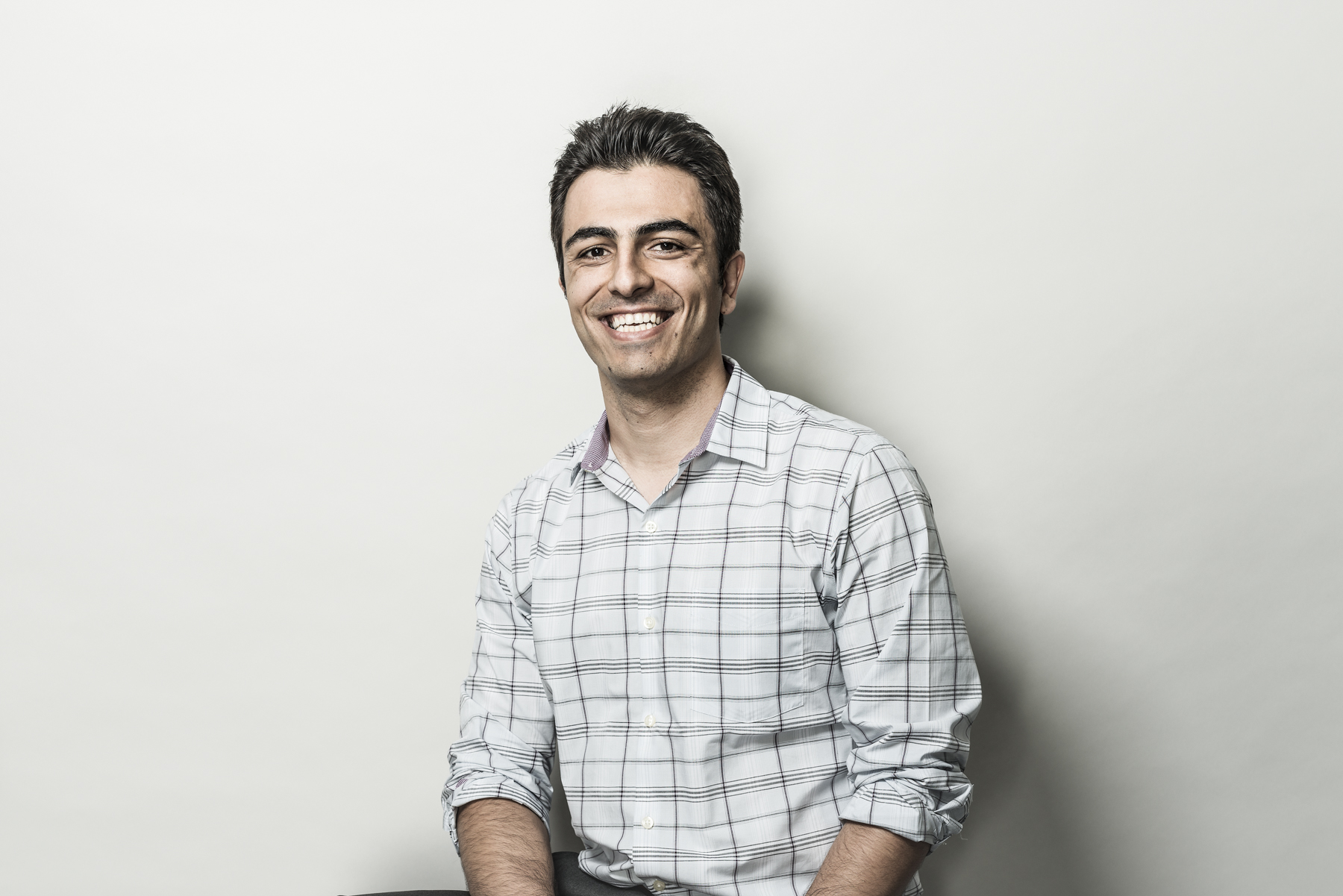
Hossein Kassiri is an Associate Professor in the Department of Electrical Engineering and Computer Science at York University. He directs the Microelectronic Prototyping and Test (MPT) Center and the Integrated Circuits and Systems Lab (ICSL). Additionally, he co-founded BrainCom Inc. in 2015 and serves as its Chief Technology Officer, focusing on implantable brain-computer interfaces. B.Sc. in Electrical and Computer Engineering from University of Tehran (2008) M.A.Sc. in Electrical and Computer Engineering from McMaster University (2010) PhD in Electrical and Computer Engineering from University of Toronto (2015) His research focuses on Analog and Mixed Signal IC Design , Low Power Implantable/Wearable Sensory Microsystems , and Wirelessly-Powered Medical Implants . He explores Physiological Signal Processing and VLSI Implementation for applications in neurological disorder monitoring and treatment. Scientific Recognition : IEEE ISCAS Best Paper Award (2016) Ontario Brain Institute Entrepreneurship Award (2015) Heffernan Commercialization Award (2014) CMC Brian L. Barge Award (2012)