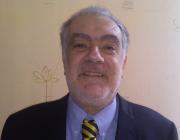
Nicholas V. Sarlis is a Professor of Experimental Solid State Physics at the Department of Physics , National and Kapodistrian University of Athens since 2017. With an h-index ≥36, he has authored 2 monographs, >155 peer-reviewed publications, and 80 conference communications. B.Sc. in Physics (1991), National and Kapodistrian University of Athens Ph.D. in Physics (1997), National and Kapodistrian University of Athens His research applies Natural Time Analysis to: Earthquake precursor identification Space weather and cosmic ray studies Climate phenomenon prediction (El Niño) Fracture mechanics and complex systems Seismicity and geoelectric field correlations Non-extensive statistical mechanics applications Recent work includes analyzing seismic entropy changes under time reversal and developing earthquake nowcasting systems. Publications span 2025's Statistical mechanics in geophysical contexts to 2024's cross-disciplinary disaster prediction tools.
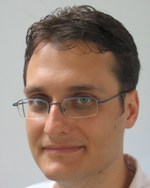
Labros Bisdounis is a Professor at the Department of Electrical and Computer Engineering, University of the Peloponnese, Greece. He previously held positions at the Technological Educational Institute of Western Greece, including Associate Professor, Full Professor, and Dean of the School of Technological Applications (2016–2018). He has extensive industry experience as a senior research engineer and project manager at Intracom S.A. (2000–2008), focusing on VLSI circuits and telecom applications. His research interests include CMOS circuit timing/power modeling, low-power/high-speed design, MOSFET modeling, and sensor applications. He has authored over 30 papers with 740+ citations and is an IEEE member. Education: Diploma in Electrical Engineering (1992), University of Patras Ph.D. in Electrical Engineering (1999), University of Patras Research Interests: CMOS circuit timing and power dissipation modeling Deep-submicron/nano-CMOS circuit design MOSFET device modeling Low-power embedded systems and SoC Sensor applications and organic electronics Leadership Roles: Dean of the School of Engineering, University of the Peloponnese (2023–present) Director of Training & Lifelong Learning Centre (2019–2019) Board Member, Hellenic NARIC (2016–2019) Collaborations: Active at the Hellenic Open University as a tutor in Computer Architecture and Digital Systems modules. Co-developed the AETHER framework for pervasive computing and contributed to energy-aware SoC designs for 5 GHz WLANs.
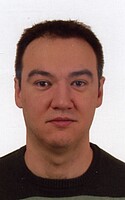
Aggelos Bletsas is a Professor at the School of Electrical and Computer Engineering, Technical University of Crete. He holds a PhD from MIT (2005) and has expertise in wireless communication, backscatter networks, and RFID systems. His research focuses on scalable wireless networks, ultra-low-cost sensor technologies, and signal processing. Education: PhD, MIT Media Lab (2005) MSc, MIT Media Lab (2001) Diploma in Electrical & Computer Engineering, Aristotle University of Thessaloniki (1998) Research Interests: His work spans wireless transmission techniques, backscatter sensor networks, and RFID systems. Key areas include: Ultra-low-cost sensor deployment RFID localization and multi-static systems Energy-efficient hardware implementations Probabilistic inference in distributed networks Awards: IEEE Marconi Prize Paper Award (2008) Technical University of Crete Research Excellence Award (2012-2013) Multiple best paper awards at RFID-TA, ISWCS, and SENSORS Academic Contributions: He advises students who have won IEEE best thesis awards and leads projects funded by ERC grants. His laboratory focuses on practical implementations of wireless sensor networks and backscatter systems. Labs & Affiliations: Director of the Telecommunications Laboratory and affiliated with the Telecommunication Systems Institute (TSI).
Aggelos Bletsas Aggelos Bletsas is a Professor at the School of Electrical and Computer Engineering (ECE) at the Technical University of Crete (TUC). He holds a PhD from MIT and has expertise in wireless communication, backscatter radio, and IoT. His research focuses on ultra-low-cost sensor networks and ambiently-powered systems. Education PhD in Media Arts and Sciences, MIT (2005) MSc in Media Arts and Sciences, MIT (2001) 5-year Diploma in Electrical & Computer Engineering, Aristotle University of Thessaloniki (1998) Research Interests Bletsas' work spans scalable wireless networks, backscatter radio, RFID systems, and energy harvesting. He pioneers batteryless IoT devices and environmental sensing technologies. His lab develops hardware and algorithms for low-cost, long-range communication. Awards & Recognition IEEE Fellow (2023) 2012-2013 TUC Research Excellence Award Multiple Best Paper Awards (ISWCS, RFID-TA, SENSORS) IEEE ComSoc and RFID Council Distinguished Lecturer (2022-2025) Labs & Projects Bletsas leads the Telecommunications Laboratory at TUC, focusing on batteryless sensors, scatter radio, and robotic inventory systems. Key projects include 'Internet of Plants' and ambiently-powered inference networks.
George Alexandropoulos is an Associate Professor at the Department of Informatics and Telecommunications, National and Kapodistrian University of Athens. His research focuses on telecommunications, signal processing, and reconfigurable intelligent surfaces (RIS) for next-generation wireless networks. He has contributed to advancements in integrated sensing and communications (ISAC), 6G technologies, and holographic beamforming. His work includes experimental validation of RIS prototypes, optimization of RIS-assisted systems, and analysis of secure communication strategies. Research interests include RIS hardware design, channel modeling, and applications in IoT, UAV communications, and disaster recovery networks. He explores topics like energy-efficient RIS operation, multi-RIS coordination, and RIS-enabled localization. His studies often address challenges at sub-THz frequencies, mutual coupling effects, and hardware impairments. Publications emphasize practical implementations of RIS in both indoor and outdoor settings, with a focus on real-world performance evaluation. Awards and grants are not explicitly mentioned, but his extensive publication record indicates significant academic contributions. His research often integrates machine learning for RIS configuration and reinforcement learning for resource optimization in dynamic networks.
Chrysostomos Kasimis is a Lecturer in the Electronics and Computers Department at the University of Patras, affiliated with the School of Sciences. He holds a Master's Degree (2007) and a PhD (2013) in Electronics from the University of Patras. His primary roles include teaching laboratory courses such as Physics Laboratory IV/V, Computer Programming I/II, and Analog Electronics Laboratory. He is a member of the Laboratory Teaching Staff (EDIP) in the Electronics Laboratory. His research focuses on neural networks for control systems and analog VLSI integrated circuits , with contributions to adaptive filter design, low-power circuits, and bio-inspired neural network applications. His work spans hyperbolic function-based filters, zeroing neural networks for optimization, and companding techniques in biomedical signal processing. Publications highlight innovation in analog circuit design (e.g., sinh-domain filters, OTA-based systems) and interdisciplinary applications in finance through neural networks. His career demonstrates expertise in both theoretical and applied electronics, with a strong emphasis on practical laboratory instruction.
Prof. Vlassis Spyridon holds a full professor position in the Electronics Laboratory at the University of Patras. He specializes in integrated circuit design, wireless communication systems, and low-power electronics. With a Ph.D. in Electronics from Aristotle University of Thessaloniki (2000), his career spans academic research and industry collaborations. His research interests include battery-less RF tags for IoT, clock/data recovery systems, and high-speed serial interfaces. He has led projects in MEMS-based clock generators, transceiver ASICs, and power management ICs for hearing aids. Education: B.Sc. Physics (1994), Aristotle University M.Sc. Electronics (1996), Aristotle University Ph.D. Electronics (2000), Aristotle University Research focuses on analog integrated circuits, including voltage-controlled oscillators (VCOs), phase interpolators, and time-mode signal processing. He has developed innovative circuits for multi-Gigabit serial links and holds five patents, with over 70 peer-reviewed publications. Recent work includes MPHY-compliant serial interfaces and temperature-compensated oscillators. Industry collaborations include projects with telecom providers and startups, designing ASICs for MEMS headphones, solid-state relays, and wireless transceivers. His articles highlight advancements in low-power CMOS circuits, jitter optimization, and digital-to-PWM conversion. Patents: Wireless transmitter DC offset recalibration (2006) Subthreshold MOS resistor (2014) Tunable subliminal transconductor (2016) Additional Czech-registered innovations Labs/Teams: Active in the Electronics Laboratory at University of Patras, contributing to multi-disciplinary projects in analog and digital circuit design.
Georgia Tsirimokou is an Assistant Professor at the University of Ioannina. She holds a Ph.D. in Analog IC Design from the Physics Department of the University of Patras (2017), following her M.Sc. in Electronics and Communications (2013) and B.S. in Physics (2011), both from the same institution. Her teaching responsibilities include courses such as MYY203 Basic Circuit Theory, MYE054 Design of Analog Circuits, and H7 - Analog Integrated Circuits and Systems. Her research interests span Data Management and Databases , Data Warehousing , Schema Evolution , and Metadata-Rich Information Systems , alongside contributions to analog integrated circuits and fractional-order systems design . Recent work focuses on filter approximation, resonator design, and interdisciplinary applications of non-integer-order circuits. Publications highlight innovations in fractional-order filters, oscillator design, and biomedical signal processing. Despite extensive research output, no awards or grants are explicitly noted in the provided materials. Her advising and lab affiliations remain unspecified in the data, though her technical expertise suggests involvement in advanced analog circuit research and development teams.
Costas Psychalinos is a Professor at the Department of Physics, University of Patras. He has served as Head of the Physics Department and as Chair of the IEEE Greece Section Circuits and Systems/Solid-State Circuits Joint Chapter. His research focuses on CMOS analog integrated circuits, including fractional-order circuits, analog filters, and low-power signal processing systems. Education: B.Sc. in Physics, University of Patras (1986) Ph.D. in Electronics, University of Patras (1991) Research Interests: Development of CMOS-based analog integrated circuits, with expertise in fractional-order systems, analog filter design, and low-voltage/low-power amplifiers. His work bridges analog electronics with advanced signal processing applications. Leadership Roles: Head of Physics Department, University of Patras (current) Chair, IEEE Greece Section Circuits and Systems/Solid-State Circuits Joint Chapter Editorial Roles: Editorial Board, Nature Scientific Reports Area Editor, International Journal of Electronics and Communications (AEU) Editor-in-Chief, Circuit and Signal Processing Section, MDPI Electronics Journal Associate Editor, Circuits, Systems, and Signal Processing Journal Editorial Board, International Journal of Circuit Theory and Applications Editorial Board, Analog Integrated Circuits and Signal Processing Journal Editorial Board, Microelectronics Journal Editorial Board, MDPI Fractal and Fractional Journal Editorial Board, MDPI Journal of Low-Power Electronics and Applications Member, Nonlinear Circuits and Systems Technical Committee (IEEE CAS Society) Scientific Recognition: Top 2% global researcher in Electrical and Electronics Engineering (Stanford-Elsevier, 2020–present) IEEE Senior Member
Giannakopoulos Konstantinos is a Lecturer in the Department of Physics at the University of Patras, specializing in the Electronics and Computers Sector. He also serves as Associated Educational Staff (SEP) for the Informatics Program at the Hellenic Open University (EAP). His academic journey includes a Physics Bachelor's (1991), two Master's in Electronics (1998 and 2014), and a PhD in Electronics (2003), all from the University of Patras. Fluent in English and German, he contributes to IEEE CAS Society since 1997 as a reviewer for journals like International Journal of Electronics and conferences such as NILES and EUSIPCO. Research Interests: Design of nonlinear electronic circuits (chaotic/hyperchaotic oscillators), analog cryptography applications, active filters (OTAs/OTRAs), and microcontroller systems (Arduino/ESP32). He has authored 9 books, 22 peer-reviewed publications, and developed educational materials (webcasts/EDY) for EAP. His work bridges theoretical nonlinear dynamics with practical analog circuit design, emphasizing chaos-based systems and educational technology. Professional Experience:曾担任 Western Greece Technical Institute's Laboratory Associate, Coordinator of the SEE Natural Sciences Project, and Director of Patras' 2nd EPAL. He led projects like MOSTRA (University of Patras Strategic Design) and IRREDER (Erasmus+ curriculum development). His recent focus includes FPAA design and microcontroller-based systems. Current Projects: MOCASTRA – University of Patras Strategic Design (2023) IRREDER: Integrating Recent Electrical Engineering into Curricula (2022) PYTHAGORAS II: Active Filter Design Research (2005–2007)
George Souliotis is an Associate Professor at the Department of Electrical and Computer Engineering, University of Peloponnese, where he has been a faculty member since 2019. With over twenty years of professional and research experience in analog integrated circuit design, he has worked for multinational microelectronic companies and continues to serve as a consultant to companies in Greece and abroad. His expertise spans multiple domains of electronic circuit design including high-speed interfaces, RF circuits, and biomedical applications. Dr. Souliotis received his B.Sc. in Physics from the University of Ioannina in 1993, followed by M.Sc. and Ph.D. degrees in Electronics from the University of Patras in 1998 and 2003, respectively. Prior to his current position, he served as a Lecturer at the Department of Electrical Engineering, TEI of Western Greece (2015-2019), and as an Adjunct Lecturer there from 2002 to 2015. He was also a specialized technical and teaching laboratory staff member at the Department of Physics, University of Patras from 2005 to 2015. His research focuses on analog and mixed signal integrated circuit design , with particular expertise in high-speed serial interfaces (USB2, USB3, BLE, M-PHY), RF circuits operating up to 80 GHz, and low-power design. Dr. Souliotis has made significant contributions to circuits for communication protocols, precision analog design, and biomedical instrumentation. He has published over 60 papers in prestigious journals and conferences and holds two patents in the field, demonstrating consistent research productivity through 2024. Analysis of his recent publications reveals three dominant research streams: high-precision comparators and data converters, power-efficient DC-DC solutions, and biomedical interface circuits. His work consistently addresses challenges in speed, accuracy, and power consumption across diverse applications from consumer electronics to medical devices. The integration of traditional analog design with modern communication protocols represents a unifying theme across his research portfolio. Senior Member of IEEE Two patents in analog circuit design Dr. Souliotis serves as a reviewer for more than 10 international journals and conferences, contributing to scholarly discourse in his field. His industry consulting work demonstrates the practical applicability of his research, while his role in the ECSA Laboratory supports both undergraduate and graduate education in hardware design. His collaborations span academic and industrial partners in Greece and internationally. As a core member of the ECSA Laboratory (Electronics Circuits, Systems and Applications) at the University of Peloponnese, Dr. Souliotis contributes to research in FPGA and ASIC design, analog/mixed signal circuits, RF design, and digital systems for security applications. The laboratory provides essential infrastructure for advancing research in integrated circuit design while training students in state-of-the-art techniques across the analog-digital spectrum.
Prof. George Karystinos is a Professor at the Technical University of Crete (TUC), School of Electrical and Computer Engineering (ECE), where he leads the Telecommunications Laboratory. His academic journey includes a Ph.D. in Electrical Engineering from SUNY Buffalo (2003) and a Diploma in Computer Engineering from the University of Patras (1997). He previously held a faculty position at Wright State University before joining TUC in 2005. His research focuses on communication theory, coding, adaptive signal processing, wireless systems, and neural networks. Key interests include spreading code design, interference suppression, adaptive antenna arrays, and noncoherent detection techniques. His work has led to advancements in power line communication, MIMO systems, and low-complexity decoding algorithms. Prof. Karystinos has received prestigious awards, including the 2003 IEEE Transactions on Neural Networks Outstanding Paper Award and the 2001 IEEE International Conference on Telecommunications Best Paper Award. He is an active member of IEEE societies in Communications, Signal Processing, and Information Theory. He teaches core courses such as Signals and Systems , Information Theory and Coding , and Probability and Random Processes . His laboratory emphasizes practical applications of theoretical concepts, with recent projects on smart photovoltaic systems and cascaded H-bridge converter control. His research spans 20+ years, yielding over 80 publications in top journals/conferences. Current efforts address challenges in IoT communication, noncoherent detection for RFID, and energy-efficient signal processing. He collaborates internationally on projects funded by Greek and EU research programs.
George C. Alexandropoulos George C. Alexandropoulos is an Associate Professor at the Department of Informatics and Telecommunications, School of Sciences, National and Kapodistrian University of Athens (NKUA). He also holds an adjunct professorship at the University of Illinois Chicago. His research focuses on wireless communication systems, signal processing, and reconfigurable intelligent surfaces (RIS), with contributions to integrated sensing and communications (ISAC), millimeter-wave/THz systems, and distributed machine learning. Education Ph.D. in Computer Engineering and Informatics, University of Patras, Greece (2010) M.A.Sc. in Signal and Communications Processing Systems, University of Patras, Greece (2005) Engineering Diploma (5 years), Computer Engineering and Informatics, University of Patras, Greece (2003) Research Interests Alexandropoulos' work spans algorithmic design for wireless networks, optimization of multi-antenna systems, and full-duplex radios. He is particularly known for pioneering contributions to reconfigurable metasurfaces, including their application in ISAC and 6G networks. His research emphasizes practical implementations, such as prototypes for AoA estimation and field trials for RIS deployment. Articles His publications highlight advancements in secure ISAC, fluid RIS design, and edge-intelligence networks. Recent work explores challenges in THz RIS hardware and OTA edge inference using metasurface-integrated neural networks. Scientific Awards IEEE ComSoc Leonard G. Abraham Prize (2024) IEEE Marconi Prize Paper Award (2021) NKUA Research Excellence Award (2023-2024) Advising & Grants Alexandropoulos has led several EU and industry projects, including contributions to Huawei's 5G standards and TII's AI research. His work often involves interdisciplinary teams and practical prototyping. Labs & Teams He is affiliated with the Communications and Signal Processing division at NKUA and collaborates with institutions like ATHENA Research Center and the Technology Innovation Institute (Abu Dhabi).
George Tsiatouchas is a Professor at the Department of Computer Engineering and Informatics, University of Ioannina. He has held leadership roles, including Chair of the department from 2018 to 2022. His research focuses on Microarchitecture, VLSI Systems, and Integrated Circuit Design. He has authored over 130 publications and holds two patents. Education: B.Sc. in Physics (1990), National and Kapodistrian University of Athens M.Sc. in Informatics and Telecommunications (1993), University of Athens Ph.D. in Informatics and Telecommunications (1999), University of Athens Professional Experience: Director of R&D programs at Integrated Systems Development SA (1998–2002) Adjunct Lecturer at University of Patras (1999–2000) His research interests emphasize analog/digital VLSI circuits and computer architecture. He has earned prestigious awards at IEEE conferences and is a Senior Member of IEEE, EDAA, and the IEEE Test Technology Technical Council. Awards: Best Paper at ISQED (2002) Best Paper at DDECS (2009) He leads the VLSI Systems and Computer Architecture Laboratory (VCAS) and participates in the Artemis Program for supply chain traceability. His lab focuses on secure hardware design and low-power electronics.
Aristides Efthymiou is an Assistant Professor at the Department of Computer Engineering and Informatics, University of Ioannina. He holds a PhD from the University of Manchester (2002) and has held academic positions at the University of Edinburgh (2004–2011) and research roles at the Institute of Microelectronics, National Center for Scientific Research 'Demokritos,' and Integrated Systems Development SA. His research focuses on microarchitecture, digital systems design, and VLSI circuits. Education: Bachelor's and postgraduate diploma in Computer Science, University of Crete (1993–1995) PhD in Computer Science, University of Manchester (2002) Research interests include approximate computing, visible light communications (VLC), and energy-efficient circuit design. He is a member of the VLSI Systems and Computer Architecture Laboratory (VCAS), contributing to projects like the Artemis Program on supply chain traceability. His work spans over 25 international publications, emphasizing hardware optimization and signal processing in VLC systems. Awards: None explicitly mentioned. Lab and Team: Leads the VCAS lab, collaborating with faculty members like Professors George Tsiatouchas and Chrysovalantis Kavousianos. Supervises doctoral candidates in areas like approximate multipliers and VLC systems.