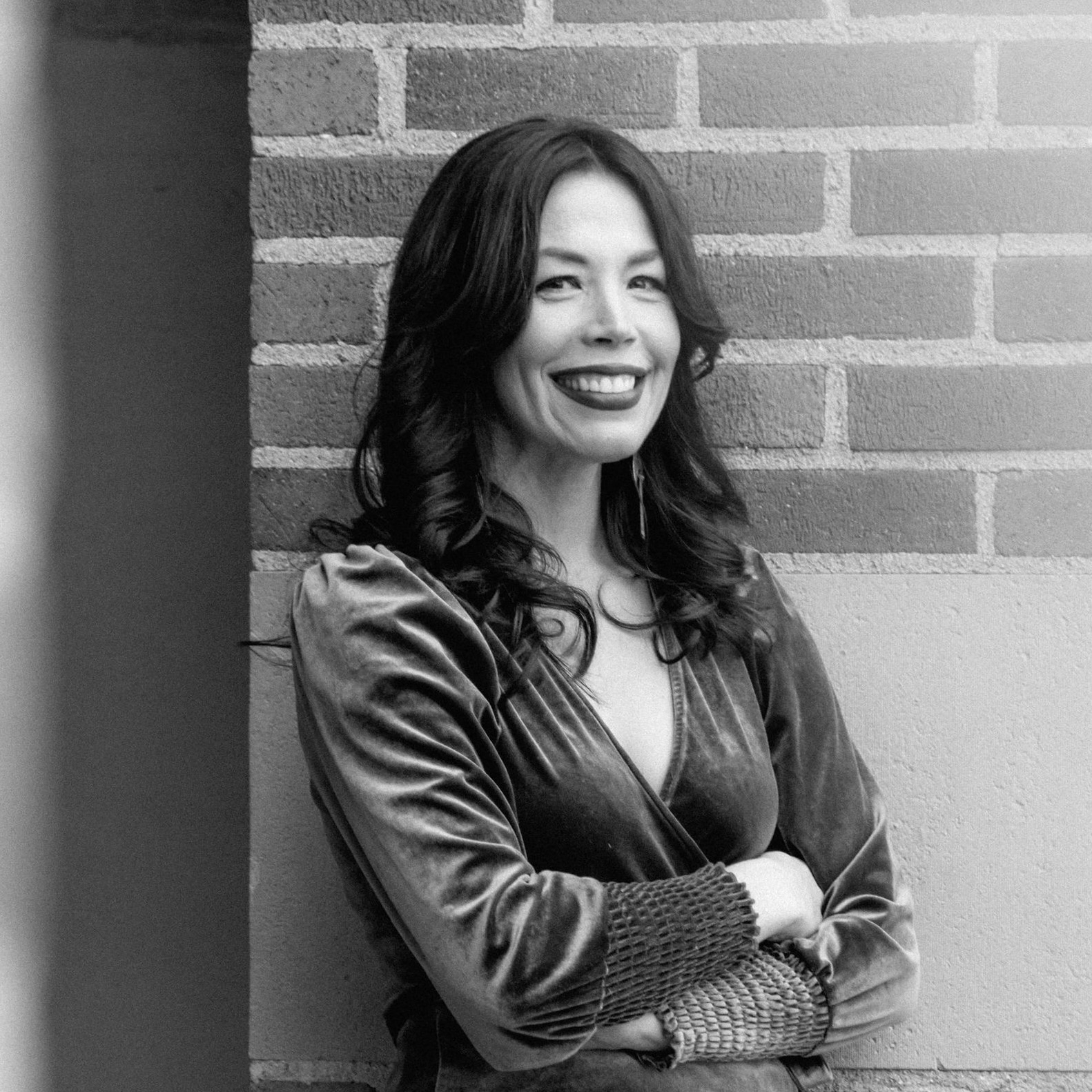
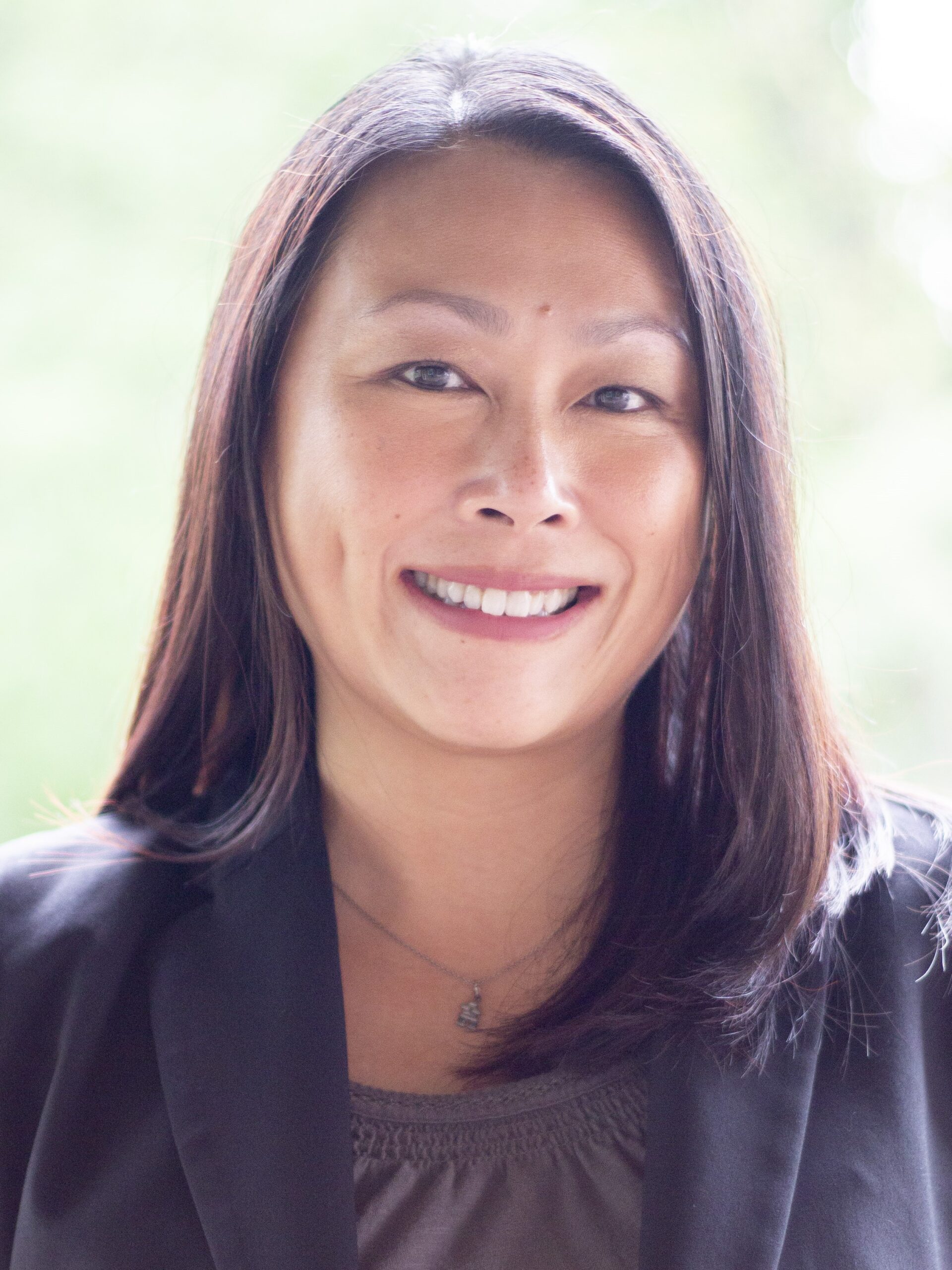
Meredith Tamminga is an Associate Professor of Linguistics at the University of Pennsylvania, where she directs the Language Variation and Cognition Lab . Her work bridges sociolinguistics , psycholinguistics , and theoretical linguistics , focusing on how linguistic variability is represented in mental grammar and how social context influences speech perception and production. She co-leads the Philadelphia Signs Project , exploring sign language sociolinguistics with collaborators at Penn and Gallaudet University. PhD in Linguistics (2014), University of Pennsylvania BA in Linguistics (2009), McGill University Her research integrates experimental methods with naturalistic speech analysis to study individual and group-level language change. Keywords include phonetics-phonology mapping , intraspeaker variation , and quantitative modeling . Notable grants include NSF awards and SAS Dean’s Mentorship Award . Key affiliations include MindCORE , Penn’s hub for integrative mind sciences, and collaborative ties to the Phonetics Lab , Child Language Lab , and Cultural Evolution of Language Lab . Her lab emphasizes cross-departmental research and welcomes undergraduate RAs and PhD students.
Dr. K. Max Zhang is a Professor in the Sibley School of Mechanical and Aerospace Engineering at Cornell University. He is the director of the Energy and the Environment Research Laboratory (EERL) and a fellow at the Atkinson Center for a Sustainable Future. His research is deeply interdisciplinary, focusing on sustainable energy systems, air quality, and environmental justice, with significant impacts on policy and community development in New York and beyond. Ph.D., Mechanical Engineering, University of California-Davis, 2004 B.S., Thermal Engineering, Tianjin University, 1998 B.A., English Language, Tianjin University, 1998 Dr. Zhang’s research centers on the integration of energy and environmental systems. He investigates air pollution dynamics using advanced numerical models like CTAG, with applications in near-source pollution, indoor air quality, and environmental justice. His work on renewable energy systems includes designing sustainable solar farms and managing distributed energy resources such as heat pumps to enhance grid flexibility. He also leads a pioneering initiative to create the first statewide public IoT network in the U.S., enabling hyperlocal weather forecasting and microclimate monitoring. His recent publications reflect a strong trend toward agrivoltaics, peer-to-peer energy markets, and IoT-based environmental monitoring. These works demonstrate a consistent focus on data-driven modeling, community-scale energy solutions, and the integration of social considerations into technical systems. The keywords across his articles highlight expertise in sustainability, machine learning, air quality, and energy transition. Cornell Town-Gown Achievement Award (2022) Engaged Scholar Prize, Cornell University (2017) People's Choice Sign of Sustainability Award, Sustainable Tompkins (2016) Scientific and Technological Achievement Award, Environmental Protection Agency (2015) Fellow of the American Society of Mechanical Engineers Dr. Zhang is actively involved in mentoring students and securing research grants from agencies such as the National Science Foundation (NSF) and the New York State Energy Research and Development Authority (NYSERDA). His projects often involve interdisciplinary collaboration across eight Cornell colleges and 16 academic departments. He has led initiatives such as the Cornell Atkinson Academic Venture Fund projects and the development of a county-level energy roadmap for Tompkins County. He also teaches courses in engineering thermodynamics, future energy systems, and air quality, emphasizing experiential and community-based learning. Dr. Zhang leads the Energy and the Environment Research Laboratory (EERL) and collaborates with the Atkinson Center for a Sustainable Future. His lab functions as a hub for innovation in sustainable communities, combining advanced modeling with real-world applications. Through partnerships with community organizations, government agencies, and industry, his team develops science-driven solutions to urban and rural sustainability challenges.
Allison Koenecke is an Assistant Professor of Information Science at Cornell Tech and a field faculty member in Computer Science at Cornell University. Previously, she was a postdoctoral researcher at Microsoft Research New England and completed her PhD at Stanford University’s Institute for Computational & Mathematical Engineering. Her research focuses on algorithmic fairness, computational social science, and causal inference in public health, addressing disparities in automated systems like speech recognition and policy decision-making. Education : PhD, Stanford Institute for Computational & Mathematical Engineering MA/MS, Stanford University BA/BS, Massachusetts Institute of Technology Research Interests : Dr. Koenecke’s work bridges economics and computer science, emphasizing equity in AI systems. Key areas include: Algorithmic bias in speech recognition (e.g., racial disparities in voice assistants) Fairness in policy tools like environmental justice data systems Causal analysis in public health interventions Ethical implications of large language models in education Media & Impact : Her research has been featured in outlets like New York Times , Science , and Scientific American . Notable studies include exposing racial gaps in speech-to-text systems and advocating for inclusive dataset development. She also explores societal impacts of AI in education and governance. Awards : Sloan Research Fellow in Computer Science Forbes 30 Under 30 in Science NSF Awards Cornell CIS Teaching Excellence Award (2024) Teaching & Outreach : She teaches courses like Designing Fair Algorithms and Data Science for Global Development , emphasizing interdisciplinary collaboration. Her PhD Professionalization course addresses hidden curricula in academia. She advises on AI ethics for nonprofits, tech companies, and government agencies.
Hyunghoon Cho is an Assistant Professor at Yale School of Medicine in the Department of Biomedical Informatics & Data Science, with a secondary appointment in the Department of Computer Science. He received his PhD in Electrical Engineering and Computer Science from MIT (2019) and MS/BS in Computer Science from Stanford University (2013). His research focuses on computational challenges in biomedical data privacy, single-cell genomics, and network biology. Assistant Professor (Primary): Biomedical Informatics & Data Science Assistant Professor (Secondary): Computer Science Appointments: Yale School of Medicine | Broad Institute (Schmidt Fellow) Research Themes: Privacy-Enhancing Technologies for genomic and health data Scalable AI/ML tools for omics data analysis Structured biological modeling for system-level discovery His work includes secure GWAS, transcriptomic privacy assessment, and sfkit - a federated genomic analysis toolkit. He received the NIH Director's Early Independence Award and leads NSF-funded projects on confidential genome analytics. Awards: NIH Director's Early Independence Award Lab Members: Haris Smajlović (Postdoc), Vincent Angelo (CBB MS), Denis Loginov (Senior Software Engineer), Lucy Zheng (CBB PhD)
Angela Reyes is Professor in the Department of English at Hunter College, City University of New York (CUNY), and Doctoral Faculty in Anthropology at the CUNY Graduate Center. She teaches courses on English linguistic structures, discourse theory, and linguistic anthropology, while serving on advisory boards for Hunter College's Asian American Studies Program and Mellon-Mays Undergraduate Fellowship Program. Education: PhD, University of Pennsylvania (2003) Her research focuses on semiotics, racialization, and coloniality, particularly examining language-personhood relationships in the U.S. and Philippines through three major ethnographic studies: Southeast Asian American youth videomaking (Philadelphia), Korean American fifth graders in a "cram school" (NYC), and Filipino college communities (Manila). She analyzes how elite linguistic registers and mixed-race discourses reflect colonial anxieties and modern aspirations. Key publications include Discourse Analysis Beyond the Speech Event (2021, awarded Edward Sapir Book Prize) and work in The Oxford Handbook of Language and Race (2020). Awards include Advanced Research Collaborative Distinguished Fellowship (2016), Spencer Foundation Postdoctoral Fellowship (2009-2010), Woodrow Wilson Career Enhancement Fellowship (2006-2007), and Ford Foundation Dissertation Fellowship (2002-2003). Scientific Awards: Advanced Research Collaborative Distinguished Fellowship (2016) Spencer Foundation Postdoctoral Fellowship (2009-2010) Woodrow Wilson Career Enhancement Fellowship (2006-2007) Ford Foundation Dissertation Fellowship (2002-2003) Edward Sapir Book Prize (2016) Her work bridges linguistic anthropology with English studies, focusing on how language mediates colonial histories, social media dynamics, and academic institutions. She employs ethnographic, archival, and new media methodologies to trace discursive patterns across time and space.
William Ennis is an Associate Professor in the Arts and Humanities school at Gallaudet University. He holds a B.A. in History from Gallaudet University and both an M.A. and Ph.D. in History from the University of Iowa. His teaching portfolio includes American History surveys, specialized courses on Deaf community history, and research methods in history. Ennis' research focuses on Deaf history with particular attention to eugenics, Civil War experiences of deaf individuals, archival practices, and the intersection of disability and social policy. He has served in leadership roles including Chair of the Faculty Senate (2018-2020), Committee Member for Presidential Search (2015), and Coordinator for institutional programs (2016-2017). His scholarly contributions include groundbreaking work on eugenics' impact on Deaf communities and transnational sign language loyalty networks. Ennis actively participates in professional organizations like the American Historical Association and Deaf History International. Though no lab affiliations are explicitly listed, his collaborative projects involve archival partnerships and oral history initiatives in the Mid-Atlantic region. Ennis has advised numerous independent studies and maintains an active speaking schedule at academic conferences focusing on Deaf history and historiography.
Christiane Fellbaum serves as Lecturer with Rank of Professor in Princeton University's Program in Linguistics and Department of Computer Science, where she has been a senior research scholar since returning in 1987 after postdoctoral work at the University of Paris. Her foundational contributions to computational linguistics include co-developing WordNet and co-founding the Global WordNet Association. Her educational background features: Ph.D. in Linguistics, Princeton University (1980) Postdoctoral Fellowship, University of Paris Fellbaum's research integrates theoretical linguistics with computational applications, specializing in lexical semantics, corpus analysis, and semantic network construction. Her work bridges computational linguistics and lexicography through projects like WordNet and Medical WordNet, with recent emphasis on multilingual resources, bias analysis in embeddings, and African language technology development. She examines semantic phenomena including idioms, verb alternations, and emotion scales through both corpus linguistics and formal ontological frameworks. Analysis of her publication trajectory reveals sustained innovation in lexical resource development since the 2000s, evolving from foundational WordNet studies to contemporary work on large language model adaptation and social bias mitigation. Current research demonstrates increasing interdisciplinary collaboration across NLP, cognitive science, and social justice applications. Her scientific recognition includes: Wolfgang Paul Prize from the German Humboldt Foundation (2001) Antonio Zampolli Prize (2006) Fellbaum has secured continuous research funding from the U.S. National Science Foundation, European Union Seventh Framework, Frank Moss Foundation, and Tim Gill Foundation. She actively mentors junior researchers through Princeton's Independent Work seminars and hosts the North American Computational Linguistics Olympiad (NACLO), while leading major international collaborations including the KYOTO and SIERA European projects. As director of the WordNet project and permanent fellow at the Berlin-Brandenburg Academy of Sciences, she maintains leadership in global lexical resource initiatives through the Princeton Language and Intelligence initiative and Natural and Artificial Minds research group.
YingLi Tian is a CUNY Distinguished Professor in the Department of Electrical Engineering at The City University of New York. Their work focuses on computer vision, machine learning, and medical imaging. Key areas include sign language recognition, medical image analysis, and AI-driven healthcare solutions. Research Interests: Artificial Intelligence applications in healthcare 3D point cloud and scene understanding Self-supervised learning and domain adaptation Sign language recognition systems Medical imaging segmentation and diagnosis Human-robot interaction and assistive technologies Notable Projects: Developed AI systems for American Sign Language recognition using RGB-D data Pioneered self-supervised feature learning techniques in medical imaging Created virtual contrast enhancement tools for CT scans Advanced sea ice motion prediction using deep learning Labs & Teams: Leads the Media and Information Technology Lab at CCNY, focusing on multimodal AI and healthcare technology innovations.
M. Tamer Özsu is a University Professor of Computer Science at the David R. Cheriton School of Computer Science, University of Waterloo, where he holds a Cheriton Faculty Fellowship. He also serves as a Distinguished Visiting Professor at Tsinghua University and is the Founding Director of Waterloo-Huawei Joint Innovation Laboratory since 2018. His extensive contributions to computing have earned him numerous prestigious awards including the 2024 ACM Presidential Award for long-standing and significant contributions to the computing field. Professor Özsu's research focuses on data engineering aspects of data science, particularly addressing data management issues with two main foci: management of non-traditional data and large-scale distributed data management. He is renowned for his seminal book "Principles of Distributed Database Systems" (co-authored with Patrick Valduriez), now in its fourth edition, and the "Encyclopedia of Database Systems" (co-edited with Ling Liu), in its second edition. His work bridges theoretical foundations with practical system implementations, targeting grand societal challenges through computational approaches. His recent publications reveal a strong trend toward graph analytics, streaming data processing, and the integration of large language models with vector data management. The research shows increasing focus on GPU-accelerated graph processing, RDF query optimization, and multimodal data analysis, reflecting the evolution of data management challenges in the era of big data and AI. His work continues to address fundamental challenges in distributed data systems while adapting to emerging technologies and application domains. Scientific Awards and Fellowships ACM Presidential Award (2024) IEEE TCDE Education Award (2024) IEEE Innovation in Societal Infrastructure Award (2022) CS Can | Info Can Lifetime Achievement Award (2018/2019) ACM SIGMOD Test-of-Time Award (2015) ACM SIGMOD Contributions Award (2006) The Ohio State University College of Engineering Distinguished Alumnus Award (2008) Fellow of the Royal Society of Canada Fellow of the American Association for the Advancement of Science (AAAS) Life Fellow of the Association for Computing Machinery (ACM) Life Fellow of the Institute of Electrical and Electronics Engineers (IEEE) Fellow of the Asia-Pacific Artificial Intelligence Association (AAIA) Elected member of the Science Academy, Türkiye Professor Özsu has been deeply involved in academic leadership and community building. As Founding Editor-in-Chief of ACM Books (2013-2019), he launched a series that by 2019 had published 28 major books with another 30 under contract. His service to ACM, particularly through SIGMOD, has been exemplary and widely recognized. He directs the Waterloo-Huawei Joint Innovation Laboratory, which focuses on cutting-edge research in data management and distributed systems, fostering strong industry-academia collaboration.
Charles Denroche is Senior Lecturer in Linguistics and Applied Language Studies at the University of Westminster, based in the School of Humanities within the College of Liberal Arts and Sciences. His interdisciplinary career combines bioscience (Magdalen College, Oxford) with advanced linguistics (PhD UCL-IOE, PGDip Westminster, PGCE TESOL IOE), and extensive professional experience as translator, lexicographer and language educator. Education & Training MA in Bioscience – Magdalen College, University of Oxford PhD in Education (Linguistics) – UCL Institute of Education, University of London Post-Graduate Diploma in Linguistics – University of Westminster PGCE TESOL – UCL Institute of Education Certificate in English Phonology – International Phonetic Association Studies in Italian Language & Literature – University of Florence Studies in Germanistik & Anglistik – Heinrich Heine University of Düsseldorf Research Interests Denroche’s work centres on how meaning is made through language. His research integrates cognitive linguistics , semiotics and translation studies to explore the roles of metaphor and metonymy in discourse, multimodal communication and pedagogy. He is particularly interested in the cognitive processes that underlie figurative language, the interface between grammar and semantics, and how these insights can inform translator training and language education. Current projects extend his theory of metonymic processing to literary translation collaboration and the analysis of visual and multimodal texts, aiming to bridge theoretical linguistics with practical applications in education and professional practice. Recent Publications & Trends Over the past decade Denroche has produced a coherent body of work that moves from foundational theory-building—most notably the 2015 monograph Metonymy and Language —to innovative methodological applications such as using drawing as a research tool for metaphor-led discourse analysis. Across 15 key outputs (2011-2024), the research trajectory shows a consistent focus on metaphtonymy (the interplay of metaphor and metonymy) at text level and on developing practical frameworks for translators, educators and discourse analysts. Honours & Awards Award of Excellence in Teaching and Learning (2008) – Westminster Exchange, University of Westminster Doctoral Supervision & Grants Denroche currently supervises one active doctoral researcher (MPhil/PhD) investigating metaphor in Arabic urban literature. He welcomes applications from prospective postgraduate students in the areas of figurative language, semiotics/multimodality, discourse analysis and translation/interpreting studies. Professional Memberships & Service International Association for Cognitive Semiotics (IACS) Researching and Applying Metaphor (RaAM) External examiner for Birkbeck, University of Hertfordshire, UCL Institute of Education Reviewer for American Journal of Semiotics , Journal of Pragmatics , Language and Cognition , Cognitive Linguistics Studies , Metaphor and the Social World
Juliet A. Williams is a Professor of Gender Studies and Faculty Director of the UCLA Quarter in Washington Program. She holds a B.A. in Government from Harvard University and a Ph.D. in Government from Cornell University. Specializes in feminist theory, masculinities studies, gender discrimination law, and Title IX Author of The Separation Solution?: Single-Sex Education and the New Politics of Gender Equality (2016) Co-editor of Public Affairs: Politics in the Age of Sex Scandals (2004) Her research examines socio-legal dimensions of gender equality, including NSF-funded work on gender neutrality in U.S. law and activism. Current book project: Daddy’s Home: What Everyone Needs to Know About Patriarchy . Publications appear in Signs , Gender & Society , and Law & Society Review . 2021-2026: Andrew W. Mellon Foundation grant ($5 million) 2017-2021: NSF grant ($325,000) with Abigail Saguy 2015: Kenneth L. Sokoloff Fellow 2009, 2007: Ms. Magazine and UC ACCORD grants Active media commentator on gender politics, appearing in 100+ outlets including New York Times , USA Today , and The Guardian , with expertise in #MeToo discourse, gender discrimination, and socio-legal dynamics.
Dina Danish (b. 1981, Paris) is an Egyptian-Danish artist and educator working at the intersection of language, historical reinterpretation, and conceptual practice. She holds a Lecturer position at the Fine Arts department of KABK in The Hague and serves as a teaching mentor at the Rietveld Academy, Amsterdam . Guest teaching roles include the Sandberg Institute and American University in Cairo . Education : BA from American University in Cairo; MFA from California College of the Arts (San Francisco) Residencies : Rijksakademie Amsterdam, Spinola Banna Italy, PiST/// Istanbul, A.i.R. Dubai, Affiliated Fellow at American Academy in Rome Her research explores humor, mistranslation, and overlooked historical moments , often through video art, performance, and text-based installations . Key themes include linguistic structures, cultural memory, and Dadaist methodologies . Recent projects examine ancient motifs in contemporary art (e.g., Jean-Baptiste Maitre) and political commentary through playful abstraction . Notable exhibitions at SFMOMA, Stedelijk Museum Schiedam, and Kunsthall Oslo highlight her focus on translation errors, sound poetry, and archival interventions . Volkskrant Award finalist Abraaj Art Prize nominee Illy Present Future Prize recipient Celeste Award nominee Barclay Simpson Award nominee Dina collaborates with institutions like Hotel Maria Kapel and De Nederlandsche Bank , and co-curated a Rijksakademie anniversary exhibition. Her work is represented by galleries in Amsterdam, Milan, and Zurich.
Tria Blu Wakpa is an Assistant Professor in the Department of World Arts and Cultures/Dance at UCLA's School of the Arts and Architecture. Her work bridges academia and community engagement, focusing on decolonizing methodologies to examine Indigenous peoples' practices in confinement contexts. Education: Ph.D. and M.A., Ethnic Studies, UC Berkeley M.F.A., Creative Writing, San Diego State University B.A., English with Film, Oklahoma State University (summa cum laude) Research Interests: She explores dance, athletics, and yoga through Indigenous frameworks, analyzing their roles in education, incarceration, and performance. Her work emphasizes community collaboration, particularly with tribal experts, and critiques colonial structures. Awards & Recognition: 2023 Gerald Kahan Scholar’s Prize (American Quarterly article) Fulbright Association’s Selma Jeanne Cohen Dance Lecture Awardee (2023) Fellowships: Ford Foundation, Hellman Fund, UC Postdoctoral Program Community Engagement: Co-Founder/Editor-in-Chief of Race and Yoga journal. Serves on LA Cultural Affairs Commission, LA Unified School District’s American Indian Parent Committee, and Fernandeño Tataviam Education Committee. Teaches at tribal, carceral, and public institutions.
Dr. Clara Cheng serves as the Interim Associate Dean of Faculty Professional Development, Director of the Undergraduate Psychology Program, and Professor of Psychology at Carlow University. Her roles include overseeing faculty development, directing the Psychology program, and teaching statistics and social psychology in flipped and online formats. She advises the Carlow chapter of Psi Chi, which she co-founded in 2013, and is a certified therapy team member with her mini labradoodle, Mochi. Dr. Cheng holds an Hon BSc in Psychology (2000) from the University of Toronto and MA (2002) and PhD (2006) in Social Psychology from The Ohio State University. She also earned certificates in American Sign Language and Online Teaching with a focus on accessibility. Her research focuses on social cognition, stereotyping, implicit bias, and culturally informed teaching methods. She contributed to the APA’s college teaching guide and frequently addresses racism and implicit bias in campus workshops. Her awards include the Sisters of Mercy Award for Advising (2020), Center for Digital Learning Fellowship (2017), and multiple teaching honors from Ohio State. Dr. Cheng’s scholarship spans over two decades, with notable contributions to implicit bias measurement, Buddhist coping mechanisms, and cross-cultural identity formation. She actively serves as Vice President for Resources for the Society for the Teaching of Psychology, promoting pedagogical innovation and inclusivity. Her advising and grants include fostering student honor societies and accessibility initiatives. Her 'therapy team' with Mochi underscores her commitment to mental health. Collaborative work with international researchers highlights her global impact in social and cultural psychology.
Katarzyna Marciniak is Professor and Department Chair of Media Arts & Culture at Occidental College, appointed in 2019 after serving as Distinguished Visiting Professor during the 2019-20 academic year. Her office is located in Weingart 112 with regular office hours on Tuesdays and Thursdays. Her academic credentials include: Master of Arts from the University of Lodz Master of Arts from the University of Montana Doctor of Philosophy from the University of Oregon Professor Marciniak's research interrogates the aesthetics and politics of transnational visual cultures, with rigorous focus on representations of foreignness, immigration, national (un)belonging, and border zones as sites of contention. She integrates feminist theory, refugee studies, and postsocialist media analysis—particularly regarding Eastern European cultures—to examine how visual media construct identities in contexts of displacement. Her pedagogical innovations emphasize ethics in teaching trauma cinema and creating transnational classrooms that engage critically with migration narratives. Analysis of her recent publications reveals a cohesive scholarly trajectory centered on refugee cinema, transnational visual representation, and socialist/post-socialist cultural studies. Her work consistently applies feminist and ethical frameworks to dissect cinematic mediation of migration, border politics, and cultural alienation, while pioneering pedagogical approaches for teaching difficult subjects through film. Her distinguished recognition includes: 2025 Linda and Todd White Teaching Prize Modern Language Association Florence Howe Award for Outstanding Feminist Scholarship (2010) for her article 'Pedagogy of Anxiety' in Signs While the source text does not specify graduate student mentorship or research grants, Professor Marciniak's prolific scholarly output and editorial leadership demonstrate active academic community engagement. She serves as Lead Editor for Palgrave's Global Cinema series and has co-edited five major volumes including The Oxford Handbook of Communist Visual Cultures (Oxford University Press). Her authored monographs include Alienhood: Citizenship, Exile, and The Logic of Difference (University of Minnesota Press) and Streets of Crocodiles: Photography, Media, and Postsocialist Landscapes in Poland (Intellect/University of Chicago Press). Her forthcoming co-authored book Refugee Cinema with Bruce Bennett (Lancaster University) is scheduled for Oxford University Press publication in 2025.