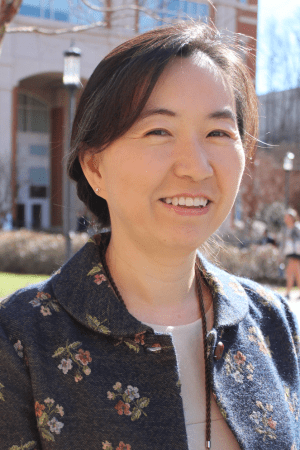
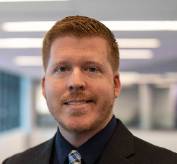
Catherine McNicol Stock serves as the Barbara Zaccheo Kohn '72 Professor of History at Connecticut College, where she has been a faculty member since 1990 and is currently on sabbatical for Fall 2025. Her academic foundation includes a B.A., M.A., and Ph.D. from Yale University. Professor Stock's research centers on the social, cultural, and political history of the United States from 1877 to the present, with rigorous focus on rural radicalism, domestic terrorism, the American West, and the socioeconomic impacts of the Great Depression and New Deal. Her seminal works Rural Radicals: Righteous Rage in the American Grain and Main Street in Crisis: The Great Depression and the Old Middle Class on the Northern Plains dissect class conflict and regional identity in rural America, while her introduction to Howard Roberts Lamar's Dakota Territory, 1861-1889 contextualizes frontier politics. She received Connecticut College's John S. King Memorial Teaching Award in 2009 for exceptional pedagogy and student engagement. Her scholarly service includes: American Historical Association American Studies Association New England American Studies Association Organization of American Historians Western History Association As College Marshal in 2015, she directed commencement ceremonies and faculty processions. Her contributions extend to The Reader's Encyclopedia of the American West and peer-reviewed book reviews in the Journal of American History and American Historical Review .
Elizabeth Bernstein is a Professor of Women's, Gender & Sexuality Studies and Professor of Sociology at Barnard College, Columbia University, where she has been a faculty member since September 2002. Her work bridges sociological theory with feminist analysis, focusing on the intersections of gender, sexuality, and political economy. Bernstein directs significant research initiatives including the Gender Justice and Neoliberal Transformations Working Group, a transnational collaboration among thirteen scholars examining gender justice in contemporary global contexts. She is currently developing a new book project titled "Imagining Immunity: Precarious Bodies and the Governance of Gendered Dis-ease," which explores immunological metaphors in understanding bodily risk and suffering. B.A., University of California, Berkeley M.A., University of California, Berkeley Ph.D., University of California, Berkeley Professor Bernstein's research focuses on the political economy of the body, gender, and sexuality, with particular attention to sexual commerce, sex trafficking, and neoliberal governance. Her work employs ethnographic methods to examine how intimate relations become sites of economic exchange and political regulation. She investigates how concepts of authenticity, freedom, and rights are mobilized in debates about sexual commerce and trafficking. Bernstein's scholarship critically engages with feminist theory, carceral politics, and transnational governance frameworks, challenging conventional approaches to sex work and trafficking that often reinforce punitive systems rather than advancing gender justice. Analysis of Bernstein's scholarly output reveals a consistent trajectory examining the intersections of gender, sexuality, and political economy within neoliberal frameworks. Her work demonstrates increasing attention to transnational governance mechanisms and their impact on intimate relations and bodily autonomy. A notable trend is her critical examination of how anti-trafficking campaigns often employ carceral logic that undermines feminist goals of gender justice. Her scholarship consistently challenges binary frameworks that position sex work solely as exploitation or liberation, instead analyzing the complex economic, political, and social dynamics that shape sexual commerce globally. Bernstein's research has received significant recognition through prestigious awards including: Distinguished Book Award, American Sociological Association, Sociology of Sexualities Section (2020) for "Brokered Subjects" Honorable Mention, Society for the Study of Social Problems Global Division Book Award (2019) Norbert Elias Prize, Norbert Elias Foundation (2009) Distinguished Book Award, American Sociological Association, Sex and Gender Section (2009) Her work has also been supported by major funding organizations including the Institute for Advanced Study, National Science Foundation, Social Science Research Council, AAUW, and Mellon Foundation. As a principal investigator along with Janet Jakobsen for the Gender Justice and Neoliberal Transformations Working Group, Bernstein leads a significant collaborative research initiative sponsored by the Barnard Center for Research on Women. Her grant portfolio demonstrates sustained support from major research institutions, reflecting the significance of her work in gender studies and sociology. While specific student advisees aren't listed in the available materials, her role as a full professor at Barnard College indicates extensive mentorship of undergraduate and likely graduate students in Women's, Gender & Sexuality Studies and Sociology. Bernstein co-leads the Gender Justice and Neoliberal Transformations Working Group, a collaboration among thirteen scholars working transnationally on questions of gender justice. This initiative represents a significant research collective examining how neoliberal policies reshape gender relations globally. Her work with the Barnard Center for Research on Women provides institutional support for this transnational feminist research network, facilitating scholarly exchange and collaborative publication projects that advance critical perspectives on gender, sexuality, and political economy.
Mary Pattillo serves as the Harold Washington Professor of Sociology and Chair of the Department of Black Studies at Northwestern University's Weinberg College of Arts and Sciences, with additional affiliation at the Institute for Policy Research. Her work centers on Chicago's urban landscape as a critical site for examining systemic racism and inequality. Her academic foundation includes a PhD in Sociology from the University of Chicago (1997) and a BA in Urban Studies from Columbia University (1991), establishing her expertise in urban analysis and racial dynamics. Pattillo's research agenda prioritizes race and ethnicity, urban sociology, and inequality through the lens of Black communities, with particular focus on housing, criminal legal systems, and the Black middle class. Her ethnographic approach reveals how spatial dynamics shape life outcomes, as demonstrated in her influential books Black Picket Fences (1999) and Black on the Block (2007), which introduced the pivotal "middlemen/middlewomen" framework for understanding professional Black roles in mediating inequality. Current work advances the "Black Advantage Vision" paradigm to reframe racial inequality research. Her publication trajectory shows deepening engagement with structural racism across multiple domains: from early neighborhood ethnographies to contemporary analyses of monetary sanctions and placemaking. This evolution reflects an interdisciplinary expansion into criminology, policy studies, and cultural sociology while maintaining core commitments to urban inequality and Black community resilience. Major recognitions include: Election to the American Academy of Arts and Sciences (2020) Robert E. Park Award for Best Book (2008) Oliver Cromwell Cox Best Book Award (2000) Fulbright Scholar designation (2019-2020) Weinberg College Community Building Award (2018) Outstanding Academic Book Award (2000) Pattillo actively mentors students through courses like Urban Ethnography and Sociology of Housing while leading significant research initiatives on school choice and criminal legal sanctions. Her community impact extends through board service at the W.T. Grant Foundation and Chicago Appleseed Center, plus founding Urban Prep Academies. Current projects examining Black safety in Chicago demonstrate her sustained commitment to community-engaged scholarship addressing urgent urban challenges.
University of Illinois Urbana-ChampaignUnited States
Asef Bayat is Professor of Sociology and the Catherine and Bruce Bastian Professor of Global and Transnational Studies at the Department of Sociology, University of Illinois, Urbana-Champaign. He has held previous academic positions at the American University in Cairo, Leiden University (where he held the Chair of Society and Culture of the Modern Middle East), and visiting appointments at UC Berkeley, Columbia University, Oxford, and Brown University. His research interests include: Political Sociology Collective Behavior and Social Movements Sociology of Religion Urban Life and Politics Islam and Modernity Contemporary Middle East Bayat's research focuses on the role of ordinary people and subaltern classes in social and political transformations, particularly in the context of the Arab Spring and Middle Eastern urban movements. His work bridges comparative and historical sociology with global and transnational perspectives, emphasizing everyday forms of resistance and the reconfiguration of political Islam. He has extensively explored the sociological dimensions of revolution, modernity, migration, and loss of home. His recent publications, including articles in International Journal of Urban and Regional Research and Journal of Democracy , reflect a sustained engagement with urban politics, revolutionary dynamics, and youth activism in the Global South. The recurring themes across his work include the agency of marginalized populations, the transformation of public space, and the evolving nature of political engagement in non-Western contexts. Bayat has received numerous honors and fellowships: Guggenheim Fellow Ford Foundation Fellow MacArthur Fellow Open Society Fellow Wissenschaftskolleg Fellow, Berlin He has been actively involved in academic leadership, having served as director of the International Institute for the Study of Islam in the Modern World (ISIM) and elected to the Board of the UN Research Institute for Social Development. He has taught key courses such as Global Social Movements, Global Religion and Politics, and Middle Eastern Societies. Though specific students are not listed, his role as a full professor and author of major works indicates extensive mentorship and academic advising. He is affiliated with multiple interdisciplinary centers, including the Center for African Studies, Center for South Asian and Middle Eastern Studies, European Union Center, and Center for Global Studies.
London School of Economics and Political Science (LSE)United Kingdom
Tomila Lankina is a Professor of Politics and International Relations at the London School of Economics (LSE), specializing in democratization, popular protest, and Russian and Eastern European politics. She holds a DPhil from the University of Oxford and has held research appointments at institutions such as Stanford University and Humboldt University in Berlin. Her work examines historical legacies of social structure and their implications for democracy, inequality, and political regimes. Her groundbreaking book The Estate Origins of Democracy in Russia (Cambridge University Press, 2022) explores how pre-communist social stratification in Russia shapes contemporary political outcomes. The book has received major accolades, including the 2023 J. David Greenstone Prize and Davis Center Book Prize. Lankina’s research also addresses modern issues like Russian media manipulation, post-communist social resilience, and the impact of historical institutions on modern governance. Active in supporting Ukrainian scholars during Russia’s invasion of Ukraine, Lankina co-founded an LSE Taskforce to assist displaced students and researchers. She has been recognized for her excellence in PhD supervision by LSE and has published widely in top journals like the American Political Science Review and World Politics . Her interdisciplinary approach combines historical analysis with contemporary political dynamics, emphasizing the persistence of social hierarchies and their role in shaping autocracy and democracy. Current projects include a book on Russian dissent history and comparative studies of post-colonial and post-communist societies.
Elaine Treharne serves as the Roberta Bowman Denning Professor of Humanities at Stanford University, holding primary appointment in the Department of English with courtesy appointments in German Studies and Comparative Literature. She concurrently acts as Senior Associate Vice Provost for Undergraduate Education and Director of Curriculum, while directing Stanford Text Technologies—a major initiative exploring textual transmission across historical periods. Her leadership extends to co-directing SILICON and spearheading NEH-funded projects that redefine digital approaches to manuscript studies. Her academic foundation includes a B.A. in English Language and Literature (First Class Honors) from the University of Manchester (1986), a Master of Archive Administration from the University of Liverpool (1987), and a Ph.D. in English from the University of Manchester (1992). This archival training underpins her dual expertise in traditional manuscript scholarship and digital innovation. Treharne's research pioneers intersections between medieval materiality and contemporary technology, investigating the haptic experience of medieval books, AI applications for manuscript analysis, and the long history of text technologies. She challenges conventional periodization through projects like 'Disrupting Categories, 1050-1250' while developing computational frameworks for fragmentology and textual distortion. Her work consistently bridges paleography with digital methodology to examine how writing systems shape cultural memory. Recent publications reveal a decisive shift from foundational medieval scholarship toward integrative digital-humanities frameworks, with increasing emphasis on phenomenological approaches to both physical and digital texts. This trajectory culminates in current projects applying machine learning to manuscript transmission patterns and developing ethical guidelines for digital archival tools. Her scientific recognition includes: Fellow of the Society of Antiquaries Fellow of the Royal Historical Society Honorary Lifetime Fellow of the English Association (former Chair and President) Fellow of the Learned Society of Wales American Philosophical Society Franklin Fellow Princeton Procter Fellow Fellow of the Stanford Clayman Institute for Gender Studies Treharne actively supervises graduate students in early literature, Book History, and Digital Humanities while securing major grants including NEH funding for Stanford Global Currents, AHRC support for the Production and Use of English Manuscripts project, and Stanford Impact Labs fellowship for archival tool development. She maintains commitment to ethical scholarly environments through her leadership in VPUE initiatives and digital pedagogy. She directs the Stanford Text Technologies initiative hosting the annual Collegium series, co-directs SILICON for internet longevity research, and leads specialized projects including 'Digital Ker' for Anglo-Saxon manuscript cataloging and 'Medieval Networks of Memory' analyzing mortuary rolls. These interconnected efforts form a comprehensive ecosystem for advancing textual scholarship across temporal and technological boundaries.
Sarah Moser is an Associate Professor in the Department of Geography at McGill University's Faculty of Arts, where she conducts research at the intersection of urban and cultural geography. Her office is located in Burnside Hall 413, and she can be reached at (514) 266-9908 or sarah.moser@mcgill.ca. Dr. Moser leads the New Cities Lab, which examines new cities, nation-building, migration, discourses of sustainability, and urban policy mobility from a human geography perspective. Dr. Moser's academic background includes: PhD in Geography from the National University of Singapore Postdoctoral Fellow at the Center for Urban and Global Studies, Trinity College Postdoctoral Fellow at the Massachusetts Institute of Technology Her research primarily examines how national, religious, and ethnic identities shape cities in Southeast Asia and the Muslim world. Dr. Moser is particularly fascinated by the transnational circulation of identity, architecture and urban policy, and how cities across Asia are increasingly looking to other parts of the global south rather than to 'the west' for inspiration. Her current work investigates the global emergence of supra-national religious and ethnic identities and how they are manifested in urban form to serve secular nation-building purposes. She specifically examines emerging pan-Islamic identity, the 'Arabization' of Muslim identity, and emerging 'pan-Chinese' identities currently circulating in Asia. Analysis of Dr. Moser's recent publications reveals a strong focus on new master-planned cities across the Global South, with particular attention to projects in Southeast Asia, the Middle East, North Africa, and Latin America. Her work demonstrates interdisciplinary engagement across urban studies, political geography, cultural geography, and postcolonial studies, with recurring themes of identity construction, transnational influences, and the political dimensions of urban planning. The geographic scope of her research has expanded significantly over time, moving from initial Southeast Asian case studies to a truly global comparative perspective. Dr. Moser's research has been supported through various grants that have enabled fieldwork in multiple countries where new city projects are underway. She has developed collaborative networks with researchers across the globe, particularly in regions where she conducts fieldwork. While specific grant details aren't provided in the available text, her extensive field-based research suggests substantial grant support for international travel and research assistance. Dr. Moser directs the New Cities Lab at McGill University, which conducts field-based research examining new city projects in Indonesia, Malaysia, Morocco, Kuwait, Nigeria, Saudi Arabia, United Arab Emirates, Palestine, and Ecuador. The lab combines discourse analysis with on-the-ground investigation, interviewing government officials, planners, and those affected by these urban mega-developments. The lab maintains an active presence on social media, particularly Instagram (@new.cities.lab), to share research findings and engage with broader audiences.
Patrick Le Galès is a CNRS Research Professor at Sciences Po's Centre for European Studies and Comparative Politics (CEE), where he contributes to research on urban governance, public policy, and European political sociology. He was the founding Dean of the Sciences Po Urban School (2015–2022) and remains an active faculty member, teaching and leading research groups on urban transformation and state restructuring. His research interests span urban sociology, comparative public policy, political economy, and the governance of European cities. He investigates themes such as financialization of housing, digital cities, urban inequalities, and the reconfiguration of the modern state. His work combines sociological and political science approaches to analyze how cities and states adapt to economic and social change. The 15 most recent publications reflect a consistent focus on urban governance, state transformation, and European integration. These works span subfields including smart cities, policy instruments, metropolitan conflict, and institutional change, with keywords in political science, sociology, and urban studies. His research often adopts a comparative framework across European and global cities. Fellow of the British Academy (FBA) Member of Academia Europaea CNRS Silver Medal (2018) Stein Rokkan Prize (2002) Regional Studies Association Best Paper Award (2017) CNRS Bronze Medal (1996) GRALE CNRS Prize (1991) Mattei Dogan Foundation Award of Excellence (2007) Le Galès has supervised numerous PhD candidates and junior researchers, though specific advisees are not listed. He has led and participated in multiple funded research projects, including European, national, and international contracts. He has served on ERC panels and editorial boards of leading journals such as British Journal of Political Science , Socio-Economic Review , and European Urban and Regional Studies . He co-edits book series on Governance (Presses de Sciences Po) and Urban and Social Change (Wiley/Blackwell). He is involved in the 'Cities are back in town' and 'Restructuring the state' research groups at the Centre for European Studies and Comparative Politics. He also contributes to the Transversal Seminars and thematic seminar series on urban and policy transformations. His ongoing project LAC-EU (2024–2028) explores Latin American challenges in the 21st century, expanding his comparative urban research globally.
Geraldine Heng is the Mildred Hajek Vacek and John Roman Vacek Chair in English at the University of Texas at Austin, where she is cross-appointed to Middle Eastern Studies, Women's Studies, Jewish Studies, and the Rapoport Center for Human Rights and Social Justice. Elected to the American Academy of Arts and Sciences in 2023 and a Fellow of the Medieval Academy of America, she founded and directs the Global Middle Ages Project (G-MAP), a major interdisciplinary initiative promoting global perspectives on premodernity. With a Ph.D. from Cornell University, Heng has pioneered the field of premodern critical race studies, fundamentally challenging the assumption that race is a modern construct. Her research focuses on literary, cultural, and social encounters between worlds, particularly through the lenses of race, gender, sexuality, class, and religion, with special attention to medieval Europe's interactions with Asia and Africa. Heng's scholarly work reveals how medieval global connections shaped cultural production and identity formation long before the so-called 'Age of Exploration.' Her approach synthesizes literary analysis, historical research, and critical theory to uncover the deep roots of globalization and its implications for understanding contemporary identity politics and cultural exchange. Her publications demonstrate a consistent trajectory toward increasingly global frameworks, moving from studies of medieval romance to comprehensive examinations of early global interconnectedness. This evolution reflects her commitment to dismantling Eurocentric narratives of the medieval world and revealing the complex networks of exchange that characterized premodern societies across Afro-Eurasia. 2019 PROSE prize in Global History 2019 Academy of American Literature prize in Historical Studies 2019 Robert W. Hamilton Grand Prize 2020 Otto Gründler prize Fellow of the American Academy of Arts and Sciences (2023) Fellow of the Medieval Academy of America Heng has secured approximately $750,000 in grants for digital projects and held eight major fellowships at research centers. She co-edits the Cambridge University Press Elements series in the Global Middle Ages and the University of Pennsylvania Press series RaceB4Race: Critical Studies of the Premodern. Her teaching encompasses courses on early global literatures, premodern race, Crusades literature, Arthurian traditions, and feminist theory. As founder and director of the Global Middle Ages Project (G-MAP), Heng has built an international scholarly network that challenges traditional disciplinary boundaries and promotes collaborative approaches to studying premodern global connections. The project has fostered numerous digital initiatives, publications, and conferences that have significantly reshaped how scholars understand medieval intercultural exchange.
University of California , Santa Barbara (UCSB)United States
Adam Sabra is a Professor and King Abdul Aziz Ibn Saud Chair in Islamic Studies at the University of California, Santa Barbara (UCSB). He holds a Ph.D. from Princeton University (1998). His research focuses on pre-modern Middle Eastern history, particularly Egypt, with emphasis on medieval and early modern periods. Key areas include social/cultural history of Cairo, poverty/charity systems, legal history, and Islamic mysticism. Education: Ph.D. in History, Princeton University, 1998 Research Interests: Medieval Egyptian urban society and economy Sufi orders and spiritual lineages Legal and charitable institutions under Mamluk and Ottoman rule Families and social mobility in early modern Egypt Recent Scholarship Trends: Recent work examines aristocratic families in Ottoman Egypt (1500–1800) and integrates hagiography into social history analysis. His publications span topics like waqf systems, artisan-scholar networks, and gender dynamics in Sufi literature. Scientific Awards & Activities: Cleveland Bayard Dodge Distinguished Visiting Professorship at AUC (2014–15) Member, Institute for Advanced Study, Princeton (2012–13) National Endowment for the Humanities Fellow Advising & Grants: Advises graduate students Nicholas Liu and Ibrahim Mansour. His research has been supported by fellowships from NEH and the American Research Center in Egypt. Labs/Teams: Collaborates with scholars in Islamic studies through edited volumes and international research networks.
Nancy Reynolds is an Associate Professor of History at Washington University in St. Louis, with affiliate appointments in Women, Gender and Sexuality Studies and Jewish, Islamic, and Middle Eastern Studies. Her research focuses on environmental and social-cultural history of twentieth-century Egypt, examining political-material intersections in built environments from department stores to dams. Her academic background includes: PhD in History from Stanford University MA in History from Stanford University BA from Harvard University Reynolds' scholarship spans Environmental History , Social History , and Urban Studies , with emphasis on how mundane objects (socks, store floors) and monumental structures (Aswan Dam, temples) reflect nationalist struggles. Her work critically engages gender dynamics and decolonization , revealing how consumption patterns and urban spaces became sites of political contestation in semicolonial Egypt. Her 13 publications (2000-2024) demonstrate an evolution from consumer culture studies (department stores, Cairo Fire) to environmental history (Aswan Dam, desert ecologies), with recent collaborative work on Middle Eastern wastelands and sustainable architecture. The 2024 corpus particularly emphasizes political ecologies and materialized absence. Her scientific recognition includes: Roger Owen Book Award (2013) for A City Consumed American Council of Learned Societies Fellowship (2012) Bernadotte E. Schmitt Grant (2010) Stanford Humanities Center Geballe Dissertation Prize Social Science Research Council Fellowship Reynolds actively shapes graduate education as former administrator of History and JIMES PhD/MA programs. Her research is sustained by major grants including a Mellon Sawyer Seminar (2016-2018) and Mellon New Directions Fellowship (2014-2016), both supporting transregional collaborations on environmental humanities. She co-leads the Grounding the Ecocritical research collective with Dr. Anne-Marie McManus, producing the "Following Absence" symposium and CSSAAME special section on Middle Eastern wastelands.
Associate Professor Mariah Zeisberg researches constitutional theory and American political development at the University of Michigan's Department of Political Science. Her work examines constitutional interpretation by non-judicial branches, executive authority in national security contexts, and democratic legitimacy. Her award-winning book 'War Powers: The Politics of Constitutional Authority' developed a relational theory of constitutional interpretation for elected branches. Current projects investigate antislavery constitutionalism, including Frederick Douglass's constitutional thought and the role of abolitionist family networks in shaping constitutional change. Teaching includes courses on constitutional politics, war powers, and legal theory. Her research bridges political theory, legal studies, and American political development to understand how political actors maintain constitutional fidelity outside judicial channels.
University of California , Santa Barbara (UCSB)United States
Assistant Professor of Sociology at the University of California, Santa Barbara, Masoud Movahed conducts research at the intersection of social stratification, economic sociology, and political sociology using advanced computational and quantitative methodologies. Education: Ph.D., University of Wisconsin–Madison M.A., New York University Postdoctoral Fellowship, University of Pennsylvania His research program integrates spatial econometrics, machine learning (including unsupervised clustering and supervised algorithms), and comparative-historical methods like event structure analysis to investigate income/wealth inequality across national contexts and within the United States. Recent work examines neighborhood dynamics related to gun violence, intergenerational mobility through racial-spatial lenses, and the relationship between political power structures and economic inequality. Publications appear in leading journals including Social Science Research , Journal of Industrial Relations , and Spatial Demography , with additional commentary featured in Foreign Affairs , World Economic Forum , and Al Jazeera . His methodological approach consistently bridges computational rigor with sociological theory. Scientific Awards: Mathematical Sociology section award, American Sociological Association Political Economy of the World-System Section award, American Sociological Association Sociology of Development section award, American Sociological Association Sabina Avdagic Early Career Scholar Prize, Society for the Advancement of Socio-Economics Dr. Movahed teaches advanced statistics courses including Social Statistics and Capstone in Data Analysis, while directing collaborative projects involving survey experiments and computational text analysis. His research program examines institutional determinants of inequality through both U.S.-focused and cross-national comparative frameworks.
Jae Hoon Lim is a Professor in the Department of Educational Leadership/Educational Research, Measurement, and Evaluation at the Cato College of Education, The University of North Carolina at Charlotte. She serves as Program Director for the Post-Master's Certificate in Qualitative Research and teaches qualitative research methods at both introductory and advanced levels. Ph.D., University of Georgia (2002), Elementary Education with Certificate in Interdisciplinary Qualitative Studies M.A., Korea University (1995), Education with focus on Educational Philosophy B.Ed., Seoul National University of Education (1990), Elementary Education Dr. Lim’s research focuses on intersectionality and equity in STEM education , particularly examining identity construction and systemic barriers faced by underrepresented groups including student veterans, Asian international female students, and African American girls. Her work addresses cultural barriers in educational transitions and critiques social/ethical dimensions of engineering education. Recent publications analyze racial disparities in veteran transitions to STEM careers , gender tightropes in transnational STEM education , and pedagogical strategies for marginalized student groups . Themes across her work include qualitative methodologies, educational equity, and intersectional analyses of race, gender, and class. Principal Investigator for $1.6M NSF grant on veteran education Co-PI for Department of Defense grants supporting student veterans Recipient of UNC Charlotte Faculty Research Grant for women veterans study Dr. Lim actively contributes to academic communities as an Associate Editor for the Journal of Women and Minorities in Science and Engineering and as former President/Chair of the Korean American Educational Researchers Association (KAERA). Her work bridges educational theory with practice through collaborations with institutions like Oxford University Press and Teachers College Press.
Gregory W. Saxton serves as a Senior Lecturer and Director of Undergraduate Studies in the Department of Political Science at Texas Tech University. He teaches undergraduate courses in comparative politics, Latin American politics, and research methods, contributing significantly to the department's academic programs. Dr. Saxton earned his Ph.D. in Political Science from the University of Kentucky in 2019. His doctoral training equipped him with advanced quantitative research skills applied to the study of political behavior in developing regions. His research agenda centers on comparative politics with a regional focus on Latin America and developing countries. Key interests include: The impact of economic and political inequality on political support Representation of the working class in political institutions Corruption perceptions and their effect on democratic evaluations Gender egalitarian attitudes and political behavior Dr. Saxton employs rigorous quantitative methodologies to analyze survey data and understand citizen attitudes toward democratic institutions, particularly in contexts of high inequality. Over the period 2018-2024, Dr. Saxton has published consistently in high-impact journals such as Governance , Political Research Quarterly , and Latin American Politics and Society . His 2023 book with Cambridge University Press, Working Class Inclusion , represents a significant contribution to the field. His work demonstrates a clear trajectory examining how inclusion (or lack thereof) of marginalized groups affects democratic legitimacy. Dr. Saxton has not received any publicly listed scientific awards in the provided materials. In his role as Director of Undergraduate Studies, Dr. Saxton provides academic guidance to Political Science majors and oversees curriculum development. He has supervised undergraduate research and mentored students in the honors program. Although specific grant awards are not detailed, his research productivity indicates successful funding for fieldwork, including extensive data collection in Argentina. Fieldwork in Argentina constitutes a major component of Dr. Saxton's research methodology, allowing him to gather primary data on political attitudes in Latin America. This hands-on approach complements his quantitative analyses of large cross-national datasets.