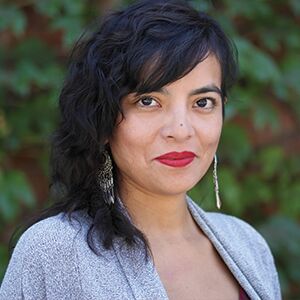
Ramsey McGlazer is an Associate Professor specializing in twentieth-century European and Latin American literature, film, and critical theory. His research engages with poetry, politics-aesthetics intersections, critical carceral studies, and feminist/queer/psychoanalytic frameworks. He holds a Ph.D. in Comparative Literature and Critical Theory from UC Berkeley (2015) and previously taught at the University of St Andrews and Brown University’s Pembroke Center. McGlazer’s work interrogates modernist critiques of progress, radical psychiatry movements, and the interplay between aesthetic practices and institutional critique. His acclaimed monograph Old Schools: Modernism, Education, and the Critique of Progress (2020) won the American Association for Italian Studies First Book Prize. Current projects include The Clinic and its Double , exploring mid-century radical psychiatry and avant-garde art. He serves as Senior Editor of Critical Times and Coeditor of Italian Culture , and has translated key works like Rita Segato’s The War Against Women . McGlazer’s writing appears in venues such as Los Angeles Review of Books and n+1 . Research interests span Surrealist provocations, Brazilian artist Lygia Clark’s propositions, and transnational feminist solidarities. His scholarship bridges literary analysis with critical engagements in carceral studies, postcolonial theory, and decolonial thought.
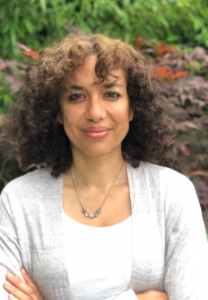
Peter Gordon is an Associate Professor of Neuroscience and Education and Cognitive Science in Education at Teachers College, Columbia University. He directs the Language and Cognitive Neuroscience Lab and holds affiliations with Biobehavioral Sciences, Human Development, and other departments. His research focuses on language acquisition, developmental neuroscience, cross-cultural numerical cognition, and MRI-based studies of language processing. Dr. Gordon earned a B.A. (Hons) in Psychology from the University of Stirling (Scotland) and a Ph.D. in Psychology from MIT. His fieldwork includes extensive studies with the Piraha in Amazonia, Brazil, and the Kadiweu in Mato Grosso do Sul, Brazil. His research interests span infant event representations, behavioral genetics of language, and the interplay between language structure and cognitive development. Notable contributions include work on anumeric cultures and the linguistic relativity hypothesis. Publications highlight cross-cultural studies, morphological processing, and cognitive neuroscience of language. He has conducted influential research on numerical cognition in Amazonian cultures and the genetic influences on language acquisition. Contact: pg328@tc.columbia.edu | Office: 1152 Building 528 | Lab: [Link Provided].
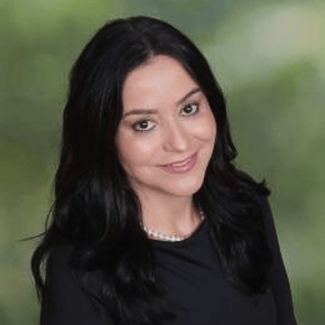
Claudia Arteaga serves as Associate Professor of Spanish, Latin American, and Caribbean Literatures and Cultures and Chair of the Department of Spanish, Latin American and Caribbean Literatures and Cultures at Scripps College. Her academic profile centers on indigenous representation in Latin America through cinematic and literary analysis, with particular emphasis on Andean societies. Her educational background includes: Ph.D. and M.A. in Spanish from Rutgers University B.A. in Linguistics and Literature from Pontificia Universidad Católica del Perú Arteaga's research critically examines indigenous self-representation in Peru, Bolivia, and Guatemala, investigating race-gender intersections , popular environmentalism , and epistemological translation in post-colonial contexts. Her work bridges Decolonial Theory , Indigenous Film Studies , and Andean Cultural Analysis , with significant contributions to understanding how communitarian filmmaking challenges dominant narratives. She actively connects academic research with social movements through interdisciplinary approaches. Her publication trajectory reveals consistent focus on indigenous media as decolonial praxis , with recent works analyzing Mayan documentaries, Quechua poetry, and Amazonian film schools. The research demonstrates evolving methodology from textual analysis toward community-engaged film studies, particularly examining how film festivals and grassroots cinema reshape environmental and identity politics across Latin America. Notable recognitions include: Mary W. Johnson Faculty Achievement Award in Teaching (Scripps College, 2018-2019) Sabbatical Research Fellowship (Scripps College, 2018-2019) Rutgers Teacher-Scholar Fellowship (2013-2014) Adolfo Snaidas Best Graduate Student Essay Award (2009) Arteaga has secured significant research funding from CLAS and GAIA for faculty-student collaborations and academic events, including the initiative 'Sumak Kawsay & Bolivarianism Today.' Her teaching portfolio spans advanced literature courses and specialized seminars on indigenous women's struggles, reflecting her commitment to integrating research with pedagogy. She maintains active engagement with the Latin American Studies Interdisciplinary Group, fostering connections between academic work and community activism. Her current projects extend into contemporary indigenous media production, with ongoing analysis of how digital platforms transform testimonial practices and environmental advocacy among Quechua and Mayan communities.
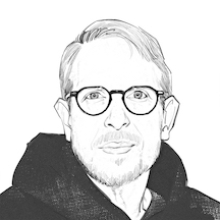
Nicholas Henriksen is an Arthur F. Thurnau Professor and Professor of Spanish & Linguistics at the University of Michigan, where he has held faculty positions since 2012. His research focuses on laboratory phonology, experimental phonetics, sociophonetics, and intonational grammar in Spanish and other Romance languages. Notable projects include studies on sound change in Andalusian and Patagonian Spanish, bilingualism (Afrikaans-Spanish), and second language speech learning. He directs the Michigan Speech Production Lab and co-leads initiatives integrating gender-diverse language into Romance curricula. Henriksen earned a PhD in Linguistics from Indiana University (2010), MA in Hispanic Linguistics (2006), and BA in Spanish/Mathematics from Rutgers (2003). His teaching spans undergraduate and graduate courses in Spanish linguistics, sociolinguistics, and phonetics, emphasizing applied research and pedagogical innovation. He has received prestigious awards, including the LSA Early Career Award (2021) and the Class of 1923 Teaching Award (2018). His research has been funded by grants from the University of Michigan ADVANCE Program and the Humanities Collaboratory, supporting projects like From Africa to Patagonia: Voices of Displacement . Collaborations include work with scholars in Argentina, South Africa, and Spain, examining language contact, heritage language maintenance, and sociolinguistic identity. Publications span over 30 peer-reviewed articles and book chapters, with a focus on phonetic variation, intonation, and bilingualism. He mentors graduate students in experimental phonetics and sociolinguistics, with advisees contributing to studies on Andalusian Spanish, heritage language acquisition, and voice quality.
Professor Joy Singarayer is a leading academic in the Department of Meteorology at the University of Reading, specializing in paleoclimatology. She holds the position of Joint Head of Department (Facilities and Finance) and is actively involved in research on climate-human interactions and past environmental changes. Her work bridges climate science, archaeology, and ecology, with a focus on understanding how past climate fluctuations inform future environmental resilience. Her research interests include the impact of climate change on agriculture and water resources, human-land-climate interactions across prehistoric to modern eras, and paleoclimate reconstructions using Quaternary records. Notable projects include CROPP (Peruvian climate resilience), PRIDE (Caspian Sea biodiversity), and Amazonian paleoecology studies. Professor Singarayer has supervised numerous PhD students exploring topics like agent-based modeling of pre-Columbian cultures, Caspian Sea hydrology, and Amazonian drought responses. Her interdisciplinary approach integrates climate modeling, fieldwork, and data analysis to address global environmental challenges. She is affiliated with the University of Reading's Meteorology Department and collaborates internationally on projects like the PotASH initiative studying southern hemisphere paleolakes. Her contributions span academic leadership, policy-relevant research, and fostering inclusive academic environments through her role on the SMPCS WIDE committee.
University of California , Santa Barbara (UCSB)United States
Dr. Aline Ferreira is an Associate Professor and Director of the Bilingualism, Translation, and Cognition Laboratory at the University of California, Santa Barbara. She holds a Ph.D. from the Federal University of Minas Gerais (2013) and served as a post-doctoral research fellow in psychology at Wilfrid Laurier University. Her research focuses on bilingualism, translation processes, cognitive aspects of language, and reading. She has co-edited influential works such as The Handbook of Translation and Cognition and The Development of Translation Competence , and her work has been published in journals like Translation and Interpreting Studies and Reading and Writing . Her research interests include cognitive translation processes, bilingual cognition, and sociolinguistic factors in language learning. Recent studies explore food security disparities, indigenous health in Brazil, and the cognitive effects of immersion learning on L2 acquisition. Ferreira’s work bridges psycholinguistics, cognitive science, and applied linguistics to address interdisciplinary questions in translation and interpreting studies. She has contributed to over 50 peer-reviewed publications and serves as a key figure in advancing methodologies for studying translation processes using eye-tracking and retrospective protocols. Her lab focuses on measuring cognitive aspects of bilingualism and translation, with particular attention to marginalized populations such as Indigenous communities in Brazil. Her publications analyze topics ranging from gender and racial disparities in food insecurity to the neurological underpinnings of interpreting tasks. Ferreira’s research also addresses educational outcomes for multilingual learners and the role of sociocultural factors in language acquisition among immigrant populations.
Greg Urban is the Arthur Hobson Quinn Professor of Anthropology at the University of Pennsylvania , with a career spanning over four decades. His work bridges Linguistic Anthropology , Cultural Motion , and Business Anthropology , focusing on how culture circulates through societies, corporations, and global contexts. He has held leadership roles as Chairman of Anthropology at UPenn (2001-2007, 2014-2018) and directed research initiatives like the Culture and Nuclear War Project . Education : Ph.D. in Anthropology (1978), MA (1973), BA (1971) from the University of Chicago. Key Books : Metaculture: How Culture Moves through the World (2001), The Culture Puzzle (2021), and Nation-States and Indians in Latin America (1991). Urban’s research interests include: Cultural Motion : The dynamics of cultural replication and transmission across societies Discourse Analysis : Rituals, power structures, and semiotic flows in communication Corporate Anthropology : Ethnographic studies of business organizations and citizenship Amerindian Cultures : Sociolinguistics and cultural practices in Brazil and South America His articles (1978-2025) reveal trends in: Corporate semiotics and affective cultural forms Constitutional discourse and citizenship Amazonian mythologies and ethnographic theory Metaculture as a framework for globalization Ritual practices and linguistic relativity Comparative studies of nation-state-indigenous interactions Scientific Awards : Lindback & Ira H. Abrams Awards for Teaching Guggenheim Fellowship Center for Advanced Study Fellowship American Ethnological Society Book Prize Multiple University Research Awards Urban’s advising and grants focus on: Interdisciplinary projects blending anthropology with business and political science Long-term ethnographic fieldwork in Brazil STS (Science and Technology Studies) collaborations Studies of corporate citizenship and constitutional processes
Lev Michael is a Professor of Linguistics at the University of California, Berkeley, in the Department of Linguistics within the College of Letters and Science. His research focuses on anthropological linguistics, typology, and the documentation and description of Amazonian languages, particularly in Peru. He is actively engaged in fieldwork, language revitalization, and the study of South American historical and contact linguistics. Research Interests: Lev Michael's work spans a wide range of topics in linguistic anthropology and descriptive linguistics. He specializes in the documentation of endangered Amazonian languages such as Iquito and Nanti, examining grammatical phenomena like evidentiality, negation, and subject-verb agreement. His research integrates fieldwork with computational methods, particularly in phylogenetic classification of language families like Tupí-Guaraní and Arawakan. He is deeply committed to language revitalization and community-based lexicography, contributing to school dictionaries and literacy materials. Recent Research Trends: His recent publications (2017–2022) reflect a strong emphasis on lexicography, computational phylogenetics, and the sociocultural dimensions of language use. Articles span from dictionary compilation to Bayesian modeling of language evolution, demonstrating a unique blend of traditional fieldwork and cutting-edge quantitative analysis. There is a consistent focus on Arawakan and Tukanoan languages, evidentiality, poetic structure in oral traditions, and the historical relationships among South American language families. Scientific Contributions: Co-developer of lexicographic resources for Iquito and other endangered languages Pioneer in applying computational phylogenetics to South American language classification Contributor to the understanding of evidentiality and reported speech in Amazonian languages Advocate for language revalorization and community-led documentation Advising and Grants: While specific students and funded grants are not listed in the provided text, Lev Michael frequently collaborates with students and community members on documentation projects. His extensive co-authorship with scholars like Christine Beier and Jaime Pacaya Inuma suggests a collaborative, team-based research model involving students, local speakers, and interdisciplinary partners. His work likely involves external funding given the scale of fieldwork and publication output, though specific grants are not mentioned. Labs and Research Teams: Lev Michael is associated with the Fieldwork and Language Documentation group and the Language and Social Context faculty at UC Berkeley. His collaborative projects involve multidisciplinary teams including linguists, anthropologists, and native speaker consultants, particularly from Peruvian Amazonian communities. He contributes to digital language archiving and lexicography using tools like FLEx (FieldWorks Language Explorer), indicating involvement in computational language documentation initiatives.
Dr Jose Elias-Ulloa is a Departmental Lecturer in Phonetics and Phonology at the University of Oxford's Faculty of Linguistics, Philology and Phonetics. His research focuses on the phonetic and phonological aspects of prosody, particularly metrical structure and intonation, and their interaction with segmental phenomena. He specializes in documenting endangered Amazonian languages such as Shipibo-Conibo, Panoan, Quechuan, and Urarina, as well as studying the contact-induced changes in Portuguese/Spanish spoken in Amazonian regions. His fieldwork spans multiple indigenous language families, emphasizing acoustic analysis and language preservation. Dr Elias-Ulloa's affiliations include the Phonetics Lab and Language & Brain Lab at the University of Oxford. His recent work examines intonational patterns in Amazonian Spanish dialects (e.g., La Merced, Pucallpa, Iquitos) and explores phonological processes like spirantization and stress adjustments in contact languages. He has published extensively on topics ranging from non-modal phonation in Boruca to lexical category-governed consonant neutralization in Panoan languages. His research also investigates prosodic influences on segmental phonetics, such as voiced stop spirantization in Peruvian Spanish, and the historical evolution of phonological features in Quechua. He has conducted pioneering studies on loanword adaptation in Shipibo-Konibo, demonstrating phonological stress realignment mechanisms in language contact scenarios.
Dr. Isabel Díaz Reviriego is a researcher at Leuphana University Lüneburg's Social-Ecological Systems Institute (SESI), where she investigates sustainability transformations through biocultural approaches. Her work bridges sustainability science, gender studies, and indigenous knowledge systems, with particular emphasis on equity and justice dimensions. Research Focus: Her interdisciplinary research examines: Gender and social differences in biocultural sustainability frameworks Epistemological diversity in Spanish-language sustainability literature Traditional ecological knowledge integration in conservation More-than-human economic assemblages Food sovereignty and agroecological transitions Publication Trends: Recent works demonstrate strong focus on decolonial perspectives in sustainability science, with critical analyses of economic paradigms and gender-power dynamics in environmental governance. Articles frequently employ systematic reviews and cross-cultural comparative approaches spanning European, Latin American, and indigenous contexts.
Hugh Cagle is an Associate Professor in the Department of History at the University of Utah, where he also serves as Director of the Diplomacy and International Studies program. His research spans Latin American history, comparative colonialism (particularly Portuguese colonialism in Brazil, India, and Goa), and science and technology studies (STS). He explores how scientific knowledge shaped colonial projects and how medical concepts influenced the construction of 'the tropics' as a geopolitical category. Education: PhD in History from Rutgers University Expertise: Latin American history, Portuguese empire, STS, comparative colonialism Languages: Portuguese, Spanish, Catalan, Latin His award-winning book Assembling the Tropics (2018) redefines the history of the concept of 'tropics' through Portuguese colonial experiences. His current projects examine animal classification under Portuguese rule and Amazonian indigenous technologies. Scientific Awards: Leo Gershoy Award (2019) Rising Star in the Humanities (2018) National Endowment for the Humanities Recipient (2012) His ORCID profile documents further publications and collaborations.
Paul Cooke is the Centenary Chair in World Cinemas at the University of Leeds, affiliated with the School of Languages, Cultures and Societies. He holds a PhD in German Studies from the University of Birmingham and has extensive experience in German Cinema, GDR Studies, and participatory video methodologies. His academic career spans roles such as Pro-Dean for Research and Innovation and acting Dean of the Faculty of Arts. Research focuses on participatory arts in public health (e.g., CE4AMR for antimicrobial resistance) and mental health (Project CREATE). He has led global initiatives like Changing the Story (post-conflict civil society) and CARAN (Nepal antibiotic resistance). Films include Roebourne , Operación Berlín , and Ek Notun Probhat , earning awards at international festivals. He directs the Centre for World Cinemas and Digital Cultures and collaborates across disciplines, including with NGOs and policymakers. Key contributions include theorizing participatory film’s role in health advocacy and heritage studies through projects like Voicing Hidden Histories .
Alexandra Y. Aikhenvald is a Professor affiliated with James Cook University, recognized as a leading scholar in linguistic typology, Amazonian languages, and language contact. Her research focuses on grammatical structures, evidentiality, and endangered language documentation. She has authored over 160 publications, including seminal works like The Oxford Handbook of Evidentiality and The Cambridge Handbook of Linguistic Typology . Her work spans multiple languages, including Tariana (Amazonia), Manambu (Papua New Guinea), and Paumarí. She explores topics such as noun categorization, serial verbs, and multilingualism. Aikhenvald has edited volumes on grammaticalization, gender systems, and clause linking semantics. Her contributions bridge fieldwork, theoretical linguistics, and sociolinguistics, emphasizing cross-linguistic comparison. Key themes include language obsolescence in Papua New Guinea, areal diffusion in Amazonia, and the typology of evidentiality and possession. Her research highlights endangered language documentation and the sociocultural dimensions of linguistic diversity.
Eduardo Leão is an Assistant Instructional Professor in Spanish at the University of Chicago, affiliated with the Department of Hispanic and Luso-Brazilian Studies. He teaches courses in Spanish, Portuguese, and English as a Foreign Language, emphasizing language acquisition and cultural immersion. His office is located at Gates-Blake 222B, and he holds regular office hours on Mondays, Wednesdays, and Fridays from 3:30 to 4:30 p.m. Eduardo Leão earned a degree in Portuguese from the Universidade do Estado do Amazonas in Brazil and completed his Ph.D. in Hispanic and Luso-Brazilian Studies at the University of Chicago. His academic journey intertwines multiple linguistic and cultural domains, reflecting his expertise in transnational literature and education. His research interests center on Latin American contemporary literature, with a focus on science fiction and Amazonian studies. These areas explore themes such as cultural identity, environmental narratives, and socio-political critiques in the region. His work bridges disciplinary boundaries, engaging with literature, cultural studies, and environmental analysis. Recent courses include SPAN 10100 Beginning Elementary Spanish I (Autumn 2024) SPAN 10300 Beginning Elementary Spanish III (Winter 2023, Spring 2023, Spring 2024, Winter 2025) SPAN 20100 Language, History, and Culture I (Winter 2025) SPAN 21955 Latin American Literatures and Cultures: 20th and 21st Centuries (Winter 2023, Autumn 2023) PORT 23424 Building a Nation: Brazilian Culture from Modernism to the Present (Winter 2024) While no scientific awards are explicitly listed, his scholarly contributions highlight innovative approaches to literary analysis and cultural studies. His teaching and research reflect a commitment to interdisciplinary education and the exploration of underrepresented narratives in Latin America.
Dr. Katharina Haude is a Chargée de Recherche HDR (Research Fellow) at the Laboratoire Structure et Dynamique des Langues (SeDyL - CNRS UMR8202) in Villejuif, France, and maintains an active affiliation with the Department of Linguistics at the University of Cologne, Germany. Her research focuses on the documentation and theoretical analysis of endangered languages, particularly the Movima language isolate spoken in Bolivia. Her academic background includes: Habilitation (HDR) from Université de Paris (2020) PhD in Linguistics from Radboud Universiteit Nijmegen (2006) Magister Artium (MA) in Linguistics from the University of Cologne (2001) Dr. Haude's research centers on syntax and information structure in under-documented languages, with Movima serving as her primary case study. Her work examines alignment systems, voice constructions, nominal tense, and clause structure, revealing how syntactic phenomena interact with discourse-pragmatic factors. She has made significant contributions to understanding inverse systems, ergativity patterns, and referential hierarchies across language families, particularly through her co-edited volumes on information structure and alignment. Her methodological approach combines rigorous fieldwork with cross-linguistic typological analysis, often focusing on how lesser-described languages challenge established theoretical frameworks. As a member of SeDyL laboratory, she contributes to collaborative projects documenting linguistic diversity, including the DoBeS archive of Movima multimedia documentation (2006-2012). Her editorial work includes special issues on information structure in lesser-described languages (2018) and referential hierarchies (2016), advancing methodological approaches for studying prosody-syntax interfaces in endangered languages. She has developed pedagogical materials for the Movima community, including grammars, dictionaries, and orthographic guides, demonstrating commitment to both theoretical linguistics and language preservation.