Dr. Daniel Matlin is a Reader (equivalent to Associate Professor) in the History of the United States since 1865 at King's College London, affiliated with the Faculty of Arts & Humanities and the Department of History. He joined King's in 2012 after previous academic positions at Queen Mary University of London (as Leverhulme Early Career Fellow) and Cambridge University, where he served as Director of Studies at the Centre for History and Economics. His research examines the intersection of race, intellectual life, and urban space in 20th-century America, with specializations in: African-American intellectual/cultural history Civil rights and Black Power movements Historical constructions of race and Black diasporic identity Urban history (particularly Harlem and New York City) Jazz history and cultural expression Publication analysis reveals consistent focus on Harlem as both physical space and cultural symbol, with interdisciplinary approaches bridging history, visual culture, musicology, and urban studies. His works critically analyze racial representation, community formation, and the politics of space. Awards & Honors: Arthur Miller Centre First Book Prize for On the Corner: African American Intellectuals and the Urban Crisis Leverhulme Early Career Fellowship He actively supervises PhD students in African-American history, civil rights, black nationalist thought, and 20th-century cultural history. Grant-funded projects include 'Race Capital? Harlem as Place and Symbol since 1900.' Matlin engages extensively with public history through lectures at institutions like the National Theatre and Black Cultural Archives.
Geoffrey Batchen holds the Professorship of the History of Art at the University of Oxford, situated within the Department of the History of Art in the Faculty of History. He is additionally a Fellow of Trinity College, where he contributes to academic governance and tutorial instruction. His career spans teaching, scholarly writing, and international curatorial practice focused exclusively on photographic history. Education: BA, University of Sydney PhD, University of Sydney Batchen's research interrogates photography's cultural embeddedness across temporal and technological shifts, emphasizing its theoretical frameworks, memorial functions, and ethical complexities. His scholarship bridges art historical analysis with material studies, examining how photographic practices shape human experience from the 19th century to digital eras. Curatorial projects extend this investigation through exhibitions at major institutions worldwide, including the Van Gogh Museum, International Center of Photography, and National Media Museum. His publication trajectory reveals evolving engagement with photography's ontological status, moving from foundational studies like Burning with Desire (1997) to comprehensive historical syntheses in Negative/Positive (2020). Recurring themes include technological materiality, memory construction, and crisis representation, with recent works addressing digital dissemination and cameraless techniques. This body of work establishes photography as both artistic medium and cultural catalyst across diverse sociopolitical contexts. Information regarding doctoral students, research grants, laboratory facilities, or award recognition was not provided in the source material.
Olga Fernández López is an Associate Professor at the Department of History and Theory of Art, Universidad Autónoma de Madrid, and holds a PhD in Geography and History (History of Art) from Universidad Complutense de Madrid (UCM). She collaborates with institutions including Intermediae (Matadero Madrid), CA2M Madrid, and Andalusian Center for Contemporary Art Seville. PhD Curating Contemporary Art, Royal College of Art (2017) PhD in History of Art, UCM Master’s in Cultural Management, Fundación Ortega y Gasset Her research focuses on: History of exhibition models and curatorial practice Contemporary art in Spain and Latin America Visual culture and political philosophy Museum decolonization Recent publications explore: Urban curatorial practices (2016-2021) Postwar European visual culture (2019) Decolonial exhibition strategies (2020) Scientific awards include: Salvador de Madariaga grant (2020) for research at Columbia University Key projects: PUBLISHERS: Publics of Contemporary Art (2019-2021) European Forum for Advanced Practices (2019-2022) Decentralized Modernities: Cold War Art (2018-2020)
Daniel Wojcik is a Professor in the Department of English and Folklore Program at the University of Oregon , where he teaches courses on Apocalypse Now and Then , Folklore and the Supernatural , and Visionary Experiences . Holding a PhD from UCLA , his work bridges art, religion, and cultural theory with particular focus on outsider art , apocalyptic movements , and vernacular spiritualities . Education: PhD, University of California, Los Angeles Key Research Areas: Visionary art and art brut Modern mythologies and alternative religions Apocalyptic beliefs and millenarian movements Urban ethnology and cultural theory Trauma, grief, and creativity Notable Awards: Fulbright Scholar (2023) Fellow of American Folklore Society (2023) Coleman-Guitteau Professorship (2014-2015) His publications analyze intersections of creativity and crisis , including Outsider Art: Visionary Worlds and Trauma (2016) and The End of the World As We Know It (2003). Recent projects document magico-religious re-enchantment in Central/Eastern Europe and UFO cosmologies . As advisor to the Folklore and Public Culture Program , he mentors students in ethnographic research and public folklore applications. Article Trends show consistent exploration of apocalyptic themes (2003-2025), outsider art analysis (2016-2025), and vernacular spirituality (1996-2021). His work connects trauma studies with artistic expression while mapping millenarian belief systems across religious and pop culture contexts. Teaching Legacy includes courses on Folklore theory , Religion and folklore , and Subcultures . He has directed fieldwork projects and public folklore initiatives at the Randall V. Mills Archives and Oregon Folklife Network.
Raghavendra Ramachandra is a Professor at the Department of Information Security and Communication Technology (IIK) , within the Faculty of Information Technology and Electrical Engineering at the Norwegian University of Science and Technology (NTNU) in Gjøvik. His research focuses on biometric systems, particularly in face, fingerprint, and finger vein recognition, with emphasis on presentation attack detection, morphing attack detection, and deep learning applications. Current research projects include: SALT (2022-2026) : Developing privacy-preserving facial biometric authentication systems. OffPAD (2022-2025) : Creating cryptographic tools and presentation attack detection for fingerprint biometrics. SWAN (2015-2020) : Developing biometric countermeasures against presentation attacks. His recent publications demonstrate technical expertise in: Face morphing attack detection using vision transformers and point cloud networks Image fusion techniques for multispectral biometrics GAN-based synthetic data generation for security evaluation Explainable AI approaches for biometric verification Professor Ramachandra also supervises PhD and Master’s students, and has extensive experience in leading national and EU research initiatives.
Jayne Knight is a Visiting Research Fellow at the University of Brighton’s Centre for Design History, focusing on popular photography history through the Kodak Museum Collection at the National Science and Media Museum. She holds a PhD from the University of Brighton (2024) and prior degrees from De Montfort University and the University of Essex. Education: PhD: 'From company museum to national collection, 1927-2023: telling the story of popular photography through the Kodak Museum Collection' (University of Brighton, 2024) Master’s: 'Connecting Culture and Industry: London Zoo and its Photographic Advertising in the 1920s' (De Montfort University) Bachelor’s: 'To what extent can the photography of Fox Talbot be considered art?' (University of Essex) Her research explores popular photography, design history, and material culture, with a focus on institutional narratives and visual archives. Recent work includes studies on 1970s/80s photography workshops, Kodak’s marketing to women, and PhD student support schemes. Knight also holds an external role as a Science Museum Group Research Associate (2025–present). Her publications span museum curation, photographic techniques, and interdisciplinary research, emphasizing the social and cultural dimensions of photography. She regularly presents at conferences and workshops, including discussions on Kodak’s historical narratives and the evolving role of photography in museums.
James Arthur Allen is a Senior Lecturer in Photography at Bath Spa University's Bath School of Art, Film and Media, where he teaches on the BA (Hons) Photography and BA (Hons) Documentary Photography and Film degrees. In addition to his academic role, he maintains an active professional practice as a freelance photographer specializing in documentary, editorial, and portrait photography with a focus on social issues across diverse geographical contexts. MA Documentary Photography - University of South Wales (2016-2018) BA (Hons) Press and Editorial Photography - University College Falmouth, Cornwall (2009–2012) AFHEA: Associate Fellow of the Higher Education Academy (2024) Professional qualifications: HEFAC, Hostile Environment First Aid Action Course, Blue Dot Safety 2010; ESTCO - Embed Simulation Training Course, Blue Dot Safety 2010 Allen's creative research centers on documentary photography exploring geopolitical conflicts, cultural identity, and social issues. His major projects include "Land of Wolves" documenting Georgia and the South Caucasus, "Adiga" examining the Circassian diaspora in Israel, "Time will tell how trustworthy you are" investigating the Somerset landscape and rural communities, and "Fatherhood" exploring contemporary parenting experiences. His work consistently addresses ethics and representation in photography, particularly in conflict zones and marginalized communities. The photographer's distinctive approach blends academic rigor with professional practice, creating work that appears in both gallery exhibitions and major media publications. His photographic output demonstrates consistent thematic development from early conflict documentation toward more personal explorations of place, identity, and social structure. Recent projects like "100 Portraits" (2024) and "Point & Shoot" show his growing interest in community engagement and institutional documentation while maintaining his signature documentary style. Rebecca Vassie Memorial Award Winner (2016) RPS International Photography Exhibition 161 Shortlist (2018) Jerwood/Photoworks Award Listing (2018) Kolga Tbilisi Photo Festival Documentary Series Award Shortlist (2018) Magnum Photos Top 30 under 30 Award Shortlist (2014) As an educator, Allen serves as the link tutor to Bath Spa University's partners boomsatsuma in Bristol. His teaching specialisms include Photography, Editorial Portraiture, Documentary Photography, and Ethics and Representation. He has previously held lecturing positions at Portsmouth University (2018-2022) and Plymouth University (2017-2018), and was involved with the Portsmouth University Photography Research Group (2018-2022). His professional practice directly informs his teaching, with field experience in conflict zones and diverse cultural contexts enriching his academic instruction. Allen maintains an active creative studio practice alongside his academic work, recently completing the "100 Portraits" project celebrating Bath Spa University's 20th anniversary and the "Point & Shoot" collaborative project with Campus Skateparks. His photography has been featured in major publications including The Wall Street Journal, The Financial Times Magazine, The Guardian, and British Journal of Photography, demonstrating the vital connection between academic inquiry and professional photographic practice.
Florian Albrecht-Schoeck is a German artist and Researcher at the Offenbach University of Art and Design . His work bridges Photography , Artificial Intelligence , and Machine Learning , exploring themes of roots, identity, origin, and belonging within societal, political, and individual contexts . He co-teaches the Photography Fundamentals course with Prof. Martin Liebscher. Albrecht-Schoeck’s artistic practice involves analog, digital, and virtual photography . His series like Not Alone (2021/2022) and Squares (2023) analyze the medium’s evolving role in the age of AI. He integrates research into teaching , helping students navigate complex technologies through projects like No way Back: Photography without Photographs (2024/2025). He has received notable awards and scholarships , including the Brückenstipendium der Hessischen Kulturstiftung (2021) and Deutsche Börse Fotoförderpreis (2011). His works are housed in collections such as the Art Collection Deutsche Börse and the Museum für Kunst und Kulturgeschichte in Marburg . Key exhibitions include Roots Retropia Rage Repeat (2018) and Fotografie ohne Fotografie (2025). He also contributes to pedagogical projects , such as the annual ZuTaten publications and exhibitions (2024/2025).
Dr. Ulf Vierke serves as Akademischer Oberrat (Senior Academic Councillor) at the University of Bayreuth, where he directs the Iwalewahaus and holds multiple leadership positions including Member of the Executive Committee of the Institute of African Studies (IAS) and Member of the Management Board of the Bayreuth International Graduate School of African Studies (BIGSAS). His academic career spans over two decades at the University of Bayreuth, beginning with doctoral studies in Cultural Studies completed in 2004. Dr. Vierke earned his Magister Artium in Social Anthropology, Ethnology, Islamic Studies, and Law at the University of Bayreuth in 1996, followed by his doctorate under Prof. Dr. Till Förster. His academic progression includes Research Fellow at the Iwalewahaus (2004-2009), Akademischer Rat (2009-2014), and promotion to Akademischer Oberrat in 2014. He has directed the Iwalewahaus since 2010 and coordinates the 'Revolution 3.0 – Iconography of Social Upheaval' research project. His research focuses on contemporary African art and visual culture, with regional expertise in Angola, Tanzania, and Kenya. Dr. Vierke's scholarly work examines urban art scenes, photographic practices, and material culture, particularly glass beads and commerce. His approach bridges anthropology, art history, and cultural studies to explore how visual practices reflect and shape social and political transformations in African contexts. He has made significant contributions to understanding Angolan photography, carnival practices, and postcolonial artistic expression. Dr. Vierke's publication record demonstrates a consistent engagement with revolutionary iconography, urban memory, and the transnational circulation of African art. His recent work explores how visual culture documents and influences social change, particularly in post-conflict societies. The thematic progression across his publications reveals an evolving focus from material culture studies to contemporary political visualities. As University of Bayreuth's Commissioner for Handicapped Students & Students with Chronic Illnesses since 2012 and Deputy chair of Studentenwerk Oberfranken's representative assembly since 2014, Dr. Vierke demonstrates significant institutional commitment beyond his research responsibilities. His authorization to supervise doctoral students at BIGSAS underscores his standing as a senior academic mentor in African Studies.
Sha Towers serves as Associate Dean of Research and Engagement and Librarian at Baylor University, providing administrative leadership across University Libraries in public services, research, space planning, and user engagement. He leads the division of Research & Engagement, overseeing the liaison librarian program, instruction and information literacy, data and digital scholarship, public services for Moody and Jones Libraries, and the Arts and Special Collections Research Center. BA (Music), Baylor University MA (Music), Baylor University MLIS (Academic Libraries), University of Texas at Austin Towers is a visual artist specializing in calligraphic and book arts, with his artist's books appearing in private and university special collections across the United States and featured in international juried exhibitions. He is the founder and curator of the Baylor Book Arts Collection and serves as liaison librarian to the departments of Art & Art History and Theatre. His research interests focus on book arts, calligraphy, artists' books, library science, academic liaison work, and special collections. His scholarly output shows a consistent focus on library engagement, relationship-building in academic settings, and the intersection of book arts with academic librarianship. Towers has developed significant expertise in the 'hangout factor' of academic liaison work and has contributed substantially to understanding engagement models in academic libraries. President of Association of College and Research Libraries Arts Section (2019) Book Art Special Interest Group Co-Coordinator for Art Libraries Society of North America (2016-present) Peer Reviewer for Art Documentation: Journal of the Art Libraries Society of North America (2017-present) President of Art Libraries Society of North America / Texas-Mexico Chapter (2015) Fellow of the Harvard Leadership Institute for Academic Librarians (2011) Towers has secured research funding including an Altmetric Annual Research Grant (2020) for investigating metrics for creative and performing arts faculty. He has mentored through his leadership roles and contributed significantly to library instruction and collection development, particularly in the arts. His work with the Baylor Book Arts Collection has created a significant resource for students and faculty, with over 2100 works from artists globally. As founder and curator of the Baylor Book Arts Collection, Towers has established specialized spaces and programs supporting book arts creation and scholarship. His work with the Book Arts & Letterpress Lab demonstrates commitment to hands-on learning and creation in the book arts medium.
Dominick M Rivers serves as Assistant Professor of Digital Art in the Department of Art & Design at Indiana State University's College of Arts & Sciences. His academic role centers on bridging historical media techniques with contemporary digital practices through teaching and creative research. His educational background includes a Master of Fine Arts (M.F.A.) from Indiana University (2023) with a major in Fine Arts, establishing foundational expertise in experimental media creation. Rivers' research investigates the materiality of obsolete technologies through lenses of sustainability and cultural preservation. His work explores analog-digital hybridity in moving image art, sound design, and alternative photographic processes, with particular emphasis on Czech New Wave Cinema influences and public access television legacies. Current projects examine how obsolete media formats inform contemporary digital art practices within globalized cultural contexts. Recent scholarly output reveals consistent exploration of signal manipulation and sustainability, demonstrated through optical sound experimentation, festival curation, and conference presentations addressing alternative processes in moving image creation. His work connects technical innovation with ecological consciousness across multiple media platforms. Bloomington Arts Projects Grant, Bloomington Arts Commission (2025) Rivers actively secures external funding for creative projects, currently serving as Principal Investigator for two Bloomington Arts Commission grants: a $3,000 Arts Project Grant (2025-present) and a $2,000 Artist Advancement Grant (2025-2027). These funds support his experimental work in obsolete technology repurposing and community-based digital art initiatives.
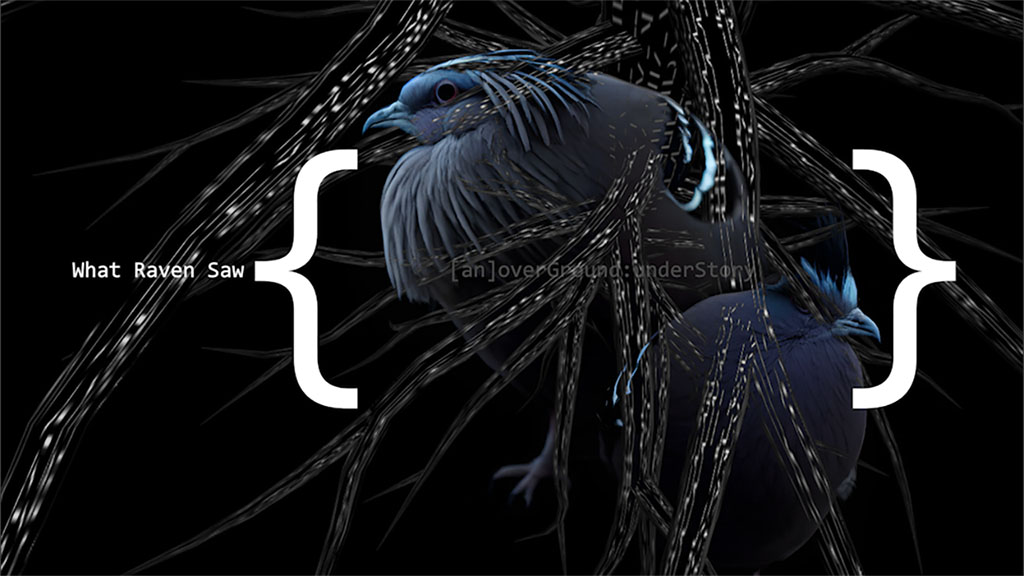
Dr. Andrew Burrell is a Senior Lecturer in Visual Communication at the University of Technology Sydney's Faculty of Design and Society. He is a practice-based researcher and educator exploring virtual and digitally mediated environments as sites for the construction, experience, and exploration of memory as narrative. His work sits at the intersection of digital media, virtual reality, and environmental humanities, with a particular focus on more-than-human ecologies and queer approaches to virtual environments. Andrew's research investigates the relationship between imagined and remembered narrative and how the multi-layered biological and technological encoding of human subjectivity may be portrayed within, and inform the design of, virtual environments. His networked projects in virtual and augmented environments have received international recognition, with recent works including "Twice, again" and "overGround:underStory," which explore the role of memory and forgetting in machine-mediated spaces and more-than-human encounters between physical and virtual ecologies. His creative practice informs his traditional research outcomes, which include publications in journals such as the Leonardo Electronic Almanac and Virtual Creativity. Andrew is particularly interested in how emerging and speculative technologies are implicated in more-than-human ecologies, and he uses creative practice to research and understand the complexities of these technologies. Andrew is a member of the UTS Visualisation Institute, a multidisciplinary research group focused on the creation of data visualizations, stories, and immersive experiences, and the School of Design's Critical Visualisation research group. He has received funding from various sources including the Australian Research Council (ARC) Discovery Projects and Create NSW. Research Interests Virtual and Augmented Reality as narrative spaces Memory construction in digital environments More-than-human ecologies and digital storytelling Queer approaches to virtual embodiment Creative applications of machine learning and AI Data visualization and environmental storytelling Accessibility and ethics in digital humanities Notable Projects Twice, again : Examines the role of memory and forgetting in machine-mediated spaces overGround:underStory : Explores entangled networks between physical and virtual ecologies Waves of Words : ARC Linkage initiative investigating language movement in pre-colonial times can't buy me love : A virtual environment collaboration with Amala Groom Layered Horizons : A geospatial humanities research platform Scientific Recognition MMUVE IT - Inter-Arts Office Australia Council Grant (2008) International presentations at conferences including ISEA (International Symposium on Electronic Art) Teaching and Supervision Andrew is an advocate for studio-based learning in which students design solutions to real-world questions through iteration and experimentation. He considers design as an anchor for interdisciplinary practice and regularly brings cross-disciplinary perspectives into his teaching. He currently supervises five PhD and master's students, with an interest in working with students at the intersection of traditional and practice-based research approaches. Research Themes in Recent Publications Andrew's recent publications demonstrate a consistent focus on the intersection of virtual environments, narrative construction, and ecological thinking. His work explores how digital technologies can be used to create new forms of storytelling that acknowledge our entanglement with non-human entities. There's a strong emphasis on ethical considerations in digital design, particularly regarding accessibility and representation. His research also investigates the application of machine learning technologies in creative practice, examining both their potential and limitations for representing human experience.
Dillon Pranger serves as an Assistant Professor at the Illinois Institute of Technology, directing the interdisciplinary Deconstruction/Reconstruction Lab focused on sustainable building material recovery and circular construction techniques. As a licensed architect, he founded the award-winning Office of Dillon Pranger (ODP) in Chicago, specializing in small-scale contextual projects that integrate material, labor, and energy lifecycles into design processes. Pranger's educational background includes a B.S. in Architecture from the University of Cincinnati and an M.Arch. from Cornell University, where he received the Henry Adams Certificate and Richmond Herold Shreve Award for distinguished thesis work. His teaching experience extends to Cornell University, Harvard GSD, and Syracuse University prior to his current position. His research centers on sustainable material systems and circular economy principles within architecture, challenging traditional waste paradigms through projects like Taking Stock and The Architecture of Waste publication. Pranger's work investigates finite material resources, design for disassembly methodologies, and urban mining concepts, emphasizing temporary material states and reversible construction techniques that preserve material value throughout multiple lifecycles. His recent design projects demonstrate consistent exploration of material reuse across scales—from the BYOB temporary structure using reclaimed Chicago bricks to Woodstack's friction-fit lumber assemblies. These works collectively examine construction waste reduction through innovative disassembly systems, QR-code material tracking, and context-specific material lifecycles, establishing him as a leading voice in circular architectural practice. Silver Medal for Best Young Architect, The Architect’s Newspaper (2023) Architizer A+ Awards (2023, 2024) Rethinking the Future Award (2023) Tallinn Architecture Biennale (2022) Henry Adams Certificate, Cornell University Richmond Herold Shreve Award, Cornell University Pranger actively mentors students through his Deconstruction/Reconstruction Lab while maintaining ODP's client-based practice. His studio courses like ARCH 497: Material Narratives and ARCH 497: The Architecture of Waste directly translate research into pedagogy, with students developing alternative building assemblies through physical prototyping. The lab investigates material scarcity through projects tracking lumber price fluctuations and exploring circular housing solutions for Amsterdam's urban context. The Deconstruction/Reconstruction Lab operates as both academic research unit and design incubator, with projects like Arcadian Anthropocene examining circular system logic for high-density housing and Design for Disassembly prototyping reversible construction techniques. Collaborative efforts involving students and practitioners test material reuse at full scale, from Woodstack's temporary pavilion to BYOB's modular brick assembly, creating tangible demonstrations of circular architectural principles.
Laine Kristberga is an Associate Professor at the Department of Art and Technology within the Faculty of Pedagogy, Psychology and Art at the University of Latvia. She has been teaching at the university since 2020 and was elected as an associate professor in 2024. In addition to her position at the University of Latvia, she also teaches in the Master's program in Baltic Sea Region Studies at the University of Latvia, the Doctoral program in Art Science and History at the Latvian Academy of Arts, and various programs at Riga Stradins University and Riga Technical University's Riga Business School. Dr. Kristberga has developed and teaches courses including 'Photography I' and 'Art and Society,' and supervises student research internships and master's theses. She is also the Director of the Latvian Performance Art Centre and organizes the annual international performance art festival 'Starptelpa,' which is supported by the Latvian Performing Arts Council and Riga City Council. Her research focuses on performance art, particularly in the Baltic region and during the Soviet era. She has published extensively on intermediality, Latvian performance art history, and contemporary visual culture. Her work often explores the intersections between different media forms and the theoretical frameworks for understanding performance art. Dr. Kristberga is also active in scientific research, serving as a researcher at the Institute of Philosophy and Sociology of the University of Latvia, where she studies totalitarian regimes. She has been involved in the LZP project 'Soviet spirituality' in Latvia, examining its development, features, and models of influence. She has received recognition for her scholarly contributions through numerous publications in both academic and popular venues. Her monograph 'Intermedial Appropriation as a Theoretical Framework for the Analysis of Performance Art in Latvia in the Period of Late Socialism (1964-1989)' has been submitted for publication to Cambridge Scholars Publishing. Outside academia, Dr. Kristberga serves as a Latvian and English text editor for publications by the National Cultural Heritage Board and various cultural institutions, including the Latvian National Museum of Art and the 'Jews in Latvia' museum.
Stafford Smith is an Associate Professor in the Department of Visual & Media Arts at Grand Valley State University (GVSU). He holds an M.F.A. from Cornell University and a B.A. from Wesleyan University. His work critically explores photography’s role in representing identity, memory, and digital culture. Key projects include Ancestry in Progress (exploring bi-racial heritage), the P.O.V. installation critiquing the male gaze, and Me So Calgon (a viral critique of anti-Asian stereotypes). He has exhibited widely, including at ArtPrize and international venues like FestFoto in Brazil. Awards include the 2024 ArtPrize New Media Prize and the 2013 Director’s Choice Award. Smith teaches courses ranging from digital photography to art history and is a sought-after speaker on photography’s evolving role in the digital age. Education: M.F.A., Photography, Cornell University (2004); B.A., Printmaking, Wesleyan University (1987). Research focuses on post-photographic practices, digital media’s impact on identity, and critical theory. Recent works investigate social media’s role in self-representation and historical reclamation. His art often combines traditional photographic techniques with digital innovation, as seen in his alcohol-transfer collages and multi-frame urban studies.