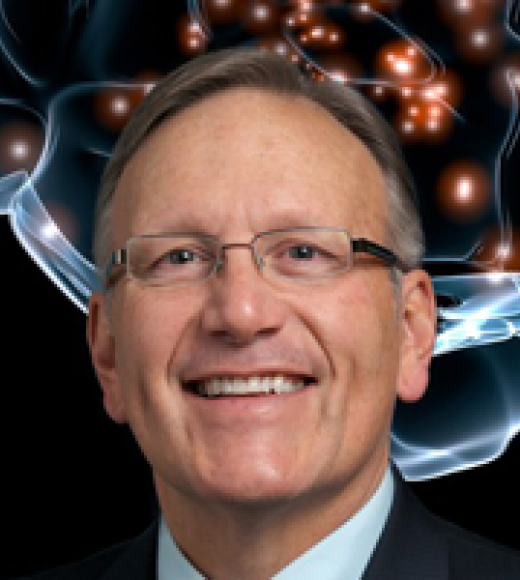
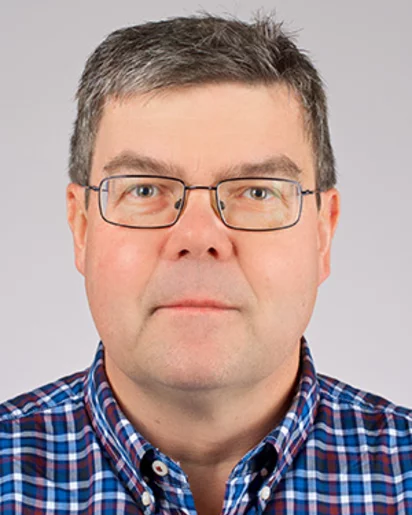
George R. Mangun is a Distinguished Professor of Psychology and Neurology at the University of California, Davis and Co-Director of the Center for Mind and Brain. He founded the UC Davis Center for Mind and Brain in 2002 and served as Dean of Social Sciences (2008-2015). Education: Ph.D. in Neurosciences (UC San Diego, 1987), B.S. in Chemistry and Life Sciences (Northern Arizona University, 1981) His research focuses on the neuroscience of attention , combining EEG and fMRI to explore how the brain selects and processes sensory stimuli. Key areas include attentional control, brain networks, and neural oscillations. Recent studies investigate hierarchical attention control, decoding spatial attention, and the role of theta/alpha oscillations in cognitive tasks. His work has implications for understanding neurological disorders like ADHD. Scientific Awards : Fulbright U.S. Distinguished Scholar (2025), Society for Neuroscience Education Award (2024), AAAS Fellow (2010), APS Fellow (2007) He has led the Neural Mechanisms of Attention Lab , funded by NSF, NIH, and international organizations, and co-authored the leading textbook Cognitive Neuroscience: The Biology of the Mind (6th ed., 2025).
Peter D. Ditlevsen is a Professor at the Niels Bohr Institute , University of Copenhagen, specializing in Physics of Ice, Climate and Earth (PICE) . With a background in theoretical physics, he transitioned to climate dynamics and turbulence. Dr. Scient (2004), University of Copenhagen PhD (1991), Technical University of Denmark Research Interests : Focuses on Tipping Points in the Earth System , especially AMOC collapse , using stochastic dynamical systems , alpha-stable processes , and nonlinear climate modeling . His work bridges climate physics , dynamical meteorology , and time series analysis . Recent Publications : 2025 work on ice-core-based Dansgaard–Oeschger event modeling , 2024 studies on AMOC multistability and complex system predictability , and 2023 Nature Communications paper on AMOC collapse early warning (cited 4000+ times in media). Scientific Leadership : Leads CriticalEarth H2020 (2021-24) and contributed to TiPES (2019-23). Holds Carlsberg Fellowship and Ole Rømer Prize . Outreach : Produces weekly climate science podcast with David Trads, delivers 4-6 public lectures/year, and has appeared in 40+ media outlets. Teaches Electrodynamics , Thermodynamics , and Turbulence courses.
Professor Hui-Ming Cheng is a Vice Chancellor’s Fellow at the Advanced Technology Institute (ATI), Tsinghua University, and founding director of the Low-Dimensional Material and Device Laboratory at Tsinghua Shenzhen International Graduate School. He also leads the Advanced Carbon Research Division at the Shenyang National Laboratory for Materials Science, Chinese Academy of Sciences (IMR CAS). With a Ph.D. from IMR CAS (1992) and postdoctoral experience at Nagasaki University and MIT, he holds honorary professorships at the University of Queensland and UNSW. His research focuses on carbon nanotubes, graphene, 2D materials, energy storage, and photocatalytic materials. Over 770 publications, 150 patents, and awards like the State Natural Science Award (China) highlight his contributions. He has edited major journals and co-founded Energy Storage Materials. Recent work includes breakthroughs in battery recycling, high-performance photodetectors, and graphene-based catalysts. Education: B.Sc. (1984), Ph.D. (1992) from Hunan University and IMR CAS. Postdoctoral roles at Kyushu Institute of Technology (Japan), Nagasaki University, and MIT. Research interests span carbon materials, energy storage systems, and nanoelectronics. Notable achievements include ultra-stable battery cathodes, high-sensitivity phototransistors, and efficient hydrogen evolution catalysts. His work on lithium-sulfur batteries and MXene films addresses scalability and sustainability challenges. Publications emphasize 2D materials, photocatalysis, and energy storage technologies. Awards reflect his global impact in materials science. He advises on grants and leads international collaborations, advancing materials innovation for next-gen technologies.
Mathieu Fontaine is an Associate Professor in Machine Listening at Télécom Paris , affiliated with the LTCI Lab within the IDS Department (Information, Data, Signal). His research focuses on machine listening for speech and audio signal processing. PhD in Informatics (2019), Lorraine University Master in Applied and Fundamental Mathematics (2015), Poitiers University BSc in Fundamental Mathematics (2013), Rennes University Fontaine's research spans speech enhancement , speaker separation , source localization , and music source separation using heavy-tailed probabilistic models and deep Bayesian networks , with applications in augmented reality . He has expertise in Python , signal processing , and machine learning (80% proficiency). His recent publications (2024) include work on diffusion models for speech synthesis , room acoustics estimation from 3D meshes , robust audio scene analysis , and direction-aware speech processing . Earlier publications (2022-2023) explore flow-based NMF , alpha-stable representations , and adaptive beamforming in multiparty environments. Fontaine collaborates with the S2A team and ADASP group at LTCI Lab. His work integrates probabilistic modeling with deep learning to address challenges in real-world audio processing, including reverberation, noise, and complex acoustic environments.
Professor Martin Freer is a Professor of Nuclear Structure and Reactions at the Birmingham Energy Institute, University of Birmingham. He has established himself as a leading researcher in nuclear physics with 197 research outputs and 65 projects spanning over two decades. In 2010, he helped establish the Birmingham Centre for Nuclear Education and Research to support the UK's investment in nuclear power generation. Professor Freer is actively accepting PhD students and supervising research in nuclear structure. His research focuses on the study of light nuclei using nuclear reactions performed at international facilities worldwide. Key research themes include nuclear structure and reactions, neutrinoless double beta decay, and alpha-clustering in nuclei. His fingerprint analysis reveals significant contributions to excited states (100%), excitation energy (72%), ground state physics (65%), beam energy (60%), neutron physics (58%), and cluster structure (47%). This demonstrates his comprehensive approach to understanding fundamental nuclear phenomena. Professor Freer's recent publications show a strong theoretical and experimental focus on nuclear structure, with particular emphasis on symmetries in collisions, triaxial deformation, shell structure, and cross-shell states in light nuclei. His work bridges fundamental nuclear physics with practical applications in energy systems, as evidenced by his thermochemical heat storage research. The consistent publication rate across decades indicates sustained scholarly productivity and evolving research interests. He has received recognition through citations and downloads of his work, with recent publications generating significant academic interest. His 2024 paper on symmetries in collisions has garnered 68 downloads, while his work on triaxial deformation has received 25 downloads, indicating active engagement with his research by the scientific community. Professor Freer is actively involved in mentoring PhD students in nuclear structure and supervising research projects. His current research portfolio includes major projects such as INHABIT (2025-2030), EPSRC Manufacturing Research Hub (2024-2031), Micro-breeder blanket development (2024-2030), and ZEBAI (2024-2028), reflecting his commitment to addressing energy challenges through interdisciplinary research. These projects demonstrate his ability to secure substantial research funding and collaborate across multiple institutions. He leads the Birmingham Centre for Nuclear Education and Research, which serves as a hub for nuclear physics research and educational programs. His work connects nuclear physics with energy engineering, materials science, and sustainable technologies, positioning him at the intersection of fundamental research and practical applications in energy production.
Laurent Clavier is a Professor at IMT Lille Douai (now IMT Nord Europe), affiliated with the Institut Mines-Télécom and conducting research within the CNRS laboratories IEMN (UMR 8520) and IRCICA (USR 3380). His work centers on digital communications and the physical layer of wireless networks for IoT applications, especially in energy-autonomous and ultra-dense environments. His research focuses on interference modeling in wireless networks, particularly under non-Gaussian and heavy-tailed conditions such as those found in IoT scenarios. He investigates the impact of interference in LoRa-like and SCMA-based networks, with a strong emphasis on statistical modeling, channel access mechanisms, and capacity analysis under α-stable noise. The recent publications highlight a consistent trend in analyzing and modeling real-world interference in low-power, large-scale wireless systems. Key themes include LoRa network optimization, unsupervised signal detection, multiuser access, and theoretical limits in non-Gaussian channels—indicating a deep integration of information theory, signal processing, and practical IoT deployment challenges. Scientific Awards: No scientific awards mentioned in the provided text. Laurent Clavier is actively involved in research projects such as ALPAGA and CASTREAU, contributing to advancements in resilient communication systems and drone-based technologies. While no formal list of advisees is provided, his HDR degree and professorial status suggest supervision of doctoral candidates. He has contributed to book chapters and high-impact journals, reflecting sustained research productivity. He is associated with research teams focusing on multi-robot systems and disaster-resilient communication frameworks, as evidenced by his participation in the Robot-IA events and comments on resilient systems. His work bridges theoretical communication models with practical IoT implementations.
Adrian Gonzalez Casanova is an Associate Professor at the School of Mathematical and Statistical Sciences, Arizona State University. He is affiliated with the Biodesign Center for Mechanisms of Evolution and serves as an Associate Editor at ALEA. His research bridges Probability Theory and Theoretical Biology, focusing on stochastic processes, interacting particle systems, and evolutionary modeling. Education: PhD from Technische Universität Berlin Previous Positions: Postdoctoral Fellow at Weierstrass Institute, Assistant/Associate Professor at UNAM, Neyman Visiting Assistant Professor at UC Berkeley His research explores interacting particle systems (e.g., Simple Exclusion Process), seed-bank models (stochastic delay differential equations), coalescent processes, and applications in experimental evolution, antibiotic resistance, and public health. Recent work includes modeling biological latency, stochastic duality, and branching processes. His publications span top journals in probability and theoretical biology, with a focus on multiscale phenomena and evolutionary dynamics. Key trends include integrating mathematical rigor with biological realism, such as using seed-bank models to study bacterial dormancy and coalescent theory for population genetics. Scientific Awards: Itô Prize (2017), Feldman Prize (2022) Editorships: Associate Editor at ALEA Memberships: Latin American Academy of Sciences, long-term scientific committee of the Seminar on Stochastic Processes He advises current and former students/postdocs like Johny Yang, Esteban Vargas, Lizbeth Peñaloza, and Nils Hansen. His work has been supported by collaborations with institutions in Mexico, the US, and Europe.
Dr. Lubos Polerecky is an Assistant Professor in the Department of Earth Sciences at Utrecht University's Faculty of Geosciences, specializing in NanoSIMS analysis since March 2013. His research focuses on aquatic biogeochemistry and microbiology, particularly the regulation of microbial function by environmental factors and mass transfer phenomena. His primary research interests include benthic primary productivity (photosynthetic and chemosynthetic), bioirrigation effects on sediment biogeochemistry, and method development with emphasis on high spatial resolution analytical methods including microsensors and imaging. His work spans multiple scales from single-cell analyses to ecosystem-level biogeochemical processes. Dr. Polerecky's recent publications demonstrate extensive work on cable bacteria, sulfur cycling, biomineralization processes, and advanced imaging techniques. His research integrates field observations, laboratory experiments, and mathematical modeling to understand complex biogeochemical systems, with particular expertise in applying NanoSIMS technology to environmental microbiology questions. BIOMARIS Forschungspreis zur Förderung der Meereswissenschaften im Land Bremen (2010) Marie-Curie scholarship, University of Paris-South, Orsay, France (2001) PhD scholarship, Dublin City University, Dublin, Ireland (1998-2002) Dr. Polerecky has developed strong collaborations across multiple disciplines, working with researchers in marine microbiology, geochemistry, and environmental engineering. His laboratory at Utrecht University maintains specialized equipment for microsensor measurements and NanoSIMS analysis, supporting research on microbial processes in sediments and aquatic systems.
Simon Leglaive is a Professor at the Rennes Institute of Electronics and Telecommunications, leading research in signal processing, machine learning, and audio/speech technologies. His work focuses on advancing methods for speech enhancement, audio source separation, and generative models for audiovisual data. He has contributed extensively to techniques involving variational autoencoders (VAEs), dynamical systems, and probabilistic modeling in noisy and reverberant environments. His research interests span signal processing fundamentals, machine learning applications to audio, and interdisciplinary projects combining speech, audio, and computer vision. Notable contributions include frameworks for unsupervised domain adaptation in speech enhancement, advanced source separation under reverberation, and human motion analysis using latent space modeling. Recent work emphasizes generative models for speech emotion recognition and robust audiovisual fusion. Key technical trends in his publications include: Integration of deep learning with classical signal processing methods Probabilistic modeling of reverberant audio mixtures Unsupervised learning for speech/noise separation Applications of vector quantization and masked autoencoders He has collaborated extensively with researchers from institutions like INSA Rennes and Sorbonne University, contributing to international challenges like the CHiME-7 speech enhancement task. His laboratory develops open-source tools and benchmarks for speech processing research.
Wytse Van Dijk is an Adjunct Professor in the Department of Physics & Astronomy at McMaster University. His research focuses on quantum mechanics, computational physics, and theoretical studies of nuclear and atomic systems. He has published extensively on numerical solutions of the Schrödinger equation, quantum tunneling, and quantum information processing. Research Interests : Quantum systems simulation, numerical methods in quantum mechanics, quantum computing algorithms, nuclear decay processes, and many-body systems like Fermi and Bose gases. His work bridges theoretical physics with computational techniques, addressing challenges in wavepacket dynamics and time-dependent quantum phenomena. Articles Trends : Recent work emphasizes numerical methods for quantum systems, including efficient algorithms for the time-dependent Schrödinger equation and quantum search algorithms. He has also explored quantum backflow, tunneling effects, and unitary Fermi gas properties. Co-Authors : Collaborations with Yukihisa Nogami and Melvin Preston highlight his network in theoretical and computational physics. His research spans over 50 years with 94+ publications (1967–2024).
Peter Ditlevsen is a Professor at the Ice, Climate and Geophysics section of the Niels Bohr Institute, University of Copenhagen, where he has been employed since 2021. He is a member of the Physics of Ice Climate and Earth (PICE) research group and serves as Principal Investigator for the CriticalEarth Horizon 2020 Marie Sklodowska-Curie Initial Training Network (2021-2024) and the TiPES RIA H2020 project (2019-2023). His research focuses on the physics of climate, dynamical systems, stochastic processes, and tipping points in the Earth system, particularly the risk of Atlantic Meridional Overturning Circulation (AMOC) collapse. His work combines theoretical physics with climate modeling, timeseries analysis of paleoclimatic records, and detection of bifurcation points in climate systems. His highly cited 2023 Nature Communications paper on AMOC collapse received global attention with over 4,000 news outlets covering it and was ranked as the top Nature Communications paper. His recent publications reveal a strong focus on abrupt climate change, particularly Dansgaard-Oeschger events and AMOC stability. His work integrates stochastic modeling with climate dynamics, using advanced mathematical techniques like α-stable processes to understand tipping points. His research shows increasing emphasis on climate risk assessment and the detection of early warning signals for potential climate system collapses. Member of the Royal Danish Academy of Sciences Carlsberg fellow (1994-1997) Ole Rømer Prize (1998) San Cataldo refuge grant (2002) Niels Bohr Institute teaching prize (2004) Ditlevsen provides comprehensive teaching across all levels, including a graduate course in Turbulence with an associated textbook. He has supervised numerous students and served as Didactic and Pedagogic Supervisor for Physics at the Faculty of Science (2007-2020). His outreach activities include a weekly podcast with journalist David Trads, over 40 popular science articles, and regular media appearances (4-6 times/year). He leads significant research initiatives including the CriticalEarth and TiPES projects, securing substantial research grants for climate tipping point research. His laboratory work focuses on the Physics of Ice Climate and Earth (PICE) group, which investigates paleoclimate dynamics and future climate risks.
Roland Badeau is a Full Professor in the Signal, Statistics and Learning (S2A) team within the Image, Data, Signal (IDS) Department at Télécom Paris, Institut Polytechnique de Paris. His primary affiliation is with the Information Processing and Communication Laboratory (LTCI). Research Interests: Badeau specializes in statistical modeling of non-stationary signals, with core expertise in adaptive high-resolution spectral analysis and Bayesian extensions to Non-negative Matrix Factorization (NMF). His work spans room acoustics (stochastic reverberation models), data representation (dimensionality reduction, time-frequency analysis), probabilistic latent variable modeling, and algorithm development (Bayesian estimation, optimization methods, fast adaptive algorithms). Applications focus on audio/music processing including source separation, denoising, dereverberation, multipitch estimation, and automatic music transcription, with extensions to biomedical data analysis and digital communications. Key Trends in Publications: Recent work centers on Statistical Wave Field Theory, establishing mathematical frameworks for reverberation modeling using energy-stress tensor formalism and Riemannian geometry. His publications demonstrate a progression from foundational signal processing algorithms (e.g., YAST, ESPRIT) to physics-informed approaches for polyhedral rooms and frequency-dependent attenuation, with strong emphasis on Bayesian and alpha-stable distribution methods for robust audio separation. Academic Leadership: Badeau supervises doctoral and master’s theses while leading teaching units at Télécom Paris. He serves as the TSIA study track supervisor (Signal Processing for Artificial Intelligence) and Master ATIAM correspondent. His team (S2A) develops tools like DESAM for joint source separation and multi-track coding.
Hongwei Long is a Professor and Graduate Director in the Department of Mathematics and Statistics at Florida Atlantic University. He holds a Ph.D. in Mathematics from the University of Warwick (1998) and specializes in stochastic systems, mathematical finance, and nonlinear filtering theory. His research bridges theoretical mathematics with applied domains like financial modeling and statistical inference for complex systems. Research Focus: Develops computational methods for stochastic differential equations, parameter estimation techniques for financial Lévy processes, and filtering applications in economics and engineering. His work frequently integrates heavy-tailed distributions and jump processes to model real-world volatility. Publications: Recent articles explore geometric Lévy processes, α-stable Ornstein-Uhlenbeck motions, and optimal control in forex markets, reflecting a consistent emphasis on quantitative finance and statistical methodology.
Troels Pedersen is an Associate Professor at the Department of Electronic Systems, Aalborg University, affiliated with The Technical Faculty of IT and Design. His research focuses on stochastic radio channel modeling, MIMO systems, radar signal processing, and positioning technologies. Key projects include WHERE2 and NEWCOM++, addressing wireless hybrid estimators and network excellence in communications. Expertise in reverberant channel modeling, propagation graphs, and Bayesian inference methods Developed models for in-room radio channels using point processes and Galton-Watson trees Contributions to MIMO radar tracking, clutter mitigation, and drone swarm micro-Doppler analysis Active in wireless positioning, cooperative networks, and IoT interference modeling with 99+ publications in journals/conferences. Supervised 1 PhD candidate and contributed to EU-funded research initiatives.
Philipp Berger is a Scientist at the Paul Scherrer Institute (PSI) in Switzerland, affiliated with the Center for Life Sciences and leading the Laboratory for Multiscale Bioimaging . His position as a research group head involves developing advanced tools for cellular engineering and microscopy while investigating receptor signaling mechanisms in biomedical contexts. Research focuses on receptor trafficking and signaling pathways , particularly VEGFR-2 and GPCRs. Berger's group demonstrated how VEGF-A isoforms alter coreceptor recruitment and signaling (Ballmer-Hofer et al., 2011), identified TBC1D10 as a VEGFR2 signaling regulator (Xie et al., 2019), and pioneered split nanoluciferase assays to study time-resolved adapter protein recruitment for GPCRs (Romantini et al., 2021). Core expertise spans molecular engineering of cellular processes and quantitative microscopy. Recent publications (2021-2023) reveal diversification into diagnostic applications (polymer brush diagnostics, SARS-CoV-2 nanofluidic devices) and neurodegenerative disease mechanisms (Apolipoprotein E-amyloid interactions), while maintaining foundational work on receptor trafficking. The lab's signature tools—Squassh for image analysis and baculovirus systems for multigene delivery—underpin most studies. Scientific Awards: No awards mentioned in source materials Advising and Grants: Berger leads a research group with active publications indicating supervision of junior scientists, though specific students aren't listed. Extensive tool development and cross-disciplinary collaborations (e.g., nuclear medicine, virology) imply sustained grant funding, though specific grants aren't documented in the provided text. Labs and Teams: He directs the Laboratory for Multiscale Bioimaging at PSI. His team developed the MultiLabel/MultiPrime cre/LoxP-based multigene expression system (Kriz et al., 2010; Mansouri et al., 2016), Squassh image segmentation tools (Rizk et al., 2014, 2015), and split nanoluciferase GPCR assays (Spillmann et al., 2020; Romantini et al., 2021). All tools are publicly available via download packages with manuals.