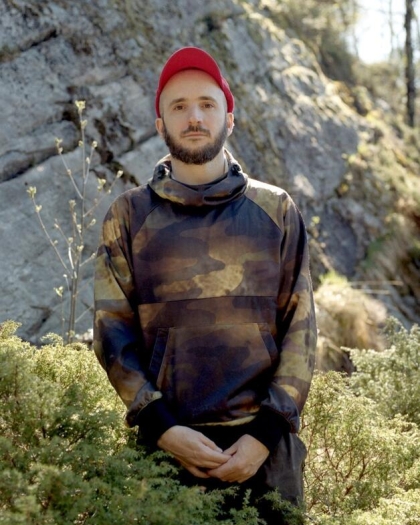
Jim Torresen is a Professor at the Norwegian University of Science and Technology (NTNU), specializing in Computer Science, Artificial Intelligence, and Robotics. He earned his M.Sc. and Dr.ing. (Ph.D.) in computer architecture and design from NTNU in 1991 and 1996 respectively, followed by industry experience in hardware design before transitioning to academia in 1999. Research Interests: His work spans Machine Learning, Evolvable Hardware, and Ethical AI, with notable contributions to music technology, facial expression recognition, and healthcare monitoring systems. He actively explores interdisciplinary applications of AI in creative domains and clinical environments. Publications & Editorial Roles: Torresen has published extensively in journals like Frontiers in Artificial Intelligence and Genetic Programming and Evolvable Machines . He serves as a Topic Editor for Frontiers in Explainable AI and has editorial roles in robotics and biomedical AI domains.
Molly Maleckar is a Research Professor at the Computational Physiology Department of Simula Research Laboratory , Oslo, Norway. Her work bridges computational modeling, cardiac electrophysiology, and biomedical applications, with a focus on arrhythmia mechanisms, fibrosis modeling, and machine learning integration in cardiac risk prediction. Research Interests include: Computational Cardiology Ion Channel Dynamics Machine Learning in Medicine Excitable Tissue Modeling Cardiac Fibrosis Analysis Biomedical Simulation Scientific Contributions span 15+ publications (2018-2024) addressing atrial fibrillation, calcium handling, and AI-driven ECG analysis. Key collaborative projects involve patient-specific ventricular modeling and educational initiatives like the Simula Summer School in Computational Physiology .
Helge Langseth is a Professor at the Department of Computer Technology and Informatics , within the Faculty of Information Technology and Electrical Engineering at the Norwegian University of Science and Technology (NTNU). His research focuses on Artificial Intelligence , Machine Learning , and Probabilistic Graphical Models , particularly Bayesian Networks and their applications in Decision Support Systems . Langseth's work addresses Explainable AI (XAI) , Reinforcement Learning , and Recommender Systems . He has contributed to Bayesian Optimization , Probabilistic Modeling , and Robotic Control in oceanic environments. His recent publications emphasize transparency , fairness , and scalability in AI systems, with applications spanning maritime trade, migraine diagnosis, and power grid management. He is affiliated with the Intelligent Systems Research Group at NTNU and actively mentors doctoral and master's students. Co-authored works with Yanzhe Bekkemoen , Sverre Herland , and Jørgen Hanssen reflect his role in advising the next generation of AI researchers.
Gabriele de Seta is a researcher at the University of Bergen's Department of Linguistic, Literary and Aesthetic Studies, leading the ALGOFOLK project funded by the Trond Mohn Foundation (2024-2028). A sociologist by training with a PhD from Hong Kong Polytechnic University, he previously served as postdoctoral fellow at Academia Sinica (Taipei) and on the ERC-funded Machine Vision in Everyday Life project. Department of Ethnology, Academia Sinica (postdoctoral fellow) Department of Linguistic, Literary and Aesthetic Studies, University of Bergen (researcher) His research focuses on algorithmic folklore, synthetic ethnography, and Chinese digital culture. He examines how digital technologies and creative practices mutually shape each other, particularly in China's sociotechnical landscape. Key areas include platform governance, machine vision, algorithmic accountability, and digital vernaculars. Recent publications analyze TikTok/Douyin's infrastructural role, deepfakes, QR codes as globalized gateways, and Chinese internet vulgarity. His work combines theoretical frameworks from STS, media studies, and digital anthropology with fieldwork on Chinese digital practices. Trond Mohn Foundation Starting Grant ERC-funded research As educator, he designed the Machine Vision module for Bergen's Critical Approaches to Technology and Society course and taught Key Theories in Digital Culture. He supervises multiple MA/PhD students including co-supervision of Hanna Lauvli. Through his blog and podcast, he promotes public engagement with digital research.
Professor Ingrid Bouwer Utne is a faculty member at the Department of Marine Engineering, Norwegian University of Science and Technology (NTNU). Her primary research focuses on risk analyses of ships, marine systems, and autonomy, with emphasis on operational safety, maintenance management, and risk control in autonomous maritime technologies. Key Projects: Leader of the Risk Group at NTNU, involved in the SFI Autoship initiative and ERC AdG BREACH project addressing risk-based rationality in autonomous systems. Research Interests: Autonomous systems design, probabilistic risk assessment, safety engineering, and risk-informed decision-making for marine operations. Grants & Funding: Secured funding from the Research Council of Norway, MAROFF, and industry partners for projects like ORCAS (Online Risk Management for Autonomous Ships) and UNLOCK (Supervisory Risk Control). She supervises numerous PhD students and postdocs, focusing on topics such as autonomous vessel navigation, risk modeling for underwater robotics, and decarbonization of maritime systems. Her work bridges theoretical risk analysis with practical applications in marine autonomy and safety systems.
Hans Bihs is a Professor in the Department of Civil and Environmental Engineering, Faculty of Engineering. His research focuses on computational fluid dynamics (CFD), wave hydrodynamics, and wave-structure interaction using the open-source framework REEF3D. Key Research Areas: CFD simulations, wave modeling, floating body dynamics, ocean wave energy, aquaculture hydrodynamics, sediment transport, and high-performance computing. Projects: ERC Consolidator Grant PARTRES (2023-2028), EEA Grants Portugal SurfWave (2023), NFR KPN IPIRIS (2021-2025), EEA Baltic SolidShore (2021-2024), NTNU's MAPLE (2022-2025), and DigiCoast (2021-2024). Email: hans.bihs@ntnu.no His recent publications (2025-2020) analyze fluid-structure interaction, ship-induced waves, floating offshore wind turbines, submerged vegetation, and coastal structures using advanced CFD techniques. Topics include wave hydrodynamics, turbulence, and numerical modeling for marine and aquaculture systems.
Dieu Tien Bui is a Full Professor in the Department of Business and IT at the University of South-Eastern Norway (USN) School of Business. His research focuses on Geospatial Artificial Intelligence Machine Learning GIS and Remote Sensing Natural Hazard Modeling Environmental Problems (landslides, floods, soil salinity, biomass) . He has contributed to over 15 recent publications in journals like Science of the Total Environment , Remote Sensing , and Geomorphology , emphasizing hybrid AI models for landslide and flood susceptibility. His work spans Vietnam, India, China, and Iran with applications in climate change adaptation and disaster management. Scientific Awards: Global Highly Cited Researcher PhD Supervision: He has supervised 8 PhD students at institutions including USN, NTNU, and Vietnamese universities.
Jianhua Zhang is a Professor of Computer Science and founding deputy head of the AI Lab at the Department of Computer Science, OsloMet - Oslo Metropolitan University, Norway. He holds affiliations with the Faculty of Technology, Art and Design. His career includes roles as Scientific Director at Vekia (France), Head of Machine Learning Lab, and Professorships at East China University of Science and Technology and Beijing University of Technology. He has held visiting positions at TU Berlin, TU Dresden, and the University of Catania. Educations: PhD in Electrical Engineering and Information Sciences (Ruhr University Bochum, 2005), Postdoctoral Research at the University of Sheffield (2005-2006). Research focuses on artificial intelligence, computational intelligence, cognitive human-machine systems, neuroergonomics, affective computing, and AI-driven neuroergonomics. Applications span engineering, biomedicine, finance, and business. He has led over 20 large-scale projects and published extensively (4 books, 13 chapters, ~200 papers). Leadership roles include Chair of IFAC Technical Committee on Human-Machine Systems (2017-2023), Vice Chair of IEEE Norway Section, and editorial roles at journals like Frontiers in Neuroscience and Cognitive Neurodynamics . He organized major conferences like IFAC HMS2025 (Beijing) and ICMLT 2024 (Oslo). Awards: Stanford/Elsevier Top 2% Scientists (2023/2024), Senior Research Fellowship (CSC, 2012), Max Planck Fellowship (2011), Shanghai Pujiang Talent (2007), DAAD Scholarship (2002-2004). Grants and advising: PI for 20+ projects, advising PhD students in AI, machine learning, and control systems. Teaching includes courses on computational intelligence, IoT, and fuzzy systems at both undergraduate and graduate levels. Labs/Teams: AI Lab at OsloMet, Machine Learning Lab (Vekia), and collaborations with institutions globally. Current work emphasizes AI ethics, neuroergonomics in smart cities, and adaptive human-machine systems.
Børge Rokseth is an Associate Professor at the Department of Engineering Cybernetics, Norwegian University of Science and Technology (NTNU). His work focuses on maritime systems, autonomous vessel control, and safety verification. He actively supervises Master's students and contributes to research on risk-informed control systems, hybrid power systems, and systems-theoretic process analysis (STPA). Research Interests: Rokseth's research spans autonomous ship systems, dynamic risk assessment, and safety verification. He explores risk-based decision-making for maritime autonomy, hazard identification in hybrid propulsion systems, and control function allocation in dynamic positioning. His work integrates systems theory, machine learning, and regulatory compliance (e.g., COLREGS) to enhance safety and environmental performance in marine operations. Publications: His recent work includes probabilistic trajectory prediction frameworks for autonomous ships, STPA-based safety analyses, and studies on decarbonization barriers in the maritime industry. These publications emphasize risk modeling, systems-theoretic approaches, and simulation-based verification. Teaching: Rokseth teaches courses such as TTK4130 - Modelling and Simulation, contributing to the education of future engineers and researchers in cybernetics and maritime systems.
Malgorzata Agnieszka Cyndecka is a Professor at the Faculty of Law, University of Bergen (UiB) , where she specializes in EU/EEA state aid law and data protection/GDPR. She is affiliated with SLATE (Centre for the Science of Learning & Technology) and serves as a member of the Norwegian Data Protection Board. Since 2019, she has been Associate Editor of the European State Aid Law Quarterly . She also holds an Associate Professor II position at the University of Oslo and contributes to interdisciplinary research on AI, privacy, and education. University: University of Bergen School: Faculty of Law Academic Rank: Professor Email: malgorzata.cyndecka@uib.no Affiliations: SLATE, Norwegian Data Protection Board, Council of Europe Expert Group on AI and Education Her research centers on EU/EEA state aid rules —particularly their application in tax, energy, and education sectors—and data protection law , with a focus on GDPR compliance in AI-driven educational technologies. She has led and contributed to major projects such as the Norwegian Data Protection Authority’s Sandbox for Responsible AI (AVT project), where she provided legal guidance on processing student data, and UiB’s DIGI courses, where she co-developed DIGI113 on Privacy and GDPR. Her work bridges legal theory with practical policy, influencing national and international frameworks on digital rights and public aid. The analysis of her recent publications reveals a strong focus on the evolution of state aid jurisprudence , especially the Market Economy Operator Principle (MEOP), burden of proof in aid cases, and sustainability in public support. Concurrently, her interdisciplinary work explores AI and privacy challenges in education , anonymization of unstructured data under GDPR, and ethical implications of algorithmic decision-making. Her contributions span legal doctrine, policy recommendations, and public commentary. Scientific Awards: European State Aid Law Quarterly PhD Award (2012–2016) for best doctoral dissertation in state aid law Advising and Grants: She supervises master’s students in EU/EEA law, data protection, and GDPR. She has been involved in externally funded projects including the Norwegian Data Protection Authority’s Sandbox for Responsible AI, the ENDO4P project (aimed at personalized endocrinology treatment via EU Horizon funding), and the Clean Up Project (Machine Learning for Anonymisation of Unstructured Personal Data) at the University of Oslo. She has also coordinated collaborations with Media City Bergen for law and technology education. Her teaching includes course leadership in JUS2302, JUS3502, JUS2303, JUS3503, and DIGI113. Labs and Teams: She is a key member of SLATE (Centre for the Science of Learning & Technology) at UiB and participates in multiple research groups including the Research Group for Information and Innovation Law. She contributes to interdisciplinary teams working on digital competence, AI ethics, and data governance in education and health. She is also active in the Academy for Young Researchers (AYF) and leads the EU and EEA Law Issues Committee in the Norwegian branch of the International Commission of Jurists (ICJ).
Ronny Scherer is Center Director and Professor at CEMO (Center for Educational Measurement) and Deputy Director at CREATE (Center for Research on Equality in Education) at the University of Oslo's Faculty of Educational Sciences. His work bridges educational measurement, assessment, and evaluation with a focus on research syntheses and complex sampling surveys. Dr. Scherer's research spans two interconnected domains: substantive areas including digital divides, equity and equality in education, and measurement of complex cognitive skills (such as complex problem solving, adaptability, computational thinking, and executive functioning); and methodological areas focusing on advanced meta-analytic techniques, multilevel structural equation modeling, and spatial analysis of complex survey data. His work frequently utilizes international large-scale assessment data from PISA, ICILS, TIMSS, PIRLS, PIAAC, and TALIS. His publication record demonstrates a clear trajectory toward increasingly sophisticated meta-analytic approaches, with recent work focusing on second-order meta-analyses, AI-assisted screening methods, and advanced techniques for handling complex survey data. His research consistently addresses critical educational challenges related to equity, digital literacy, and measurement of 21st century skills. Dr. Scherer has secured significant research funding for projects including ARISE (Academic resilience in mathematics and science among vulnerable students), DiDiRes (Digital inequalities in education), and ADAPT21 (Educational assessments of the 21st century: Measuring and understanding students' adaptability in complex problem solving situations). Co-director of CREATE (Centre for Research on Equality in Education) since 2023 Professor of Educational Assessment and Measurement at CEMO since 2019 Extensive experience with international large-scale assessments including ICILS, TALIS, and PIAAC As an educator, Dr. Scherer teaches advanced courses in measurement models, multilevel models, meta-analysis, and equity in education. He actively supervises graduate students interested in his research areas and has developed numerous workshops on structural equation modeling and meta-analytic methods for international audiences.
Ali Ramezani-Kebrya is an Associate Professor with tenure in the Department of Informatics at the University of Oslo (UiO), where he leads research in machine learning theory. He holds dual Principal Investigator roles at the Norwegian Center for Knowledge-driven Machine Learning (Integreat) and SFI Visual Intelligence, and is an active member of the European Laboratory for Learning and Intelligent Systems (ELLIS) Society. His service includes Area Chair positions for NeurIPS and AISTATS, and Action Editor for Transactions on Machine Learning Research. His research focuses on theoretical foundations of deep learning with emphasis on understanding input data distribution encoding in neural network layers. Key themes include minimizing statistical risk under resource constraints, addressing distribution shifts in distributed settings, and developing practical tools for robust federated learning. Current applications span emotion recognition, marine data analysis, and neuroscience, reflecting his commitment to real-world machine learning challenges as evidenced by his FRIPRO-funded Machine Learning in Real World (MLReal) project. Recent publication trends reveal three dominant threads: (1) label/covariate shift mitigation in distributed systems through entropy regularization and density ratio estimation; (2) communication-efficient optimization via layer-wise quantization and adaptive compression techniques achieving 150% speedups; and (3) robustness guarantees against tailored attacks and distribution shifts. These works consistently bridge theoretical bounds with empirical validation across domains from GAN training to federated settings. Scientific recognition includes: FRIPRO Grant for Early Career Scientists (2025) for MLReal project SFI Visual Intelligence Spotlight Publication award (2023) for federated learning work He actively mentors 11 graduate students across Oslo and Tromsø universities, with recent PhD placements at Apple and NVIDIA. Current grant portfolio features the FRIPRO Early Career award and leadership roles in two major Norwegian research centers. His lab maintains strong industry collaborations through Vector Institute and EPFL, with recent hiring for PhD and postdoc positions in physics-informed machine learning.
Zeinab Karami Hassan Abadi is a PhD candidate at the Department of Engineering Cybernetics, Norwegian University of Science and Technology (NTNU), under Professors Jon Are Wold Suul and Marta Molinas. Her research focuses on Control of Wireless Power Transfer Systems for Public Transport Applications, supported by SINTEF Energi's collaboration with Dr. Giuseppe Guidi. Academic Background: 2015-2021: Research Associate at University of Kurdistan, Sanandaj, Iran. 2015-2017: M.Sc. in Power Systems Engineering (University of Kurdistan). 2011-2015: B.Sc. in Electrical Engineering (University of Kurdistan). Research Interests span Optimal Control of Power Converters, Model Predictive and Robust Control, Wireless Power Transfer Systems, and Microgrid Dynamics. She specializes in advanced control strategies for power electronics in renewable energy and EV charging applications. Her work emphasizes stability and efficiency in power systems, with contributions to Model Predictive Control (MPC) for DC microgrids and inductive power transfer. Notable collaborations include projects with SINTEF Energi, focusing on practical implementations of control algorithms in real-world systems. Labs/Teams: Active in NTNU’s Power Electronics and Drives group, collaborating with SINTEF on applied power systems research.
Shaukat Ali serves as Research Professor and Head of the Department of Engineering Complex Software Systems at Simula Research Laboratory, concurrently holding the title of Chief Research Scientist. His academic leadership drives innovation at the critical nexus of quantum computing, artificial intelligence, and software engineering, with concentrated expertise in verification, validation, and testing methodologies for complex systems including cyber-physical infrastructures and autonomous robotics. His primary research domains encompass: Verification and Validation Search-Based Software Engineering Autonomous Driving Systems Cyber-Physical Systems Engineering Digital Twin Technologies Quantum Software Engineering Analysis of recent publications (2024-2025) reveals a decisive trend toward quantum-AI convergence in software engineering, particularly through quantum software testing frameworks and AI foundation models applied to cyber-physical systems. His work systematically addresses noise mitigation in quantum hardware, uncertainty quantification in adaptive robotics, and novel testing paradigms using vision-language models for industrial robotics—demonstrating both theoretical rigor and industrial applicability. As department head, Ali spearheads strategic research directions in complex software systems, fostering cross-disciplinary collaboration while actively shaping quantum software engineering through workshops like QAI2024 and Q-SANER 2024. His invited presentations at venues including JYU Quantum Electronics and EU-Korea Quantum Forums underscore his influence in defining emerging research landscapes.
Bettina Sandgathe Husebø is a Professor and Head of the Center for Geriatric and Nursing Home Medicine at the Department of Global Health and Community Medicine, Faculty of Medicine, University of Bergen (UiB). She also serves as Innovation Manager at IGS, UiB since 2019. Her extensive career spans clinical practice, research, and leadership roles in geriatric and palliative care. Dr. Husebø completed her medical education at the University of Bonn, Germany in 1988, followed by specialization in Anaesthesiology and Intensive Care in 1995. Her Norwegian qualifications include Medical Specialization in Palliative Medicine (2012) and Nursing Home Medicine (2014) from UiB, along with a PhD from the Faculty of Medicine Dentistry at UiB in 2008. She further enhanced her expertise with a Postgraduate Safety, Quality, Informatics and Leadership (SQIL) Program from Harvard University in 2021. Her research focuses on critical geriatric issues including pain assessment and management in dementia patients, behavioral disturbances in dementia, palliative care in nursing homes, and digital phenotyping applications for elderly care. She has pioneered work on the relationship between pain, agitation, and neuropsychiatric symptoms in dementia patients, particularly through the COSMOS trial and LIVE@Home.Path study. Her recent publications (2023-2025) demonstrate a strong emphasis on digital health solutions for dementia care, with particular focus on activity monitoring, pain assessment through technology, and community-based interventions for aging populations. Her work bridges clinical geriatrics, technology innovation, and patient-centered care models. Among her notable recognitions are the National Dementia Award by His Majesty King Harald of Norway (2022) and multiple awards for research excellence in pain management and palliative care. Her work has significantly influenced Norwegian healthcare policy regarding dementia care and end-of-life practices. As an educator, she lectures in English, German, and Norwegian on dementia, pain in dementia, innovation technologies for older adults, symptom management at end-of-life, systematic medication review, and advance care planning. She has received teaching awards including 'Teacher of the Year' from the Faculty of Medicine and Dentistry at UiB. Dr. Husebø leads the Center for Geriatric and Nursing Home Medicine (SEFAS) and has been instrumental in establishing Norway's first palliative care ward in a nursing home. Her research group focuses on translating evidence into practice to improve quality of life for elderly patients, particularly those with dementia.