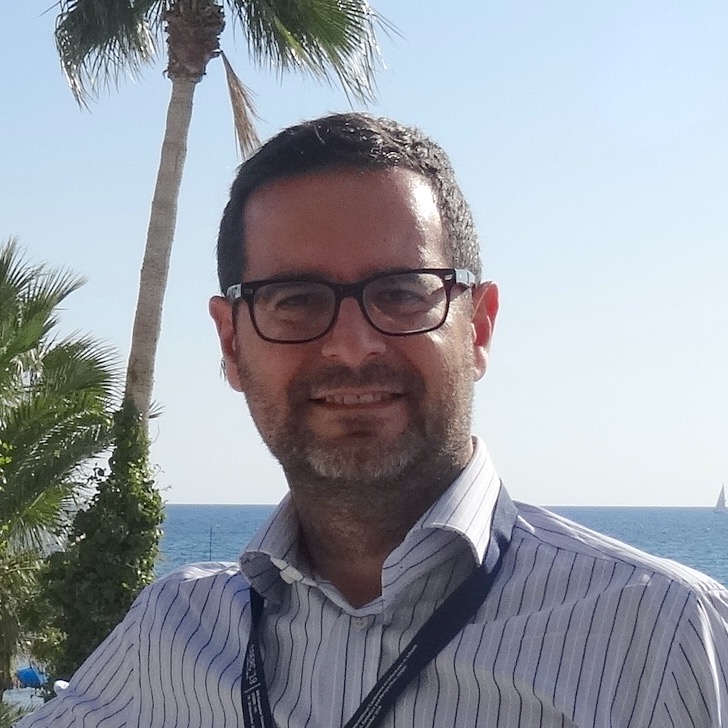
Mr. Yi Wang is a researcher at the Department of Mechanical Engineering, Imperial College London, specializing in Multi-scale Modeling of Powder Forging and related fields. His work bridges mechanical engineering, energy systems, and artificial intelligence. University: Imperial College London Department: Department of Mechanical Engineering Research Interests include electric vehicle-grid integration, microgrid resilience, reinforcement learning applications in energy systems, and multi-energy network optimization. His publications emphasize AI-driven strategies for low-carbon transitions and grid stability. Email: yi.wang12@imperial.ac.uk
Robert Bray is an Associate Professor of Operations Management at the Kellogg School of Management, Northwestern University, where he has held the Donald P. Jacobs Scholar position since 2012. He holds a B.S. in Industrial Engineering and Operations Research from UC Berkeley (2006) and a Ph.D. in Business Administration from Stanford University (2012). His research focuses on dynamic programming, supply chain management, and empirical operations, with notable contributions to understanding the bullwhip effect, supply chain proximity, and inventory dynamics. He has served as an associate editor for Operations Research , Manufacturing & Service Operations Management , and Management Science . His work has received multiple recognitions, including the MSOM Meritorious Service Award and finalist nominations for top operations journals. He teaches advanced courses on dynamic program estimation and operations analytics. Research interests span empirical operations management, with particular emphasis on supply chain coordination, inventory control, and the application of econometric methods to operations problems. His recent work explores the interplay between operational transparency and customer satisfaction, as well as the impact of AI in educational settings. He has published over 20 peer-reviewed articles in top journals like Operations Research and Management Science , addressing topics ranging from judicial process optimization to automotive supply chain quality. Dr. Bray's academic service includes refereeing for leading journals and participation in initiatives such as the Chicago-Argonne Initiative for Computational Economics. His professional experience includes roles as a lecturer at Stanford and consulting engagements with firms like Intel and Restoration Hardware. His research consistently bridges theoretical rigor with practical applications, offering actionable insights for operational efficiency and strategic decision-making.
Emrah Demir is a Professor of Operational Research in the Department of Logistics and Operations Management at Cardiff Business School, Cardiff University . Prior to this, he was an Assistant Professor at Eindhoven University of Technology, Netherlands. He holds a PhD in Management Science from the University of Southampton and degrees in Industrial Engineering from Baskent University, Turkey. Education: PhD in Management Science, University of Southampton, UK (2012) MSc in Industrial Engineering, Baskent University, Turkey (2008) BSc in Industrial Engineering, Baskent University, Turkey (2005) His research centers on green logistics, artificial intelligence, human/AI collaborative decision-making, and operational research , with a focus on optimizing freight transportation and supply chains for sustainability. He applies quantitative and analytical methods—including exact and heuristic optimization techniques—to address real-world logistics challenges. His recent work explores AI-driven routing, drone and robot delivery, maritime emissions, and behavioral aspects of algorithm adoption. The analysis of his recent publications reveals a strong integration of AI, sustainability, and logistics optimization . Key themes include last-mile delivery with autonomous systems, green vehicle routing, maritime decarbonization, and human-AI collaboration in decision-making. His work spans both theoretical modeling and practical applications in industry contexts, particularly with Ocado and in international sustainability initiatives. Scientific Contributions and Editorial Roles: Area Editor, Journal of Heuristics (Logistics and Supply Chain Management) Associate Editor, IMA Journal of Management Mathematics Associate Editor, Frontiers in Future Transportation – Freight Transport and Logistics Associate Editor, OR Spectrum Associate Editor (Engineering), Arabian Journal for Science and Engineering (from 2025) He has secured multiple external grants, including from the Colombia-UK PACT Programme (GIRO-ZERO) and Ocado Group plc , focusing on decarbonizing freight and optimizing supply chains. He supervises several PhD students on topics such as driver behavior, AI collaboration, and greenhouse gas emissions in shipping. He has held academic leadership roles including Programme Director for the MSc in Logistics and Operations Management and Deputy Head of Section for Learning & Teaching. Research Labs and Teams: He is affiliated with the Logistics and Systems Dynamics Group (LSDG) , Co-Director of the PARC Institute of Manufacturing, Logistics and Inventory , and Director of the Business & Economics Artificial Intelligence Research (BEAR) Network , reflecting his interdisciplinary engagement in AI, logistics, and sustainable operations.
Michael Hewitt is a Professor of Supply Chain Management at the Quinlan School of Business, Loyola University Chicago, where he holds the Ralph Marotta Chair in Free Enterprise. He serves as Executive Director of the Quinlan Business Leadership Hub and Director of the Supply Chain and Sustainability Center, playing key leadership roles in academic and research initiatives. His research focuses on Supply Chain Optimization , Freight Transportation , and Network Design , leveraging advanced mathematical modeling and operations research techniques. His work bridges theoretical innovation with practical applications in logistics and transportation industries. The 15 most recent publications (limited here to 5) reflect a strong trend in continuous-time network modeling , dynamic discretization methods , and large-scale optimization for freight and service network design. His research spans disciplines including Operations Research, Transportation Science, and Supply Chain Analytics, with recurring subfields such as Benders decomposition, time-expanded networks, and resource-constrained pathfinding. Scientific Awards: CSoNet Best Paper Award 2023 INFORMS TSL Freight Transportation & Logistics SIG Best Paper Award 2021 Glover-Klingman Prize 2019 INFORMS TSL Best Paper Award 2018 Loyola Faculty Researcher of the Year 2015 Dr. Hewitt has secured research funding from the National Science Foundation , Material Handling Institute , and New York State Health Foundation . He actively mentors students through research collaboration and has advised projects with real-world impact at companies like Bayer Crop Science , Exxon Mobil , and Schneider . He serves on editorial boards and holds leadership roles in INFORMS , including past presidency of the Transportation Science and Logistics Society. He leads two major centers: the Supply Chain and Sustainability Center and the Quinlan Business Leadership Hub , fostering interdisciplinary research, industry partnerships, and student development in supply chain and leadership education.
Gavin Cawley is a Professor in the School of Computing Sciences at the University of East Anglia (UEA), with additional affiliations to the Data Science and AI group, the Centre for Ocean and Atmospheric Sciences, and the Statistics group. His research spans machine learning, bioinformatics, climate modeling, and environmental data analysis. His primary research interests include Machine Learning , Kernel Methods , Model Selection , Bayesian Regularization , Bioinformatics , and Climate Modeling . He has made significant contributions to understanding overfitting in model selection, sparse logistic regression for gene and cancer classification, and time series classification using ensemble methods. His work bridges theoretical machine learning with practical applications in biology, archaeology, and environmental science. The recent trend in his publications shows a strong interdisciplinary focus, combining machine learning with climate science (e.g., Arctic sea ice prediction) and molecular biology (e.g., protein domain movements). His work often involves developing and evaluating statistical models for complex real-world problems, emphasizing robustness, interpretability, and predictive accuracy. While no specific awards are listed in the provided text, his extensive publication record in top journals such as Journal of Machine Learning Research , Bioinformatics , and Neural Networks , along with high citation counts (e.g., over 1,800 citations for his 2010 paper on overfitting), indicates significant recognition in the academic community. He has also contributed to organizing major machine learning challenges, such as the ChaLearn AutoML and Active Learning challenges. He has supervised or collaborated with numerous researchers across disciplines, though specific student names are not listed. His work involves methodological development in model selection, kernel learning, and survival analysis, often applied to biological and environmental datasets. He has been involved in projects related to predictive uncertainty, ozone forecasting, and microbial growth modeling. While no specific lab or team name is mentioned, his affiliations with the Data Science and AI group and the Centre for Ocean and Atmospheric Sciences suggest active participation in interdisciplinary research teams focused on data-driven environmental and biological modeling.
Andrew V. Goldberg is an Endowed Chair Professor in the Department of Industrial and Systems Engineering at Lehigh University since July 1, 2025. A globally recognized expert in operations research and algorithms, he has held research positions at Stanford University, Microsoft Research, and Amazon. PhD in Computer Science, MIT MS in Computer Science, UC Berkeley BS in Mathematics, MIT His groundbreaking research includes the push-relabel algorithm for maximum flow problems and an average-case linear-time algorithm for shortest path problems, both revolutionizing network optimization and computational science. His work impacts transportation, network routing, and education through widespread adoption in academic curricula. Goldberg has received prestigious accolades including: Fellowships: ACM (2009), SIAM (2013) Prizes: A.W. Tucker Prize (1988), Farkas Prize (2011) Test of Time Awards from ESA With 26,000+ Google Scholar citations (h-index 74) and 17 patents, he bridges theoretical innovation with industrial applications. His research focuses on developing algorithms that improve systems ranging from undergraduate ISE coursework to real-world logistics networks.
Karl Stampfer is a Professor of Forest Engineering at the Institute of Forest Engineering within the Department of Ecosystem Management, Climate and Biodiversity at the University of Natural Resources and Life Sciences, Vienna (BOKU). Appointed in 2012, he leads research on digital transformation in forestry operations with emphasis on work safety, steep-terrain harvesting, and climate-resilient infrastructure. His work bridges engineering practice and academic innovation through the Forest Demonstration Centre. His academic credentials include a Diploma (1991), Doctoral degree (1996), and Habilitation (2002), all from BOKU. Career progression shows continuous engagement: University assistant at the Institute of Forest Engineering from 1993, culminating in his full professorship. Stampfer's research focuses on Forest Engineering with three core pillars: (1) Timber harvesting system optimization for steep terrain using winch-assisted and cable yarding technologies, (2) Work safety through UWB sensors and causal accident modeling, and (3) Digitalization via laser scanning (TLS/ALS) for forest inventory, road monitoring, and digital twin development. His work integrates sustainable resource management with practical industry applications. Analysis of his 78 publications reveals a strong 2022-2024 trend: digital tools dominate 65% of outputs, particularly LiDAR for danger zone monitoring and climate adaptation. Safety research comprises 25%, with accident counterfactuals and ergonomic analysis. The remaining 10% addresses biomass logistics and road engineering, reflecting his multidisciplinary approach to European mountain forestry challenges. Scientific recognition includes: Promotion Award of the Foundation '120 Years of University of Natural Resources and Life Sciences, Vienna' (2002) Schrödinger Fellowship at ETH Zurich's Professorship for Forest Engineering (1997) Promotion Award of the Austrian Society for Occupational Medicine (1996) He has supervised numerous theses with no publicly listed advisees. Grant activity centers on externally funded research reports (e.g., SafeForests, LaDiWaldi) despite zero ongoing projects shown. Collaborations with AUVA, Land Kärnten, and international consortia like IUFRO drive his practical knowledge transfer to forest associations and policymakers. Stampfer operates within BOKU's Forest Demonstration Centre and co-leads the HCAI-Lab with Andreas Holzinger. His team specializes in field validation of digital tools, including the Seilgerätesimulator (VR training) and UWB danger zone monitors. Current work targets autonomous harvesting systems and AI explainability for accident prevention, as evidenced by 2025 presentations at FORMEC and Woodmaster events.
Tracy Yother serves as Assistant Professor in Aeronautical Engineering Technology (AET) within Purdue University's School of Aviation and Transportation Technology. With over 18 years of industry experience at Boeing, McDonnell Douglas, and Pratt & Whitney spanning product support, program management, and business development, she teaches undergraduate Powerplant Systems courses and graduate-level aviation leadership/process improvement curricula while maintaining active FAA Airframe and Powerplant certification. Her academic credentials include: Ph.D. in Career and Technical Education from Purdue University M.S. in Technology, Aviation Logistics from Purdue University B.S. in Aviation Technology from Purdue University Dr. Yother's research pioneers the integration of emerging technologies into aviation maintenance education, with dual focus on faculty credentialing challenges and AI-driven maintenance solutions. She leads NIST-funded development of electric propulsion standards curriculum while advancing natural language processing applications for maintenance record analysis and defect detection through API integration. Her work bridges industry standards with academic training requirements for next-generation aviation technicians. Recent publications reveal strong thematic continuity in aviation education innovation, particularly addressing workforce development for electric propulsion systems and AI-enhanced maintenance practices. Her scholarship consistently connects curriculum design with industry consensus standards while expanding into diversity initiatives and sustainable maintenance technologies. Recognition includes: February 2021: School of Aviation and Transportation Technology’s Outstanding Faculty in Learning Award Dr. Yother directs NIST Standards Curricula Development Program funding for electric propulsion aviation standards while maintaining active leadership in professional communities. As ASEE Aerospace Division Chair and member of UAA Maintenance Division and Aviation Technician Education Council, she shapes national conversations on aviation maintenance education standards and workforce development strategies. Her research directly informs Purdue's aviation technology programs through industry partnerships, with current focus on developing training frameworks for high-voltage aircraft systems and AI-assisted maintenance protocols that address emerging industry challenges.
Dr. Ip-Shing Fan is a Senior Lecturer in Enterprise Systems at Cranfield University's IVHM Centre, with academic career spanning over three decades. His work bridges technology implementation, organizational behavior, and complex system interactions across aerospace, manufacturing, and healthcare domains. Dr. Fan leads the Digital MRO and Hangar laboratories at Cranfield's DARTeC Initiative and serves as Course Director for the MSc in Aviation Digital Technology Management. PhD in Computer Integrated Manufacturing from Cranfield University BSc in Industrial Engineering (First Class Honours) from Hong Kong Commonwealth Scholarship recipient His research focuses on socio-technical systems in technology implementation, with specialization in Digital Twin applications for aircraft health management, Industrial Automation in aerospace contexts, and Human Factors in maintenance operations. He established the European BEST research consortium for enterprise system implementation knowledge and develops solutions for Predictive Maintenance , Robotic Inspection systems, and Agile Manufacturing frameworks. Key publication trends show expertise in Aerospace Informatics (2022-2025), Enterprise System Implementation (1995-2010), and Supply Chain Knowledge Modeling (2008-2010). Recent work addresses AI Document Reconciliation , Autonomous Inspection Systems , and 3D Printing Applications in aviation maintenance. Dr. Fan chairs the BCS Beds Bucks Northants Branch and has consulted for industry leaders including Boeing, BAE Systems, and SAP. His career combines academic research with practical implementation across Digital Transformation in aviation, Operational Optimization in healthcare, and Knowledge Engineering standards development.
Manuel Ricardo Torres Soriano is a Catedrático de Universidad (Full Professor) in Public Law at Pablo de Olavide University in Seville, Spain. His academic work focuses on political and administrative science with a specialization in terrorism studies, particularly jihadist terrorism and cyberterrorism. He serves as one of the 15 international advisors on the Advisory Council on Terrorism and Propaganda of the European Counter-Terrorism Centre (ECTC) within Europol, contributing to European counterterrorism efforts since the center's establishment nearly three years ago. PhD in Political Science from Universidad de Granada (2007), thesis: "La dimensión propagandística del terrorismo yihadista global" Academic experience at institutions including London, Stanford, and Harvard Professor at both Pablo de Olavide University and the University of Granada (UGR) Professor Torres Soriano specializes in the intersection of terrorism, technology, and political communication. His research examines jihadist propaganda ecosystems, cyberterrorism, disinformation campaigns, and the evolving nature of modern terrorism. He has pioneered work on the concept of "technophobic terrorism" as a potential fifth wave of terrorism, building on David Rapoport's theoretical framework of terrorism waves. His expertise spans both historical analysis of terrorist movements and forward-looking assessments of emerging threats in the digital age, with particular focus on how technology transforms both terrorist tactics and counterterrorism responses. His recent publications reveal a consistent analytical framework examining how terrorist organizations adapt to technological change, particularly in the digital realm. He has documented the evolution of jihadist media platforms, analyzed Russian disinformation tactics using false-flag cyber operations, and explored the relationship between technological advancement and potential future terrorist motivations. A recurring theme across his work is how digital technologies both enable new forms of terrorism while simultaneously providing tools for counterterrorism efforts, creating a complex dynamic that requires sophisticated analytical approaches. Member of the Advisory Council on Terrorism and Propaganda of the European Counter-Terrorism Centre (ECTC) within Europol Recipient of recognition from Spain's Ministry of Defense for his doctoral thesis Author of influential books including "Espejismos del mañana" and "#Desinformación. Poder y manipulación en la era digital" Professor Torres Soriano actively contributes to security policy through his work with European security institutions and Spanish government advisory bodies. He has collaborated extensively with state security forces in both analytical and training capacities, translating academic insights into practical counterterrorism strategies. His research has informed counterterrorism approaches in Spain and at the European level, particularly regarding online radicalization, digital countermeasures, and the evolving nature of terrorist propaganda. He regularly engages with policymakers through institutional reports and advisory roles, ensuring his academic work has direct relevance to contemporary security challenges. His work bridges academic research with practical security applications through collaborations with the European Counter-Terrorism Centre, Spanish security services, and international academic networks focused on extremism and counterterrorism. As digital technologies continue to transform the security landscape, his research remains at the forefront of understanding how terrorist organizations adapt their strategies and how societies can develop effective countermeasures in the digital age.
Rainer Kolisch is a Professor of Operations Management at the TUM School of Management, Technical University of Munich , where he has held a chair since 2002. He currently serves as Head of the Operations & Technology Department (since 2024) and previously as Dean of the QTEM Masters Network (2016–present) and Vice Dean of International Affairs (2007–2020). His career includes academic roles at Technical Universities of Dresden (Full Professor, 2002) and Darmstadt (Associate Professor, 1999–2002). Affiliations: TUM School of Management, Technical University of Munich Editorial Roles: Editor-in-Chief of OR Spectrum (2014–2020), Member of editorial boards for journals like International Journal of Production Research Research Interests focus on Airport Operations Management , Health Care Operations Management , Project Management and Scheduling , and Engineer-to-Order Manufacturing . His work addresses dynamic scheduling, resource allocation, and robust optimization in transportation and healthcare systems, with recent studies on electric vehicle charging networks and agile project management. Scientific Awards include: Best Teaching Award (2022) Excellence in Reviewing (2022) OMEGA Best Paper Award (2021) Handelsblatt Research Recognition (2005) DFG Habilitation Fellowship Advising spans numerous PhD and Master’s students , including Christopher Bersch, Robert Brachmann, and Giacomo Dall'Olio. His grants likely include DFG funding, though specifics are not detailed here.
David Durand is a Lecturer in Computer Science at the Computer Science Department of the IUT of Amiens (Institute of Technology) within the University of Picardie Jules Verne . He serves as a Deputy Vice-President for Communication, Culture & Scientific Mediation and is a teacher-researcher affiliated with the MIS Laboratory and its SDMA Team . Research Focus: Distributed and communicating objects, middleware, IoT, and data processing in eHealth. His work addresses IoT heterogeneity, communication protocols, and AI-driven data processing architectures for medical applications. Recent projects explore intrusion detection in Medical IoT (MIOTs), AI threat management in healthcare, and movement analysis for Parkinson's disease treatments. His publications span cybersecurity, robotics, and AI in healthcare, with a focus on federated learning and anomaly detection. He actively supervises students in IoT-related topics, including smart homes, logistics, and medical robotics.
Seb Bacon is the Professor of Practice in Research Software Engineering at the Bennett Institute for Applied Data Science , University of Oxford. His work focuses on software engineering for healthcare data analysis, particularly through the OpenSAFELY platform , which played a critical role during the COVID-19 pandemic. Prior roles include CTO at OpenCorporates and founder of Democracy Club, emphasizing open data and transparency in governance. His research interests span health informatics , data science , and public health analytics , with a focus on pandemic response, healthcare disparities, and software systems for large-scale data analysis. Articles highlight his contributions to understanding COVID-19 impacts , prescription trends , vaccine efficacy , and health equity through computational methods. Key collaborations include the Nuffield Department of Primary Care Health Sciences and the OpenSAFELY team , addressing issues like opioid safety , antimicrobial resistance , and long-term pandemic effects .
Christos Tryfonopoulos is an Associate Professor and Head of the Department of Informatics & Telecommunications at the University of the Peloponnese, where he leads the Software and Database Systems (SoDa) Lab. His academic career spans prestigious institutions including the Max-Planck Institute for Informatics in Germany, where he led the P2P and Information Management research area from 2006-2009, and the Technical University of Crete, where he completed his PhD and MSc degrees. His research interests focus on information management, distributed systems, digital libraries, and data/user anonymity. His work bridges theoretical foundations with practical applications across diverse domains including environmental monitoring, cybersecurity, cultural heritage, and medical informatics. He has developed innovative frameworks for pollution prediction, cyber-threat intelligence, and academic expertise mapping that demonstrate the interdisciplinary nature of his research. Professor Tryfonopoulos has published over 80 papers in top-tier journals and conferences including TOIS, TKDE, SIGIR, and SIGMOD. His recent work shows a strong trend toward applying machine learning techniques to information management problems, with publications spanning environmental science, cybersecurity, and bibliometrics. His research group has developed several significant tools including VeTo+ for expert set expansion, inTIME for cyber-threat intelligence, and Hydria for cultural heritage analytics. Candidate for best research paper in ESWC 2016 conference Honorable mention for best poster (3rd place) in ESWC 2012 conference Award as Distinguished Scientist Excelling in Research Abroad (2008) Best student paper award in ECDL 2005 conference Heraclitus PhD fellowship from Greek Ministry of Education (2002-2005) National Scholarship Foundation of Greece (IKY) scholarship (1998) Professor Tryfonopoulos has supervised 5 PhD students (3 in progress), 19 MSc students, and 31 BSc students. He has led or participated in 13 competitive EU and national research projects including ENIRISST+ for shipping and transport infrastructure, WeCare for student support structures, and FORESIGHT for cybersecurity simulation. His current research focuses on intelligent infrastructure for transportation logistics, cyber-threat intelligence systems, and educational technologies for data science.
Dr. Nagy Róbert is an Assistant Professor at the Department of Structural Mechanics, Faculty of Civil Engineering, Budapest University of Technology and Economics. His academic career spans both engineering and biomedical research domains. Education: Structural Engineer MSc Visiting Scientist: Imperial College London Languages: English (fluent), Italian (conversational), Portuguese (basic), Chinese (beginner) Research focuses on two primary areas: (1) Biomechanics – analyzing hemodynamic stresses in abdominal aortic aneurysms and developing inverse kinematic methods for rupture risk estimation using SPH numerical models and finite element simulations; (2) Structural Engineering – investigating explosion-resistant building design, blast parameter attenuation in urban geometry, and linear buckling analysis of thin-walled members. Additional work includes agricultural processing effects on cereal properties and digital pedagogy implementation in schools. His computational mechanics expertise bridges civil engineering applications (explosive load modeling) and biomedical innovations (aneurysm simulations). Key methodologies include smoothed particle hydrodynamics, nonlinear finite element analysis, and stress distribution modeling. Teaching contributions include tutorials in Statics, Advanced Mechanics, Strength of Materials, and Dynamics at both BSc and MSc levels in Hungarian and English. He also developed curriculum components for Nonlinear FEM and basic mechanics courses.